Tag: Hulu

  • Comcast makes sweet $65 bn offer for Fox’s entertainment assts

    Comcast makes sweet $65 bn offer for Fox’s entertainment assts

    Let the games begin. That’s the clarion call that Comcast CEO Brian Roberts has given by making an offer of $65 billion to acquire the Murdoch-owned Fox entertainment assets. Priced at $35 a share, the Comcast “superior” offer is at a 19 per cent premium over what Disney’s Bob Iger  made last year at $28 per share or $52.4 billion in an all-stock transaction.  The deal is undergoing regulatory approval and includes Fox’s movie studios, networks Nat Geo and FX, Asian pay-TV operator Star TV, and stakes in Sky, Endemol Shine Group and Hulu, as well as regional sports networks.

    Comcast is already taking steps to clearly stake its claim to the prized 21C Fox assets.  Roberts in a letter addressed to Rupert, Lachlan and James Murdoch stated that his company was going ahead with filing a preliminary proxy statement with the Securities Exchange Commission (SEC) in opposition to the Disney merger proposal. He added that Comcast had been “advised this is necessary to be in a position to be able to communicate with your shareholders directly regarding the votes they are being asked to cast on 10 July We hope this is precautionary only, as we expect to work together to reach an agreement over the next several days.”

    The Comcast  offer comes a day after a US district judge Richrd Leon  approved AT&T’s $85 billion bid for Time Warner. Leon emphatically thumbed down the government’s claim that AT&T/Time Warner would be anti-competitive and harm consumers. Roberts who had already announced last month that his company would make an offer post the regulatory go ahead from the US law makers for the AT&T- Time Warner transaction.

    Most observers are expecting The Walt Disney Co to up the ante by bettering its bid possibly flagging off a bidding war.

    Roberts in a conference call with investment analysts said that Fox’s assets are financially attractive. “Fox is an outstanding company which has done an outstanding aggregating content and distribution on a global basis,” he said. “This transaction offers a good chance to add these complimentary assets to our existing NBC Universal portfolio laying the foundation for many group opportunities. We have a proven track record of integrating companies, investing in them and growing them. And we can do that for Fox assets.”

    Roberts was quite confident that Comcast’s proposed transaction will obtain all necessary regulatory clearances in a timely manner and that “the transaction is as or more likely to receive them than the Disney transaction. Accordingly, we are offering the same regulatory commitments as the ones 21CF has already obtained from Disney, including the same $2.5 billion reverse termination fee agreed to by Disney. To further evidence our commitment, we also are offering to reimburse the $1.525 billion break-up fee to be paid by you to Disney, for a total cost to Comcast of $4.025 billion, in the highly unlikely scenario that our transaction does not close because we fail to obtain all necessary regulatory approvals.”

    During the conference call. Roberts added that the acquisition of Fox’s assets would expand Comcast’s core businesses to new markets and give it leadership position in four of the markets of the US, the UK, India and Latin America. Also the third most valued media company’s  international revenue contribution to its top line would rise from nine percent to 27 per cent following the digestion of Fox assets. Distribution platforms  such as Tata Sky, Sky, Fox and X1 would accrue to its portfolio giving the company a collective customer relationship of 53 million. Additionally, OTT platforms such as Hotstar, Hulu, NowTV,and Fox Plus would help give it more content and revenue leverage.

    Roberts has urged the Murdochs to make haste as its merger proposal with Disney is coming up for shareholder vote on 10 July. And he has pointed that  “there should not be any meaningful difference in the timing of the U.S. antitrust review between a Comcast and Disney transaction.”

    Comcast CFO Michael Cavanagh told investment analysts that the media gianthad enough financial muscle on its balance sheet to be able to finance and see through the transaction quickly- within 12 months of signing. He pointed out that he expected cost synergies of $2billion to be realised post merger, keeping in mind that Comcast will acquire 100 per cent of Sky, He explained  that he expected the deal to add to the proforma company’s free cash flow per share and earnings per share. Cavanagh expected the company’s debt to be at four times net debt EBIDTA in 2019.

    Roberts told investors that he was waiting for a revert from the Murdochs and the Fox board. He also stated that he has known them for a long time and that “there was disappointment when 21CF decided to enter into a transaction with The Walt Disney Company, even though we had offered a meaningfully higher price.”

    Meanwhile, late in the day, Fox acknowledged that it had received a new offer from Comcast and in keeping with its fidicuary duties the Fox board said it will carefully review it.

    It added that it hasn’t decided whetther it would postpone or adjourn the 10 July meeting to vote on the Disney proposal. 

    It’s over to the Murdochs and The Walt Disney Co. 
  • Trace launches 3 channels in Japan

    Trace launches 3 channels in Japan

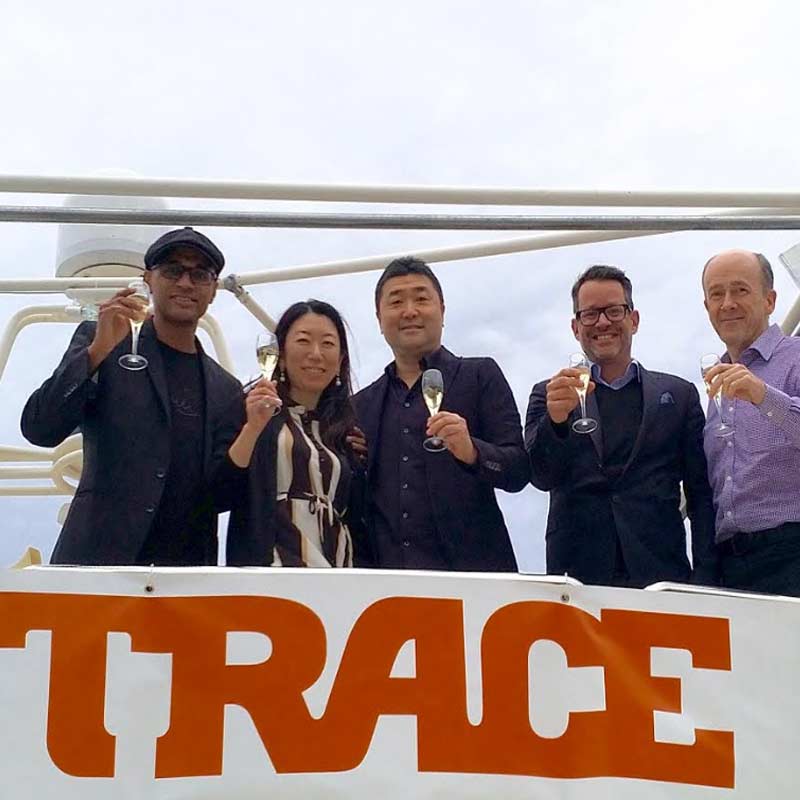
    MUMBAI: Trace and Hulu have announced the launch of three of Trace’s premium music channels, as part of the Hulu channels line-up, currently available to 1.64 million subscribers in Japan, from 9 April 2018 at MIPTV in Cannes. The channels are Trace Urban, Trace Tropical, and Trace Gospel.

    Trace chief group commercial officer and CEO International Laurent Dumeau said, “We have been very keen to bring the Trace brand to Japan for the very first time and to deliver music channels to an audience in Japan who are passionate about urban, tropical and gospel music. We have been asked for many years to bring these channels to Japan, and now through our partnership with Hulu in Japan we can deliver.”

    Hulu in Japan is an online video subscription service offering over 50,000 films, TV dramas and animation for a fixed monthly price of 933 yen (excluding tax). The lineup includes “Hulu Premiere” offering exclusive first view in Japan, “Hulu Original” created by Hulu in Japan, catch up episodes and live music streaming.

    Trace is a global multi-platform media and entertainment company that connects with multicultural audiences through premium afro-urban music and content across 21 pay TV channels, radios, motion picture, online and mobile services in over 160 countries to 200 million viewers and listeners.

    Trace Urban is a hip-hop and R&B top-40 music channel. It showcases the best videos from these three music genres as well as interviews, shows and documentaries related to urban artists and culture. Lightning International CEO and Trace Asia MD James Ross, said, “The expansion of the Trace music channels into Japan is a key part of our strategy to make Trace channels available to TV and online audiences throughout the Asia-Pacific region”.

    Trace Tropical is the music channel exclusively dedicated to tropical music. It features the videos from Latin America, the Caribbean and the Indian Ocean in various music genres (Salsa, Reggae, Reggaeton, Merengue, Bachata, Zouk, Zumba and Soca). Trace Tropical also broadcasts concerts and documentaries on tropical music and cultures.

    Trace Gospel is the only channel that presents today’s face of gospel music, which has evolved tremendously and nowadays it is much more than just choirs. Through the best music videos of contemporary, urban, worship and traditional gospel, as well as interviews with upcoming and established artists, features and concerts, Trace Gospel shows the diversity of gospel music.

  • 21st CF spins-off into new live news & sports co Fox

    21st CF spins-off into new live news & sports co Fox

    MUMBAI: After the blockbuster acquisition of 21st Century Fox by The Walt Disney Company, the former has announced that it will spinoff into a new brand Fox’ that will seek to replicate its own success in the newly focussed verticals of live news and sports brands.

    Using fiscal 2017 as a base, the new Fox is expected to have annual revenue of $10 billion and EBITDA of $2.8 billion. The company will have an investment grade balance sheet conservatively levered with a maximum of $9 billion of new gross debt or under 3 times net leverage on day one.

    Fox will hold iconic branded properties Fox News Channel, Fox Business Network, Fox Broadcasting Company, Fox Sports, Fox Television Stations Group, and sports cable networks FS1, FS2, Fox Deportes and Big Ten Network (BTN). It will also include the company’s studio lot in Los Angeles and equity investment in Roku.

    This new entity will own the top cable news channel in the US and the most-watched business news channel, as well as a station group, which is present in nine out of the 10 largest metro areas. Under sports, it holds the rights for NFL, MLB, World Cup Soccer and NASCAR.

    Fox will have a strong financial profile, supported by peer-leading growth and differentiated free cash flow generation, and will be positioned to continue to deliver consistent growth driven by affiliate rate increases, retransmission growth and strong advertising demand for its live content and entertainment product.

    21st Century Fox executive chairman Rupert Murdoch said: “The new Fox will draw upon the powerful live news and sports businesses of Fox, as well as the strength of our broadcast network. It is born out of an important lesson I’ve learned in my long career in media: namely, content and news relevant to viewers will always be valuable. We are excited by the possibilities of the new Fox, which is already a leader many times over.”

    The remaining business of the company has been combined with Disney in a $52.4 billion acquisition including all its film and TV studios, cable entertainment networks and international TV business. Disney will also acquire FX Networks, Fox Sports Regional Networks, Fox Networks Group International, Star India, and 21st Century Fox’s interests in National Geographic Partners, Hulu, Sky, Tata Sky and Endemol Shine Group.

    Murdoch said that the deals are crucial to paving way for a new Fox and a better Disney. “We have always made a commitment to deliver more choices for customers; provide great storytelling, objective news, challenging opinion and compelling sports. Through today’s announcements, we are proud to recommit to that promise and enable our shareholders to benefit for years to come through ownership of two of the world’s most iconic, relevant, and dynamic media companies. They will each continue to be leaders in creating the very best experiences for consumers.”

    The spin-off transaction will be taxable to 21st Century Fox, but not to its shareholders.  The new Fox will receive a step-up in its tax basis commensurate with the amount of the corporate tax relating to the spin-off that will generate annual cash tax savings over the next 15 years.

    Following the spin-off, Fox expects to continue to pay shareholders a strong regular dividend, with the initial rate to be determined prior to the completion of the spin-off. Prior to completion of the spin-off, new Fox will pay an $8.5 billion cash dividend to 21st Century Fox, representing an estimate of such tax liability. If the final tax liability of 21st Century Fox is less than such amount, the first $2 billion of that adjustment will be made by a net reduction in the amount of the cash dividend to 21st Century Fox from new Fox. The amount of such tax liabilities will depend on several factors, including tax rates in effect at the time of closing as well as market values of Fox following the closing.

    Upon closing of the spin-off transaction, 21st Century Fox’s shareholders would receive one share of common stock in new Fox for each same class 21st Century Fox share currently held.  Following the separation, new Fox would maintain two classes of common stock: Class A Common and Class B Common Voting Shares. Details of the spin-off transaction distribution will be included in the registration statement that will be filed with the Securities and Exchange Commission.

    As part of the definitive agreement with Disney announced today, 21st Century Fox shareholders will receive 0.2745 Disney shares for each 21st Century Fox share in the merger.  The per share consideration is subject to adjustment up or down for certain tax liabilities arising from the spinoff and other transactions related to the acquisition. Terms of the transaction call for Disney to issue approximately 515 million new shares to 21st Century Fox shareholders, representing approximately a 25 percent stake in Disney on a pro forma basis. The transaction values the merged 21st Century Fox business at $28 per share using a reference Disney share price of $102 and at nearly $30 per share based on Disney’s closing share price on December 13, 2017. This equates to a total enterprise value of approximately $69 billion.

    The merger is subject to customary conditions, including regulatory and shareholder approval.

    Combining with Disney are 21st Century Fox’s critically acclaimed film production businesses including Twentieth Century Fox, Fox Searchlight and Fox 2000, which together offer diverse and compelling storytelling businesses and are the homes of Avatar, X-Men, Fantastic Four and Deadpool, as well as The Grand Budapest Hotel, Hidden Figures, Gone Girl, The Shape of Water, and The Martian– and its storied television creative units, Twentieth Century Fox Television, FX Productions and Fox21, who have brought The Americans, This Is Us, Modern Family, The Simpsons, and so many more hit TV series to viewers across the globe.

    New Fox Assets

    Fox News Channel (FNC): 24-hour all-encompassing news service dedicated to delivering breaking news as well as political and business news. FNC has been the number one cable news channel in the country for 63 straight quarters, and more recently has been the top basic cable network.  FNC is available in approximately 90 million homes and dominates the cable news landscape, routinely notching the top ten programs in the genre.

    Fox Broadcasting Company (FOX): Home to some of the highest-rated and most acclaimed series on television as well as the most sought after sports properties, it is viewed by nearly 100 million households each month, airing 15 hours of primetime programming a week, as well as major sporting events and Sunday morning news.  Through the Fox Now app, Fox viewers can watch full episodes of their favourite Fox shows on a variety of digital platforms, while enjoying enhanced interactive and social capabilities around those shows.

    Fox Business Network (FBN): Financial news channel delivering real-time information across all platforms that impact both Main Street and Wall Street, Fox Business Network has been the number one business network for four consecutive quarters. FBN launched in October 2007 and is available in more than 80 million homes in major markets across the United States. The network has bureaus in Chicago, Los Angeles, Washington, DC and London.

    FOX Television Stations Group: One of the nation’s largest owned-and-operated network broadcast groups, comprising 28 stations in 17 markets and covering over 37 per cent of US television homes. This includes a presence in nine out of the 10 largest metro areas in the US including seven duopolies in the top 10 markets: New York, Los Angeles, Chicago, Dallas, San Francisco, Washington, DC and Houston; as well as duopolies in Phoenix, Minneapolis, Orlando and Charlotte. 

    FS1 and FS2: FS1 is a popular sports cable network launched in 2013 in approximately 90 million homes boasting nearly 5,000 hours of live event, news and original programming annually. FS1 has several pillar sports: college basketball and football, MLB, NASCAR, NFL (ancillary programs), international soccer, Bundesliga, UFC, Premier Boxing Champions (PBC) and USGA. Major events televised on FS1 include the US Open, MLB Postseason, the FIFA 2018 and 2022 World Cup and the FIFA Women’s World Cup in 2019. FS2 was founded in 2013 and is focused on extreme sports, including skateboarding, snowboarding, wakeboarding, motocross, surfing, mixed martial arts, BMX and FMX. FS2 is available in approximately 50 million homes.

    Big Ten Network: The first internationally distributed network dedicated to covering America’s most storied collegiate conferences. Covering over 1,000 sporting events each year, including football, basketball, Olympic sports and championship events and award-winning original programming, in-depth studio analysis and classic games. The network is in approximately 50 million homes across the United States and Canada, including carriage by all the major video distributors.

    Also read:

    With Star India, Disney emerges as India’s largest M&E firm

    Disney to buy 21st Century Fox assets for $52.4 billion

    Disney expected to announce 21 CF buyout tomorrow: media reports

    Now, Comcast in talks to buy 21st Century Fox


  • Apple commits $4.2 bn for original content

    Apple commits $4.2 bn for original content

    MUMBAI: Apple can’t get enough of taking more bites. The Cupertino-based company is reportedly spending a whopping $4.2 billion a year on coming up with original content by 2022.

    According to a report in Variety, this amount is much higher than the original commitment of $1 billion in 2018. Despite the effort, Apple will still lag the budgets set by video on demand giants Amazon and Netflix. Amazon’s pocket will turn up $8.3 billion for original video content, the highest for any tech giant. This will also shadow Netflix’s $6.8 billion margin.

    Much of Apple’s current programming has been music-based but the company is looking at looking eye-to-eye with contemporaries – Amazon, Netflix and Hulu. This will involve beating them where are best – shows and movies. Apple Music will be rebranded in the next 2-3 years which will also give it a headstart with its 30 million subscriber base. They will get video content access at just $10 a month.

    The idea behind focussing on a new territory is to give a boost to its services vertical, which is expected to make up 14 per cent of the revenue in 2017.

    For now the company has planned two offerings, Amazing Stories reboot from Steven Spielberg and a news-business comedy with Jennifer Aniston and Reese Witherspoon.

  • ‘It is criminal for TV not to think of social change’ – PMC’s Kriss Barker

    ‘It is criminal for TV not to think of social change’ – PMC’s Kriss Barker

    For most programming executives and management in TV companies today, television is all about running on a treadmill chasing ratings, viewership, and the concomitant revenues, followed by the next bonus and promotion. Every trick in the creative book and outside it is resorted to, to keep the ratings of a show on a high.

    Hence, it comes as a breath of fresh air when one comes across a senior media professional who does not care much about ratings or twisted elongated plots, rather focuses on helping the creation of TV and radio content with meaning, which has an impact on society and sparks off social change. US-born Population Media Centre vice-president international Kriss Barker has been behind creative initiatives on TV and radio in 56 countries over her 20-year career.

    She is in India at the invitation of a Hong Kong-based financing and production house and Indiantelevision.com’s founder Anil Wanvari to train Indian TV writers to produce entertainment education, which is based on the PMC Methodology. The latter itself is based on the Sabido scriptwriting methodology, which has been used to write television shows in about 80 languages and more than a 100 countries. The workshop is underway in Mumbai currently and ends on 3 December. Indiantelevision.com ‘s Kirti Chauhan got into a conversation with Barker – who is a PhD in public health  and has made Cape Town South Africa as her home , but travels 300 days each year, preaching the gospel of television with purpose – on the importance of TV as a medium to spark social change and how it can be done in India. Excerpts:

    What are the factors behind your shift from being a health practitioner to a media practitioner and scriptwriter trainer?

    My background is in public health and I have spent a lot of time working on public health inventions. And you find that you are spending so much time treating illness and diseases which are preventable. Public health has avoided doing it for years. We are treating conditions at the very end of the situation, rather than at the beginning. We do not focus so much on prevention, rather we have our eyes on treatment.

    When I found this powerful communication tool, which we call the Sabido or PMC methodology, it really helps to motivate change that can lead to prevention using media.

    Miguel Sabido – a TV researcher from Televisa in Mexico in the sixties and seventies – created this methodology, which focuses not on the story – but the social issue or problem. The story comes last. First, I first need to get ‘what’ is the real problem, and ‘why’ does that problem exist. And then look at ‘positive’ and ‘negative’ values that people in society hold around that. We need to honour these values and we need to integrate those people holding those into the TV show’s script and let those voices be heard.  Sabido or PMC methodology believes there are three characters every story or TV show has: positive, negative, and transitional. The transitional character is the one who has the journey – it is the one, the audience has to identify with. That is the doubting character, who does not know what to do. The positive and negative role models are almost like archetypes – they are too bad and too good to relate to me, but the one in the middle is exactly like me. He or she is the one I relate to.

    In Toilet Ek Prem Katha, the father is the negative character, the daughter is the positive one, and Akshay Kumar is the transitional. You love him.  All three are needed to help tell a story that in turn helps influence and bring about the desired social change.

    There are socially relevant shows being made on TV? What’s so special about a Sabido methodology show?

    A lot of people think they are doing social shows but this is not done effectively. I think it because only some (not all of them) of a whole gamut of theories and golden rules have been captured and used in these shows. You feel you have mastered the techniques but the fact is that you have not mastered the refinements. And you know that a lot of these programmes fail because of this. People have made music videos, short films around responsible parenting etc. Over the years, what we have learnt is that it needs to be a long running TV series, it needs to be a serial drama. You can’t do this in film or documentary, music video or a short number of episodes. You can’t cut short this; everybody is looking at a shortcut. But like in life, you get what you put in and hence, they have failed.

    When we go into a country we do a lot of formative research which helps creative people, the writers, to understand the realities of the situation of the social issues. But we have to be very careful all along the way. For example, we design a show about women inequality, women’s empowerment, the question is how far do you go before women say: no, no, that’s not me! So you have to take it a little bit aspirational, but you can’t take it too far or it is no longer believable.  And it is no longer even desirable.

    How important is it for TV channels and OTT platforms in the modern world to engage in social change shows? Why should they do it?

    It is criminal not to. Media is such an important powerful tool, and it has been misused a lot. We just play with it. And then we get things like the Columbine shooting or people going and shooting a cinema because they saw it in a movie or in a TV show.

    If you want to make a powerful product even more popular, make it more relatable. That’s the big disconnect. That is why the biggies are losing to Netflix and Hulu in the US because the former decide what they want people to see and they forgot that people really want to see themselves.

    What are the challenges you have faced?

    Funding is the big challenge. For example, a radio programme running at least twice a week over a year needs at least 104 episodes. In television, it is at least for a season. However, to get an investor or donor to commit to that is challenging. A radio show of that duration in Africa takes around $1.5-2 million. This is a lot of money for even a donor or investor, or a bucket of investors. They would rather do billboards or a comic book is what we hear sometimes.  The biggest challenge is to convince the investors that if they really want mass change on a big scale, this approach is cost effective as you can reach out to millions of people.

    How receptive have television stations and research been to using television as a tool for changing society?

    They are getting more so now because they have started realising that by not doing this, they would lose the market. For example, we are currently negotiating with Televisa Mexican, they are struggling (especially younger market) to find a way to get back into the market because of Netflix. We come in, and we say that the way to get back that market is to make a show about them.

    We had a hit show in LA, East Los High and the reason behind its popularity was that it was the only show ever produced in LA by Latinos and for Latinos. The whole production and acting cast and crew were Latinos. That’s the first this had ever happened. It seems nuts to me because this was in East LA where the majority of the population is Latino. People will watch shows of a lower production quality as long as they see themselves in the characters and the story. Like in Nollywood where the production quality is not great, but some of them connect so well.

    You have had a legacy relationship with India? Can you elaborate?

    Our predecessor organisation worked here many years ago and helped produce Hum Log, Humrahi on Doordarshan. Since about 2003, we have been wanting to get into India and just haven’t managed to get any inroads. Right now, we have been engaged by south-east Asian investment organisation One Talk Media and then they partnered with Indiantelevision.com. We are training some of the writers in our methodology and we hope to carry something to fruition with the two partners. India is a sophisticated market like Mexico and the US, and this is a model we will follow here. 

     Tell us about your reason to enter India.

    We have been trying to get into India for a long time – it’s a huge-huge market. The reason behind PMC is to try and create a sustainable population for the world. Whether you like it or not, India has a huge demographic impact on world sustainability. So, to be here and looking at societal behaviour change and looking at family planning and population dynamics, looking at women’s empowerment, children’s health – these are exactly the kind of things we need to be doing in a huge powerhouse like India.

    Have you ever cast big stars or are you planning to cast in your social issues related shows?

    We tend not to. And one of the reasons is cost. Our shows are trying to be a slice of life. We want you to believe that these are real people and if you get a big star or a known person, whether for the radio voice over or for a TV show, our viewers are not going to believe that the character is real no matter how good the actor is. So, we tend to take younger, less known voices and faces because we can make him who you want him to be.

    How effective has the Sabido method been in attaining its objective of social change?

    50 of the 55 shows that have been made using the Sabido or PMC methodology have achieved the desired social change objective. So the method works. The four or five that did not work was because we deviated from the methodology or put them in the wrong time slot.

    We lowered the fertility rate in Ethiopia by over a child and a half in a period of two and a half year period.  So it works.

    What is the relevance of societal change in a world of so much audio-video content? What role can it really play?

    A couple of things. Identification is big, these shows are built around that. So it’s entertainment that has a purpose and I feel most of us, I believe, like to be entertained. We want to go in that space where we can just relax, not want to think, but at the same time most of us like learning something. There is no preaching. These are ‘educational’ shows, social change content shows but we are not doing a good job if anybody recognises it to be that. For instance, a viewer in Africa should not tell me that the show is about female genital mutilation. Rather she should tell me it is about Fatima (a character) who had a rough time in her life. Just the educational content should be a part of the entertaining story. If you can build a story about someone who is like ‘me,’ then you have me in. 

  • Hulu CEO Mike Hopkins hops to Sony Pictures

    Hulu CEO Mike Hopkins hops to Sony Pictures

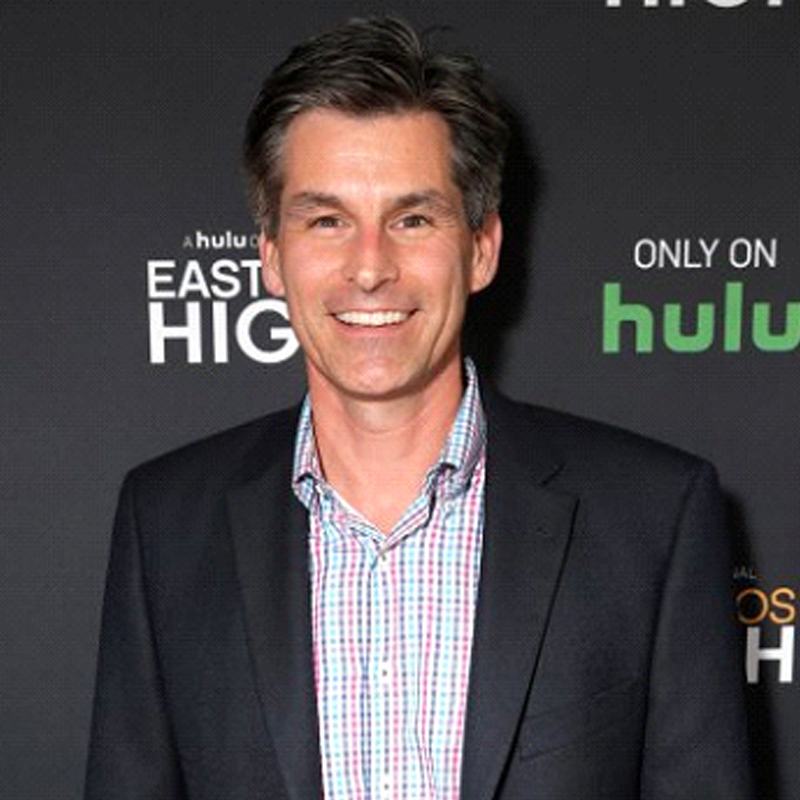
    MUMBAI: Sony Pictures Entertainment (SPE) chairman and CEO Tony Vinciquerra has recruited former lieutenant, Hulu CEO Mike Hopkins, to fill the top job that had been vacant since the departure of Sony Pictures TV chairman Steve Mosko seventeen months ago.

    At Hulu, Hopkins will be succeeded by Randy Freer, president and COO of Fox Networks Group and current Hulu board member.

    Hopkins has been named chairman, Sony Pictures Network, overseeing all television production, distribution and marketing operations globally for the studio, as well as SPE’s media networks business. He will start in late November and report to Vinciquerra.

    Hopkins had been president of distribution for Fox Networks Group under FNG chairman and CEO Vinciquerra until Vinciquerra’s 2011 exit from Fox. Hopkins was named CEO of Hulu in 2013 amid turmoil at the streaming service, co-owned by 21st Century Fox, Disney, NBCUniversal and Time Warner, which at the time had been run by an interim CEO while its owners were exploring a sale. Over the past four years, Hopkins has built up the company, which doubled revenue and tripled its market valuation and recently made Emmy history with 10 statuettes, becoming the first streaming service to land a Best Series Emmy for breakout drama The Handmaid’s Tale.

    Vinciquerra said, “Mike is a proven and innovative leader who has played a key role in redefining today’s television landscape, both for consumers and for how content producers reach them.”

    Hopkins’ appointment will streamline Sony’s reporting structure on the TV side. Following Mosko’s departure, all of his key reports — presidents of programming and production Zack Van Amburg and Jamie Erlicht, president of worldwide networks Andy Kaplan, president of distribution Keith Le Goy, and president of ad sales & research Amy Carney — began reporting directly to Vinciquerra’s predecessor Michael Lynton. The setup remained the same when Vinciquerra came on board earlier this year, with Jeff Frost succeeding Van Amburg and Erlicht as a direct report when the two left in June. (Frost was named president of Sony Pictures Television Studios, overseeing domestic production sans international and marketing which had been part of Van Amburg and Erlicht’s purview, with Chris Parnell and Jason Clodfelter upped to co-presidents.)

    Moving forward, the heads of SPT’s domestic and international television production, distribution, advertiser sales and research, marketing and Sony Pictures Worldwide Networks will report to Hopkins.

    Hopkins’ departure from Hulu, which has been on an upswing, capped by the Emmy triumph of The Handmaid’s Tale, is somewhat surprising. Still, Hulu is a far away from catching up with SVOD leader Netflix.

    “Tony has long been a colleague and mentor of mine, and I’m really excited to join him and the rest of the talented team at SPE,” said Hopkins. “There is a tremendous opportunity to build on SPT’s momentum globally and I look forward to working with the team to realise that potential.”

    Under Hopkins, a 20-year industry veteran, Hulu has grown its audience to 47 million total unique viewers; expanded its business to include live news, entertainment and sports in addition to its existing SVOD offering; and entered premium original programming with Casual, The Mindy Project, The Path and The Handmaid’s Tale. On the acquisition front, Hulu has signed deals for movies from Epix, full libraries of exclusive programming from AMC Networks and FX Productions, as well as all episodes of such current and classic series as This is Us, Homeland, Black-ish, Seinfeld, CSI, Empire, Fargo, Nashville, Golden Girls and South Park.

    As President of Distribution for Fox Networks, Hopkins oversaw the distribution strategy, sales and marketing for the company’s 45 linear and non-linear U.S. channels, as well as on-demand and digital extensions. His team also developed authenticated and digital video products BTN2GO and Fox Now.

    The independent Sony Pictures TV Studios, which is facing increasing challenges and has been fighting its way through increasing vertical integration, will produce or co-produce more than 30 broadcast, cable and digital series on air in the 2017-2018 season. That includes The Blacklist and The Goldbergs, now in their fifth seasons; breakout new ABC drama The Good Doctor, already renewed for a full season; CBS’ S.W.A.T.; as well as The Tick, Atypical, Better Call Saul, Preacher, Outlander, The $100,000 Pyramid, SuperMansion and the upcoming Philip K. Dick’s Electric Dreams and Cobra Kai.

    Sony TV projects with big production commitment by the broadcast networks include Norman Lear’s Guess Who Died for NBC, Carol Mendohlson and David Hudgins’ Chiefs for CBS, and an untitled Gloria Calderon project for CBS.

  • Facebook plans to stream sports, comedy, reality & gaming TV series

    MUMBAI: Cable cutters never had it this good. Now, a broad range of streaming services is available on all your devices, including those that offer live TV.

    Social networking giant Facebook, with around two billion monthly users, plans to start production on high-quality gaming shows and television series possibly investing up to $3 million (Rs 193 million) an 30-minute episode which would be broadcast on its platform. Facebook may announce its first batch of TV-like shows this summer, targeting 13-34 age-group audience but focusing on 17-30 range, PTI and WSJ reported. With that, Facebook is set to take on Netflix, YouTube, and Hulu.

    The online platform, which has around two billion monthly users worldwide, is working on the project with a small group of partners and hopes to start putting out episodes of its forthcoming series by the end of the summer. The company is also reportedly keen on sit-com programming having signed deals for short-form content from partners such as Vox Media, ATTN, and BuzzFeed earlier this month.

    It was in mid-April that Facebook originally planned to unveil its shows around its developer conference, then in time for the Cannes Lions festival, which started mid-June. But, it did not happen.

    Facebook vice president for media partnerships Nick Grudin, in a statement to AFP, said its goal was to make Facebook a place where people could come together around video, observing that Facebook and its collaborators would “experiment with the kinds of shows you can build a community around — from sports to comedy to reality to gaming.”

    Facebook is funding the shows on its own at first, he said, “but, over time, we want to help lots of creators make videos funded through revenue sharing products like Ad Break,” a software tool that allows adverts to be directly inserted into Facebook’s online content.

    Facebook could possibly not have shows about teens, or “political dramas, news [or] shows with nudity and rough language.” So, it seems Facebook wants to be the safest, most straight-down-the-middle TV network on the web. Facebook may share ad revenue with creatives who contribute short-form content. And, in a major change from the way online competitors have been doing business, it will also open up its viewership data to “Hollywood” — presumably production partners.

  • Hulu to live-stream top TV channels with NBCUniversal tie-up

    MUMBAI: Hulu and NBCUniversal have reached a comprehensive, new distribution agreement that will bring NBC and Telemundo Owned Television Stations and portfolio of leading cable networks to Hulu’s upcoming new live TV streaming service when it launches this Spring. The deal will provide live and on-demand streaming access to networks including NBC, Telemundo, USA, Syfy, Bravo, E!, MSNBC, CNBC, NBCSN and more, bringing the total number of channels in Hulu’s live TV service to more than 50. The agreement also includes a framework for licensing the NBC and Telemundo broadcast affiliates for carriage on Hulu’s new service.

    “NBC Universal is home to many of today’s leading sports, news, entertainment and lifestyle networks – brands that not only draw large audiences but also drive pop culture,” said Hulu CEO Mike Hopkins. “With this agreement in place, Hulu will soon provide an affordable, complete live TV package that includes all four major broadcast networks, the top-rated cable news channels, a massive sports offering and our deep existing premium streaming library for under $40.”

    “We’re pleased to partner with Hulu to make NBCUniversal’s leading portfolio of entertainment, news and sports networks available on this new service,” stated NBCUniversal Content Distribution chairman Matt Bond. “Growing our audiences is an important priority and this partnership will help bring our networks to new customers.”

    As one of the world’s leading media and entertainment companies, NBCUniversal’s suite of networks includes NBC, with broadcast hits such as This Is Us, Blindspot and The Voice, as well as late night series The Tonight Show Starring Jimmy Fallon, Saturday Night Live and Late Night with Seth Meyers; leading cable networks like USA— home of the critically acclaimed cable drama Mr. Robot — Syfy, Bravo and E!; top-rated news programming from NBC’s The Today Show and Dateline, to live, breaking coverage from MSNBC and CNBC news networks; leading American Spanish-language network Telemundo; kids programming from Sprout; and sports programming like Sunday Night Football and the Olympics and networks including NBCSN, Golf Channel and NBC Sports Regional Networks in Chicago, Philadelphia, New England, Mid-Atlantic, Bay Area, California and Northwest.

    NBCUniversal’s portfolio of networks adds to a growing list of more than 50 popular channels that will all be offered through Hulu’s new live TV service at launch. The deal follows Hulu’s recently announced agreement with A+E Networks, as well as its agreements with 21st Century Fox, The Walt Disney Company, Turner Networks and CBS Corporation.

    In addition to the company’s current ad-supported and ad-free subscription video on demand products, Hulu’s new service will offer viewers the most valuable pay-TV option on the market in a groundbreaking, new user experience for under $40 per month. With no set-up costs or installation, only Hulu will bring together live and on demand channels, original series and films, and premium library TV shows and movies, all in one place, across living room and mobile devices.

  • 66pc Indians polled access pirated content, consumer education vital: Irdeto

    66pc Indians polled access pirated content, consumer education vital: Irdeto

    MUMBAI: A new online consumer survey from Irdeto, the world leader in digital platform security, found that 71% of Indian consumers polled are aware that producing or sharing pirated video content is illegal, and 64% know that streaming or downloading pirated content is illegal. Despite this high level of awareness, 66% of respondents still choose to watch pirated content. However, the survey also found that over half (56%) of Indian consumers who watch pirated content could be convinced to pirate less, or even stop watching, when told that piracy could hinder studio investment and cause a drop in the quality of content. The online research was conducted in partnership with YouGov and polled over 500 Indian adults aged 18+.

    The research found that one in three consumers (30%) who watch pirated content in India are most interested in watching movies that are currently being shown in the cinema, followed by TV series (23%), and live sports (13%) and Blu-ray edition of movies (13%). Interestingly, only 6% of consumers who watch pirated content are interested in viewing digital service movies or TV programmes from content providers like Netflix, Hulu, etc. This reflects the state of video consumption in India, which is still rooted in a preference for local content but increasingly demonstrating an appetite for Hollywood content and more regional films.

    “India’s OTT market holds huge potential for operators and content providers, especially with the rise of 129 million urban mass consumers who will drive India’s consumer story. Demand for content on any device will only grow – but so will piracy if it is not adequately addressed,” said Irdeto country manager – India Sanjiv Kainth. “Piracy not only damages revenue streams, but also deters content creators from investing in new content. It impacts the creative process and could provide consumers with less choice. It is important that consumers are aware of the long term impact of this behavior, and that content providers have a 360-degree approach to security and anti-piracy that can prevent pirates from stealing additional market share.”

    In regard to the most popular devices used to consume pirated video content, Irdeto’s survey found that 48% of Indian consumers who watch pirate content use their laptops and computers most to watch this content while 25% use their smartphones. Streaming sites and devices were among the least popular channels to watch pirated content, standing at 1% each, while smart TVs, Google Chromecast and Android set-top boxes are used by a mere 3-4% of consumers, among those who watch pirated content.

    “Pirate businesses will continue to capitalize on increased demand for content, but innovative operators are making headway in the fight against piracy,” said Irdeto vice president of services Rory O’Connor. “Consumer education, a compelling legal video service and a robust security and anti-piracy program are the best ways to mitigate online and streaming piracy. A comprehensive anti-piracy strategy that includes watermarking, detection and enforcement can prevent pirates from stealing market share.”

    Methodology

    The research was commissioned by Irdeto and conducted online from January 11, 2017 – January 18, 2017 by YouGov. Total sample size was 502 Indian adults (aged 18+). The figures have been weighted and are representative of the urban population of adults in India (aged 18+).


  • AT&T unveils live video streaming service, DirecTV Now

    AT&T unveils live video streaming service, DirecTV Now

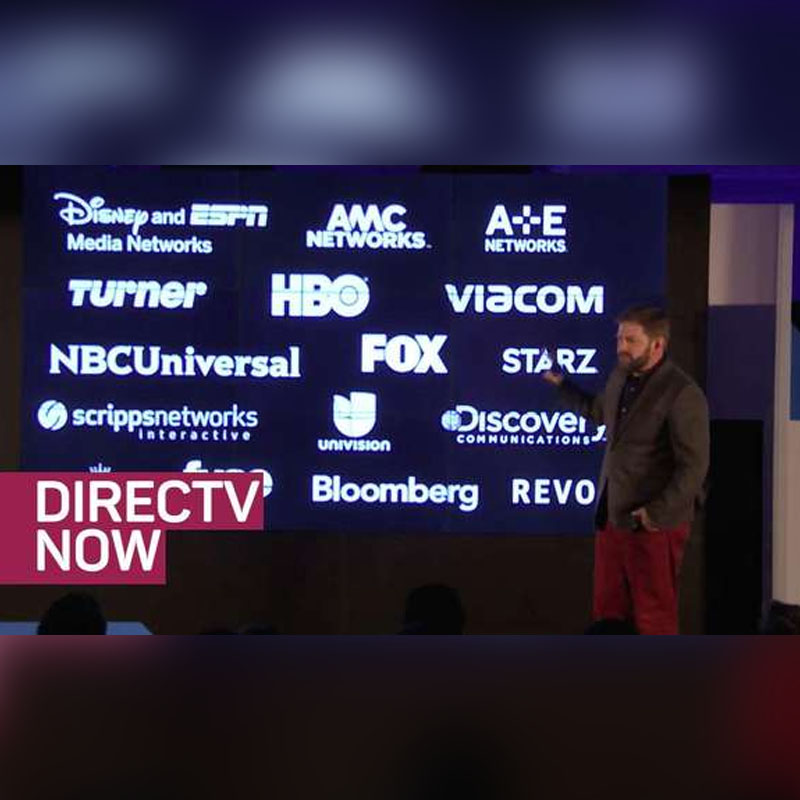
    MUMBAI: To win over subscribers who avoid pay-television subscriptions, AT&T has launched its streaming service DirecTV Now. The service will launch at prices ranging from $35 a month for over 60 channels to $70 for over 120 channels.

    The company has also announced that, for a limited time, more than 100 channels will be available for $35. The video service joins competitors like Sling TV and PlayStation Vue in drastically undercutting traditional cable and satellite packages, which often cost more than $100 per month. Dish Network launched Sling TV streaming service more than a year ago, and Sony PlayStation has its own package called PlayStation Vue. Next year, online video service Hulu plans to offer its own bundles of TV channels.

    The platform’s content will include live and on-demand video from Walt Disney, Twenty-First Century Fox, Viacom Inc and Scripps Networks Interactive. According to reports, the company is actively working to bring CBS Corp programming to its service.

    AT&T is counting on the mobile video market for new revenue as most U.S. consumers already have wireless service and further growth is limited. AT&T acquired DirecTV for $48.5 billion last year, making it the largest U.S. pay-TV operator with 25.3 million video subscribers, in an effort to diversify into the media and entertainment business.

    AT&T is also at near talks to acquire Time Warner for about $86 billion. This deal would create a media behemoth that offers TV, wireless, and the content that goes with it.