Tag: Hulu

  • Covid2019 cuts back customer acquisition costs

    Covid2019 cuts back customer acquisition costs

    MUMBAI: Covid2019 has plummeted what was a skyrocketing cost of customer acquisition, according to a report that delves deep into the correlation between the pandemic and the entertainment industry. According to the special report, Navigating Covid-19, by Parrot Analytics, this is exciting for platforms launching in the middle of pandemic such as Quibi, HBOMax, and Peacock. Yet, as time stretches on, OTTs may lose subscribers whose free trials end or who churn due to the recession. After the lockdown, the demand for content may be even more important as out-of-home activities will pose greater competition.

    Under stay-at-home orders, OTTs are gaining subscribers due to consumers’ heightened perceived value of their catalogue offerings.  

    The report says that the global lockdowns, forcing everyone to be home, have led to increased content consumption (viewership, ratings, etc.). Yet, this increased consumption has been accompanied by the unique challenges of satisfying audiences while production of key tentpoles has been halted and delayed. Broadcasters and cable (Pay-TV) have additional hurdles compared to OTTs. They must also cope with reduced ad revenue within the industry, making their ability to optimize their airing schedules and to fill content gaps even more crucial. Nonetheless, OTTs and Broadcasters alike are looking to solve their challenges by acquiring and producing virus-proof content.

    Meanwhile, distributors have an opportunity to revisit and leverage their reserve of content. They can offer unique packages of titles that will allow platforms and channels to retain their viewers and subscribers. Producers are challenged with finding innovative ideas and formats as well as adapting existing ideas to new restrictions placed during and post-lockdown. Simultaneously marketers are left searching for fragmented and dispersed audiences, recalculating and holding on allocating budget.

    Pay TV

    In the short-term, Pay TV has similarly seen a surge in viewership and ratings. Yet, as industry analyst Rich Green- field points out, this bump has been underwhelming. Greenfield is not alone; many analysts expect networks to feel more repercussions due to their losses of advertising, their reliance on live TV, and their battle for a digitally orient- ed key audience: those between 18-24. When consumers are faced with hard choices, Covid2019’s impact long-term may accelerate cord-cutting, contributing to Pay TV’s decline. However, broadcasters can avoid this by capitalizing on audiences who are tuning in now.

    What qualities have created opportunity under stay-at-home measures?

    According to the report, there are a few characteristics of SVODs that have been advantageous during the lockdowns.

    •           Size of catalogue:  The lockdown conditions have temporarily increased the value of all content, making it easier to reach the threshold of demand needed to acquire a customer. Thus, the larger the catalogue the greater the likelihood of customer acquisition at the moment.

    •           Supply of originals:  As stay-at-home orders continue, boredom and loneliness is on the horizon for many consumers. This makes original content that connects people more important than ever.

    •           Flexible viewing: With families, roommates, and others forced to share living spaces, SVOD content avail- ability on multiple screens is an advantage. The flexibility to watch on TVs, laptops, and phones allows consumers to watch their preferred content wherever they want and with whomever they want.

    •           Ad-free: Declining revenue from advertising poses a unique challenge at the moment; many companies have cut their marketing teams, frozen budgets, and are limited in ad-production capabilities. Thus, SVOD’s diminished reliance on ad-revenue is beneficial.

    Netflix

    Consider Netflix. Its large catalogue, supply of diverse original content, flexible availability and lack of ad-reliance allows it to thrive at this moment. The crisis has also temporarily reverted Netflix to an earlier phase in OTT life-cycles, in which total demand for content dictates subscriber growth and retention.

    Netflix is not alone, Disney+ also exhibits similar qualities. Although it has a limited supply of originals, its flexible access, ad-free platform, and large catalogue of premium children’s and family-friendly IP support its ability to thrive. Amazon Prime Video and Hulu are also well positioned with large catalogues, many originals, and flexible viewership.

    For Pay-TV, channels with large catalogues of family-friendly content, such as Discovery and Disney, are fulfilling increased demand from kids who are home due to school closures. Other broadcasters which are experiencing holes in programming are employing repeats or flashbacks of favourite episodes, searching for foreign acquisitions, and considering moving exclusive content from their OTT platforms back

    The key for producers and distributors is therefore to capitalize on this need for a larger catalogue and greater supply of originals. They can solve the pains of an aching industry with innovative content that fulfils and attracts the audiences that platforms, networks, and marketers are seeking to find.

    What can the industry do to thrive moving forward?

    In the midst of uncertainty, data allows decision-makers to be agile, says the report.

    Covid-2019’s effects on the global TV industry have likely just begun to unfold. As new consequences emerge, the industry will need to adapt swiftly by combining the art of storytelling with the science of human behaviour.

    Content preferences

    Audience content preferences have shifted due to Covid2019, these include a desire for original content, especially content that fills holes left by cancellations or delays.

    OTTs have an opportunity for growth due to increased streaming volume, but in order to prevent churn they must optimize their release schedules and content acquisitions.

    Broadcasters are challenged with holes in programming schedules, but can adapt by reinvigorating fandoms and finding replacement titles that will attract target audiences.

    Distributors should optimize their content packages for broadcasters and OTTs in need.

    Producers, despite shutdowns, can be resilient by prioritizing projects that fulfil audiences’ shifting demand and finding new formats to create fresh content.

    Marketers may need to pivot their channel spends, but can find ways to maximize their audience reach and tap into emerging preferences.

    OTT solutions
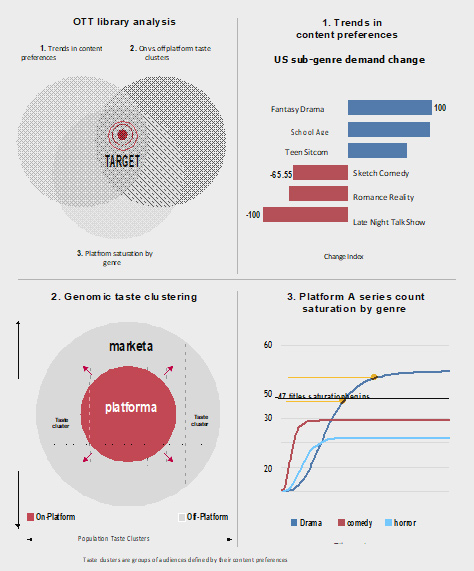
    Capture shifting preferences: By examining trends in content preferences, OTTs can prioritize speeding up releases or acquiring titles that may appeal to audiences’ shifting needs.

    Acquire vs. retain subscribers: Platforms must evaluate whether titles fulfil the preferences of existing subscribers or those yet to be acquired. Depending on an OTT’s goals, they may choose to prioritize a title that targets retention or to prioritize a title that targets acquisition.

    Ensure audiences are satisfied, but not overloaded:  Saturation is another term for diminishing marginal returns. Based on past data, OTTs can derive an optimal point or a point of saturation. To ensure audiences are not over- whelmed, OTTs should evaluate if there is headroom before speeding up releases or acquiring titles. Otherwise, due to genre saturation, titles may underperform.

  • Where’s Quibi headed for in the OTT world?

    Where’s Quibi headed for in the OTT world?

    MUMBAI: The streaming video landscape continues to fragment in 2020, as a growing number of streaming services join the fight for subscribers and users within an already competitive space. As a result, the global number of SVoD subscriptions is estimated to exceed 1 billion by mid-2020. Other streaming video services across social media players, esports and AVoD are also expected to show impressive growth.

    The subscription streaming market has been further amplified by the stay-at-home lockdown period, which is not only encouraging a rise in TV viewing but also a change in behaviour, as gaps in live TV scheduling, particularly sports, encourage consumers to look elsewhere for entertainment alternatives. Beyond SVoD, this is also expected to fuel uptake of premium AVoD services such as Pluto TV. According to Futuresource’s Living with Digital consumer research, at the end of 2019, one in seven American households were active monthly users of Pluto TV, with Tubi just a little lower.

    Quibi is a platform that sees a potentially rich corner for targeting millennial audiences with mobile-specific content. As the name indicates, ‘quick bite’ entertainment will consist of scripted and non-scripted content across a range of genres, including comedy, drama, reality and news updates. A-list creators, including Steven Speilberg, Ridley Scott and Catherine Hardwicke, are on board to produce and direct shows exclusively for the service, with Quibi’s new film-making technology ensuring a seamless experience, whether viewing in portrait or landscape.

    Its launch during lockdown presents itself as a double-edged sword. As mentioned, consumers now have more time to experiment with new services, but equally, solo mobile-viewing is based to fit around people’s lifestyles and “normal” routines: when arriving early to meet your friends at the bar, commuting to work or school, exercising at the gym – all of those activities that are now on hold for the foreseeable future. The marked increase in SVoD viewing on TV sets over the recent weeks ultimately comes at the expense of content viewing on mobile devices.

    Another key point here is: who are Quibi’s rivals? Its unique proposition addressing mobile viewing at a monthly price means that it is not only competing with major SVoD players like Netflix, Hulu, Amazon, and beyond, but other free services that also focus on mobile viewing. This includes the likes of Facebook Watch, Snap Originals, IGTV, Tik-Tok and of course, YouTube. Although YouTube is the market leader for short form content worldwide, people do not only watch its content on smartphones or tablets. In fact, Futuresource’s consumer research shows that just 42 per cent of YouTube watchers in the top five Western European countries and USA use a tablet or smartphone as their main viewing device to view the service. As the quality and professionalism of content on YouTube increases, consumers are finding additional value in watching on a larger screen. This means that Quibi faces potential competition from all sides, as it looks to exploit what it has identified as a gap in the market. However, Quibi has recently announced that it will enable casting to compatible TVs in May.

    Quibi launches with a free 90-day trial, a longer period than currently offered by Netflix, Amazon Prime, Apple TV or Disney+. This is highly unusual for such a service launch, and its major challenge will be converting these to paying subscribers. While the trial provides a valuable period to garner user behaviour and shape the future direction of the service, will most users have exhausted the content that interests them by the time the trial expires?

    Quibi will be judged on both the quality and originality of the content it provides, benchmarked against the key SVoD and AVoD players as mentioned above. Whether the service can command the attention it needs in a considerably fragmented market remains to be seen.

    The author is principal analyst at Futuresource Consulting
     

  • Disney+ stays put on subscriber guidance despite overwhelming response

    Disney+ stays put on subscriber guidance despite overwhelming response

    MUMBAI: There was a widespread high expectation for Disney+ and the streaming service had more than 10 million sign-ups by the end of first day. Within a few months of its entry, Disney+ acquired 28.6 million paid subscribers surpassing all previous estimates. Although the media conglomerate seems excited with the positive response, it is not changing the guidance currently.

    “We’re just beginning there, and I think it's just premature for us to take our guidance up. What we do know, of course, is that we have reached a number in the United States that since you did the math that would suggest that we're at the number that we predicted we would be in year five, just after a very short period of time, and I don't know whether that is a statement about the total available market or the quality of the product or both, or the price. It is just the way I think a number of factors that I've touched upon, and I just – I'll go over them one more time,” Disney chairman and chief executive officer Robert Iger stated in an earnings call.

    While Disney projected between 60-90 million global subscribers by 2024, it counted on two-thirds of that from subscribers outside the United States. As the streaming service has not been launched in most of those markets, Iger said it is more of a challenge to launch in those markets and needs more marketing efforts. Although the interest in streaming is not as high as US in those markets, he mentioned that these markets have been seeded with streaming.

    The platform saw 50 per cent of subscribers signing up directly while Verizon partnership made way for 20 per cent subscribers. Rest of the subscribers came from other services including Apple, Google, LG, Microsoft, Samsung, Sony and Roku. Moreover, the bundle with ESPN and Hulu was very helpful in terms of lowering churn rates.

    “The fact that the ARPU by the end of the quarter was $5.56 on a $6.99 subscription suggests that while there were discounts in the market in the packaging that existed enabled consumers to buy in at lower prices. We did extremely well, basically with the Direct-to-Consumer Package,” Iger added.

    As Igers shared, users have adored the  offering of classic movies and shorts from the studio including Moana and Frozen, Disney Channel series like Hannah Montana and The Suite Life of Zack & Cody, recent theatrical releases like The Lion King. Along with old library, subscribers have shown interest to growing slate of original content especially The Mandalorian which has “quickly become a bonafide hit and a cultural phenomenon”.

    “We know there is great anticipation for the substantial array of Baby Yoda consumer products hitting the market in the coming months. We'll continue to add high quality content to the service that includes Frozen 2, and Episode 9, The Rise of Skywalker. Many of you probably saw our Super Bowl spot featuring three original new Marvel series for Disney Plus. Loki, The Falcon and the Winter Soldier, which will premiere on the service in August and Wandavision, which will debut in December,” Iger stated.

    However, the trajectory in terms of investment in original programming on the service is roughly the same as it would have been or as was before the launch. The company has not brought significant change in the investment.

    Although Disney is working up a plan to take its other streaming service Hulu internationally, it has decided that the priority needs to be Disney+. It is going to be launched cross multiple territories in Western Europe, and India on 29 March. Following that, it is going to continue to roll out across the world going into 2021 including Latin America. Hulu’s international expansion will come right after or soon after that.

  • Solo video viewers on the rise in India: Ampere Analysis research

    Solo video viewers on the rise in India: Ampere Analysis research

    MUMBAI: Going solo! That’s something Indian streaming services have been working hard to get viewers to do with their video apps – especially in a mobile-first country like India.

    Apparently, it seems to be working, according to a new research report put out by UK research firm Ampere Analysis, late last month.

    It stated that 15 per cent of viewers in India went in for solo viewing of video content in Q3 2019-2020 as against 10 per cent in Q1. While 50 per cent growth in two quarters will have the streaming service heads grinning in glees, the Indian consumer has some way to go before reaching the high solo viewing habits of those in Europen markets.

    In Sweden, for instance 45 per cent of internet users watched video and TV alone in Q3 2019, up from a little over 40 per cent in Q1; in Denmark, the figure went up to 35 per cent in Q3 2019 from 30 per cent in Q1-2019. The Netherlands had a smarter jump growing from 25 per cent in Q1 to 35 per cent in Q3. The UK shares similar numbers.

    The research revealed that solo viewing is high in markets where OTT usage is high clearly indicating that video on demand content is driving this behaviour. Research also showed that these viewers believe that family viewing is no longer important.

    This trend will only gather momentum as existing leaders like Netflix, Amazon Prime, Hulu and new streamers like Disney+, Peacock, HBO Max, and other country players like Hotstar, Zee5, Voot, SonyLiv aggressively roll out and push their offerings globally and localise content.

    The trend must specially give some satisfaction to Star India and Disney APAC big boss Uday Shankar. It was in 2015 that the network had launched its Hotstar  “Go Solo” campaign.

    “We were talking to young Indians, who prize individuality and non-conformity. Those who weren’t satisfied with the traditional viewing in India, sitting around a living room TV set, watching a channel that someone else had chosen,” the network says.

    “She is always on top of news and opinion articles, yet I have never seen her hold a physical newspaper,” Uday is quoted as saying on the Star website, referring to the young women in India who are changing how they consume media. "Her daily dose comes exclusively from the digital universe. She is a voracious consumer of movies and drama; yet goes to theatres more for fun than for creative consumption. Fixed schedule programming sounds as bizarre to her as silent movies to us.”

    With Disney announcing the launch of Disney+ as a tab on Hotstar by March 2020, this solo viewing trend can only head further northwards.

  • Disney starts the year with strong quarter, reports $20.86 bn revenue

    Disney starts the year with strong quarter, reports $20.86 bn revenue

    MUMBAI: The Walt Disney Company (Disney) reported its first fiscal quarter earnings, the first result since the launch of its new streaming service Disney+. Beating Wall Street expectations, the company has seen a strong start by reporting $20.86 bn revenue in contrast to market expectation of $20.79 bn. Disney’s adjusted earnings per share came in at $1.53 versus the expected $1.44.

    “We had a strong first quarter, highlighted by the launch of Disney+, which has exceeded even our greatest expectations,” said Disney chairman and chief executive officer Robert Iger said.

    “Thanks to our incredible collection of brands, outstanding content from our creative engines and state-of-the-art technology, we believe our direct-to-consumer services, including Disney+, ESPN+ and Hulu, position us well for continued growth in today’s dynamic media environment,” he added.

    Media Networks revenues for the quarter increased 24 per cent to $7.4 bn, and segment operating income increased 23 per cent to $1.6 bn. Cable Networks revenues for the quarter increased 20 per cent to $4.8 bn and operating income increased 16 per cent to $862 mn. Broadcasting revenues for the quarter increased 34 per cent to $2.6 bn and operating income increased 41 per cent to $575 mn.

    Studio Entertainment revenues for the quarter increased from $1.8 bn to $3.8 bn and segment operating income increased from $309 mn to $948 mn. Higher operating income was due to increases in theatrical and TV/SVOD distribution results at legacy operations, partially offset by a loss from the consolidation of the TFCF businesses.

    Direct-to-Consumer and International revenues for the quarter increased from $0.9 bn to $4.0 bn and segment operating loss increased from $136 mn to $693 mn. The company stated that increase in operating loss was due to costs associated with the launch of Disney+, the consolidation of Hulu and a higher loss at ESPN+. However, it also mentioned that these increases were partially offset by a benefit from the inclusion of the TFCF businesses due to income at the international channels including Star.

    The company’s biggest bet at streaming Disney+ delivered an impressive 26.5 mn subscribers, starting from Nov. 12 through year’s end. ESPN+ had 6.6 mn subscriber as of 28 December. Hulu’s SVOD only subscriber stood at 27.2 mn while the service combined with Live TV offering had 3.2 mn subscribers.

    “The average monthly revenue per paid subscriber for ESPN+ decreased from $4.67 to $4.44 due to a shift in the mix of subscribers to our bundled offering. In November 2019, the Company began offering a bundled subscription package of Disney+, ESPN+ and Hulu. The bundled offering has a lower average retail price per service compared to the average retail price of each service on a standalone basis,” Disney stated.

    “The average monthly revenue per paid subscriber for our Hulu SVOD Only service decreased from $14.49 to $13.15 driven by lower retail pricing and a shift in the mix of subscribers to our bundled offering. The average monthly revenue per paid subscriber for our Hulu Live TV + SVOD service increased from $52.31 to $59.47 due to higher retail pricing,” it added.

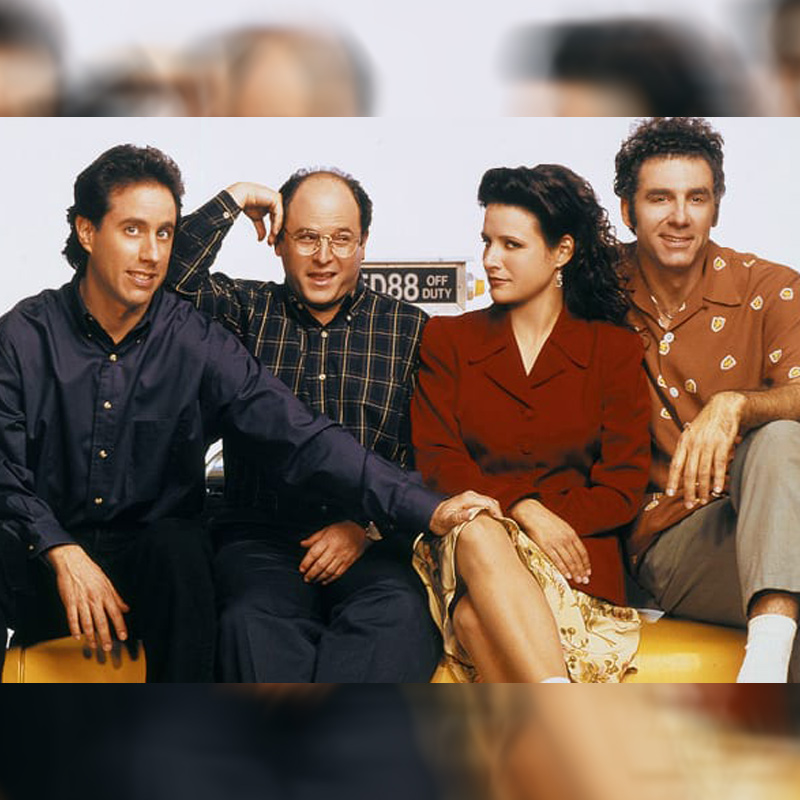
  • Netflix acquires global streaming rights of ‘Seinfeld’

    Netflix acquires global streaming rights of ‘Seinfeld’

    MUMBAI: Netflix comes back to the sitcom battle as it has landed the global streaming rights to Seinfeld. The streaming giant announced on Monday that all 180 episodes of the sitcom will be with Netflix after striking a deal with Sony Pictures Television.

    Not only will Netflix offer Seinfeld in the US but also to its 151 million subscribers throughout the world in 2021. The move comes at a time when the company recently lost the streaming rights to shows like Friends and The Office.

    “Seinfeld is a one-of-a-kind, iconic, culture-defining show,” Sony Pictures Television chairman Mike Hopkins said as quoted by Los Angeles Times. “Now, 30 years after its premiere, Seinfeld remains centre stage. We’re thrilled to be partnering with Netflix to bring this beloved series to current fans and new audiences around the globe,” he added.

    Walt Disney-owned Hulu currently has the domestic streaming rights to Seinfeld for $130 million in a six-year deal that expires in 2021. After the deal with Hulu ends in June of that year, the deal with Netflix will kick in.

    “Seinfeld is the television comedy that all television comedy is measured against,” Netflix’s chief content officer Ted Sarandos said as quoted in media reports. “It is as fresh and funny as ever and will be available to the world in 4K for the first time,” he added.

  • Disney to offer Disney+-Hulu-ESPN+ bundle for $12.99 a month

    Disney to offer Disney+-Hulu-ESPN+ bundle for $12.99 a month

    MUMBAI: With the launch of Disney+, Walt Disney Company (Disney) will offer a bundle package of its three streaming services — Disney+, Hulu, and ESPN+ from 12 November. The bundle has been priced at $12.99 a month.

    Disney chief executive officer Bob Iger revealed the plan for the bundle during Disney’s quarterly earnings call with Wall Street analysts. Iger also disclosed that Disney is in talks with Apple, Amazon and Google to distribute its highly awaited Disney Plus and the newly announced bundle on their platforms.

    “The positive response to our direct-to-consumer strategy has been gratifying, and the integration of the businesses we acquired from 21st Century Fox only increases our confidence in our ability to leverage decades of iconic storytelling and the powerful creative engines across the entire company to deliver an extraordinary value proposition to consumers,” Iger said in a press release.

    Disney+ will enter the market with 300 film titles and 7,500 episodes of Disney TV series. Eight of the films will be from the Star Wars franchise, 18 will be Pixar, 70 will be from Disney Animation and four will be Marvel.

  • Star India losses partially offset Disney’s international revenue

    Star India losses partially offset Disney’s international revenue

    MUMBAI: The giant media conglomerate Walt Disney Company could not reach Wall Street’s expectations for the quarter ended 29 June 2019. The company posted weaker than expected earnings per share and revenue in its Q3 results. Star India which now comes under Disney after the merger with 21st Century Fox affected the company’s revenue.

    Earnings per share (EPS) for the quarter decreased 28 per cent to $1.35 from $1.87 in the prior-year quarter while the expectation was $1.74 by the analysts. Total revenue stood at $20.2 billion against the consensus estimate for $21.4 billion.

    "Our third-quarter results reflect our efforts to effectively integrate the 21st Century Fox assets to enhance and advance our strategic transformation,” Disney Chairman Bob Iger said. “We remain confident in our ability to successful execute our strategy,” he added.

    Cable Networks revenues for the quarter increased 24 per cent to $4.5 billion and operating income increased 15 per cent to $1.6 billion. The company said higher operating income was due to the consolidation of 21CF businesses (primarily the FX and National Geographic networks) and an increase at ESPN.

    "Results for the quarter also reflected a benefit from the inclusion of the 21CF businesses due to income at the Fox and National Geographic international channels, partially offset by a loss at Star India,” the company said in a release.

    Direct-to-consumer and international revenues for the quarter increased from $827 million to $3,858 million and segment operating loss increased from $168 million to $553 million. The increase in operating loss was due to the consolidation of Hulu, the ramp-up of investment in ESPN+, which was launched in April 2018 and costs associated with the upcoming launch of Disney+.

    Studio Entertainment revenues for the quarter saw a 33 per cent increase to $3.8 billion and segment operating income increased 13 per cent o $792 million. Parks, Experiences and Products revenues for the quarter increased 7 per cent to $6.6 billion and segment operating income increased 4 per cent to $1.7 billion.

    "The incredible popularity of Disney’s brands and franchises positions us well as we launch Disney+, and the addition of original and library content from Fox will only further strengthen our direct-to-consumer offerings,”  Iger said in the earnings release despite the bumpy quarter.

  • Disney to take charge of Hulu’s scripted originals team

    Disney to take charge of Hulu’s scripted originals team

    MUMBAI: Following the Disney – 21st Century Fox merger, Walt Disney Television is taking charge of the streaming service Hulu’s scripted originals team. Hulu scripted originals senior vice president Craig Erwich will now report to Disney Television Studios and ABC Entertainment head Dana Walden.

    Erwich and his team will not relocate to Disney’s headquarters in Burbank but will remain based out of Hulu's Santa Monica headquarters. But the streamer's unscripted original programming, original film and licensed content teams will continue to report to Hulu CEO Randy Freer.

    "As Hulu drives toward its ambitious subscriber and engagement goals, it is important that we take full advantage of the creative resources and production capabilities of Disney Television Studios, which are among the best in the world," Freer said.

    "Hulu Originals have been widely recognised for their originality, boldness and high level of quality," Walden said. "They are a meaningful part of what has driven the platform’s impressive growth over the past few years. Craig and his team have done excellent work. I am excited to work with Randy in this next phase of Hulu. This new structure will enable Hulu to have access to many of the best creators in the world and programming from all of the content engines inside of Walt Disney Television," the executive added.

    Renowned Hulu originals such as The Handmaid’s Tale, The Act, Catch-22, Castle Rock, The Looming Tower and Pen15 have been launched under Erwich’s leadership who joined the organisation in 2014.

  • Bob Iger on Disney’s bid to conquer streaming business

    Bob Iger on Disney’s bid to conquer streaming business

    MUMBAI: The Walt Disney Company (Disney) is gradually changing the focus of its business. Despite having a strong revenue-generating traditional media business, the company is set to make a splash in with high-profile entry into the streaming era. While the newly created direct-to-consumer segment of the business remains the immediate top priority, the entertainment giant is focusing on both programming and technology to differentiate itself in the high-stakes battle.

    The media conglomerate launched its audacious digital venture last April with sports streaming service ESPN+, which now has two million paid subscribers. Disney CEO and chairman Bob Iger said in an earnings call after Q1 results that from the nine-month journey of ESPN+, Disney has learned that BAMtech platform is capable of handling not only scale in terms of live streaming simultaneously but a substantial number of transactions in a very short period of time. Having fortified its base for the upcoming Disney+ service, the Bob Iger-led company seems confident about the streamer’s success.

    Disney is aiming to pump in serious amounts of cash to produced exclusives for its upcoming streaming service, Disney+.

    Iger told investors that Disney intends to relinquish $140 million (current rate) year over year in licensing revenue to provide the content it has currently licensed to Disney+. Captain Marvel will be the first Disney movie that the entertainment behemoth will entirely hold back from its licensee partners. The move is in line with Disney’s 2017 announcement of ending the practice of licensing its films to platforms like Netflix.

    Iger also revealed that teams of many Disney sub-brands are producing content with Disney+ in mind.

    “We have a number of creative engines across our company, many of which are dedicating their time and talents to develop content for the Disney+ platform,” Iger told investors.

    “Many are the same innovators driving the prolific success of Disney, Pixar, Lucasfilm, and Marvel. We look forward to leveraging National Geographic for even more content on Disney+,” he added

    Apart from Disney+ and ESPN +, the company will soon own a majority stake in the very popular over-the-top platform Hulu post its acquisition of 21st Century Fox closes. With just 30 per cent stake in Hulu, Iger thinks it’s premature to discuss its business prospects for now. The veteran executive, however, stated that Disney would look more aggressively at some international rollouts of Hulu.

    While competitors are looking at bundling services on one platform, Disney has preferred segregation so far.

    “Ultimately, our goal would be to use the same tech platform to make it easier for people to sign up for all three should they want to, same credit card, same username, same password, et cetera, but give the consumer the kind of choice that we think consumers are going to demand more and more in today's world,” Iger remarked.

    He also mentioned that if a consumer wants to subscribe to two or three platforms together, Disney will probably offer a discount to them. On the other hand, having three different platforms will enable them to attract subscribers who only want to consume a particular type of content, for example, sports.

    It’s evident from the fortunes of other OTT platforms that making profits in the streaming business at the moment is a long shot. Investors of Disney are also expecting the costs in streaming business to pressurize total revenue.

    Talking about making Hulu’s business profitable, with its good subscriber base, Iger said that there is enough opportunity in media businesses citing the example of streaming giant Netflix.

    “We think there's huge potential for Hulu to grow as well as for the other services to grow and plenty of room for other entrants in the marketplace. But we aim to take advantage of, on the Disney and ESPN side, our brands and that expertise,” he added.