Tag: Hulu

  • Studio Blo gets its Hollywood script with Chad Greulach in the frame

    Studio Blo gets its Hollywood script with Chad Greulach in the frame

    MUMBAI: Lights, camera… algorithm! India’s Studio Blo, the country’s pioneering AI film studio, is ready to roll on its biggest project yet, a Hollywood partnership with veteran producer Chad Greulach, whose credits stretch across Netflix, Hulu, Amazon Prime and Discovery.

    Greulach’s cinematic résumé is no small scroll, he’s worked with names that light up marquees and arenas alike: Leonardo DiCaprio, Snoop Dogg, John Legend, Lenny Kravitz, Gene Simmons and Criss Angel, to name a few. Now, he’s stepping into the world of AI storytelling with Studio Blo to craft original entertainment IPs for the American market where human creativity meets machine precision.

    The partnership will see the duo co-develop AI-powered stories and content for studios, music labels, channels and brands, while also expanding Faimous, Studio Blo’s AI-led celebrity IP engine into Hollywood. The move aims to merge AI’s creative horsepower with star-driven storytelling, opening new frontiers in how celebrity and content intersect.

    For Studio Blo, the announcement marks another bold step in a journey that’s already caught global attention. Its current slate includes “Warlord”, an AI-generated TV series co-produced with acclaimed filmmaker Shekhar Kapur, which explores the emotional and philosophical edges of AI and human imagination.

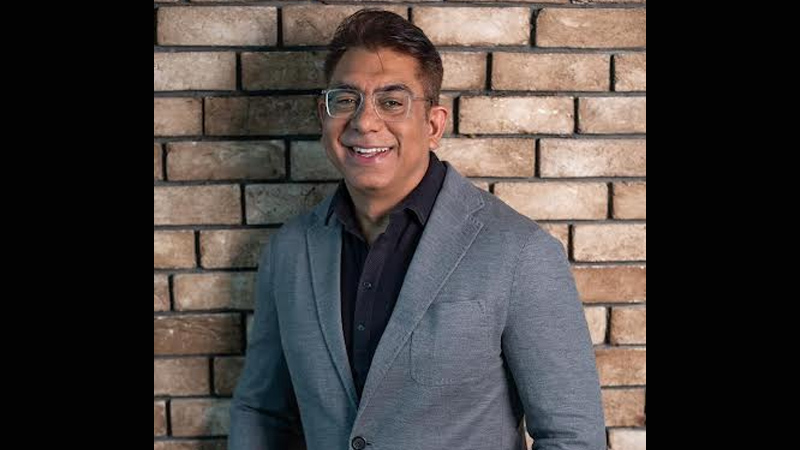
    “Our collaboration with Chad marks a defining moment in our journey where India will make stories for the world,” said Studio Blo co-founder and CEO Dipankar Mukherjee. “We’re using our proprietary AI tech stack as a creative collaborator with the finest global talent. Chad’s expertise will help us craft AI-first stories that are emotionally rich, visually stunning and globally resonant.”

    Greulach, for his part, sees the partnership as the future in motion. “The future of entertainment lies at the crossroads of technology and creativity, and Studio Blo is right at that intersection,” he said. “Dipankar and his team aren’t just experimenting, they’re reimagining storytelling itself. Together, we’ll build entertainment IPs that fuse human artistry with machine intelligence to captivate audiences everywhere.”

    As AI reshapes every frame of the creative process from script to screen Studio Blo is positioning itself as India’s breakout player in the global AI entertainment ecosystem, proving that the next big Hollywood story might just be coded in India.

    With this alliance, Studio Blo isn’t just crossing continents, it’s blurring the line between imagination and innovation, showing that in the world of film, even intelligence can be artificial but emotion never is.
     

  • Hulu goes global as Disney drops Star and overhauls its streaming app

    Hulu goes global as Disney drops Star and overhauls its streaming app

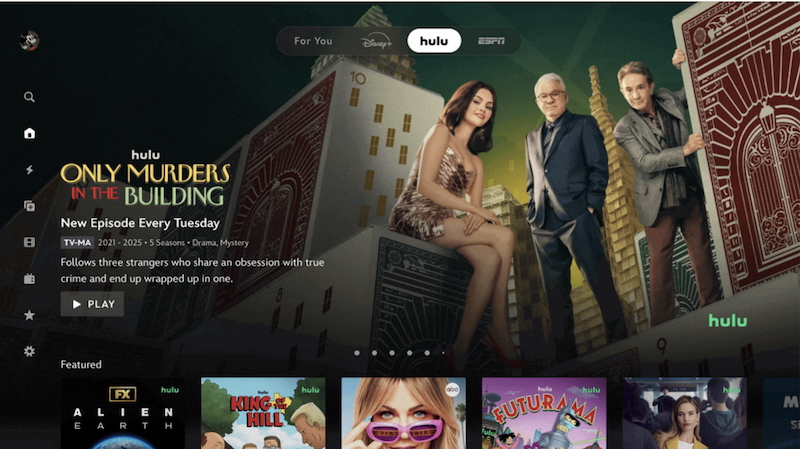
    BURBANK: Disney is ditching Star. From 8 October, Hulu—until now available only in America and Japan—will become the entertainment brand for adult content on Disney+ in international markets. The move sets the stage for a full merger of Disney’s streaming apps next year, as the media giant tries to simplify its cluttered digital offering.

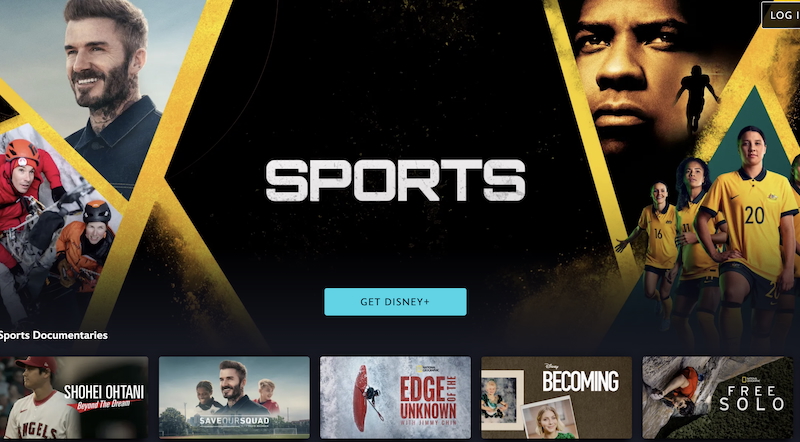
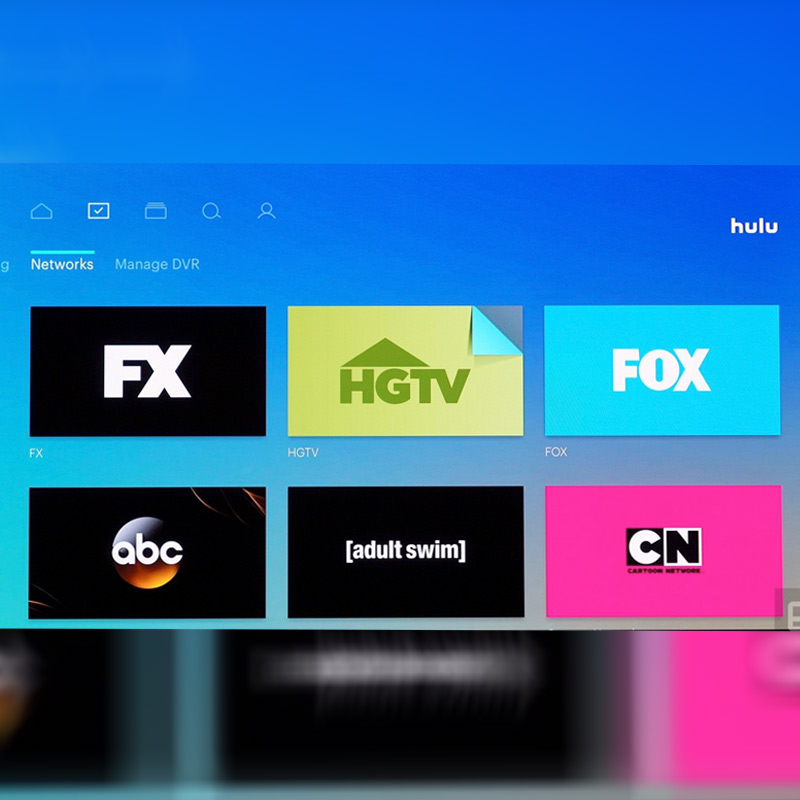
    The rebrand comes with a sweeping redesign of Disney+. Subscribers will encounter a new “For You” landing page, powered by algorithms that promise to learn viewing habits over time. A navigation bar across the top splits content by service—Disney+, Hulu and ESPN—whilst a “Live” hub corrals news, sports and round-the-clock streams into one place. New badges will flag season finales, fresh series and recently added films.

    Behind the scenes, Disney has rebuilt its recommendation engine from scratch. The new system will surface personalised suggestions across the platform, with user profiles made more prominent to keep viewing habits separate. The homepage gets a visual refresh too: a video carousel replaces static images, brand rows showcase the latest releases with cinematic artwork, and the overall design aims for something sleeker and more modern.

    Mobile users will see widgets arrive on iOS devices, offering one-tap access to shows and films. Disney promises “mobile-first” features in the coming months, though it has kept details vague. The company describes these changes as merely the opening salvo, with more updates planned before the unified app launches next year.

    The timing is no accident. Disney has been haemorrhaging money on streaming—its direct-to-consumer division lost $512m in the most recent quarter—and needs to cut costs whilst growing subscribers. Consolidating brands and improving discovery could help keep viewers hooked, reducing the churn that has plagued the industry. Whether audiences embrace the changes or simply long for the days when finding something to watch wasn’t quite so algorithmic remains to be seen.

  • Disney’s magic numbers: Q2 2025 earnings cast a spell

    Disney’s magic numbers: Q2 2025 earnings cast a spell

    MUMBAI: The Walt Disney Company’s Q2 2025 earnings have delivered a star-studded performance, with revenues climbing seven per cent to $23.6 billion, driven by robust gains in entertainment and experiences. But it wasn’t all smooth sailing — sports struggled with soaring production costs, keeping the magic somewhat grounded.

    In the spotlight, Disney’s entertainment segment sparkled with a 61 per cent surge in operating income, hitting $1.3 billion. Direct-to-consumer revenues also soared, thanks to a 2.5 million bump in Disney+ and Hulu subscriptions, pushing the combined total to 180.7 million. The much-talked-about Disney+ subscriber base alone rose to 126 million, an addition of 1.4 million from the previous quarter.

    However, the sports division played a tougher game. Operating income tumbled by $91 million to $687 million, primarily due to bloated programming costs, which included airing three extra college football playoff games and an additional NFL clash. ESPN’s domestic advertising revenue shot up by 29 per cent, but it wasn’t enough to offset the spending blitz.

    Disney’s crown jewel — its experiences division — continued to enchant. Segment operating income hit $2.5 billion, a nine per cent rise, as domestic parks saw a 13 per cent boost in income, driven by higher spending and increased attendance.

    Net income soared to $3.4 billion from just $216 million a year ago, with adjusted earnings per share (EPS) hitting $1.45, a 20 per cent year-on-year jump. Free cash flow surged over 100 per cent to $4.9 billion, thanks to lower tax payments and tighter cost control.

    But not everything was a fairy tale. Disney’s Star India JV posted a $103 million loss, reflecting ongoing challenges in the competitive Indian market. There was also a equity loss from India JV of ~$300 million driven by purchase accounting amortisation. Amounts for the current period include impairment charges related to the Star India transaction ($143 million) and content ($109 million). Tax expense in the current period includes the estimated tax impact of these charges and a non-cash tax charge of $244 million related to the Star India transaction. Amounts for the prior-year period include impairments of goodwill ($2,038 million).

    Looking ahead, Disney is waving its wand at a 16 per cent rise in adjusted EPS for the full year, expecting $5.75 per share, as it bets on double-digit growth in entertainment and a fresh direct-to-consumer push with ESPN’s new offering.

    Disney’s CEO Bob Iger summed it up: “Our outstanding performance this quarter underscores our continued success building for growth and executing across our strategic priorities. Overall, we remain optimistic about the direction of the company and our outlook for the remainder of the fiscal year.” 

  • US Streaming platforms achieve record share of television viewing in Nielsen Report

    US Streaming platforms achieve record share of television viewing in Nielsen Report

    MUMBAI: Nielsen’s March 2025 report on The Gauge indicates a shift towards more seasonal television viewing patterns in the US. Overall television viewing declined by six per cent compared to February, influenced by seasonal changes. However, the streaming category continued its growth, capturing 43.8 per cent of total TV usage in March, a 0.3 percentage point increase from February.

    NIELSEN'S VIEWING

    A notable finding is that for the first time in a monthly Gauge report, the top ten most-watched streaming programmes originated from seven different platforms: Prime Video, Hulu, Disney+, Max, Paramount+, Netflix, and Apple TV+. Max experienced the largest month-over-month growth among streaming services, increasing by six per cent, primarily driven by viewership of The White Lotus. YouTube also achieved a new platform record for the second consecutive month, accounting for 12 per cent of total TV watch time, despite a slight decrease in viewing hours compared to the previous month.

    Cable television benefited from the NCAA men’s basketball tournament in March. Cable’s share of viewing rose to 24 per cent, a 0.8 percentage point increase, supported by a 29 per cent rise in cable sports viewing and consistent viewership for cable news. The most-watched cable sports broadcasts included NCAA Elite Eight games on TBS. Cable news programmes represented seven of the top ten cable telecasts, with Fox News Channel’s coverage of the presidential address on 4 March  attracting 11 million viewers on the network and over 36 million viewers in total.

    TOP STREAMING SHOWS

    The broadcast category saw strong performance with ABC’s broadcast of The Oscars on 2 March, which was the most-watched programme in March with 20.3 million viewers across ABC and Hulu. Data indicated that viewers streaming the Oscars on Hulu were significantly younger compared to those watching via traditional broadcast. Scripted dramas accounted for 28 per cent of total broadcast viewing in March, with Tracker on CBS having five of the top ten broadcasts, each averaging over 10 million viewers. However, the absence of football contributed to an overall nine per cent decrease in broadcast viewership from February, resulting in a 20.5 per cent share of total TV viewing for the month.

  • Disney advances live streaming ad technology in the US

    Disney advances live streaming ad technology in the US

    MUMBAI: The Walt Disney Co has launched new advertising technology integrations to enhance live streaming monetisation on its platforms earlier this week. Advertisers can now programmatically bid on live inventory across Hulu and Disney+, including ESPN and ABC News content, through Disney’s proprietary ad server and Google’s Display & Video 360.

    Senior vice president of ad platforms Amy Lehman highlighted the advancement in ad technology, enabling automated workflows for live ad inventory. Senior vice president of addressable sales Jamie Power confirmed that platforms like Google’s DV360, The Trade Desk, Yahoo DSP, and Magnite are now certified to leverage viewership spikes during live events.

    The integration of Google’s Display & Video 360 instant deals via Disney’s real-time ad exchange (Drax) allows for rapid deal creation, streamlining the buying process. This builds on the existing Drax direct integration.

    Disney is also deploying dynamic ad insertion (DAI) for live events on Disney+, extending the technology already available on Hulu, to enable personalised ad experiences. Lehman emphasised Disney’s leadership in live streaming, combining technological expertise with ad technology to meet market demand.

    This move allows advertisers to target audiences during live events with increased efficiency and precision

  • Bitmovin streams ahead with AI-powered Ad analytics & real-time insights

    Bitmovin streams ahead with AI-powered Ad analytics & real-time insights

    MUMBAI: Bitmovin is rewriting the rules of video streaming with two cutting-edge enhancements to its Analytics platform Server-Side Ad Insertion (SSAI) Analytics and Real-Time Observability. These tools are designed to help streaming providers fine-tune their ad strategies and proactively address quality issues before they impact viewer experience.

    According to Bitmovin’s eighth Annual Video Developer Report, ad insertion remains the streaming industry’s biggest headache, even as advertising emerges as the top opportunity for innovation. SSAI, a widely adopted architecture for ad monetisation, often comes with technical roadblocks. Bitmovin’s SSAI Analytics aims to clear those hurdles by offering real-time debugging and deep insights into ad performance. The tool provides precise metrics on ad plays, viewer engagement, abandonment rates, and performance across devices and streaming formats.

    “Advertising-based models have surged in popularity, but implementing SSAI successfully has remained a major challenge,” said Bitmovin CEO and co-founder Stefan Lederer. “With SSAI Analytics, our customers gain real-time engagement data and troubleshooting capabilities, ensuring maximum revenue potential from ads.”

    But Bitmovin isn’t stopping at advertising. The company’s Real-Time Observability feature is transforming video analytics from reactive troubleshooting to proactive quality control. Instead of waiting for complaints, streaming providers can now detect and resolve potential issues before they affect viewers. Advanced filtering options allow operators to pinpoint disruptions across different devices, networks, and streaming environments, significantly reducing churn and improving audience retention.

    “Real-Time Observability shifts the paradigm from damage control to prevention,” Lederer added. “By offering unparalleled insights into streaming infrastructure, we empower providers to deliver flawless viewing experiences.”

    Bitmovin, a pioneer in the streaming industry with over 400 global clients including BBC, Hulu, fuboTV, and Discovery has built a reputation for firsts, from developing the world’s first commercial adaptive streaming player to its software-defined encoding service that runs seamlessly across any cloud platform. With SSAI Analytics and Real-Time Observability, the company continues to push the boundaries of streaming technology, helping platforms boost engagement, reduce churn, and monetise content more effectively.

    For an industry hungry for innovation, Bitmovin’s latest advancements promise smoother streams, sharper ads, and fewer frustrations both for providers and their audiences.


  • Six US media firms account for 51 per cent of global content spends: Ampere Analysis

    Six US media firms account for 51 per cent of global content spends: Ampere Analysis

    MUMBAI: The big media and entertainment boys are at it, despite all round murmurings that the content production business is seeing a massive slowdown. At least, that’s what new intelligence from Ampere Analysis has revealed. 

    The research firm stated that while recent market challenges have impacted the TV and film production landscape, spending across the top six global content providers – Disney, Comcast, Google, Warner Bros. Discovery, Netflix, and Paramount Global – has grown since the pandemic. Combined spending across these groups will reach a new high of $126  billion in 2024 and account for 51 per cent of the total content spend landscape, up from 47 per cent in 2020. Original content spend remains the leading spend type across these providers, accounting for over $56 billion in investment and 45 per cent of their total spending since 2022.
    Despite announced cutbacks among its linear and theatrical brands, Disney remains the largest contributor to the media landscape at 14 per cent of global investment in TV and film content in 2024. This has been supported by the full acquisition of Hulu at the beginning of 2024, adding an additional $9 billion in to Disney’s spend total.

    Netflix is the top investor in global streaming content. It has averaged a total of $14.5 billion in annual investment in original and acquired programmes since the pandemic. Further growth is expected in 2025 through the acquisition of sports tights for NFL matches and WWE entertainment.

    In total, $40 billion of the $126 billion is currently spent on these six operators’ subscription streaming services (including Disney+, Peacock, and Paramount+). This highlights the growing importance of these platforms as audiences move away from linear television in favour of the convenience and expansive catalogues available via streaming.

    Google’s contribution to the content market comes via YouTube, and investment in programming through its revenue-sharing arrangements with content creators. While a different entity to other TV and film groups, YouTube continues to build its global presence through partnership deals with major content owners, making it the third largest contributor to the content landscape.

    Despite production shutdowns caused by the US writers’ and actors’ strikes, streamers have continued to support the production landscape by pivoting towards more global strategies. International (non-US originating) programming accounts for 40 per cent of Paramount+’s and 52 per cent of Netflix’s spend in 2024. Such content is typically cheaper to produce, and effective in motivating new and niche audiences to subscribe to a platform, supporting revenues.

    “Ongoing investment by major studios and streaming platforms into new programming will be key to keeping audiences engaged and entertained. We can expect the content landscape to see low-level growth in 2024 as production schedules recover from disruptions caused by the pandemic and the writers’ and actors’ union strikes. Looking forward however, overall growth in spend is set to plateau as companies look to refocus their output. This will include limiting commissioning volumes and prioritising strategic investments and profitability to counter the current challenges of the media market,” said Ampere Analysis investment analyst Peter Ingram, in his recent analysis made public today. 

    Pix Courtesy: The Walt Disney Company

  • Banijay Asia brings NBCUniversal’s ‘Monk’ to India on Disney+ Hotstar

    Banijay Asia brings NBCUniversal’s ‘Monk’ to India on Disney+ Hotstar

    Mumbai : Banijay Asia announced the Indian adaptation of NBCUniversal’s iconic detective series Monk.

    The adaptation will revolve around Adrian Monk, a detective with obsessive-compulsive disorder and his assistants Sharona Fleming and Natalie Teeger. Monk works with the San Francisco Police Department in solving unconventional cases while investigating his wife’s unsolved murder. The plot also explores the main characters’ personal lives and struggles.

    The Indian adaptation of the series is already in production and will stream exclusively on Disney+ Hotstar and Hulu. This marks the first Asian adaptation of the format and the second worldwide, following the Turkish version. Monk originally aired on USA Network in the United States and is licensed globally by NBCUniversal Formats, which is part of Universal International Studios, a division of Universal Studio Group.

    Banijay Asia & Endemol Shine India founder & group CEO Deepak Dhar said “We are incredibly excited to partner with NBCUniversal Formats to adapt Monk for the Indian audiences. The original series has set a new benchmark for character-driven mysteries, and we believe our adaptation will resonate similarly. With a stellar cast in place, we are confident about doing justice to the iconic characters. The production has been progressing seamlessly, and we look forward to showcasing this exciting project on Disney+ Hotstar, thus taking our long and fruitful association one step ahead, as we continue to bring high-quality and engaging content to Indian audiences together.”

    Disney+ Hotstar (Hindi) business head HSM and content head, Sumanta Bose shared his excitement about the collaboration, stating, “We are thrilled to partner with Banijay Asia and NBCUniversal Formats to bring this award-winning series to the Indian audience. Monk is an exciting fit for our platform, with its captivating mix of humor, mystery, and emotional depth. We have attempted to make this adaptation feel rooted and Indian, and thus uniquely fresh for our audiences including those who may have seen the original.”

    NBCUniversal Formats SVP, Format sales & production, Ana Langenberg added, “It’s wonderful to see Monk finding a home with Indian audiences. The show’s charm has connected with viewers around the world, and with trusted partners like Banijay Asia & Disney+ Hotstar, we know this adaptation will capture the heart of the original while embracing a new cultural backdrop. We’re eager to see this beloved series brought to life in India.

  • Quo vadis Disney+Hotstar?  Quo Vadis JioCinema?

    Quo vadis Disney+Hotstar? Quo Vadis JioCinema?

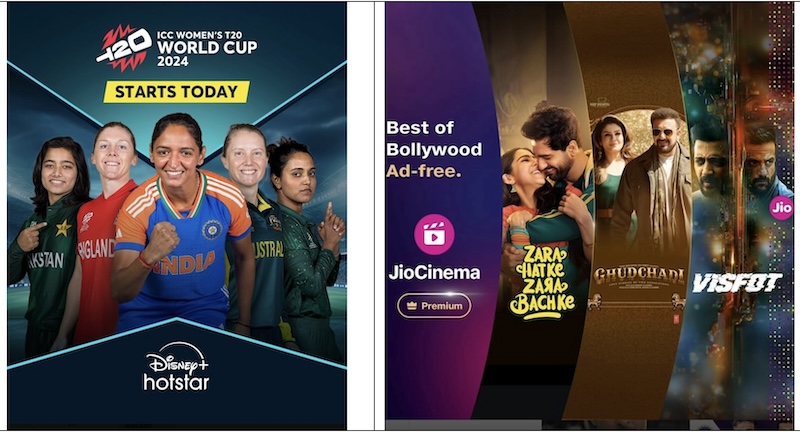
    MUMBAI: Will the joint venture between Reliance’s Viacom18 and Disney Star India result in the integration of   their respective streaming  platforms – JioCinema and Disney+Hotstar – into one?  Speculation has been running rife, and various guesses have been made.

    Initial predictions were that Disney+Hotstar would become a button on the JioCinema app. When Reliance acquired Viacom18, it had merged three streaming services under it – Voot, Voot Select, Voot Kids  – into JioCinema.  The reasoning was that Disney + Hotstar would meet the same fate, at that time.

    Then media reports appeared stating that the two would stay as separate streaming services, one for sports and the other for entertainment.

    Other pundits  had followed up theorising that premium content  would move to  Disney+Hotstar and it would continue as an SVoD service, and JioCinema would end up being the AVOD product. More  guesses followed that it would be the other way round, with JioCinema becoming the premium SVOD offering and Disney+Hotstar being the AVOD one.

    Now a report in The Economic Times has stated that sources close to the matter told the newspaper that JioCinema’s fate has been decided. That Disney + Hotstar is going to be the sole  streaming platform  that will be left after the merger because of its superior technological backend and infrastructure.

    The report also cites download numbers from the Google Play store for Disney+Hotstar which stood at 500 million and for JioCinema that were at a much lower 100 million. Disney+Hotstar, according to the ET report, had 335 million active users in Q4 2023, while JioCinema (according to Reliance’s annual report)  had reached an average 225 million monthly users. Finally, Disney+Hotstar had 35.5 million paid subscribers of June 2024 much lower than the 61 million it had when it streamed the IPL and HBO shows.

    Which way will Reliance and Disney+Hotstar swing? No confirmation or direction was given by either Reliance or Disney+Star India. Neither to ET or to any other publication.

    But let’s look at how the mouse house is working with its three major services in the US, Disney+, ESPN+ and Hulu.  It offers Hulu with advertising at $10.99 a month; Hulu with no ads at $18.99 a month. Disney+  premium is offered at $13.99 a month ($139.90 per year); Disney+ standard at $9.99 ($99.90 a year) and Disney+ standard with ads at $5.99 a month. Then it offers different bundles. Disney+ and Hulu with ads at $10.99 a month. Disney+ and Hulu with no ads at 19.99 a month. The Disney+, Hulu and ESPN+  trio basic bundle with ads is available at $16.99 a month whereas the same package  with no ads can be bought for $26.99 a month.  A  Disney+, Hulu and Max bundle with ads is available for $16.99 a month;  the same without ads costs $29.99 a month.

    In March 2024, Disney+ started putting content from Hulu (which has a slight adult tilt to its programming and is geared for a general audience as compared to Disney+ which is more family oriented)   onto its app with films and shows from the latter coming alongside the Disney+ offerings.

    Disney+ had 150 million  subscribers as of December 2023 and Hulu nearly  50 million.  That  pales compared to Netflix’s latest subscriber numbers at 282.5 million, but it shows that there are many ways that streamers can be targeted and sold to  subscribers.

    Yes, the Indian consumer is a totally different beast, many may argue and she/he prefers simplicity. But throw in a deal that gives them a financial advantage and they are quite likely to go for it.

    So have we heard the last of what lies ahead for Disney+Hotstar and JioCinema? 

    Until the duo or one of the two or Uday Shankar comes on record, we, at indiantelevision.com believe we might still see some more permutations and combinations being considered before a final announcement is made. 
     

  • Disney+’s big bet: A daily telenovela on OTT globally

    Disney+’s big bet: A daily telenovela on OTT globally

    MUMBAI: 11 October marked a new way of program scheduling for Disney+. The streamer dropped five episodes of drama series Return to Las Sabinas on its service  in Spain and all over the world  (in India, viewers can watch it on Disney+Hotstar ) and on Hulu in the US. So what’s new about this? 

    What is new about Return to Las Sabinas is the gutsy decision that Disney+ Spain vice-president original production Sofía Fábregas  has taken. Episodes of the telenovela drama are being dropped  daily weekday morning for the next 65 days for the 70 episode series. (For diehard melodrama viewers: in India daily episodes are being introduced Monday to Friday at 12:30 pm with English subtitles .)

    While that is pretty déjà vu for television viewers and programmers in India, for the Spaniards to use the television daily drop routine on an OTT platform is pretty daring. 

    “It’s yet to be confirmed if it’s going to be a success or not, but Disney was willing to take the risk to be the first with something that was both established, but because nobody had tried it [in streaming], also very new,” Fábregas told Deadline.  “We wanted to take something that the audience was accustomed to and put it in an unexpected place.”

    But with Fábregas confessing that it is a big risk, she’s taken steps to at least reduce it by hiring the best to put their might behind the production as well as innovating on production  values. For one, she hired  Banijay Iberia’s Diagonal production company to do the job. Then she roped in  experienced  show runner and creator Eulàlia Carillo  as its executive producer while bringing on veteran Jordi Frades  to helm the show. 

    Instead of the tacky indoor studio sets that telenovelas are normally shot in, she decided to film it on natural outdoor and indoor locations in and around Barcelona  to make it look premium. Each 45 minute episode was shot over two and a half days with two cameras giving it a cinematic look instead of the one day given to normal daily dramas. Post production was also allocated twice the amount that normal dramas get to make the output on screen look snazzy. Writing was given two and a half  years so that the right hook points, cliff hangers could stand out and bring viewers back daily. 

    The series stars top Latino actors like Celia Freijeiro, Andrés Velencoso, Olivia Molina, Natalia Sánchez, Nancho Novo, and María Casali. 

    The story follows two sisters, Gracia and Paloma, who return to their childhood home in Las Sabina to care for their father. Gracia reconnects with her first love, Miguel, who is now engaged to Ester. However, his brother Tano, is still in love with her and refuses to back down. Paloma takes over the family lands and clashes with landowner Paca Utrera, who has a nefarious plan for the town. In the meantime, the girl’s father, Emilio, attempts to reconcile with his daughters, but a hidden secret complicates his efforts. 

    Sounds familiar? Like many other telenovelas or drama series? 

    Frades told Deadline that the idea is not to have a very different plot. “We want the people to find love, passion, drama, comedy and everything they like in a daily show, but maybe with a little upgrade.”

    Even Carillo accepts that. Speaking to Deadline he said:  “It starts, as any other fiction does, with a question: What would you be willing to forgive? The series is about forgiveness and second chances. It’s also about first love and how it impacts on our lives, and also new loves and how we find love even when we don’t expect it.”

    Fábregas  told Deadline that she’s going by her gut. She said:  “I would say it’s a bet, and let’s see if we win,” she noted. “It is a bet because we haven’t done it yet, not us or not the other streamers. We’re programming against other streamers. Could it change the rules? Potentially, yes. Maybe in five years all the streamers will have programming like this.”

    Or could it happen earlier?