Tag: HUL

  • Sudhir Sitapati moves on from HUL, to be replaced by Srinandan Sundaram

    Sudhir Sitapati moves on from HUL, to be replaced by Srinandan Sundaram

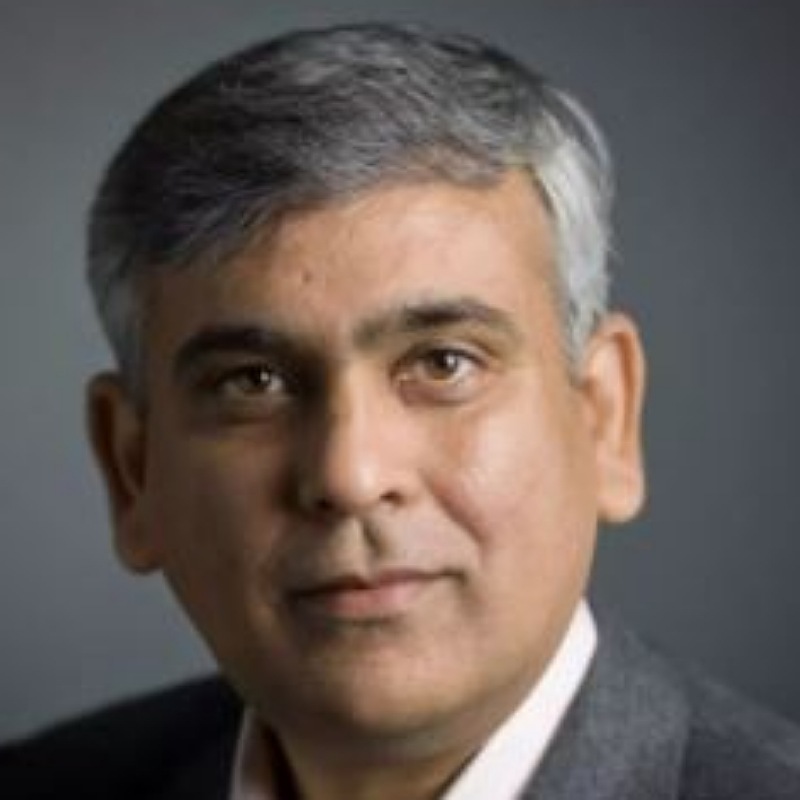
    NEW DELHI: Hindustan Unilever (HUL) executive director foods and refreshment Sudhir Sitapati is moving on from the FMCG major. He will be replaced by Srinandan Sundaram, currently executive director – customer development. The appointment will be effective 1 July 2021.

    Sitapati is leaving the organisation to pursue an external opportunity.

    He joined HUL as a management trainee in 1999 and has successfully managed roles across sales and marketing. As executive director – foods and refreshment, he led the transformation of the brand’s Tea portfolio into a purpose-led category that regained market leadership and gained shares for the last three years.

    During his tenure, he also led the merger of Adityaa Milk and more recently, GSK Consumer Healthcare business into HUL, bringing iconic brands like Horlicks and Boost into the Unilever family. The Unilever Food Solutions business was also rewired and transformed into a growth engine.

    Sundaram joined HUL as a management trainee in 1999 and over the last 22 years, has had a strong track record in both customer development and marketing. In his current role, Srinandan has been at the forefront of bringing in leading-edge technology and transforming the company’s CD organisation into a high tech – high touch team. The Shikhar app, launched under his leadership, has lent a competitive edge to the business, especially during the pandemic and is the largest eb2b app in India today.

    HUL chairman & MD Sanjiv Mehta said, “I would like to thank Sudhir for his immense contributions to the company over the last two decades. We cherish iconic ad campaigns like Daag Acche Hain and Swad Apnepan Ka that were created under his leadership. He played a pivotal role in the merger of GSK CH into HUL. I wish him the very best as he embarks on a new chapter in his career. I am delighted with the appointment of Srinandan as head of foods and refreshment and I’m certain that he will take the business to the next level of performance.”

  • Covid relief: India Inc shows it cares, puts employees’ wellbeing before profits

    Covid relief: India Inc shows it cares, puts employees’ wellbeing before profits

    MUMBAI: As the second wave of Covid2019 batters the Indian subcontinent, there is little doubt that we are staring at a humanitarian disaster of humongous proportions. Even as the country struggles to cope with what is possibly a deadly new variant of the Coronavirus, organisations are going out of their way to show solidarity with their workforce.

    Recently, Reliance Industries announced that it has decided to give employees their entire bonus for 2020-21, acknowledging their commitment to the company in a challenging year. It also launched an inoculation drive for all its employees, their family members, and stakeholders from Friday.

    Earlier, FMCG major HUL announced it will cover for the vaccination of around three lakh people, which include not only its employees and their families but also those in its extended ecosystem.

    Across India, as cases surge and precious lives are being snuffed out, companies are pressing the pause button on chasing quarterly targets and are instead going the extra mile to help afflicted employees and their loved ones.

    Showing empathy  through enhanced employee benefits

    Many companies have become generous with employee benefits and leaves, granting special wellness leaves, vaccination leaves, and reduced work-day weeks for their employees, along with providing staff access to mental and health care services.

    Online food delivery platform Swiggy has rolled out a four-day work week for employees for the month of May, keeping in mind the mental and physical well-being of its employees. Workers have also been given the flexibility to choose the four days they want to work in a week.

    Companies like Tata Steel, Google, Amazon, Schneider Electric, Deloitte and more have provided their employees with 14 special sick leaves for them to recuperate and recover.

    Some companies like ITC, Optum and Phillips have provided their employees with unlimited leave policies. These companies have allowed the affected ones to rest with a clear-cut mandate of not to resume work until they recover.

    According to Human capital solutions and services provider GI Group India VP & head HR Upasana Raina, “The mental well-being of everyone in the organisation is key to each person’s individual success that finally ties up into the success of the collective.” She added that apart from ensuring that 100 per cent of their workforce has WFH facility, the agency also “encourages employees to take time for themselves to strike a healthy balance between work and family.”  

    Personal finance app Branch has also implemented the “unlimited paid time off for dealing with the physical and emotional trauma”. Branch India MD Sucheta Mahapatra says, “With the second wave, we understand that most employees are physically and mentally affected either personally or in their social circles. The health coverage will now cover Covid Related hospitalisation. We have internally formed a Covid employee taskforce to evaluate and work on various work streams to support employees during these times.” 

    Telecom and IoT services provider Teliolabs CEO Amit Singh says, “We have formed a Covid response team with a doctor, finance, HR and system admin teams to ensure proper help to the team members in case of any Covid related query, hospital admissions etc. We are also extending our medical insurance and term insurance policies for better coverage in these difficult times.” This is in addition to giving paid leave to employees falling sick owing to Covid.

    Insurance tech provider SE2 Digital Service LLP head HR Sumit Bhatia shares some of the initiatives the company has put in place to ensure their employees are safe and reassured during the pandemic situation: “Reimbursement of RTPCR tests and vaccination costs, health insurance that includes Covid related hospitalisation, 24×7 free doctor access, stress management (EAP) support, 14 days of special Covid leaves in case any associate is detected positive, and in the unfortunate scenario of an associate’s demise due to Covid – monetary coverage for family (beyond Term Life Insurance)- SE2 will pay the associates’ full one-year salary (including 100 per cent of the variable pay) or Rs 10 lakh (whichever is higher) to the family.”

    AI-driven online automobile marketplace Droom has announced a Rs 1 crore budget to combat Covid for its employees and dealers’ community. It has launched programs for its 20,500+ dealers to assist in pharmaceuticals, vaccination, medical assistance and provide isolation wards with basic medical facilities. It has also increased its medical insurance coverage by five times this year, providing medical coverage group insurance for employees’ parents, and has even launched a telemedicine consultation for mental and physical health free of cost.

    Converting office spaces into Covid isolation & vaccination centres

    Besides providing benefits, some companies have taken a step further and converted office spaces into isolation centres and hospitals for employees and their kin.

    HDFC Bank has converted three of its training centres in Gurugram, Bhubaneswar and Pune into isolation facilities for its Covid-affected employees. These facilities have been equipped with first-line assistance and will have round the clock nurses and visiting doctors. The facilities include setting up vaccination camps. In addition, it has also tied up with many hotels across the country to provide isolation facilities, basic amenities and basic medical checks.

    Similarly, TCS has set up Covid Care Centers across 11 cities in India and entered into arrangements with hotels that have hospital tie-ups. Employees and their families can avail emergency medical financial assistance, apart from the health insurance facilities offered. In fact, many IT firms are setting up hospital beds in their campuses with oxygen and ventilator support to support employees and their families to deal with the acute shortage the country is facing.

    Droom has also converted its Sector 15 office into an emergency response center with telemedicine services, nurses, and all basic healthcare facilities.

    Further, Amazon, ITC, Capgemini, RPG Group, and Cognizant have also set up Covid-care centres either on their own, or through tie-ups with hotels or hospitals at this critical time when the country’s healthcare system is getting overburdened.

    Bry-Air, DRI and Artemis have organised vaccination camps for their employees, while Fortis recently arranged drive-thrus for Panasonic, Jindal Steel, Coforge, Honda Motorcycles and Scooters.

    IT majors like TCS, HCL Tech, Tech Mahindra, Infosys have introduced Covid201919 test centres to help their staff avoid exposure by visiting crowded test centres and waiting in long queues.

    Assuring monetary aid

    Companies are also taking measures to ensure the long-term financial stability of their staff and their families. Zomato announced that it would provide 100 per cent of the deceased employee’s income for two years to the family. Paytm’s Vijay Shekhar Sharma said the company will continue to pay salaries to the families of deceased employees throughout the current financial year

    Cars24 CEO Vikram Chopra recently won a lot of love on social networking site LinkedIn for an internal mail he sent out to all his employees urging them to buy whatever it was that they needed for the treatment of themselves or a family member, without worrying about its price.

    He wrote, “Need oxygen or medicines but only available in black at a very high price and without any proof? Please just buy whatever you need, from whatever source you get it. Don’t worry about a proof to be produced to the company or how it costs,” adding “Send us an email and we will transfer money asap.” He further wrote that the company will also try to arrange medicines, or oxygen and whatever else is required, while stressing that “We will pay you advance or reimburse all costs, whichever is faster. I repeat, no proofs required.”

    Setting up Covid helpline & resource access  

    Software giant, TCS has set up a Covid help desk for employees to seek any assistance required, along with a 24×7 TCS Medical Hotline to reach doctors and TCS Cares services for counselling.

    HDFC Bank too is providing e-consultation with doctors through apps including Apollo 24/7, MediBuddy, PharmEasy Apps, with PharmEasy helping with delivery of medicines as well. Additionally, the bank has also provided access to e-consultation with empanelled psychologists through these apps.

    Several companies, including PricewaterhouseCoopers, Accenture, Grofers, Cars24, Deloitte have announced that they will sponsor the cost of vaccines for their employees and some for their families as well.  
  • HUL Q4: Net profit up 41%; health, hygiene & nutrition portfolios drive growth

    HUL Q4: Net profit up 41%; health, hygiene & nutrition portfolios drive growth

    NEW DELHI: FMCG major Hindustan Unilever (HUL) reported a good set of numbers on all fronts for the quarter ending 31 March 2021. Beating market estimates by a significant margin, net profit surged 41 per cent to Rs 2,143 crore on the back of a solid 16 per cent volume growth.

    Revenue grew by 34.6 per cent year-on-year to Rs 12,132 crore during Q4. Domestic consumer growth was at 21 per cent.

    For the fiscal 2020-21, the consumer goods company said its consolidated net profit was at Rs 7,999 crore, as compared to Rs 6,756 crore in 2019-20, a growth of 18 per cent. Consolidated total income for FY21 was at Rs 47,438 crore, as against Rs 40,415 crore in FY20.

    Health, hygiene and nutrition, which makes up 80 per cent of business, grew in double-digits for the third consecutive quarter, while discretionary and out-of-home categories improved sequentially, the company said.

    Home care growth at 15 per cent was enabled by a strong recovery in fabric wash. Household care continued its strong performance delivering double-digit growth. Liquids and fabric sensations continued to outperform, benefitting from robust market development initiatives, stated HUL.

    “Our in-quarter performance was strong on both the top-line and bottom-line. Despite challenging times, in FY21 our business ecosystem has withstood the disruption and demonstrated agility and resilience across the value chain,” said HUL chairman & MD Sanjiv Mehta. “We have delivered on our multi stakeholder business model. Our purpose-led brands and capabilities were further strengthened during the year and this positions us well to serve our consumers during this turbulent period.”

    The company’s focus will firmly remain behind delivering volume led competitive growth, he added.

    Mehta went on to say that the recent surge in Covid cases is of serious concern and “ensuring safety and well-being of people remains our top priority”.

  • Amit Jain named chairperson of MMA India board of directors

    Amit Jain named chairperson of MMA India board of directors

    MUMBAI: MMA, formerly known as the Mobile Marketing Association, has appointed L’Oréal India managing director Amit Jain as chairperson of its India board of directors.

    Jain succeeds Priya Nair, who is the executive director – beauty and personal care at Hindustan Unilever. Nair will move into a new role as chair emeritus of MMA India.

    “MMA has been doing stellar work in helping marketers use insights and tools to harness the convergence of marketing and technology to drive personalised and customised engagement, in line with evolving consumer needs and purchase behaviour. I am delighted to take on this role and lead MMA’s commitment to shape the future of marketing today by bringing brands closer to consumers through connected consumer journeys," Jain said.

    MMA India country head Moneka Khurana added, “Amit Jain’s business leadership, progressive outlook and experience in managing credible boards will help in shaping the future of Modern Marketing for MMA India at a time when it’s central to all marketers to drive business ROI, customer engagement and innovations.”

    MMA Asia Pacific managing director Rohit Dadwal said "Amit Jain’s deep knowledge of digital marketing in the 21st century will prove invaluable to the furthering of MMA’s mission in advancing modern marketing in India. I look forward to working with Amit and would like to thank Priya for her invaluable contribution and for paving the way forward.”

  • Slow down with a cup of tea, says Brooke Bond Taj Mahal

    Slow down with a cup of tea, says Brooke Bond Taj Mahal

    MUMBAI: We live in a world that celebrates speed, where keeping busy is how we measure our happiness. We passionately make plans and feel delighted in chasing them. But the truth is, that life’s most rewarding moments aren’t found in grand plans or great adventures. Instead, they are found when we are in our own company, breaking away from our schedules, even if it's just for a while. It is these hidden moments that Taj Mahal Tea urges us to find.

    With its new television commercial, aptly titled Fursat Waali Chai, the brand reminds us to hit the pause button when life becomes too hectic – to allow oneself a moment of peace and to uncover the magic in the mundane. Featuring the famed classical vocalist Nirali Kartik, the film showcases a charming conversation between her and a steaming tea kettle, wherein the tea poetically cajoles her into taking a break from her practice to savour a cuppa. Soon, Nirali gives in to temptation and enjoys sipping tea by herself while soaking in the sights and sounds of the palatial garden.    

    Along with being a visual delight, it's also the film’s soulful music that adds to the grandeur. The composition that has been created from Raga Asa Mand beautifully lifts the film and highlights the theme of finding magic in solitude.

    Tea & foods (HUL) vice president Shiva Krishnamurthy said, “For 30 years, Brooke Bond Taj Mahal has promoted Indian classical music through memorable and iconic advertising. Through our latest TVC, we urge people to steal moments from their hectic lives and revel in their own company. Nothing could evoke that feeling better than a cup of Taj Mahal tea and the soulful rendition of Asa Mand by Nirali Kartik.”

    Ogilvy India chief creative officers Harshad Rajadhyaksha and Kainaz Karmakar said, “This is a film for the senses. It is a romantic expression of every tea lover’s alone time with their best cup of tea. Music runs through the blood of this brand and will always be a very carefully crafted piece. Nirali Kartik’s voice and Prakash Varma’s vision transport us to some magical moments in this film.”

  • HUL tops personal care & hygiene advertisers on TV, print: TAM AdEx 2020 report

    HUL tops personal care & hygiene advertisers on TV, print: TAM AdEx 2020 report

    MUMBAI: The TAM Adex overview of advertising in the personal care and hygiene sector across TV, print, radio and digital media for the year 2020 has thrown up some significant insights. All four media witnessed a thumping recovery in Q4 advertising over Q1. The trends also reflected the growing importance of handwashing and sanitisation due to the Covid2019 scare.

    The personal care/hygiene sector witnessed 38 per cent growth in television ad volumes in Q4 of 2020, compared to Q1, according to the TAM AdEx overview of the segment across TV, print, radio and digital in 2020. Compared to Q1 of 2020, Q4 witnessed 3X ad insertion growth on digital, while ad space in print witnessed double digit share from November 2020 onwards. Ad volumes for the personal care and hygiene sector grew by 4X on radio in Q4 over Q2 of 2020.

    Television

    Ad volumes of the personal care/hygiene sector on TV increased by seven per cent in 2020 over 2019. Compared to Q1 of 2020, Q4 witnessed 38 per cent growth in ad volumes of this sector. Due to Covid2019, the lowest ad Volumes were observed in Q2, which includes the lockdown period. A drop recorded in personal care and hygiene sector advertising was seen during April 2020 over March 2020 due to the lockdown. However, during September-December 2020, ad volumes on television witnessed a double digit share. The GEC genre topped preference list of personal care/hygiene players during 2020.

    The top three product categories contributed more than 55 per cent to the ad volume share of the personal care/hygiene sector. Top 10 Advertisers accounted for more than 80 per cent share of ad volumes in 2020 with FMCG major Hindustan Unilever (HUL) topping the list. Among the Top 10 brands, five belonged to the toilet soaps category. Top 10 brands accounted for more than 30 per cent share of ad volumes in 2020 with Dettol Toilet Soaps topping the list.

    Print

    Ad space in print witnessed double digit share from November 2020 onwards. Compared to the first quarter of 2020, Q4 witnessed 45 per cent ad space growth in print publications.

    Ad space of the personal care/hygiene sector in print decreased by 19 per cent in last year over 2019. Compared to Q1 of 2020, Q4 witnessed 45 per cent ad space growth. Print ad space recovered to pre-lockdown level within four months of post lockdown period. Ad space in print witnessed double digit share in the months of September, November and December of 2020.

    Fairness creams leads the list of top 10 categories under the personal care/hygiene sector. Top 10 advertisers accounted for more than 65 per cent share of ad space in 2020 with HUL leading the list, followed by SBS Biotech. 

    Among four zones, north topped for personal care/hygiene advertising with 41 per cent share in print during 2020. Mumbai and Kolkata were the top cities in the west and east zone respectively as well as in overall India.

    Radio

    Ad volume for the personal care/hygiene sector on radio dropped by 11 per cent last year over 2019. Q3 of 2020 registered the highest advertising of personal care/hygiene on radio. Due to Covid2019, lowest ad volumes were observed in Q2 which includes the lockdown period. Highest share of ad volumes for personal care/hygiene sector registered during August to October of the previous year.

    Ad volumes for the personal care/hygiene sector grew by 4X in the fourth quarter over second quarter of 2020. On radio, ads for tooth pastes and toilet soaps ruled with more than 45 per cent of the total ad volumes.

    Maharashtra was the top state with 16 per cent share of ad volumes followed by Gujarat with 15 per cent share. Top 10 advertisers accounted for 74 per cent share of ad volume in 2020 with Vicco Laboratories leading the list. 

    Digital

    Ad insertions of the personal care/hygiene sector on digital decreased by 24 per cent in 2020 over 2019. Compared to Q1 of 2020, Q3 and Q4 witnessed 2X and 3X growth in ad insertions, respectively. The highest share on digital was observed during the festive period, that is, October-December 2020, which had 40 per cent share of total ad insertions on the medium.

    On the digital medium, tooth pastes and face wash were the top personal care/hygiene categories, with 24 per cent and 13 per cent share, respectively. The top 10 advertisers accounted for more than 75 per cent share of ad insertions in 2020, with GlaxoSmithkline leading the list.

    The top 10 brands accounted for 47 per cent share of ad insertions on digital in 2020. Sensodyne Rapid Relief topped the list with 11 per cent share of the total ad insertions for the personal care/hygiene sector.

  • HUL to take legal action against Sebamed for recent campaign

    HUL to take legal action against Sebamed for recent campaign

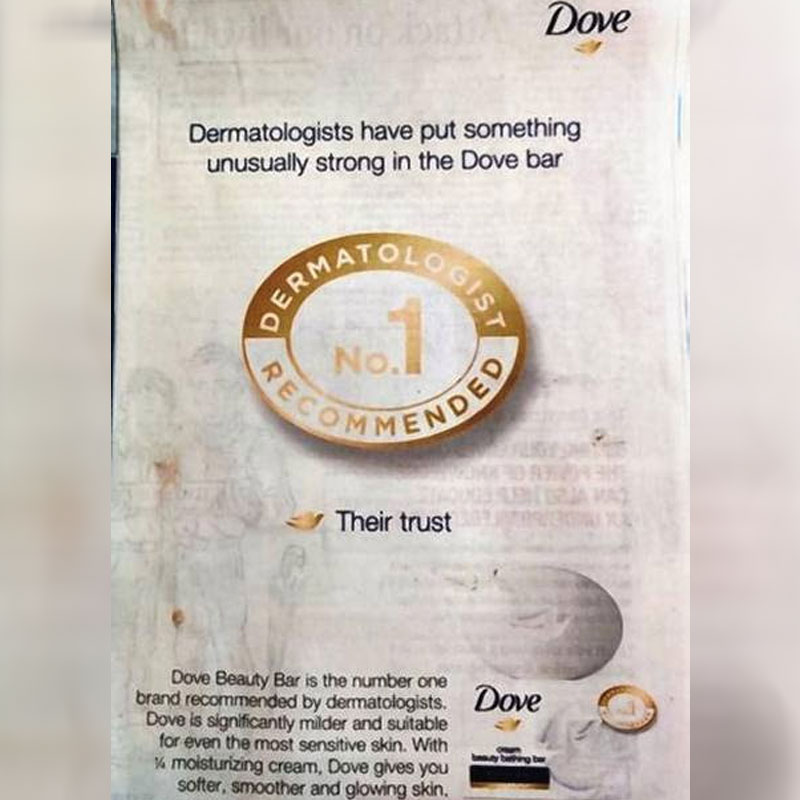
    NEW DELHI: FMCG giant Hindustan Unilever Ltd (HUL) is in the process of filing a legal case against German skincare brand Sebamed for targeting its soap brands Lux, Dove, and Pears in a series of ads released last weekend, media reports suggested. Sebamed in its Filmstars Kee Nahi Science Kee Suno (listen to science, not filmstars) campaign had called out the aforementioned soap brands for their pH levels. 

    "Our brands are best-in-class and deliver fully on the promises…backed by strong tech, science, clinical evidence and decades of expert and consumer-backed testing, enjoying strong brand loyalty. We will take suitable action as we deem fit," HUL has said as per several reports. 

    HUL also responded to the bold campaign by Sebamed, claiming that dermatologists trusted Dove. Sebamed claimed Dove soaps have a pH level of 7, while Pears and Lux have a pH level of 10, same as that of detergent bar Rin. The ads also named Santoor soap. 

    Previously, Sebamed India head Shashi Ranjan had said, “We stand for truth and transparency. During these unprecedented times, our wide portfolio of skin and hair care products with unique pH 5.5 benefit offers the new gold standard to the consumers. We remain  strategically committed to investing in attracting the best talent, creating engaging brand stories and driving  rapid distribution expansion across channels.”

  • GEC ad volumes saw 33% rise in 2020: TAM AdEx

    GEC ad volumes saw 33% rise in 2020: TAM AdEx

    MUMBAI: 2020 was a difficult year for the television broadcast space, courtesy Covid2019 pandemic. Every genre struggled hard to ensure saliency in terms of content generation and maintaining ad volumes. In the early days of the lockdown, GECs were hit the hardest because the production schedules were canned and there was no fresh content. They were forced to rerun the old episodes of popular shows and were unable to create fresh content until the Unlock phase started and that too under strict guidelines. The situation forced the advertisers to rethink their strategy. 

    Television Audience Measurement (TAM) released an analysis on ad volumes and active brands on GECs in 2020.  Ad volumes on general entertainment channels (GECs) last year has grown by more than one fourth over that of 2016, according to the TAM AdEx-Mirroring Y 2020 for advertising in GEC genre. It witnessed 33 per cent rise in 2020 compared to base year 2016. After ad volumes on GECs troughed in the second quarter of 2020 due to the imposition of a nationwide lockdown, they witnessed resurgence during the third and fourth quarter on the back of a gradual Unlock. 

    It also pointed that the month of October and November had the highest ad volume share (10 per cent each) due to the festive period. True Shield Hand Sanitizer was the top brand during the period of April, May, June and August in GEC genre. 

    In 2020, top three channel genres retained their positions compared to 2019, among which the Hindi GEC genre topped during both the periods. The Hindi GEC witnessed a growth of one per cent since 2019. Tamil GEC has continued to take 15 per cent of the pie in both the years. Malayalam and Kannada GEC observed positive rank shift. Top five channels genres accounted for more than 65 per cent share of ad volumes during both the periods.

    The report stated that the count of advertisers and brands dropped by 38 per cent in quarter two of 2020 which recovered by 48 per cent and 58 per cent respectively in quarter four over quarter two. Personal care/personal hygiene sector topped with 25 percent share of ad volumes followed by F&B with 22 per cent share.  Top sectors which included personal care/personal hygiene, F&B and services together added 57 per cent share of ad volumes which were also on top during 2019. The top four sectors also including hair care has dominated the GEC genre in year 2020.

    While the toilet soaps category maintained leading position during 2020, with seven per cent share of ad volumes, ecom-media/entertainment/social media climbed by five spots to achieve the second rank, replacing toilet/floor cleaners. The report highlighted that the top ten categories belonged to food and beverages sector. Biscuits category was the only new entrant in the top ten, replacing hair oils. Positive rank shift was observed in milk beverages and ecom-media/entertainment/social media categories. In terms of growth, hand sanitisers category witnessed highest growth of 10X, followed by range of toiletries with six times growth.

    Among the top advertisers of the year 2020, HUL topped the list followed by Reckitt Benckiser India. Top ten advertisers contributed 58 per cent share of GEC ad volumes. Marico was the only new entrant in the top ten advertisers’ list. P&G, ITC, Cadburys India, Wipro, Godrej Consumer Products, Colgate Palmolive India, Nestle India and Marico were in the list of top ten advertisers with a positive rank shift compared to the year 2019. Clinic Plus Shampoo was the top brand during 2020, followed by Lux Toilet Soap. The top ten brands together added 10 per cent share of ad volumes during 2020. Also, six out of the top ten brands were from HUL while three belonged to Reckitt Benckiser.

    2020 was a difficult year for the television broadcast space, courtesy Covid2019 pandemic, but regional channels have managed to hold their market. According to the report, regional channels had 3X ad volumes compared to national channels. Regional and national channels had 77 per cent and 23 per cent share of ad volumes respectively during both the years (2019-20).  HUL and Reckitt Benckiser India were the top two advertisers present in both regional and national channels during 2020. In GEC genre, regional channels had three times more ad volumes compared to national channels. Apart from this, Docubay Media and Attica Gold Company were the top exclusive advertisers in national and regional GECs respectively.

    One of the most affected genres on television in terms of ads during the Covid2019 lockdown was the GEC genre. The broadcasters were dependent on reruns of famous and old shows as shooting and production stopped due to restrictions. This led to a steep decline in adverts on GECs. From July onwards, when fresh content arrived, it propelled the advertising in the GEC genre, logging 330+ hours of average ad volumes per day. It saw a spike of  74 per cent more compared to lockdown period from April to June 2020. Tally of categories grew by 24 per cent whereas advertisers grew by 95 per cent and brands rose by more than 2X during Unlock.

    The report further highlighted that prime time was the most preferred timeband on GEC genre, followed by afternoon and morning time-bands.  Prime time, afternoon and morning time bands together added 72 per cent share of ad volumes.

    Ad commercials of 20-40 seconds were most preferred for advertising on GECs during both the years. Commercial advertising added 55 per cent share of ad volumes whereas promos had 45 per cent share in 2020.

  • BARC Week 43: Amazon India emerges as top brand

    BARC Week 43: Amazon India emerges as top brand

    NEW DELHI: The Broadcast Audience Research Council (BARC) of India has released its data for top advertisers and brands for the period between 24 October to 30 October 2020.

    The data reflects the top 10 advertisers and brands across genres on India television, 2+ Individuals, NCCS All demonstrating ads that were inserted the most in week 37 of 2020.

    Top advertisers

    Hindustan Unilever continued to be the biggest advertiser this week with 270150 ad impressions. It was followed by Reckitt Benckiser India which ranked second with 155931 ad impressions.

    ITC Ltd bagged the third spot with 52932 insertions. Godrej Consumer Products Ltd and Wipro secured the fourth and fifth place with 52358 and 37982 insertions respectively.

    Ponds bagged the sixth spot with 31150 ad insertions.

    Other top brands in the pecking order were as follows: Colgate Palmolive India, Amazon Online, Cadbury’s India, and Brooke Bond Lipton India.

    Read more stories on BARC

    Top Brands

    Amazon.in was once again the top brand this week with 20492 ad impressions. Dettol Antiseptic Liquid came in second with 18035 ad insertions. Surf Excel Easy Wash bagged the third spot with 17637 ad impressions.  

    The fourth and fifth spots were acquired by Lizol and Glow & Lovely with 16671 and 14429 ad insertions respectively.

    The sixth position went to Dettol Toilet Soaps with 14409 ad insertions.

    Other top brands in the pecking order were as follows: Lux Toilet Soap, Wheel Active 2 in 1, Clinic Plus Shampoo and MPL.

  • HUL’s Axe takes a ticket to the IPL

    HUL’s Axe takes a ticket to the IPL

    MUMBAI: Sachet pricing. That’s a tack that’s worked like wildfire amongst India’s masses who lie at the lower end of the customer pyramid. Shampoos, soft drinks, detergents – almost every category and brand has tried it – with much success. They have scaled their offerings to mini sizes to make products affordable and usable by those in the hinterlands and those short on money.

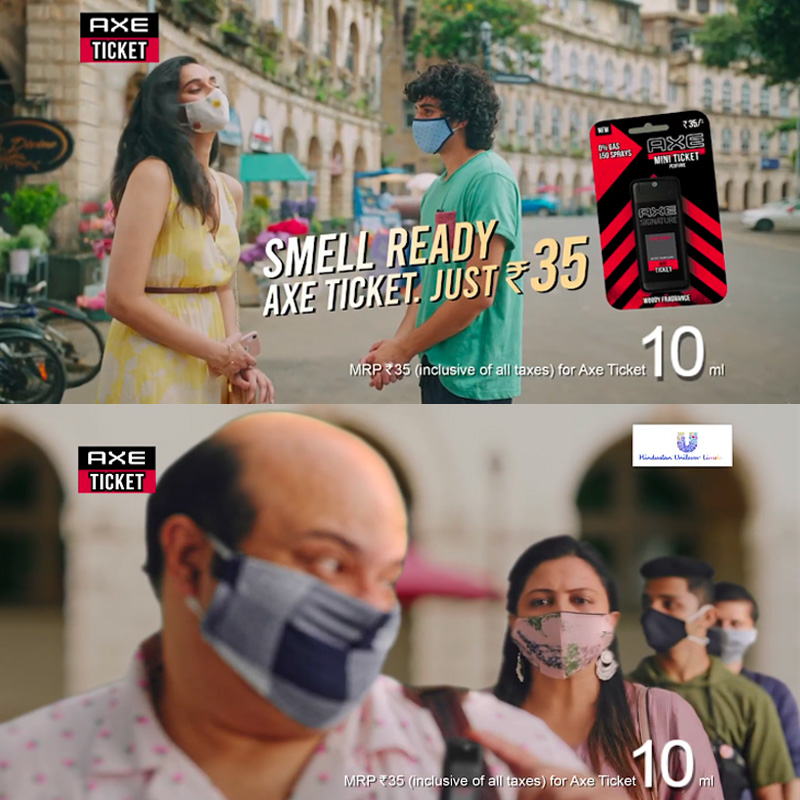
    India’s savviest marketing company, the giant HUL, has been using the IPL to promote Axe Ticket, a miniaturisation of the famed Axe perfume which it launched in February 2018.

    The 2018 version came in a 17 ml size and was priced at Rs 65. A concentrated perfume, it could be used for 250 sprays, but required three or four pumps to give the wearer odour protection and make them attractive to the opposite sex. The Axe mini-ticket followed in late 2019 in a 10 ml size priced at Rs 35, but promotion was suspended on account of the Covid2019 pandemic.

    Read  more news on HUL

    For the past two months, the mini-version has been back, but with the sobriquet Axe Ticket. A humorous campaign which is airing during the IPL telecast shows folks in an ATM queue all masked up and keeping socially distanced from each other. One of them brings out his Axe ticket and sprays himself. Presto, the perfume gets to a pretty young thing who is immediately drawn towards him and turns around and parks herself in a demarcated space just before him. Pop comes the message: “Smell ready. Axe Ticket at Rs 35 only. “

    The TVC ends with an older bald man, bringing out his Axe Ticket, hinting that he will spray himself with it, in the hope of luring the lady behind him in the queue.

    Why does HUL need to promote a smaller pack under the Ticket brand and at a lower price? The reasons are obvious: the pandemic has resulted in incomes getting clipped, jobs being lost, and the mood getting pretty sombre amongst the target audience for the perfume: the young Indians.

    Hence, HUL is attempting to induce purchases of an item considered a luxury by most – at a time of cash paucity. At Rs 35 for 10 ml, it comes within the reach of many who buy adulterated duplicate perfumes from the roadside at prices double that. And with the promise of longer lasting fragrances such as wood and chocolate, Axe Ticket thus looks attractive.