Tag: HUL

  • Brands piggyback the selfie

    Brands piggyback the selfie

    MUMBAI: When Oscars 2014 host Ellen DeGeneres posted a selfie co-starring some of Hollywood’s finest stars, it went on to crash the record hitherto held by President Barrack Obama. At the end of the awards’ ceremony, DeGeneres’ “Best photo ever” stood at 2,070,132 retweets and counting; a milestone in social media history. More importantly, the fact that Degeneres had clicked the iconic selfie using a Samsung Galaxy Note 3 (given to her by the brand itself) wasn’t lost on the teeming tweeple. In fact, various international reports stated that 37 million people worldwide tuned in to the broadcast to view DeGeneres’ tweet while 43 million tuned in just to view the Samsung snap.

    Taking a cue from Samsung and other such international brands, home-grown brands too are increasingly tapping into the marketing potential of the selfie, allegations of narcissism notwithstanding. For instance, Dove and Ponds from the house of HUL are running a large-scale social media contest incorporating the selfie element even as we speak. When contacted, company officials refrained from sharing any details. However, it is learnt that along with cross promotions, these products are creating a lot of noise across social media platforms.

    Click here to watch the video

    At least a dozen Indian brands are putting the selfie to good use. ”Selfies are the latest fad and something that would instantly connect with our customers. From celebrities to teenagers to even middle-aged people, everyone today is suddenly using their phone cameras to not only click their surroundings but themselves,” said Lenskart CEO & founder, Peyush Bansal. Recently, Lenskart rolled out a social media campaign, asking for selfies from its fan base. “The idea was to see how involved our customers are in our products. We wanted to engage the online customers in a fun Lenskart selfie contest by asking them to take a selfie, share it on our and their social media pages by linking and tagging Lenskart through all platforms and using the hashtag – #mylenskartselfie. They had to ask all their friends to ‘like’, ‘favourite’ their selfies and the ones with the maximum number of likes won the contest,” said Bansal.

    Force-fitting selfie-ness

    Using selfies to market products is fine but the general perception is that all brands, from beauty to surrogate, are looking to engage social media by calling for selfies. We spoke to a few social media experts for their views.

    “Not every brand can pull off a selfie stunt and hope to make it an instant social media hit. It needs to connect with the audiences; it should come across as something natural or on the spur of the moment and not staged. Unless one makes no bones about it but does it in style,” said Grey Digital executive creative director Navin Kansal.

    On the other hand, Digital Quotient COO Vinish Kathuria, expressed the view that curated content really works for brands these days. “It is interesting to see that various brands are thinking in terms of crowd sourcing techniques while rolling out contests on social media,” he said.  

    Whether the continued use of selfies will work for brands or it will reach a point of saturation, only time will tell.

  • Starsports.com gains big by streaming IPL 2014

    Starsports.com gains big by streaming IPL 2014

    MUMBAI: The nation is caught in the Pepsi IPL 2014 fever. The series that is being streamed on starsports.com, in its first week, has managed to garner an unprecedented traction of more than a million visitors every day. During the period, starsports.com has attracted around 47 lakh unique visitors across web and mobile delivering just more than a crore visits.


    During the first seven matches played in the current season, 150 million minutes of video were consumed by users with an average of more than 32 minutes per match. Consumption on mobile now stands at 42 per cent of the overall traffic. The majority of the viewer base is in the age group of 18-24 years in the top eight metro cities which contribute to overall 60 per cent of the traffic. Gender specifically, female traffic saw a significant surge contributing 27 per cent of the overall audience.


    Speaking on the occasion, Star India EVP and head, new media Ajit Mohan said, “IPL 2014 is perhaps a turning point for sports consumption. For the first time, online consumption of sports is becoming about video, video, and video. And, our investment in creating a world class backbone for video delivery is showing up as a significant improvement in the experience for sports fans, especially on a mobile screen.”


    Since its inception in December 2012, starsports.com has invested heavily to build a video infrastructure customized for India, where the experience is characterized by a proliferation of mobile devices and where a large number of consumers still have access to low bandwidth. In addition, for IPL, the company has leveraged its television infrastructure to deliver mid-rolls (advertisements in the middle of the overs) in addition to the already prevalent pre-rolls (advertisements which roll before the start of the video). 


    Video streaming of Pepsi IPL 2014 on the sports website has attracted many sponsors-HUL as the presenting sponsor and amazon.in, Toyota, ITC Personal Care and Reckitt Benckiser as associate sponsors.


    Star India president sales Amit Chopra added, “The most innovative advertisers in India are recognising the power of the mobile screen. Many of them have been hesitant in the past about investing in video ads online, given the sketchy delivery of both content and ads. We have been able to offer a powerful proposition to these advertisers by delivering a great video experience and a highly engaged sports fan.”


    Powered by live and video rights, the rich digital platform covers many world sports like major cricket tournaments, BPL, La Liga and Serie A in football, F1, hockey, tennis and badminton. 

  • HUL aims for a #Brightfuture this Earth Day

    HUL aims for a #Brightfuture this Earth Day

    MUMBAI: The biggest consumer goods company in the country, Hindustan Unilever Limited (HUL), does more than just a lip service to the corporate social responsibilities (CSR).


    On Earth Day, the company launched a campaign on twitter with a hashtag #Brightfuture with an aim to interact with people and get them to tweet what actions people have taken for a better tomorrow.


    Through the #Brightfuture campaign, HUL wants people to share ‘how through their small actions they have been able to achieve sustainable living especially for the bright future for the children.’


    “A large number of people today want to adopt a sustainable lifestyle and prefer using brands that are more sustainable. It is our belief that occasions such as Earth Day provide us an opportunity to encourage people to take action by doing small things which, added together, contribute to a better society and environment,” says the HUL spokesperson.


    The response has been good with many sharing tips on the same. Some of the tips shared on the company’s twitter page are: “I prefer to read online to save newspaper and print got by cutting trees,” “I’ve played ‘Dry & Safe Holi/Diwali’ for years. Now I do my bit to spread awareness regarding it,” “Enjoy sports and recreational activities that use your muscles rather than gasoline,” “Reduce travelling by using video conferencing for meetings.”


    The company promises to give HUL goodies to the best tweets.


    The consumer goods company which believes in a sustainable tomorrow, through its various initiatives like Project Sunlight or Help A Child Reach 5, has done its bit with an aim to make sustainable living desirable and achievable by inspiring people to look at the possibilities of a world where everyone lives well and within the natural limits of the planet.


    The Unilever Sustainable Living Plan which was launched in 2010 has three ambitious goals, all to be achieved by 2020:

    1.  To help more than a billion people take action to improve their health and wellbeing.

    2.  To halve the environmental footprint of our products across the value chain, not just those relating to manufacturing or within our direct control.

    3.  To source 100 per cent of their agricultural raw materials sustainably.

  • Marketing, the Dove way!

    Marketing, the Dove way!

    MUMBAI: There has been some exemplary advertising from Dove from the house of Unilever for over a decade now. The brand has endeavored to define beauty in a meaningful manner through its communication strategies.

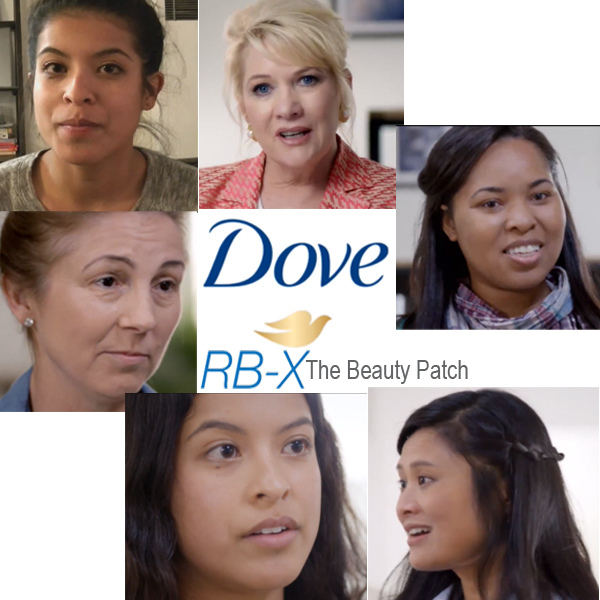
    The latest is a digital film which goes on to say that “Beauty is just a state of mind”. It features a two week-long social experiment by New York Times bestselling author, psychologist and body image expert, Dr Ann Kearney-Cooke, inviting women to wear a custom-made ‘beauty patch’ to help them feel more beautiful. The ladies give personal accounts of how the patch variously made them feel ‘more confident’, ‘refreshed’ and so on. At the end of the experiment, the patch is revealed to contain nothing, proving that beauty is more than just skin deep. Not surprisingly, the film which is running on YouTube garnered more than 15 million views within one week.

    Not just the digital film but most of Dove’s advertising carries significant marketing lessons for other beauty brands. Here’s looking at some of them…

    Stories win hearts

    Advertising with a strong storyline always works. Consumers connect with a product line if it is endorsed by people with a story. Dove has successfully taken care of this aspect locally and globally.

    Be constant

    For people to remember advertising, it is essential for brands to be consistent in the way they project their ideas through communication. Dove over the past few campaigns has gone digital and this has helped them get greater reach.

    Have a clear line of thought

    Projecting an idea sharply helps. One of the reasons why Dove pops up in people’s minds is that it almost always supports a strong line of thought.

    Take the video route

    In the age of social media, creating visual campaigns is a plus. More importantly, videos can be shared and help measure feedback instantly. Tracking the success of the campaign becomes that much easier, and Dove seems to have got that right!

    Use subtle marketing plug-ins

    While rolling out digital films, brands need to go subtle on plug-ins. Two things that work best on digital platforms are curiosity and a good amount of hype. Dove has got just the right amount of both.

    Click here to watch the video

  • SureWaves to tie-up with 50 cable TV channels

    SureWaves to tie-up with 50 cable TV channels

    KOLKATA: Having tied-up with over 300 local cable TV channels, Bangalore-based digital media-technology company SureWaves MediaTech now aims to have another 50 cable TV channels for integrated advertisement aggregation.


    “We plan to reach out to all cable TV channels in the country. At present, we have tied up with 300 channel partners. It is a continuous process. With time, aggregation with the remaining channels will take place,” SureWaves head strategy and regional director-south, Nishant Nair, told indiantelevision.com.


    SureWaves MediaTech offers the SureWaves Media Grid, an integrated advertisement aggregation, content delivery, network management, media planning, and reporting platform. The company positions a proprietary device that is connected to the grid and the TV channels. SureWaves provides real-time data monitoring of ads, which has made cable TV advertising accountable for the first time; according to Nair.


     The company collaborates with local channels owned by multi-system operators (MSOs). “We are not interested in tying up with local cable operators who have channels as we are not sure about the quality of these channels,” said Nair. “SureWaves is already on its way to becoming a game-changer in the way geo-targeted advertising currently works in the country.”


     With digitisation picking up pace, the number of satellite channels in the country is expected to grow and SureWaves plans to approach these channels to extend its solution. At present, around 150 brands such as HUL, Wipro, Dabur, Parle, Aircel, Vodafone, Nestle and Honda are utilising SureWaves’ services.


     “We are also targeting national advertisers, who want to reach all the markets,” said Nair. The television advertising spend is around Rs 15,000 crore and the eastern region, primarily dominated by West Bengal, accounts for nearly 20 per cent of the TV advertisement market.


     Just last month, SureWaves started its Kolkata operations and is betting on the Kolkata market for growth. The company currently has over 75 employees.

  • Lowe Lintas and Partners and HUL win at Global Mobile Awards

    Lowe Lintas and Partners and HUL win at Global Mobile Awards

    MUMBAI: Lowe Lintas and Partners along with India’s largest FMCG Company Hindustan Unilever Ltd. have won the Global Mobile Awards under the category- Best Advertising or Marketing on Mobile for their innovative ‘Free mobile Radio’ service- ‘Kan Khajura Tesan’. HUL and Lowe Lintas are amongst one of the 31 winners from 680 entries across the world. 


     An ‘innovative’ medium that effectively reaches to the rural audience, The ‘Kan Khajura Tesan’ is a ‘Free mobile Radio’ in Bihar that provides users to access entertainment content worth 15 minutes per week. Reaching out to more than 5 million consumers, the channel has now become the biggest radio station in the state that was otherwise termed to be ‘media dark’.


    Speaking more about the service, Anaheeta Goenka (Executive Director, Lowe Lintas and Partners, India) said, “For Kan Khajura to take off, we needed people to take the first step and hence our singular task was to drive missed calls. Unlike all other mediums where you push the message out, here the consumer had to first call to even experience the content. The communication strategy was built around making them remember a 10 digit number, and call this number, again and again and again”. Quite a challenge in a day and age where we remember nothing beyond our own mobile numbers!


    Deepa Geetakrishnan (President, Creative – Lowe Lintas and Partners) said, “Kan Khajura Tesan was an answer to this task. We needed something surprising and sticky around this innovative mobile channel that would make people want to call it. And from there came the idea of Kan Khajura tesan….the tesan that gets stuck to your ears. A Kan Khajura (Centipede) is an insect that enters the ear, and gets lodged there. It’s quite common in North India.”


     To access the content the consumer is required to give a “Missed call” (the call here gets disconnected automatically after the two initial rings) on a given number. He is then called back where some content, which includes an RJ speak, jokes, and Bollywood songs amongst others, is played to him. Hence, giving the entertainment hungry audience exactly what they want.


     In today’s age of communication, although it has become easier to reach out to people globally, brands still face a problem in reaching out to the heart of India – the rural population. Currently, about 70% of India’s population resides in rural areas. Hindustan Unilever Ltd, for a while, had been trying to explore this untapped market further. Most of rural India lives in darkness due to lack of electricity, and hence most of rural India is ‘Media dark’. Keeping in mind the tremendous success achieved in Bihar, HUL has launched the campaign in Jharkhand and plans to take it to other states including Uttar Pradesh, Madhya Pradesh and Rajasthan.

  • Bridging the urban-rural gap

    Bridging the urban-rural gap

    MUMBAI: It was in the early 90s that India opened up to trade and investment with the rest of the world and ever since there has been no looking back.


    Liberalisation has upped the purchasing power and standard of living of the middle class but it has also deepened the urban-rural divide, what with marketers focusing more on major towns and metros as compared to rural areas in the country.


    Initiatives such as HUL’s Project Shakti – which aims to create livelihood for underprivileged women in villages – have been very few and far between.


    Speaking of similar such endeavours at the Rural Marketing Forum were the likes of Avinash Oza, Ashish Tandon, Ravi Shankar, Rajendra Dhandhukia, Sanjeev Goyle, Sharad Varshney, Taranbir Singh, Vinay Thakker and Veerendra Jamdade.


    Part of the three-day Asia Retail Congress – a global platform to promote world-class retail practices – the forum saw discussions titled Agriculture Sector – Challenges & Opportunities, Is it possible to decode Rural Consumer Behaviour and Bus Stations – New Hub for Rural Marketing among others.


    According to Fullerton India Credit Company marketing and rural business head Ravi Shankar, government-introduced welfare schemes such as NREGA come with their fair share of challenges. “We have to educate people, especially youngsters who don’t want to follow their parents into farming that there are a lot more initiatives like dairy farming, poultry farming etc. that they can indulge in and earn well without leaving their villages or smaller cities,” he said.


    ING Vysya Bank business head for agriculture and rural banking Taranbir Singh gave the example of what Nestle did to Moga in Punjab. “The city is a perfect example of how corporates can transform lives and hopefully, more corporates will help change rural India by starting more branches, manufacturing units etc,” he said.


    JCB India rural GM and head Puneet Vidyarathi was of the view that citizens as a whole, need to start contributing to agriculture and work on challenges including increasing land banks, managing water resources and building on infrastructure.


    A majority of the participants felt that regional players would gain apart from the people in rural areas if the required importance was given to rural development by both government and corporates.


    On the topic of how brands can reach out to rural areas, Vritti Solutions founder and director Veerendra Jamade suggested that instead of waiting for melas, schools and pilgrims to reach out to rural consumers, bus stations should be utilised for the purpose. “Melas, schools, etc. have their own limitations whereas bus stations, if used to our advantage, can optimise the presence of the brand in that area,” he said.


    A key observation that emerged was: rural consumers follow a herd mentality and go by what their elders advise and hence, brands have a tough job convincing them about their products. However, mobile penetration seems to be changing that.


    A related takeaway was that brands need to focus on different age groups in rural areas and target them accordingly.

  • Unilevers’ Project Sunlight promises a brighter future

    Unilevers’ Project Sunlight promises a brighter future

    MUMBAI: Earlier this year, Indian TV channels aired a TV commercial set in a village where a majoirty of children succumbed to diarrhea even before they could complete two years. It then panned to a man who walked on his hands in to a temple in gratitude of his son turning five. All this in a modern India where Audis and Lamborghinis speed across expressways. The TV commercial was a public messaging initiative by multinational giant Hindustan Unilever (HUL) and it sought to encourage healthy handwashing habits amongst children on the back of its brand Lifebuoy.

    Similarly, on 20 November, celebrated world over as Universal Children’s Day, the company – no stranger to emotionally connecting with people – launched a brand new initiative christened ‘Project Sunlight,’ with an equally moving advertisement/film.

    An extension of HUL’s ‘Sustainable Living Plan’ launched in 2010, ‘Project Sunlight’ aims to make sustainable living desirable and achievable by inspiring people to look at the possibilities of a world where everyone lives well and within the natural limits of the planet.

    The ad film is aptly titled ‘Why bring a child into this world?’ and starts with expectant parents across the globe sharing their concerns about bringing a child into a world fraught with natural and man-made disasters, then going on to allay their fears and explain how it is the best possible time to do so.

    Also launched in Brazil, Indonesia, UK and the US apart from India, ‘Project Sunlight’ is designed to appeal to people everywhere, particularly parents, encouraging them to join what Unilever (HUL’s parent) sees as a growing community of people who want to make the world a better place for their children and for future generations.

    As part of the launch, Unilever plans to help two million children through its ongoing partnerships: providing school meals through the World Food Programme; supporting Save the Children to provide clean, safe drinking water; and improved hygiene through UNICEF. In collaboration with UNICEF, it aims to reach out to 500,000 school children in 3,500 schools across India and set up hand washing facilities.

    Said HUL CEO & MD Sanjiv Mehta in a press statement: “The launch of ‘Project Sunlight’ is a significant milestone in the history of our company. We believe that large companies like ours have to be part of the solution to the problems the world is facing. Adopting sustainable lifestyles and people using their purchasing power to make consumption choices that are good for them and good for the world are important factors in the drive to reducing social inequality and averting the worst climate change predictions – to make sustainable living commonplace.”

    Guided by Unilever’s consumer insight, including new international research commissioned by the company, ‘Project Sunlight’ demonstrates that children are key to motivating adults to want to adopt more sustainable lifestyles and are a powerful influence on changing parental behaviour.

    On the campaign, said Unilever chief marketing & communications officer Keith Weed: “In the first stage of ‘Project Sunlight,’ we are inviting people to take three simple actions. We want to help people ‘See’ a brighter future; in order to do this, we are inviting people to watch a film online which aims to inspire and motivate people. We want to encourage them to ‘Act’ by doing small things which, added together, contribute to a better society and environment. Ultimately, we want people to ‘Join’ the movement and become part of a growing community of like-minded people and organisations who all want to play their part in building a brighter future.”

    Why did HUL choose the name Sunlight? “We chose the name Sunlight as a tribute to our founder William Lever, whose audacious vision 130 years ago to ‘make cleanliness commonplace’ with Sunlight soap inspired Unilever’s equally ambitious purpose today: to make sustainable living commonplace. Sunlight also reflects the sense of possibility and optimism which characterises Unilever’s approach,” informed Weed.

    ‘Project Sunlight’ will initially go live on an online hub – www.projectsunlight.com – which brings together the social mission stories of Unilever brands across the world, and invites consumers to get involved in doing small things which help their own families, others around the world and the planet. 

    The film, especially commissioned by Unilever and directed by Academy Award winning director Errol Morris, inspires people to see the future in a more positive and optimistic way. The Indian version of the film has a voiceover by actor Shah Rukh Khan.

    IndustrySpeak

    As a parent it touched me. I would be lying if I said I don’t worry about the future each time my boys were on the way. It feels good to know that someone else is also thinking about kids’ future. It is very refreshing. It is a completely different way of looking at the future. Thanks to many of the science fiction novels and Hollywood blockbusters, we sometimes feel the future will be grim and tough. We all collectively have overlooked the fact that life is actually getting better every given day. And to top it all, hearing SRK, the parent, talk just makes the film more relatable. Also SRK’s popularity with the masses will pull in more eyeballs to this campaign.

    Abhijit Avasthi, NCD, Ogilvy & Mathers

    Today, consumers buy brands for what they believe in and stand for rather than what they preach/tell about themselves. It’s important to have good karma. And to associate a celebrity with it will only propel the idea to a larger section of the population. Remember Lead India? It used the likes of Amitabh Bachchan, Karan Johar among many others, which gave it prominence.

    Why bring a child into this world? is a common question on the minds of many. It is a lovely idea and shows that today, when companies are taking away from the environment; there are some who want to give back to the world.

    Nisha Singhania, co-founder and director, Infectious

    For a company of that stature to come and say that yes, the present looks dicey but we are working towards a brighter future, says a lot about their determination.  If one looks at the film, it shows a beautiful insight because today, couples do discuss and are apprehensive about bringing new life into the world. It might help some to rethink on the subject.

    As for a voiceover by SRK, I’m not too sure if it will help the film’s reach because it is not as distinctive as Amitabh Bachchan’s voice. Having said that, it is such a beautiful film that it doesn’t need someone to help push it.

    Arun Iyer, NCD, Lowe Lintas

    Usually it’s corporations that need an image makeover that go heavy on CSR initiatives. For instance Shell and Exxon, whose businesses are not exactly environment-friendly, champion the cause of environmental protection. So naturally, over the years, one has grown cynical about such things.

    However, the film, momentarily at least, makes one suspend the cynicism. The emotions it shows are raw, and the lack of slickness makes it work. As it doesn’t come across as manipulative, you are drawn in, and empathise with the people it features. Every parent is concerned about the world he is leaving for his children. Perhaps the ideal way to make people realise that it’s important to improve and sustain the planet is to remind them of this. By featuring expectant parents, the idea taps into this insight nicely.

    Viral Pandya, co-founder and chief creative officer, Out of the Box

  • Unilevers’ Project Sunlight promises a brighter future

    Unilevers’ Project Sunlight promises a brighter future

    MUMBAI: Earlier this year, Indian TV channels aired a TV commercial set in a village where a majoirty of children succumbed to diarrhea even before they could complete two years. It then panned to a man who walked on his hands in to a temple in gratitude of his son turning five. All this in a modern India where Audis and Lamborghinis speed across expressways. The TV commercial was a public messaging initiative by multinational giant Hindustan Unilever (HUL) and it sought to encourage healthy handwashing habits amongst children on the back of its brand Lifebuoy.

    Similarly, on 20 November, celebrated world over as Universal Children’s Day, the company – no stranger to emotionally connecting with people – launched a brand new initiative christened ‘Project Sunlight,’ with an equally moving advertisement/film.

    An extension of HUL’s ‘Sustainable Living Plan’ launched in 2010, ‘Project Sunlight’ aims to make sustainable living desirable and achievable by inspiring people to look at the possibilities of a world where everyone lives well and within the natural limits of the planet.

    The ad film is aptly titled ‘Why bring a child into this world?’ and starts with expectant parents across the globe sharing their concerns about bringing a child into a world fraught with natural and man-made disasters, then going on to allay their fears and explain how it is the best possible time to do so.

    Also launched in Brazil, Indonesia, UK and the US apart from India, ‘Project Sunlight’ is designed to appeal to people everywhere, particularly parents, encouraging them to join what Unilever (HUL’s parent) sees as a growing community of people who want to make the world a better place for their children and for future generations.

    As part of the launch, Unilever plans to help two million children through its ongoing partnerships: providing school meals through the World Food Programme; supporting Save the Children to provide clean, safe drinking water; and improved hygiene through UNICEF. In collaboration with UNICEF, it aims to reach out to 500,000 school children in 3,500 schools across India and set up hand washing facilities.

    Said HUL CEO & MD Sanjiv Mehta in a press statement: “The launch of ‘Project Sunlight’ is a significant milestone in the history of our company. We believe that large companies like ours have to be part of the solution to the problems the world is facing. Adopting sustainable lifestyles and people using their purchasing power to make consumption choices that are good for them and good for the world are important factors in the drive to reducing social inequality and averting the worst climate change predictions – to make sustainable living commonplace.”

    Guided by Unilever’s consumer insight, including new international research commissioned by the company, ‘Project Sunlight’ demonstrates that children are key to motivating adults to want to adopt more sustainable lifestyles and are a powerful influence on changing parental behaviour.

    On the campaign, said Unilever chief marketing & communications officer Keith Weed: “In the first stage of ‘Project Sunlight,’ we are inviting people to take three simple actions. We want to help people ‘See’ a brighter future; in order to do this, we are inviting people to watch a film online which aims to inspire and motivate people. We want to encourage them to ‘Act’ by doing small things which, added together, contribute to a better society and environment. Ultimately, we want people to ‘Join’ the movement and become part of a growing community of like-minded people and organisations who all want to play their part in building a brighter future.”

    Why did HUL choose the name Sunlight? “We chose the name Sunlight as a tribute to our founder William Lever, whose audacious vision 130 years ago to ‘make cleanliness commonplace’ with Sunlight soap inspired Unilever’s equally ambitious purpose today: to make sustainable living commonplace. Sunlight also reflects the sense of possibility and optimism which characterises Unilever’s approach,” informed Weed.

    ‘Project Sunlight’ will initially go live on an online hub – www.projectsunlight.com – which brings together the social mission stories of Unilever brands across the world, and invites consumers to get involved in doing small things which help their own families, others around the world and the planet. 

    The film, especially commissioned by Unilever and directed by Academy Award winning director Errol Morris, inspires people to see the future in a more positive and optimistic way. The Indian version of the film has a voiceover by actor Shah Rukh Khan.

    IndustrySpeak

    As a parent it touched me. I would be lying if I said I don’t worry about the future each time my boys were on the way. It feels good to know that someone else is also thinking about kids’ future. It is very refreshing. It is a completely different way of looking at the future. Thanks to many of the science fiction novels and Hollywood blockbusters, we sometimes feel the future will be grim and tough. We all collectively have overlooked the fact that life is actually getting better every given day. And to top it all, hearing SRK, the parent, talk just makes the film more relatable. Also SRK’s popularity with the masses will pull in more eyeballs to this campaign.

    Abhijit Avasthi, NCD, Ogilvy & Mathers

    Today, consumers buy brands for what they believe in and stand for rather than what they preach/tell about themselves. It’s important to have good karma. And to associate a celebrity with it will only propel the idea to a larger section of the population. Remember Lead India? It used the likes of Amitabh Bachchan, Karan Johar among many others, which gave it prominence.

    Why bring a child into this world? is a common question on the minds of many. It is a lovely idea and shows that today, when companies are taking away from the environment; there are some who want to give back to the world.

    Nisha Singhania, co-founder and director, Infectious

    For a company of that stature to come and say that yes, the present looks dicey but we are working towards a brighter future, says a lot about their determination.  If one looks at the film, it shows a beautiful insight because today, couples do discuss and are apprehensive about bringing new life into the world. It might help some to rethink on the subject.

    As for a voiceover by SRK, I’m not too sure if it will help the film’s reach because it is not as distinctive as Amitabh Bachchan’s voice. Having said that, it is such a beautiful film that it doesn’t need someone to help push it.

    Arun Iyer, NCD, Lowe Lintas

    Usually it’s corporations that need an image makeover that go heavy on CSR initiatives. For instance Shell and Exxon, whose businesses are not exactly environment-friendly, champion the cause of environmental protection. So naturally, over the years, one has grown cynical about such things.

    However, the film, momentarily at least, makes one suspend the cynicism. The emotions it shows are raw, and the lack of slickness makes it work. As it doesn’t come across as manipulative, you are drawn in, and empathise with the people it features. Every parent is concerned about the world he is leaving for his children. Perhaps the ideal way to make people realise that it’s important to improve and sustain the planet is to remind them of this. By featuring expectant parents, the idea taps into this insight nicely.

    Viral Pandya, co-founder and chief creative officer, Out of the Box

  • HUL joins twitter to reach out to its consumers

    HUL joins twitter to reach out to its consumers

    MUMBAI: Hindustan Unilever Limited (HUL), the market leader in consumer products in the country, has joined twitter recently.


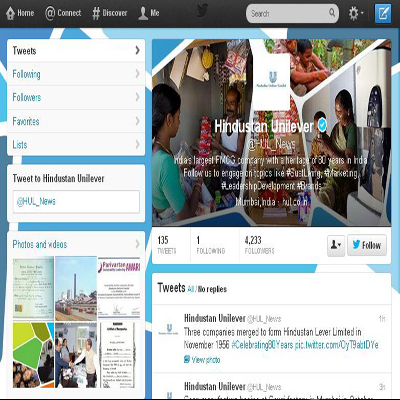
    The company which has presence in over 20 consumer categories such as soaps, tea, detergents and shampoos amongst others with over 700 million Indian consumers using its products joined the social media site with the handle @HUL­_News with a tweet saying “HUL, India’s largest FMCG company is now on Twitter. Join the conversation with us on topics like #Sustainability, Marketing & #Leadership.”


    When asked why did the company as a corporate brand chose to join twitter, the HUL spokesperson said: “Social media provides us an opportunity to reach out to our consumers and other stakeholders in an ongoing and engaging manner.”


    And with 4,233 followers already on the site in a short span is proof enough what the brand means to the country.


    Not to forget that HUL has been on social media for several years now through its various brands like Sunsilk, Surf Excel, Dove which the company boasts of having led digital marketing in India with some path-breaking work and innovations.