Tag: HUL

  • HUL becomes top advertiser again; Ministry of Health and Family inserts most ads in BARC week 29

    HUL becomes top advertiser again; Ministry of Health and Family inserts most ads in BARC week 29

    MUMBAI: The Broadcast Audience Research Council (BARC) India has released its data for last week’s top advertisers and brands between 14 July to 20 July 2018.

    The data is a reflection of top 10 advertiser across genre on Indian television (U+R) : 2+ Individuals. 

    The data demonstrates ads that were inserted the most in week 29 of 2018. 

    Top Advertisers: 

    Not much has changed in terms of top advertisers this week as Hindustan Unilever Limited continued to lead with 155495 ad insertions on television. HUL’s products include foods, beverages, cleaning agents, personal care products and water purifiers.

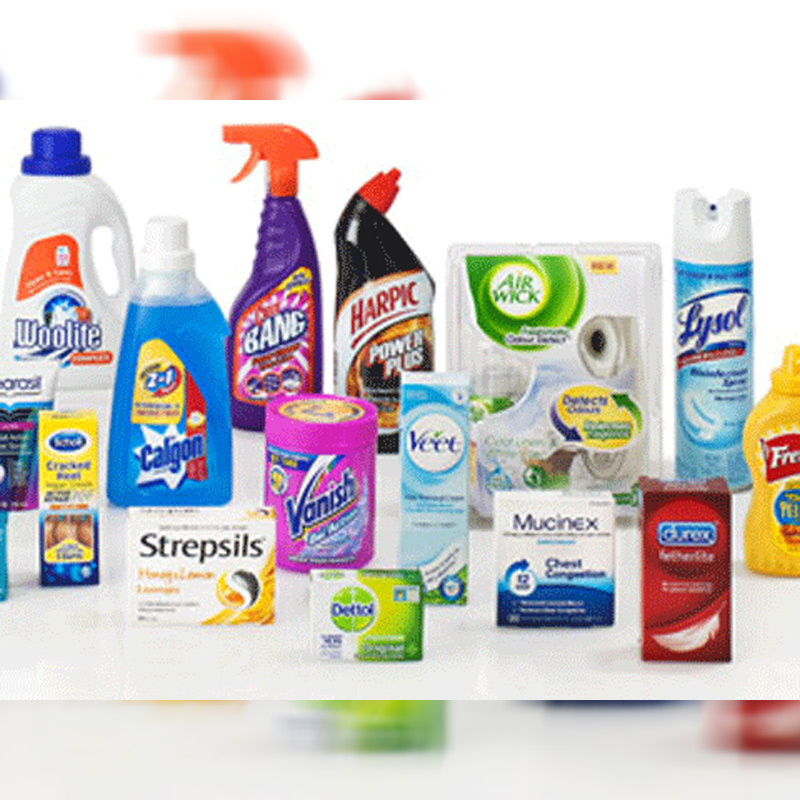
    Reckitt Benckiser Limited, maker of Dettol, Veet, Durex condoms, Strepsils, Air Wick, Harpic among others stood at second position with 78728 ad insertions. 

    This was followed by Procter & Gamble with 38356 and ITC Limited with 33238 ad insertions. E-commerce major Amazon India retained fifth position this week with mere 30230 insertions. 

    Top Brands:

    The Indian Ministry of Health and Family Welfare advertised the most and topped the charts with 11504 ad insertions in week 29. 

    Hotel searching website, Trivago, continued to stay the second most advertised brand with startling 11321ad insertions. 

    Internet video on demand service Amazon Prime retained its position and showcased its ads 10489 times while Colgate Dental Cream, a product by Hindustan Unilever Limited inserted its ads 9162 times. 

    Cleaning and disinfecting product Lizol, stood at fifth position with 9132 ad insertions between 14-20 July 2018.

  • Reckitt Benckiser again top television advertiser

    Reckitt Benckiser again top television advertiser

    BENGALURU: Indian FMCG and consumer health products company Reckitt Benckiser (India) Ltd (RBIL) has once again climbed the almost sole andperpetual bastion of Indian FMCG company Hindustan Unilever Ltd (HUL). For the second time this year, RBIL was the biggest advertiser in terms of insertions in week 14 of 2018 (Saturday, 31 March 2018 to Friday, 6 April 2018) according to BARC (Broadcast Audience Research Council of India) data. The previous occasion when the company beat HUL in terms of TV ad insertions was in week 11 of 2018 (Saturday, 10 March 2018 to Friday, 16 March 2018) according to BARC’s list of top 10 advertisers across genres – all India (U+R) : 2+ individuals -in terms of ad insertions or spots. During the 52 weeks of calendar year 2017 (Saturday, 31 December 2016 to Friday 30 December 2017), it was HUL that held the top slot as the largest television advertiser in the country. 

    In week 14 of 2018, according to BARC data, RBIL had 1,21,102 insertions to HUL’s 1,19,602 ad spots. In week 11, RBIL had 1,10,173 to HUL’s 99,405 ad insertions. RBIL accounted for 30.2 percent ad insertions of the combined total insertions by the top 10 advertisers in week 14 and 28.6 percent in week 11, while HUL had 29.8 percent and 25.6 percent of the ad insertions during the same weeks respectively. Hence the big two accounted for 59.9 percent and 55.4 percent of the combined total insertions by the top 10 advertisers in week in weeks 14 and 11 of 2018 respectively.

    It must, however, be noted that if one were to account for the insertions by HUL affiliates/subsidiaries/associate (HUL group companies) companies, the total would far exceed the ad insertions by any other advertiser. For example, among the top 10 advertisers in week 14 of 2018 wasBrooke Bond Lipton India Ltd (Brooke Bond) at rank eight with 18,075 insertions, while in week 11 Brooke Bond did not find a place among BARC top 10 advertisers list, neither did any other HUL group company.Refer to the table below showing BARC’s list of top 10 advertisers in weeks 11 and 14 of 2018.

    public://barc_4.jpg

    Also Read :

    Top television advertisers in 2017 based on BARC’s Top 10 lists

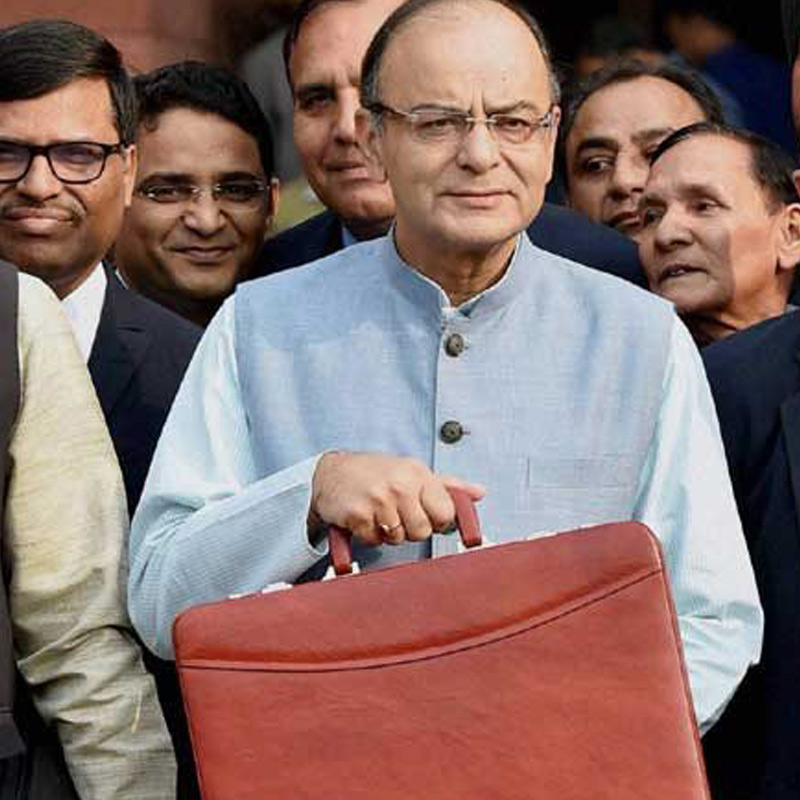
    News channels rake in advertising on budget day

  • News channels rake in advertising on budget day

    News channels rake in advertising on budget day

    BENGALURU: Normally, the days leading up to, during and following the state and national elections and election result day are when news channels rake in the moolah. Another important day for news channels for attracting advertisers is the day the national budget is announced. This budget day was no different – advertisers flocked news channels.  Here is a list of top five advertisers and brands on news channels on 1 February 2018 according to Broadcast Audience Research Council (BARC):

    public://c5.jpg

    Channels: CNBC Awaaz;   CNBC Bazar;   CNBC TV 18;   CNBC TV 18 Prime HD;   Zee Business;   ET Now;   BTVI

    public://c4.jpg

    Channels: Aaj Tak;   Zee News;   India TV;   News18 India;   India News;   News Nation;   News 24;   Zee Hindustan;   Tez

    public://c3.jpg

    Channels: Republic TV;   Times Now;   Times Now HD;   India Today Television;   CNN News18;   NDTV 24×7;   Mirror Now;   News X;   NewsX HD

    As is obvious from the above charts, the top five advertisers and brands were across verticals – be it infrastructure, finance, insurance, home décor, lighting, pharmaceutical, etc. Baba Ramdev’s Patanjali Ayurved was the biggest advertiser among the top five lists and that too across just one genre of news – Hindi business news.
    A number of these players are normally not present in BARC’s weekly lists of top 10 advertisers and bands in terms of insertions. Here are BARC’s lists of the top 10 advertisers and brands in week 5 of 2017 (Saturday, 27 January 2018 to Friday, 2 February 2018).

    public://c2.jpg

    public://c1.jpg

    Also Read :

    Demystifying news television viewership in 2017

    BARC segments viewership data for South regional news from GECs

    BARC panel tampering: first arrests made

  • HUL marketing spends up in third quarter

    HUL marketing spends up in third quarter

    BENGALURU: Indian FMCG giant Hindustan Unilever Ltd (HUL) is one of the biggest advertisers in India. On Indian television, the company releases the highest number of advertisements by far according to Broadcast Audience Research Council of India (BARC) weekly data for top 10 advertisers across genre. According to BARC’s weekly data for calendar year 2017 (week 1 starting Saturday, 31 December 2016 to week 52 ending on Friday, 29 December 2017), the FMCG behemoth released a staggering 68,12,298 ad insertions. This number does not include the television insertions by Brooke Bond Lipton India Ltd (Lipton), Lakme Lever Ltd (Lakme) and Ponds India Ltd (Ponds).

    Industry sources said that HUL had promoted its products quite aggressively in Q3 2018 by way of sops to the players across the sales and distribution chain as well as to consumers for some of its brands. In the current fiscal that started on 1 April 2017 (FY 2018) and will end on 31 March 2018, the company spent the highest amount as yet in the quarter ended 31 December 2017 (Q3 2018, quarter under review) towards advertisement and sales promotions at Rs 1,107 crore. In terms of percentage of total revenue also, HUL’s Q3 2018 ad and sales promotion spend works out to 12.66 percent, another peak for this year. HUL’s year-over-year (y-o-y) and quarter-on-quarter (q-o-q) spends towards advertisement and sales promotion in Q3 2018 increased 29.47 percent and 8.21 percent respectively.Please refer to the graph below for HUL’s ad and sales promotion spends during the last eight quarters.

    public://g1.jpg

    HUL was the top advertiser during all the 52 weeks of 2017 according to BARC data.Please refer to the graph below:

    public://g2.jpg

    It must be noted that BARC provides weekly data – BARC’s week commences on a Saturday and ends on the next Friday. Hence the quarterly TV insertions numbers mentioned above are approximate.

    HUL’s Tea and beverages company Lipton was present among BARC’s top 10 advertisers across genre lists during 50 of the 52 weeks. In week 52 of 2017, Lipton had 32,049 ad insertions, the highest by it in the year, while in week 19 of 2017 it had 15,719 TV ad insertions, the lowest while it was present in BARC’s list of top 10 advertisers across genre. Lakme was present in BARC’s weekly lists for 3 weeks of 2017, while Ponds was present in the lists for 15 of the 52 weeks of 2017. Assuming that these three advertisers released 20 percent additional television advertisements during the year, the total number of TV insertions by HUL during the year works out to almost 82 lakhs.

    HUL chairman Harish Manwani said: “We have delivered another strong performance in the quarter, with broad based growthacross categories and further improvement in margins. We remain positive about the mid-term outlook of the industry and willcontinue to invest strongly in our core brands and developing categories of the future. There are early signs of commodity costinflation and we will further sharpen our focus on cost effectiveness programs and manage our business dynamically forcompetitiveness and sustained profitability.”
     

  • Fogg maker takes on fairness creams with Pretty24

    Fogg maker takes on fairness creams with Pretty24

    MUMBAI: Taking a stab at fairness creams’ perennial message of fair skin being the benchmark of beauty and success, Fogg deodorant maker Vini Cosmetics (Vini) is touting the idea that every shade of skin is equally beautiful. The company has been plugging the primetime of mainline television channels for the past fortnight or so with the TVC of its latest product Pretty24.

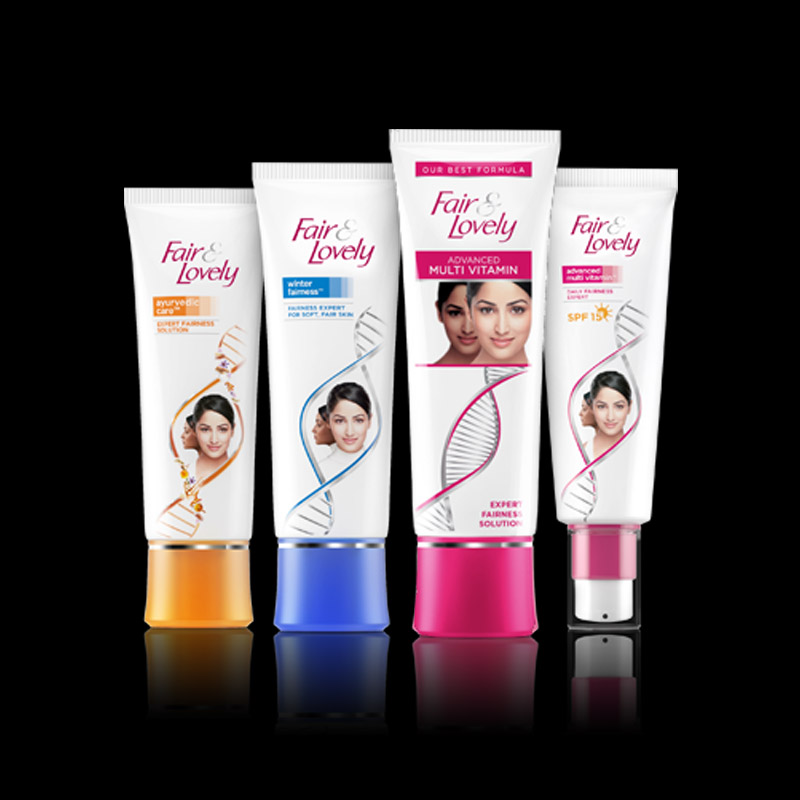
    Pretty24 is taking on the might of the entire fairness (read: skin lightening) cream category–which has grown to more than$600 million a year and is dominated by Hindustan Unilever’s (HUL) Fair & Lovely, Emami’s Naturally Fair, Cavincare’s Fairever Fairness , among others. Its positioning: a facial cream which rejuvenates, beautifies, and protects without any claim of lightening the skin shade.

    The estimated Rs 700 crore turnover Vini Cosmetics is promoted by one of the breakaway brothers, Darshan Patel, of Paras Pharmaceuticals (the maker of Moov, Itchguard and Krack). And he’s got the funding of two large private equity firms—Bay Capital (9 percent) and Sequoia Capital (12 percent).

    Speaking to a financial publication, Patel said: “Personal care brands have all along made consumers believe that one achieves fairness through application of skin creams. But one can never change one’s skin tone. One may minimise or repair the damage caused by aging and pollution, but never change the tone. Pretty24 would liberate Indian women from the discrimination based on skin tone.”

    Sources indicate that he has kept aside an advertising budget of around Rs 4 crore for the Pretty24 launch campaign.

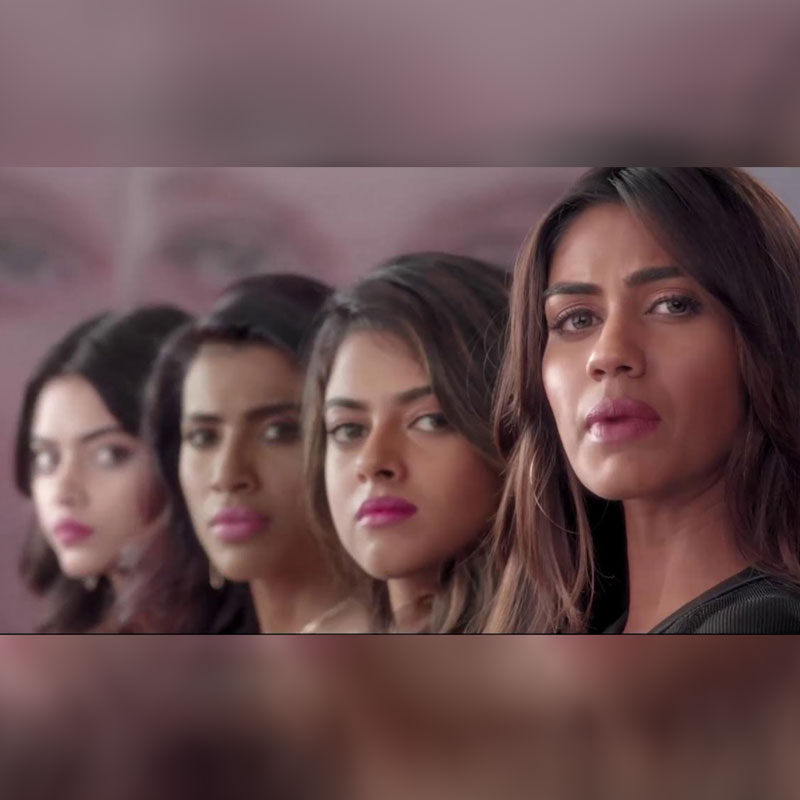
    The TVC features five dusky determined pretty lasses marching into a beauty products showroom/salon with a mission.

    One of them knocks over standi-tubes of fairness creams accusingly stating that first women were taught that only if you are fair, you are beautiful.

    Then another of them speaks to the camera bitterly stating that hope was created amongst the dark skinned that fairness is possible.

    The third young girl then voices her anguish that every moment they made us feel that only fair folks are considered a success.

    The fourth young lady then says what many an Indian girls may be feeling: “They never told us the truth. That human skin can never be lightened.”

    Finally, all of them say “enough of this fairness” and toss the tubes away. And up comes the voice over: Pretty24 for all skin colours. And the girls come back and state: “Pretty24. Change your thoughts, not your skin colour.”

    The Pretty24 TVC is nothing to write home about in terms of its production or fancy VFX or creative values. It follows Patel’s belief that ads need not entertain, rather they should inform. Speaking to Forbes a year and a half ago he had stated: “Most advertising is 90 percent entertainment and 10 percent knowledge; I have always done the opposite with my advertising.”

    His Fogg TVC, too, had demonstrated very openly that the deo had less gas than other long-selling competitors in the market. It featured two glasses; in one of them Fogg is sprayed and in the other a common deo. While the glass with Fogg visibly filled up with each spray, the other glass barely did, indicating the vapour that dissipated.

    That TVC worked well for it and it became the number one deo brand, leaving behind HUL’s Axe.

    Patel is a savvy marketer. Earlier his company had launched a face cream called Glam-Up, which was promoted as a product to be used on special occasions, which would transform a woman into a glamorous beauty. One of the TVCs had shown a modern young woman, waking up in a golden party dress at home and slowly rising and saying that she is not the fairness type, she is rather the glam type and she uses Glam-Up.

    Additionally, he had also launched a face powder called White Tone which was sold on the benefits of giving users an even facial tone, an oil free look and a fair complexion. Those initiatives left a relatively superficial impression on the target audience.

    Will he succeed in disrupting the fairness cream category this time with Pretty24? It’s going to be a pretty interesting slugfest.
  • ZEEL CEO Punit Misra says: “We intend to compete fairly”

    ZEEL CEO Punit Misra says: “We intend to compete fairly”

    MUMBAI: Last year in October,  Zee Entertainment Enterprises Ltd (ZEEL) appointed Hindustan Unilever (HUL) sales and customer development executive director Punit Misra as ZEEL domestic broadcast business CEO.  Coming from the FMCG sector Misra has entered the television industry with an advantage – ‘ both the businesses depend on consumer behaviour’.

    ZEEL is now the largest broadcaster in India.  First it acquired Anil Ambani led Reliance Broadcast business and recently bagged 9X Media.

    In a conversation with Indiantelevision.com’s Sonam Saini, Misra shares his one year experience and plans going forward.

    Excerpts:  

    How do FMCG and TV broadcasting compare since both of them depend on understanding audience behaviour?  

    As you said rightly, it’s all about consumer and consumer practise and not building brands. Building brands happens through content- that’s the difference because people use soap once in a day for those 3-5 minutes, but here people sit and consume and get emotionally attached. They can talk about hours but I don’t think consumers can sit and talk about consumer brands this much, so that’s the difference.

    You have completed a year in ZEEL. How has been the experience of heading a broadcast business?

    I am loving every minute here. I began with knowing nothing but there are a lot of things to do.

    Did you initiate the change after you took charge?

    It’s our initiative, not any one individual’s. Nothing works in any industry or any company because of one person. Deepak Rajadhyaksha has been raising and crafting a lot of things. Pratyusha is there and the agency team. I can’t even claim that I have done something.

    Did Punit Goenka take you through the company’s process in your first few days? How did he guide you?

    He is guiding me today as well. He’s just an amazing person. He guiding and gives space and I marvel at how he manages both at the same time. It is just incredible to have him as coach.

    What were the challenges that you faced? What milestones are you personally proud of?

    Firstly, we are supposed to learn before we start taking decisions. For me that was important because coming from a non-TV background I had to spend time to know the business, the people and the brand.

    Along with the team we are fantastically proud with the fact that we are the number one network. The fact that Zee TV is the number channel in HSM, I am proud of that.  I am  proud of the team that I have. We have retained key talent in the company since so many years.

    How do you view Zee’s presence in the market given competitors like Star and Sony are ramping up properties?

    They all have been in the market while competing. We are proud that we are number one in the Hindi speaking market Zee TV and Zee Anmol. Competition is good for the industry and for us as well.  We intend to compete fairly. KBC has grown fantastically, Sony has done a really great job. Star got IPL and congratulations to them. Colors suddenly took a hit but are back from the lead. Things to learn from them. We are all friends but otherwise we are competing tooth and nail in the space to win the viewer.  

    What was the idea behind 9X acquisition? What is the strategy for it?

    It’s the number one group in music genre that’s the reason we acquired the channels. We are still conceptualising the strategy.

    Why are you doing this channel refresh? Was there a need?

    All brands will come to a stage and think that now is the time to change and we believed that we were not doing well last year. We slipped to be in the middle. As today you know we are on number one and the timing is right.

  • ASCI dismisses HUL plaint against two Emami products

    ASCI dismisses HUL plaint against two Emami products

    MUMBAI: The Independent Review Committee (IRC) of The Advertising Standard Council of India (ASCI), chaired by Justice Mohit Shah (retired), has summarily dismissed two complaints filed by HUL against Emami Limited’s Fair and Handsome Instant Fairness Facewashes over the last six months.

    The complaints filed by HUL with ASCI against the two face wash brands of Fair and Handsome, was reviewed by Justice Shah at a meeting attended by teams from Emami and HUL. He went at length to look at the merit of every point raised, before arriving at his recommendations.

    One model of the brand was contested on the language used, “Instant Fairness Face Wash”, apart from raising seven more objections on the brand. Rigourous clinical study reports, consumer evidence and research studies were presented to prove how the face wash delivers, which was accepted by the chairperson.

    In the second case, HUL had raised objection to the language, “100% Oil Clear Instant Fairness Face Wash”, contesting that this was misleading, while the clarification was “clearing excess oil up to 100%” which was clearly mentioned on the pack. Post all the submissions, Justice Shah commented that, “I find substance in the submission made by the advertiser that the claim, “100% Oil Clear” is to be understood as “100% excessive oil clear”. The findings in the clinical study as well as the consumer study support this claim.”

    HUL had raised 11 more objections on the 100% Oil Clear Instant Fairness Face Wash, all of which were conclusively proven through clinical studies, consumer studies and reports by leading market research agencies, leading to dismissal of all 18 objections on both products.

    In another recent instance, ASCI had dismissed the disparagement case filed by HUL against Fair and Handsome Fairness Cream.

    HUL had filed a complaint with ASCI on the brand’s recent TVC, where the complainant had claimed that the advertisement disparaged HUL’s product – Fair & Lovely Fairness Cream. The Fast Track Complaints Panel (FTCP), after viewing the TVC, product packaging and noting Emami’s response, were of the view, “There are many aspects of dissimilarities between the product shown in the TVC and the complainant’s product.” Hence, the complaint was not upheld.

  • Telecast of Patanjali’s two ads stopped by high court

    Telecast of Patanjali’s two ads stopped by high court

    MUMBAI: It was a bit of a marketing blasphemy. And, Patanjali Ayurved’s advertisements have hit a legal hurdle.

    Telecast of Patanjali’s two product ads which allegedly disparaged HUL and Dabur’s brands have been stopped by high courts in India.

    The Delhi court ordered Patanjali to stop telecasting TV ads for its soaps. The decision came after Reckitt Benckiser complained it had allegedly disparaged Dettol brand.

    After the Bombay High Court restrained the baba’s company from advertising its soap brand, which allegedly disparaged competitor Hindustan Unilever’s brands, the Delhi High Court passed an injunction against Patanjali’s chyawanprash commercial. Patanjali ad had made direct attacks on Lux and Pears: “Filmstars ke chemical bhare sabun na lagao.”

    This advertisement was allegedly disparaging Dabur India’s chyawanprash brand. The division bench of Delhi HC has restrained the telecast and circulation of Patanjali’s said advertisement.

    A Patanjali Ayurved spokesperson said that it would file its reply to the court after seeking the details of the order. Its communication strategy is simple — to convey to the consumers the benefits of using healthy and natural products as against other products which may be harmful.

    Patanjali Ayurved is not alien to rows. The West Bengal Public Health Laboratory found a batch of the Patanjali Amla Juice ‘unfit’ for consumption. Outlook had reported that Nepal’s Drug Administration had asked Patanjali to recall six ‘substandard products.’

    It remains to be seen if questionable advertising methods prove to be good publicity for the baba’s products in the long run.

  • TVF’s ‘ideas man’ Tarun Tripathi joins OML

    TVF’s ‘ideas man’ Tarun Tripathi joins OML

    MUMBAI: Tarun Tripathi, the brand awareness and brand solution head of The Viral Fever (TVF), the digital entertainment channel for the younger generation which seldom watches television, has joined Only Much louder (OML). 

    For the young, TVF had created a web series called Permanent Roommates, touted as the second most-viewed long-form web series. TVF had also released its second original series, TVF Pitchers, about engineers at different companies who quit to launch their startups.

    Tripathi, who states in his profile that he is in the business of ideas, has come on board OML as the chief strategy officer from 1 September, 2017.

    Tripathi joined TVF in January 2016, where he was leading branded content and marketing. Tripathi also worked for HUL’s ‘phd’ as a business head for 19 months. He was responsible for digital media buying, planning and strategy.

    Tripathi, the founder of a startup called Collectivity, a consultancy focussed on the intersection of technology, content, and the bottom of the pyramid, also worked with Myspace as the director – marketing and content (India) for 17 months. 

    Starting his career as an assistant consultant for KPMG Mauritius, he moved to Trikaya Grey in Mauritius where he wrote copies for two years and then headed Yash Raj Films’ marketing department for around six years before moving to Myspace.

    Also Read:

    Airtel & TVF create internet’s live reality show 

    ChuChu TV on YouTube records 10m subs with 154 kids videos

    Satisfying writer, client and customer is biggest challenge: Arunabh Kumar