Tag: Hubahu

  • “The writer’s task is to facilitate the director’s vision” : Ajitabh Menon

    “The writer’s task is to facilitate the director’s vision” : Ajitabh Menon

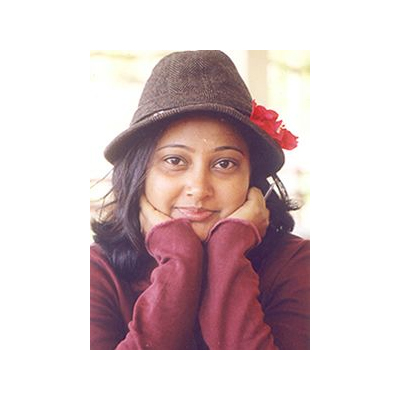
    Like other wise men, Ajitabh Menon believes that success is not reflected by quantity but quality. He has been extremely discerning about the projects he has undertaken. At 26, Menon is one of the more sought after writers on TV, with two of his serials- Hubahu andHum Pardesi Ho Gaye hitting bull’s eye.

    Menon, who started off with Khwaish, a youth series on Sony and went on to write one-off episodes of Rishtey and Aap Jo Bolein Haan To Haan… on Zee is now concentrating on writing two movie scripts, one of which will be directed by Parvati Balagopalan, Hubahu‘s producer.

    In a candid interview to indiantelevision.com correspondent Amar, Ajitabh speaks his mind. Excerpts:

    How did Ajitabh Menon evolve into a writer?
    I’ve done a diploma course in film and TV production from XIC, Mumbai. I wanted to be a director and in fact, still want to be one, but breaks as an writer came in easy and hence I took to writing. I have graduated in psychology because then, I wanted to be a counsellor. Even though I did not finally become one, my study of psychology has helped me in understanding and writing about characters very different from me.

    Which are the subjects that you like to tackle most?
    I would love to work on as many subjects as I can, except the regular soaps depicting make-believe family dramas.

    “My study of psychology has helped me in understanding and writing about characters very different from me”
    __________

    With Hubahu producer Parvati Balgopalan

    What is the starting point of your writing – an idea, a concept, the complete story?
    That could be anything, even something that could strike me from this conversation we are having right now. You never know where a potent idea emanates from. It could be from a newspaper story; another movie or it could be a concept you and your producer/director have been thinking about for some time.

    Do you like to work on your own concepts or are you comfortable working on concepts given to you?
    I believe concepts don’t emanate from one person. They are the result of extensive deliberations among a team. At least that’s how I work. Like for instance, in the case of Hubahu, Parvati, Nupur and I just started working on a germ of an idea- identical twin sisters exchanging positions and this move backfiring to dramatic effect.

    Do you subscribe to the view that TV is a writer’s medium?
    I wouldn’t totally agree with this. This statement is used because TV normally tends to be very verbose as it is. By and large, it is a restrictive medium with constraints on visual freedom. I do believe that on TV as well as in cinema, the writer’s task is to facilitate the director’s vision. To that extent, it is not a writer’s medium.

    What do you think makes one an effective writer?
    A psychological insight into disparate characters, the ability to suddenly make a moment dramatic, the ability to make a character appear larger than life and the ability to be sensitive to things one is normally not cued in to, without being affected by these things.

    How many projects do you like to work on simultaneously?
    Not more than two.


    A still from Chhota Muh Badi Baat
    “Concepts don’t emanate from one person. They are the result of extensive deliberations among a team”
    __________

    What is your writing schedule like?
    There is no proper schedule. Mostly, I like to write late into the night but again I might just start writing anytime I feel up to it and am in the right frame of mind.

    Does writing in isolation help you to concentrate?
    On the contrary, I like writing when there are people around, so that I may instantly take their feedback.

    Does TV writing pay well?
    It pays me well. I don’t know about others. Actually a lot depends on the team you are working in, your own credibility and the like.

    How important is effective narration in selling a concept?
    Very important. Actually, people seldom have time to read entire stories and they go mainly by what is narrated to them. Hence effective narration is quintessential. As far as tips for effective narration go, one has to be all excited and charged up about the story and tell it passionately. At the end of your narration, if the listener gets the impression that you’ve made a point, your job is half done.

    Hubahu was written in consultation with Sony, so there was no way either of us could be unhappy with the output”
    __________

    On the sets of Hubahu with director Nupur Asthana

    Have you felt a channel’s intervention interfering with your work?
    No, not at all. In fact, channels have been very cooperative and helpful. In the case of Hubahu, Sony has been completely involved in all discussions concerning the writing of the first thirteen episodes. It was actually a good thing because the episodes were written after taking them into confidence and hence there was no way either of us could be unhappy with the output.

    How much time does it take you to write one episode ofHubahu?
    Not more than two and half days taking into account the entire script- the story, screenplay and dialogues.

    Are you choosy about writing offers coming your way?
    Yes I am. See, its very important for me to work on projects I thoroughly enjoy and with people I relate well with. Recently, I have refused an offer from a reputed producer because I didn’t like his way of putting things across.

    How many re-writes go into your final script?
    On an average, my third draft is the final draft. But again it is contingent on so many factors.

    Where do you see yourself 10 years from now?
    Directing movies.

  • “I don’t know why Sony is NOT the top most channel today. It may be because crap sells” – Sandhya Mridul

    “I don’t know why Sony is NOT the top most channel today. It may be because crap sells” – Sandhya Mridul

    Proud folks, hefty pay packets, and a huge fan following all over the country-the pretty side of fame. The ugly side-back stabbing, false tales, snubbing, double dealings. Sandhya Mridul, who played twin sisters in the serial Hubahu, was a rage among television audiences. She also got her claim to fame with Extraaa Innings on MAX during the World Cup last year. But her detractors say she is rude and arrogant.

    Indiantelevision.com’s Vickey Lalwani caught up with this babe who has been added as a hot thing in Sony’s dearest serial on date Jassi Jaissi Koi Nahin to find out whether she is indeed arrogant… and lots more. Read on to understand that frankness and honesty are often misconstrued as arrogance.

    Excerpts from a tete-a-tete:


    After ‘Hubahu’, we didn’t see you on television. Why?
    Yes, my last serial was Hubahu on Sony, almost two years ago. After Hubahu, I received a number of offers, but I was bored. A trend had started which I didn’t approve of. Television was getting monotonous and boring. At the same time, I started receiving offers in films, theatre, events… I really wanted to explore other media, which is why I took a break from television. Plus I think that Hubahu had allowed me to portray a gamut of emotions and there wasn’t anything beyond that happening on television that time.

    How has your tryst with films been? And what else is happening in your career?
    It’s been a good experience in films so far. I am a newcomer in the filmi world and am still finding my feet. I did Saathiya purely to see whether I fit into the fray, whether I have the same presence on the silver screen which I do on television. I enjoyed the experience but after the subsequent offers I received, I realised that I am more suited to offbeat, crossover films rather than hardcore, commercial cinema. I did Waisa Bhi Hota Hai – Part 2, which received quite a bit of appreciation. Then, I did Strings, another crossover film, which is being shot start to finish at the Kumbh Mela. Madhur Bhandarkar’s Page 3 just got over.

    I am experimenting with different scripts and will soon start shooting for international VJ Luke Kenny’s directorial venture titled 13th Floor and an English play Zen Katha with Lilette Dubey which would open in July/August. There is a lot of martial arts involved, hence I am undergoing formal training in this aspect.

    After ‘Saathiya’ I wasn’t interested in playing the same old role all the time. I don’t want to get slotted


    Saathiya, even though a major hit, didn’t help you to get noticed and bag commercial films?
    I did get noticed, in fact, I guess I was liked so much that everyone thought that I am the eternal sister (laughs). All my subsequent offers wanted to cash in on the role I did in Saathiya and I wasn’t interested in playing the same old role all the time. I don’t want to get slotted. That is why I rejected those offers and have consciously given my assent to offbeat scripts. I am open to good roles in commercial films though, may I add.

    Do you find the two mediums- films and television- vastly different? Also, has television changed in its style of functioning from the time you left?
    Yes. There are so many factors, time for one. While shooting for a film, we do a scene a day, on an average. For a television serial, on the other hand, it is more than seven-eight scenes daily as the episode has to be completed in time.

    Things have changed in the last few years. Everything is very frantic, there is a lot of pressure. Due to the deadline, quality suffers as well, everything is so rushed. The cassette has to go at the end of the day, dialogues are jotted down hastily on the spot. Quality and creativity take a backseat. Films are much more relaxed and you have plenty of scope to experiment and innovate. I find TV to be a very stressful medium.

    Also, television is a repetitive medium. Apart from the lack of scope of variety of roles, once you start playing a character, that particular character becomes a part of you for years. I get really peeved when serials go on and on. Conversely, in films, once you finish playing a certain character, you detach from it and concentrate on playing a totally different role.

    How did ‘Jassi Jaissi Koi Nahin’ happen?
    It happened out of the blue. Tony Singh gave me a call and I was delighted when he mentioned his offer. I know him since the days of Banegi Apni Baat when I made my debut on TV. Tony and Deeya Singh had given me my first break with Banegi Apni Baat (she appeared as Sakshi, assistant to Girish Mullick, in the last 100-odd episodes before the serial winded up) and I have known them to be efficient and creative. I gave an instant nod of approval to Tony without even listening what he wanted me to do. You can say that my second coming to television was an emotional decision.


    By the same yardstick, would you accept an Ekta Kapoor offer – considering you were a part of ‘Koshish… Ek Asha’?
    No. I am not emotional about Ekta at all. I have no reason to be.


    Are you hinting that ‘Koshish Ek Asha’ was not a good experience?
    Koshish… Ek Aasha was an experience. Period.

    Please elaborate…
    No experience is good or bad because you come out learning something. Koshish Ek Asha gave me a lot of what I am today. Balaji Telefilms is not the easiest production house to work with. I know that’s what you want to hear, but I never said that they are. But they know how to make stars. However, I must say that my director and the cast were a gem. Hmmm… think of it, I wouldn’t term it as a bad experience.

    You raved about the Singhs. What is so special about them?
    When they talk to you, they know what they want. Plus their involvement is very high, they’ll take interest in your costumes, jewellery, et al, they have an eye for detailing; but at the same time, they respect your character. Top of all, they don’t have scripts which beat around the bush, saying ‘Tune Meri Zindagi Tabah Kar Di’ and those kid of things, but rather real kind of situations and colloquial language which appears so very natural.

    I remember asking Shefali in my early days in Banegi Apni Baat that how could she cry so easily, but I soon felt undergoing the same feeling, which means their scenes are written extremely well. Importantly, they know how to make a good project in a simple manner.

     
    Tony & Deeya Singh are one of the few people in the industry who care for their actors

    Considering that you are an add-on to Jassi Jaissi Koi Nahin, have you seen the earlier episodes to facilitate your understanding of the characters you will interact with?
    My entire family are ardent fans of the show. My mom has regularly followed the show and she is there to give me the required inputs. I do not have the time and inclination to dedicatedly follow television, but I have watched individual episodes. From whatever little I have seen, I have found the show to be extremely endearing, without any pretensions. There are no caricaturish characters and everyone are projected as normal human beings.

    Tell us about your character.
    I play Yana, a high-flying business tycoon, who has put the fashion world in a tizzy with her deals. She is blunt, no-nonsense and at the same time a trifle bizarre. Armaan falls for Yana and she and Jassi both compete for his affections. For the moment, this is the sketch of my character. This is a special appearance, small yet impactful and I had the dates to offer, so I thought ‘Why not?’. At this stage, due to other commitments, I cannot devote myself to a lead role in a serial.

    What do you mean by ‘special appearance’? Hope you know where it is headed for…
    (Interrupts) I haven’t sat down and discussed the future path the character takes. As I said, I trust Tony and Deeya completely. They are one of the few people in the industry who care for their actors. So far, I have shot for four episodes. The shoot took place in Singapore. It’s good fun, shooting with a new bunch of people. I’m meeting most of them for the first time, except Parmeet Sethi, whom I know since quite some time. Frankly speaking, I don’t know how much stress I really want to take on.

    If you are game to take on stress, I feel you can acquire a lot of fame in television where many actors have become more famous than films stars have.
    Fame does not matter to me. If it had, I wouldn’t have quit television. And maybe by now, I would have joined politics and made so much money that I had a personal bungalow by now. But… I want to go home with a calm mind. I don’t want to keep asking on the sets ‘Pack up kab hai yaar?’ If fame was my trip, I would have also been chasing commercial cinema in any avtaar – be it even sister or bhabhi – and not cross-over, small budget films like I am doing now.

    Going back to Yana. Any specific homework you have done for Yana’s role?
    Absolutely nothing. I don’t believe in doing any specific homework for a rich entrepreneur’s role. I just read the script and subconsciously allowed the character’s personality to merge with my own. So far, my role isn’t very difficult. It is a grey character – either you’ll like her or hate her. She is hot, attractive, cocksure and in her own way, bizarre, she’s got a magnetic personality. At times, she is arrogant. At times, she is friendly. But at the end of the day, she is indifferent. Either you are hooked are you are repelled (Smiles).

    If you say hot, your outfits must be special?
    Very special. The outfits are ultra-modern and hi-fashion.

    I had been offered Mandira’s studio job during the World Cup last year but I had refused it
     

    As ultra as this (she is wearing a shoulder revealing top)?
    Oh, this is understated. Yana can be far more more bizarre this.

    Is your character there in the original ‘Ya Soy Betty La Fea’?
    I have no clue. I have not seen the original and I just trusted my instincts when I signed the role.

    Tell us about ‘Extraaa Innings’ you did for Sony.
    Well, I have always loved sport. But, cricket has never been my forte, I am more of a tennis freak. But then they explained to me the kind of concept they had in mind with me. I pondered over it and decided to give it a try. After all, it was a great chance to soak in the carnival atmosphere of a World Cup!

    Surely, you must have envied Mandira Bedi because the spotlight was on her…
    I did not envy but felt sorry for Mandira Bedi. The studio job she did was not a piece of cake to be eaten. If she had the spotlight on her, she deserved it. Actually, I had been offered the studio job, but had refused it, informing them that I wouldn’t be comfy talking to the legends about the game which I didn’t know in detail.

    You’ve done TV, films, plays. Any plans of direction?
    None whatsoever. Technically, I am zero.

    Choti Si Asha’, ‘Hubahu’, then the ‘Extraaa Innings‘, now ‘Jassi Jaissi Koi Nahin’. You have acquired the reputation of being a Sony girl. Comment.
    It isn’t about partiality, but I have got the best offers from Sony TV. At the time of endorsing, I see the project and not the channel. Their’s is a channel which believes in true variety and my last three shows have been for Sony. The last one, Hubahu, in my opinion, has been my best serial, to date and it took guts for the channel to bring out such a serial which was so different from the mundane stuff on tube.

    Yet, Sony is not the topmost channel today. Your take on this?
    (Shrugs) Well, I cannot comment on this (pauses). I really don’t know. Maybe because crap sells. For me, Sony remains a far more interesting channel because it tries to genuinely experiment.
  • “The absence of a powerful script can undo all efforts that go into direction.” : Nupur Asthana

    “The absence of a powerful script can undo all efforts that go into direction.” : Nupur Asthana

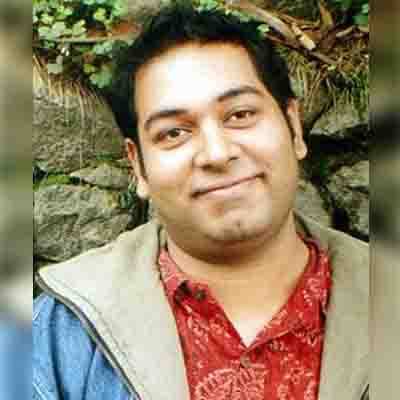
    Nupur Asthana has just two soaps in her portfolio- Hip Hip Hurray and Hubahu, apart from a few one-offs for Zee’s Aap Jo Bole…. But the young director’s meticulous planning and effort shows in her work. While Hip Hip Hurray was a runaway success – running well for all of 80 episodes, Hubahu that has completed just a month on Sony has also been getting positive reviews. Asthana has carefully managed to steer clear of the rat race. She takes up only one project at a time and gives it her very best. Interestingly, she also scripts her own shows. Hip Hip Hurray was written by her. Hubahu was conceived by her, after which she worked with writer friend- Ajitabh Menon to ensure that it came out the way she wanted. Asthana is also busy writing a film that she plans to direct. She comes across as a person full of life and one who is proud and possessive of her work.

    Excerpts of an interview with indiantelevision.com correspondent, Amar.

    What brings you into direction?
    I have always been involved with theatre activities since my student life. After graduating from the Lady Shri Ram College in Delhi where I was actively involved with theatre both as actor and director, I came to Mumbai and did a course in filmmaking from the Sophia College here. I later assisted Ketan Mehta on the thriller movie, Aar Ya Paar. After being with Ketan for a couple of years, I wrote and directed the successful youth series- Hip Hip Hurray. This was the original version that ran successfully for 80 episodes. I say this because people tend to confuse it with the rehashed version of the same serial churned out last year by Zee.

    What are the qualities required of an effective director?
    A director needs to have a strong and vivid imagination. He / she needs to be an effective communicator and a good man manager because after all from the pre to the post production stage, the director has to deal with no less than 75 odd people in different stages. Besides, a director needs to have a very strong script sense.

    There have been so many occasions when I wanted to something but had to curtail myself simply because the budgets on TV did not permit it.

    Which subjects appeal most to you?
    Any subject that has scope for strong drama and explores the
    psychology of people.

    How do you react to the oft- made statement that TV is a writer’s medium with little scope for the director?
    Well, a writer no doubt has a pivotal role to play on TV but again, how two directors treat the same written scene, does make a difference in the final output. Also, the importance of a writer varies with the nature of programme. For instance, in the case of Friends, its entirely the way it’s been written that makes it stand apart. Even if the script was played without visuals, it would draw a very positive response. However, in the case of a serial like The Practice it’s the way the director handles the crucial scenes that makes all the difference. A writer does have a very important role to play on TV, but I wouldn’t subscribe to the view that the director’s part is insignificant.

    How deeply are you involved with the scripting of your serials?
    I am involved from the stage the show is conceived. I am involved with it even when it is being written. I believe that the absence of a powerful script can undo all efforts that go into direction. In fact, as far as possible, I like to write my projects. The story and screenplay of Hip Hip Hurray were mine. I am also writing a movie I plan to direct.

    What is your method of instructing actors? Do you enact the scenes yourself?
    It depends. The actors in Hip Hip Hurray were all very new and needed to be groomed very carefully. In such a case, I didn’t mind enacting scenes out so that they can comprehend the characters better. But I don’t do it in Hubahu because most of the actors are pretty seasoned ones and they don’t need to be spoon-fed.

    Which factors do you never compromise on as director?
    I cannot tolerate indiscipline from my actors. It puts me off even if they are late for the shoot by ten minutes. Besides, I like to give my actors their scripts well in advance. For instance, even before the shoot started, I gave all my actors the bound script of the first thirteen episodes of Hubahu. I don’t accept any excuses if they come unprepared for the shoot. It’s actually a little tough on the actors because they are not used to working this way but that’s how I function.

    Do budgets prove to be a constraint in television?
    Yes. There have been so many occasions when I wanted to something but had to curtail myself simply because the budgets on TV did not permit it.

    Who are your favourite directors?
    Ketan Mehta and Italian film-maker Federico Fellini.

    What are the stylistic elements you’ve picked from them?
    Ketan Mehta uses a very fast style of cutting pictures while editing. This makes the scenes appear real fast. I have incorporated this style in my editing. Fellini had this unique ability of bringing out some humour even in the most intense and grim scenes. I’ve tried doing something similar.

    A writer no doubt has a pivotal role to play on TV but again, how two directors treat the same written scene, does make a difference in the final output.
    ___________

    Do you feel that channels’ executive producers are overbearing in their attitudes?
    I don’t know. As far as Hubahu is concerned, my experiences have been very pleasant. In fact the EPs have been involved with the script right from the time it was being written. Once the script was ready, they would not interfere. But I can’t say the same of Aap Jo Bolein Haan To Haan… I feel the programme is very badly structured and I really couldn’t do much on it. In fact, that’s one programme I would not even like to include in my CV.

    Is there any genre you would be averse to directing?
    Yes, all these saas-bahu sagas. I don’t relate with them and there is no way I can see myself doing them.

    Does a long running soap tend to get monotonous after a point?
    Yes, it does. Actually, the story doesn’t hold beyond a point and one has to merely go through the chores in the latter episodes. That is why I have planned out Hubahu only for 52 episodes. When I was doing Hip Hip Hurray, I had reached a near burnout stage around the 70th episode. I was totally exhausted of ideas and just couldn’t think of how the story would move in the last few episodes. That is when, even though I had been writing the serial, I had to get other writers into the act.

    Who are your favourite actors?
    Rajat Kapoor is one of my favourites, with whom I always like to work. Besides I like Sandhya Mridul who plays the lead in Hubahu.

    Which has been the happiest moment of your career?
    The telecast of the first episode of Hip Hip Hurray. It was a dream come true and I had invited the entire cast of the serial to my house to see this episode. It was the happiest moment of my career.

  • Without skipping a beat, ‘Dhadkan’ set for fade-out

    Without skipping a beat, ‘Dhadkan’ set for fade-out

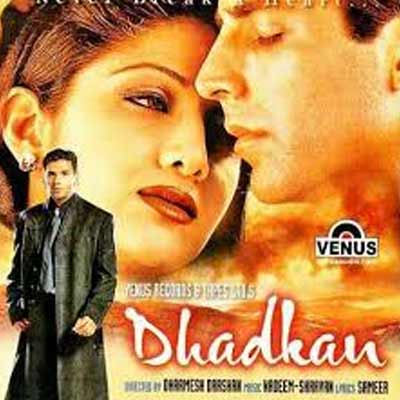
    MUMBAI: Hospital series Dhadkan, along with twin dilemma Hubahu are making way for the Madhuri matchmaking show Kahin Na Kahin Koi Hai that commences telecast on 29 July.

    KNKKH has been slotted in the 8:30 to 9 pm band that was earlier occupied by Dhadkan (Monday through to Wednesday) and Hubahu (Thursday). While Hubahu is being wound up after a 40-episode run this Thursday, Dhadkan, which launched earlier with much fanfare, is being pushed to a later time slot from the coming week.

    A gritty well made serial, the big-budget Dhadkan nevertheless was never able to garner ratings higher than 2 TVRs, say sources. The consistent lack of ratings is now responsible for the show being shifted to the 10:30 pm slot till the third week of August, when it will end after bringing the tale to its logical conclusion in a total of 87 episodes. 

    For the show, producer Aqua Pictures had put up a state-of-the-art set in western Mumbai’s Kandivli suburb using authentic hospital equipment. At the end of the day though, India’s answer to ER failed to strike a chord with audiences here. And that is what ultimately forced Sony to turn off Dhadkan’s life support system. 

  • Sony hopes to lock up 8:30 band with double whammy – hospital drama and tale of twins

    Sony hopes to lock up 8:30 band with double whammy – hospital drama and tale of twins

    MUMBAI: Sony Entertainment’s programming strategy is clear. Keep launching new shows at regular intervals and make sure the shows are consistently different.

    The 9 to 10 pm slot is in the bag (at least that’s what the channel claims) with the Balaji soaps Kkusum and Kutumb. And now the channel is targeting the 8:30 pm to 9 pm time band.

    The Sony team led by CEO Kunal Dasgupta was out in strength yesterday to announce the launch of two new shows. Dhadkan marks the channel’s foray into the hospital drama genre with a real feel while Hubahu is your regular soap with the plotline revolving around twins switching identities. The former starts on 4 February and will air Monday – Wednesday at 8:30 pm while the latter premieres 7 February and will air once a week on Thursdays at the same time.

    Elaborating on the channel’s plans, V-P programming and production Nachiket Pantvaidya said: “These shows are part of our strategy to consolidate our position in the 8:30 – 9 pm slot four nights a week Mondays to Thursdays. With Dhadkan and Hubahuwe hope to add half an hour to our hold on the 9-10 pm slot which is one of our strengths.” 

    The channel also claimed that since October when the launch of Kutumb was announced, channel share has gone up 30 per cent. The channel also said that from now on, whenever a new show is launched it will be positioned differently from what rivals have to give. They will mix emotion with gripping edge of the seat entertainment.

    Pantvaidya said as part of new programming initiatives the channel was looking at, February would see a new show launched in the afternoon slot. In March three launches have been scheduled, all in prime time slots and all different genrewise – comedy, thriller and drama. April will see two more shows launched Pantvaidya said.

    When questioned as to why Sony was doing a hospital show when rivals already had one on air with the similar theme (Star Plus launched Sanjivani on 16 January), Dasgupta pointed out that Dhadkan was in the making for seven months. Rival channels simply wanted to beat the air time the moment they got a whiff of what Sony was up to, he said.

    DHADKAN: The marketing strategy for Dhadkan spans the media like print and outdoors. Region specific marketing has also been undertaken in Delhi and Mumbai. In Mumbai the railways have been roped in while in Delhi DTC busbacks are being used.

    Dhadkan is an effort on the part of the channel to take the experience of being in a hospital further by taking viewers right into the heart of the Operating Theatre by simulating reality, the channel avers.

    The setting is Seth Deen Dayal Hospital. When Seth who started the hospital dies his son takes over but his vision is different. He is only interested in the word profit. The show also examines the personal lives of doctors and their daily struggle to cope with job pressures. It goes beneath the deceptively calm suface and reveals the edgy atmosphere and turmoil prevailing. It has been produced by Aqua pictures and directed by Umesh Padalkar.

    Padalkar said the show took the help of six doctors. Hospital layouts were studied and design principles were taken into account when utilising the 9-10,000 square space. The Operating Theater Floor was elaborate and for this modular sets were designed probably for the first time in India. This allows walls to be added or subtracted. Even lighting could be changed. An associate director took care of the background activity. The actors underwent extensive drills on how to use instruments like a stethoscope and for scrubbing and even basic procedure like how a doctor enters the OT Theater. 

    The doctors present praised the channel for taking the initiative to consult them. They were critical of the ridiculous manner in which the profession is depicted in Bollywood films and teleserials. The equipment seen on the show has apparently been procured form dealers who supply hospitals. The idea was to basically explore life in its fullest with inspiration from shows like ER and Chicago Hope.

    The main problem for Sony is that Star got some lead time with the launch of Sanjivani on 16 Jan and so no matter how authentic Sony’s show may be, it has some catching up to do.

    HUBAHU: In contrast to the hospital drama, Hubahu is about twin sisters who are as different from each other as chalk from cheese. Sandhya Mridul plays both the roles. Aditi lives in India and her life is rather conservative. Ananya is smart, sophisticated and lives in Bangkok. The story revolves around them switching identities and the comedy and tragedy that follows. 

    Speaking on this Anupama Mandloi, director on air programming, said: “The basic concept of this show is ‘If I were you’. Two people discover that the grass is not always greener on the other side.” It has been produced by E-motion Pictures. This represents the first collaboration between them and the channel. Milind Soman and Parvati Balagopalan are the producers. Milind Soman said that the concept has been done before in films like The Parent Trap and on the stage. However on the small screen there is scope to explore and play with every possible incident which leads to heightened drama.

    Whether the show can sustain audience interest for 52 episodes on an identity switch proposition remains to be seen though.