Tag: Huawei

  • Infosys-Huawei aided Globe Telecom project wins TM award

    Infosys-Huawei aided Globe Telecom project wins TM award

    MUMBAI: Infosys, a global leader in consulting, technology, outsourcing and next-generation services, has announced that it has been awarded in the ‘Best in Show’ category by TM Forum Live! Asia”.

    TM Forum is a leading global industry association for digital business. The award was given for the ‘Cognitive Digital Agent’ – a project championed by Globe Telecom, Philippines along with Infosys, Amdocs and Huawei.

    The project demonstrated the feasibility of using cognitive computing technologies aligned to telecom business processes to enhance customer experience in a more intuitive and natural fashion. To address changing consumer needs and demands in today’s digital economy, Infosys, along with Huawei and Amdocs, established the Cognitive Digital Agent – a five month project, led by Globe Telecom. This was aimed at creating the next-generation of customer care services, leveraging artificial intelligence technologies.

    The core solution is driven by Infosys’ expertise in natural language processing, machine learning and cognitive computing. The Cognitive Digital Agent has the capability to address complex queries and answer questions through omni-channel access including interactive voice responses (IVR), portals and wearables.

    The Cognitive Digital Agent creates a difference in situations where, if a call-center is contacted, the responses are generated using natural language processing – making them more consumer friendly, or on social media platforms and in smart watches where the machine agent responds to queries 24×7. TM Forum recognized the project for some of these exceptional demonstrations of business outcomes across channels, and the inventive use of machine learning and Artificial Intelligence (AI).

    Infosys president and global head of energy, utilities, telecommunications and services Rajesh Krishnamurthy said, “Our goal has been to explore the use of cognitive computing and artificial intelligence technologies such as natural language processing and machine learning to create the next generation of customer care services, which, in turn, enabled us to create this compelling project that can significantly improve customer satisfaction. This award is testimony to the company’s AI capabilities and demonstrates our thought leadership in the telecom industry.”

    Globe Telecom chief information officer Pebbles Sy-Manalang said, “Globe is at the forefront of transforming the telecoms industry in the Philippines by being a Digital Service Provider, well-equipped to serve the needs of Filipinos in living out their digital lifestyle. Once again we are changing the game by adopting Artificial Intelligence concepts and technologies that would give more than 68 million customers of Globe improved service while being cost-efficient. When we decided to demonstrate the potential and applicability of Cognitive Digital Agent through TM Forum’s Catalyst program, we partnered with Infosys because of its leadership position in Telco industry and the richness of Infosys’ Artificial Intelligence and Machine Learning platform. I am happy to see that our partner ecosystem with Infosys, Amdocs and Huawei were able to demonstrate this potential value to our industry and what it can do for our customers which has been appreciated by TMF”

    TM Forum VP of services & catalysts Rebecca Sendel said, “This award-winning project captured the spirit of the Catalyst program by rapidly developing a solution through collaboration and teamwork, delivering a quantifiable business outcome in the form of significant cost reduction (between 10 and 40 percent). These results exemplify the R&D multiplication effect of the Catalyst program, which is a proven collaboration platform for designing, building and testing solutions much faster and with lower risk and cost than any individual company could hope to accomplish.”

  • Infosys-Huawei aided Globe Telecom project wins TM award

    Infosys-Huawei aided Globe Telecom project wins TM award

    MUMBAI: Infosys, a global leader in consulting, technology, outsourcing and next-generation services, has announced that it has been awarded in the ‘Best in Show’ category by TM Forum Live! Asia”.

    TM Forum is a leading global industry association for digital business. The award was given for the ‘Cognitive Digital Agent’ – a project championed by Globe Telecom, Philippines along with Infosys, Amdocs and Huawei.

    The project demonstrated the feasibility of using cognitive computing technologies aligned to telecom business processes to enhance customer experience in a more intuitive and natural fashion. To address changing consumer needs and demands in today’s digital economy, Infosys, along with Huawei and Amdocs, established the Cognitive Digital Agent – a five month project, led by Globe Telecom. This was aimed at creating the next-generation of customer care services, leveraging artificial intelligence technologies.

    The core solution is driven by Infosys’ expertise in natural language processing, machine learning and cognitive computing. The Cognitive Digital Agent has the capability to address complex queries and answer questions through omni-channel access including interactive voice responses (IVR), portals and wearables.

    The Cognitive Digital Agent creates a difference in situations where, if a call-center is contacted, the responses are generated using natural language processing – making them more consumer friendly, or on social media platforms and in smart watches where the machine agent responds to queries 24×7. TM Forum recognized the project for some of these exceptional demonstrations of business outcomes across channels, and the inventive use of machine learning and Artificial Intelligence (AI).

    Infosys president and global head of energy, utilities, telecommunications and services Rajesh Krishnamurthy said, “Our goal has been to explore the use of cognitive computing and artificial intelligence technologies such as natural language processing and machine learning to create the next generation of customer care services, which, in turn, enabled us to create this compelling project that can significantly improve customer satisfaction. This award is testimony to the company’s AI capabilities and demonstrates our thought leadership in the telecom industry.”

    Globe Telecom chief information officer Pebbles Sy-Manalang said, “Globe is at the forefront of transforming the telecoms industry in the Philippines by being a Digital Service Provider, well-equipped to serve the needs of Filipinos in living out their digital lifestyle. Once again we are changing the game by adopting Artificial Intelligence concepts and technologies that would give more than 68 million customers of Globe improved service while being cost-efficient. When we decided to demonstrate the potential and applicability of Cognitive Digital Agent through TM Forum’s Catalyst program, we partnered with Infosys because of its leadership position in Telco industry and the richness of Infosys’ Artificial Intelligence and Machine Learning platform. I am happy to see that our partner ecosystem with Infosys, Amdocs and Huawei were able to demonstrate this potential value to our industry and what it can do for our customers which has been appreciated by TMF”

    TM Forum VP of services & catalysts Rebecca Sendel said, “This award-winning project captured the spirit of the Catalyst program by rapidly developing a solution through collaboration and teamwork, delivering a quantifiable business outcome in the form of significant cost reduction (between 10 and 40 percent). These results exemplify the R&D multiplication effect of the Catalyst program, which is a proven collaboration platform for designing, building and testing solutions much faster and with lower risk and cost than any individual company could hope to accomplish.”

  • CES 2017 unveils game-changing innovation to the world

    CES 2017 unveils game-changing innovation to the world

    LAS VEGAS: The future of technology was unveiled yesterday on opening day of CES® 2017, as more than 3,800 companies debuted products across a record 2.6 million net square feet of exhibit space. Opening day featured future-focused product announcements and keynotes from the leaders of Carnival Corp., Huawei and Nissan, in addition to a C Space keynote with chairman and senior executive of IAC and Expedia, Inc. Barry Diller and chairman and CEO of MediaLink Michael E. Kassan. Owned and produced by the Consumer Technology Association (CTA)TM, CES 2017 runs through Sunday, January 8, in Las Vegas, Nevada.

    Keynotes
    CTA president & CEO Gary Shapiro kicked off CES 2017 by exploring how technology transcends industries, transforms lives and fosters innovation. “Today’s innovators are working long hours and late nights to change lives for the better – and in some cases they’re saving lives,” he said. Shapiro announced that CTA will invest $1 million in five initiatives to help create better paying American jobs that maintain U.S. leadership in technology and innovation. “Our industry supports 15 million jobs and it’s time those of us in corporate America take an ethical responsibility and ownership in our national future.” Shapiro also announced CTA’s “Let’s Go Humans” campaign, celebrating innovators and creators who are developing technologies that are improving lives and making the world a better place to live.

    Immediately following Shapiro, Carnival Corp president & CEO Arnold Donald took the opening keynote stage to unveil the Ocean Medallion, a first-of-its-kind wearable that acts as a personal digital concierge for cruise guests. The Medallion enables guests to access rooms, make on-board purchases, locate family and friends and so much more to maximize the cruise experience. “Each guest is different and the things that make them happy are different,” said Arnold. “Our mission is to personalize and simplify the vacation experience for everyone.”

    During the C Space keynote, IAC and Expedia’s Barry Diller discussed changes in the media landscape and how the advertising industry is being challenged today by fake news. This interview-style session was moderated by MediaLinks’ Michael E. Kassan and addressed the potential negative consequences of the public’s newly-found freedom to publish content. “Before, you needed a distributor,” said Diller, “Now you push a button and publish to the world; while that’s freeing, it has lots of nasty consequences.”

    Richard Yu, CEO of Huawei Consumer Business Group delivered a keynote address on Thursday afternoon. He said the company has invested $38 billion in R&D in the last 10 years and announced a new smartphone with a dual-camera – a second generation Leica Dual camera, featuring dual sensors and 2X hybrid zoom. Yu showcased an ultra-long lasting battery with the Huawei SuperCharge, which charges four times faster and lasts 50 percent longer than other smartphone batteries. He also introduced the Mate 9, the world’s first intelligent smartphone to integrate with Alexa, the intelligent voice service.

    Wrapping up the day, Nissan Motor Corp chairman & CEO Carlos Ghosn shared the company’s vision for a zero-emissions, zero-fatality world. “The disruptive angle of autonomous drive technology, electric vehicles, connected cars and services means we will see more change in the next ten years than we did in the last 50,” said Ghosn. He then announced that the next-generation Nissan Leaf electric vehicle will come with the semi-autonomous ProPilot system, as well as the company’s plans to launch their Seamless Autonomous Mobility (SAM) system. Developed from NASA technology, SAM enables a “human in the loop” approach to autonomous driving, which monitors a vehicle’s path from a distance, providing peace of mind to drivers.

    SuperSessions and Conferences
    Opening day featured dynamic SuperSessions and conferences, including the Sports Business Innovation conference, C Space Storytellers panel series and the Innovation Policy conference.

    The Stoked About 5G SuperSession, moderated by ReCode Senior Editor of Mobile Ina Fried, featured executives from 20th Century Fox Film, BMW Group, Ericsson and SK Telecom. The panel discussed the possibilities for innovation using the new 5G network – a network that reacts faster than the human brain.

    CTA’s Gary Shapiro sat down with Federal Trade Commission Chairwoman Edith Ramirez to discuss consumer privacy, the Internet of Things, patent trolls and the sharing economy. Ramirez emphasized the need for Congressional action to ensure the functions of internet-enabled devices are transparent. “All of the innovation you see on the CES show floor depends on the use and gathering of data, and that’s only going to accelerate, especially in regard to artificial intelligence and machine learning,” said Ramirez.

    David Kirkpatrick, founder and CEO of Techonomy, moderated The Challenges Facing an Artificially Intelligent World SuperSession. Speakers included Chris O’Connor, general manager, IBM Watson, Dr. Vivienne Ming, co-founder, Socos, Jeroen Tas, CEO, Connected Care & Health Informatics, Philips, and Paul Daugherty, chief technology & innovation officer, Accenture. The panel discussed the future of Artificial Intelligence (AI), how it will grow to become all-inclusive, similar to IoT, and how AI will enhance human lives, help further develop our abilities and change our society.

    CNET’s Next Big Thing SuperSession was moderated by CNET Editor-in-Chief Lindsey Turrentine and CNET’s Editor-at-Large Brian Cooley. The panel explored barriers to unlocking the smart home. Obstacles discussed included cost, complexity and security. When the group turned to discuss security, they were briefly joined on stage by actress Carly Chaikin, who plays the hacker Darlene on the USA television series “Mr. Robot.” Security of the smart home, the panelists agreed, is the starting point of any smart home device.

    C Space Storyteller Sessions

    Thursday’s C Space Storyteller sessions kicked off with Margo Georgiadis, president, Americas at Google, moderating a panel with leaders from Universal Pictures and AT&T. The executives took a deep dive into how each brand leverages mobile to grow stronger and drive business results. They also touched on how to win the war for attention with so much content competition, with the consensus being to hook and hold audiences with compelling content.

    Next, executives from Hulu and Live Nation took the C Space stage to discuss how they are redefining the concert experience through a new frontier: Virtual Reality. Kevin Chernett, executive vice president, global partnerships and content distribution at Live Nation Entertainment and Noah Heller, vice president, emerging technology at Hulu addressed the new frontier of leveraging virtual entertainment to give fans unprecedented access into the worlds of top artists both on and off stage.

    Mike Parker, president, iCrossing moderated an afternoon Storytellers panel with executives from Bridgestone, PepsiCo and Whirpool Corp. to explore customer behavior driven by technology and innovation. Marketers need to manage the flow of data and leverage the analytics while learning more about their audiences. Brands will be challenged to maintain consistency with their stories, given the new tools coming into the market.

    Rounding out the Storyteller sessions, President of Verizon Digital Media Services Ralf Jacob talked with leading content creators about how OTT strategies and technologies have enabled them to engage audiences and further drive opportunities. The goal isn’t to get the most clicks, but to keep their audiences coming back, increasing page time and sharing information with the brand. Engaging new users presents a gamble because marketers are forced to use new strategies with little data.

    Sports Business Innovation
    David Levy, president of Turner, kicked off the Sports Business Innovation Conference Track on Thursday. Panelists included WNBA player Sue Bird, NBA analyst Grant Hill, NCAA President Dr. Mark Emmert, and NBA Commissioner Adam Silver. The panel, moderated by Turner Sports Sportscaster Ernie Johnson, covered a number of topics related to technology’s effect on professional sports. Seven-time NBA All-Star Grant Hill put it best, “We are all connected. Not just in how you interact with fans, but how you manage your body.”

    The three subsequent panels examined topics varying from an athlete’s life outside of sports, the challenges of, and strategies for, consumer engagement and the massive opportunity presented by the growing popularity of eSports. Participants included Chris Bosh of the NBA’s Miami Heat; Draymond Green of the NBA’s Golden State Warriors and Dexter Fowler’s of Major League Baseball’s St. Louis Cardinals, as well as executives from Bleacher Report, Dell and Ford.

    To round things out, Federal Communications Commission (FCC) and Federal Trade Commission (FTC) Commissioner Roundtable Session was moderated by Julie Kearney of CTA with panelists FCC Commissioners Mignon Clyburn, Mike O’Rielly and Ajit Pai and FTC Commissioners Maureen Ohlhausen and Terrell McSweeny. FCC Commissioners kicked off the panel with broad agreement on the ongoing broadcast spectrum incentive auction, each commenting they are optimistic the incentive spectrum auction will succeed and make resources more efficient. The FTC Commissioners identified ongoing issues for data privacy and security for consumers with IoT, but stressed that any approach to regulating should be flexible enough to promote innovation.

    Thursday also featured the Stuff Wearable Tech Awards, highlighting the 10 best wearables coming to market. The full list of award winners and honorees can be found at Stuff.tv.

  • CES 2017 unveils game-changing innovation to the world

    CES 2017 unveils game-changing innovation to the world

    LAS VEGAS: The future of technology was unveiled yesterday on opening day of CES® 2017, as more than 3,800 companies debuted products across a record 2.6 million net square feet of exhibit space. Opening day featured future-focused product announcements and keynotes from the leaders of Carnival Corp., Huawei and Nissan, in addition to a C Space keynote with chairman and senior executive of IAC and Expedia, Inc. Barry Diller and chairman and CEO of MediaLink Michael E. Kassan. Owned and produced by the Consumer Technology Association (CTA)TM, CES 2017 runs through Sunday, January 8, in Las Vegas, Nevada.

    Keynotes
    CTA president & CEO Gary Shapiro kicked off CES 2017 by exploring how technology transcends industries, transforms lives and fosters innovation. “Today’s innovators are working long hours and late nights to change lives for the better – and in some cases they’re saving lives,” he said. Shapiro announced that CTA will invest $1 million in five initiatives to help create better paying American jobs that maintain U.S. leadership in technology and innovation. “Our industry supports 15 million jobs and it’s time those of us in corporate America take an ethical responsibility and ownership in our national future.” Shapiro also announced CTA’s “Let’s Go Humans” campaign, celebrating innovators and creators who are developing technologies that are improving lives and making the world a better place to live.

    Immediately following Shapiro, Carnival Corp president & CEO Arnold Donald took the opening keynote stage to unveil the Ocean Medallion, a first-of-its-kind wearable that acts as a personal digital concierge for cruise guests. The Medallion enables guests to access rooms, make on-board purchases, locate family and friends and so much more to maximize the cruise experience. “Each guest is different and the things that make them happy are different,” said Arnold. “Our mission is to personalize and simplify the vacation experience for everyone.”

    During the C Space keynote, IAC and Expedia’s Barry Diller discussed changes in the media landscape and how the advertising industry is being challenged today by fake news. This interview-style session was moderated by MediaLinks’ Michael E. Kassan and addressed the potential negative consequences of the public’s newly-found freedom to publish content. “Before, you needed a distributor,” said Diller, “Now you push a button and publish to the world; while that’s freeing, it has lots of nasty consequences.”

    Richard Yu, CEO of Huawei Consumer Business Group delivered a keynote address on Thursday afternoon. He said the company has invested $38 billion in R&D in the last 10 years and announced a new smartphone with a dual-camera – a second generation Leica Dual camera, featuring dual sensors and 2X hybrid zoom. Yu showcased an ultra-long lasting battery with the Huawei SuperCharge, which charges four times faster and lasts 50 percent longer than other smartphone batteries. He also introduced the Mate 9, the world’s first intelligent smartphone to integrate with Alexa, the intelligent voice service.

    Wrapping up the day, Nissan Motor Corp chairman & CEO Carlos Ghosn shared the company’s vision for a zero-emissions, zero-fatality world. “The disruptive angle of autonomous drive technology, electric vehicles, connected cars and services means we will see more change in the next ten years than we did in the last 50,” said Ghosn. He then announced that the next-generation Nissan Leaf electric vehicle will come with the semi-autonomous ProPilot system, as well as the company’s plans to launch their Seamless Autonomous Mobility (SAM) system. Developed from NASA technology, SAM enables a “human in the loop” approach to autonomous driving, which monitors a vehicle’s path from a distance, providing peace of mind to drivers.

    SuperSessions and Conferences
    Opening day featured dynamic SuperSessions and conferences, including the Sports Business Innovation conference, C Space Storytellers panel series and the Innovation Policy conference.

    The Stoked About 5G SuperSession, moderated by ReCode Senior Editor of Mobile Ina Fried, featured executives from 20th Century Fox Film, BMW Group, Ericsson and SK Telecom. The panel discussed the possibilities for innovation using the new 5G network – a network that reacts faster than the human brain.

    CTA’s Gary Shapiro sat down with Federal Trade Commission Chairwoman Edith Ramirez to discuss consumer privacy, the Internet of Things, patent trolls and the sharing economy. Ramirez emphasized the need for Congressional action to ensure the functions of internet-enabled devices are transparent. “All of the innovation you see on the CES show floor depends on the use and gathering of data, and that’s only going to accelerate, especially in regard to artificial intelligence and machine learning,” said Ramirez.

    David Kirkpatrick, founder and CEO of Techonomy, moderated The Challenges Facing an Artificially Intelligent World SuperSession. Speakers included Chris O’Connor, general manager, IBM Watson, Dr. Vivienne Ming, co-founder, Socos, Jeroen Tas, CEO, Connected Care & Health Informatics, Philips, and Paul Daugherty, chief technology & innovation officer, Accenture. The panel discussed the future of Artificial Intelligence (AI), how it will grow to become all-inclusive, similar to IoT, and how AI will enhance human lives, help further develop our abilities and change our society.

    CNET’s Next Big Thing SuperSession was moderated by CNET Editor-in-Chief Lindsey Turrentine and CNET’s Editor-at-Large Brian Cooley. The panel explored barriers to unlocking the smart home. Obstacles discussed included cost, complexity and security. When the group turned to discuss security, they were briefly joined on stage by actress Carly Chaikin, who plays the hacker Darlene on the USA television series “Mr. Robot.” Security of the smart home, the panelists agreed, is the starting point of any smart home device.

    C Space Storyteller Sessions

    Thursday’s C Space Storyteller sessions kicked off with Margo Georgiadis, president, Americas at Google, moderating a panel with leaders from Universal Pictures and AT&T. The executives took a deep dive into how each brand leverages mobile to grow stronger and drive business results. They also touched on how to win the war for attention with so much content competition, with the consensus being to hook and hold audiences with compelling content.

    Next, executives from Hulu and Live Nation took the C Space stage to discuss how they are redefining the concert experience through a new frontier: Virtual Reality. Kevin Chernett, executive vice president, global partnerships and content distribution at Live Nation Entertainment and Noah Heller, vice president, emerging technology at Hulu addressed the new frontier of leveraging virtual entertainment to give fans unprecedented access into the worlds of top artists both on and off stage.

    Mike Parker, president, iCrossing moderated an afternoon Storytellers panel with executives from Bridgestone, PepsiCo and Whirpool Corp. to explore customer behavior driven by technology and innovation. Marketers need to manage the flow of data and leverage the analytics while learning more about their audiences. Brands will be challenged to maintain consistency with their stories, given the new tools coming into the market.

    Rounding out the Storyteller sessions, President of Verizon Digital Media Services Ralf Jacob talked with leading content creators about how OTT strategies and technologies have enabled them to engage audiences and further drive opportunities. The goal isn’t to get the most clicks, but to keep their audiences coming back, increasing page time and sharing information with the brand. Engaging new users presents a gamble because marketers are forced to use new strategies with little data.

    Sports Business Innovation
    David Levy, president of Turner, kicked off the Sports Business Innovation Conference Track on Thursday. Panelists included WNBA player Sue Bird, NBA analyst Grant Hill, NCAA President Dr. Mark Emmert, and NBA Commissioner Adam Silver. The panel, moderated by Turner Sports Sportscaster Ernie Johnson, covered a number of topics related to technology’s effect on professional sports. Seven-time NBA All-Star Grant Hill put it best, “We are all connected. Not just in how you interact with fans, but how you manage your body.”

    The three subsequent panels examined topics varying from an athlete’s life outside of sports, the challenges of, and strategies for, consumer engagement and the massive opportunity presented by the growing popularity of eSports. Participants included Chris Bosh of the NBA’s Miami Heat; Draymond Green of the NBA’s Golden State Warriors and Dexter Fowler’s of Major League Baseball’s St. Louis Cardinals, as well as executives from Bleacher Report, Dell and Ford.

    To round things out, Federal Communications Commission (FCC) and Federal Trade Commission (FTC) Commissioner Roundtable Session was moderated by Julie Kearney of CTA with panelists FCC Commissioners Mignon Clyburn, Mike O’Rielly and Ajit Pai and FTC Commissioners Maureen Ohlhausen and Terrell McSweeny. FCC Commissioners kicked off the panel with broad agreement on the ongoing broadcast spectrum incentive auction, each commenting they are optimistic the incentive spectrum auction will succeed and make resources more efficient. The FTC Commissioners identified ongoing issues for data privacy and security for consumers with IoT, but stressed that any approach to regulating should be flexible enough to promote innovation.

    Thursday also featured the Stuff Wearable Tech Awards, highlighting the 10 best wearables coming to market. The full list of award winners and honorees can be found at Stuff.tv.
  • ITU Telecom suggests government policy to drive broadband, digital economy

    ITU Telecom suggests government policy to drive broadband, digital economy

    MUMBAI: ITU Telecom World 2016 is in its second day today. Huawei and the International Telecommunications Union (ITU) jointly hosted the first Asia Pacific Exchange on Broadband Regulation and Policy. They also released the White Paper on Broadband Regulation and Policy in Asia-Pacific Region: Facilitating Faster Broadband Deployment. Speakers at the exchange called for more comprehensive broadband policies to guide development and speed the rollout of national broadband networks, as the basis for growth in the digital economy.

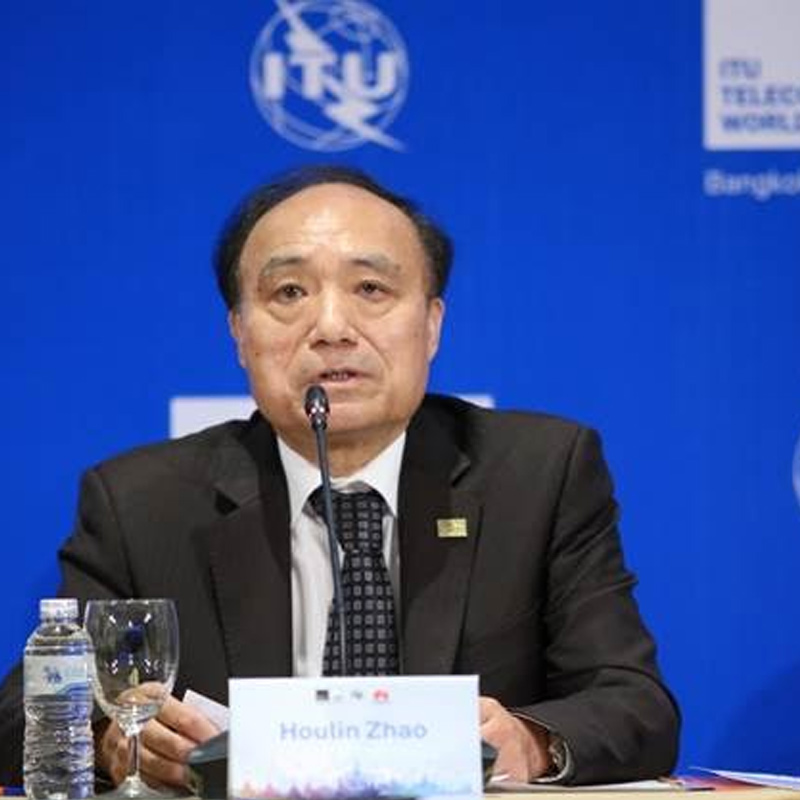
    Houlin Zhao, secretary-general of the ITU, made opening remarks at the exchange. He started his speech with appreciation to Huawei’s cooperation with ITU on the Exchange, and Huawei’s long-term support to ITU as its member. He pointed out that the ICT technologies and broadband infrastructure have become core economic competencies, critical for national competitiveness. Meanwhile, broadband has become people’s basic aspiration. It’s difficult for us to imagine a time without a broadband network and applications. Hence, Government should make broadband an imperative policy and persistently work on it.

    Development in the Asia-Pacific region has been very unbalanced, and there is great variation in connectivity across the region. According to Jin Yuzhi, Vice President of Huawei Southern-East Asia Region, Japan, Republic of Korea, and Singapore are world leaders, with broadband penetration of 95%. But in Myanmar, Bangladesh and Cambodia, less than 5% of the population has access to broadband. Speakers at the exchange said that in those countries, more government and policy support was required to accelerate infrastructure growth and increase external connectivity.

    “Broadband should be part of national strategy. Governments should encourage telecom investment and infrastructure development like submarine and land cables, data centers and other network development,”Jin said.

    During the exchange, Huawei and the ITU launched their White Paper on Broadband Regulation and Policy in Asia-Pacific Region: Facilitating Faster Broadband Deployment to offer policy guidance. The white paper calls on governments to lead infrastructure development, to build alliances incorporating different government departments and private industry, and to develop broadband-friendly industrial policy. Governments should improve infrastructure synergy and find ways to simplify the process of obtaining rights of way. They should require new buildings and renovation projects to include fiber connections, produce explicit standards for compensation for eminent domain, and start universal service funds. Governments should legislate comprehensive frameworks for ICT, expand international fiber links, loosen restrictions on carriers, investors, and infrastructure builders, release more spectrum, and make more efficient use of spectrum resources.

    During the exchange, speakers from many countries in the region agreed on the need to accelerate national broadband rollout to enable the digital economy. Leaders of regulatory agencies from Portugal, Thailand, Cambodia, India, Singapore and Malaysia discussed the development of broadband in their countries, and talked about the challenges they have faced and solutions they have developed. All parties said that they hoped for more global and regional cooperation, and that they were working to build more complete national industry policies, and improve the ICT investment climate to accelerate the development of their national broadband networks.

    Speakers from the event’s sponsor said that Huawei is a leading provider of global information and communications technology (ICT) solutions. The company has a depth of expertise as an ICT industry advisor, long experience delivering successful national broadband solutions, and global operations and systems for training telecommunications professionals. Huawei is ready to work with all the nations of the Asia-Pacific region to develop their broadband capacity, and to build a better connected Asia-Pacific.

    About 200 government officials, industry leaders, and technology experts around the region attended the exchange. ITU Telecom World, first held in 1971, is one of the most important and largest telecommunications expos in the world. The theme for this year’s expo is “Better Sooner. Accelerating ICT Innovation to Improve Lives Faster”.

  • ITU Telecom suggests government policy to drive broadband, digital economy

    ITU Telecom suggests government policy to drive broadband, digital economy

    MUMBAI: ITU Telecom World 2016 is in its second day today. Huawei and the International Telecommunications Union (ITU) jointly hosted the first Asia Pacific Exchange on Broadband Regulation and Policy. They also released the White Paper on Broadband Regulation and Policy in Asia-Pacific Region: Facilitating Faster Broadband Deployment. Speakers at the exchange called for more comprehensive broadband policies to guide development and speed the rollout of national broadband networks, as the basis for growth in the digital economy.

    Houlin Zhao, secretary-general of the ITU, made opening remarks at the exchange. He started his speech with appreciation to Huawei’s cooperation with ITU on the Exchange, and Huawei’s long-term support to ITU as its member. He pointed out that the ICT technologies and broadband infrastructure have become core economic competencies, critical for national competitiveness. Meanwhile, broadband has become people’s basic aspiration. It’s difficult for us to imagine a time without a broadband network and applications. Hence, Government should make broadband an imperative policy and persistently work on it.

    Development in the Asia-Pacific region has been very unbalanced, and there is great variation in connectivity across the region. According to Jin Yuzhi, Vice President of Huawei Southern-East Asia Region, Japan, Republic of Korea, and Singapore are world leaders, with broadband penetration of 95%. But in Myanmar, Bangladesh and Cambodia, less than 5% of the population has access to broadband. Speakers at the exchange said that in those countries, more government and policy support was required to accelerate infrastructure growth and increase external connectivity.

    “Broadband should be part of national strategy. Governments should encourage telecom investment and infrastructure development like submarine and land cables, data centers and other network development,”Jin said.

    During the exchange, Huawei and the ITU launched their White Paper on Broadband Regulation and Policy in Asia-Pacific Region: Facilitating Faster Broadband Deployment to offer policy guidance. The white paper calls on governments to lead infrastructure development, to build alliances incorporating different government departments and private industry, and to develop broadband-friendly industrial policy. Governments should improve infrastructure synergy and find ways to simplify the process of obtaining rights of way. They should require new buildings and renovation projects to include fiber connections, produce explicit standards for compensation for eminent domain, and start universal service funds. Governments should legislate comprehensive frameworks for ICT, expand international fiber links, loosen restrictions on carriers, investors, and infrastructure builders, release more spectrum, and make more efficient use of spectrum resources.

    During the exchange, speakers from many countries in the region agreed on the need to accelerate national broadband rollout to enable the digital economy. Leaders of regulatory agencies from Portugal, Thailand, Cambodia, India, Singapore and Malaysia discussed the development of broadband in their countries, and talked about the challenges they have faced and solutions they have developed. All parties said that they hoped for more global and regional cooperation, and that they were working to build more complete national industry policies, and improve the ICT investment climate to accelerate the development of their national broadband networks.

    Speakers from the event’s sponsor said that Huawei is a leading provider of global information and communications technology (ICT) solutions. The company has a depth of expertise as an ICT industry advisor, long experience delivering successful national broadband solutions, and global operations and systems for training telecommunications professionals. Huawei is ready to work with all the nations of the Asia-Pacific region to develop their broadband capacity, and to build a better connected Asia-Pacific.

    About 200 government officials, industry leaders, and technology experts around the region attended the exchange. ITU Telecom World, first held in 1971, is one of the most important and largest telecommunications expos in the world. The theme for this year’s expo is “Better Sooner. Accelerating ICT Innovation to Improve Lives Faster”.

  • TV premiere of Daniel Craig’s ‘Spectre’ on 23 October

    TV premiere of Daniel Craig’s ‘Spectre’ on 23 October

    MUMBAI: Movies Now is all geared up to air the television premiere of the Daniel Craig starrer James Bond movie Spectre. With Diwali round the corner, the movie will hit the TV screens on 23 October at 1 pm and a repeat telecast at 9 pm.

    Bond fans are also going to be treated to some prizes which are up for grabs during the premiere with a high-decibel marketing campaign. The channel has designed a four-pronged approach to engage with its audience, focusing on on-air, OOH, on-ground and digital mediums.

    It has roped in multiple partners for the premiere which is presented by Amazon, co presented by Huawei, driven by Ford, partnered by Airtel and in association with Raymond. The Experiential Marketing partner is Barcode.

    “James Bond is one of the most iconic characters from Hollywood and Spectre was one of the highest grossing movies in India in 2015. While all television premieres on Movies Now have always received a phenomenal response from viewers and advertisers, as category leaders we are the going the extra mile for Spectre because Bond holds a very special place in the hearts of Indians. The main focus of our marketing campaign is to reach out to a mass audience, targeting both Bond franchise loyalists and movie enthusiasts. With Spectre, we hope to re-create the same box office magic and success on TV,” said Times Television Network English Entertainment Cluster and Zoom senior vice president and head Vivek Srivastava.

    Besides promoting the premiere on the Times Television Network and various other channels across the Indian TV spectrum, Movies Now has also announced an exclusive In-movie Watch and Win contest. 4 lucky winners stand a chance to win an iPhone 7 each; all that they need to do is give a missed call and answer simple questions based on the movie.

    With a 10 city outdoor campaign across Mumbai, Delhi, Bengaluru, Chennai, Kolkata, Pune, Hyderabad, Cochin, Thiruvananthapuram and Hyderabad, the channel is supplementing this as an on-ground activation across 500 bars, which culminates in a mega-event of 3 simultaneous invite-only Bond-themed Spectre Parties held in Mumbai, Delhi and Bengaluru.

    Continuing with their focus on engaging with the urban youth, the channel’s digital initiatives include a special ‘Which Bond Are You?’ Instagram quiz and a day-long Twitter contest to be held on 23rd October with an iPhone7 and other cool prizes up for grabs.

  • TV premiere of Daniel Craig’s ‘Spectre’ on 23 October

    TV premiere of Daniel Craig’s ‘Spectre’ on 23 October

    MUMBAI: Movies Now is all geared up to air the television premiere of the Daniel Craig starrer James Bond movie Spectre. With Diwali round the corner, the movie will hit the TV screens on 23 October at 1 pm and a repeat telecast at 9 pm.

    Bond fans are also going to be treated to some prizes which are up for grabs during the premiere with a high-decibel marketing campaign. The channel has designed a four-pronged approach to engage with its audience, focusing on on-air, OOH, on-ground and digital mediums.

    It has roped in multiple partners for the premiere which is presented by Amazon, co presented by Huawei, driven by Ford, partnered by Airtel and in association with Raymond. The Experiential Marketing partner is Barcode.

    “James Bond is one of the most iconic characters from Hollywood and Spectre was one of the highest grossing movies in India in 2015. While all television premieres on Movies Now have always received a phenomenal response from viewers and advertisers, as category leaders we are the going the extra mile for Spectre because Bond holds a very special place in the hearts of Indians. The main focus of our marketing campaign is to reach out to a mass audience, targeting both Bond franchise loyalists and movie enthusiasts. With Spectre, we hope to re-create the same box office magic and success on TV,” said Times Television Network English Entertainment Cluster and Zoom senior vice president and head Vivek Srivastava.

    Besides promoting the premiere on the Times Television Network and various other channels across the Indian TV spectrum, Movies Now has also announced an exclusive In-movie Watch and Win contest. 4 lucky winners stand a chance to win an iPhone 7 each; all that they need to do is give a missed call and answer simple questions based on the movie.

    With a 10 city outdoor campaign across Mumbai, Delhi, Bengaluru, Chennai, Kolkata, Pune, Hyderabad, Cochin, Thiruvananthapuram and Hyderabad, the channel is supplementing this as an on-ground activation across 500 bars, which culminates in a mega-event of 3 simultaneous invite-only Bond-themed Spectre Parties held in Mumbai, Delhi and Bengaluru.

    Continuing with their focus on engaging with the urban youth, the channel’s digital initiatives include a special ‘Which Bond Are You?’ Instagram quiz and a day-long Twitter contest to be held on 23rd October with an iPhone7 and other cool prizes up for grabs.

  • IoT connectivity: Huawei, Schindler tie up

    IoT connectivity: Huawei, Schindler tie up

    NEW DELHI: Huawei has signed a Global Frame Agreement on Internet of Elevators & Escalators (IoEE) with global elevator manufacturer Schindler Group to cooperate in the future on the development of smart Internet-of-Things (IoT) components for a seamless connectivity of elevators and escalators.

    Huawei and Schindler will establish global partnership to develop a Connected Elevators Solution that is open, flexible, and scalable. The new IoT connectivity solution is an important element of Schindler’s digital platform and will enable Schindler to better monitor, analyze and leverage data generated from its elevators and escalators, and support the unified connection and management of Schindler’s one million elevators around the world.

    A Huawei release said more than one billion users rely on Schindler’s mobility solutions every day. Timely and efficient management of these assets is critical for safety and customer satisfaction.

    Schindler Group CEO Thomas Oetterli said: “The cooperation will help us to significantly reduce time to market for our new digital offerings.” Huawei Rotating CEO Eric Xu added: “Huawei is pleased to empower Schindler’s digital transformation.”

    Lux Research reported that, by 2020, the global Industrial IoT (IIoT) will be worth an estimated $ 151 billion. The IIoT includes factory machinery and industrial products, with one typical example being the Internet of Elevators & Escalators (IoEE). IoT technology transmits operational data from the elevators in real-time to enable elevator data simulation, achieving preventive maintenance through and cloud-based big data analysis. Elevator safety will be significantly enhanced, while the operational cost of the elevators can be largely reduced.

  • IoT connectivity: Huawei, Schindler tie up

    IoT connectivity: Huawei, Schindler tie up

    NEW DELHI: Huawei has signed a Global Frame Agreement on Internet of Elevators & Escalators (IoEE) with global elevator manufacturer Schindler Group to cooperate in the future on the development of smart Internet-of-Things (IoT) components for a seamless connectivity of elevators and escalators.

    Huawei and Schindler will establish global partnership to develop a Connected Elevators Solution that is open, flexible, and scalable. The new IoT connectivity solution is an important element of Schindler’s digital platform and will enable Schindler to better monitor, analyze and leverage data generated from its elevators and escalators, and support the unified connection and management of Schindler’s one million elevators around the world.

    A Huawei release said more than one billion users rely on Schindler’s mobility solutions every day. Timely and efficient management of these assets is critical for safety and customer satisfaction.

    Schindler Group CEO Thomas Oetterli said: “The cooperation will help us to significantly reduce time to market for our new digital offerings.” Huawei Rotating CEO Eric Xu added: “Huawei is pleased to empower Schindler’s digital transformation.”

    Lux Research reported that, by 2020, the global Industrial IoT (IIoT) will be worth an estimated $ 151 billion. The IIoT includes factory machinery and industrial products, with one typical example being the Internet of Elevators & Escalators (IoEE). IoT technology transmits operational data from the elevators in real-time to enable elevator data simulation, achieving preventive maintenance through and cloud-based big data analysis. Elevator safety will be significantly enhanced, while the operational cost of the elevators can be largely reduced.