Tag: Huawei

  • Huawei dives deep to surface seamless submarine terrestrial networks

    Huawei dives deep to surface seamless submarine terrestrial networks

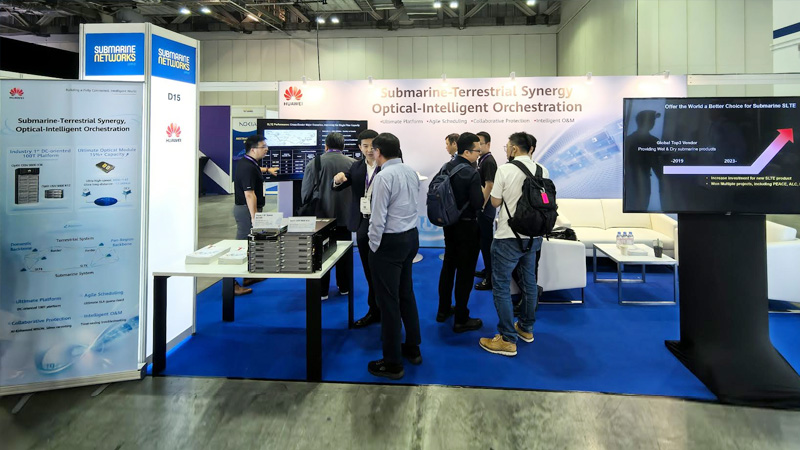
    MUMBAI: When it comes to the internet’s undersea highways, Huawei wants to make sure the data doesn’t hit traffic when it surfaces on land. At Submarine Networks World 2025 in Singapore, the company pulled back the curtain on its vision for Submarine-Terrestrial Synergy, Optical-Intelligent Orchestration, a bold reimagining of how submarine cables and terrestrial networks can work as one.

    For decades, the two domains have operated in silos, with limited interoperability and cumbersome management. Huawei’s new strategy looks to smash those barriers, promising cross-domain visualised management, coordinated scheduling, intelligent O&M, and end-to-end ultra-broadband services. The pitch: a network that’s not only faster, but smarter and greener too.

    Huawei unveiled the industry’s first DC-oriented 100T submarine-terrestrial integrated platform, the OptiX OSN 9800 K series. The specs are ambitious:

    .  Integrated architecture: One unified platform bridging submarine and terrestrial networks.

    .  Ultra-large capacity: 4T service processing per slot, 100T plus per chassis, and up to 96T per fibre.

    Ultra-high energy efficiency: Power consumption slashed to 0.1 W/Gbit, 65 plus lower than the industry average.

    .  Ultra-strong intelligence: Digital twin-powered O&M, boosting operational efficiency by 40 plus.

    Also showcased was Huawei’s latest 1.6T board for submarine SLTE systems. With adjustable rates from 300G to 1.6T and transmission distances stretching 11,000 km, the board promises to push submarine cables’ performance to new depths while ensuring flexibility for operators.

    Huawei president of optical transmission domai Gavin Gu summed up the ambition: “Huawei plans to build an integrated submarine-terrestrial network architecture featuring ultra-broadband, high reliability, agility and intelligence, enabling seamless transmission while significantly enhancing network O&M efficiency and service quality through intelligence.”

    With global digitalisation and AI adoption surging, submarine cables already carrying more than 95 plus of the world’s international data traffic are facing unprecedented demand. Huawei, with 30 years of optical transmission expertise, is positioning itself as a key architect of the next-generation internet backbone.

    By linking the deep sea to the data centre with a seamless, intelligent bridge, Huawei is betting that the future of connectivity lies not just in laying more cable, but in making every bit smarter, faster, and greener.

  • Skyworth Digital appoints new vice president to lead expansion

    Skyworth Digital appoints new vice president to lead expansion

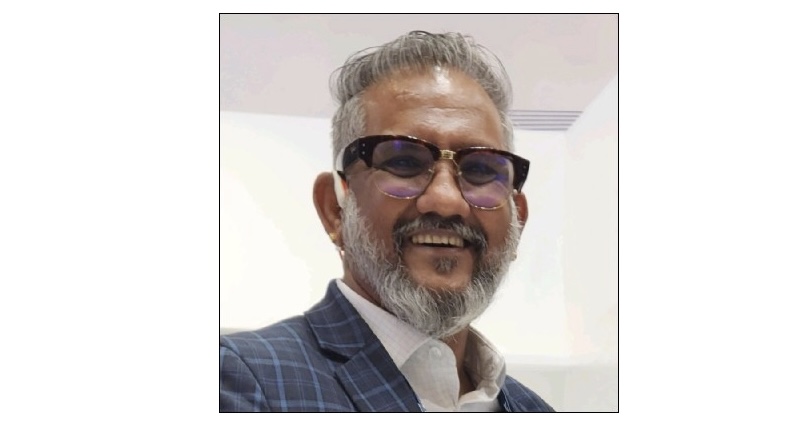
    MUMBAI: After steering Skyworth Digital’s India operations for seven years, Jayaprakash Thulasiraman has been tapped to lead the company’s new business strategy as vice president. The television and broadband equipment maker announced the appointment on LinkedIn, where it outlined the veteran’s remit: emerging business incubation, strategic partnerships, government affairs and “special assignments that call for experience, insight—and a spark of bold thinking”.

    Thulasiraman brings three decades of experience from technology and telecommunications heavyweights including Reliance, Vodafone, Motorola and Huawei. During his tenure as Skyworth’s general manager for India, the firm secured a coveted position among Tata Play’s top three partners in 2025.

    The appointment comes as Skyworth seeks to shore up its position in the broadband-focused digital television market. Under Thulasiraman’s leadership as country manager, the firm expanded its portfolio beyond traditional set-top boxes to include broadband customer premise equipment and fixed wireless access devices—a strategic pivot to capture the growing convergence of television and internet services.

    Before joining Skyworth in 2018, Thulasiraman held leadership roles at Optiva, Amdocs and Huawei, where he managed accounts for major Indian telecoms. Earlier in his career, he oversaw Vodafone India’s terminal business, orchestrating the first official iPhone launch in the country in 2007.

  • Nokia ropes in Hitesh Chhabra as sales director

    Nokia ropes in Hitesh Chhabra as sales director

    MUMBAI: Hitesh Chhabra, a veteran of the ICT world with over 23 years of experience, has jumped ship from Chinese tech giant Huawei to join Nokia as sales director this month. The move marks the end of a nearly 14-year run at Huawei, where he most recently served as director of enterprise solution sales and chief technology officer for the company’s enterprise business group in India.

    During his tenure at Huawei, Chhabra led solution sales operations across India, with responsibilities ranging from yearly business planning and pre-sales team management to strategic consulting and C-level engagement. His role involved extensive customer interaction and sales team leadership focused on technology strategy execution.

    Prior to his Huawei chapter, Chhabra cut his teeth at several tech heavyweights, including a two-year stint at Alcatel-Lucent (now part of Nokia), where he worked as a solution manager at the IP Transformation Centre. His CV also includes nearly four years at UTstarcom, where he served as senior network specialist and assistant manager at the Global Escalation Centre, and shorter tenures at Tata Consultancy Services and Cisco’s Technical Assistance Centre.

    Known for his team-oriented approach and customer relationship development skills, Chhabra brings to Nokia his expertise in ICT solution sales, campus and enterprise networks, and strategic leadership—precisely the toolkit the Finnish firm will be keen to deploy as it battles for market share in the enterprise space.

  • Honor taps Zivpreet Kaur to lead India marketing

    Honor taps Zivpreet Kaur to lead India marketing

    MUMBAI: Smartphone maker Honor has appointed Zivpreet Kaur as its marketing director for India from late 2024. Zivpreet brings substantial experience from her previous role as regional media, advertising & communications lead for the Middle East and Africa region, where she managed media strategy across multiple territories.

    The appointment comes at a crucial juncture for Honor, which has been working to strengthen its position in India’s fiercely competitive smartphone market. Zivpreet’s  expertise spans digital transformation, e-commerce, and cross-functional team leadership—skills that align with Honor’s  ambitions in the Indian market.

    Prior Honor, where she is celebrating her sixth year, Zivpreet held senior positions at Huawei consumer business group and Dentsu Aegis Network, where she managed global accounts including General Motors, MasterCard, and Philips. Her track record includes developing integrated marketing campaigns and optimising media investments across traditional and digital channels.

    The move signals Honor’s  commitment to bolstering its marketing operations in India, where the brand faces stiff competition from established players. Zivpreet has been tasked with shaping consumer engagement models and reinforcing brand recognition in what remains one of the world’s fastest-growing smartphone markets.

  • ShareChat gets Wavemaker’s Ajit Varghese as chief commercial officer

    ShareChat gets Wavemaker’s Ajit Varghese as chief commercial officer

    NEW DELHI: ShareChat has appointed Ajit Varghese as its chief commercial officer. Varghese brings in a track record of 25+ years of leading large-scale business transformations and building diverse and successful businesses around media, creative, digital, data, content, sports, and performance.  

    Prior to joining ShareChat, Varghese was the global president at WPP group’s Wavemaker, known among the world’s top five media networks with clients ranging from industry giants like Vodafone, L’Oreal, Huawei, IKEA, Paramount Pictures, Chanel, Xerox, Netflix, Chevron, Beiersdorf, and Tiffany.  

    In his new role at ShareChat, he will be pivotal in expanding and strengthening the platform’s revenue efforts and building a robust monetisation approach with the strategic content partnership. He will also spearhead its marketing functions, to be inclined towards brand elevation, aligned with business centricity. He will be reporting into ShareChat COO & co-founder Farid Ahsan. 

    This key appointment announcement comes amidst Sharechat witnessing exponential growth in the past few months. The upward curve not only mirrors the new user growth and higher user engagement on the platform but also reflects an increased interest among B2C brands, for leveraging Bharat internet audiences. 

    Farid Ahsan said, “Brand marketing and monetisation is going to be the core focus of ShareChat and we will direct our efforts towards elevating the brand positioning through strategic communications approach. Ajit, with his leadership capabilities and expert knowledge of the media, marketing and advertising domain, will play a critical role in further building brand awareness, deepening relationships with our business stakeholders and driving ShareChat toward the next phase of growth.”  

    Ajit Varghese said, “Having previously worked and transformed several global organisations, it has always been a hidden desire to contribute towards transforming an Indian organisation to global repute. I believe ShareChat in the next few years will evolve as the default partner to every brand, homegrown and global, who intends to engage with the internet-first population. As the digital advertising landscape awaits the inclusion of over 400 million new internet users, mostly inclined towards native languages, ShareChat will stay at the forefront of unveiling a new digital era. This will be an exciting journey for me as I look forward towards contributing to ShareChat’s growth and building a win-win relationship with our community of users, partners and business stakeholders.” 

    An alumnus of Xavier Institute of Management, Bhuvaneshwar, and a graduate in agriculture engineering from Orissa University of Agriculture and Technology, Varghese has worked across India, Singapore and London. With years of leadership positions across globally-reputed media organisations like Wavemaker (WPP), Maxus (WPP), Madison World, he has been recognised as a Global Media Leader with a track record of turning around organisations, leading rapid growth, and gaining market dominance. 

    Over the past few months, ShareChat has been strategizing to become a future-ready organisation by delivering an immersive social experience to its users and building a global product. The platform has collaborated with leading music labels in India and across the globe, set up ‘ShareChat Labs’ in Silicon Valley, and driven content partnerships with various news and entertainment organisations. Over 150 B2C brands have partnered with ShareChat to explore its strength in engaging with Bharat (language-first) internet audience on the platform. 

  • Huawei obtains world’s first CC EAL4+ security certificate for 5G products

    Huawei obtains world’s first CC EAL4+ security certificate for 5G products

    Huawei, the global leading provider of ICT technologies, has won the world’s first Common Criteria (CC) Evaluation Assurance Level(EAL)4+ certificate for 5G products. This certificate indicates the security of Huawei 5G base station products reaches the world-leading level and can provide trusted security assurance for 5G wireless access.

    CCN (Centro Criptologico National), a Spain certification authority, officially issued the certificate to Huawei 5900 Series 5G gNodeB software on May 20. The evaluation has been conducted in accordance with the provisions of the Spanish IT Security Evaluation and Certification Scheme, and the conclusions of the evaluation facility in the evaluation technical report are consistent with the evidence adduced, according to CCN.

    CC certification is a widely recognized security certification in the world. There are seven levels. For EAL4+ or higher level, the source code needs to be tested and certified. EAL4 is “the highest level at which it is likely to be economically feasible to retrofit to an existing product line.”

    “Huawei believes that trust needs to be based on facts, facts need to be verifiable, and verification needs to be based on common standards. By using industry practices, certification is the most effective way to address security issues,” said Jay Chen, vice president of Huawei Asia Pacific.

    Huawei has incorporated internationally recognized cyber security certification standards and requirements, such as CC and FIPS, into product R&D, and actively invites third-party labs to certify Huawei products. Currently, its products and solutions have obtained more than 270 security certificates (including CC, FIPS, and CSA).

    “The awarding of the world's first 5G CC EAL4+ certificate once again demonstrates our 5G leadership. Huawei will continue to explore innovative 5G technologies, and to facilitate global operators in achieving 5G commercial use,” Jay added.

  • Huawei & Apple manufacturing tussle predicted, former may overtake Samsung

    MUMBAI: American analyst firm Drexel Hamilton has stated that current mobile trends point to Huawei, presently the world’s second largest android smartphone manufacturer, dethroning Samsung to become Apple’s main challenger in years to come.

    With a wide pipeline of products to cater to various market segments, both Huawei and Honor have put the needs of the Indian consumer first and have focused on channel, retail, brand, marketing and services, to strengthen the business base and streamline operations and customer service.

    Keeping in line with the government’s ‘Make in India’ policy, Huawei recently opened a manufacturing facility in Chennai. After China, India has the most localized facilities with a pan-India presence having 14 circle offices, over 200 service centers across India, two customer experience centers in India, one R&D center and Innovation Solution & Demo Center each. Huawei also has 8000 employees across India (92% Indian) with 3000 working in R&D.

    Huawei/Honor EMUI presently supports 14 local Indian languages and was the first brand to introduce the SOS feature in all smartphones, as per the government’s directive. Huawei/Honor are presently looking at expanding offline distribution in a bid to help increase accessibility of their smartphones in all markets.

  • 5G network: Huawei launches 5000 series station & microwave bearer solution

    MUMBAI: Innovative technologies empower mobile operators to build a 5G-oriented network. Huawei has launched its 5000 series base station in Mobile World Congress 2017. It has also unveiled 5G-oriented microwave bearer solution.

    The futureproof base station provides up to 10 times the support capacity of existing base stations as well as 30% better performance and 20% OPEX savings. With its new-generation 5000 base station, Huawei leads the industry in technology innovation, user experience and commercial success.

    The radio unit of the 5000 series is a modular design based on leading Power Amplifier (PA) technology. It achieves the highest level of integration in the industry with best-in-class performance and high output power. It supports flexible multi-channels such as 4T4R, 8T8R and 64T64R (Massive MIMO) capabilities, thus greatly improving spectrum efficiency, network capacity, and throughput. Such innovations will benefit operators building efficient, agile, and more economical networks. Such networks have 10 times the capacity to meet future mobile broadband (MBB) traffic growth.

    Huawei Wireless Network Marketing and Solution president An Jian said, “Huawei is dedicated to solving operator challenges and meet their demands. Broadband traffic will continue to surge with emergence of new and diversified applications. The innovative 5000 series base station provides powerful performance and futureproof design to help operators building leading ultra-mobile broadband networks. This accelerates the exploration of business opportunities, meets demands of evolution from 4.5G to 5G, and achieves commercial success.”

    The 5000 series base station baseband modules use new-generation baseband signaling processing chipsets and new architecture design to support Multi-RAT and Massive MIMO technologies.

    Huawei has also unveiled the microwave bearer solution. Featuring ultra-high bandwidth, ultra-low latency, and cloud readiness, it supports 5G application scenarios, helping operators manage future challenges to 5G bearer networks.

    5G application scenarios include enhanced Mobile Broadband (eMBB), Ultra-Reliable and Low Latency Communications (uRLLC), and massive Machine Type Communications (mMTC). The IMT-2020 report, published by ITU, defined 5G and laid out its requirements, specifying that 5G should support 10 Gb/s per user, 1 ms latency, and 1 million device connections per square kilometer. To meet the challenging requirements on bandwidth, latency, and flexibility, Huawei has developed its 5G-oriented microwave bearer solution, which features the following:

    • Ultra-high bandwidth: 20 Gb/s

    Huawei’s solution maximizes the value of the microwave spectrum through super dual band and large capacity E-band technologies to provide 10 to 20 Gb/s broadband access, meeting the requirements of carrier customers. Huawei is also actively researching D-band (110 to 170 GHz) and W-band (75 to 110 GHz), and is facilitating the development of standards that will support the smooth evolution to 50 – 100 Gb/s.

    • Ultra-low latency: less than 100 μs

    To reduce the per-hop microwave latency from hundreds of μs to tens of μs, Huawei uses its own chips and optimization algorithms in its solution. This fulfills the requirement for ultra-low latency. In addition, routing microwave allows for more flexible deployment of mobile bearer networks, reducing the latency of X2/eX2 services in LTE and LTE-A scenarios.

    • Cloud readiness: improving efficiency and meeting multi-service requirements

    Using Huawei’s All-Cloud Network architecture, the 5G-oriented microwave bearer solution significantly improves the efficiency of network operations, enables agile service provisioning, and reduces OPEX. Combined with the sub-solutions of Huawei’s All-Cloud Network solution, the 5G-oriented microwave bearer solution can efficiently transmit different services.

    The launch of the 5G-oriented microwave bearer solution will drive the evolution of the microwave industry towards large bandwidth, low latency, and cloud readiness to enable the business success of operators.


  • Huawei’s ‘NFV Solution’ awarded ‘Best Enabler’

    MUMBAI: At Mobile World Congress 2017 in Barcelona, Huawei’s NFV solution was awarded Best Technology Enabler. This award points to the recognition within the industry of Huawei’s leading capabilities and outstanding performance in NFV architecture, technology, commercial application, and the evolution toward Cloud Native. Organised by the GSMA, Mobile World Congress is the world’s most influential event in the mobile communications sector, and the GSMA Global Mobile Awards are considered the highest honor within the industry.

    Huawei hit the ground running by developing NFV solutions using the Cloud Native concept. Moving beyond basic virtualization, Cloud Native enables telecom networks to become fully distributed and automated, giving them greater elasticity, robustness and agility. This helps operators enhance network efficient and deliver inspired user experiences, and enable agile innovation in services for better digital transformation.

    Elastic: The Cloud Native network has a distributed architecture, so resources can be dynamically deployed wherever they are needed to support applications. It is a “sensing” network that recognizes the services deployed, and an elastic network that can adapt to support those services. There are two types of elasticity: capacity elasticity and topology elasticity. Capacity elasticity means that all network resources are pooled. Network software can orchestrate any part of the fabric across multiple data centers and capacity is no longer the bottleneck. Topology elasticity means the ability to deploy resources to any required geographical location, enabled by control/user plane separation and service orchestration.

    Robust: An intelligent network builds in robustness at the network and service levels. The network is decentralized, with stateless elements, N-way redundancy and inter-DC service provisioning. Active fault injection, monitoring and self-healing processes are combined with big data analysis and management of services, enabling fault prediction and automated controls. Ultimately, an intelligent network delivers carrier-class service reliability even over unreliable infrastructure.

    Agile: Agility means service orchestration + programmability + ISSU (in service software upgrade). Flexible service assembly, service autonomy, and distributed deployment are achieved by decomposing network functions into microservices, and applying a service governance framework, data model and a programmable user interface. Services and new functions can be delivered as needed, so the network can instantly respond to the needs of very different services required by different industries.

    Using key Cloud Native technologies, Huawei has already rolled out its Cloud Native VNF solution, which has been widely adopted on core networks. Huawei remarked at MWC 2017 that the company will continue to optimize solutions revolving around service needs and through such efforts will help to build 5G and better connected agile networks.

    As of January 2017, Huawei had won over 170 contracts for cloud core networks. In addition, Huawei is a strategic partner and co-innovator with Vodafone, Deutsche Telekom and other global leading operators on their Cloud Native strategies. At MWC 2017, Huawei presented a Cloud Native demonstration developed with Vodafone. Looking to the future, Huawei will continue to help operators build more open, more innovative, more sustainable ecosystems around their Cloud Native networks, with the aim of creating more new services and more value.

  • Huawei upgrades on Brand Finance list

    MUMBAI: Huawei advanced to become the world’s 40th most valuable brand in 2017, up seven places from its position a year ago, according to the “Global 500 2017 world’s most valuable brands” list. In its annual ranking, British brand valuation firm Brand Finance, the world’s leading brand valuation firm, valued the Huawei brand at US$ 25.23 billion, up 28% from the previous year.

    Every year, Brand Finance evaluates thousands of global brands to determine its “Brand Finance Global 500” list of today’s most valuable brands. In 2017, Brand Finance used its Royalty Relief methodology to calculate a theoretical brand royalty rate. The rate estimates the theoretical cost of utilizing a brand, based on the assumption that the brand is not already owned. The evaluation also included a thorough analysis of public awareness, brand loyalty, promotional events, marketing investment, employee satisfaction and corporate reputation. Brand Finance also took into account the brand’s future anticipated income.

    In 2016, Huawei boosted its worldwide branding efforts through a series of device launches and global marketing campaigns. Thanks to its innovative, premium flagship P and Mate Series smartphones, which represent Huawei’s industry-leading design, Huawei’s brand made significant global gains last year. In 2016, Huawei shipped over 140 million smartphones globally, which made it the world’s third largest vendor, with a market share of 10%, up 29% from a year ago. Figures indicate that Huawei is growing faster than the industry average. Huawei Consumer Business Group revenue for 2016 topped 178 billion RMB, an increase of 42% from 2015, marking the fifth consecutive year of steady growth.

    To continue to raise its brand profile worldwide, Huawei focused on implementing world-class global marketing campaigns that included design, fashion, entertainment and sports. According to an IPSOS survey, Huawei’s global brand recognition rose to 81% in 2016, up from 76% in 2015. The success of Huawei’s branding efforts is best reflected by customer sentiment. Overseas customer consideration and preference improved significantly by 66.7% and 100% respectively, compared to 2015.

    Brand Finance isn’t the only organization that has recognized Huawei’s significant brand impact. In fact, multiple global agencies have noted Huawei’s rising star, including WPP’s Millward Brown, BrandZ and Interbrand. Published by WPP’s Millward Brown, BrandZ ranked Huawei at No. 50 on the Top 100 Most Valuable Global Brands list, while Interbrand named Huawei No. 72 on its 100 Best Global Brands of 2016. Huawei has featured on both lists for consecutive years, demonstrating Huawei’s continued successes in building an exceptional global brand.