Tag: HTA

  • Tabla maestro Zakir Hussain and his tryst with tea

    Tabla maestro Zakir Hussain and his tryst with tea

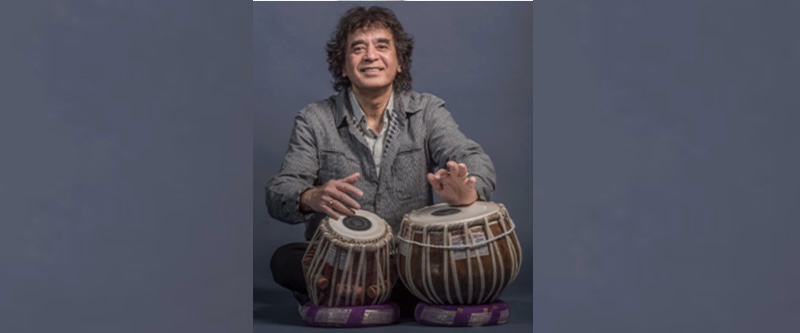
    MUMBAI: Our memory of Zakir Hussain is that while he was eloquent, he preferred to let his  tabla do the talking. Whenever he stepped on stage, sat down in front of his tabla, the audience would go silent, in awe of a maestro. His endearing smile before every performance, spoke of his humility, building his connect with those who had come to hear his tabla talk. Yes, they clung on to every word he spoke too.

    Sadly, we will not be able to hear him speak any more. Zakir Hussain passed away on 15 December in a hospital in San Francisco of idiopathic pulmonary fibrosis, a condition that develops following a scarring of the lung tissue. He had been hospitalised for the past two weeks. He was only 73.

    Taj Mahal and Zakir Hussain

    What the advertising industry and lay consumers will remember him for is his  tabla playing skills during his mesmerising performances as well as for the Brooke Bond Taj Mahal  TV commercial which sprang him into the homes of all of India. And it is still etched in many of our minds from that era.

    Forbes, a few years ago gave us an insight into what went into the making of the TVC and how it chose the tabla magician to endorse the brand.

    Th tea  brand was launched in 1966 and was seen as catering to upmarket “western” consumers. Research had revealed the even the aspirational middle class had started to take to Taj Mahal tea. The company decided to relaunch it in the eighties and broad base its appeal.

    Connoisseurs of tea, research suggested, put colour, smell and taste as criteria  for choosing a tea brand. The tea leaves used in the Taj Mahal had a distinctive brown colour and an intoxicating aroma. They also had a flavour which could only come after the meticulous vetting process done by the tea master, a task that requireds immense effort and dedication.

    Taj Mahal and zakir hussein

    The relaunch therefore had to bring in Indianness into the communication. Added to the western perception of Taj Mahal tea, it would be the perfect blend to broad base the messaging and communication.

    HTA was the advertising agency and it hired film maker Sumantra Ghoshal to make the TVC. KS Chakravarthy, yes our very own Chax , and KV Pops Sridhar were at the agency then. Chaks was the  copywriter then and his love for musical instruments, especially the tabla, thought Zakir Hussain would be the perfect choice as he reflected both western and Indian values. He lived in the US, yet he played the tabla – an Indian instrument -the world over, and with the best of musicians globally. 

    It was decided that the backdrop would be the iconic Taj Mahal in Agra and the film would portray Zakir practising on his musical instrument with his long locks  of hair flying as he was immersed in his riyaaz. His dedication to riyaaz would be akin to the hours in the lab that a tea master would take to come up with the perfect blend.

    Zakir Hussain Taj Mahal Tea

    Taking a break, Zakir was seen sipping a cup of tea. And a female voice  stated “Wah Ustaad wah!” Zakir in turn replied: “Arre Huzoor, wah Taj boliye” in his inimitable style. The voice over for the commercial was given by the famed Harish Bhimani.  

    The TVC ran on state-owned broadcaster Doordarshan and it struck a chord with the masses. Not only did Zakir’s tabla playing equate the idea of perfection, the Taj Mahal monument was also rated as amongst the wonders of the world. And the rest, as they say, is history.

    The brand later used other musicians like Niladri Kumar on the sitar and Rahul Sharma on the santoor in its TVCs and Zakir, himself appeared with other celebs like Ruby Bhatia and Alisha Chinai, but what we recall even to this day is the first TVC which featured him. Such was the power of the first ad.

    Zakir would also be involved in Hollywood either making an appearance or composing music for films like Apocalypse Now, The Second Best exotic Marigold Hotel, and Monkey Man, according to ImDb.

    The son of tabla legend, Ustad Allahrakha Khan,   Zakir Hussain Allaraka Qureshi is survived by his wife Antonia Minnecola and two daughters Anisa and Isabella Querishi. He will be sorely missed by them and his two brothers Taufique and Fazal Querishi – both tabla players of renown. And of course he will be missed by millions of fans of classical Indian music and the art and style of the tabla as performed by Zakir Hussain. 
     

  • Rajit Desai joins Mindshare as partner – consulting

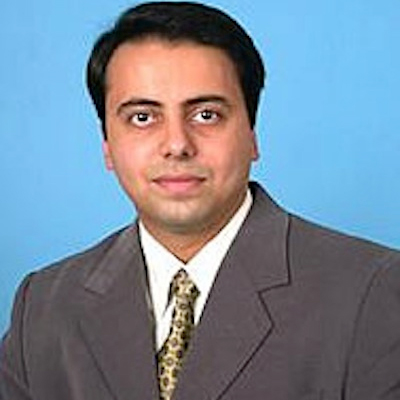
    Mumbai: Mindshare has strengthened its consulting and analytics discipline in the west with the appointment of Rajit Desai as partner – mindshare consulting.

    In his new role, Desai will actively contribute towards developing and restructuring Mindshare‘s business consulting offering for clients in west region.

    He will be reporting to the Mindshare consulting and analytics head of practice Sandeep Pandey.

    In his last stint, Desai served as the VP and head of Lab center (research and strategy hub) at Lodestar UM.

    Pandey said, “Our nature of work requires people from strong consulting and business strategy profile and Rajit has a combination of both. It is part of our larger talent restructuring within consulting discipline and you will hear soon about many senior profiles joining from different industries.”

    Desai said, “This exciting role is a logical next step for me. I see this as a big opportunity and I look forward to help address client‘s marketing and business problems and grow the practice along with the high quality team at Mindshare.”

    Having worked in the marketing vertical and as media consultant for various companies like HTA, Sony, Times Now, Loadstar, Media e2e and Turner Broadcasting, Desai comes with 16 years of work experience in the media function.

  • ‘With all the new delivery platforms, we are at the doorstep of a very interesting phase’ : Pradeep Hejmadi – Tam Media Research vice president

    ‘With all the new delivery platforms, we are at the doorstep of a very interesting phase’ : Pradeep Hejmadi – Tam Media Research vice president

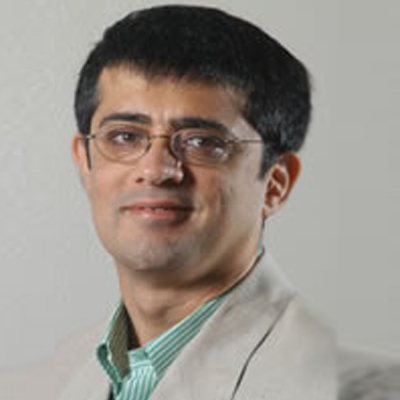
    He has been associated with a wide variety of assignments in the domain of media planning and broadcast management. Now he’s buried into hardcore research.


    It’s been just over six months since Tam Media Research vice president Pradeep Hejmadi joined the company and when we mention that to him, he seems shocked at how time has flown.


    His last assignment was with the kids’ channel Nick. His experience traverses through various media organisations like Turner International, Discovery India, HTA and The Times of India.


    Speaking to Indiantelevision.com’s Hetal Adesara Hejmadi dwells on the various issues that concern the television industry today and also on the exciting phase that it entering.


    Excerpts:

    It’s been just over six months since you joined Tam, how has the journey been so far and what was the mandate given to you when you joined?

    The journey has obviously only begun but it’s been good fun. Being on the broadcast side, you see one view of the world. There I was doing a whole host of stuff that is quite different from what I’m doing here. So from that point of view it is a refreshing change to come to audience research and to help people to converse with data.


    In terms of mandate, the idea was simply to focus on two areas: one is on the needs of the broadcasters and to keep the system abreast in terms of the areas that are emerging as interest areas for the industry per se.


    The other mandate is to get people to make decisions on the basis of the information that they have. Some people tend to have a biased approach towards numbers as research sounds like such a difficult animal to manage and tame. Our focus has been to try and make sure that people are able to read audience behaviour and act on it. And hopefully start seeing some response on the basis of what they are doing so that they can get far more structured in the way they go about their businesses.


    The environment is pretty crazy as we are operating in a very heterogeneous market and it is not easy to use any information and just act on it. Many a times the devil is in the details so our focus is really to find that devil and help people tame it.

    Can you throw light on the new initiatives that Tam is or will be undertaking and in which areas?

    Not too much of what we do is an industry secret, so I’m sure that you know pretty much everything. The Elite panel is something that is going to be launched and the current panel expansion is also underway. The panel expansion is a nine month process that we started in the beginning of this year. By the fourth quarter of this financial year, we should be ready. We have consulted the industry and many people have told us not to make a mid-year change in the measurement science. So after consensus from the industry, we are looking at January 2007 to switch to the new universe.

    What about the launch of the Elite panel and what according to you will be the data thrown by it in terms of viewership patterns? How much of importance will it hold in the coming days in terms of tracking viewership?

    The Elite panel will be up by July this year.


    The way that we have crafted the panel has not been to bring out any nuance but to focus on a segment. Everyone wanted to have an audience profile, which is the top end of our entire market structure. So in Mumbai and Delhi, we are now going to have a panel, which will represent the behaviour of the top three or four per cent of the population.


    Our focus has been to use all the quantitative data that we can get and construct that profile in such a manner that it robustly segments the elite from the national panel. Again we have a whole set of variables through which we have been successful in bringing that point out.


    In terms of behaviour, once the panel is up people will see what happens. There are a lot of myths and that is a constant in any industry. But once the panel is up people will be able to see the reality as it is.


    Obviously, given that the elite are the top three or four per cent of the population will have a different lifestyle and it will reflect in their media consumption as well. Right now we don’t have the panel up so I can’t even force a guess as to what the panel will throw up. But it should be very interesting and the industry is very keen on getting that kind of information.

    Which are the broadcasters who are specifically interested in the elite panel?

    Surprisingly, all the broadcasters are interested. For the Hindi general entertainment channels, the aim is to talk to everybody and they don’t want to exclude the elite. English entertainment channels are also very keen because they feel that the core component of their viewership is the elite. But a lot of these feelings and aspirations that broadcasters have at present are driven by perception. But as the data comes out we will be able to find out the reality.


    A few of the things that we have seen is that for the elite the segmenting elements in terms of defining them differ by market. For example, in Delhi, the definition for elite was a much trickier one than it was for Mumbai. But now for both the markets we have been able to arrive at variables that describe that segment very well.

    ‘In the digital age, numbers will keep rapidly changing so we needed to find ways of being able to pull out from a large sample a very robust estimate of DTH penetration as it stands’

    So the elite panel will be only in Delhi and Mumbai?

    Currently we are looking at only these two cities for the elite panel.

    With new delivery platforms like IPTV and mobile TV coming in this year and also keeping in mind the new DTH platforms launching, is Tam undertaking any research in these areas?

    We have just done a penetration study, which has brought out estimates of what the DTH number is for households, the small number of the addressable conditional access boxes that are there and also what the current incumbent players have in terms of market share.


    Those numbers are already in place. The fact is that in the digital age, numbers will keep rapidly changing so we needed to find ways of being able to pull out from a large sample a very robust estimate of DTH penetration as it stands. The large sample needs to be touched, collected and reported in a very short period of time. We were able crack that by using the IMRB household panel, which has shown very interesting numbers. As things pan out, we will be working towards getting the universe estimates updated more frequently. We will also be able to understand the rollout of this phenomenon in different markets in a very different manner.

    Is this a difference of viewership of people watching DTH and those watching C&S?

    At the moment we don’t know because we are not measuring DTH. To us the mandate from the industry was to measure any phenomenon which had a market share of five per cent and above. If any phenomenon was below five per cent of a market then there is no point in measuring that.


    So from our point of view we have been doing establishment surveys to measure a phenomenon. So if CAS or DTH becomes five per cent of the market then we will have to report on it.

    So are you saying that DD Direct and Dish TV DTH subscribers do not add up to five per cent of the market?

    No it is not five per cent of an individual market.

    Once Tata Sky and Reliance launch their DTH, will Tam begin measuring viewership on DTH?

    Once DTH arrives and reaches a five per cent critical mass, we will begin measuring it. Now whether it is pre or post the launch of Tata Sky DTH is immaterial.

    If you get 300 channels as against 100, will you watch three times the TV? It will be interesting to find out

    What will be the difference in the backend infrastructure for measuring DTH?

    There will be a difference because these signals are digital. Currently, primarily because the market is analog is nature, we had meters which worked on analog. Now we’ve brought in state-of-the-art TVM5 meters which can measure DTH and any digital and IPTV signals. These are the meters that we will be deploying for measuring viewership on DTH.


    So the elite panel will be on TVM5 meters and also all the metros will be moving to TVM5 meters.

    What according to you is going to be the impact on programming content after the launch of these new platforms?

    This is a very interesting question you raised. There is one aspect of what DTH providers will do to justify a person to shift from cable to DTH. And there is another part of the picture, which is what the consumer will do once the new DTH platforms are launched.


    DTH platform players have already realized that to drive people to take a box or dish and to go through the motion of having a one on one relationship with the service provider, they will have to add some value over the basic tier. So from their point of view, they are trying to build and aggregate as much content and provide as much variety as possible. Whether consumers will watch or not, we will know once we know what content has been aggregated.


    It will be a game of wait and watch to find out whether tastes will change. But the fact is that tastes changed when we shifted from terrestrial to cable and satellite. So going by that, tastes should change with DTH coming in but how much and by what measure will have to be seen.


    Obviously some rules of the game will change. For instance, currently distribution does play a very critical role. At that time, the kind of TV sets will not matter because all these households will be remote households by default because they will switch channels off the set top box (STB). All of these households will get all the channels on the STBs provided they pay for them. So it will become television neutral and also cable bandwidth neutral.


    In one sense it becomes a level playing field across consumers. Now if you get 300 channels as against 100, will you watch three times the TV? It will be interesting to find out. I have a feeling that over a period of time people and their tastes change. So you will see a change in behaviour but over what period of time and will it be an easy or painful switch-over will be ascertained by various constituents.


    From our perspective, we need to have measurement that is representative and precise. We need to have people understanding what is coming out of this system so that they can then funnel it back.


    We are actually at the doorstep of a very interesting phase. In six to eight months’ time we will start seeing some things changing.

    What are your views on conditional access system (CAS)? How is it going to impact the industry if and when it comes into place?

    From a long term perspective it is obviously good for the industry. Nothing happens very easily. We know the resistance to change that we as human being have. On CAS it has got into a kind of a mess and has had a bad history. It also got much politicized and hence because of that and a whole host of things, it has made life difficult for CAS.


    But I think once DTH rolls out and channels announce their pricing for DTH, it will help CAS. It is very good that we have a body like the Telecom Regulatory Authority of India (Trai), which has put in certain norms to help platforms iron themselves out. So in their regulation the ‘must provide’ clause has been put in and pricing parity has been brought in so that channels can’t have different pricing for different platforms. This will help CAS and DTH.


    Intrinsically there are some issues with CAS. One of them is inter-operatibility. As far as CAS is concerned, if you stay in Chembur and then move to Churchgate, you might not be able to use the same box. Whereas this problem does not arise in DTH.


    In Chennai, for example CAS did not fly because the tastes of that market is very different. Also the popular regional channels are all free to air. So the number of people who were ready to pay for that box was very small. But in a lot of other markets, most of the Hindi entertainment channels are all pay. As long as they don’t buckle because of advertising revenue pressures and stay pay, they could fuel growth of CAS.

    Tam has been tracking viewership in Chennai, where CAS has been implemented. What have been the learnings from there?

    CAS penetration is very low in Chennai. The pricing is very exorbitant. For instance, initially, the channels that were on STBs and were of interest to the mass population were kids channels and English entertainment channels. If you added up all those channels on an a la carte rate, the cost of the box was four times the cost of annual subscription for these channels. Now that’s prohibitively expensive.


    In that market, it was a first launch, so it is understandable if Sumangali might have adopted the strategy of not wanting to price it down that much. But obviously the value proposition was not that compelling. This is not the case with a lot of northern and western markets. In these markets a lot of Hindi content is pay, which has appeal. Therefore it might drive the box much faster than it did in Chennai. So Chennai is really an exception.

    Going forward, what according to you are the issues that broadcasters will face in the coming years with new technologies launching? Do you have any words of caution for them?

    I don’t have any word of caution for them mainly because of one reason – I don’t see any threat, I only see an opportunity in the way things are happening. Consumers have consumed channels for a while and they like the programming they watch. The positive thing that is happening now is that a broadcaster is seeing an opportunity in a disguised form of various distribution routes.


    If broadcasters see that as an opportunity and seize it, it might be a lot more good news for them than what it seems to be, with certain reservations. If you get your pricing right; if you make sure that as a broadcaster you are not biased towards a distribution platform, it is only going to be better because there are issues with the kind of TVs in a household and in what kind of analog frequency band is there with cable. Plus there are issues with the number of people you can serve with one cable system. All of these will cease to exist with DTH.


    A consumer will start making a choice and give their preferences, whereas broadcasters will be able to solidify the product over a period of time. So that revenue line will become a far more solid line.


    Obviously, there will be a painful and uncertain phase but that is there everywhere. People will have to learn to deal with it but it will take a slightly longer time. Consultation can work much better than confrontation in many a situation. At this stage people in the industry need to communicate more effectively… forget strategy and that’s what will help them.

    Do you see any other major event impacting the television industry this year?

    If I say yes, I might be wrong. If I say no, I might be wrong too. I really don’t know. I think the days ahead are going to be fun as all the different genres are reinventing themselves in order to get a lion’s share, whether it is music, kids, regional or Hindi general entertainment channels, all of them are rethinking their approach.


    I don’t know what else will be big this year, but religious channels are catching up big time. Sports is going through the roof in terms of the number of events. With so much of cricket, I’m not sure whether it will have that novelty value. It will have mass appeal but whether all masses will run for it will be worth watching.

    What are the genres that will work this year? Will reality shows still rule the roost?

    Reality is a very broad term, it’s like saying – serials, which brings everything under one category. But within reality we have seen only a few things happening. Reality has its pluses and minuses, you can’t overdo reality and start running it like a soap as it tends to become boring. It needs to have that ‘Wow’ factor.


    Also notable is the fact that unfortunately all the sequels of reality have not done that well. So it also tells you something about such programming. But there is a growing appetite for it from the consumers’ side. So from that point of view it will stay… in what form and format, we will have to see.


    If you see the number of people going to Mipcom from India, you know that reality is not going anywhere. Over a period of time things will start ironing out in the reality genre.


    In reality a unique concept, which is executed well gets you walk-ins faster than a soap. For anybody who wants a shot in the arm, reality is the quick fix solution. But then, they need to have a solid strategy to retain that new audience and capitalise on it.