Tag: HT Media Ltd.

  • Yajur Gulati Joins Cinépolis India as lead – brand & communications

    Yajur Gulati Joins Cinépolis India as lead – brand & communications

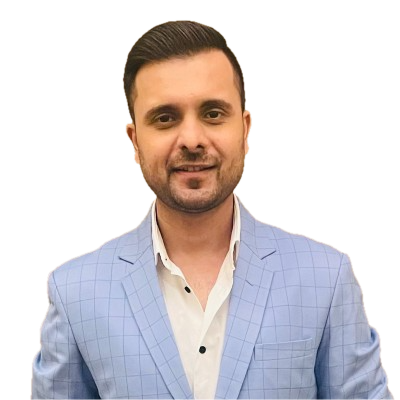
    MUMBAI:  Yajur Gulati, a distinguished marketing professional with extensive expertise in brand strategy and communications, has taken on a new role as lead – brand & communications at Cinépolis India. This strategic appointment marks an exciting chapter in Gulati’s career, as he takes charge of enhancing the brand’s presence and communication strategies across India.

    Gulati brings a wealth of experience to Cinépolis India, with a career spanning over a decade in diverse marketing and leadership roles. Before this, he led integrated media and communication strategies at Philips, where he played a pivotal role in promoting categories like male grooming, beauty, oral healthcare, and personal health. His initiatives included media planning, digital marketing, product launch activations, and brand health KPIs.

    Earlier in his career, Gulati held significant positions at companies such as HT Media Ltd., Reliance Brands Limited, GroupM, and LinkedIn, managing marketing operations, digital strategies, and brand activations. His impressive portfolio also includes managing marketing campaigns for Fortune 500 clients like Google, Microsoft, and Unilever.

    A graduate of Delhi University with a bachelor’s in commerce, Gulati further honed his marketing expertise through a postgraduate diploma in marketing from SVKM’s Narsee Monjee Institute of Management Studies (NMIMS).

    In his new role at Cinépolis India, Gulati is expected to drive innovative campaigns and strengthen the brand’s consumer connection, ensuring its leadership in the entertainment and cinema industry.
     

  • Shruti Bhargava returns to Republic Media Network as national branded content head

    Shruti Bhargava returns to Republic Media Network as national branded content head

    MUMBAI: Shruti Bhargava has officially commenced her new role as the national head of branded content and associations at Republic Media Network. In her announcement on LinkedIn, she expressed her gratitude, stating, “Thank you Hersh Bhandari for your unwavering support and for the opportunities to help me grow in the professional journey.”

    With over 15 years of extensive experience in the media industry, Shruti Bhargava’s career reflects remarkable growth and versatility.

    She has held significant leadership roles, including general manager – north at Republic World since January 2024, overseeing operations and advertising revenue across platforms. Prior to this, she served as regional head – north & east India at Goldmines Telefilms, managing advertising revenue for diverse television channels. Between April and December 2022, she was general manager at Republic World, spearheading branded content initiatives and campaigns.

    Earlier, as deputy general manager at Republic Media Network Sales, she led the North India business for Republic TV from June 2021 to March 2022.

    Bhargava’s career also includes senior manager positions at TV Today and HT Media Ltd, where she managed advertising sales and marketing strategies across radio, television, digital, and print media, cementing her reputation as a well-rounded leader in the industry.

    Bhargava’s academic background includes a Bachelor of Technology in computer science from the Indian Institute of Technology, Kanpur, and a master’s degree from the University of Illinois at Urbana-Champaign. Additionally, she has participated in significant initiatives such as the International Antarctic Expedition as a Climate Force Ambassador.

    As Bhargava steps into this new chapter at Republic Media Network, her vision is set on strengthening brand partnerships and creating impactful content that resonates with audiences across the nation.

  • VBS 2024: OTT aggregation and beyond

    VBS 2024: OTT aggregation and beyond

    Mumbai: India is in the grips of seismic changes as far as video and broadband consumption is concerned. Pay TV cord-cutting is rampant even as free TV subscriptions are on the rise and OTT buy-ins are churning with the signs up for certain platforms stagnating even as others are seeing rapid increases and some are seeing cataclysmic drops. Aggregators of OTTs are popping up on the horizon promising cheap bundles along with value-added services for cable TV and DTH. There’s a rush to set up free advertising-supported TV channels by TV set manufacturers and smart TV device makers. There’s the Jio factor where it is seeking to convert most pay TV customers to free streaming of video content by offering access to consumers at no cost. The consumer continues to demand bandwidths higher than ever imagined even as prices are dropping. Margins are under pressure as every player goes one-up on each other to acquire and retain customers.

    Clearly, the video and broadband distribution landscape has not been as vibrant as it is now… How long will this pot-boiling continue? What will the magic potion of video and broadband look and taste like? And what’s the end game? Indiantelevision.com held its 20th edition of Video and Broadband Summit better known as VBS at Sahara Star Hotel, Mumbai.

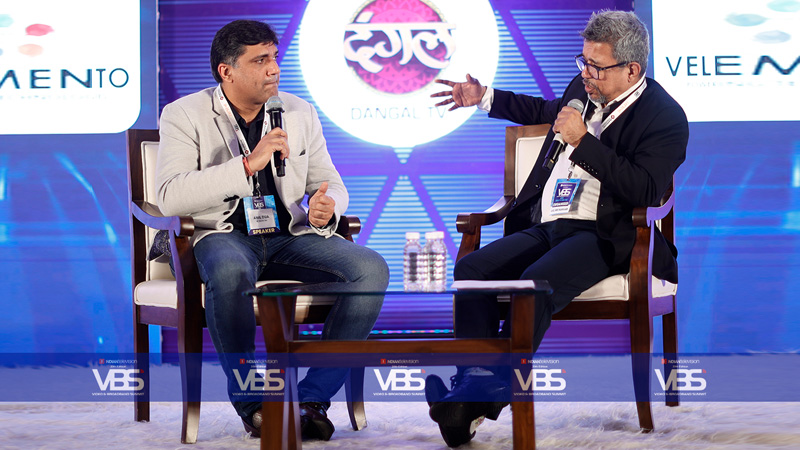
    The fireside chat on the topic: ‘OTT Aggregation And Beyond’ had HT Media Ltd chief revenue officer (HT Labs) Anil Dua in conversation with Indian Television.com group founder, chairman & editor-in-chief Anil NM Wanvari.

    Beginning the conversation, Wanvari asked, “How is OTTplay overcoming the challenge faced by consumers who seek ease of use?”

    Dua replied, “Now you don’t need to go to different apps. we have possibly the largest OTT aggregator platform in India called OTTplay, which covers more than 35 apps containing live TV channels. Gone are the days when you have to worry about the hassle of going from one platform to another to check what exactly you want to watch. So we have solved the problem of what to watch, through our recommendation engine, and also the proper way to stream it because in one app, you will get all the apps together. So that’s OTTplay. Maybe this is a good time for us to show you what our platform looks like.”

    After an AV of OTTplay was played on the screen, Wanvari asked, “You’re aggregating and you’re serving to telcos, you’re servicing to ISPs, cable. So what’s the percentage distribution between them?”

    To which, Dua replied saying, “So we have a very good mix of the internet service providers with whom we do the bundling with the broadband plans. We also have cable operators, through whom we reach out to our customers. We also have a direct-to-customer channel through our digital landscape, which helps us reach out to our clients.”

    He added, “If you look at our content, we have a very good balance across regions. That’s one of the big USPs that we bring to the table. Let’s start with the South. If you go to Coimbatore, their number one OTT Sun NXT is with us. If you come to AP or Telangana, their number one and two OTT and TV, aha are with us. When you go to a Hindi heartland, we have Bhojpuri, for Ludiana we have Punjabi, We have, of course, the large Hindi OTTs, i.e., ZEE, Sony, Lionsgate, etc. We have most of these OTTs. So we are relevant across a spectrum of customers. I believe we are relevant to everyone”

    Wanvari interjected, “I’m not talking about relevance. I’m talking about penetration so far. My understanding is, that you’ll have been pushed so aggressively in the west. You’ll have been more aggressive up north, and possibly down south, rather than the west and the east.”

    Dua answered, “You’re right! So far, south is obviously the leading market for us, followed by the north, west, and then the east.”

    Wanvari then asked, “What’s the kind of watch time that people are spending across your apps?”

    Dua replied, “By DNA, we are a tech company. We have customers at the middle of everything that we do. We track watch hours, average time per user, and average time that each user spends. I won’t be able to share the exact numbers, but it’s pretty good. We have seen that in tier two and three cities, our average time per user goes up significantly. So that’s one of the insights that we have got with focus on the regional content that we have done.”

    Wanvari said, “What is that? Are those areas TV dark?”

    Dua answered, “Things are changing in this pandemic industry. I believe that so far the OTT penetration has largely happened in the larger towns, and there’s a lot of scope in tier two and tier three for both OTT platforms as well as aggregators like us.”

    Moving on to the next question, Wanvari asked, “Are the other lower tier of society picking up your app because of your long package with all 35 plus all the 400-500 TV channels? That’s pretty affordable at Rs 3000/year. But people can pick up regional packs at 100 rupees, etc. So what is finding the most takers and where is it finding, in tier two, and tier three? Is it the upscaled customers or is it the lower ones? Is it mobile or is it Smart TV?

    Dua answered, “So first of all, by design, we are a TV-first app. We want more and more customers to be watching us on television., When I say, TV, it is TV and mobile by default. That’s the first thing. The second thing as you talked about the packs. We have packs ranging from, as high but like you rightly said you said, as affordable as 250 rupees a month for 32 OTTs and 350 plus five TV channels a month. If you come to the regional packs like the Hindi heartland pack or a north pack or an east pack, that starts from as low as Rs 100 a month. So they’re very affordable. The high-income strata in tier two are the most takers. The metros are more around the larger packs.”

    Wanvari further asked, “Do you have specials coming up from time to time, special promotions? Secondly, do you also have special price promotions for the content that has been put out there by your partners?”

    Dua said, “We belong to the HT Media group. We are a media company ourselves. We have our reach through our newspapers, through our digital landscape that we have. One is that we use our own media to reach out to the customers. And we have the content nudges that go to the customers who subscribe to us.”

    He added, “The answer to both your question is yes! If you look at our digital reach across our basic platforms, hindustantimes.com or live mint or live Hindustan, we have 300 million plus, on a monthly basis and use. So we use that, to reach out to our prospective customers to start with and to the subscribers who are already with us. There are time-to-time content nudges that go to them, the new arrivals coming in and reaching out to them to not only continue to be with us but also watch and use us, so that we can offer value to our customers.”

    Wanvari immediately asked, “ Are you EBIDTA positive or are you bleeding?”

    Dua answered, “We are right now in the start-up mode. We are in our third year running. We are now very close to coming to a place where we can start generating revenue.”

    Wanveri further asked, “Is the capacity full or do you see more partners coming in? How do OTT players partner with you all?”

    Dua replied, “Today, we are 32 OTTs. Very soon, by June, we should roughly be at about 43 to 45 and we clearly see that in the short term. In the short to medium term we should be at 50 plus OTTs. So there is no limitation with respect to the capacity. Partnering is simple. If the content is relevant to our customers, we are willing to discuss and partner. There is obviously a different discussion with each of our content partners that we have.”

    Wanvari quickly asked, “So, how long does it take to come up with a partner, to conclude a partnership? Is the process quick or prolonged?”

    Dua answered “My experience has been that gently the closure of the commercial discussion in this kind of business takes about 30 days and then another about 30 to 45 days. In about two and a half months we are GTM ready.”

    Asking a question about their subscriber base, Wanvari asked, “Where do you all see yourselves two to three years down the line? Do you think the appetite will continue in the space when it gets competitive?”

    Dua replied saying, “If you look at the growth of broadband, today we have roughly 50 per cent plus penetration in rural India. The smartphone penetration itself is growing into tier two and tier three by more than 25 per cent every year. So growth is not going to be an issue. Talking about the large telcos, remember that still one-third of the market is with non-telco broadband providers. That market is not only there today but it is also growing. We clearly see that as the market for us. And with bundling with their proposition is how to we want to reach out to the customers. On top of that, we have our D2C channel, which caters to the first two-thirds part of the customer base. A lot of customers of large telcos who have not used the content that is provided by them. So they keep looking for the right platform, and the right value proposition. So that’s how we’re building this whole mix.”

    Wanvari then asked, “You said discoverability is very easy for your customer. How different are you all from Netflix, which is supposed to be the gold standard, in terms of recommendation, search, discovery, and all of that?”

    Dua answered, “We talk about the four pillars of our business. The first pillar of our business clearly is the user experience and the user interface that we bring in. We have single sign-on for most of the apps. If you have, for example, OTTplay with you, and you want to watch Scam 2003 on Sony LIV, because you don’t need to have a Sony LIV app. So it’s deep integration. You can just move from one platform to another within OTTplay without having those apps. That’s the first thing. The second thing that we bring to the table. You talked about Netflix recommendations. If you are a customer or a subscriber of OTTplay, you get AI-based recommendations from all 32 platforms and not just one. So if you’ve watched an action movie or content on one of the platform, the next time you come to OTTplay player you will get recommendations across. The third thing is we are extremely regional in the content that we bring in. Fourthly, of course, is the affordability. We want to reach out, we want to be affordable to the masses of India.”

  • Bharat Gupta assumes the presidency at INMA’s South Asian Division from Jagran New Media

    Bharat Gupta assumes the presidency at INMA’s South Asian Division from Jagran New Media

    Mumbai: Jagran New Media’s CEO, Bharat Gupta, has been elected as the regional president of the South Asian Division of the International News Media Association (INMA), succeeding the earlier president, Praveen Someshwar, MD & CEO at HT Media Ltd. Jagran New Media is the digital arm of Jagran Prakashan Ltd, which operates businesses in Print, Radio, Outdoor & Digital. This leadership transition was part of the recent election conducted by INMA during its annual business meeting, where new officers and regional directors were appointed for the International board. The team also extends its gratitude to Earl J. Wilkinson, Executive Director and CEO of the International News Media Association (INMA), for his exemplary leadership.

    Other regional presidents on the INMA International Board include Petteri Putkiranta, President, News & Featyre, Sanoma Media Finaland, Helsinki, Finland; Troy Niday, Chief Operations Officer Sonoma Media Investments – The Press Democrat, Santa Rosa, California; and Pablo Deluca, Director de Asuntos Institucionales Infobae Buenos Aires, CABA, Argentina (Latin American Division President).

    Ecstatic about the appointment, Jagran New Media CEO Bharat Gupta said, “I am deeply honoured to take on the role of South Asia Division President at the International News Media Association (INMA) and contribute to a global dialogue on the future of news media. My primary focus will be driving scale, impact, and sustainability for digital news media companies, and central to my vision is the creation of a collaborative platform where we can all ideate, collaborate, and innovate. This approach is especially crucial in the context of the ongoing disruption caused by AI and ML technology stacks. There will be a special emphasis on culture building within our organisations, particularly through fostering Diversity, Inclusion, and Equity, to ensure a transformative impact across the media landscape. By integrating these elements, I aim to contribute meaningfully to INMA’s mission and support the evolution of the Indian media sector within the global framework.”

    With a wealth of experience and expertise in the media sector, Mr. Bharat Gupta will be responsible for laying down the futuristic vision of the South Asia Division, overseeing all activities and championing INMA’s core values of sustainable journalism, success, innovation, and continuous learning. Before his elevation to president, he served as an integral part of INMA South Asian Division as its Vice President, which showcased his firm dedication to INMA’s

    mission, focusing on fostering growth, revenue, and brand development within the dynamic media universe.

    With a global Board of Directors overseeing the association’s activities, INMA continues to be at the forefront of providing professional training and development opportunities for its 20,000+ members across 94 countries. It leads the news industry with initiatives to understand better digital subscriptions, intelligent data, products, advertising, and the emerging relationship with Big Tech platforms.

    Along with serving as the president of the INMA South Asia Division (International News & Media Association), he is also a governing council member and co-chair at the Internet and Mobile Association of India (IAMAI); a founding member of the Digital News Publishers Association (DNPA); Executive president of the Misinformation Combat Alliance; a board member of the International Fact Check Network (IFCN); an Advisory Board Member of FT Strategies, London; and a member of the Google Global News Advisory Group and YouTube Global News Advisory Group; and the founding member & president of the Misinformation Combat Alliance (MCA), a cross-industry collaborative effort to combat and limit the spread of misinformation. 

  • Print on recovery road, pin high hopes on festive season: Industry heads

    Print on recovery road, pin high hopes on festive season: Industry heads

    NEW DELHI: The Covid2019 pandemic threw the print publication industry into crisis. When the lockdown was imposed, circulation was severely impacted in major cities which caused newspapers to go into survival mode. Buffeted by declining readership, print companies resorted to cost-cutting, downscaled manpower, put investments on hold and channelled resources into the digital landscape. The industry took lessons from this experience, and kept the ball rolling.

    Now, six months later, the print industry is on the way back to normalcy, experimenting with new opportunities, and scaling the business for the future.

    At Pubnation, the virtual roundtable organised by Indiantelevision.com, industry heads and representatives from leading media houses – The Hindu chief revenue officer Suresh Balakrishna; Malayala Manorama VP marketing and ad sales Varghese Chandy; Punjab Kesari Group director Abhijay Chopra; Sakshi Media Group ED & CEO Vinay Maheshwari; HT Media Ltd executive director Rajeev Beotra; The Pioneer general manager Gurudatta Jha – discussed the new hopes the print business is looking forward to, what monetisation models can publishers’ experiment with, and expectations from the festive season. The session was moderated by indianielevision.com founder, CEO and editor-in-chief Anil Wanvari.

    With the economy gradually recovering from the aftershocks of the pandemic, newspaper publishers are witnessing an all-time high market consumption. According to Malayala Manorama’s Varghese Chandy, there is no drop in circulation, and the business for them is growing month-on-month in terms of getting advertisements.

    HT Media Ltd executive director Rajeev Beotra echoed the same thought, saying: “Each month is better than the previous one. The language dailies did not see any disruption in distribution, they were pretty much stable. The disruption was confined to large metros and big cities. English publication got a little impacted, but from a revenue standpoint we are doing well. We are on a good track, and the focus is to drive the growth engine.”

    The Hindu chief revenue officer Suresh Balakrishna acknowledged that the company took some cost-cutting measures during the lockdown period, when advertising was a complete washout. He also noted a curious anomaly in circulation figures amid the pandemic. “We had a sort of mix reaction during the time – Kerala, Andhra Pradesh, and Telangana were reasonably unaffected in terms of circulation but in states like Karnataka and Tamil Nadu circulation numbers went down in April, May, and June and then we had to bring them back gradually in the unlock phase.”

    In terms of advertising, the publication registered a month-on-month progress of the graph, and August and September were particularly good for the business, with things looking up ahead of the festive season, Balakrishna added.

    Sakshi Media Group ED & CEO Vinay Maheshwari agreed that the market is opening up a little, and it did not encounter many challenges in Andhra and Telangana on the circulation front, but the Hyderabad market was a stumbling block. “The impact has been more on English dailies in contrast to regional and Hindi dailies, but now we are doing fairly well and advertisers are showing interest again which is a good sign for the business and the overall industry.”

    Declaring that the worst is over, The Pioneer general manager Gurudatta Jha also pointed out some unexpected setbacks. “Education and real estate were counted as big properties in terms of advertisement but the business is not coming from that side. But then there are new opportunities which are helping the business. We will do better as time progresses.”

    Festive demand

    Most of the newspaper houses are hopeful that the festive season will bring a little cheer for the industry, and advertisers will leverage the print medium, as they do every year.

    “Diwali is the biggest money-maker for us, followed by the wedding season. We might not see a rush in the market but segments like paints, edtech, electronic goods are doing very well due to demand across various products. The use of technology adoption is leading to a new wave of consumption. That is going to translate into advertisements,” said Punjab Kesari Group director Abhijay Chopra.

    Besides edtech companies, advertising from the auto sector, especially during the auspicious Navratri-Diwali period, is also on the rise, said Balakrishna.

    “I was not expecting car sales to go up so fast but it is growing, 2-wheelers have also become very important. These are the pocket of opportunities that have come up for us. In the Diwali seasons, we expect categories like edtech, automobile, e-commerce participating big this time, and the season will offer more opportunities. However, we need to learn to handle this new ecosystem better,” added Balakrishna. 

    Chandy held the view that people were reluctant and advertisers were apprehensive about putting money in Onam, but those who have invested money are reaping the benefits. “Advertisers should utilise this opportunity as there is a pent-up demand now, and people are buying across categories.”

    Beotra, too, is keen to make hay while the sun shines. “In this year’s IPL, we have seen very different forms of advertisers. While some traditional advertisers may be conspicuous by their absence, several other edtech players are becoming a huge category. This will continue to be a disruptive, volatile world for a long time to come. We will have to be vigilant and look for opportunities.” 

  • Helios Media elevates Shrutish Maharaj as chief sales officer

    Helios Media elevates Shrutish Maharaj as chief sales officer

    MUMBAI: Helios Media has promoted Shrutish Maharaj as chief sales officer. 

    He has been a part of the company’s core team since its inception four years ago.


    In the new role, Maharaj will be responsible for spearheading the revenue and content marketing functions at Helios. He has about 12 years of experience and has earlier worked with organisations like India Today Group, HT Media Ltd, Network 18, UTV News ltd and Times Group in various capacities.


    Maharaj said, “The last four years haven’t been the easiest but surely most exciting and enriching. We have created benchmarks and then recreated them. We are constantly redefining the way people approach media sales and it’s most satisfying to see larger networks counting on us as experts of specialty products. We have built this team of handpicked people for whom sales is a passion; more than just a career and I would say our people are our biggest assets. I am definitely thrilled at this development and am geared up for all the challenges and opportunities coming our way this year.”


    Helios Media currently handles revenue mandate for MTunes HD, Living Foodz, Epic TV, Music F Fatafati, food vertical of Femina (WWM Group), Fashion TV in exclusive capacity.


    Apart from the above he will also lead Brand Chef, which is an indigenous initiative by Helios connecting the brand, consumer and content in the food domain.


    Commenting on Maharaj’s appointment, Helios Media managing director Divya Radhakrishnan said, “I am glad that the reins are now in the right hands and Shrutish will continue to make us proud. His organisational pride of wearing the Helios Spirit on his sleeve has been heartening and also infectious.”


    Helios Media COO Bala Iyengar added, “Shrutish is a perfect example of what it takes to sprint your way to this coveted position, which was waiting for him to occupy. The right persona that a rapidly growing organization likes ours is what Shrutish has worked towards developing and successfully at that.”

  • HT Media officially launches Fever 104 FM

    HT Media officially launches Fever 104 FM

    MUMBAI: Further strengthening its position as a leading media company, HT Media Ltd today announced the official launch of a FM radio station in Delhi under the brand name Fever 104 FM in collaboration with Virgin Radio.

    The Delhi station would be followed by launch in Mumbai, Bangalore and Kolkata (need not necessarily in that order).

    Commenting on the launch, business head S. Keerthivasan said in a statement, “Our brand, our focus on quality, and our people will be our key competitive advantages in an increasingly cluttered and undifferentiated radio market place.”

    He added that the station reflects the “evolving tastes of discerning, urban Indians” who are comfortable with both Hindi and English and seek a good music experience more than anything else from their radio.

    “To give the consumer a radio experience comparable with anywhere in the world, Fever 104 has invested in, and ensured through our tie-up with Virgin, the best quality infrastructure and a highly competent and experienced talent pool,” Keerthivasan said.

    According to an official release, Fever 104 FM is an adult contemporary music station that targets consumers in the age group of 15-39 years and offers them a format radio experience.

    The tag line for Fever 104 FM highlights the philosophy of the radio station: more music, less talk.

    The four-ad launch campaign, developed by Lowe Lintas, projects the brand imagery for Fever 104 FM as one that is contemporary, youthful and innovative.

    Virgin Radio, the programming partner for Fever, has its presence in variious markets, including Bangkok, South Africa, London, Paris and Malaysia.

    Fever’s parent HT Media’s flagship brand is the English daily Hindustan Times. The company also owns Hindi daily Hindustan.

    Apart from the newspapers, the media house owns Hindi magazines Nandan and Kadambini and the company is now looking at launching a business paper.