Tag: Hrishikesh Mukherjee

  • Tata Play Classic Cinema celebrates the ‘The Showman of Indian Cinema’

    Tata Play Classic Cinema celebrates the ‘The Showman of Indian Cinema’

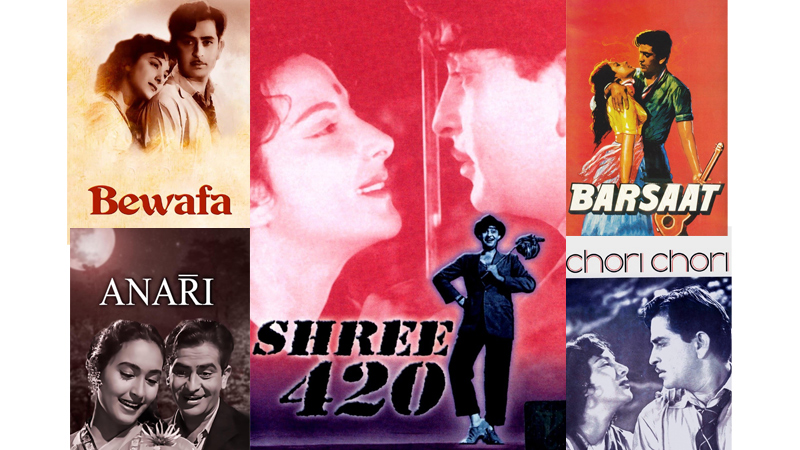
    Mumbai: The silver screen has witnessed the magic of many legendary actors, but none quite like the ‘Showman of Bollywood’, Raj Kapoor. With his charming smile, charismatic screen presence, and a keen sense of storytelling, Kapoor remains an enduring icon in the hearts of film enthusiasts.  He was not just an actor, but also a film director, producer, and a pioneer of Indian cinema, whose influence continues to resonate with audiences worldwide. A tribute to this Bollywood legend’s legacy, Tata Play Classic Cinema is proud to present the Raj Kapoor Film Festival, a celebration of the cinematic legacy of the legendary actor and filmmaker. From November 1st to November 10th, every day at 5 PM, this festival promises to transport you to a bygone era, allowing you to relive the magic of Raj Kapoor’s iconic movies.

    Barsaat

    Barsaat, directed by Raj Kapoor himself, is a must-watch classic that was released in 1949. This film marked Raj Kapoor’s directorial debut and set the stage for his illustrious filmmaking career. The film’s popularity can be attributed to its unforgettable music, with iconic tracks like “Jiya Beqarar Hai Chhayee Bahar Hai” and “Hawa Mein Udta Jaye”. Barsaat captures the essence of romance and drama with captivating performances by Kapoor and Nargis, who were also a real-life couple at the time!

    Bewafa

    Directed by the acclaimed director ML Anand, this 1952 film is a heartfelt melodrama that explores the complexities of love, betrayal, and forgiveness. The movie features an ensemble cast, including Raj Kapoor, Nargis, and Ashok Kumar, who deliver captivating performances that tug at your heartstrings. It shines in its portrayal of complex emotions and showcases Raj Kapoor’s remarkable acting. The film delves into the intricacies of human relationships and the consequences of infidelity, making it a must-watch for those who appreciate vintage Bollywood cinema and the captivating performances of its iconic stars.

    Shree420

    Directed by Kapoor himself, this 1955 film also showcases his incredible versatility and charisma as the lovable Chaplinesque tramp, Raju, who arrives in the bustling city of Bombay with dreams of making it big. With an enchanting narrative, unforgettable performances by Nargis and Nadira, and iconic songs like “Mera Joota Hai Japani” that continue to resonate with audiences, ‘Shree 420’ not only entertained but also offered a poignant commentary on the allure and pitfalls of urban life. The film’s enduring legacy includes the influence it’s storyline left on Indian cinema and the various accolades the movie grabbed including the National Film Award in 1956.

    Anari

    Anari (1959) is a delightful Bollywood classic that you don’t want to miss! Directed by Hrishikesh Mukherjee, the film stars the legendary Raj Kapoor alongside the talented Nutan. With a heartwarming storyline, ‘Anari’ captures the essence of innocence and simplicity in the hustle and bustle of city life. The film beautifully portrays the transformation of a naive, but kind-hearted man, Raj, into a responsible and compassionate individual, thanks to the spirited and independent Aarti. Together, they create a charming on-screen chemistry that’s both endearing and unforgettable. The movie also won many awards  for its winning performances, bringing Raj Kapoor the Filmfare for ‘Best Actor’. Anari is a timeless tale of love, trust, and personal growth.

    Chori Chori

    Chori Chori, a 1956 Bollywood gem starring the legendary Raj Kapoor and the enchanting Nargis in lead roles, is a delightful romantic musical directed by Anant Thakur. This endearing film, tells the tale of a charming and penniless musician, played by Raj Kapoor, who falls in love with a runaway heiress, portrayed by Nargis. The film beautifully captures their journey as they discover love in the most unexpected places, with remarkable chemistry between the lead pair. ‘Chori Chori’ is not only a timeless classic but also renowned for its soulful music, with songs like “Yeh Raat Bheegi Bheegi” and “Aaja Sanam Madhur Chandni Mein” that have become all-time favorites.

    Experience the timeless charm of Raj Kapoor’s classics daily at 5 pm exclusively on Tata Play Classic Cinemas on 318 from 1 to 10 November.

  • Not Just for Laughs: Tracing Humour In Indian Advertising

    Not Just for Laughs: Tracing Humour In Indian Advertising

    NEW DELHI: One of the Navarasa, hasya (humour) has been an integral part of Indian performance and creative arts since 500 CE. From its presence in the scriptures to medieval performing arts of the nakkal, bhands, bahurupi, bhagatiya, etc in the form of small skits heavy on slapstick comedy, humour has always been a source of entertainment for Indians. At one point in time, Indian movies, be they melodramas or potboilers, were incomplete without the comic relief – an actor whose role was to break the tension with his jokes and shenanigans, without disrupting the narrative.Even the classic action blockbuster Sholay had the characters of Jailer and Soorma Bhopali. Admittedly, it took some time for us to adapt to more subtle and satirical forms of comedy. Take Bollywood for instance – from Mehmood, Asrani and Keshto Mukherjee in the 70s and 80s, to Johnny Lever, Shakti Kapoor and Govinda who ruled the roost in the 90s – there isn’t much difference in their brand of zany, in-your-face humour.

    There were filmmakers like Hrishikesh Mukherjee, Basu Chatterjee and writers like Premchand who were experimenting with more subtle forms of comedy, but the attachment of humour with a performance created a blanket view for most of the audience. Certain programmes in the earliest days of television in India were also humorous in nature; ZabaanSambhalKe, Tu Tu Main Main, Ye Jo Hai Zindagi, and Office Office being some examples. Almost all of them relied on a slice-of-life but very heavy-handed humour that aimed to elicit loudguffaws ratherthan leave a pleasant smile on viewers’ faces. A similar flow could very well be traced in the Indian advertising too, of which humour has been a great part. 

    How Humour Found Its Way In Indian Advertising

    "Indian ads have been using humour in various forms for more than five decades. The early ads used to be in cartoon form in newspapers. Then it went to TV and now in digital formats,” Brand Building founder and brand strategist Ambi Parameswaran shares. According to him, humour is just another emotional appeal that connects well with the consumers and has done a good job in increasing the brand propensity among the masses.

    Here’s a look at how the element of humour has evolved in Indian advertisements. 

    The Early Pun-tastic Days 

    If we look at the early print ads of the 1940s and 1950s, humour was largely missing from all brand communications. Those were the days of long-form, simple, informative copies aimed at hard-selling the products; be it for Rexona, Lux, or Tata Benz. 

    It was in the mid-1960s that brands like Amul and Parle started experimenting with quirkier messaging, thereby introducing humour to Indian advertising. With the use of puns, these brands sought to catch the reader's eye in an instant and also tickle their funny bone.However, the underlying messaging remained the same, indicating the what and why of the product.

    Brands like Binaca Talc and political parties like Shiv Sena also made some bold moves with their tongue-in-cheek way of stating things. Both the ads came out in 1967.

    The 70s were much braver and incisive with their comedy; Amul took jibes at major social and political matters, while Surf’s Lata Ji tried to claim her territory back from the new entrant Nirma, which offered a similar product experience at a cheaper price. 

    This was probably the turning point in Indian advertising as brands started getting in more deeply into the humour space. Vicks (Vicks Ki Goli Lo, KhichKhich Door Karo), Luna (Chal Meri Luna La),  and LijjatPapad (KurramKurram) were some of the other iconic ads of those days.

    The Jibes of the ‘90s & ‘00s

    The following two decades saw a great influx of creativity in Indian ad-making. As the economy liberalised, creating greater competition in the market, brands were forced to fight for attention and loyalty. As a result, a great number of print and video ads were churned out during this period. 

    This era also witnessed a finer form of humour, with personification and exaggeration, taking centre stage. However, most ads still focussed on getting a loud laugh from the viewers. The impact of sitcoms and serials with family values also reflected in the new slice-of-life form of advertising, which had already begun in the 80s but only got refined. 

    Pepsi (Oye Bubbly), Cadbury (Duniya Dairy Milk Ki Bann Jaye Re), Mentos (Daddu) ads were some of the top commercials to experiment with personification in that era.

    As the larger-than-life personalities of the film world made their way to television sets, hyperbole became a key element in many ads, primary examples being the Fevikwik (Chutki Mein Chipkaye), Happydent White (Smile Please), and Center Fresh Fruit (KaisiJeebhLaplapayee) commercials.

    Enter The Internet

    MICA co-chairperson fellow program in management Prof Varsha Jain states that from 2007 onward, with the advent of the internet and its penetration, humour in advertising took on a new form and direction. As the consumer became smarter, more alert, and better connected with the global world, the ads started becoming more creative, the slapstick humour turned into subtle satire, and more brands started taking into cognizance social and political matters. 

    Fevikwik (TodoNahi Jodo) is one of the finest examples. Released in 2015, the ad took a beautiful take on the Indo-Pakistan relationship. The Mauka Mauka ads for the World Cup were also very tasteful in their humour.

    More recently, there are a number of brands which have had a stunning journey on the funny and quirky side of the scripts. Be it food-delivery platform Swiggy or fantasy sportsapp Dream 11, their ads are always a big hit with netizens.

    Brands like Zomato and Durex are making the best use of social media, their moment marketing initiatives always relying on great puns and anecdotes. In the age of internet virality, humour helps businesses make a positive impression on audiences, which can boost revenue and brand awareness.


    congrats everyone who voted for team Rajasthan

    A post shared by zomato (@zomatoin) on


    The only condition: Be reeaaaaly good at it! #FathersDay

    A post shared by Durex India (@durex.india) on


    Why Humour

    As per Varsha Jain, humour serves great cognitive benefit for a brand as the ads are more viewable and memorable. That’s why most ads in the early days of advertising were created in a way to start word-of-mouth discussions around the products. This has only transferred to online modes with social media now, but the objective still remains to get people talking. 

    However, this might not be the only reason making brands stick to funny campaigns with catchy slogans. Another prime reason to play with humour is that the genre allows space for better storytelling in little time, says The Script Room co-founder Ayyappan Raj. 

    Humour as a genre doesn’t demand much of a scale, therefore offering logistical benefits too. “You can crack a joke in a conversation between two people in a lift, you don’t need to go to Ladakh and do drone shots,” quips Raj.

    The Recipe to Strike The Right Chords with Humour

    Speaking to Indiantelevision.com on Ad Break, iconic adman Bharat Dabholkar had pointed out that to make humour work, one has to ensure that they stay away from religion, communalism, and sexism; otherwise, pretty much everything can be made to look funny. 

    Hyper collective founder and global CCO KV Sridhar (Pops) points out that ads with high cultural relevance, quirky, un-dramatised humour and relatable anecdotes for the viewers will always strike the right chords. One perfect example is the ongoing Dream 11’s #ApnaGame campaign. 

    He adds, “You cannot be offensive or crude in your humour. There is no need to dramatise a joke. If you see today, the donkey campaign (for UpGrad) and the CRED campaigns, they do not work for me at all.”

  • Sony MAX2 remembers Hrishikesh Mukherjee on his 97th birth-anniversary with ‘Lights, Camera, Kissey’

    Sony MAX2 remembers Hrishikesh Mukherjee on his 97th birth-anniversary with ‘Lights, Camera, Kissey’

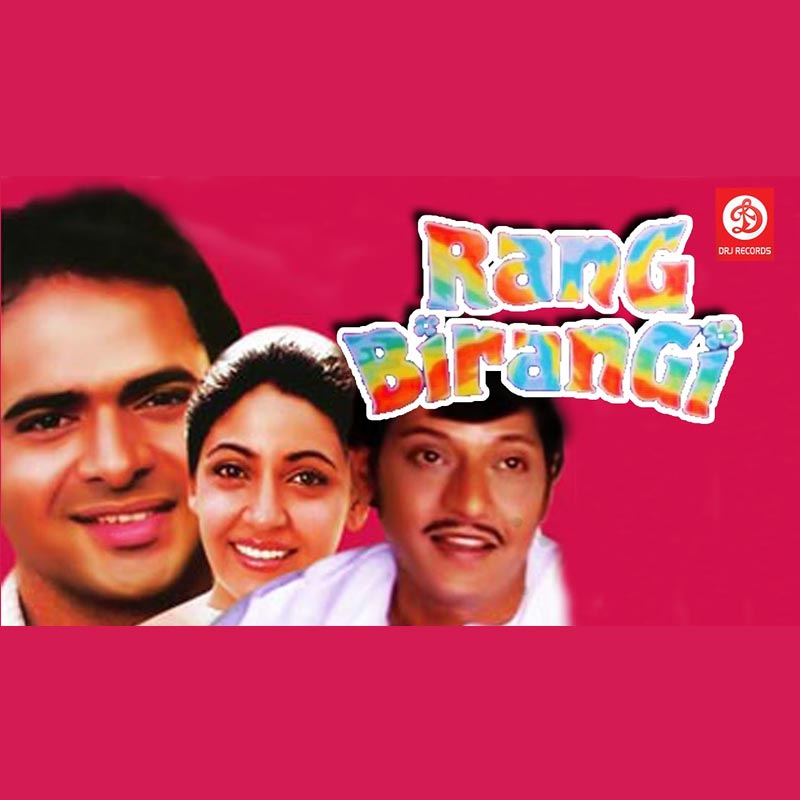
    MUMBAI: Sony MAX2 will host a special segment of Lights, Camera, Kissey on 28th September 2019 to pay a special tribute to Hrishikesh Mukherjee who is largely regarded as one of the greatest filmmakers of his era. The writer / director who symbolized the ‘middle-class man’ through his characters is recognized for his slice-of-life movies, many of which won several accolades. The upcoming episode of Lights Camera Kissey will pay a tribute to Hrishikesh Mukherjee with interesting trivia and unheard stories from his 1983 film Rang Birangi which also saw Parveen Babi’s last performance of her career.

    Hrishikesh Mukherjee fondly known as Hrishi da made his directorial debut with Dilip Kumar starrer Musafir in 1957 went on to direct over 40 movies in a career spanning close to 50 years. He was the directorial mastermind behind several iconic films like Satyakam, Chupke Chupke, Anupama, Anand, Abhimaan, Guddi, Gol Maal, Majhli Didi, Chaitali, Aashirwad, Bawarchi, Kissi Se Na Kehna and Namak Haraam amongst many others.

    Rang Birangi was one of his most memorable movies where a meddling friend whose attempt to rekindle the spark in his friend's relationship with his wife leads to complications in their lives. The story goes into a comical turn of events which are bound to keep audiences laughing endlessly. It is an iconic film that witnessed Amol Palekar and Parveen Babi share the screen for the first time.

    The man behind the lens was a legend, one that will always be remembered for his humility and versatile storylines and Shekhar Suman will be throwing some light on this in the upcoming episode of ‘Lights Camera Kissey’.

    Eminent actor and prolific storyteller, Shekhar Suman, will take audiences on a trip down memory lane, sharing some behind the scene, unheard stories that haven’t yet seen the light of the day! He will narrate stories of Bollywood actors, singers, producers and directors to give us a sneak peek into the bygone era of Hindi cinema through LCK on Sony MAX2.

    Sony MAX2 is proud to present ‘Rang Birangi’ on Lights Camera Kissey on 28th September 2019

  • ‘Daawat-e-Ishq’ triumphs over ‘Khoobsurat’ at BO

    ‘Daawat-e-Ishq’ triumphs over ‘Khoobsurat’ at BO

    MUMBAI: Daawat-e-Ishq opened to a lukewarm opening response and the collections remained on the lower side on Friday, improving marginally on Saturday and as well as on Sunday only to slide again today onwards.


    A Muslim background love story with an anti-dowry message, its linear narration makes it a routine fare. The film managed to collect Rs 13.6 crore for its opening weekend.


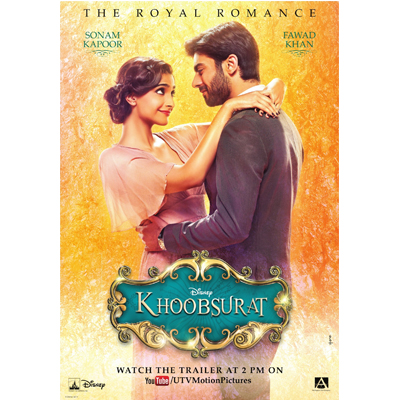
    Khoobsurat, having borrowed the basic plot from Hrishikesh Mukherjee’s 1980 hit of the same name, about a freewheeling woman entering and challenging the norms of the house laid down by the woman of the house, a royal one at that, comes a cropper. An insipid, poorly scripted and executed film, it started with below average opening with a little improvement on Saturday and Sunday as weekends normally do add to the collections. The film collected Rs 10.5 crore for its opening weekend.


    Finding Fanny, a zany road movie about a senior citizen being helped by his village mates find his childhood love, has made a little impact at the box office. Despite some favourable reviews by critics, the film has been able to put together just about Rs 23.5 crore in its first week.


    Creature 3-D, another Vikram Bhatt horror had to its credit a fully locally computer generated man-eating creature but the film lacked in substance, got monotonous as its stretched too long and failed to generate interest in the viewer. The film collected a poor Rs 16.8 crore in its first week.


    Mary Kom sustained ably in its second week in the absence of any formidable opposition and added Rs 11.15 crore in its second week taking its two week total to Rs 53.35.


    Raja Natwarlal added Rs 10 lakh in its third week taking its three week tally to Rs 23.85 crore. The movie will be a loser at the box office.

  • Bol Bachchan is imbecilic and banal

    Bol Bachchan is imbecilic and banal

    MUMBAI: The first half of Bol Bachchan is almost like Part II of Singham. It is totally South-influenced, with Ajay Devgn playing a mofusil landlord, who controls his town and people and who travels with a cavalcade of half a dozen SUVs of same make, model and colour. His only detractor is his own blood, a cousin.

    The villain, Jeetu Verma, does not matter because he is just an excuse to show Devgn‘s fighting prowess. 


    Ajay Devgn is a wrestler; he is all brawn and no brains. Like in all his Golmaal films, he is the Big Moose character from Archie comics who just flashes his muscles while the others are funny. He can‘t make you laugh for the life of it. He is laughed at and you join in most of the time; he is made a fool of and you enjoy it initially till it all gets senile and childish as the film progresses.

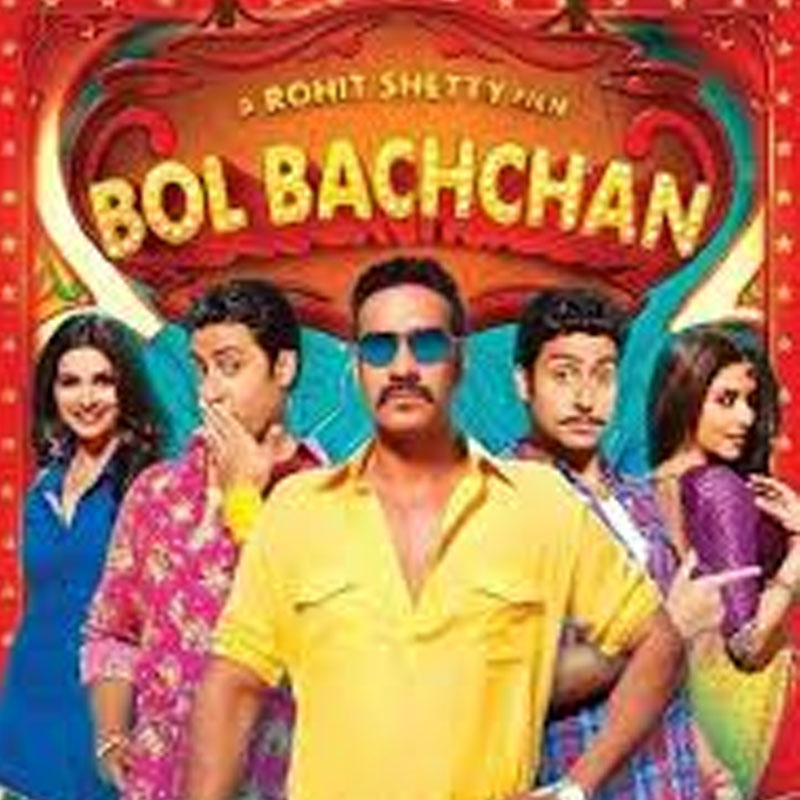
    Rohit Shetty picks an old classic, Golmaal, a 1979 Hrishikesh Mukherjee hit and decides to make his own version based on it. So here is Abbas Ali (Abhishek Bachchan), who has been conned out of his own taxi as well as the house he possesses in Delhi by some conniving loan sharks. With Hindi films being the flag bearers of secularism, his father‘s best buddy, Asrani, tells Abhishek that more than buddies, he and Abhishek‘s father were like brothers and offers to take him to his native Ranakpur where a job is waiting for him at Devgn‘s estate. Ajay Devgn rules the land with his own laws and diktats but he is his people‘s beloved for his fair ways. So what if he takes along a posse of musclemen to punish a worker who conned him of 99 rupees.

    Having arrived in Ranakpur, Abhishek makes his presence felt instantly when he breaks the lock of a disputed temple to save a child who has fallen in a lake in the temple premises. He catches Devgn‘s eye for his brave act. He is introduced to him as Abhishek Bachchan instead of Abbas by his sidekick, Krishna, as the mob that has gathered to watch the event would not take lightly to a Muslim breaking open a temple door even if to save a child. This sets the ball rolling for the lie after lie they tell Devgn and more lies to cover the previous lie. Devgn is generous and lenient but deception is one thing he punishes brutally. Abhishek the Abbas is devout and keeps roza and his lie is almost found out as Devgn and his yes man, Neeraj Vora, see him offering the Eid namaaz.

    So far Bol Bachchan was fun and games but this is where the director decides to fall back on the 1979 Golmaal as Abhishek wriggles out of the namaaz episode by saying it must be his brother, Abbas who was offering the namaaz; he does not sport a moustache which Abhishek does. What is more, Abbas is gay. Devgn, the soft heart do-gooder that he is, also wants to employ waylaid Abbas/Abhishek to teach his sister, Prachi Desai, classical dance. Thereafter, the writers and director go berserk and there is a double role galore; Asin, who plays Abbas/Abhishek‘s siter has two identities too, so does Archana Puran Singh and you forget who else! With Devgn having a sister and Abhishek Bachchan too having one, a cross connection is obvious. Both guys love the others‘ sister; Abhishek loves Prachi Desai because of no apparent reason and Devgn loves Asin because she is a pixel for pixel look alike of his deceased girlfriend! Even the late Manmohan Desai would not have found this worth trying; and he was the king of make-believe!

    The truth has to come out someday and, when it happens, it is on a car balancing on a mountain boulder. The problem is that it is a long drawn sequence with poor audio. Humour, if any in this scene, is lost. What is more, such a sequence needs avant-garde special effects and, on that count, the scene is shoddy.

    Rohit Shetty was good with his Golmaal series but this time he has taken his audience for granted and dished out an imbecile, banal stuff; he has lost his direction to put it mildly. Script goes haywire and an editor is sorely missed in this 154-minute marathon of forced comedy. First half is tolerably fun but second half is a farce. The film lacks totally on music, emotions and romance, the three vital ingredients in an Indian film. The item song at the start of the film with Amitabh Bachchan is uninspiring and a waste.

    This is not a performance film really and, considering that, Ajay Devgn just about passes muster as Mr Duh. Abhishek Bachchan is okay as Abhishek Bachchan but totally at sea as the gay Abbas; he is just not made to play gay. Prachi Desai and Asin are just decorative pieces and bad ones at that. Archana Puran Singh and Krishna ham all the way through. Only good performances come from Asrani and Neeraj Vora.

    Bol Bachchan has a rather huge price tag attached to it and with average opening and uncomplimentary reports, it will fall way short of its recovery target.