Tag: Hozefa Attari

  • Retail sector requires new paradigm for consumer-brand interaction

    Retail sector requires new paradigm for consumer-brand interaction

    MUMBAI: Retailers around the globe recognise that the outbreak of COVID-19 will have a significant impact on their business.

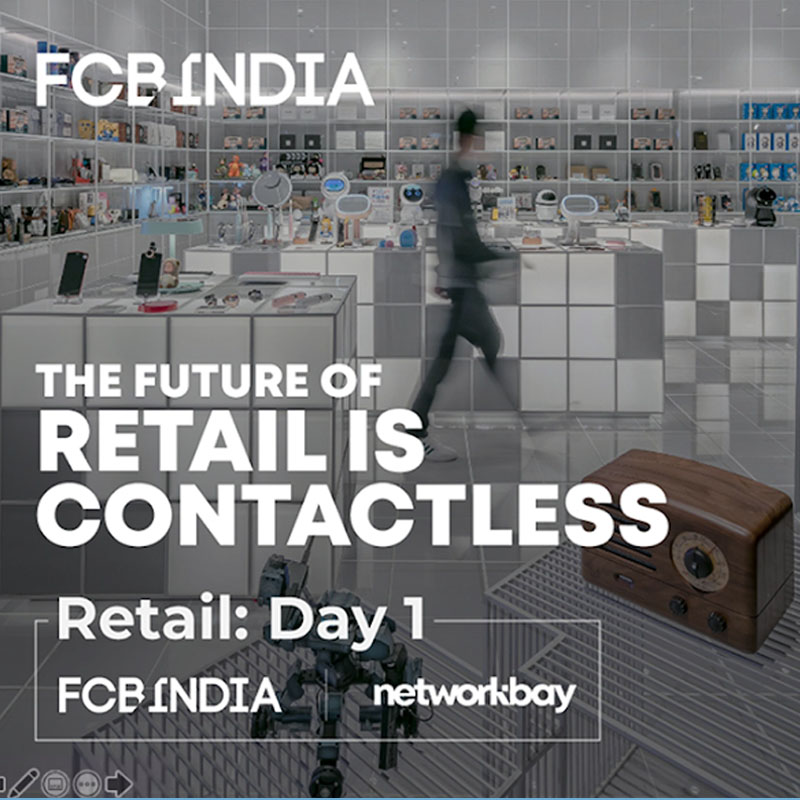
    Sensing this need, FCB, India in collaboration with Networkbay, announced launched ‘Retail: Day 1,’ an initiative to work with brands and retailers to ‘manage, redefine and transform’ their retail experiences in the post-COVID era.

    Everyone is looking at the new normal that will arrive as soon as the lockdown gets lifted. After doing an extensive research on consumer behaviour, FCB India has found that the biggest change will be witnessed by the retail sector. The challenge before every brand is to create a new paradigm in which consumers would interact with brands in the retail space.

    FCB India and Networkbay will identify a measured careful contact approach and how consumers would react to this new reality.

    FCB India group chairman and CEO Rohit Ohri said: “The reason for the partnership is to understand the change as to how we can prepare our clients to adapt quickly to this new world. From the FCB point of view, we are bringing the understanding of consumer behaviour and big changes that we see going forward. At the same time, Networkbay will bring its sense, capability, understanding and technology related to the retail industry."

    Networkbay co-founder Hozefa Attari added: “There is no direct answer to what the retail sector is going to look like. Our idea is to create a retail environment that is safe and future-ready and at the same time answers to the very human need of shopping. We are doing this by combining the strengths of some of the best technology brands you see globally.”

    FCB has a strong foothold in the automotive space. Dealers were already struggling in the pre-COVID era and Hozefa believes that this industry has a large potential to change the overall consumer experience. They are coming up with automotive visualisation wherein one can create experiences right out of test driving on a roadway. Consumers can also use augmented reality to familiarise with the car.

    Another industry which will be hugely impacted is the cosmetic sector where samplers and freebies have always been part of a retail experience. But looking at the situation people will be hesitant to test products now. To enable the contactless makeup journey, Networkbay has come up with a solution where consumers can choose the product which is perfectly calibrated with their skin tones.

    A large number of departmental stores and apparel brands are now going to see that consumers are hesitant to pick up clothes and try them in the fitting room. The firm will provide a virtual tour of the store and help consumers choose the clothes of their interest.

    Even essential services are impacted, because even after the lockdown is lifted, consumers will look at safe ways to pick a product. So, Networkbay provides an option where instead of picking every product, consumers can have augmented reality product explainers.

    According to Hozefa, contactless is just an initial learning but what they really want to see after six months is transformable retail experiences which will connect the brands and connect the shoppers and is still a safe and strong experience.

    According to Ohri and Hozefa, clients are more than open for digital solutions because they no longer like to keep physical experience and add a certain level of technology. But they are looking at solutions that can generate a lot of ROI. Investment in digital gives tremendous immediate returns.

    “Today we are getting products that we never bought online. If you are doing this for a period of two months you are building a habit; you don’t have a choice. Very few people are stepping out to purchase anything and most products are delivered online. So we created a technology which is simple and accessible,” he said.

    According to Ohri, behavioural changes occur when a big event creates disruption. For instance, demonetisation changed the behaviour of transactions for consumers. A lot of people who never used ATM or online transfers or portals like Paytm started using it. So, once the cash flow was back, online transactions wouldn't have become zero. This change has been a transformation for India. It is pretty much like how COVID-19 has affected people.

  • FCB India in partnership with Networkbay launches ‘Retail: Day 1’

    FCB India in partnership with Networkbay launches ‘Retail: Day 1’

    MUMBAI: FCB India in collaboration with Networkbay today announced the launch of ‘Retail: Day 1’ a special initiative to work with brands and retailers to ‘manage, redefine and transform’ their retail experiences in the post-COVID era.

    It’s time, we adapt to the new normal, unlearn the old formulas, redefine the business of brands and brand communication with the evolving consumption pattern. The launch of ‘Retail: Day 1’ therefore beckons the first day of contactless retail experience. Through this collaboration FCB India and Networkbay will work with brands and retailers to quickly adapt to this new scenario. By leveraging digital tools and spatial design innovation, ‘Retail: Day 1’ is aimed at creating enhanced new retail virtual experiences which are engaging and at the same time fulfilling business requirements of conversion and sales for brands.

    Follow Tellychakkar for the consumer facing news & entertainment.

    A recent survey by National Retail Federation (NRF) deduced:

    ·         Nine in 10 consumers have changed their traditional shopping habits

    ·         More than 50 per cent  of consumers have ordered products online that they would normally purchase at the store

    ·         Nearly six in 10 consumers say they are worried about going to the store due to fear of being infected

    Some of these changes would be temporary while others will be permanent. As the community moves beyond the survival mode, the digital-adoption momentum is likely to carry forward and become permanent. As a matter of fact, consumer behaviour will be dependent on two factors – the reluctance to mingle in crowded public places and higher propensity for digital adoption. While the survey by NRF represents finding in America, but the human sentiments resonate with the changing behaviour across the globe.

    A study by Deloitte published on 30 March 2020 shared an outlook on the retail industry with the emphasis on changing behaviour.

    ·         Non-contact demand during the pandemic is expected to boost sales at smaller stores that can host smaller crowds at a time. However, supermarket chains have ensured supply of products at regular prices

    ·         Due to the pandemic‘s impact on consumer behaviour and habits, “online-sales” are expected to witness a significant surge, even after the industry recovers

    ·         The establishment of online platforms is expected to become indispensable for offline stores, and online–offline service integration is expected to increase

    A Nielsen study unveiled in March 2020 looked at the retail purchase in traditional, modern and e-commerce channels, and evaluated consumer attitudes. It tracked this behaviour for several weeks from the time the disease first surfaced in India till the country went under a lockdown. First, it observes an increase in consumer interest in health and hygiene products, leading to purchase of safety items such as hand sanitizers and face masks. As the disease spread, consumers started stockpiling their pantry with shelf-stable food and broader assortment of health and safety products. Store visits went up and the basket size expanded. The quarantine stage, followed by restrictive living, led to a rise in online shopping, fewer store visits, purchase of essential goods.

    A story published by Mint gave a deep dive into the auto sector, ‘Executives at automobile companies said their mass market cars may see a spike in sales in a post covid-19 scenario. They argue that customers will shun shared cabs and public transport as the fear of the disease, a global pandemic that has killed thousands, lingers. Some car companies are expecting their affordable hatchbacks to do well as the middle-class consumer puts hygiene and safety above all else.’- Source Mint newspaper dated 2 April 2020

    The recent McKinsey study in China suggests, consumers are likely to opt for online shopping even after the outbreak ends, especially for categories such as groceries and personal care. This trend is likely to continue long after the lockdowns are called off as people would still be apprehensive to visit crowded areas like malls or supermarkets.

    The aforesaid data and research excerpts imply that it is time for contactless retail experience for brands and it is here to stay. Even after the lockdown is lifted, consumers will still be apprehensive about stepping out and visiting stores. The footfall would be very low. China is a precedent for this consumer behaviour pattern. With the emergence of the online platforms that empower the consumer whilst ensuring their safety, engagement will be driven more on the basis of the ‘experiential’ rather than ‘material’. The post-covid retail environment will surely be a default online retail preference. And with the launch of ‘Retail Day: 1’, we announce our day one at the new normal, as we adapt to the new game.

    Speaking on current challenges, FCB India  group chairman and CEO Rohit Ohri said, “This lockdown period will change our world forever. When we emerge on the other side of this crisis, retail experiences will be redefined. Our research shows that shopper behaviour will dramatically change. Even though retail stores may be open, customers who shop there will not engage with the stores as they used to. Retail needs to urgently reinvent itself for the post-COVID world. We’re hoping that our Retail Day 1 initiative, we are able to help our clients rapidly build back their business.”

    Adding, Networkbay co-founder Hozefa Attari said, “Our platform combines the strengths of some of the leading retail design, technology and service brands to develop every retailer’s Store of the Future. Project ‘Retail: Day 1’ will allow us to work closely with FCB, taking advantage of their deep expertise in brand and customer behaviour, to develop radical customer journeys, be it contactless automotive dealerships, virtual stores or even connected packaging and Augmented Reality.”