Tag: Hotstar

  • Star India’s Gaurav Banerjee on Hotstar’s content diversity, SVOD uptake & nurturing talent

    Star India’s Gaurav Banerjee on Hotstar’s content diversity, SVOD uptake & nurturing talent

    Hotstar has consistently outperformed some of the global over the top (OTT) platforms in India with the help of a mix of TV show content, sports and the recently-added originals. After Criminal Justice, the next original to launch under the Hotstar umbrella will be Out of Love. Launching 22 November, the series is based on BBC’s award-winning series Doctor Foster.

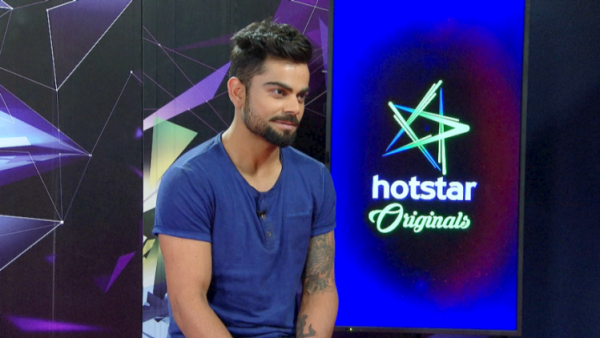
    Star India Hindi entertainment president and head Gaurav Banerjee attributes the platform’s success to its content mix. Compared to traditional TV, the digital space provides flexibility to creators to play with content narratives, style and direction.

    On the sidelines of the Out of Love launch, Banerjee spoke about Hotstar’s upcoming content strategy, feedback to Hotstar Specials, viewership ratio, online content regulation along with other topics in a freewheeling chat with Indiantelevision.com.Edited excerpts:

    Hotstar Specials entered the market at the beginning of this year when one of the main goals was to turn AVOD consumers into SVOD base. How has been the initial response? How has it helped to increase the SVOD base till now?

    It has been an incredibly good journey. We are very excited about the response we got. People have liked the shows. Our attempt at creating different types of content has been noticed. Sports documentary, a big edgy legal kind of drama, thriller, comedy and now a female-centered drama – we have it all. We have been overwhelmed by some of the responses we got from viewers and critics for shows like Criminal Justice. Obviously, we are doing this to power up Hotstar VIP and that strategy is playing out well.

    This is just a start. Everything takes time, consistency, effort and a series of quality content. For all digital content in our country, this is day zero. We have a lot to learn.

    What does your inside data say about viewership demography?

    Hotstar as a platform skews twoard the younger Indians. We have a great opportunity with all these types of content which are edgier and varied. The second opportunity from the creative point of view is very interesting; we can play with season length and episode length. In television, over a period of time, the format gets settled. Whereas here it can be led by the kind of stories we have such as the right point to finish a particular episode. This allows for a lot of flexibility for creative people.

    You have worked with renowned production houses or studios for Hotstar Specials. Are you considering giving a chance to young producers like you did for television business? 

    Yes we do and thank you for noticing that about Star India and that's something we are deeply proud of that we are that platform where new voices can come in and tell big stories. But we are just starting out. This is like a startup and there is a lot of content with new filmmaking, stories and talent. Hopefully, there will be a lot to talk about in the coming weeks and months.

    Now many of the platforms are launching a number of originals to build a loyal subscriber base. When do you see SVOD monetisation actually turning easier?

    Brands, including Hotstar VIP, are already attempting this. This will happen as the per capita and GDP grows and people will want to be discerning about the choices they want to make. They would want to watch higher quality and they will be willing to pay for it.

    Cinema prices have gone up but viewers are willing to pay. As a content creator platform, we have to create the experience that people really like, whether it is the technology experience, marketing, talent or stories. All of that has to combine to create something which you say that you like and makes you agree to pay more for it.

    Do you see a model emerging in the future where viewers can go for a bundled model in OTT like cable TV?

    It’s hard to tell. But I think that having an incredible content asset should be any company’s priority. Even with so many OTT platforms, viewers have a lot more choices today. So, people can decide where they want to spend. Essentially everyone is competing for time.

    What is your content strategy for 2020?

    Our first goal is variety. We want different stories and keep expanding them. This year we did a sports documentary, thriller and a social drama. A lot of OTT drama has been male-oriented. Out of Love is breaking that. It’s female-centric, emotional and about marriage. We want to keep experimenting and attract the best talent in the country. We want to work with the best actors, directors, showrunners all the time and we will do everything we can to create the right culture and figure the right scale of ambition so that Hotstar will be their target destination to work.

    Lately, online content regulation has been the talk of the town. What is your take on this?

    My team and I, across TV and digital, believe that we don’t want to do anything irresponsible. We won’t do edgy content just for the sake for it. That’s an ethical choice we all need to make. We need to figure out a method so that people don’t think of this as a chaotic classroom where there are just unruly kids and they need a class monitor or a strict supervisor. That’s the maturity needed from the creative community, platforms and the entire ecosystem and I feel if we do that we are all going to be fine.

  • The journey of Star India’s Uday Shankar through his eyes

    The journey of Star India’s Uday Shankar through his eyes

    MUMBAI: He came. He spoke. They listened. He conquered.  That, in summation, defines how the Walt Disney Company Asia Pacific president, and Star & Disney India chairman Uday Shankar’s tryst with members and invitees of the Advertising Agencies Association of India’s Subhas Ghosal Memorial lecture “Why I have been in Media for 30 years” on 11 October 2019 went. The audience – consisting of a slew of senior advertising and marketing professionals – listened in awe, smiled, laughed throughout the Shankarspeak, which commenced around 9:30 pm in the Four Seasons Hotel in Worli, Mumbai. He spoke extempore, no teleprompters in sight, and his speech was fluency at its best, delivered with the confidence of a professional who knows what he has achieved and what he is setting out to achieve.

    Throughout his 34-minute speech, Uday constantly referred to the risks he has taken during his entire career. Like the time when he was grappling with being called upon by the Murdochs to head Star India as CEO and he asked his family whether he was taking a chance as he had had no exposure to entertainment or business having been a news man all of his life. To which his daughter quipped: “What risk? If anything, weren’t the Murdochs the ones who were taking the risk?”

    He went on to join the organisation, and the rest, of course, is history. Uday spoke about the time when – on being urged by his wife – he chucked his secure job at the publication Down to Earth and relied on his wife’s income for six months before securing a lower paying position at Zee TV. “I took a 50 per cent pay cut,” he revealed. “But I so wanted to do news television that I was willing to go that distance.”

    Uday then revealed how he switched to the Star Network when he was called upon by the Murdochs to clean up the mess that was Star News from his comfortable position at Aroon Purie’s Aaj Tak.

    “On the face of it, it was a bad career move,” he revealed. “Star News was as messed as it could ever be. All the success and equity I had created for myself at Aaj Tak and before was at risk. The sensible course was to run for my life. But instead I dived headlong into it and doubled down. Within a month I was both editor and CEO. Everyone thought I was going to break all records of disastrous stints as a media CEO. I knew nothing about running a business. But as a journalist I had learned one thing: when you do not know something, you go to people who understand it better than you. That’s what I did. I focused on bringing in good talent and content. And slowly the tide turned. Star News went from bottom to the top of the pile.”

    That’s when the Mudrochs spotted him as a potential leader of Star India. While at Star News he, at least, had command over news content, he did not have any experience of entertainment when he walked into Star India. There was an exodus in the organisation as two top-notch executives had left to launch their own channels, taking experienced professionals with them. He once again relied on his journalistic instinct which told him that a crisis could be tremendous opportunity.

    Once there, he concentrated on playing the long form of the game of cricket – test match vs the IPL, Uday revealed. His first focus was on hiring good talent. Deciding to discount experience, he emphasised on intelligence and youthfulness and irreverance. The leadership under him did not have previous media experience unleashing a really powerful force in the company. Simultaneously, he focused on getting rid of the slacker culture in Star.

    He then went about chipping away at edifices that had made Star Plus a success until then. He dropped all Ekta Kapoor and Balaji shows and dropped the successful Kaun Banega Crorepati and called in new producers to churn out differentiated content like Satyameva Jayate hosted by Aamir Khan to the annoyance of established ones. “Everyone thought we were crazy. Who would put a show like that on entertainment television on Sunday? It was a great decision. It made an impact on society. And it had an even bigger impact on the thinking at Star. Everyone thought that it was going to be my nemesis. But I survived Satyamev Jayate,” he highlighted.

    “We are in the business of content. It may surprise you to know how few companies have content at their core. The biggest contribution I have made at Star is that I have tried to push content closer and closer to the centre of the core so much so that the core of Star today is content,” he further explained.

    “If no one believes that it can be done, we will take a shot at it. This is a culture we have built at Star,” he says.

    The greater risk taken by Uday was the decision to take Star into sports – the graveyard of many media companies. He was not satisfied with the ICC rights, BCCI rights but acquired the IPL rights at aggressive prices as well. “No other media company invested in cricket like Star India did. In contrast to other networks which usually have commentaries in one or two languages, Star expanded it in seven languages which paid off as 86 per cent of their cricket sports viewership come from languages, only 14 per cent comes from English.”

    He spoke about Star’s move towards promoting kabaddi as a sport, wherein everyone thought his goose was cooked. “A friend told me the Murdochs had trusted me too much and that the company had too much money. With the best of intentions, he cautioned that both of these are going to end very badly,” said Uday. “However, we are making some money and I have kept my job. Our sports business is a work in progress as is the sports consciousness in this country. We are slowly building one of the most exciting franchises in the world.”

    Uday then went on the speak about Star’s next  foray with Hotstar wherein he launched the app in a data-dark market where the mobile handset was a device for talking. What gave him the confidence was India’s surprising ability to leapfrog. Once again, he hired the best talent.  He spoke about the risk he took during the Hotstar launch campaign, which ran across the Star network saying “TV is passe. Get over TV. Get Hotstar.”

    He further revealed:  “When we were launching Hotstar, a very senior executive at one of the global tech and video giants warned us that if you try, you will lose a lot of money, effort and time and then you will come begging to us to host your content on our platform. He said that we would still be kind to you. Now, it seems they can’t tire of hiring my talent. Not just one company that is hiring our talent as if it is going out of supply but every media and tech company that’s active in India seems to have one destination to pick up talent  –  Star India. I would make a lot more money if I ran a talent agency. It is annoying but it is also a tribute to our incredibly talented team that’s even more audacious than it is talented. A team that is committed to changing Indian media and content – making a difference to the lives of people. That’s why I am in media for 30 years. And it feels like I am just getting started. Over the years, we have become change agents for India. At Star, we don’t just believe in a better India, we believe in our duty to participate and shape that India. Of course, when a company like Walt Disney values and embraces the businesses we have built, it is extremely gratifying.”

  • Strong Netflix growth underlines OTT growth potential in India

    Strong Netflix growth underlines OTT growth potential in India

    MUMBAI: Netflix India has just posted its earnings with the registrar of companies and reportedly, the video streaming giant has grown more than 700 per cent in the past 12 months.

    While the company doesn’t share these details publicly, an ET Tech report, quoting Netflix’s annual filing, says that the Indian-arm of American video streaming giant recorded overall revenues of Rs 466.7 crore with a net profit of Rs 5.1 crore. In 2018, the company had a turnover of mere Rs 58 crore with Rs 20 lakh net profit.

    No doubt, Netflix has upped its game in India by investing in expanding local content, a high-stakes marketing blitzkrieg and the launch of mobile-only plans starting at as low as Rs 199 per month, Netflix’s lowest subscription plan anywhere in the world. The strong growth posted by Reed Hastings-owned company, however, only underlines the tremendous growth potential for OTT platforms in the Indian market.

    As per EY and FIICI 2019 report – ‘A Billion Screens of Opportunity,’ the OTT sector in India grew by a whopping 59 per cent in FY2019, growing from Rs 13.5 billion in 2018 to Rs 17 billion in 2019. The sector is estimated to reach Rs 24 billion by 2021. PwC, in its 2019 annual report – ‘Global Entertainment & Media Outlook 2019-2023,’ estimated that the Indian OTT market will grow to Rs 11,976 crore by 2023, growing at a CAGR of 21.8 per cent. During that period, India is also slated to be the eight biggest OTT market overtaking South Korea.

    OTT platform expansion in India is also supported by rising digital penetration and disposable income. In 2018, digital media grew 42 per cent to reach Rs 169 billion. As per the FICCI 2019 report, paid video subscribers grew from around 7 million in 2017 to around 12-15 million in 2018. The report further estimates that India could have 30-35 million paying OTT subscribers (and a further 350+ million subscribers accessing bundled OTT services from telcos) by 2021.

    All these market studies only buttress one point, i.e. there is enough space for over 30 OTT players in India, both home-grown like Zee5 and AltBalaji, as well as global-giants like Netflix, Amazon and Hotstar, to co-exist and grow simultaneously. The same is also reflected in the ever-increasing subscription base of all these platforms.

    While Netflix in India registered near 700 per cent growth, in terms of subscribers, it’s still dwarfed by Hotstar that has upwards of 300 million active monthly users in India. In comparison, both Netflix and Amazon, the two global-giants in video-on-demand industry, together have less than 30 million subscribers in India. Even the home-grown late-entrant to the party, ZEE5, digital-arm of Zee Entertainment Enterprises Ltd's (ZEEL) launched in February 2018, increased its monthly active users from 21.7 million in the first quarter of 2018 to 76.4 million in the first quarter of 2019.

    It’s pertinent to note that different OTT platforms in India are also adopting different expansion strategies. While global premium content was Netflix’s strength, Amazon expansion was helped by its clubbing of Amazon prime video with its online-retail service. Hotstar banked on sports telecast, whereas ZEE5 launched in 12 different languages, making it a strong player in the expanding regional market.

    To be sure, though, the road-ahead for OTT platforms in India is not all that rosy. For one, no OTT platform has yet cracked the perfect monetisation model. While revenue and subscriber base are, indeed, increasing at a healthy pace, net profits are still meagre. Even Netflix, despite registering a 700 per cent growth rate, has posted a net profit of only Rs 5 crore. Barring Hotstar, that generates revenue through advertising during live sporting events, no other OTT player has successfully integrated advertising on their platforms.

    For now, Netflix India is reaping dividends of being the early-mover in the market, as well as strong global premium content combined with local original shows and movie titles. Last fiscal, Netflix released six original films, five web-series and one docuseries in Hindi. The company has also signed an exclusive output deal with Karan Johar's Dharmatic Entertainment. However, the OTT war for subscribers in India is only heating up. With the foray of global players like Apple TV+ and Disney+, as well as region-specific OTT platforms like Hoichoi and Simply South, the Indian OTT market may see further segmentation, forcing companies to constantly innovate, expand and experiment with a variety of new advertising models.

  • I&B Ministry to meet industry leaders to discuss online video content regulation

    I&B Ministry to meet industry leaders to discuss online video content regulation

    Amidst reports of government considering certification/censorship of online video content, the I &B Ministry will hold a second round of consultation next week with industry players, who are determined to oppose any pre-censorship on digital platform.

    The I&B Ministry has invited all  online curated content providers (OCCPs), including Netflix, Amazon and Hotstar, through industry association, the Internet and Mobile Association of India (IAMAI) for consultation on the issue of regulation of online video content, as per a report in ET.

    The meeting, slated for next week in Chennai, comes close on the heels of a similar consultation in Mumbai last month.

    In October, PTI had quoted union minister for information and broadcasting Prakash Javadekar as saying that there should be some kind of regulation of OTT platforms on the lines of print and electronic media and films.

    “I have sought suggestions on how to deal with this because there are regular feature films coming on OTT — good, bad and ugly. So how to deal with this, who should monitor, who should regulate?. There is no certification body for OTT platforms and likewise news portals also,” Javadekar was quoted as saying.

    Earlier in September, Live mint has reported that I&B Ministry was looking to finalize a model for the certification of online video streaming content soon after Diwali.

    However, any government attempt to regulate content on OTT, is bound to face stiff opposition from the industry, who believe that the existant IT Act 2000 and a voluntary self-regulatory code signed by major OTT players in January this year, are sufficient in dealing with any untoward situation.

    Online vidoe streaming players like Netflix, Hotstar, Jio, Voot, Zee5, Arre, SonyLIV, ALT Balaji and Eros Now have signed a self-censorship code in January that prohibited these platforms from showing certain kinds of content and set up a redressal mechanism for customer complaints.

    The self-regulation code, bars video players from showing content that’s banned by Indian courts, disrespects the national emblem and flag, outrages religious sentiments, promotes terrorism or violence against State and shows children in sexual acts. Amazon, however, is not part of the self-regulatory code signed under the aegis of IAMAI.

    “We should publish a list of all the laws that apply to OCCP platforms so that there is no is perception that OCCPs are not regulated,” Gowree Gokhale, head of Telecom, Media and Technology practice at Nishith Desai Associates, which is part of the consultation process, was quoted as saying by ET.

    However, despite the presence of a self-regulatory code, there have been an array of PILs in court demanding regulation of online video content.

    In May, the Supreme Court had issued a notice to the Centre on an appeal to regulate content on online streaming platforms.

  • Hotstar Premium reveals new content line up for November

    Hotstar Premium reveals new content line up for November

    Another month, another great list of shows and movies to watch! From critically acclaimed shows to cult classics, catch some of the best and latest content at the tip of your fingers – Whenever. Wherever

    What’s new this month on Hotstar Premium 
    His Dark Materials (5th November)
    Adapting Philip Pullman’s award-winning trilogy of the same name, which is considered a modern masterpiece of imaginative fiction, His Dark Materials follows Lyra (Dafne Keen), a seemingly ordinary but brave young woman from another world. Her search for a kidnapped friend uncovers a sinister plot involving stolen children and becomes a quest to understand a mysterious phenomenon called Dust.
    Cast: Dafne Keen, Ruth Wilson, James McAvoy, Clarke Peters, Anne-Marie Duff, Lin-Manuel Miranda

    Very Ralph (13th November)
    Very Ralph, the first documentary portrait of fashion icon Ralph Lauren, reveals the man behind the icon and the creation of one of the most successful brands in fashion history. Offering unprecedented access to his life and work, Ralph Lauren speaks candidly in extensive interviews about his childhood, his five-decade-long marriage, the early days of his company, his response to criticism, his inventive multi-page ad campaigns and his pioneering vision which includes a remarkable series of firsts. 

    The Kid who would be King (16thNovember)

    Old-school magic meets the modern day in this epic adventure! Alex is just a bullied kid until he discovers Excalibur, the legendary Sword in the Stone. Now, his friends (and his enemies) must become knights, and join the wizard Merlin (Patrick Stewart) to fight the wicked Morgana (Rebecca Ferguson). With the future at stake, Alex must show courage he never dreamed he had!
    Cast: Louis Ashbourne Serkis, Denise Gough, Dean Chaumoo

    Hotstar Premium has a large selection of latest American shows, blockbuster Hollywood movies and award-winning content from International studios
     

  • Hero Indian Super League 2019-20 doubles viewership for the Opening Game this season

    Hero Indian Super League 2019-20 doubles viewership for the Opening Game this season

    MUMBAI: India’s premier football league – Hero Indian Super League (ISL) Season 6, had a spectacular star studded opening in Kochi on October 20th, 2019. The season opener between arch rivals Kerala Blasters FC and ATK registered 1.2 TVR and 96%** growth in TV ratings among M15+AB Urban and an impressive 97% viewership growth on Hotstar over last season. The two teams have a long history and have met previously in two finals – 2014 and 2016, both of which were won by ATK. Kochi’s Jawaharlal Nehru Stadium was a sea of yellow and the home side gave its fans a lot to celebrate by winning the highly contested game 2-1 and setting a standard for the ongoing season. The fans also witnessed high octane performances by Bollywood Superstars Tiger Shroff and Disha Patani who grooved to their superhit tracks and joined in the celebrations.

    There has been a consistent rise in the fan following for Indian football in the country and the Hero ISL, the premier football league of India, has been at the heart of this revolution getting bigger and better with each passing year. A seven month wait ended with the highly anticipated season opener that had fans glued to their TV & mobile screens which was broadcast in 7 languages and 20 channels. This season with the inclusion of the two new teams, Hyderabad FC and Odisha FC, the Hero ISL will see more diverse fan cultures and an increase in the footprint of Indian football in new frontiers.

    Opening with a flying start, the Hero Indian Super League, will be bigger and better than ever before, with more audiences expected to tune-in to catch their favourite team battle for the championship and coveted AFC Champions League play-offs spot.

    Fans can catch all the football action in the Hero Indian Super League Season 6 on the Star Sports Network, Hotstar and Jio TV

  • Star Plus spotlights 26 Changemakers to shape a New India

    Star Plus spotlights 26 Changemakers to shape a New India

    Mumbai: Star Plus announces the second season of “TED Talks India NayiBaat,” a collaboration with TED, the globally celebrated nonprofit organization devoted to Ideas Worth Spreading. The new season reflects the narrative of a vibrant, fast evolving new India – bolder, brighter, braver.

    A legacy of passivity and acceptance is giving way to a society that is demanding and driving change. Armed with optimism, young millennial minds are leading the way, becoming change makers, because they believe their innovative ideas and spirits are bigger than the odds they face. “TED Talks India NayiBaat” turns the spotlight on ordinary Indians doing extraordinary work. These visionaries and everyday heroes will spark new conversations, infuse movements with energy and inspire a billion imaginations to action.

    The show will be aired over weekends in Hindi, English, Tamil, Bangla and Telugu across Star Plus, Nat Geo, Hotstar and Star World, starting November 2nd.

    Sanjay Gupta, Country Manager, Star & Disney India,said,“With TED Talks India NayiBaat, our goal is to showcase, celebrate and support the unsung visionaries who are working towards making a positive impact on society. I believe that a nation is built on the ideas and values of its people. We hope that the ideas and work of our featured speakers inspire our youth to don the role of a social change agent.”
            
    Shah Rukh Khan said, “On the show, I witnessed so much passion – people with pathbreaking ideas are disrupting the shackles of the impossible and finding solutions. TED Talks India is a mirror of the new face of India. It is all about being future ready and future focused. I am in awe of the diverse spectrum of speakers this season. On one hand, we have a 13-year-old scientist creating amazing inventions; on the other is a woman from Bundelkhand empowering thousands of Indian girls. This kind of television content is time-defining. It is the need of the hour.”

    Chris Anderson, Head of TED, added, “India has a spirit of optimism and continuous evolution that’s beautifully captured in this series. From speakers on the TED stage to hundreds of TEDx events organized across the country, TED has had a longstanding relationship with India. We’re thrilled to continue to collaborate with Star Network to showcase the brilliant ideas that can shape the India of tomorrow.”

    Tuning into the intelligent audience in this new India, aware of its potential and possibilities, Star Plus is committed to developing landmark content that is both entertaining and socially progressive. Over the years, milestone shows like Satyamev Jayate, Rubaru Roshni and the recent live telecast of Chandrayaan 2 have been some of the celebrated initiatives from the network.

    Stay Tuned for TED Talks India NayiBaat, starting November 2rd, 2019 at 9.30 p.m. on Star Plus
     

  • SVOD to account for one-third of sector revenues in India by 2024

    SVOD to account for one-third of sector revenues in India by 2024

    MUMBAI: The Asia Pacific online video industry will generate US$27 billion in advertising and subscription revenue this year, up 24% Y/Y from
    2018, according to a new report, Asia Pacific Online Video & Broadband Distribution 2020, published today by Media Partners Asia (MPA). This pie is forecast to expand at a robust 13% CAGR to US$50 billion by 2024, propelled by rising investment and competition, widening broadband access and ongoing development of local content, payment infrastructure and IP protection.

    China, the world’s second-largest online video after the US, remains a major part of this growth, representing 59% of online video advertising and subscription revenue in Asia Pacific this year, according to MPA, although this share will contract slightly to 55% by 2024. At the same time, online video revenues in China are forecast to reach US$27 billion in 2024, up from US$16 billion in 2019, a 11% CAGR. MPA analysts have reduced earlier China forecasts as a result of economic deceleration as well as increased market maturity and regulatory oversight.

    Nonetheless, China’s online video ecosystem remains highly developed, benefiting from sizable investments from digital majors Alibaba, Baidu and Tencent. These three players are absorbing sustained losses in video thanks to profitability in other parts of the business. This allows them to buy and create local premium content in volume, as well as exclusive sports rights, while developing innovative technologies and large talent pools.

    In recent years, a fourth player, ByteDance, has emerged as another formidable force in China’s online video market. Between them, Alibaba, Baidu, ByteDance and Tencent will represent 69% of online video revenue in China this year, MPA forecasts. Chinese players have also started rolling out online video services in Asia, notably ByteDance in India, Japan and Southeast Asia as well as iQiyi and Tencent in Southeast Asia and Taiwan.

    Ex-China, APAC’s largest online video geographies by revenue are: (1) Japan; (2) Australia & New
    Zealand; (3) India; (4) Korea; (5) Taiwan; and (6) Thailand, with Indonesia set to overtake Thailand by
    2024. Online video revenues in APAC ex-China will grow from US$11 billion in 2019 to US$23 billion by 2024, a 16% CAGR, according to MPA projections.

    Commenting on the findings of the report, MPA executive director Vivek Couto said:

    “The online video industry is evolving and growing rapidly across Asia Pacific. This is especially true in countries with a significant addressable broadband market, developed payment infrastructure and a dynamic local content ecosystem, as entertainment and, in some cases, sports rights move online. Government-enforced IP protection has also been relatively effective in some markets, helping drive the market forward.

    At the same time, deep investments in content and technology have helped a handful of homegrown and global players to scale and dominate market share. Some of these players have access to abundant capital, with content and video distribution forming part of larger ecosystems in some cases, subsidizing costs and investment. Standalone OTT video remains loss-making in Asia Pacific on the whole, although some operators should start to see profits over the next three to five years, either in large domestic markets or as part of an expanding global and regional footprint.

    Deft  regulation  will  be  key  to  fulfilling  online  video’s  potential.  In  many  instances, regulators are attempting to bring OTT regulations in line with broadcasting and pay-TV, although restrictions on foreign investment could inhibit best-of-breed competition, while imposing TV content standards on niche online services may be counter-productive. Rules on foreign content titles allowed within libraries also potentially limit consumer choice.”

    Growth Dynamics

    MPA’s Asia Pacific Online Video & Broadband Distribution 2020 report foresees advertising models staying dominant across most of APAC over the next five years, with the exception of China, Australia & New Zealand, although subscription services are expected to gain scale in key markets. A critical mass of customers is already paying for premium entertainment online in Australia & New Zealand, China and Japan, with India and Korea not far behind.

    In Japan and Korea, SVOD (subscription-based video-on-demand) will contribute a significant chunk of sector revenues by 2024. Advertising will remain dominant however, reflecting the slow-burn nature of SVOD in these markets as well as the growth of online video advertising, benefiting YouTube in particular.

    In India, SVOD will account for about one third of sector revenues by 2024, although local players are also making inroads into online video advertising alongside YouTube. Disney-owned Hotstar is a strong and fast-growing number two platform across both advertising and subscription, lifted by access to IPL cricket in particular. Hotstar has also benefited from demand for catch-up content from Star India, its direct owner, as well as access to premium Hollywood entertainment. MPA estimates that Hotstar will account  for  more  than  20%  of  online  video  advertising  in  India  this  year,  while  its  low-ARPU subscription model has also attracted a critical mass of customers.

    In Southeast Asia, advertising will remain the cornerstone of industry revenue, maintaining a 74% share of online video revenues by 2024, according to MPA. YouTube will dominate, although some local and regional platforms should gain incremental share. Southeast Asia SVOD revenues have largely been driven by Netflix so far.

    Overall,  the  Asia  Pacific  pie  will  remain  fairly  evenly  split  between  advertising  and  subscription according to MPA, with advertising’s share decreasing slightly from 56% in 2019 to 54% in 2024, as subscription increases its share from 44% in 2019 to 46% in 2024.

    Market Leaders

    According to MPA analysis, 15 operators will account for almost 70% of Asia Pacific online video revenues in 2019. This list comprises four operators in China, three in Japan, two in Australia, and one each in India and Korea, alongside three global platforms and one regional service.

    Global players

    Outside China, global platforms have established strong positions in the online video landscape at this early stage of industry development. Between them, Amazon, Netflix and YouTube are on track to represent 54% of online video advertising and subscription revenues in Asia Pacific ex-China this year. YouTube continues to grow consumption and advertising, benefiting from a formidable blend of data and tech, although competition is increasing in key markets such as Australia and India. Netflix is an effective proxy for SVOD in much of Asia Pacific outside China with an estimated 13.2 mil. paying subs as of year-end 2019, according to MPA. At the same time, Amazon has made significant progress in India and Japan where it has invested in local content for its Prime Video service, complementing the growth of other Amazon services.

    More global players are about to join the fray. Disney+ will make its APAC debut in Australia and New Zealand in November 2019 at a competitive price point of US$6.7 per month, likely followed in 2020 by Japan, where a similar service, Disney Deluxe, already exists today. India, Korea, Southeast Asia and Taiwan should come on stream in 2021. Meanwhile, Apple TV+ will launch globally in November 2019, with prices in Asia Pacific ranging from US$1.4 per month in India to US$6.1 per month in New Zealand.
     TV Linx [tvlinx@indiantelevision.in]

  • Vu Televisions launches the Vu UltraAndroid TV on Amazon India

    Vu Televisions launches the Vu UltraAndroid TV on Amazon India

    Mumbai: California-Indian Luxury TV player, Vu Televisions is all set to launch their new range of televisions – the Vu UltraAndroid TV. The demand for Vu Televisions in the last few years has only increased and with a 30% YoY growth, this festive season, Vu Televisions is extremely bullish about their growth to double in comparison to last year.

    Devita Saraf, Chairman, Vu Televisions said: “Over the years, Vu Televisions has revolutionised the video viewing experience for their consumers with a perfect mix of innovation and technology. Our consumers comprise primarily of the young, educated India whose preferences are constantly evolving. Vu Televisions caters to exactly that audience segment that is not only looking for great picture and sound quality, but new innovative experiences that are a part of their day to day lives.”

    The Vu UltraAndroid TV is not just an ordinary television set, but a complete entertainment package in itself. Vu UltraAndroid TV’s exquisite clarity and immersive surround sound is an asset to the television’s features. The extraordinary resolution, impeccable connectivity and easy access to the world of Google makes the television a must-have in your living rooms.

    The VU UltraAndroid television comes with a set of power packed specifications. The Vu Ultra Android TV has a Pure Prism Grade High Brightness Panel, along with exemplary Adaptive Contrast to maintain the perfect colour accuracy for pragmatic clarity. The Vu UltraAndroid TV gives an approachable access to the world of Google with an additional 8GB Storage. The ActiVoice search and personalized recommendations provide more entertainment and less hassle.  The Vu UltraAndroid TV range is powered by the latest version of Google Android 9.0 and also has Hotkeys on the remote for Netflix, Amazon Prime Video, Hotstar, YouTube and Google Play which creates an effortless experience for users while watching content. The TV set also comes with built-in Dolby and DTS Surround Sound Technologies for the best sound experience. VU Ultra Android TV has built-in Google Chrome cast feature through which one can simply casts movies, shows and photos from their Android, iOS, Mac or Windows device to your television set. It also has Built-in Bluetooth 5.0 version as well.

    The range of televisions will only be available on Amazon India on 28 September 2019, exclusively for PRIME members and for non-PRIME members from 29 September 2019 onwards.

  • National Geographic,. Star Plus,. Star Bharat & Hotstar join forces to showcase India’s mission to the Moon to Indians across the globe

    National Geographic,. Star Plus,. Star Bharat & Hotstar join forces to showcase India’s mission to the Moon to Indians across the globe

    MUMBAI: India  will be carving a place for itself  among the  world's space faring nations with ISRO's Chandrayaan 2 landing as it attempts to become the  fourth country to land  on the  moon after the  former Soviet  Union,  US and China. If successful, Chandrayaan 2 will be the  southernmost lunar landing ever on the moon's surface. This will be a moment of national pride for India  and to celebrate it, National Geographic, Star Plus, Star  Bharat  and  Hotstar have  come together to telecast the  Chandrayaan 2 landing to viewers across 100+ countries.

    National Geographic has a rich legacy in pushing the boundaries of exploration and bringing it alive through credible and immersive storytelling over the last 131 years.Star Plus and Star Bharat  have  built love  among Indians  through new  and innovative stories  that stimulate change. The  coming together of  these stellar  forces  aims at  uniting Indians  across 100+ countries to witness this historic mission.

    "This event will be a historic and immensely proud moment for  India. What  ISRO and the team  of scientists have achieved is nothing short  of spectacular. The Star network believes in inspiring its  viewers with path breaking content and we are delighted to provide our audience with the  chance to witness the  historic moment live"  said Sanjay Gupta, Country Manager- Star & Disney India

    This milestone event will  also include spectacular visuals, trivia and  expert interviews to demystify the mission in an immersive and authentic way. The show will be telecast live on National Geographic, Hotstar,Star Plus and Star Bharat in India on September 6, 2019 from
    11.30 PM1ST (6:00PMGMD, one hour before the scheduled touchdown. It will also air across
    100+ countries and will be available to viewers on Hotstar anytime, anywhere.