Tag: Hotstar

  • Hero Group forays into edtech with ‘Hero Vired’

    Hero Group forays into edtech with ‘Hero Vired’

    New Delhi: Tapping into the booming ed-tech market, the Hero Group has launched a new ed-tech company – Hero Vired – to adequately train and empower the workforce of the future. The launch accompanied the release of its new brand campaign, Be Made for BIG Things, which went live on social media and OTT platforms.

    National award-winning actor Ashish Vidyarthi has lent his voice to the brand campaign, which attempts to showcase the importance of an end-to-end learning ecosystem for today’s workforce. It talks about how individuals have plans for their future that are larger than life, pushing them to try newer frontiers. “It is often this drive that sets them apart from the crowd. This is where Hero Vired will help individuals, learners and professionals to achieve them. The concept for this campaign was born from the fact that life is more than just another job,” stated the company during the launch.

    Hero Vired head of programs & marketing Sushma Bharath said, “We believe that there’s more to life than just another job, increment or a degree. We want to bridge the gap between learning and employability by ensuring our efforts result in the real transformation of life and ambitions. Be Made For BIG Things is a campaign that will inspire people to look beyond the subjects and see the possibilities of tomorrow.”

    AVDS founder and chief creative officer Arun Verma said, “Today's generation is not fixated on just another job title, salary or designation. They are looking for a larger purpose and a reason for being. Show them a dream that adds a purpose to their life, beyond just a career or organisational growth and they will be all in, committed to your vision. That is what Hero Vired creates – youngsters who want to be made for the human race, not the rat race.”

    The film will be promoted across OTT platforms Disney+ Hotstar and Zee5 and social media platforms. It went live on YouTube on Tuesday evening.

  • K Madhavan tapped as Walt Disney India & Star India president

    K Madhavan tapped as Walt Disney India & Star India president

    New Delhi: K Madhavan has been named president, the Walt Disney Company India and Star India, effective immediately. He takes on the mantle from Uday Shankar, who stepped down in October and exited the mouse house at the end of 2020.

    The announcement was made by The Walt Disney Company chairman international operations and direct-to-consumer Rebecca Campbell early on Wednesday.

    In this role, Madhavan will drive the strategy and growth of the company in India, with responsibility for the vast Disney, Star and Hotstar businesses and operations spanning across entertainment, sports and regional channels, and direct-to-consumer. This includes oversight of channel distribution and advertising sales, as well as a thriving local content production business which currently is responsible for the creation of 18,000 hours of original content across fiction, non-fiction, sports, and movies in eight languages.

    “For the past several months, I have had the pleasure of working directly with KM and have seen first-hand how he has adeptly managed our India business, which has been and will continue to be critical to our global and regional strategy,” said Campbell. “A skilled leader with an extensive background in media, KM has taken our vast Star networks and local content production businesses to new heights despite continued industry evolution and significant challenges due to the pandemic.”   

    “I am very proud to have the opportunity to lead the incredibly talented and passionate team we have in India, and to further build upon our strong portfolio of channels and high-quality programming that is a favourite with viewers across the region,” said Madhavan. “We have an exciting journey ahead of us. I am committed to continuing to move our business forward, working more closely together with colleagues across Disney to enhance our global and regional offerings.”

    Since 2019, Madhavan served as country manager of Star & Disney India, overseeing the media conglomerate’s television and studios business in India. He has been responsible for driving the growth of the business, focusing on innovation, and creating compelling content for consumers. 

    Madhavan joined Star India in 2009 as its south head. Under his leadership, the company built a thriving regional entertainment portfolio. Previously, he was the driving force behind Asianet’s growth as the undisputed leader in Malayalam with more than 50 per cent of market share, serving as MD and CEO in 2000-2008. Madhavan’s vision for the regional language network led the company to set benchmarks in quality programming in south India. Prior to his media career, he was in the banking and corporate finance sector. 

    Madhavan currently serves as president of the Indian Broadcasting Foundation (IBF) and as chairman of the National Committee of Media & Entertainment CII (Confederation of Indian Industry).  

  • India online video opportunity to scale to $4.5 billion by 2025

    India online video opportunity to scale to $4.5 billion by 2025

    NEW DELHI: 2020 was a breakthrough year for over the top (OTT) streaming platforms. India’s online video industry generated an estimated $1.4 billion in revenue in the year, with advertising contributing 64 per cent and subscription 36 per cent, said Media Partners Asia (MPA) in its ‘India Online Video and Broadband Distribution’ report.

    India is currently the fastest growing OTT market. According to MPA, the country's overall online video market is projected to grow at a compound annual growth rate of 26 per cent over 2020-25 to reach $4.5 billion.

    There are around 60 platforms operating in the Indian OTT landscape. However, YouTube (43 per cent), Disney+ Hotstar (16 per cent), Netflix (14 per cent), Amazon Prime Video (seven per cent) remained the top five platforms which accounted for a combined 80 per cent share of total revenues in 2020.

    “Subscription based online video services benefited significantly in 2020 as the country went into the lockdown. Key players are investing in premium local content while leveraging sports, movie rights and aggressive consumer pricing to drive subscriber adoption. The subscription video-on-demand (SVoD) market will remain competitive as Disney+ Hotstar scales its direct subscription business while Netflix and Amazon Prime Video deepen partnerships with mobile and fixed broadband operators. These three platforms accounted for almost 80 per cent of the SVoD revenues in 2020,” said MPA India vice president Mihir Shah.

    YouTube remains the market leader in AVoD, accounting for 67 per cent of total online video advertising in 2020. But, its market share is expected to decline to 55 per cent by 2025 as domestic broadcaster-backed platforms and short form user-generated content (UGC) video players expand their presence. “Local premium content and sports rights will help broadcaster-backed platforms gain share. Increased reach and engagement with rural millennials will improve monetisation for short-form video platforms,” added Shah.

    According to its projections, the SVoD market could reach $1.9 billion by 2025, a 30 per cent CAGR from 2020.

    Online video advertising reached an estimated $909 million in 2020, a marginal decline of two per cent y-o-y as reduced demand has forced advertisers to recalibrate advertising budgets. The AVoD segment is expected to expand at a CAGR of 24 per cent over the next five years to reach $2.6 billion by 2025.

    India OTT content investment reached $700 million in 2020 as both domestic and global platforms are investing in the country’s burgeoning SVoD opportunity. The budgets for originals and local acquisitions continue to trend upwards. As a result, the OTT content costs are projected to grow at a CAGR of 18 per cent in the next five years to reach $1.6 billion, said the report.

    The 4G revolution drove the country’s mobile broadband penetration to 43 per cent as of December 2019. With commercial rollout of 5G expected to begin in 2021, India’s mobile broadband penetration is forecast to grow steadily to 66 per cent by 2025. India's fixed broadband market remains under-penetrated at merely six per cent of households, but fresh investments by private telecom players have renewed the market. According to MPA, the country's fixed broadband market is projected to grow at a CAGR of 18 per cent between 2020 and 2025 to reach 45 million subscribers with more than 82 per cent of subscribers through fiber.

    With the infrastructure upgrades, consumers are identifying new uses for the expanded broadband capacity including work from home, education from home, video conferencing, as well as online video streaming.

    Alliances and partnerships are emerging which facilitate the sale of VOD and data bundling packages. Jio has collaborated with all leading platforms, while Airtel has tied-up with Amazon Prime Video and Zee5 for its fixed broadband offering.

  • Shoppers Stop bids goodbye to 2020 with an epic extravaganza, ‘Goodbuy 2020’

    Shoppers Stop bids goodbye to 2020 with an epic extravaganza, ‘Goodbuy 2020’

    Mumbai: India’s leading fashion and beauty destination, Shoppers Stop has launched an epic extravaganza, ‘Goodbuy 2020’ that will witness the finest activations and series of engagements from 11th December to 31st December 2020 across all Shoppers Stop stores in the country.

    This year has been a challenging one on many counts, owing to the pandemic. To end the year on a positive note, the brand has curated a series of activations across Watches, Fragrance, Home, Beauty, Kids, Womenswear, Menswear, and Athleisure categories. For the first time, the brand will offer an immersive experience to its customers under each category, break the monotony of End-of-season-sale, and reinstate faith to come back to the store. To add to the experience, the brand has curated Shopping Segment Videos under each category with engaging storytelling and witty voiceovers by roping-in popular celebrities and influencers. The three weeklong event will offer unique and bespoke experiences, contests, live events with popular brands, celebrities and influencers along with fresh, new content on the Content Hub. 

    The brand aims to curate this as an annual property with new additions every year! Shoppers Stop’s epic extravaganza will witness the following activations.

    Watch-a-thon:

    Watches add an element of style and class to the entire ensemble! Watch-a-thon will witness an exclusive launch of coveted watch brands such as Guess, Titan, and Timex. Reputed label, Jaipur Watch Company has been roped-in for the “Design your Bespoke Watch” contest wherein contestants are invited to submit their watch designs. The winner gets his personalized watch design created from Jaipur Watch Company with a 3D printed Dial. The Fossil brand watches will also host an activation for personalised watches.

    Scent-a-thon:

    Fragrances evoke a sense of happiness and contentment. This mega-thon has attractive offers and a unique experience to be a part of. Shoppers Stop has organized a Scent-a-thon at their MGF Saket, New Delhi store. The brand has collaborated with one of the finest fragrances brands, Ajmal Perfumes to unveil 4 exclusive fragrances specially curated for Shoppers Stop customers. To take this association a notch higher, the brand has roped-in Maxime Exler, an expert French perfumer who will conduct a bespoke event with the fragrance notes. Customers will get an exclusive chance to spend time individually with the perfumer to create their signature fragrance basis their choices of ingredients. The perfume bottle will be handed over to the customer and signed-off by the expert along with the name of the customer. 

    Home-a-thon:

    This entails the bedsheet exchange offer wherein customers will be encouraged to donate their old bed sheets. These in turn will be upcycled into by-products and/or given as is to the marginalized population. This mega-thon also includes an online gamification activity with treasure hunts. That’s not it, there will be live events with brands such as Soulflower and Rosemore on DIY fragrances and interesting cooking tips with homeware brand, Wonderchef. There will be also a Cook-off contest wherein reputed chef Sanjeev Kapoor’s team will curate 15 minutes of Home MasterChef recipes.

    Glow-a-thon:

    Beauty is one of the key growth pillars of Shoppers Stop! Resonating with this, the brand has specially curated Glow-a-thon. There will be live events and tutorials with beauty experts held every day. There will be also a session on Decoding the Party Looks for 2021 in association with 7 brands. Customers will also be educated on the winter skincare regime and can avail discounts on beauty products.

    Fem-a-thon:

    The brand is also hosting Fem-a-thon across apparel, footwear, and handbag categories. This will entail Hacks for the Party Looks, Styling tips with in-house designers, Live events, Shop-able Virtual Fashion Show, and exclusive launches. One can also shop the look from Shoppers Stop’s Stylehub page!

    Play-a-thon:

    For their youngest target audience, the brand has curated Play-a-thon for kids. This will witness a Shop-able Virtual Fashion Show with Winter Carnival theme showcasing festive, private label and infant wear collection. To give wings to your kid’s imagination, the brand is also organizing, the ‘I am a Designer’– Kids design contest wherein the winner designs will be translated into merchandise with credit on tags to the designer.

    Him-a-thon:

    In the final week, Shoppers Stop is running Him-a-thon with mix ‘n’ match party hacks, styling tips with in-house designers, brand collection videos, and discounts on every purchase across the menswear category. There will be also an activation on ‘Wardrobe Makeover’ and an ‘Ultimate Lockdown Challenge’.

    Fit-a-thon:

    Last but not the least for the fitness enthusiasts, the brand is hosting Fit-a-thon! Customers get a chance to record their steps taken. These steps will be further converted into an amount equivalent and donated to be utilised to help the marginalised section of the society in meeting their daily needs. Besides, there will be many attractive deals on athleisure and sneakers and a chance to take home personalised sneakers from the store!

    The brand has associated with a popular OTT channel, Hotstar to get well known faces of the television world such as Divyanka Tripathi, Karan Wahi and Shivangi Joshi on-board. It has also collaborated with well-known influencers like, Siddharth Nigam and Mithila Palkar to curate shopping segment videos for every category and activation.

    Additionally, the much-awaited End of Season Sale that starts from 18th December will also provide more attractive offers. So, visit your nearest Shoppers Stop or log in to the website and app for more details and offers on this epic extravaganza!

  • Eventually,  IPL 2020 scored big with advertisers, sponsors

    Eventually, IPL 2020 scored big with advertisers, sponsors

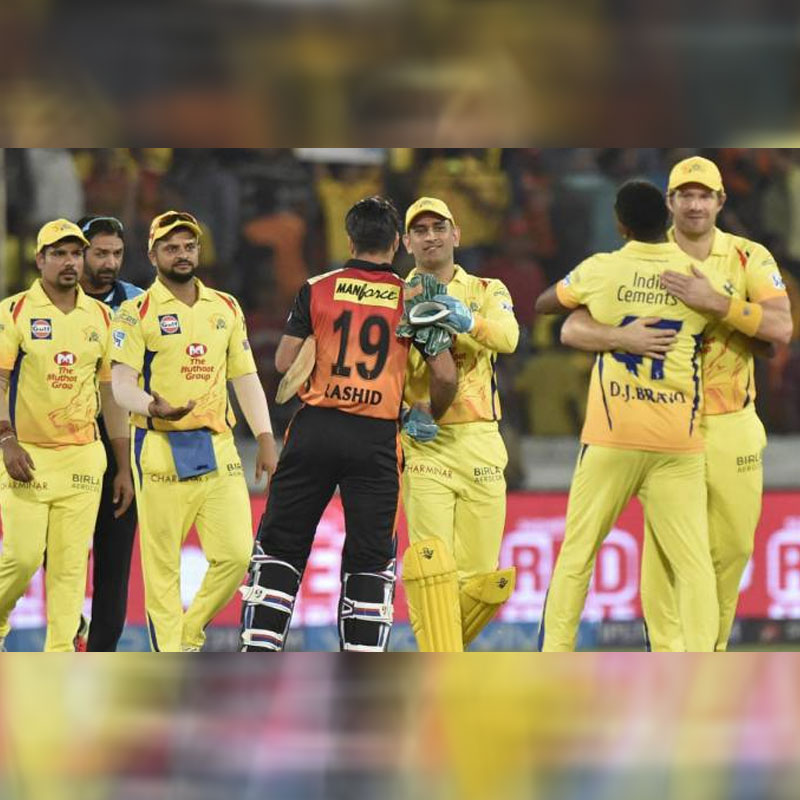
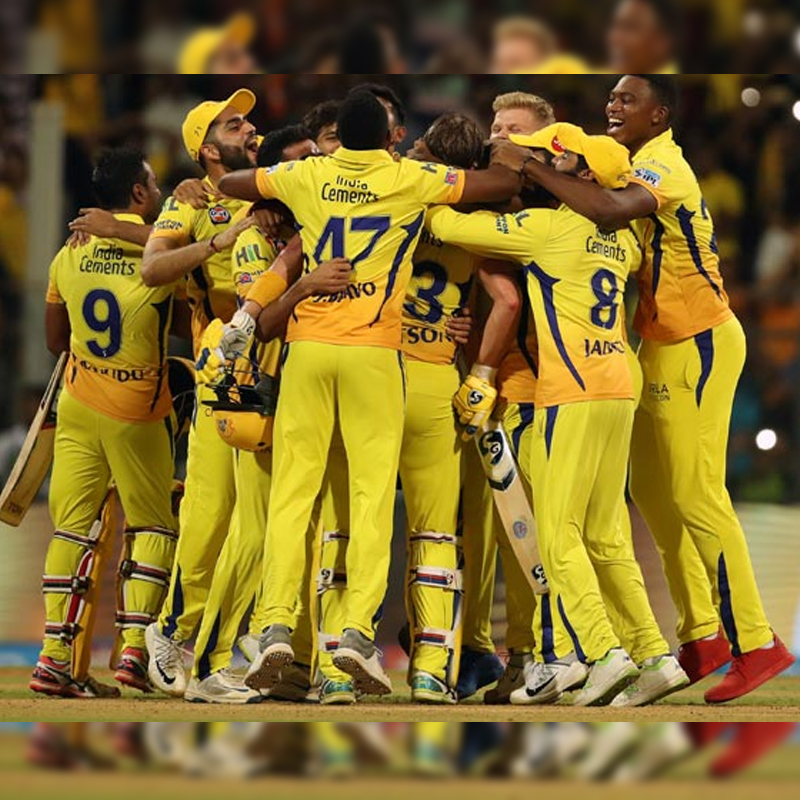
    NEW DELHI: When IPL 2020 began in September, there was a lot of speculation in the industry about its capability to churn out the spectacular revenues like every year. The sponsorship rates had gone down by as much as 25 per cent, and it was highly uncertain that the advertisers, who were still reeling from the financial disaster that Covid-2019 turned out to be, would be willing to spend the big bucks on advertising. However, broadcast partner Star was pretty positive that it would manage to surpass its previous year’s revenue records and clock sales of more than Rs 2000-crore that it managed to churn in 2019. And as it  panned out, it was not just Mumbai Indians captain Rohit Sharma who held the trophy aloft after an easy win against the Delhi Capitals in the finals last evening, but the broadcaster also had some big wins in its kitty. 

    The Media Ant Co-founder Samir Chaudhary stated that IPL 2020 turned out to be a big property for the broadcaster with viewership numbers attaining new highs in IPL 2020. His expectation is that Star will pocket higher revenues than in the previous season. 

    Havas Media Group India national head – buying R. Venkatasubramanian agreed, estimating the  jump to be around 10-12 per cent (TV + digital) over last year. 

    “They sold most of the inventory well before the start of the tournament. As per my knowledge, they must have sold only three to five per cent inventory during the tournament and the sticker prices were 10-15 per cent more than what was offered initially,” pointed out Venkatasubramanian.

    The initial rates ranged between 10 and 15 lakhs per 10 second, as Indiantelevision.com had reported earlier. There were five co-presenting sponsors for Dream11 IPL 2020 on Star Sports – Dream 11, Phone Pe, Amazon, Vodafone Idea and Byju’s; 13 associate sponsors: Mondelez, ITC Foods, Polycab, Diageo, P&G, Coca-cola, Hero, KP Group, Facebook, Daily Hunt, Samsung, Cred and AMFI. Beyond the live game – Byju’s was the sponsor for the pre-and-post-game live show – Byju’s Cricket Live. 

    The categories of advertisers included BFSI, edtech, online gaming, online shopping, home décor, mobile handsets, consumer durables, FMCG, auto, apparel amongst others. Internet and digital-based business like fantasy sports, edtech, e-commerce, and online gaming, also got good traction. 

    As confirmed by a Star Sports spokesperson, IPL 2020 had 18 sponsors and a total of 110 advertisers on board, which is the highest number of partners and advertisers in the history of the IPL, since it began in 2008. Most of the inventory was sold in advance. 

    IPL 2020 performed exceptionally well in terms of viewership as well.  As per BARC data, for television,  IPL 2020 has seen an increased engagement and affinity, reflected through the higher number of games watched. IPL 2019 had 326 billion minutes consumption. That mark had been surpassed in this year’s IPL when just 50 out of the 60 games had been played.

    Additionally, the season recorded the most games watched by an average viewer for any 60-game IPL season and the highest engagement for any IPL ever on the back of regionalisation with Hindi and southern language feeds (Telugu, Tamil and Kannada).

    “The viewership has increased 18-19 per cent compared to last year (till the sixth  week of the tournament) and mostly IPL 2020 will finish with 15-18 per cent higher viewership compared to IPL 2019,” Venkatasubramanian highlighted. 

    That will be more power to the game of cricket. And the love that its fans give it.

  • Disney+Hotstar taps 13 sponsors for IPL 2020

    Disney+Hotstar taps 13 sponsors for IPL 2020

    KOLKATA: Disney+Hotstar has bolstered its sponsorship portfolio for IPL 2020 with 13 sponsors. The brands which have onboarded for the largest cricket showbiz span across categories.

    The start-up unicorn Dream11 is the co-presenting sponsor and Boost is co-powered by sponsor. The 11 associate sponsors include Acko, Maruti Suzuki, KhataBook, Flipkart, Swiggy, Ace23, HDFC Bank, Great Learning, MX Player, Kingfisher Calendar and AMFI (Association of Mutual Funds in India).

    “Dream11 IPL 2020 will be a major catalyst for viewers and fans, who are longing to see their favourite stars back on the field. We have created avenues for interactive advertising innovations which enable brands to engage with their audience more effectively," Star and Disney India ad sales president Nitin Bawankule said.

    Read more news on Disney + Hotstar

    "This has resulted in interest and investment from prestigious brands across categories as varied as auto to e-commerce to banking. All of this, coupled with enormous interest from viewers and fans, makes us confident that this year’s Dream11 IPL will be a resounding success,” he added.

    Considerably, Disney+ Hotstar recently decided to take IPL matches behind paywall this year. It has struck deal with Jio and Airtel to boost the subscription too. Hence, the bold move will allow brands to reach high spender quality audiences.

    Read more news on IPL

    Earlier, the platform has also announced the addition of new features to the interactive Watch’N Play social feed. Replicating the exhilarating roar of the stadium, fans will be able to use an interactive emoji stream.

  • 65% millennials and Gen Z prefer OTT over TV, report says

    65% millennials and Gen Z prefer OTT over TV, report says

    KOLKATA: Urban India’s youth has relied on OTT platforms to kill monotony. Amid other options, the streaming services have emerged as the most popular source of entertainment as 70 per cent of the youth have turned towards OTT platforms in their spare time. Along with existing subscribers, new OTT subscription purchases during the lockdown period spiked throughout the country across demographics.

    According to a report from The Data Sciences Division of Dentsu Aegis Network (DAN) India, 65 per cent of millennials (25-39 years) and Gen Z (5-25 years) prefer consuming video content on an OTT platform over TV. The younger the audience is, the habit of consuming OTT is higher. The report also shows that daily OTT content consumption among Gen Z is higher than millennials. 

    While before lockdown 95 per cent of the respondents used to consume only two-three hours of daily content, during lockdown on average each millennial has consumed 1.66 hours of additional content and GenZ is consuming two-three hours of additional content too.

    As a result of having more time at hand, binge-watching is becoming a prime trait of popular culture. While five per cent of the research universe has claimed to consume between six-twelve hours of daily content on OTT platforms in pre-pandemic period, currently 20 per cent of the sample is enjoying binge-watching. Millennials and Gen Z’ s purchased two and three additional OTT platform subscriptions respectively since the start of the lockdown. The average daily consumption hours have remained around four hours.

    The international platforms with expanding local content library are becoming popular choices. 60 per cent of the sample has a subscription to either Amazon Prime Video or Netflix. Disney+Hotstar also has been able to attract nearly 19 per cent of the urban youth. Homegrown platforms like ZEE5, Voot are creating a buzz gradually. Comedy, thriller and action-based entertainment were the top three preferences of GenZ audiences while millennials were more inclined towards consuming a lot more Sci-Fi over thrillers. Money Heist, Breaking Bad, Paatal Lok, Narcos, Riverdale, Friends were all the rage among the episodic content. 

    Another interesting trend that has come out of the study is that OTT based gaming has gained significant popularity during the lockdown period. While the curve of heavy gaming remained constant, casual gaming saw a steep increase in popularity. However, millennial audiences were significantly less likely to consume OTT based gaming when compared to their GenZ counterparts.

    OTT platforms have traditionally been more favoured by the young audience for the nature of the content it produces. Surprisingly, 11 per cent of the respondents criticised OTT platforms of imposing, glorifying and promoting “Content disgracing a religion or a caste”. These criticisms were accompanied by a majority (73 per cent) criticising the depiction of anti-national sentiment, foul language and bold as well as smutty content.  “Pop up Ads” were also criticised for harming the seamless viewing experience. Despite the growth of broadband across the country, connectivity issues are prevailing until now.

    The OTT industry is anticipated to grow 45.5 per cent during the forecast period 2019 to 2026. Along with the humongous growth, increased collaborations between OTT platforms and pay up TV, further hybridization and evolution of OTT monetization models could be more noticed going forward. India is expected to emerge as the second-largest OTT market with 500 million users by 2020 itself. 

  • Nitin Agarwal joins Purplle.com as chief marketing officer

    Nitin Agarwal joins Purplle.com as chief marketing officer

    NEW DELHI- Former Hotstar VP marketing and user growth Nitin Agarwal has joined Purplle.com as a chief marketing officer. He will be in charge of Purplle’s marketing and growth.

    Prior to this, Agarwal was associated with Sarva, an omnichannel fitness startup where he was leading the role of CMO and head of the digital business.

    He has over 11 years of experience in creating new categories, building inspiring brands, and driving revenues across high growth, PE/VC backed businesses.

    He worked with Hotstar for more than two years. Agarwal was instrumental in building ShopClues. He joined the brand in 2013 and helped it become the eighth unicorn in 2016. Apart from this, he led all marketing initiatives at ShopClues including branding & communication, media planning & buying, performance marketing, and mobile user acquisition.

  • IPL 2020: Brands opt for spot buying over bigger packages

    IPL 2020: Brands opt for spot buying over bigger packages

    NEW DELHI: It was being coined for long by the industry insiders that IPL will bring respite to the broadcasters from tardy advertising revenues that they are dealing with since the onset of Covid-19 pandemic, in early March.

    The tournament will take place in UAE this year between September 19 and November and is touted to be the biggest Live Sports event this year. Undoubtedly, there is a lot of excitement about the property among consumers, broadcasters and brands.

    It has been widely reported that Star has set a target of Rs 3000 crore in advertising revenues for IPL this year.

    Media Ant co-founder Samir Chaudhary shares, the ad rates for Star Sports are pretty much the same as the last time, Rs 13-15 lakhs per 10 seconds but on Hotstar it has gone up from ‘120 CPM in last season to ‘180 CPM.

    Interestingly, the experts pointed that while the advertisers are happy to go ahead with this high impact property, they are also playing it safe when it comes to buying ad slots on Star Sports and Hotstar for the tournament. Unlike every year, brands are not flocking to buy package deals but are smartly investing in spot buying, a leading marketing expert tells us. He adds that this is also the reason that ad rates have been slightly up this year. 

    Several reports indicate that Star has already sold a large part of their ad inventory and the rest of the inventory will be sold close the bigger matches. A lot will also depend on the viewership numbers of the tournament. For the record, IPL has always been able to clock high viewership numbers. In 2019, the cricketing league clocked a viewership of 462 million.

    Media veteran Shripad Kulkarni notes, “For Star Sports, these are the rates that they have begun with but it is a very dynamic situation this time. It will all depend on demand and supply. Also, usually, they used to open the FCTs once the sponsors were finalised but they don’t have much time now, so all of this is running parallely. I am hoping for the sake of all us that there is a last-minute surge in the prices as many are looking at it as a point of revival.” 

    Interestingly, this year, IPL is coinciding with the festive season which is further helping its cause. Traditionally brands are keen to advertise during this season to reach out to their consumers who are in a good mood to purchase. Advertisers have a very small window and they prefer to go all in during this time. So, this year, it is expected that advertisers will be happy to pay a premium for IPL slots to reach out to their consumers.

    In a recent interaction with Indiantelevision.com CEO, founder, and editor-in-chief Anil Wanvari, Havas Media group MD India Mohit Joshi had noted that good 25-30 per cent of this year’s festive season spends will be taken by forthcoming the cricketing league, scheduled to happen between 19 September and 8 November.

    Another expert insisted that the market sentiments are fairly positive right now and a number of brands are in the process of buying ad slots. Though, he adds that the sponsorship rates are running about 25 per cent low this year. 

    The positive sentiment around the property was further enhanced with the announcement of Dream11 replacing Vivo as the title sponsor. The fantasy league brand bought the sponsorship right for Rs 222 crore.

    On the digital front, Disney + Hotstar will play a major role this year. Several industry experts have pointed that they are expecting good viewership on Hotstar and therefore the ad rates are slightly higher, maybe up to 50 per cent more than the last time.” It is expected that a lot of brands will be keen to experiment with IPL on the digital front.

    Surprisingly, Kulkarni is expecting a dip in the ad rates for Hotstar to the tune of 25-30 per cent from the last season. He also agrees that a lot is going to depend on demand and supply. The rates might be revised as the season progresses and viewership numbers are revealed. 

    In terms of the number of FCTs sold, all the media experts maintained that many brands, from the ed-tech, automobile, and FMCG categories, are in the discussion phase and confirmations will follow in the next two weeks. 

  • The Big Shift: Where is digital taking the M&E industry?

    The Big Shift: Where is digital taking the M&E industry?

    NEW DELHI/MUMBAI: It’s a rainy afternoon in Delhi and 48-year-old homemaker Sunita is looking for recipes for fritters on YouTube on a smartphone she was recently gifted by her husband. She has made fritters a thousand times in her life and she knows the recipe to it by heart, but she likes to watch chefs online to “learn new tricks” for perfecting her already excellent culinary skills. Sometimes, she plugs in the firestick on her smart TV and scrolls through Amazon Prime and Netflix for old movies. Even her evening TV watching has shifted to apps like Hotstar and Voot, which she is still learning to use properly but nevertheless enjoys the ad-free entertainment on demand. 

    This is not just the story of Sunita, but a whole lot of other people from all age groups and interests. Her husband prefers watching news online rather than switching on the TV channels as it is more comfortable to watch it on his phone, though without earplugs. Their three-year-old grandson is learning his ABCs on yet another mobile app and doesn’t miss his Peppa Pig sessions every evening. And as the never-ending lockdown imposes its dark shadow on his probability to attend physical classes like his parents or grandparents, there are investments being made into paid subscriptions of many educational apps and sites, along with other digital tools. 

    Digital, as we know, is dominating all aspects of our lives. From grocery shopping to learning, to working out, to dating; everything has found a digital counterpart and in many cases a competition. 

    The media and entertainment industry is also not untouched from this trend. As per PwC Global Entertainment and Media Outlook 2019-2023, digital revenues are accounting for a larger share of the industry’s total revenue, year-on-year, starting at 40.7 per cent in 2014 and reaching 55.4 per cent in 2019. It is expected to reach 61.6 per cent in 2023. 

    India is not far behind from the global trends. In fact, it is one of the top markets to embrace this digital boom. As per EY-FICCI report 2020, digital media overtook filmed entertainment in 2019 to become the third-largest segment of the M&E sector. Digital media grew 31 per cent to reach Rs 221 billion and is expected to grow at 23 per cent CAGR to reach Rs 414 billion by 2022. 

    “Digital subscription revenues more than doubled from 2018 levels and digital advertising revenues grew to command 24 per cent of total advertising spend. The sector continues to grow at a rate faster than the GDP, driven primarily by growth in subscription-based business models and India’s attractiveness as a content production and post-production destination,” read the report. 

    The same report suggests that OTT subscription market will approximate 10 per cent of the total TV subscription market by 2020 and there will be over 40 million connected TVs by 2025. And while there is no concrete comparative data to see the growth of digital in comparison to traditional forms of media, there have been many agencies and people claiming that Covid2019 has only accelerated this process. Several reports by bodies like BARC, Nielsen and Kantar have hinted at the increased time spent on digital platforms during the lockdown. 

    So, is this big shift to digital indicating a slow demise of traditional media?

    Swastik Productions MD Rahul Kumar Tewary notes that while digital media has gained traction during the past few months, there is not going to be a takeover of the market space that television enjoys by it. Both the mediums may overlap to a certain extent, but in the end, these are two different market segments. 

    “I believe digital is growing but TV will remain the same. I don’t think there will be too much of an impact on TV programming. There is a certain age group of consumers for the digital content; there is a trend that the youth of India is moving towards the digital side,” he shares. 

    Locomotive Global co-founder Sunder Aaron adds, “We will come out of this pandemic at some time and the domination of pay television and the advertisement on pay TV will continue. But it will have a new balance with digital media and digital delivery of content. We still are a country where there is low penetration for digital consumption. Mobile consumption is actually high but if you look at wirelines into households, it’s still very low as compared to the rest of the world. Hopefully, we will see an increase in the wireline broadband penetration over several years and that will be a big game-changer for digital delivery and digital content consumption.” 

    But are there enough rigid lines between TV and digital anymore? Once, during an interview, someone had asked to define television and the gentleman then went on to elaborate that television is more than the idiot box we knew a few years back. It has camouflaged in a ‘smart box’ now, which also hosts traditional entertainment as well as the modern digital options. It also enables personal chatting and social media apps on the big screen and has a far bigger role to play as a shared screen as well.  

    And definitely, no one can deny the part of digital technologies in keeping this traditional form of entertainment up. In the past few years, almost all the big GECs and news channels have launched their own apps to keep pace with the digital age. Be it Hotstar, Sony Liv, Voot, or Zee5, all these applications first started as an inventory of television shows and then went on to host original content as well. 

    All the major telecom players are a part of the revolution as they were in the DTH era. With Airtel launching its own entertainment app and partnering with other OTTs to offer its consumers exclusive access to content, Idea offering live channels on its movies and TV apps and the very popular and Jio announcement Jio TV+ aggregating TV as well as OTT content, digital dominance seems to stay here. Even on the regulators’ side, TRAI recently launched a channel selection app to facilitate easy subscription modifications for users. 

    Digital technology is now everywhere and that’s what made it possible for the world to continue running even during the strictest of lockdowns for the past few months. 

    One of the biggest industries to benefit from it has been the online news industry. In an earlier story , Indiantelevision.com wrote on the movement of mainstream journalists like Vikram Chandra and Faye D’Souza to digital content curation. It showed how the democratic environment that digital offers as a medium allows journalists to be more true and free to express themselves. The added technological features and better reach are cherries on the top. 

    While Chandra admitted of being heavily reliant on AI-based execution of his editorial functions and being in advanced-level talks with some of the OTT players to push his content, Pankaj Pachauri said, “GoNews has been successfully able to converge satellite TV technology with digital technology as our product can be uplinked on any satellite channel digitally for broadcast. We have tried and tested this technology during the last general elections with APN news for its prime time broadcast,” highlighting the vast roles digital technologies are playing there. 

    All this, undoubtedly, has opened up the gates to great opportunities for digital marketers. Most of the functions of an agency have turned data-driven and are claiming to provide a never-attained-before hyper-targeted reach to advertisers. 

    Digitalkites sr. VP Amit Lall, a few weeks back, discussed s the ability of marketers to follow a consumer’s journey not just across platforms but also devices to provide them with a seamless experience and help advertisers understand user behaviour better. 

    Madison Media & OOH group CEO told Indiantelevision.com on Media Minds 2 that the entire digital renaissance has been a big part of his successful five-year-long journey at the agency, thus far. He shared that the share of digital in agency billings has increased from two to three per cent to 20-22 per cent in this time. 

    And this digital intervention is not only helping the programmatic, SEO, search, social and other digital aspects of marketing but also helping traditional options to be more targeted and improved. The whole lot of data collection that is done via digital media is used to chart out trajectories for mainline campaigns. 

    Additionally, the oldest mainline medium of traditional advertising, out-of-home (OOH), has begun its digital journey, again pushed by the Covid2019 lockdown. 

    Eyetalk Media Ventures MD Gautam Bhirani says, “Fuelled by technological advancements as more devices connect with the power of internet-of-things, location-based mobile data can bridge the gap between digital-physical worlds and converging them can give us holistic consumer insights. As we adapt to the pandemic induced lifestyle changes often termed as ‘The New Normal’, it is constantly impacting consumer behaviour, sentiment and journey which makes it imperative for us to learn and integrate these learnings in OOH planning. Detailed analysis of mobile data that determine brand affinity, interests, preferences, income size, gender, commute patterns, dwell time in the online and offline world can help identify locations for OOH placement and mobile device IDs can be used to retarget the consumer.” 

    Laqshya Media Group CEO Atul Shrivastava adds his own experience, “Our transformation from an OOH to a multi-media conglomerate has followed a carefully coordinated strategy of delivering the most optimised consumer-contact solution to our clients by combining digital, OOH and experiential. In order to make our OOH and experiential offerings more interactive, we added a digital marketing company to our network, which gives us the bandwidth to offer our clients an unbeatable offline-online combination.” 

    Digital dominance is clearly shaping up a distinct world, dominating the media and entertainment industry. While there are high chances that traditional platforms will survive this big shift, one can look forward to redefined versions of televisions and newspapers. 

    (With inputs from Anjali Thakur and Shikha Singh)