Tag: Hotstar

  • T20 cricket garnered highest viewership across genres: BARC

    T20 cricket garnered highest viewership across genres: BARC

    MUMBAI: The recently concluded Asia Cup delivered the highest ratings of the season amongst the other sports with the Indian-Pakistan match taking the cake.

    With approximately 26.6 crore viewers at an all India level excluding the finale, the India-Pak match was also viewed as the top programme across genres, according to the data recorded by Broadcast Audience Research Council (BARC).

    BARC’s viewership measurement showed that viewing of cricket consistently dwarfed viewership of all other forms of programming, including general entertainment, since April last year.

    According to the survey, the format of T20 on Star Sports from the past eight weeks attracted the majority of eyeballs. With the advent of multiple screens, Hotstar has now emerged as a significant source of viewership and is also becoming the primary screen for an increasing number of consumers in metropolitan India.

    The Asia Cup Indo-Pak match was the highest watched T20 match ever on Hotstar with engagement levels for Asia Cup matches being 1.5 times higher than even the 2015 IPL.

    According to the Council, the viewership amongst affluent males in urban India for matches when India played one-day international or T20 games is significantly higher than the lead entertainment channel’s share on those cricket days.

    Highlighting cricket’s share of television audience in rural India, the viewership was even greater among the same demographic group, more than twice the share of eyeballs garnered by the lead entertainment channel on those days.

    This trend highlights cricket’s undiminished appeal to consumers and is a testament to efforts aimed at establishing new broadcast benchmarks with a view to delivering a significantly enhanced and more immersive viewing experience for fans across the country.

  • “Viewers are no more mere viewers they are our consumers”: Rohit Bhandari

    “Viewers are no more mere viewers they are our consumers”: Rohit Bhandari

    MUMBAI: A pioneer of innovation which has revolutionized world television with shows like Game of Thrones, Last Week Tonight with John Oliver, Entourage and many more, HBO (Home Box Office) competes with Hollywood through their diverse range of content on board. The network recently partnered with Star India for an exclusive programming agreement through which Hotstar and the network’s other channels will have access to HBO’s original content.

    With a brand new red and blue washed look, HBO will also launch an application. Rebranded by Turner  International from Turner Studios Atlanta, and the broadcaster is all geared up to invade the entertainment space with its popular content programming appealing to a larger and younger audience. The movie destination already has titles like Mission Impossible, Transformers Genesis, etc under them.

    Speaking to Indiantelevision.com’s Megha Parmar, Turner International English entertainment Senior Director and Network head Rohit Bhandari sheds some light on his journey with the network so far, the English entertainment space, what attracts the advertisers to the genre, BARC rolling out their rural data, and the way ahead for the channel.

    Excerpts are:

    How has been the journey so far with HBO?

    It has been good as I joined at the time when HBO came into the network and it was quite new for everyone. From the WB channel, which is typically a library service to launching a channel where you have all the premieres, movies and good deals in place, the journey has been exciting. In the initial year, I had to understand what content we have and what content we can expect working with our content partners; understanding the way it’s going to take us in the next few years and what benefits it can do us. I think that was an exciting part in the first year.

    In the second year, we saw a transition from TAM to BARC that shook up everyone. We are trying to understanding the BARC audience as BARC is yet to settle down. It was going through various phases – household data, individual data and then rural got added to it, but this has not changed our lives. We are still looking at the changes that will affect the system. And I think, once the TAM meters come in the panel, it is going to expand further and how does that help us is what we are waiting for. Once all this happens, we can say that BARC has settled down and that’s when everyone will know where they stand from a genre consumption point of view or an individual channel’s point of view.

    Out of the eight movie channels in India, we manage two – that is 25 per cent of the share. We want to understand the consumers better by knowing their motivations, what do they enjoy doing and how does he engage with you and as the consumers have evolved in such a connected world from an alphanumeric phone to a smartphone. This forms a great engagement as well as great distraction. We did our survey and based on the feedback we decided to do a revamp of both our channels. We decided to do something new and give something fresh to our consumers.

    What gives the channels under you an edge above the competition?

    There is no real edge at this point of time. The entertainment space is extremely competitive. Look at the overall situation right now, with only 5 to 6 big studios delivering big films. Some are real blockbusters films and some are the second grader films that come out. To settle in this big English movie space, you need a fair mix of both. At this time, we have a good mix coming from Warner and Paramount, our first pay partners, which we play on HBO and we plan to buy content from more studios so that we can have a complete offering and make up a number for our consumers. Our bit right now is to understand our consumers better, engaging with them and to build the gap from what they expect from us as a movie channel and what we eventually deliver to them, that is where we stand.

    How was year 2015 for the English movie channels? Are there any bench marks or highlights of the year that you would like to mention?

    I think it was a year of a lot of adjustments. We at HBO want to understand our brand better and are adjusting to what it stands for. Everyday is a new day for us where we improve ourselves from the previous day. It’s a process of continuous improvements that we are working on right now. We are happy as well as unhappy and want to develop more. That word ‘more’ is what we are striving for.

    How much does viewership impact advertisers and agencies when it comes to English movie channels?

    It does impact the advertisers. Typically, a lot of the sponsorship only comes on big titles. Hence, it is important to have a right mix of both of performance and a big title. Everyone is trying to achieve that and so are we. 

    Did the genre grow in terms of ad revenues from the previous years? Do you see a further increase this year?

    Yes. There has been an increase from the previous years. I don’t think there will be any drastic change this year. I expect it to be at the same range.

    Do you see an increase in the subscription revenue with digitization?

    The subscription numbers are growing up slowly. Compared to the increase that we saw in DAS I and II, DAS III has been a bit slow but as the year rolls out with big ticket events coming up, we are expecting the roll-out to be a bit more aggressive.

    Movies Now, Star Movies, Zee Studio are often seen fighting for the top three ranks in the BARC data. How do you plan to invade the space?

    As I mentioned earlier, there are only 5 to 7 studios sharing content across channels. Everyday the idea is to increase the ratings and that is what we are trying to do. We are trying to change at three levels. First, we are structuring our titles in a better way. Second, we are going to launch an app soon. The idea behind launching an app is to provide information. It is actually an engagement tool. The mobile phone has become a competitor to TV and especially when our core focus is in the age group of 16 to 30, we need to have that type of content. As you grow, your choice of a handset also grows – that is, your functionality improves and hence you start spending more time on it. The entire idea is to use a medium which the youth follows and is active on. The consumers should know what the brand has and what it is doing for them.

    Lastly, we need to understand from them what their expectations are and bridge the gap of meeting it with what we are providing. That’s a challenge. We are doing something like Batman versus Superman where we are trying to create unique experience for our viewers. We are trying to do that on the app itself. These are the things through which we are trying to reward the viewers for being loyal to us and also for engaging with us on the app. We are trying to have a slightly deeper connection with our viewers. 

    What is key for the genre to garner advertisers’ attention?

    Advertisers want a brand that talks to aspirational India. Within Indian space, English is considered as a minority language. From that perspective, advertisers look for a brand that delivers to this set of audience and continues to hold that edge in continuing to deliver the promise and that’s what HBO has always done.

    BARC had sometime back come out with rural data. Did that have an impact on the content strategy that was followed?

    We look at the data from two perspectives. One, how does the advertisers view us and how the consumers view us. English entertainment initially used to be a four metro base than it became six metro base and then it became eight metro base and then became a 1mn plus based. BARC initially was concerned with urban India, a mix of upper and middle ‘Bharat’ of India. Rural as a metric is being recorded and reported to us for the first time in India. One would expect a number from the council. It has changed the dynamics of the game, but it still needs some time to stabilize its data collection and assimilation process. But as a core offering, I would not focus more on rural. From an English point of view, we will focus on our target group that lies ex-rural irrespective of BARC data. That is the market we will focus on and even our advertisers focus on. Rural is important for everyone but for our genre rural will not be so important.

    BARC and TAM have collaborated. What do you have to say about that?

    It’s a good move. All the meters that TAM had are going to get added to the BARC panel. Whether it gets added uniformly across or whether they expand the panel completely is what we are waiting to hear. Eventually there is only one currency and that actually clears the air on everything

    How is HBO attempting to redefine the movie viewing experience for the viewers?

    The new consumers that we are speaking with, preference is to watch a lot of action content. Based on our research, a couple of key points that came out were that people watch TV because they want to reduce their stress, which is why most of us watch TV. At the second level, they watch English movies as a base to learn English language and hence subtitling becomes important. At the third level, it gives them an opportunity to explore a different culture. Lastly, with the special effects, audio effects or graphics that we use in award winning movies, the viewers want to watch something slicker slightly larger than life and have that entire feeling of grandeur. And that grandier-massier feeling is what we are looking for. There are two levels in which we operate; one is to provide content that your audience wants to watch and also provide content which educates them further about the entire genre.

    Do you think the availability of movies and shows on digital platforms will take away the traditional tv viewing experience?

    At this time I don’t see it as a threat for at least the next few years. On TV the audience is growing on an ongoing basis with digitization and DAS III, and the base is only going to increase. On a larger level, the consumers have to mature to a certain level and understand the difference between TV and what the digital platforms are offering. At least for the next few years, I see TV dominating the space. 

    In an era where people download content globally and the rate of download is very aggressive, is piracy a major teething issue for Hollywood movies?

    This is a bigger question for theatrical guys. What happens is there is a window between theatrical and TV. Earlier it was 12 months and now it has come down to 9 months or 6 months at some places. That is a critical question for theatrical as they are the first ones on the receiving end. Piracy is when theatres get affected by the number of people walking in to watch the movie. I don’t see it as a threat for HBO as a brand.

    Will we see a change in marketing with more experimental initiatives?

    We work closely with our partners. We try to take ownership of the film right from theatrical to the time it premieres on the channel. It is typical consumer behaviour. Today, Batman vs Superman are blockbuster movies which you would definitely want to watch. Once you watch it, there is a certain experience that you derive from the film and that is the same experience that we want to give our consumers when you watch it on HBO. Hence we try to keep the connection alive with them. Hence it is association with a movie at the theatrical level itself. 

    What is the way ahead for the channel?

    We are two brands. Our aim is to keep increasing our viewership share in the overall entertainment space. So currently we have 23 per cent of viewership. We are trying to push ourselves hard to be at number one. That is what I and my team is geared up for. Our aim is to push the envelope by doing new different things to expect a different result at the end of the day. We want to continue surprising our viewers every day. Viewers are no more mere viewers they are our consumers; they come up religiously every day to check what’s happening on the channel like a consumer but also want them to treat HBO as a brand and what we try to do is brand HBO trying to surprise them by trying to do something different.


  • “Viewers are no more mere viewers they are our consumers”: Rohit Bhandari

    “Viewers are no more mere viewers they are our consumers”: Rohit Bhandari

    MUMBAI: A pioneer of innovation which has revolutionized world television with shows like Game of Thrones, Last Week Tonight with John Oliver, Entourage and many more, HBO (Home Box Office) competes with Hollywood through their diverse range of content on board. The network recently partnered with Star India for an exclusive programming agreement through which Hotstar and the network’s other channels will have access to HBO’s original content.

    With a brand new red and blue washed look, HBO will also launch an application. Rebranded by Turner  International from Turner Studios Atlanta, and the broadcaster is all geared up to invade the entertainment space with its popular content programming appealing to a larger and younger audience. The movie destination already has titles like Mission Impossible, Transformers Genesis, etc under them.

    Speaking to Indiantelevision.com’s Megha Parmar, Turner International English entertainment Senior Director and Network head Rohit Bhandari sheds some light on his journey with the network so far, the English entertainment space, what attracts the advertisers to the genre, BARC rolling out their rural data, and the way ahead for the channel.

    Excerpts are:

    How has been the journey so far with HBO?

    It has been good as I joined at the time when HBO came into the network and it was quite new for everyone. From the WB channel, which is typically a library service to launching a channel where you have all the premieres, movies and good deals in place, the journey has been exciting. In the initial year, I had to understand what content we have and what content we can expect working with our content partners; understanding the way it’s going to take us in the next few years and what benefits it can do us. I think that was an exciting part in the first year.

    In the second year, we saw a transition from TAM to BARC that shook up everyone. We are trying to understanding the BARC audience as BARC is yet to settle down. It was going through various phases – household data, individual data and then rural got added to it, but this has not changed our lives. We are still looking at the changes that will affect the system. And I think, once the TAM meters come in the panel, it is going to expand further and how does that help us is what we are waiting for. Once all this happens, we can say that BARC has settled down and that’s when everyone will know where they stand from a genre consumption point of view or an individual channel’s point of view.

    Out of the eight movie channels in India, we manage two – that is 25 per cent of the share. We want to understand the consumers better by knowing their motivations, what do they enjoy doing and how does he engage with you and as the consumers have evolved in such a connected world from an alphanumeric phone to a smartphone. This forms a great engagement as well as great distraction. We did our survey and based on the feedback we decided to do a revamp of both our channels. We decided to do something new and give something fresh to our consumers.

    What gives the channels under you an edge above the competition?

    There is no real edge at this point of time. The entertainment space is extremely competitive. Look at the overall situation right now, with only 5 to 6 big studios delivering big films. Some are real blockbusters films and some are the second grader films that come out. To settle in this big English movie space, you need a fair mix of both. At this time, we have a good mix coming from Warner and Paramount, our first pay partners, which we play on HBO and we plan to buy content from more studios so that we can have a complete offering and make up a number for our consumers. Our bit right now is to understand our consumers better, engaging with them and to build the gap from what they expect from us as a movie channel and what we eventually deliver to them, that is where we stand.

    How was year 2015 for the English movie channels? Are there any bench marks or highlights of the year that you would like to mention?

    I think it was a year of a lot of adjustments. We at HBO want to understand our brand better and are adjusting to what it stands for. Everyday is a new day for us where we improve ourselves from the previous day. It’s a process of continuous improvements that we are working on right now. We are happy as well as unhappy and want to develop more. That word ‘more’ is what we are striving for.

    How much does viewership impact advertisers and agencies when it comes to English movie channels?

    It does impact the advertisers. Typically, a lot of the sponsorship only comes on big titles. Hence, it is important to have a right mix of both of performance and a big title. Everyone is trying to achieve that and so are we. 

    Did the genre grow in terms of ad revenues from the previous years? Do you see a further increase this year?

    Yes. There has been an increase from the previous years. I don’t think there will be any drastic change this year. I expect it to be at the same range.

    Do you see an increase in the subscription revenue with digitization?

    The subscription numbers are growing up slowly. Compared to the increase that we saw in DAS I and II, DAS III has been a bit slow but as the year rolls out with big ticket events coming up, we are expecting the roll-out to be a bit more aggressive.

    Movies Now, Star Movies, Zee Studio are often seen fighting for the top three ranks in the BARC data. How do you plan to invade the space?

    As I mentioned earlier, there are only 5 to 7 studios sharing content across channels. Everyday the idea is to increase the ratings and that is what we are trying to do. We are trying to change at three levels. First, we are structuring our titles in a better way. Second, we are going to launch an app soon. The idea behind launching an app is to provide information. It is actually an engagement tool. The mobile phone has become a competitor to TV and especially when our core focus is in the age group of 16 to 30, we need to have that type of content. As you grow, your choice of a handset also grows – that is, your functionality improves and hence you start spending more time on it. The entire idea is to use a medium which the youth follows and is active on. The consumers should know what the brand has and what it is doing for them.

    Lastly, we need to understand from them what their expectations are and bridge the gap of meeting it with what we are providing. That’s a challenge. We are doing something like Batman versus Superman where we are trying to create unique experience for our viewers. We are trying to do that on the app itself. These are the things through which we are trying to reward the viewers for being loyal to us and also for engaging with us on the app. We are trying to have a slightly deeper connection with our viewers. 

    What is key for the genre to garner advertisers’ attention?

    Advertisers want a brand that talks to aspirational India. Within Indian space, English is considered as a minority language. From that perspective, advertisers look for a brand that delivers to this set of audience and continues to hold that edge in continuing to deliver the promise and that’s what HBO has always done.

    BARC had sometime back come out with rural data. Did that have an impact on the content strategy that was followed?

    We look at the data from two perspectives. One, how does the advertisers view us and how the consumers view us. English entertainment initially used to be a four metro base than it became six metro base and then it became eight metro base and then became a 1mn plus based. BARC initially was concerned with urban India, a mix of upper and middle ‘Bharat’ of India. Rural as a metric is being recorded and reported to us for the first time in India. One would expect a number from the council. It has changed the dynamics of the game, but it still needs some time to stabilize its data collection and assimilation process. But as a core offering, I would not focus more on rural. From an English point of view, we will focus on our target group that lies ex-rural irrespective of BARC data. That is the market we will focus on and even our advertisers focus on. Rural is important for everyone but for our genre rural will not be so important.

    BARC and TAM have collaborated. What do you have to say about that?

    It’s a good move. All the meters that TAM had are going to get added to the BARC panel. Whether it gets added uniformly across or whether they expand the panel completely is what we are waiting to hear. Eventually there is only one currency and that actually clears the air on everything

    How is HBO attempting to redefine the movie viewing experience for the viewers?

    The new consumers that we are speaking with, preference is to watch a lot of action content. Based on our research, a couple of key points that came out were that people watch TV because they want to reduce their stress, which is why most of us watch TV. At the second level, they watch English movies as a base to learn English language and hence subtitling becomes important. At the third level, it gives them an opportunity to explore a different culture. Lastly, with the special effects, audio effects or graphics that we use in award winning movies, the viewers want to watch something slicker slightly larger than life and have that entire feeling of grandeur. And that grandier-massier feeling is what we are looking for. There are two levels in which we operate; one is to provide content that your audience wants to watch and also provide content which educates them further about the entire genre.

    Do you think the availability of movies and shows on digital platforms will take away the traditional tv viewing experience?

    At this time I don’t see it as a threat for at least the next few years. On TV the audience is growing on an ongoing basis with digitization and DAS III, and the base is only going to increase. On a larger level, the consumers have to mature to a certain level and understand the difference between TV and what the digital platforms are offering. At least for the next few years, I see TV dominating the space. 

    In an era where people download content globally and the rate of download is very aggressive, is piracy a major teething issue for Hollywood movies?

    This is a bigger question for theatrical guys. What happens is there is a window between theatrical and TV. Earlier it was 12 months and now it has come down to 9 months or 6 months at some places. That is a critical question for theatrical as they are the first ones on the receiving end. Piracy is when theatres get affected by the number of people walking in to watch the movie. I don’t see it as a threat for HBO as a brand.

    Will we see a change in marketing with more experimental initiatives?

    We work closely with our partners. We try to take ownership of the film right from theatrical to the time it premieres on the channel. It is typical consumer behaviour. Today, Batman vs Superman are blockbuster movies which you would definitely want to watch. Once you watch it, there is a certain experience that you derive from the film and that is the same experience that we want to give our consumers when you watch it on HBO. Hence we try to keep the connection alive with them. Hence it is association with a movie at the theatrical level itself. 

    What is the way ahead for the channel?

    We are two brands. Our aim is to keep increasing our viewership share in the overall entertainment space. So currently we have 23 per cent of viewership. We are trying to push ourselves hard to be at number one. That is what I and my team is geared up for. Our aim is to push the envelope by doing new different things to expect a different result at the end of the day. We want to continue surprising our viewers every day. Viewers are no more mere viewers they are our consumers; they come up religiously every day to check what’s happening on the channel like a consumer but also want them to treat HBO as a brand and what we try to do is brand HBO trying to surprise them by trying to do something different.

  • Hotstar extends partnership with ICC World Twenty20 2016; Announces associate sponsorship agreement

    Hotstar extends partnership with ICC World Twenty20 2016; Announces associate sponsorship agreement

    MUMBAI: Star India’s OTT platform Hotstar today (7 March 2016) extended its partnership with ICC World Twenty20 2016 through a sponsorship agreement with cricket’s international governing body, the ICC, for the 2016 edition of its mega event.

    The agreement makes Hotstar an associate sponsor of the tournament and ensures on-ground visibility for the platform at all venues for the entire duration of the month-long tournament. In addition to the sponsorship agreement, Hotstar also holds the exclusive digital rights for the live broadcast of the ICC World Twenty20 2016 

    Hotstar president and head Ajit Mohan said, “We are delighted to have deepened our association with the ICC World Twenty20 2016. With the sponsorship, we are reinforcing our commitment to our users and delivering on the promise that whenever there is cricket, Hotstar is the place to follow the game. Continuing on our efforts over the last one year, we are focused on creating a delightful proposition for cricket fans.”  

    ICC Chief Executive, David Richardson said, “We are delighted that Hotstar has decided to strengthen its support of cricket and relationship with the ICC as a global partner of the ICC World Twenty20 India 2016. Through the media rights partnership, Star India reaches out to a global television audience, which is further expanded via its digital platform, Hotstar. With the extension of the relationship to include sponsorship, Hotstar will now have the opportunity to engage and interact with the in-stadia cricket enthusiasts.”

    Richardson further added, “As the momentum builds ahead of the ICC World Twenty20 2016, Hotstar will launch a series of campaigns to further drive up the anticipation among cricket lovers for this eagerly-awaited event.”

  • Hotstar extends partnership with ICC World Twenty20 2016; Announces associate sponsorship agreement

    Hotstar extends partnership with ICC World Twenty20 2016; Announces associate sponsorship agreement

    MUMBAI: Star India’s OTT platform Hotstar today (7 March 2016) extended its partnership with ICC World Twenty20 2016 through a sponsorship agreement with cricket’s international governing body, the ICC, for the 2016 edition of its mega event.

    The agreement makes Hotstar an associate sponsor of the tournament and ensures on-ground visibility for the platform at all venues for the entire duration of the month-long tournament. In addition to the sponsorship agreement, Hotstar also holds the exclusive digital rights for the live broadcast of the ICC World Twenty20 2016 

    Hotstar president and head Ajit Mohan said, “We are delighted to have deepened our association with the ICC World Twenty20 2016. With the sponsorship, we are reinforcing our commitment to our users and delivering on the promise that whenever there is cricket, Hotstar is the place to follow the game. Continuing on our efforts over the last one year, we are focused on creating a delightful proposition for cricket fans.”  

    ICC Chief Executive, David Richardson said, “We are delighted that Hotstar has decided to strengthen its support of cricket and relationship with the ICC as a global partner of the ICC World Twenty20 India 2016. Through the media rights partnership, Star India reaches out to a global television audience, which is further expanded via its digital platform, Hotstar. With the extension of the relationship to include sponsorship, Hotstar will now have the opportunity to engage and interact with the in-stadia cricket enthusiasts.”

    Richardson further added, “As the momentum builds ahead of the ICC World Twenty20 2016, Hotstar will launch a series of campaigns to further drive up the anticipation among cricket lovers for this eagerly-awaited event.”

  • 88th Academy Awards: Where and when can India tune in?

    88th Academy Awards: Where and when can India tune in?

    MUMBAI: It’s that time of the year again when movie buffs across the globe stay glued to their television screens to celebrate Hollywood’s best. Yes, it’s Oscar time! No matter, which part of the world you are in, if you have a flair for international cinema, the Oscars is a singular event you wait an entire year for and dare not miss it. That goes for the Hollywood fans in India as well. 

    The 88th Academy Awards will be held on 29 February at the Dolby Theatre, Hollywood in Los Angeles at 5:30 pm PST. Those in India can catch the show live at the wee hours of the morning at 5:30 am on Star Movies and Star Movies Select HD.

    And in case you’re not a morning person you can tune in again to either of the channels at 8:30 pm for a repeat telecast of the awards.

    For the digital audience — be it early commuters, people who can’t be in front of a TV due to circumstances and even those who have long forsaken television — start flipping tables, Star India’s OTT platform Hotstar will also stream the Oscars live at the same time.

    Hotstar will also let viewers catch the Oscars main event after 29 February with Red Carpet Moments, Thank you clips, high-points, best speeches as well as behind the scenes footage from 1 – 13 March.

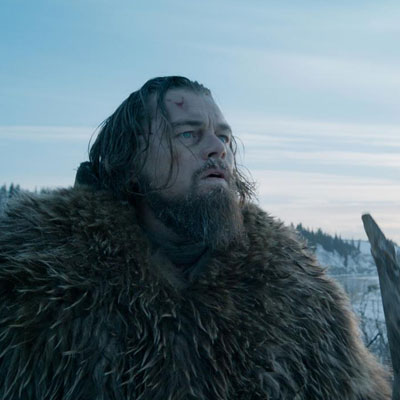
    Last to last year there was a general disagreement when Hollywood actor Leonardo Dicaprio failed to bag the Oscar for best actor for The Wolf Of Wall Street and his Indian fans took to social media to express their disappointment. This year, even as Dicaprio is yet again nominated for his performance in The Revenant, the expectation and anticipation levels are sky high. 

    Some of the movies nominated for the Best Picture this year are The Big Short, Bridge of Spies, Brooklyn, Mad Max: Fury Road, The Martian, Room and Spotlight.

  • 88th Academy Awards: Where and when can India tune in?

    88th Academy Awards: Where and when can India tune in?

    MUMBAI: It’s that time of the year again when movie buffs across the globe stay glued to their television screens to celebrate Hollywood’s best. Yes, it’s Oscar time! No matter, which part of the world you are in, if you have a flair for international cinema, the Oscars is a singular event you wait an entire year for and dare not miss it. That goes for the Hollywood fans in India as well. 

    The 88th Academy Awards will be held on 29 February at the Dolby Theatre, Hollywood in Los Angeles at 5:30 pm PST. Those in India can catch the show live at the wee hours of the morning at 5:30 am on Star Movies and Star Movies Select HD.

    And in case you’re not a morning person you can tune in again to either of the channels at 8:30 pm for a repeat telecast of the awards.

    For the digital audience — be it early commuters, people who can’t be in front of a TV due to circumstances and even those who have long forsaken television — start flipping tables, Star India’s OTT platform Hotstar will also stream the Oscars live at the same time.

    Hotstar will also let viewers catch the Oscars main event after 29 February with Red Carpet Moments, Thank you clips, high-points, best speeches as well as behind the scenes footage from 1 – 13 March.

    Last to last year there was a general disagreement when Hollywood actor Leonardo Dicaprio failed to bag the Oscar for best actor for The Wolf Of Wall Street and his Indian fans took to social media to express their disappointment. This year, even as Dicaprio is yet again nominated for his performance in The Revenant, the expectation and anticipation levels are sky high. 

    Some of the movies nominated for the Best Picture this year are The Big Short, Bridge of Spies, Brooklyn, Mad Max: Fury Road, The Martian, Room and Spotlight.

  • India’s OTT paid video subscribers pegged at 1.3 million: Frost and Sullivan

    India’s OTT paid video subscribers pegged at 1.3 million: Frost and Sullivan

    MUMBAI: OTT (over-the-top) was the buzzword in the Indian media and entertainment sector in 2015 with multiple players firming up their game plan to tap into the lucrative and booming digital space. With the emergence of numerous OTT service providers in the past two years coupled with the entry of Netflix in India, the space is poised to grow at a fast pace in the years ahead.

    According to Frost and Sullivan’s market insight on the OTT video market in India, there are about 66 million unique connected video viewers in India every month, and about 1.3 million OTT paid video subscribers. Growth in the space can be attributed to increase in smart-phones penetration as well as the improvement in Internet speed in India.

    Despite facing several challenges today, the OTT market growth will be fuelled by various disruptive innovations in technology and business models over the next five years, as per Frost and Sullivan. 

    “With an increase in the use of smart devices in India, content owners and aggregators are using non-TV platforms to improve reach and generate revenues through subscription and advertisement. However, it’s hard to woo the Indian consumer. Success in OTT video distribution will depend on the ability to offer variety of content, new content, at a reasonable price and impeccable user experience,” said Frost and Sullivan research director Vidya Subramanian Nath. 

    While today a few broadcasters such as the Star TV Network and Zee Entertainment are driving services as well as viewership for OTT video with Hotstar and DittoTV respectively, over the next five years, there will be more broadcasters as well as cable and DTH operators expanding their OTT services. However, inadequate bandwidth speeds and the incumbency of YouTube in the market have challenged market participants.

    “India may have over 225 million Internet users, but for consuming video, one needs high-speed broadband access and only about 35 per cent of these users have access to it, informed Nath. “OTT video subscription numbers fluctuate dramatically every month. We find that advertising video on demand (AVOD) is the most preferred mode of OTT video delivery in India currently,” she said.

    Among content types, there is an increasing demand for short duration video content. This is primarily attributable to the average low Internet speeds and changing preferences of many Indian viewers. It is common to find online viewership peak during major sports events like the IPL, elections, or breaking news.

    Platforms such as YouTube offer opportunities for independent content creators who can publish their videos online without the hassles of negotiation with large networks. Now, with the entry of Netflix in India, independent professional content production will continue to grow. Broadcasters who have their own content or video platforms with a variety of publishers are driving the market. While Viacom18 is all set to launch its service called VOOT next month, Ekta Kapoor’s Balaji Telefilms is also burning the midnight oil to launch its OTT platform – ALT Digital by June this year. Balaji Telefilms CEO Sameer Nair has huge expectations from the platform and expects ALT Digital to have a whopping four million paid subscribers globally by 2020. 

    With substantial investment being pumped in by companies like by Star India (Hotstar), Sony Pictures Networks India (Sony Liv), Zee Enterprises (dittoTV), Eros International (ErosNow) and Singtel, Sony & Warner (HOOQ) amongst others, the competition in the OTT space is set to intensify with the key differentiators being user experience and variety of content offering.

  • India’s OTT paid video subscribers pegged at 1.3 million: Frost and Sullivan

    India’s OTT paid video subscribers pegged at 1.3 million: Frost and Sullivan

    MUMBAI: OTT (over-the-top) was the buzzword in the Indian media and entertainment sector in 2015 with multiple players firming up their game plan to tap into the lucrative and booming digital space. With the emergence of numerous OTT service providers in the past two years coupled with the entry of Netflix in India, the space is poised to grow at a fast pace in the years ahead.

    According to Frost and Sullivan’s market insight on the OTT video market in India, there are about 66 million unique connected video viewers in India every month, and about 1.3 million OTT paid video subscribers. Growth in the space can be attributed to increase in smart-phones penetration as well as the improvement in Internet speed in India.

    Despite facing several challenges today, the OTT market growth will be fuelled by various disruptive innovations in technology and business models over the next five years, as per Frost and Sullivan. 

    “With an increase in the use of smart devices in India, content owners and aggregators are using non-TV platforms to improve reach and generate revenues through subscription and advertisement. However, it’s hard to woo the Indian consumer. Success in OTT video distribution will depend on the ability to offer variety of content, new content, at a reasonable price and impeccable user experience,” said Frost and Sullivan research director Vidya Subramanian Nath. 

    While today a few broadcasters such as the Star TV Network and Zee Entertainment are driving services as well as viewership for OTT video with Hotstar and DittoTV respectively, over the next five years, there will be more broadcasters as well as cable and DTH operators expanding their OTT services. However, inadequate bandwidth speeds and the incumbency of YouTube in the market have challenged market participants.

    “India may have over 225 million Internet users, but for consuming video, one needs high-speed broadband access and only about 35 per cent of these users have access to it, informed Nath. “OTT video subscription numbers fluctuate dramatically every month. We find that advertising video on demand (AVOD) is the most preferred mode of OTT video delivery in India currently,” she said.

    Among content types, there is an increasing demand for short duration video content. This is primarily attributable to the average low Internet speeds and changing preferences of many Indian viewers. It is common to find online viewership peak during major sports events like the IPL, elections, or breaking news.

    Platforms such as YouTube offer opportunities for independent content creators who can publish their videos online without the hassles of negotiation with large networks. Now, with the entry of Netflix in India, independent professional content production will continue to grow. Broadcasters who have their own content or video platforms with a variety of publishers are driving the market. While Viacom18 is all set to launch its service called VOOT next month, Ekta Kapoor’s Balaji Telefilms is also burning the midnight oil to launch its OTT platform – ALT Digital by June this year. Balaji Telefilms CEO Sameer Nair has huge expectations from the platform and expects ALT Digital to have a whopping four million paid subscribers globally by 2020. 

    With substantial investment being pumped in by companies like by Star India (Hotstar), Sony Pictures Networks India (Sony Liv), Zee Enterprises (dittoTV), Eros International (ErosNow) and Singtel, Sony & Warner (HOOQ) amongst others, the competition in the OTT space is set to intensify with the key differentiators being user experience and variety of content offering.

  • India-Sri Lanka T20 game on Star Sports sets 5-year viewership benchmark

    India-Sri Lanka T20 game on Star Sports sets 5-year viewership benchmark

    MUMBAI: The second game of the PayTM T20 India vs. Sri Lanka series, broadcast on the Star Sports network, has become the highest-rated T20 international in the past five years. The match, won comprehensively by India, rated 256 TVM, according to BARC Panel CS4+ Urban calculations, surpassing the 112 TVM mark set by the India vs. Pakistan first T20 game in 2012.

    Anticipation was high heading into the game as Sri Lanka had dealt India a crushing defeat in the opening tie. A close game appeared to be on the cards but India’s batting order, led by a charge from southpaw Shikhar Dhawan, systematically picked apart Sri Lanka’s fearsome bowling attack on a dusty Ranchi pitch. The hosts scored 196, a total that proved insurmountable for Sri Lanka, with the visitors falling 69 runs short of the target.

    Despite the promise of a hard-fought game going unfulfilled, India’s dominant performance kept fans entertained. The ratings the match garnered, which followed the crushing defeat India dealt Australia last month on their home turf, sets the stage for the next few months of explosive T20 action still to come with the Asia Cup, ICC World T20 and the IPL all set to further whet viewer appetite for the shorter version of the game.

    Star India COO Sanjay Gupta said, “This is a fantastic start to the T20 season of cricketainement that will be available on Star Sports up ahead. We have got the Asia Cup being played in the T20 format for the very first time, followed by India playing host to the ICC World T20, with the Vivo IPL closing the exciting T20 season. All the action from these tournaments will be broadcast live on Star Sports with the IPL available on hotstar. India fans can expect a thoroughly enriched and immersive viewing experience this T20 season with innovations that will light up screens across platforms.”

    Viewership garnered by the India-Sri Lanka match is reflective of a surge in interest in the shorter version of the game. T20 is fast becoming India’s most-loved format of play and data shows fans have been enthusiastically lapping up the action from recent T20 series including the India-South Africa and India-Australia contests. This trend is also evident on digital channels with Hotstar, recording a 1.5 times higher watch time per viewer on all the recent T20 series than last year’s edition of the IPL 2015.