Tag: Hotstar

  • Amazon Prime to explore sports genre & catch-up TV

    Amazon Prime to explore sports genre & catch-up TV

    MUMBAI: Prime subscribers in India are in for a treat. Nearly a year after preparations, American e-commerce giant has finally launched its Prime Video service in India. At an introductory price of Rs 499 a year (Rs 42month) and a month’s free trial as reported by Indiantelevision earlier, Amazon Prime Video gives users access to latest Hollywood movies, Bollywood blockbusters, TV shows, Amazon original series and kids’ programming. For those who already have an Amazon Prime subscription, they get video streaming as well for no extra charge.

    As many as nine original programs have been produced with the first slated to launch early next year and nine under production. Its original series are produce by Ram Madhwani, Prasoon Joshi, All India Bakchod (AIB), Vikram Malhotra, OML, Ritesh Sidhwani, Farhan Akhtar, amongst others.

    The subscription based video-on-demand service is now available in 200 territories. With learnings from its other markets and the lavish content portfolio, one can ensure that it is here to stay.

    “For now, the number of international shows will be slightly greater than the ones produced in India. As we get into this, the ratio of Indian content will get higher and higher. After the US and Japan, India is the third country wherein we are betting high,” said Amazon Prime APAC head of content James Farrell.

    Given the huge appetite for sports content in India and the lack of sports content being offered by the current OTT platforms, abreast its current offering, the service might also look at providing compelling sports programming and catch-up television to its customers.

    “I perceive that Indian customers want to watch great movies and shows at a decent value and that is what we are providing. Prime is an amazing deal in shopping and watching at an affordable price. We are focused on providing compelling content to our customers. So, today we are announcing licensed movies and TV shows apart from original content and foreign content. Sports is a compelling category for customers and we will consider that,” said Amazon Instant Video International VP Tim Leslie.

    As broadcast and digital continue to converge within sport, fans demand more access to content at their fingertips on any device. There is a clear need for the next step in providing customers direct propositions in sports media. Sports federations, leagues and brands are already looking to harness the power of OTT content and the opportunities it offers. The one who adopts first will rule.

    “Sports is important for India and we will evaluate it. We will let you know as we decide on sports,” added Amazon Video India director and country head Nitesh Kripalani.

    In addition to its current content offering, if there is a demand to provide next day television of their favorite channels in India, the service will definitely look into it.

    “Catch-up is one category where we are trying to talk to everybody. So, whether it is movies, kids, sports or catch-up television, if our customers want linear television’ catch-up the next day, we will talk to those channels and look at a partnership. We will definitely explore that,” added Farrell.

    “India has one of the richest and most vibrant entertainment industries in the world—Amazon is energized by the talent and the passion of India’s film industry and is excited to be making multiple Indian original shows already, with more to come. We are also making a commitment to our Indian customers to deliver high-quality, binge-worthy shows that they’ll love to watch,” said Amazon Studios VP and head Roy Price.

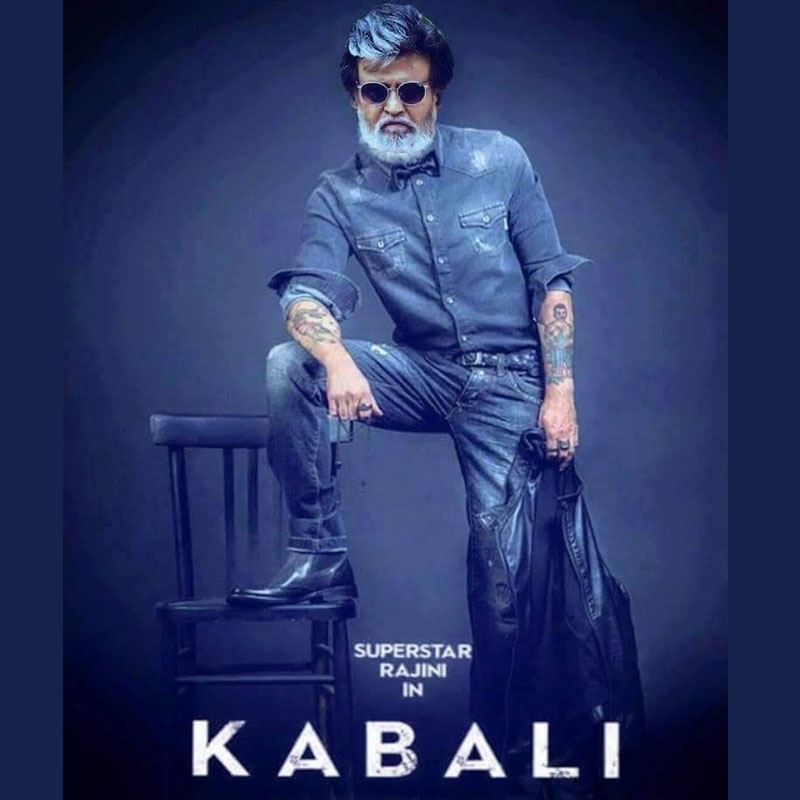
    After tying up with film makers and film studios since September, Amazon Prime’s video content portfolio has 2016’s top Indian and Hollywood blockbusters. It also has top kids shows like Doraemon, Chhota Bheem and Oggy & the Cockroaches and Indian shows like Taarak Mehta Ka Ooltah Chashmah, CID and Crime Patrol. Titles like Salman Khan starrer Sultan, Rajnikanth’s Kabali and Hollywood blockbuster Batman vs Superman – Dawn of Justice, has made it to its offering. Its international bouquet includes shows like The Good Wide, Two and a Half Men, Mr. Robot, etc. Many US TV shows will premiere on Prime Video within a day of its broadcast in the US.

    “We don’t look to create disruption in the entertainment space but we want to listen to our customers and their needs. We are in a customer revolution in India in the way people watch content in India, which has happened in US, UK and recently in Germany. It is starting to happen in Japan. The customer revolution is that why be bound to watch shows at certain days and time, why do not you watch it wherever and whenever you want to watch. That is very important. Other point is that content creators don’t have to fine huge audience on linear TV. They can make ambitious and ground-breaking shows and find their audience,” voiced Leslie.

    Some selected Prime Video international content is also available in dubbed Indian languages and subtitles. In addition to English and Hindi films, the service will also offer regional movies in Tamil, Telugu, Bengali and Marathi. It also promises movies and TV shows from top Indian and international studios.

    “We want to solve customer problems and we took it in three ways – selection, convenience and value. We are focused on getting the widest selection of exclusive and latest content. We want to solve the problem of data usage and too many advertisements playing. All at the same time of shipping guaranteed in one or two days and the best content. We are enablers of the market; we are enablers who want to consume great content, we are enablers of creators who want to create great content without having the constraints of the duration. We want to change the way customers consume and creators create content,” added Kripalani.

    It is also looking to offer TVOD in its other prime markets. “We will always look at more ways to watch content. It not just includes devices but more ways to purchase content. So, we want to provide customers lots of choice,” asserted Leslie.

    Besides Netflix’ subscription plans which start from Rs 500 and go up to Rs 800 per year, India has online streaming platforms like Star India’s Hotstar with its premium service at Rs 199 per month. Compared to this, YuppTV charges consumers Rs 99 a month whereas Eros Now has a daily pass for Rs 10 and a weekly pass for Rs 30 and a weekend pass for Rs 20. The annual subscription is available for Rs 1,000.

    Hooq starting at Rs 199 per month which is popular among movie buffs and Spuul which offers a Premium subscription option in monthly, annual, and multiple smaller packages, along with pay-per-view movies as well.

    “Globally, viewership is moving towards VOD and one can also see this increasing adoption of digital video consumption in India too. This has thrown the field open for a lot of players in the country and the entry of Amazon Prime is a welcome and much anticipated move for the VOD space in India. With robust smartphone penetration and the launch of 4G, one can foresee a tectonic shift in consumption that will forever change the entertainment industry. With the entry of the likes of Amazon Prime, the VOD space will be poised for growth as video content will be created and marketed specifically for the web and devices. However content, accessibility and overall user experience will be a game changer for any player to succeed in India. Currently at Spuul we have ~18m users of which 80% consume content on smartphones and we expect this to grow exponentially in 2017. We will continue to execute on our focus of providing the best quality Indian content and superior user experience to the masses, and our upcoming product releases and content additions will reflect that,” said Spuul India CEO Rajiv Vaidya.

  • 2016: Hotstar is Apple TV’s & Voot Google Play’s top app

    2016: Hotstar is Apple TV’s & Voot Google Play’s top app

    MUMBAI: Hotstar has appropriated the top spot on amazing iTunes as Apple TV’s app of the year for India 2016. The app was launched on Apple TV in August and the recognition comes on the back of a breakthrough year in which Hotstar continued to lead and disrupt the Indian market place. Indiantelevision.com also reported about a similar recognition in the digital space yesterday. In its year of launch, Viacom18’s video-on demand platform, Voot made it to the prestigious -Best Apps of the year 2016 India list on Google Play.

    2016 saw Hotstar introduce a host of new tech features and content proposition for its ever-increasing number of consumers, which currently stands at a whopping 130 million downloads.

    “India is the only country in the world where a streaming platform like Hotstar exists where the best TV shows from around the world, movie premieres and live sports are available on a single platform. The Indian consumer today is absolutely at the frontiers of mobile video: no consumer in any other part of the world has access to better options than the Indian consumer. Now, we are setting our sights on shaping the connected TV experience in India,” said Hotstar CEO Ajit Mohan.

    While innovation on live sports streaming continued to draw fans with the deeply engaging coverage of the Vivo IPL 2016, Rio 2016 Olympic Games, Premier League football and Kabaddi World Cup on Virtual Reality, the entertainment offerings were significantly beefed up when Hotstar launched its premium service in April making the best of international shows available in India alongside their US airing.

    The lineup on the premium service includes Emmy award-winning TV shows such as Game of Thrones, The Night Of, Westworld, Veep, and American Crime Story that are all exclusively available in India on Hotstar.

    Also Read:

    Viacom18’s Voot ranked among 2016’s best apps on Google Play

  • 2016: Hotstar is Apple TV’s & Voot Google Play’s top app

    2016: Hotstar is Apple TV’s & Voot Google Play’s top app

    MUMBAI: Hotstar has appropriated the top spot on amazing iTunes as Apple TV’s app of the year for India 2016. The app was launched on Apple TV in August and the recognition comes on the back of a breakthrough year in which Hotstar continued to lead and disrupt the Indian market place. Indiantelevision.com also reported about a similar recognition in the digital space yesterday. In its year of launch, Viacom18’s video-on demand platform, Voot made it to the prestigious -Best Apps of the year 2016 India list on Google Play.

    2016 saw Hotstar introduce a host of new tech features and content proposition for its ever-increasing number of consumers, which currently stands at a whopping 130 million downloads.

    “India is the only country in the world where a streaming platform like Hotstar exists where the best TV shows from around the world, movie premieres and live sports are available on a single platform. The Indian consumer today is absolutely at the frontiers of mobile video: no consumer in any other part of the world has access to better options than the Indian consumer. Now, we are setting our sights on shaping the connected TV experience in India,” said Hotstar CEO Ajit Mohan.

    While innovation on live sports streaming continued to draw fans with the deeply engaging coverage of the Vivo IPL 2016, Rio 2016 Olympic Games, Premier League football and Kabaddi World Cup on Virtual Reality, the entertainment offerings were significantly beefed up when Hotstar launched its premium service in April making the best of international shows available in India alongside their US airing.

    The lineup on the premium service includes Emmy award-winning TV shows such as Game of Thrones, The Night Of, Westworld, Veep, and American Crime Story that are all exclusively available in India on Hotstar.

    Also Read:

    Viacom18’s Voot ranked among 2016’s best apps on Google Play

  • Hotstar to air Barun Sobti’s ‘Tanhaiyaan’ in Jan

    Hotstar to air Barun Sobti’s ‘Tanhaiyaan’ in Jan

    MUMBAI: Actor Barun Sobti is all set to make a comeback, but this time in a web series. Star India’s video-on-demand (VOD) service is all geared up to air a fiction web series, titled Tanhaiyan. The 10 episodic show with a duration of 20 minutes each will launch in the mid-week of January 2017.

    The show is produced by Gul Khan and Karishma Jain of Unit 7 Network for 4 Lions Films, the web series is directed by Gorky M.

    In the show, Sobti plays the role of Haider, while the other lead Surbhi Jyoti will be seen playing the role of Meera Kapoor. Kapoor is in love with Haider, who is seen flirting with girls.

    Khan said, “Someone once asked me what’s the why of Tanhayian.. Well there isn’t a person who hasn’t experienced the loss of a loved one.. And every time we lose someone it changes who we are….So here are two people who are dealing with that loss in their own different way.. But sometimes someone walks right into that loneliness and Phir aap tanhayion mein bhi Tanha nahi rehte… Tanhaiyaan is a tribute to that magic…”

    Hotstar entered into the original content production with a talk show hosted by RJ Malishka called M Bole Toh. It also aired a 20 episodic news comedy series On Air with AIB with 10 in English and 10 in Hindi. The streaming platform is also rumoured to bring the second season of the show soon.

    It had also brought back its popular TV fiction show Iss Pyaar Ko Kya Naam Doon as a Hotstar Original after a gap of three years.

    Being a first mover in the space, it today boasts about 75 million downloads from the mobile nation India – far far ahead of the 30 odd OTT platforms which have popped up. Hotstar offers a smorgasbord of programs: right from India’s favorite sport cricket to 650 shows from its 23 channels, 36 English TV shows, 70 Hollywood movies, and oodles of Hindi cinema as well. The 85,000 hours of content it can stream is available in eight Indian languages.

    Primarily a free and advertising-dependent service, the Star Network has poured in an estimated $60-70 million to bring it to the place it has so far.

  • Hotstar to air Barun Sobti’s ‘Tanhaiyaan’ in Jan

    Hotstar to air Barun Sobti’s ‘Tanhaiyaan’ in Jan

    MUMBAI: Actor Barun Sobti is all set to make a comeback, but this time in a web series. Star India’s video-on-demand (VOD) service is all geared up to air a fiction web series, titled Tanhaiyan. The 10 episodic show with a duration of 20 minutes each will launch in the mid-week of January 2017.

    The show is produced by Gul Khan and Karishma Jain of Unit 7 Network for 4 Lions Films, the web series is directed by Gorky M.

    In the show, Sobti plays the role of Haider, while the other lead Surbhi Jyoti will be seen playing the role of Meera Kapoor. Kapoor is in love with Haider, who is seen flirting with girls.

    Khan said, “Someone once asked me what’s the why of Tanhayian.. Well there isn’t a person who hasn’t experienced the loss of a loved one.. And every time we lose someone it changes who we are….So here are two people who are dealing with that loss in their own different way.. But sometimes someone walks right into that loneliness and Phir aap tanhayion mein bhi Tanha nahi rehte… Tanhaiyaan is a tribute to that magic…”

    Hotstar entered into the original content production with a talk show hosted by RJ Malishka called M Bole Toh. It also aired a 20 episodic news comedy series On Air with AIB with 10 in English and 10 in Hindi. The streaming platform is also rumoured to bring the second season of the show soon.

    It had also brought back its popular TV fiction show Iss Pyaar Ko Kya Naam Doon as a Hotstar Original after a gap of three years.

    Being a first mover in the space, it today boasts about 75 million downloads from the mobile nation India – far far ahead of the 30 odd OTT platforms which have popped up. Hotstar offers a smorgasbord of programs: right from India’s favorite sport cricket to 650 shows from its 23 channels, 36 English TV shows, 70 Hollywood movies, and oodles of Hindi cinema as well. The 85,000 hours of content it can stream is available in eight Indian languages.

    Primarily a free and advertising-dependent service, the Star Network has poured in an estimated $60-70 million to bring it to the place it has so far.

  • Amazon seals Rajini film deal; dares Netflix, hikes sellers’ commissions

    Amazon seals Rajini film deal; dares Netflix, hikes sellers’ commissions

    MUMBAI: Amazon India has signed a content agreement with the Tamil Nadu-based V Creations. The alliance has been negotiated at a time when Amazon is all set to launch Prime Video India, competing with Netflix streaming and Star India’s Hotstar.

    Amazon is bringing the cheapest VOD subscription service in India with Amazon Prime, which comes with a complementary Amazon Prime Video subscription.

    Amazon has been focusing on the two most popular categories in India, that is, sports and of course Bollywood, Mint reported. With this alliance, Prime would have exclusive subscription streaming rights for two of Tamil Nadu’s highest grossing films — Rajnikanth’s Kabali and Theri, a crime drama released earlier this year. Amazon India recently launched its global Prime membership programme, offering fastest product deliveries for an initial fixed price of Rs 499 a year.

    The largest global online retailer Amazon has signed the long-term content partnership with the film production company V Creations when the former is gearing up for launching of its Prime online television service in India which is dubbed as a leading market for entertainment.

    In the UK and the US, Amazon Prime Video is available for $8.99 a month. Now, it is bringing the same service in India for as low as $15 a year. This significantly dents Netflix India regardless of content availability since the subscription price difference is vast.

    As part of its localization efforts, Amazon has been signing content rights in India. Recently, it teamed up with Karan Johar’s Dharma Productions.

    Amazon meanwhile has hiked the sellers’ commission in categories such as electronics, while reducing it in others such as large appliances, after a festive season confrontation with its competitor Flipkart. Amazon at present has over 120,000 sellers on its platform in India.

    Amazon, Snapdeal and Flipkart operate as marketplaces charging fees and other charges for connecting customers with third-party sellers.

  • Amazon seals Rajini film deal; dares Netflix, hikes sellers’ commissions

    Amazon seals Rajini film deal; dares Netflix, hikes sellers’ commissions

    MUMBAI: Amazon India has signed a content agreement with the Tamil Nadu-based V Creations. The alliance has been negotiated at a time when Amazon is all set to launch Prime Video India, competing with Netflix streaming and Star India’s Hotstar.

    Amazon is bringing the cheapest VOD subscription service in India with Amazon Prime, which comes with a complementary Amazon Prime Video subscription.

    Amazon has been focusing on the two most popular categories in India, that is, sports and of course Bollywood, Mint reported. With this alliance, Prime would have exclusive subscription streaming rights for two of Tamil Nadu’s highest grossing films — Rajnikanth’s Kabali and Theri, a crime drama released earlier this year. Amazon India recently launched its global Prime membership programme, offering fastest product deliveries for an initial fixed price of Rs 499 a year.

    The largest global online retailer Amazon has signed the long-term content partnership with the film production company V Creations when the former is gearing up for launching of its Prime online television service in India which is dubbed as a leading market for entertainment.

    In the UK and the US, Amazon Prime Video is available for $8.99 a month. Now, it is bringing the same service in India for as low as $15 a year. This significantly dents Netflix India regardless of content availability since the subscription price difference is vast.

    As part of its localization efforts, Amazon has been signing content rights in India. Recently, it teamed up with Karan Johar’s Dharma Productions.

    Amazon meanwhile has hiked the sellers’ commission in categories such as electronics, while reducing it in others such as large appliances, after a festive season confrontation with its competitor Flipkart. Amazon at present has over 120,000 sellers on its platform in India.

    Amazon, Snapdeal and Flipkart operate as marketplaces charging fees and other charges for connecting customers with third-party sellers.

  • Originals are a big play for us, says Viacom 18’s Gaurav Gandhi

    Originals are a big play for us, says Viacom 18’s Gaurav Gandhi

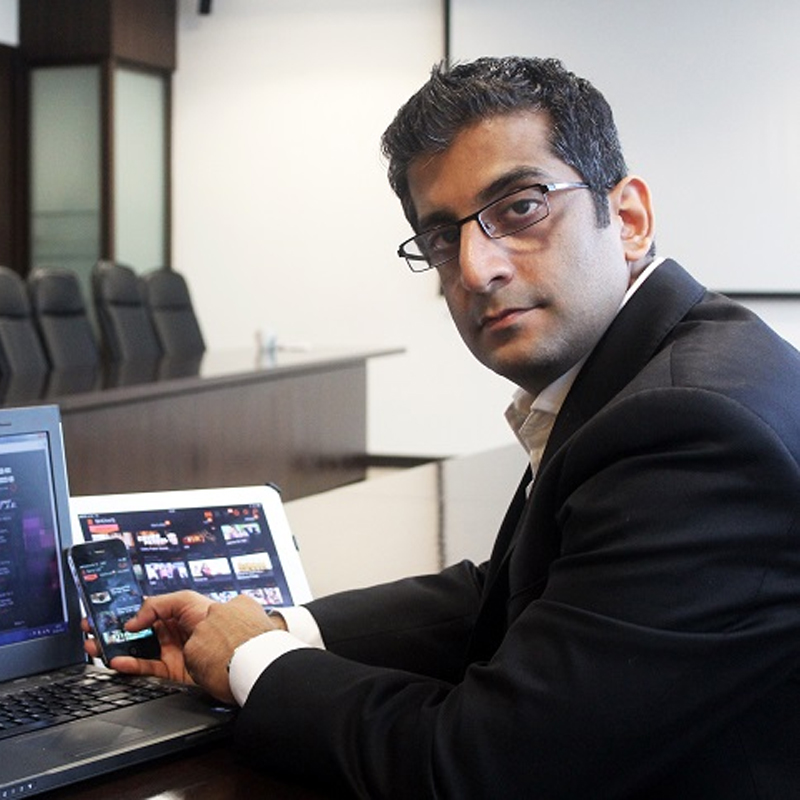
    If you look at Gaurav Gandhi’s CV, you will see that this NMIMS graduate began as a strategic business media executive with the Sam Balsara-promoted Madison Communications way back in 1998. He then took the plunge into television, joining Turner as a researcher and planner, and then, Star India. He followed that up with a stint in NDTV Imagine. 

    But, for the past six years, he has been associated with the Viacom18 brand – first as the commercial head, then moving on to distribution of traditional television with various assignments in Sun18 and IndiaCast, before being given the responsibility of steering the company into the digital space in late 2015. 

    Burning the midnight oil for more than seven months, he and his team, rolled out their first offering – a VOD service called Voot in March 2016. Rivals such as Star India, and Zee TV had their versions – Hotstar and DittoTV — in play for a longer period. But, that did not faze Voot COO who is known to be a feisty fighter. He is quite clear of the direction that Voot is taking, and he spoke about its journey so far in a tete-a-tete with Indiantelevision.com’s Megha Parmar. Read on to get some Gandhi insights on the Indian OTT space.

    How has the response to Voot been so far?

    The response has been very good. We are happy where we are. To get to be the third largest streaming website in watch time in a short period that we have is very encouraging. It’s been a good journey. We know that, as a market, we have close to 100 million users now, which will go to 400 million. So, the 4x growth is happening in the market, and we are riding that well.  There are three things that really encourage us. First, 45 minutes per day per user on an average is a very good number, so the watchtime is there. We have a large user base now, which excites us. Second is the fantastic response to our content. Of our three properties (TV, kids and originals), specifically for television, there is so much to do around a reality show. Thirty per cent of the views come from the extra stuff that we do around it. We shoot a lot of things along with our TV counterparts. And having 50+ advertisers on board definitely gives us a sense that we are going in the right direction.

    What were the learnings in the past few months?

    There has been a lot of learning. With our kids, we know exactly what is going on.We have a publishing cycle in place and the way it works is to make sure that we refresh it thrice a day. Kids will come back from school by 4 pm, and we thought that we should put our best content there and market it. Reality happened to us at 9 pm as the kids were watching it at that point of time when their parents are busy with dinner. That was the learning, which came alongside. Actually, the father’s phones have been used far more on weekends.

    We initially were of the opinion that 500 cities are enough for us but, in the third month, we crossed 1000 cities. There are viewers in 1100 cities right now who regularly consume Voot.  It’s all been a great learning. We had originally thought that it was about currency or new shows, but the catalogue has been watched by people for new stuff.

    People repeatedly come to us for something they love such as the MTV show, Kaisi Yeh Yaariyan. We look at the data and have witnessed that a lot of people consume data when in office between 1:30 am and 3 pm. There is a big surge of content.

    The kids demo peaks at 9 pm, the GEC at 10 pm and youth escalates from 11 pm to 1 at night. Our traffic only goes down from 2:30 am to 5 am. That is the time when we have some time with us, say, to solve a technical problem. Those things are very different. This is a consumer business, B2C, as against the past. We have not been going to  the consumers directly. We are consumer brands now, and that is an interesting proposition.

    When you say that 75 per cent of video consumption is now happening through WiFi and it is expected to change after digitization, after which a majority of the consumption will happen through telcos. The telcos are also coming into play with their own offerings of VOD and aggregation OTT platforms such as Jio, Wynk, Idea TV. Are the VOD platforms going to be at a disadvantage?

     Let me be honest with you, there is no dearth of platforms, and there will be none going forward. It’s like we have approximately 600 to 800 channels right now technically, and it still has a demand because people are watching. We are ultimately providing content. Those are platforms wherein everything is available but ours is a video-on-demand platform where you can choose what you want to watch and at what time.

    If you are talking from the content front, if you have a clear direction on the partnerships, the consumers as well as the content creation that you are doing, I don’t see a threat. Second, telcos are building services out. How we work with them and tie up is yet to be seen. The fact that we are over the top, we are available to every single person. We are an OTT service and we are available to all.

    Telcos are only concerned about one thing: consumer data. We work very closely with Jio and many other players. I think, from a telecoms perspective, they want to give their users everything possible and encourage them to consume data. From our point of view, we are talking about the fact that we want maximum viewership and that converts to eyeballs, money, and so on. So it’s very much a complementary situation. We provide content, and they get the users to use that content on their network. We get our eyeballs they get their consumption.

    What type of growth do you see after 4G rolls out completely?

     I see currently 120 million digital video users overall to go to 400 million next year. That’s three and a half times growth. You are doubling the user base over digital video every year. Now, if that is the case, all the players will grow automatically. Obviously, there will be top three, four, five, naturally who will see more growth because of more content.

    The other part of India is an interesting challenge because top five or six companies control 80 per cent of the IP. They are investing on the IPs and they are building more and more. Naturally, they will have a bigger advantage. Telcos will build their interesting products. How you will work with the telcos and how they launch their products will be interesting to see.

    Currently, it’s an ad-supported market largely, and that leads to getting more eyeballs because you are making it available to a large set. We foresee growth to be fairly phenomenal in the next 36 months for everyone in the market. We want to grow at a faster pace — naturally.

    So, you think an ad supported model is faring well for you, and that is the way to go? Or, will you also experiment with other models?

    There are multiple models that you can play with. The reason that, today an ad supported model works, and is the right way is because of three main reasons. One, people are psychologically prepared to pay for content. You get 400 channels for Rs 300, and if you go back 10 years, the cable TV monthly subscription was around Rs 200. Channels have increased, it’s become digital, HD has arrived, etc., but the amount you are paying is the same. People think that this is our birthright, we will get it anyhow. So, there is a big mindset shift that needs to happen and it has to happen with the distribution industry. But, till then, the value of content in the mind is benchmarked to the amount you pay on TV, especially if it a subscription base. If it is event based, for eg, paying for a movie where you are paying for the experience of movie, you will not pay the same amount for watching a movie at home. You are paying for the outing, the experience, so there is a challenge.

     The second challenge is data prices, that are very high. To pay for data and to pay for content together for a consumer is very steep today.

    The third one is payment gateways. How do you pay for content? Not many people have credit cards, and people are not using it for recurring charge.

    I see this mindset changing in the next 36 months as well. The data prices will fundamentally come down, you will have data, bundled deals of content, you will have better speed connectivity, you will be offered premium services, HD service and various other services. Even the gateways will emerge. All these things will allow me to do a subscription model or a TVOD model as well. But, the large belly of the business is the ad-supported model.

    To run an advertising model you need humongous volumes. If you are a niche player, however good you might be, you can’t get business on advertising because the whole model of advertising is built on the number of eyeballs.

    It is a very expensive business. There are technology costs which are very high, there are content costs, there are costs of marketing and acquiring a customer, there are costs of streaming to the customer.

    The more content you watch on Voot or Hotstar or Youtube, there are two things which tend to happen. You are charged for data and it will also cost more to me as well as I have to pay the CDN (content delivery network) cost. So, the more you watch, the more I am paying. So I have to recover that cost. Unless you are a large volume player, you can’t do ad-supported. If you are a small player, you have to charge a sensible price to recover that cost. Netflix  – taking the sliver of the market at that price point, saying I only want these people – is one model. You are paying Netflix month on month.

    I think there will be more interesting models emerging in India going forward to break the psychological barrier in people’s mind. It’s not only an affordability barrier, but also a psychological barrier.

    We have to traverse the journey from ‘completely free’ to ‘completely pay.’ That journey has to pass through the consumer’s point of view, who is trying to pay for somethings. Once you are hooked on, then you tend to convert into a smaller package. The consumers will convert, but you can’t straight away give them a shock that tomorrow morning you will have to pay Rs 700. You will then get some, but a small portion.

    However, that’s not enough as in this country you have to build volumes. We are in the volume business. But, with some products, you can say that I want to play the international market game and play on the subscription part. It makes a lot of sense.

    But, one player has minimalised its rate to say the cost of a samosa. What do you have to say about that?

    We are not comparing with them. They only offer channels and not video on demand. I don’t know how are they doing it. Any strategy in my mind has to be sustainable. If they are able to offer all the channels in the world at Rs 20, then I think cable companies should talk to them and figure out why are they not charging that amount for the same channels.

    But, think of it logically. If you have all channels, everything for life at Rs 20 per month, then why would you pay the cable operators? You can choose to acquire customers from any route. You have a different way of acquiring customers and then you can hope them to stay hooked. I think it’s a marketing strategy from their point of view. People use different marketing strategies. But, I don’t think it makes business sense.

    I personally consume Voot content while it also is a ritual for me to catch up on Splitsvilla. But, there is a lag of around eight hours. Why?

    Splitsvilla has a humongous catch-up. There was a day where the Splitsvilla Sunday numbers were bigger than the next three days put together combined in a total value. I am a firm believer that consumers should have an ad model but you also need to understand that an ad supported model, you are getting this absolutely free as compared to me providing it to a cable or a DTH operator who is charging customers for it. There needs to be some gap. I could make this little pay and make it at the same time. But, if it is absolutely free here, you can play it, Chromecast it, share it, then personally I don’t feel that it is the right model. But, you can argue with me why it has to be eight hours? Why can’t it be six hours or a four hour lag? Those things are workable from my point of view but currently we have started with this strategy to put it up next morning. So, the way it works is TV airs it, we then process it, which takes about two to three hours. The team comes up here at 5am and publishes it on for the TV, tablet, mobile, website, etc. By 7:30 am, the content gets published most of the times.
    Is there scope of providing live content? How much, according to you, can the window be narrowed which also makes sense to your business?
    I am not going to comment on live, but, from case to case, we might have a much shorter window. I can narrow it down to zero also but, right now, I am not taking up that call because putting it up in the morning makes sense. You have to look at the larger thing. Currently, TV is measured on ratings and that’s how channels and advertisers are making money. TV has a large business there. This type of an emerging business has a separate sales, cost, structure, separate consumer base; we have to grow both businesses. It can’t be at the cost of the other. Definitely, it can’t be that you are actually working against the partners of yours especially on the distribution side by providing it free or live at the same time. I know some of my competitors have done it on the same time or even before, but as a stunt it is fine. But, if you do it continuously, I think it is should be made a free channel, which should be also free for the cable operators.

     I think giving it absolutely free at the same time is something I am not completely convinced right now. It is just a commercial business challenge to figure out whether it makes sense.

    We at the same time are also trying to increase the ARPU of the consumers. The business will grow but it also needs value. If I say that the same channel is available here for free and you stream it whereas there you are charging Rs 600 for it, then why will you pay? For what? The consumers will come and leave. We are just four months old, and this is an evolving space for us. At this time, we feel a six to eight hours lag is good. But, sometimes we reduce the lag.

    Do you plan to have Colors Infinity content on Voot?

    We do have it with us. The stage is there. We already have all the Indian productions of Infinity. At this time, it will only be home-grown content because the international content has two challenges, one is the third-party rights and the international players are a little more circumspect about putting content on ad-supported models. They want to put it on premium models. So, we are working with them to see what we can do. We have the format for ‘24’ with catch-up available. So, we get the stuff we create here. I think it is a journey. There are only two large ad-supported models in the world i.e China and India. They have never seen many big ad-supported models in the world.

    It’s a shift for us as well. If you talk to large players, they come to India and are amazed by the advertising growth here. Their mindset has changed. Netflix charges $8 in US which is like Rs 500 for us. But, that is their price point. I think as you are playing with the consumers in the market, you also have to adjust your prices and look at that.

    Some are B2B players who don’t talk to consumers directly. It takes sometime for them to figure out their life. So, I think it will take some time to convince the big studios to put their content on the ad-supported model in English.

    How are your originals doing onVoot?

    Very good. We only started with a few. There is a surge in catch-up audience or the ones who were more skewed towards TV content. ‘Chinese Bhasad’ has done well for us. ‘Badman’ has won awards India and internationally as well. ‘Shaadi Boys’ have seen a crazy demand and we have some episodes in place for the next season to come up shortly. The kind of traction we get for trailers is mind-blowing. I have got my competitors writing to us saying the content is phenomenal. Just now, someone from Star wrote that you are killing it with your shows. So, we are very happy with the response. I think the idea really is to create differentiated content that people don’t get on television but also have it relevant. We don’t want flaky things at all. We want to connect with the audience, and this is mature show. This is for everybody who is either married or is in relationship. It is not for a 15, 18 or 20 year old.

    Do you plan to package separately for your originals on Voot?

    As we speak, we have launched six shows. But, overtime, we will create a separate section of Voot Originals on the app. That is the way for us. Totally! Originals are a big play for us.

    Data is crucial for OTT and VOD. Are advertisers buying (agreeing with) the data you are giving them. What do they expect?

    Fifty advertisers on board, it’s not a small number. Everybody can see us as the third largest platform in the country in terms of size, in terms of minute data. You look how we have gotten million downloads. We are amongst the first guys who shared our data weekly dashboard to advertisers. Before us nobody used to do that. We are proud of what we have pursued in the first few months but it’s a long way to go. So advertisers are very keen. We have deals with several agencies, all the big clients are on board, we have long term deals as well.

    What is the sweet spot for advertising rates for OTT and VOD platforms? Let’s say for Voot?

    That is very hard, I can’t guesstimate. Let me tell you that we are on the higher end of the market. Because you know what you get here are the premium audiences – in the sense that they would not be buying Porsche and BMW but a loyal audience who can actually be fully measured and targeted.  You will be able to get a sponsorship opportunity, content, several integrations and lot more things surrounded. Sometimes, you are able to own the entire show as well.

    SonyLiv, Hotstar, Amazon Prime are going to be bidding for IPL rights? Where will that place platforms such as Voot as compared to the one who gets it?

    See, we don’t play in sports. Whether it comes on OTT or television, the reality of it is very simple. When there is cricket and when there is India playing, people are watching something. I do not buy the fact people are watching both things at the same time. The statement that you are watching TV and you are watching Voot or Hotstar or whatever it might be does not work.

    I actually believe that a sport, especially cricket, is something which you watch with a lot of people together. It’s an event-based thing. People watch it so numbers are there is no doubt about it. But, in my mind, it’s not as if those two hours or four hours or three hours of a match impacting my Voot journey too much. Contrary to that, I think we have a clear strategy on three big or four big types of content and I want to put my money behind that and that’s why what I am doing with kids, originals, reality. It is a clear indicator that I was actually putting my money before advertisers came on. I commissioned the shows in originals before they came on right. I am not waiting for the next guy to come who will give me money so that I can start.
  • Originals are a big play for us, says Viacom 18’s Gaurav Gandhi

    Originals are a big play for us, says Viacom 18’s Gaurav Gandhi

    If you look at Gaurav Gandhi’s CV, you will see that this NMIMS graduate began as a strategic business media executive with the Sam Balsara-promoted Madison Communications way back in 1998. He then took the plunge into television, joining Turner as a researcher and planner, and then, Star India. He followed that up with a stint in NDTV Imagine. 

    But, for the past six years, he has been associated with the Viacom18 brand – first as the commercial head, then moving on to distribution of traditional television with various assignments in Sun18 and IndiaCast, before being given the responsibility of steering the company into the digital space in late 2015. 

    Burning the midnight oil for more than seven months, he and his team, rolled out their first offering – a VOD service called Voot in March 2016. Rivals such as Star India, and Zee TV had their versions – Hotstar and DittoTV — in play for a longer period. But, that did not faze Voot COO who is known to be a feisty fighter. He is quite clear of the direction that Voot is taking, and he spoke about its journey so far in a tete-a-tete with Indiantelevision.com’s Megha Parmar. Read on to get some Gandhi insights on the Indian OTT space.

    How has the response to Voot been so far?

    The response has been very good. We are happy where we are. To get to be the third largest streaming website in watch time in a short period that we have is very encouraging. It’s been a good journey. We know that, as a market, we have close to 100 million users now, which will go to 400 million. So, the 4x growth is happening in the market, and we are riding that well.  There are three things that really encourage us. First, 45 minutes per day per user on an average is a very good number, so the watchtime is there. We have a large user base now, which excites us. Second is the fantastic response to our content. Of our three properties (TV, kids and originals), specifically for television, there is so much to do around a reality show. Thirty per cent of the views come from the extra stuff that we do around it. We shoot a lot of things along with our TV counterparts. And having 50+ advertisers on board definitely gives us a sense that we are going in the right direction.

    What were the learnings in the past few months?

    There has been a lot of learning. With our kids, we know exactly what is going on.We have a publishing cycle in place and the way it works is to make sure that we refresh it thrice a day. Kids will come back from school by 4 pm, and we thought that we should put our best content there and market it. Reality happened to us at 9 pm as the kids were watching it at that point of time when their parents are busy with dinner. That was the learning, which came alongside. Actually, the father’s phones have been used far more on weekends.

    We initially were of the opinion that 500 cities are enough for us but, in the third month, we crossed 1000 cities. There are viewers in 1100 cities right now who regularly consume Voot.  It’s all been a great learning. We had originally thought that it was about currency or new shows, but the catalogue has been watched by people for new stuff.

    People repeatedly come to us for something they love such as the MTV show, Kaisi Yeh Yaariyan. We look at the data and have witnessed that a lot of people consume data when in office between 1:30 am and 3 pm. There is a big surge of content.

    The kids demo peaks at 9 pm, the GEC at 10 pm and youth escalates from 11 pm to 1 at night. Our traffic only goes down from 2:30 am to 5 am. That is the time when we have some time with us, say, to solve a technical problem. Those things are very different. This is a consumer business, B2C, as against the past. We have not been going to  the consumers directly. We are consumer brands now, and that is an interesting proposition.

    When you say that 75 per cent of video consumption is now happening through WiFi and it is expected to change after digitization, after which a majority of the consumption will happen through telcos. The telcos are also coming into play with their own offerings of VOD and aggregation OTT platforms such as Jio, Wynk, Idea TV. Are the VOD platforms going to be at a disadvantage?

     Let me be honest with you, there is no dearth of platforms, and there will be none going forward. It’s like we have approximately 600 to 800 channels right now technically, and it still has a demand because people are watching. We are ultimately providing content. Those are platforms wherein everything is available but ours is a video-on-demand platform where you can choose what you want to watch and at what time.

    If you are talking from the content front, if you have a clear direction on the partnerships, the consumers as well as the content creation that you are doing, I don’t see a threat. Second, telcos are building services out. How we work with them and tie up is yet to be seen. The fact that we are over the top, we are available to every single person. We are an OTT service and we are available to all.

    Telcos are only concerned about one thing: consumer data. We work very closely with Jio and many other players. I think, from a telecoms perspective, they want to give their users everything possible and encourage them to consume data. From our point of view, we are talking about the fact that we want maximum viewership and that converts to eyeballs, money, and so on. So it’s very much a complementary situation. We provide content, and they get the users to use that content on their network. We get our eyeballs they get their consumption.

    What type of growth do you see after 4G rolls out completely?

     I see currently 120 million digital video users overall to go to 400 million next year. That’s three and a half times growth. You are doubling the user base over digital video every year. Now, if that is the case, all the players will grow automatically. Obviously, there will be top three, four, five, naturally who will see more growth because of more content.

    The other part of India is an interesting challenge because top five or six companies control 80 per cent of the IP. They are investing on the IPs and they are building more and more. Naturally, they will have a bigger advantage. Telcos will build their interesting products. How you will work with the telcos and how they launch their products will be interesting to see.

    Currently, it’s an ad-supported market largely, and that leads to getting more eyeballs because you are making it available to a large set. We foresee growth to be fairly phenomenal in the next 36 months for everyone in the market. We want to grow at a faster pace — naturally.

    So, you think an ad supported model is faring well for you, and that is the way to go? Or, will you also experiment with other models?

    There are multiple models that you can play with. The reason that, today an ad supported model works, and is the right way is because of three main reasons. One, people are psychologically prepared to pay for content. You get 400 channels for Rs 300, and if you go back 10 years, the cable TV monthly subscription was around Rs 200. Channels have increased, it’s become digital, HD has arrived, etc., but the amount you are paying is the same. People think that this is our birthright, we will get it anyhow. So, there is a big mindset shift that needs to happen and it has to happen with the distribution industry. But, till then, the value of content in the mind is benchmarked to the amount you pay on TV, especially if it a subscription base. If it is event based, for eg, paying for a movie where you are paying for the experience of movie, you will not pay the same amount for watching a movie at home. You are paying for the outing, the experience, so there is a challenge.

     The second challenge is data prices, that are very high. To pay for data and to pay for content together for a consumer is very steep today.

    The third one is payment gateways. How do you pay for content? Not many people have credit cards, and people are not using it for recurring charge.

    I see this mindset changing in the next 36 months as well. The data prices will fundamentally come down, you will have data, bundled deals of content, you will have better speed connectivity, you will be offered premium services, HD service and various other services. Even the gateways will emerge. All these things will allow me to do a subscription model or a TVOD model as well. But, the large belly of the business is the ad-supported model.

    To run an advertising model you need humongous volumes. If you are a niche player, however good you might be, you can’t get business on advertising because the whole model of advertising is built on the number of eyeballs.

    It is a very expensive business. There are technology costs which are very high, there are content costs, there are costs of marketing and acquiring a customer, there are costs of streaming to the customer.

    The more content you watch on Voot or Hotstar or Youtube, there are two things which tend to happen. You are charged for data and it will also cost more to me as well as I have to pay the CDN (content delivery network) cost. So, the more you watch, the more I am paying. So I have to recover that cost. Unless you are a large volume player, you can’t do ad-supported. If you are a small player, you have to charge a sensible price to recover that cost. Netflix  – taking the sliver of the market at that price point, saying I only want these people – is one model. You are paying Netflix month on month.

    I think there will be more interesting models emerging in India going forward to break the psychological barrier in people’s mind. It’s not only an affordability barrier, but also a psychological barrier.

    We have to traverse the journey from ‘completely free’ to ‘completely pay.’ That journey has to pass through the consumer’s point of view, who is trying to pay for somethings. Once you are hooked on, then you tend to convert into a smaller package. The consumers will convert, but you can’t straight away give them a shock that tomorrow morning you will have to pay Rs 700. You will then get some, but a small portion.

    However, that’s not enough as in this country you have to build volumes. We are in the volume business. But, with some products, you can say that I want to play the international market game and play on the subscription part. It makes a lot of sense.

    But, one player has minimalised its rate to say the cost of a samosa. What do you have to say about that?

    We are not comparing with them. They only offer channels and not video on demand. I don’t know how are they doing it. Any strategy in my mind has to be sustainable. If they are able to offer all the channels in the world at Rs 20, then I think cable companies should talk to them and figure out why are they not charging that amount for the same channels.

    But, think of it logically. If you have all channels, everything for life at Rs 20 per month, then why would you pay the cable operators? You can choose to acquire customers from any route. You have a different way of acquiring customers and then you can hope them to stay hooked. I think it’s a marketing strategy from their point of view. People use different marketing strategies. But, I don’t think it makes business sense.

    I personally consume Voot content while it also is a ritual for me to catch up on Splitsvilla. But, there is a lag of around eight hours. Why?

    Splitsvilla has a humongous catch-up. There was a day where the Splitsvilla Sunday numbers were bigger than the next three days put together combined in a total value. I am a firm believer that consumers should have an ad model but you also need to understand that an ad supported model, you are getting this absolutely free as compared to me providing it to a cable or a DTH operator who is charging customers for it. There needs to be some gap. I could make this little pay and make it at the same time. But, if it is absolutely free here, you can play it, Chromecast it, share it, then personally I don’t feel that it is the right model. But, you can argue with me why it has to be eight hours? Why can’t it be six hours or a four hour lag? Those things are workable from my point of view but currently we have started with this strategy to put it up next morning. So, the way it works is TV airs it, we then process it, which takes about two to three hours. The team comes up here at 5am and publishes it on for the TV, tablet, mobile, website, etc. By 7:30 am, the content gets published most of the times.
    Is there scope of providing live content? How much, according to you, can the window be narrowed which also makes sense to your business?
    I am not going to comment on live, but, from case to case, we might have a much shorter window. I can narrow it down to zero also but, right now, I am not taking up that call because putting it up in the morning makes sense. You have to look at the larger thing. Currently, TV is measured on ratings and that’s how channels and advertisers are making money. TV has a large business there. This type of an emerging business has a separate sales, cost, structure, separate consumer base; we have to grow both businesses. It can’t be at the cost of the other. Definitely, it can’t be that you are actually working against the partners of yours especially on the distribution side by providing it free or live at the same time. I know some of my competitors have done it on the same time or even before, but as a stunt it is fine. But, if you do it continuously, I think it is should be made a free channel, which should be also free for the cable operators.

     I think giving it absolutely free at the same time is something I am not completely convinced right now. It is just a commercial business challenge to figure out whether it makes sense.

    We at the same time are also trying to increase the ARPU of the consumers. The business will grow but it also needs value. If I say that the same channel is available here for free and you stream it whereas there you are charging Rs 600 for it, then why will you pay? For what? The consumers will come and leave. We are just four months old, and this is an evolving space for us. At this time, we feel a six to eight hours lag is good. But, sometimes we reduce the lag.

    Do you plan to have Colors Infinity content on Voot?

    We do have it with us. The stage is there. We already have all the Indian productions of Infinity. At this time, it will only be home-grown content because the international content has two challenges, one is the third-party rights and the international players are a little more circumspect about putting content on ad-supported models. They want to put it on premium models. So, we are working with them to see what we can do. We have the format for ‘24’ with catch-up available. So, we get the stuff we create here. I think it is a journey. There are only two large ad-supported models in the world i.e China and India. They have never seen many big ad-supported models in the world.

    It’s a shift for us as well. If you talk to large players, they come to India and are amazed by the advertising growth here. Their mindset has changed. Netflix charges $8 in US which is like Rs 500 for us. But, that is their price point. I think as you are playing with the consumers in the market, you also have to adjust your prices and look at that.

    Some are B2B players who don’t talk to consumers directly. It takes sometime for them to figure out their life. So, I think it will take some time to convince the big studios to put their content on the ad-supported model in English.

    How are your originals doing onVoot?

    Very good. We only started with a few. There is a surge in catch-up audience or the ones who were more skewed towards TV content. ‘Chinese Bhasad’ has done well for us. ‘Badman’ has won awards India and internationally as well. ‘Shaadi Boys’ have seen a crazy demand and we have some episodes in place for the next season to come up shortly. The kind of traction we get for trailers is mind-blowing. I have got my competitors writing to us saying the content is phenomenal. Just now, someone from Star wrote that you are killing it with your shows. So, we are very happy with the response. I think the idea really is to create differentiated content that people don’t get on television but also have it relevant. We don’t want flaky things at all. We want to connect with the audience, and this is mature show. This is for everybody who is either married or is in relationship. It is not for a 15, 18 or 20 year old.

    Do you plan to package separately for your originals on Voot?

    As we speak, we have launched six shows. But, overtime, we will create a separate section of Voot Originals on the app. That is the way for us. Totally! Originals are a big play for us.

    Data is crucial for OTT and VOD. Are advertisers buying (agreeing with) the data you are giving them. What do they expect?

    Fifty advertisers on board, it’s not a small number. Everybody can see us as the third largest platform in the country in terms of size, in terms of minute data. You look how we have gotten million downloads. We are amongst the first guys who shared our data weekly dashboard to advertisers. Before us nobody used to do that. We are proud of what we have pursued in the first few months but it’s a long way to go. So advertisers are very keen. We have deals with several agencies, all the big clients are on board, we have long term deals as well.

    What is the sweet spot for advertising rates for OTT and VOD platforms? Let’s say for Voot?

    That is very hard, I can’t guesstimate. Let me tell you that we are on the higher end of the market. Because you know what you get here are the premium audiences – in the sense that they would not be buying Porsche and BMW but a loyal audience who can actually be fully measured and targeted.  You will be able to get a sponsorship opportunity, content, several integrations and lot more things surrounded. Sometimes, you are able to own the entire show as well.

    SonyLiv, Hotstar, Amazon Prime are going to be bidding for IPL rights? Where will that place platforms such as Voot as compared to the one who gets it?

    See, we don’t play in sports. Whether it comes on OTT or television, the reality of it is very simple. When there is cricket and when there is India playing, people are watching something. I do not buy the fact people are watching both things at the same time. The statement that you are watching TV and you are watching Voot or Hotstar or whatever it might be does not work.

    I actually believe that a sport, especially cricket, is something which you watch with a lot of people together. It’s an event-based thing. People watch it so numbers are there is no doubt about it. But, in my mind, it’s not as if those two hours or four hours or three hours of a match impacting my Voot journey too much. Contrary to that, I think we have a clear strategy on three big or four big types of content and I want to put my money behind that and that’s why what I am doing with kids, originals, reality. It is a clear indicator that I was actually putting my money before advertisers came on. I commissioned the shows in originals before they came on right. I am not waiting for the next guy to come who will give me money so that I can start.

  • OTT players spend exceeds traditional broadcasters; Netflix weighing  Indian content to drive growth

    OTT players spend exceeds traditional broadcasters; Netflix weighing Indian content to drive growth

    MUMBAI: Online platforms such as Amazon and the streaming giant Netflix have ramped up their investment in programming, investing US$ 7.5 billion last year which is more than HBO, Turner and CBS in most countries including Australia and South Korea.

    Netflix invested over twice as much on original programming as the entire Australian TV market, a new report stated. In India, it could look at licensing deals and produce more local language content as it seeks to strengthen its presence here.

    The US-based company, which expanded into over 130 markets, entered India a few months ago and rivals streaming sites or platforms such as Star India’s Hotstar, SonyLiv, YuppTV, Spuul, Ditto TV, Eros Now, and Hungama. All these are betting on growing smartphone and Internet use to drive growth. Netflix could soon be introducing ‘download-and-go’ offline streaming.

    Between 2013 and 2015, Amazon and Netflix doubled their annual investments on programming. In 2013, Amazon spent US$ 1.22 billion, that jumped to US$ 2.67 billion in 2015. In the corresponding period, Netflix investments rose from US$ 2.38 billion to US$ 4.91 billion, a IHS Markit report stated while examining how TV programme producers are adapting to the era of internet TV.

    “Netflix and Amazon investments are only topped by Disney ($11.84 billion) and NBC ($10.27 billion),” said IHS Technology senior principal analyst Tim Westcott,.

    Netflix added over 50 per cent more subscribers than expected in the third quarter as original shows such as “Stranger Things” drew new international viewers and kept US customers despite a price hike, according to FactSet StreetAccount.

    Other online platforms such as China’s Youku Toudu, iQifyi, Tencent and Hulu in the US have also increased their investment in original programming and acquisitions.

    “More and more consumers are watching content online, shaking the foundations of the traditional TV industry,” Westcott said. “However, it’s premature to declare that the era of linear TV is over,” he added.

    Westcott estimated that, in 2015, the US represented 33 per cent of worldwide expenditure on TV programming, with US$ 43 billion invested across free-to-air, pay TV and online.” “Netflix and Amazon, though they are US companies, are now commissioning for multiple territories, so we have treated them as global platforms.”

    The biggest markets in Western Europe were the UK with $10.7 billion, Germany ($7.3 billion), France ($6.6 billion) and Italy ($4.6 billion). “Notably, China is now the second largest market in Asia Pacific, with $8.4 billion invested last year,” Westcott said. Japan is the largest in the region with $9.8 billion, followed by South Korea ($2.6 billion), Australia and India—both on $2.4 billion.

    Netflix considers pouring money into building its stable of licensed and original movies and TV shows. Content spending will rise to $6 billion next year, a $1 billion increase from 2016, its CEO Reed Hastings has said.

    It faces competition from the likes of Amazon and Hulu. Figures released in the World TV Production Report 2016 claim Netflix spent US$ 4.91bn on new programming the last year, compared to Australia’s total market spend of US$2.4bn. Amazon, which may reportedly launch in Australia in a few months, increased its programming investment in 2016 to US$ 2.67bn from US$ 1.22bn in 2015, although far below Disney’s spend of US$ 11.84bn in 2016.

    In India however Netflix has branded itself in the premium bracket and therefore has some disadvantage as far as pricing is concerned. A majorly English language content makes business difficult for Netflix in India. More local language content and licensing deals could help in this context. Netflix, which has not disclosed its subscribers base in India, may need to adopt a localisation strategy for growth in the country.