Tag: Hotstar

  • Alternative sports has big demand in India & consumers willing to pay for premium content: Veqta

    Alternative sports has big demand in India & consumers willing to pay for premium content: Veqta

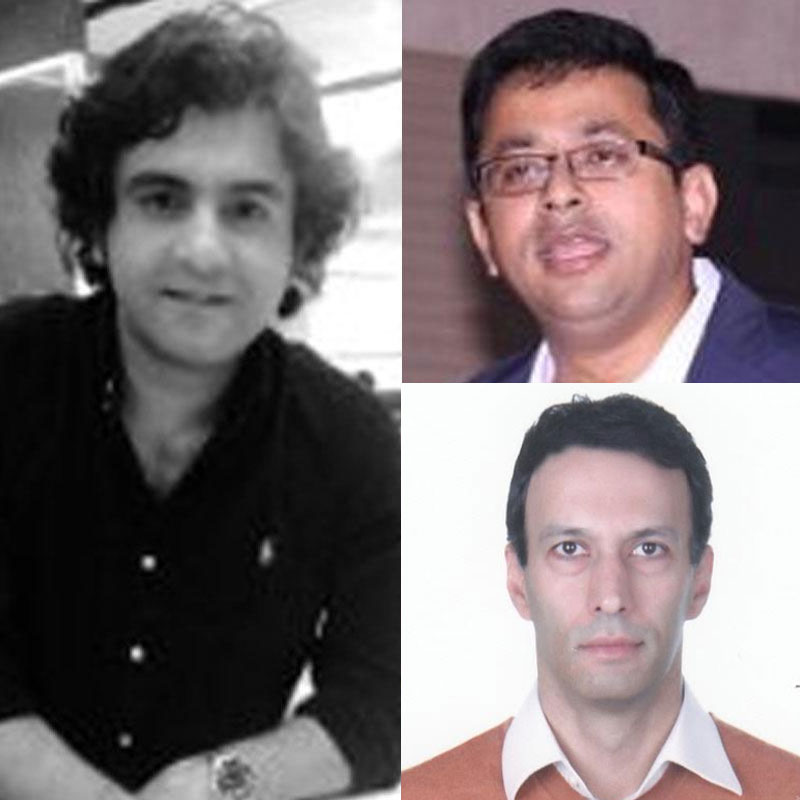
    Where there’s a will, there’s a way. And three sports enthusiasts live up to this adage beautifully. Building a company from ground zero to a level where it’s considered a leading digital media company is no mean achievement. The company: Veqta. The persons involved: co-founders Varun Mathur, Vikram Tanwar and Gaurav Gill.

    So, what does Veqta do? It is a leading (some say the first) Indian OTT subscription service dedicated exclusively to sports. It brings a unique selection of sports action across football, basketball, motorsports, tennis, MMA, Baseball, Fight Sports, badminton, etc. from authentic sources all over the world and the best analysis/opinions from world-class experts.

    Mathur is a former management consultant having worked with companies like TCS, Accenture, Nimbus, IMG and PGTI in leadership positions. Tanwar, apart from being a member of the founding team of Veqta, was previously the founder, CEO and MD of ITW Consulting. Similarly, Gill is also the founding partner and director at Chatsworth Management & Advisors. The company, now gets viewers for sports content, which is not available on other broadcasting and OTT platforms.       

    The business whiz-cum-sports-enthusiasts talk about their journey of a year and a half at Veqta in a free-wheeling conversation with Indiantelevision.com’s Kirti Chauhan. Edited excerpts from the interview follows:

    Q. How was Veqta conceptualized and what are the changes today from the time the platform was launched?

    Gaurav Gill (GG): To design Veqta’s offerings, we were looking at the biggest catchment areas in the Indian context outside the cricket and then we started handpicking our choice of sports properties to serve the needs and demands of the Indian market. Undoubtedly, we have a sound and solid offering in fight sports like wrestling, martial art and boxing, which is the biggest category in the country after cricket. We have a strong offering for basketball lovers because the game has a high demand in urban India. South India has a fan following for motorsports. As tennis is heavily demanded but underserved sports property in India, we have kept a wide offering in the tennis category.

    Varun Mathur (VM): Life certainly has changed from the time we started this OTT platform in many ways. Most notably, when we started, it was us who chased various sports league and federations for content, but today many global sports leagues, federations and sports companies get in touch with us to have their content on Veqta.

    Q. As you have chosen a niche area of sports streaming, how much traction and viewership you are netting? What is the average time spending on Veqta?

    Vikram Tanwar (VT): We monitor user engagement on a day to day basis and have observed that users are spending fairly large time on our platform. 1.2 minute per page is the average time spent by a user and statistics say that we have an average of 11 unique page views for every user. We have crossed 150,000 downloads within a month post the subscription service launch. We have catered 1.8 million page views on Veqta’s website within the first two weeks of the subscription launch. Our digital campaign has got 1.4 billion impressions across various mediums and the campaign video has crossed five million views.

    Q. Recently, you broadcast the boxing bout between Floyd Mayweather and Conor McGregor. How was the response in India?

    VT: Boxing bout between Floyd Mayweather and Conor McGregor was our first live property after the launch of subscription package on Veqta. Our strategy was to make the battle available only on Veqta not even on television. The boxing battle and the digital campaign was a huge success, gathering around 1.4 billion digital impressions across various mediums. Within a month of activation of a subscription package, we have crossed over 150,000 downloads. This made it clear to us that in India there is a big demand for alternative sports, apart from mainline sports like cricket, and there are people willing to pay for premium sports content.

    Q. What is the strategy behind keeping subscription low, compared to other OTT platforms’ rates?

    VT: India was an unexplored market for sports outside cricket and that’s one of the main reasons for Veqta to come alive. As sports fans, our aim was to make Veqta available to as many people and give them the comfort and flexibility to watch sports whenever and wherever on the go.

    GG: Initially, we have kept the pricing very low to make people aware of the product. If the person is genuinely interested in sports, the pricing context should not be a deterrent factor. We have an introductory offer of Rs 99 (actual cost Rs 399) to attract viewers, but it is for a limited time period. We surely want to have a sound subscription revenue based model, but at the same time, we don’t want the journey of watching sports to be difficult in India.

    Q. What is your revenue model?

    VM: Veqta is primarily a subscription-based service and so a bigger share of revenue will come from subscription. According to us, India is completely ready for a very large subscription service. For certain events, Veqta will look at sponsorship and advertising revenue, but that would be the secondary focus. In India, currently, advertisement rate is low for non-cricket sports. Being a sports-oriented service, we don’t want too much of clutter with lots of advertising on our page currently. In future, we might have sponsors’ logo along with sports content.

    Q. Do you presently have advertisers on board?

    VT: Although we do not have any advertiser on board currently, we would look forward getting them. At this juncture, we want our consumers to experience the uninterrupted live sport. Every sport is designed differently. Some sports allow us to showcase ads during a game, while some don’t. While we can fill airtime during a cricket match with ads, sports like basketball, football or tennis do not allow us to showcase uninterrupted feed along with advertising spots as in-between breaks in such games are absent.

    Q. What is your marketing strategy?

    VT: We have a focused marketing strategy, which is to acquire exclusive content rights without sharing it with any other broadcaster. We have adopted this marketing strategy from the time we have launched our subscription service and it is working efficiently. The big fight between Floyd Mayweather and Conor McGregor exemplified our marketing strategy of streaming exclusive content. Also, we are using a targeted digital marketing approach through which our marketing campaign focuses on identifying the sports fan segment specifically in the country. We then interact with them over various digital platforms to engage them with Veqta.

    GG: We are currently focusing on the digital-driven campaign. Our user acquisition cost is currently exciting vis-a-vis industry norms. But in future, we would look forward at above the line (ATL) campaigns. Considering the user demographics, digital is a more efficient and effective medium compared to television in the entire spectrum of various age groups. Based on the matrix, a majority of our users currently are under 15-28 age group, which is active on digital mediums. With the help of our analytics, it is easy to track and grab more subscribers.

    Q. How is the customer acquisition done?

    VT: Our customer acquisition strategy is centered on unique content offering across sports that have a very strong offering via exclusive rights to top sports leagues, events and tournaments for the Indian territory. We use targeted digital marketing to amplify our content package with our target customers.

    Q. Do you think there is a space for a service such as Veqta when domestic players such as SonyLiv, Hotstar, Jio and international ones like Amazon and Perform Group are getting into the business of sports streaming in India?

    VM: Based on Veqta’s offerings, we don’t have direct competitors at this juncture. As compared to us, other OTT platforms like SonyLiv and Hotstar, which offer sports, talk to a different audience with different content offerings. The competitive market of OTT platforms is extremely large and diverse, which has space for multiple service providers. The OTT market space of China has got 11 sports platforms, which are running successfully. Currently, in India, we are the only dedicated sports platform. And, we believe to have a great growth opportunity having crossed the benchmark of a million users within a year. Veqta is turning out to be a great piece of a compact show for which Indian consumers are willing to pay for high-quality content.

    Q. Do you think is there any opportunity for Veqta in cricket?

    VT: We are not targeting cricket at present. At this stage, our bouquet is full of other sports like fight sports, football, basketball, table tennis and much more. We are aware of the fact that India can’t be a single sports country.

    GG: The reason cricket fans are receiving a good experience is the quality and quantity of coverage by various broadcasters and OTT platforms. At the same time, fans of other sports do not receive the same quality experience generally. Looking at this scenario, our prime focus is to address the need of non-cricket sports fans.

    Q. Are you looking at adding any new sport in Veqta’s kitty?

    VM: Veqta would be adding Cue Sports, squash, American sports, eSports, indoor sports and games and much more very soon. Apart from this, we would look to add more properties of basketball and football and more of racquet sports like tennis, badminton and squash in our kitty.

    Q. It would be really helpful if you can enumerate the sports being showcased on Veqta presently.

    VM: VEQTA is currently covering a broad spectrum of sports including boxing, MMA, wrestling, baseball, basketball, tennis, table tennis, and rugby. In tennis, we are exclusive rights holder of WTA (Women’s Tennis Association). We have the rights to broadcast International Table Tennis games. In rugby, we own the rights to stream HSBC Sevens World Series. In the rally category, we own rights to broadcast World Rally Championship. 

    Q. Would you explore adding talk shows-type content on Veqta?

    GG: We are progressively into acquiring content rights to create Veqta as the biggest sports library. We are not targeting producing content ourselves, but we have explored sports reviews, sports analysis, and pre-news shows. in the near future, we would be looking at adding sports reviews, comments, analysis, and pre-match shows. We will be focusing towards reality instead of fiction. Our immediate priority is to make sure that live sports offerings keep growing.

    Q. What type of distribution alliances would be useful for Veqta?

    VT: OTT adoption and consumption is constantly evolving and we believe that distribution alliances will help realise the true potential of any OTT offering. We are already in advanced discussions with two large telecom service providers and with one of the largest OEM handset manufacturers for distribution alliances. We are also having discussions with hardware providers to offer Veqta for the home screen and large screen viewing. These alliances might be done by pre-embedding the Veqta flagship platform in hardware and on handsets or by offering limited Veqta content through a specialist Veqta Sports offering as a part of an OTT listing/marketplace offering by the respective service providers.

    Q. As sports rights are expensive propositions how such acquisitions are funded — internal accruals or are you looking at raising funds?

    VM: We are in active discussions with companies to raise more capital. However, we have spoken about our seed funding once in media, which was Rs. 33.5 million.

    Q.  Since Veqta was a late entrant in the Indian OTT space, what were the challenges faced and benefits reaped?

    GG: OTT as a concept in India is in an evolutionary stage, so we do not consider ourselves a late entrant. As far as dedicated sports platform is concerned, we are one of the early players. Earlier entrants into space successfully introduced the term OTT to the masses, which was not only welcomed but also got a great push from the likes of Reliance Jio. After studying the market and scenario, we decided to be in the SVoD category through which we are netting good subscriber numbers. We feel the subscription-based model is the correct approach to generate good revenue.

    Q: Would you be offering sports content in Indian regional languages and from when?

    VM: We firmly believe that sports still need to touch its potential reach in India. The basic problem we face is the offering of sports in India is limited to a few languages. For example, a sport like a football has a big fan following in pockets like Kerala, West Bengal and North-East, but if the nuances are not understood by a consumer other than his/her mother tongue or in the language spoken in the region, the viewing experience could diminish. We are aiming to go forward and give more customized experience to our viewers, but not immediately. In near future, we would be able to choose some sports properties and offer commentaries and related information in various regional languages.

    Q. Is there a possibility that in future Veqta transforms into a television broadcaster?

    VT: We strongly believe in the long run OTT consumption and viewership globally across general entertainment genres will replace (traditional) television. But, our key business strategy is “never say never” as we keep striving for improvements.

    Q. What technology are you using and who has designed your backend technology?

    VT: Veqta uses the services of multiple third-party technology companies like MultiTv, Switch, Amazon Web Services (AWS), Limelight and a few more. Earlier, people were putting a lot of money in developing in-house technology. As it is difficult for niche digital broadcasters to put a huge amount of money in developing in-house technology, we prefer to use various third-party operators, including those for satellite downlink. Unlike other OTT platforms like Hotstar, Amazon Prime, SonyLiv and Voot, we play 6,000 hours of live content, which has to be accurate and efficient in terms of streaming. Ours is a tougher job as we receive IP feeds from many of our partners who are pushing content from various corners of the globe. This content bounces of several servers and IPs, so we have deployed servers closer to source to receive LIVE match feed and process it there itself, before pushing it on to the CDN. For certain other partners, we receive the LIVE matches through satellite and process the feeds here in India after downlinking them.


    Q. What is your glass-to-glass latency?

    VM: The signals we receive are delivered on CDN (content delivery networks), which are the high-speed global servers that cache and deliver web content instantly. With the help of good internet connectivity, our glass-to-glass latency level maintains less than one second, which is around 300 milli-seconds, much less than television and other sports OTT platforms. It is one of the reasons that we are getting more subscribers as they are willing to pay less and get quick sports updates instead of investing time and money on subscribing television channels.

    Q. Where do you see Veqta over the next five years?

    GG: Five years down the line, Veqta will be one of the dominant forces in the sports streaming and OTT ecosystems. It will evolve into a world-class sports network in terms of number of a sports broadcast, number of customers and in the number of geographies we operate in. Most probably, Veqta will be a global player in the coming five years. Also, we want every sports fan to have a fabulous world-class experience while watching best of sports from all over the world at any point of time.

    ALSO READ:

    Floyd Mayweather vs Conor McGregor boxing fight on Indian OTT VEQTA4

    OTT: VEQTA is exclusive Major League Baseball partner for India

    Sports OTT VEQTA launches its mobile app for sports programming
  • TED Talks Nayi Soch on Star Plus, Hotstar: Content should feed passion for knowledge, says Uday Shankar

    TED Talks Nayi Soch on Star Plus, Hotstar: Content should feed passion for knowledge, says Uday Shankar

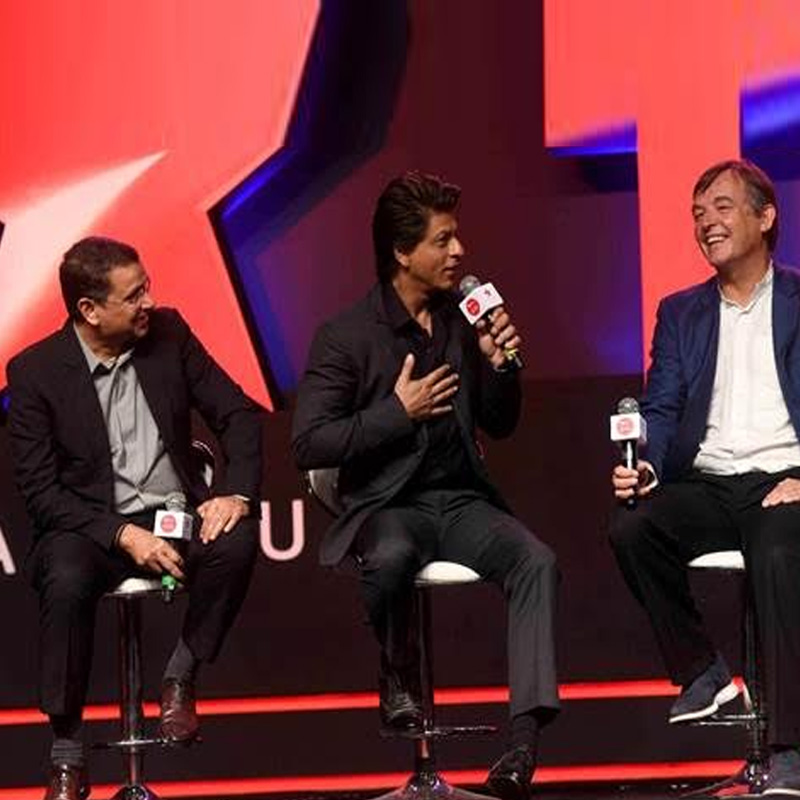
    MUMBAI: “Television should offer a spectrum of content which includes not just the traditional definition of entertainment but also content that feeds the human passion for knowledge, which stokes curiosity and inspires people,” said Star India chairman and CEO Uday Shankar, at the unveiling of the first look of ‘TED Talks’ in India along with the megastar Shah Rukh Khan and head of TED Chris Anderson in Mumbai on Thursday evening.

    Inspiring a billion imaginations is much more than a tag line, it’s a promise Star India delivers every day in ways that break away from the conventional, spark national debate and help shape the new India.  

    Challenging the grammar of conventional entertainment and inspiring Nayi Soch, Star India is bringing this disruption on Star Plus, produced by Fremantle India, and hosted by Khan.

    Star India has always believed in powering social change through the power of its content to influence and impact people’s lives and thought. Continuing with this journey, the new programme will take forward Star’s commitment of creating a social impact.

    In a global first collaboration that will make the transformative power of ideas accessible to audience across India, Star Plus unites with TED – the global platform known for spotlighting and spreading powerful ideas that transform people see the world.

    It is TED’s first collaboration with a major network to produce a television series featuring original TED Talks in a language other than English.

    The show will bring some of the best innovators and thinkers of Indian origin to the center stage, hosted by Shah Rukh Khan. The show captures a mix of speakers, thinkers and doers, who have questioned norms and brought forth unique ideas that have the potential to inspire billions. 

    All these ideas which originate from personal belief and self-motivation bear testimony to the ingenuity of Indians. 

    Scientists, authors, thinkers, entrepreneurs and artistes, this show provides a global platform to speakers from all walks of life, taking their ideas to every home in India with the huge reach of the Star Plus platform.  It can also be viewed on Hotstar, Star’s online video streaming platform.

    Shankar said: “At Star, we have always believed that conventional definitions of content exist only to be challenged. I have been a big fan of TED and felt that there is no reason why these ideas should not be made accessible to all Indians in a language of their choice.”

    He added: “The timing is perfect — It is a time when the world is looking to India for the next big idea. Shah Rukh Khan whose charisma and enthusiasm will be pivotal in connecting with our viewers.”

    Khan said: “Bringing the power of ideas to people’s living rooms across India, and reaching out to especially the youth of our country, is something that’s really exciting.”

    Anderson said, “We have a real shot at offering millions of people the empowerment that inspiring speakers can bring.”

    Also Read:

    TED Talks to get Hindi version on Star with SRK as host

    Star Plus salutes Moms through Dhoni, Kohli and Ajinkya in promos

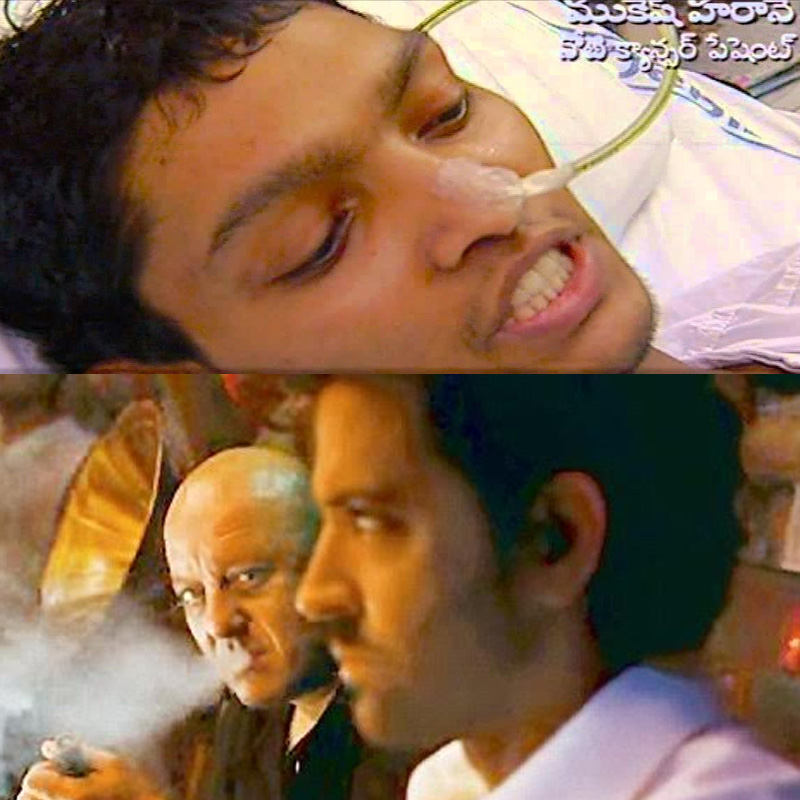
  • OTT players claim voluntary compliance as TRAI petitioned on anti-tobacco norms breach

    OTT players claim voluntary compliance as TRAI petitioned on anti-tobacco norms breach

    MUMBAI / NEW DELHI: Even though the Indian government has asked the broadcast carriage and telecoms regulator TRAI to rein in OTT platforms for alleged flouting of norms relating to tobacco and alcohol advisories in programmes, a majority of digital players claim to be voluntarily adhering to government directives meant primarily for TV shows despite absence of regulations for the sector.

    “As we belong to the traditional medium of television, it comes from within to carry Indian government-advised disclaimer (relating to scenes in TV shows and films involving tobacco and alcohol consumption),” Alt Balaji CMO Manav Sethi told Indiantelevision.com, adding, it is “not mandatory” for OTT platforms to do so, though.

    According to Arre co-founder and CEO Ajay Chacko, “OTT platforms are regulated under the Information Technology Act, but carrying a disclaimer relating to tobacco and alcohol consumption in shows depends upon the online content creators. We certainly carry a disclaimer highlighting the negative effects of alcohol and tobacco on health in our shows as done in films.”

    In a controversial and much-debated move, which some critics dubbed as killing creative freedom, the ministry of health and family welfare, some years ago, had come out with a directive stating that all films and TV shows had to carry a disclaimer regarding the negative effects of tobacco and alcohol consumption during scenes where artistes were shown doing the same.

    But why a hue and cry now relating to shows on OTT platforms?

    The ministry of health, according to a report in Millennium Post yesterday, has written to TRAI to ensure that OTT players such as Amazon Prime, Netflix, Hotstar, Reliance Jio and Voot adhere to the ministry’s directive relating to anti-tobacco and alcohol norms. The ministry felt that OTT and digital platforms were not running health-related disclaimers as done by movies and traditional TV shows. 

    But, why lobby with TRAI, which doesn’t regulate or govern content-related issues? In the opinion of the ministry of health, as enunciated by the newspaper report, internet-based services fell within the purview of the Telecoms Ministry and Telecom Regulatory Authority of India and the issue was flagged with TRAI since anti-alcohol and anti-tobacco agencies were finding it difficult to enforce the rule on errant OTT players.

    Though a source in Voot said it voluntarily runs during shows a health warning ticker — like “Smoking is injurious to health” — as part of “best practices”, the health ministry’s letter to TRAI highlights the conundrum of content regulation relating to OTT platforms.

    Indian films and TV programmes started carrying disclaimers on the negative effects of alcohol and tobacco consumption to adhere to the health ministry directive, indirectly enforced by the ministry of information and broadcasting (MIB), but at present there are no regulations relating to OTT platforms in India.

    TRAI has been debating the issue of OTT regulations, as part of net neutrality, with the stakeholders for over a year now but is still in the process of finalising its recommendations, which are expected to be unveiled some time soon.

    However, it is pertinent to point out that TRAI’s jurisdiction doesn’t extend to content regulation and is limited to content distribution and distribution platforms. As there’s no official content regulator like the Ofcom or the FCC, Indian TV channels broadly follow industry-formulated self-regulation norms, guided by pointers enumerated in the Cable TV Networks Regulation Act that’s enforced by MIB.

    ALSO READ :

    TRAI’s final recommendations on net neutrality likely by September

    Net neutrality: TRAI recommendations likely to keep Indian context in mind

    Surrogate liquor advertising: Time for change?


  • Niche regional OTT player Hoichoi offers Bengali content on iOS, Android and Chromecast

    Niche regional OTT player Hoichoi offers Bengali content on iOS, Android and Chromecast

    MUMBAI: As predicted by most observers, regionalisation as well as niche services are coming to the VOD or OTT ecosystem in India. It’s happening at a trickle now, but could gain momentum over the next few months. For with its large population of more than a billion mobile users, there is room for more — for sure. Kolkata-based Bengali entertainment major Shree Venkatesh Films (SVF), is the latest to take the plunge with its OTT play called Hoichoi.

    Vishnu Mohta – one of the promoters – who has worked with KPMG Risk Advisory and Lloyds TSB corporate strategy in their London offices, is the driving force behind the new platform which is targeting 220 million Bengalis globally. With original web-series, short films, and documentaries exclusively for Hoichoi in the pipeline, the service will also offer over 500 Bengali Movies and 1000 songs for subscribers. Recently, in the run-up to the Hoichoi launch, SVF had rolled out an innovative social media campaign to promote its upcoming original web series, an adult-comedy, Dupur Thakurpo.

    Among the big players in the game figure global players such as Amazon Prime and Netflix, and homegrown startups such as Hotstar, dittoTV, Voot, ALT Balaji and SonyLiv, as well as independent platforms such as TVF Play and Spuul. The congested Indian OTT market has around 32 plus players – some with an overwhelming or exclusive content, some with niche content or pricing plans and others who want to be counted.

    SVF, on its part, had selected ViewLift, a global content distribution and monetisation platform, as its technology partner. The VOD service claims to provide the largest collection of the best in Bengali entertainment content on Web, iOS, Android, and Chromecast. ViewLift CTO Manik Bambha states, “Hoichoi is well positioned to capture significant opportunities in the space with a niche offering meant for Bengali consumers. Hoichoi will benefit from our extensive marketing, data and analytics tools that will help them enhance interaction with their audience.”

    “ViewLift is an expert in the OTT space,” says Vishn, who has a Bachelor of Commerce degree from Bond University Australia and MSc in International Business from Aston University Birmingham, UK. With enhanced service architecture, extensive data and analytics insights, and global client support, ViewLift delivers high quality video consumption experiences worldwide.

    SVF is helmed by Shrikant Mohta, Mahendra Soni and Vishnu. Shrikant is SVF’s creative muscle who produced the internationally acclaimed ‘Chokher Bali’ and five other national award-winning films — ‘Raincoat’, ‘Memories in March’, ‘Apur Panchali’, ‘Chotoder Chobi’, and ‘Chander Pahar’. President of Eastern India Motion Pictures Association (EIMPA), and an active member of Kolkata International Film Festival (KIFF), he initiated the shooting of Bengali films abroad.

    Under Soni’s leadership, SVF distributed almost 900 films including blockbusters like ‘Dangal’, ‘Sultan’, ‘Dabangg’, ‘Ghajini’, ‘’Ae Dil Hai Mushkil’, ‘Kahaani 2’, ‘The Jungle Book’, ‘Kapoor & Sons’, ‘Neerja’, ‘Airlift’ and Drishyam.’ He also drives satellite and music syndication deals, along with film acquisitions.

    Mohta and Soni are pretty gung-ho about Hoichoi. The Indian consumer who has access to OTT entertainment — with internet penetration around 32-34 per cent today, and one-third owning smartphones — may well be spoilt for choice, now.

  • Asian OTTs use global, local content, AVoD and SVoD mix to consolidate position, says report

    Asian OTTs use global, local content, AVoD and SVoD mix to consolidate position, says report

    MUMBAI: Over-the-Top services are steadily gaining traction in APAC, but succeeding in a highly diverse and price-sensitive market will entail a thorough understanding of consumer preferences and intent.

    OTT players in the region are already partnering with mobile operators to drive subscribership. Examples include Viu’s various partnerships with Telekom Malaysia, Maxis and U Mobile in Malaysia, Indosat in Indonesia, CSL in Hong Kong and Idea cellular in India among others.

    A new report, “OTT Video in Asia-Pacific: Localised content and business models are key while mobile will offer opportunity for future video growth” has been added to the repository of Market Research Hub (MRH).

    Strategies of the four key OTT video service providers have been discussed in the report in the form of four case studies. The key OTT video service providers profiled in the case studies include Netflix, iflix, Viu, and Hotstar.

    The success of OTT services in any market depends upon a host of factors, with viewer awareness and receptiveness among the key factors. Smartphone ownership, cellular and broadband penetration levels, and pay-TV subscription are the other key factors that influence the scope of OTT video services in a market.

    The APAC region remains diverse, with a significant variation in internet and broadband penetration levels. Further, owing to lax piracy laws, a significant section of the consumer base is habitual of downloading pirated copies from the internet. In view of these factors, many OTT video service providers are using a mix of AVoD and SVoD to consolidate their position.

    According to the report, content remains an integral part of overall viewer experience in APAC. OTT video service providers have realised the importance of high-quality content, as a result of which, content production has gained prominence. Further, increase in smartphone ownership and launch of 4G services in several APAC countries are leading to collaboration between telecom service providers and OTT video service providers.

    According to the report, OTT service providers in countries that have low OTT readiness can commence with AVoD services to raise awareness and interest among viewers. The report comments that this strategy has helped Hotstar and Viu in gaining a significant foothold in the APAC OTT video services market.

    However, AVoD as a business model is likely to face a lot of challenges, on account of high cost of content acquisition. Further, relying on one particular form of content may not work, and OTT service providers may have to rely on a mix of local and international content to appeal to a wider target audience.

  • Hotstar to stream Emmy Awards in India on 18 Sept

    Hotstar to stream Emmy Awards in India on 18 Sept

    MUMBAI: It is bringing the world to India and taking India to the globe!

    Ahead of its launch in a “few international markets in the next couple of months” Hotstar, ranked number one by App Annie  in terms of MAUs, is also bringing the 69th Primetime Emmy Awards to Indian viewers. live.  This is even as the research firm KalaGato reported 73 per cent jump in Hotstar’s market share, that is expected to spurt with the addition of Emmys, CBS, and GoT.

    For Hotstar, which has over 100,000 hours of drama and movies in nine languages, and covers every major global sporting event, the Emmy countdown has now begun.  As the excitement builds up, viewers of the India’s leading video-on-demand service will be able to tune in to the awards simulcast on 18 September, at 530 am on 18 September 2017 from 8 pm onwards. Thereafter, the ceremony will be available in the Hotstar library from Tuesday, 19 September.

    Indiantelevision.com spoke to the Hotstar CEO Ajit Mohan on Friday evening, but he sought queries on email, which have been sent.

    With a whopping 149 nominations across 23 shows that it has licensed from American studios, Hotstar is the home of the Emmys and will be the only digital platform in the country to telecast simulcast the event. Viewers will have the opportunity to watch the much-anticipated ceremony along with the rest of the world, from wherever they are. This year, the event will be hosted by Stephen Colbert, previous Emmy Award winner and host of The Late Show with Stephen Colbert, at the Microsoft Theater in Los Angeles.

    From the Hotstar library, acclaimed shows like Westworld, Feud, Veep and Big Little Lies lead the extensive list with the most number of nominations. Other favourites include Night Of, This is Us, Silicon Valley, The Wizard of Lies, among others. Through their partnership with the world’s largest studios, like HBO, Disney and Showtime, Hotstar has managed to bring the most celebrated international shows to India, under the Hotstar Premium bucket.


    (For our readers: We, at indiantelevision.com got an email from Hotstar communications agency Text100 on 16 September at 11:19 pm after the Emmy Award Hotstar telecast press release was published on 16 September at 9:22 am. It had already been indexed by the Google News bot.  The Text 100 email read as follows

    Request you to disregard the announcement in this email. The information contained in it is incorrect. Hence, please do not publish it or use it in any form of story. Sorry for the inconvenience.”

    Another email followed from Text100 at 11:49 pm. It said:

    As discussed, request you to disregard the previous communication on Hotstar live streaming the Emmys. The information is incorrect. Hence, please do not use it in any form of story. Sorry for the inconvenience.”

    Here’s the link that was published – http://www.indiantelevision.com/iworld/over-the-top-services/hotstar-to-live-stream-emmy-awards-in-india-on-18-sept-170916?amp

    We have chosen to use the strikethrough text mode to inform readers that the story has been cancelled. Apologies for any inconvenience caused by the incorrect information provided by Hotstar’s agency, Text100. We adhere to the highest editorial standards and our effort is to  bring you the most accurate information possible. Always – Editor

    (Updated on 17 September 2017 at 10:57 am)

    Later in the day we got another email from Text100 stating that the Emmy Awards would be streamed on 18 September from 8 pm onwards. So now you know when to watch your favourite awards show on Hotstar. Hence, we removed the strikethrough mode and updated the story.

    (Updated on 17 September at 6:43 pm)

  • How broadcasters and studios can harness ERP, innovative tech to run content biz

    How broadcasters and studios can harness ERP, innovative tech to run content biz

    MUMBAI: India’s Prime Focus, which was in news in connection with the leak of an upcoming episode of ‘Game of Thrones’ to be broadcast by its partner Star India’s Hotstar, recently signed technology deals with prominent traditional and digital broadcasters. Now, its technology arm Prime Focus Technologies (PFT) will be unveiling a host of industry-first upgrades to its flagship product, CLEAR Media ERP Suite, at IBC 2017.

    CLEAR now offers a brand new functionality for end-to-end Work Order Management, pre-integrated with its Media Asset Management (MAM), Workflow Engine and Video Tools.

    This further elevates CLEAR’s promise of enterprise digitization to the next level, by enabling users to manage all of the following on ONE system:

    * Assets, with associated metadata and essence.
    * Resources, including internal and freelance resources, as well as 3rd party vendors.
    * Tasks, including generation, timeline estimation, scheduling, assignment and execution (using tools within or outside CLEAR)
    * Orchestration of content workflows across the content supply chain.

    While users have been able to track business processes in previous versions of CLEAR, the new Work Order Management now allows the tracking of every incoming work request including all of its associated processes, tasks and deliverables, through completion. Additionally, its Resource and Task Assignment modules enable assignment of manual tasks to best-fit resources based on skill, availability and cost. Users can assign tasks across their pool of internal, vendor and freelance resources, thus ensuring optimal resource utilization in alignment with business objectives.

    With BPM driven tasks, due date based Work Order monitoring dashboards, in-depth data analytics and reporting, Work Order Management is a vital ingredient that helps Media and Entertainment enterprises improve quality and maintain on-time delivery alongside increases in scale. It lays the foundation for streamlining content operations and helps M and E players enhance efficiencies across core processes like acquisition, review and approval, cataloguing, QC, mastering, distribution, promos and localisation.

    “To lead in the industry, broadcasters and studios have to move beyond managing just content and focus on successfully running the business of content by harnessing the power of enterprise software and innovative technology,” said Prime Focus Technologies founder and CEO Ramki Sankaranarayanan.

    “For the first time ever, media and entertainment organisations can have both assets and work related details for the entire supply chain on one system. This will usher in extreme transparency across the content lifecycle, and reduce manual effort drastically to help M and E enterprises lower their Total Cost of Operations,” he added.

    PFT will also be showcasing the latest additions to its Hybrid Cloud-enabled CLEAR Media ERP Suite at IBC 2017. These include:

    DAX® Production Cloud: ONE Software for Dailies and Post Workflows that enables all stakeholders within the production supply chain to collaborate, service and distribute media, all on the same software

    Promo Operations: A never-before functionality that provides end-to-end business process orchestration for promo creation including versioning automation.

    Mastering Automation: An efficient and cost-effective way to create masters for domestic and international syndication
    Interoperable Master Format (IMF):

    * World’s first IMF Media Player for playback over streaming proxy
    Future-ready solution for IMF content exchange, with support for SMPTE’s upcoming Applications (beyond 2 and 2e).

    * Technology to transform IMF Packages into deliverables for DPP and iTunes.

    When both, assets and work-related details, for the entire supply chain would be on one system, life would certainly be much easier for the media and entertainment organisations.

    Also Read:

    Comment: War on online video piracy, which matters, is here for India to fight

    Hotstar tech partner Prime Focus signs deals with Turner & sports broadcasters

    DD Kashir: Prime Focus, Beehive & Grasshopper shortlisted for packaging

    Prime Focus reports flat results for first quarter

  • IPL has come to the rightful home of cricket in India: Star’s Uday Shankar

    IPL has come to the rightful home of cricket in India: Star’s Uday Shankar

    NEW DELHI: Star India chairman and CEO Uday Shankar today said that the winning bid figure for IPL media rights of approximately $ 2.55 billion (Rs. 163475 million) was the “right” amount for a property as exciting as the Indian Premier League and justified the acquisition by asserting the competitiveness in bidding in various categories proved it.

    “We are delighted to bring IPL to the rightful home of cricket in India and elsewhere,” Shankar said at a post-bid press conference in Mumbai, adding that the eco-system of IPL and sports broadcasting has changed over the last 10 years, which reflected in the figures bid by players anxious to corner a slice of the cricket pie.

    “We believe that the IPL is a powerful property and lots of value can be created in the digital (world) and on TV for fans,” Shankar said explaining why Star bid both, for the digital and TV rights of the premier cricket property that was with Sony for the last 10 years.

    Shankar drove home the point that, as Star had a strong presence in TV and was also the owner of a robust digital platform (Hotstar), it made sense for the company to get complete rights of IPL. 

    However, Shankar made no bones of the fact that the company would have to think hard on the strategies to monetise the IPL as pay TV revenues were “highly regulated” in India, courtesy sector regulator TRAI’s new proposed tariff regime.

    For the record, Star India had challenged the tariff regime proposed by the TRAI in Madras High Court and a final directive form the court is still pending.

    Pointing out that Star would “continue to work within the law” in an effort to get better return on investment, especially now that it has invested heavily in IPL too, Shankar jocularly added, “We’d have to figure out something or we have a problem.”

    Shankar was also of the opinion that the Indian consumer had surprised critics and skeptics alike by taking to digital quite well. “As a country, we were told India was not broadband-ready (but) in less than two years India has emerged as one of the exciting markets (for digital players),” he said, adding that a better broadband infrastructure and cheaper data prices would further boost the market for online video consumption in India.

    The Indian cricket board, owners of the IPL brand and property, however, skirted questions on Star’s impending monopoly over the broadcast business now that it has also acquired the rights for IPL. Dish TV had written to BCCI and the government warning that if Star won the IPL rights too, it would be in a monopolistic situation to dictate terms to distributors of TV content as Star already had rights of most major cricket properties around the world.

    Meanwhile, the man credited with conceiving IPL, Lalit Kumar Modi, now living in exile in the UK, tweeted, “So, Star Sports wins the global rights for IPL. I would’ve hoped for a larger figure. Deserved greater value after 10 years of success.” 

    Also Read:

    IPL chief Shukla recuses from ‘live-streaming’ media rights auction

    Jawahar Goel raises alarm of emerging Star cricket monopoly (updated)

    IPL tendering process to commence 17 July; bidding to be fierce

  • IPL net realisation up, digital ad revenue grew astronomically as compared to TV

    IPL net realisation up, digital ad revenue grew astronomically as compared to TV

    MUMBAI: How have the businesses of brands, advertisers and the allied industry changed since the advent of one of the most popular sporting events — IPL. The net realisation of IPL property has gone up by five per cent despite the depreciation of the rupee against the US dollar.

    Started in 2008, IPL success has been a catalyst for the T20 boom across the sporting world. But, for India, it was the beginning of a journey towards being a sporting nation. In short, the IPL has proved to a true game-changer — with distinct pre-and post IPL eras of sports marketing. It has added a new word to India’s vocabulary: Sport-ainment!

    IPL may see leading sports broadcasters such as Sony Pictures Network India (SPNI) and Star Sports invest over US$ 2 billion to pocket broadcast rights. Duff & Phelps is however expecting the broadcast and digital rights for IPL in next five years to go beyond $2 billion.

    Duff & Phelps 2017 report indicates 26 per cent growth in IPL brand values to USD 5.3 billion compared to USD 4.2 billion last year, boosted by the renewed Vivo title sponsorship deal at Rs 22 billion. A team of 6-7 persons worked on the report which also includes Duff & Phelps London MD Trevor Birch who was also the CEO of Chelsea FC. (As per Brand Finance, however, the value of IPL system grew by nine per cent in 2017 to $3.8 million.)

    Digital content is becoming a strong medium of social media engagement for the sports viewers. The number of tweets pertaining to the IPL has crossed 8.5 million and continues to grow.
    “In the span of next five years, it is a possibility that digital will reign over television, television will remain where it is — which means there would neither be significant growth nor fall. To give an example, Sony’s ad revenues crossed INR 13 billion this year with 10 per cent increase from last years ad revenue, while Hotstar’s ad revenues from IPL rose to Rs 1.2 billion, more than double the previous year,” Duff & Phelps MD Santosh N told Indiantelevision.com.

    The brand value of the individual teams have risen 34 per cent on an average in 2017 compared to 2016. The net realisation of IPL property has gone up by five per cent in the overall value of IPL business.

    Talking about the changes IPL is making to accelerate its growth in coming years, Duff & Phelps MD Varun Gupta said, “IPL is doing great when it comes to audience penetration — viewership in rural areas is going up, significantly. Focusing on international markets is making IPL capture eyeballs in different countries. With Afghanistan players playing for different franchises, it has added Afghani viewers too — for example.”

    IPL 2017 also ascended to new heights, with nearly 45 per cent of viewership coming from rural India.

    Talking about the ad revenue “Cricket is heavily leading with 80 per cent and the remaining is from other sports. India is a cricketing nation, the fact is — it has many slots for ads, everytime a wicket falls between the overs and the time outs,” Santosh added.

    Speaking on the competition among players bidding , “On the television side, the clash is between Sony and Star, but, in the digital space, Amazon, Jio and Hotstar are going to have a tough fight,” Gupta added.

    About whether advertisers are moving to digital, Santosh added, “Every advertiser is looking at the ROI, with digital advertising you can structure it in a better way which is not possible in a linear TV.”

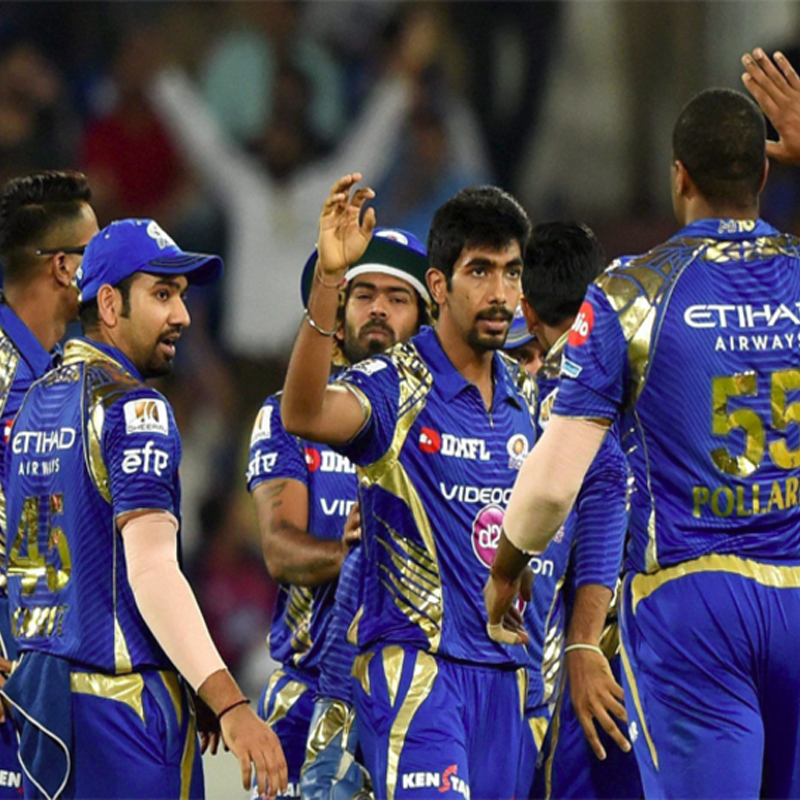
    As per Maxus, a total of approximately six million mentions on social media were registered in the 10th season, more than twice those of the last season (approximately 3.1 million mentions). Mumbai Indians had an incredibly successful digital media strategy, attracting over 83 million engagements across Facebook (50 million), Instagram (29 million) and Twitter (3.95 million).
    “Merchandising continues to be a challenging aspect in India, their needs to be a better understanding as in how to license your brand to maximise revenues, its an area where international franchise has also struggled with and they got it right in the past 5-6 years,” Gupta added.

    Brand finance is an independent branded business valuation and strategy consultancy which has also compiled a report on IPL brand value in 2017. Comparing the data of Duff & Phelps and Brand Finance, Duff and Phelps have Mumbai Indians(MI) on the top with brand value of $106 million in 2017 and 36 per cent increase compared to last year followed by Kolkata Knight Riders (KKR) with $99 million gaining 29 per cent brand value. Royal challengers Bangalore with 31 per cent increase sits at third position with $88 million.

    Whereas, Brand Finance (UK) has KKR on top with $58.6 million and 24 per cent increase in brand value followed by MI with 17 per cent hike and $54.1 million. SunRisers Hyderabad has placed itself at third position with $46.5 million and 23 per cent hike. RCB is on the fourth position with only 4 per cent increase and $44.4 million as its brand value.  

    About the difference in the reports, Gupta said, “This involves a lot of primary and secondary research, it might be possible that we interacted with different stake-holders. The methodology might be different from ours: we use income and royalty approach to arrive at our final output.”

    ALSO READ :

    IPL: Discovery & YuppTV in fray, CoA-BCCI discuss conflict of interest & pay today

    CSA T20 Global League reschedules player draft dates

    IPL: BCCI tells SC rights bidding process under way, hearing on 22 Aug

  • Hotstar rolls out attractively-priced Premier League offer

    Hotstar rolls out attractively-priced Premier League offer

    MUMBAI: From time to time, Hotstar, the VOD streaming service from Twenty First Century Fox’s  Star India, has been making short-term promotional subscription offers through its payment partners like HDFC, Citibank, PayTM and what have you.

    Subscribers have either been getting 100 per cent cash back for one month or two months depending on the subscriber’s card. Including the first free trial month, that effectively gives an annual subscription at anywhere between Rs 1, 800 or Rs 2,000 as compared to the monthly subscription price of Rs 199.

    However, since 11 August, it has been running an extremely tempting subscription scheme called the Premier League offer, which has a sticker price of Rs 999 for nine months. The only catch: the payment is non-refundable and has to be made using a debit card and is for a limited period till 12 September.

    The idea obviously is to get potential football lovers who have been fence sitting  so far to sign up with a massive discount of around 40-50 per cent.

    Over the past year, the government has been driving consumers toward digital payments, and also open bank accounts. The Indian consumer – normally wary of piling too much debt – has been loathe to sign up for a credit card. However, opening a bank account normally gets a bank customer a debit card in most cases.

    By pushing the Premier League offer, it is hoping to make it a very lucrative proposition for those consumers and others to start using their debit cards.

    Hotstar, smart TV apps of which are in the pipeline, currently offers around 50,000 hours of movies and television content together across eight languages, and almost all major sports are covered live.  

    Even as the research firm KalaGato reported 73 per cent jump in Hotstar’s market share in 10 months, that is expected to spurt further with the addition of the CBS catalogue, and of course Game of Thrones which has been in the news for its crackling seventh season and its leakage from different partners worldwide, including India.

    Recently announcing a pipeline with 18 originals from India, Amazon Prime offers perceptibly the most reasonable annual plan at Rs 499. Sun TV’s Sun NXT subscription plans start from Rs 50 per month. Netflix however is expensive – with plans starting at Rs 500 per month, but is reflective of the catalogue size and its target audience, the crème de la crème of Indian consumers.

    Amazon Prime has reportedly bagged a market share of just 9.66 per cent, Sony Liv pocketed 6.96 per cent share and Airtel-run Wynk Movies was at 6.36 per cent, the KalaGato report had added.

    We reached out to Hotstar CEO Ajit Mohan, but received no response.