Tag: Hotstar

  • Voot sets its sights on regional & premium ad-free content

    Voot sets its sights on regional & premium ad-free content

    MUMBAI: It’s time for Voot to woot because the 18-month old digital venture from the Viacom18 stable witnessed four fold the growth in video streaming in November.

    According to App Annie’s November report, Voot is at third position with 7.5 billion minutes of total time spent. The top two slots were taken by Hotstar and Jio TV. For 2018, Voot’s focus is on original and regional content with Tamil in focus. Kannada, Marathi and Bengali are also on the radar. “We will create originals and also dub content into other regional languages,” says Voot COO Gaurav Gandhi.

    The first quarter of 2018 is dedicated to regionalisation while the next three months are dedicated to international expansion catering to the global Indian diaspora. Simultaneously, the second quarter will see Voot’s focus shift to premium ad-free content such as original series and movies. Gandhi says that there are 30 million Indians living overseas and the expansion will be to the US, UK, Canada, South Africa, Singapore, Indonesia, etc.

    The year also has something for kids with 30 new shows. There will be 20 shows in six languages that is a part of Voot’s aggressive ‘going regional’ plan. Last year it won the innovation award for content distribution for its progressive web app (PWA) at the International Broadcasting Convention 2017. This year, it wants to make video available offline on its PWA.

    Voot is getting a makeover with a new logo, refreshed packaging and a brand film that shows Voot as the ultimate entertainment destination. Says Voot head – marketing and partnerships Akash Banerji: “To connect with the audience, we need to connect with them on a thought level. #WHYNOT is not just an expression or a phrase, it is a belief system, a philosophy and a mindset that Voot as a brand aims to foster and encourage in this country.”

    The new brand campaign for Voot, created by Mullen Lintas, is designed to gratify the dynamic media consumption patterns of a new age user, seeking entertainment on their own terms.

    Mullen Lintas national creative director Shriram Iyer says that the campaign is about people who, unhappy with current content choices, moved to Voot. He says, “The idea of any new technology is to question the status quo. And Voot’s new campaign is all about that. The current campaign is about them and their question to the world ‘Why not’.”

    Voot, as a part of both AVOD and SVOD model, has bagged 175 advertisers and 350 brands trust in the year 2017. Gandhi says that this year advertisers have excitedly taken part in participating in various digital offerings, which eventually increases the revenue of content providers.

    Refering to the highlights of the year 2017, Gandhi says that Voot has gained 32 million monthly active users, six million plus daily active users, and 50 minutes time spent per viewer per day. Its daily time spent has taken it to the second position after Netflix, according to App Annie report. Colors’ flagship show Bigg Boss has given Voot 550 million views till date and 60 minutes average time spent per viewer per day. Even a show like Splitsvilla, which has male viewership of 52 per cent, got 150 million views.

    Voot has grown exponentially during the year by banking 10 original serious in the account till date. The next step is to break the regional barrier.

    Also read:

    Our work culture fosters leaders: Viacom18’s Sudhanshu Vats

    Bigg Boss Season 11 garnered 70 mn views on Voot in 10 days

    Voot originals’ strategy of disruptive shows unfolds with ‘Yo Ke Hua Bro’ from 18 Aug

  • Star to air IPL on 10 channels, in 6 languages; live on Hotstar

    Star to air IPL on 10 channels, in 6 languages; live on Hotstar

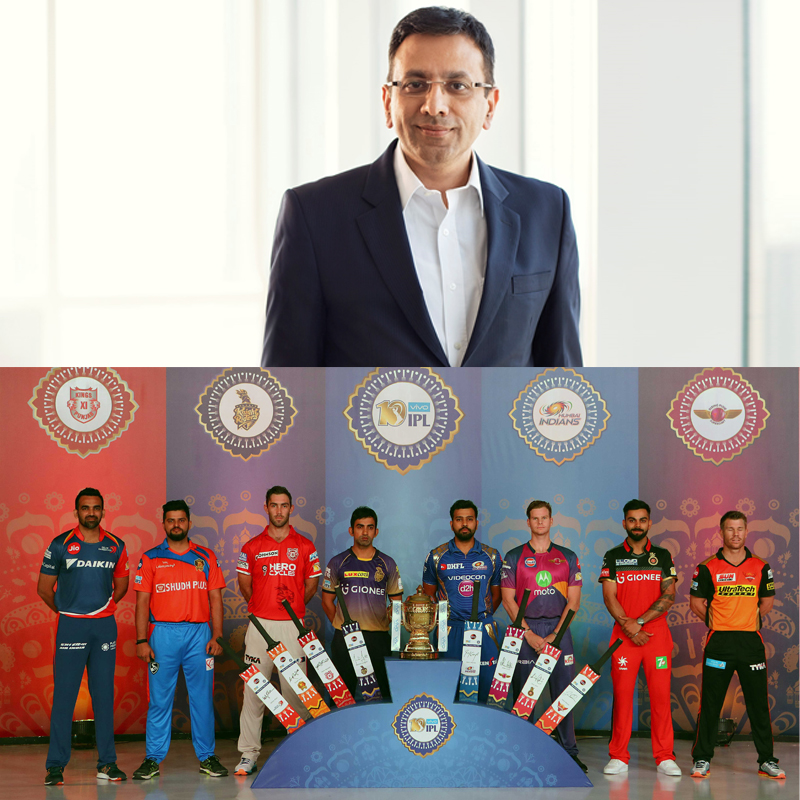
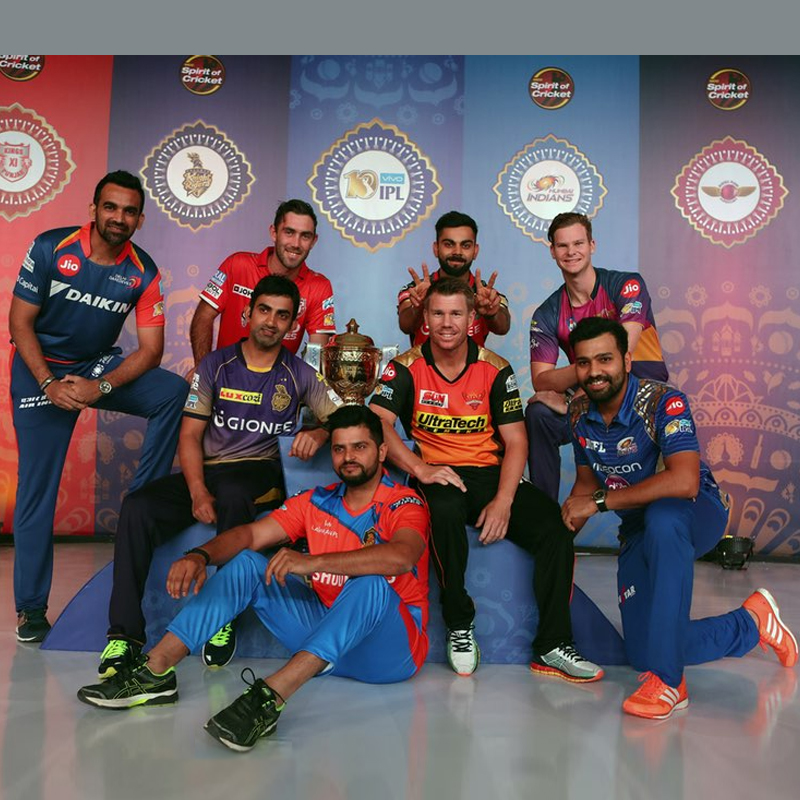
    MUMBAI: Indian media and entertainment biggie Star India is going full throttle for its first season of the Indian Premier League (IPL). With 12 channels in its bouquet, Star India has decided to involve 10 of them and its digital platform Hotstar to live telecast the matches in six languages including Hindi, English, Tamil, Telugu, Kannada and Bengali.

    “By leveraging the power of TV and Hotstar, IPL will be enjoyed by a total of 700 million fans across geographies which was 550 million in the previous year,” reads a press release issued by Star India.

    The sportscaster which used to stream the action on Hotstar  with a five minute lag will be offering it live on the streaming service with the possibility of a pay option. It is believed to be in conversation with various telecom operators which would bundle it in data and talk plans for their subscribers.  

    The Star India management was quoted in newspaper reports as saying they want to make Hotstar a more massy product than the premium service that is being offered currently.

    Star India has innovated the technology for first time live on TV and digital, check-ins and live score cards on hand-held phones. What this means is that Hotstar users will be able to have a very visible score unit once they logon to the service on their handphones, as compared to earlier when it just streamed the regular TV signals with difficult to read aston bands and cards.

    Star India MD Sanjay Gupta said, “Technological innovations is at the heart of the experience, bringing the stadium home and giving the fans an interactive and immersive viewing experience.”

    public://IPL-Press-Release.jpg

    Star India may also introduce Virtual Reality (VR) for its Hotstar subscribers.

    Meanwhile, the BCCI has announced that the mega auctions for the 11 th IPL will be held in Bengaluru on 27, 28 January 2018.

    Also Read:

    Star India to introduce VR for IPL 2018

    Comment: Does Star stand to gain or lose by sharing IPL with DD?

    Star’s Uday Shankar on distribution challenges, IPL, FTA vs. pay TV, innovations, Made in India content…and much more

  • Comment: The rise and rise of Uday Shankar

    Comment: The rise and rise of Uday Shankar

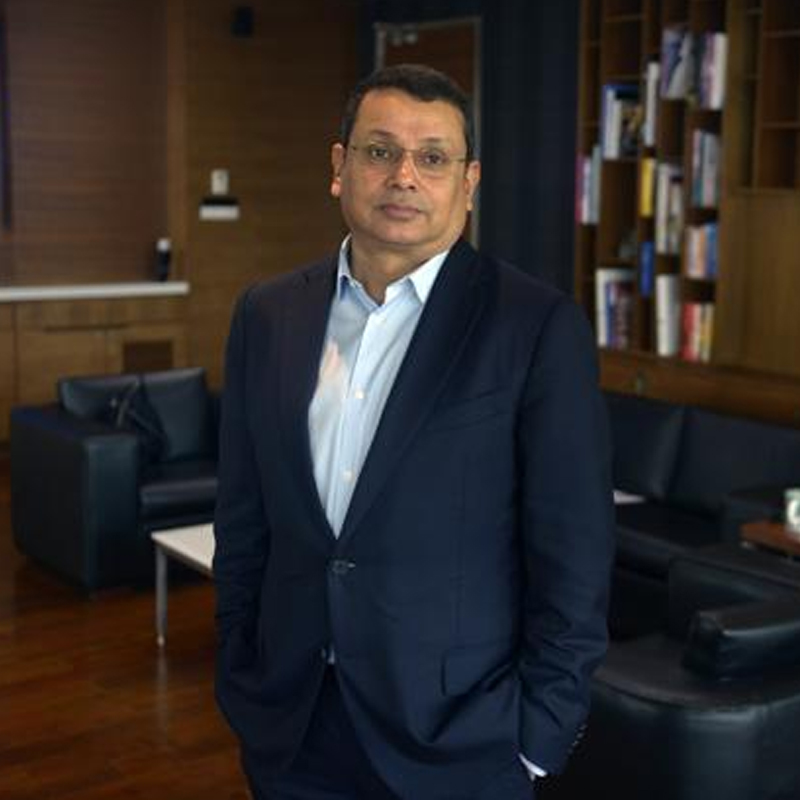
    MUMBAI: From not having enough money to afford even a TV set in Delhi in 1991 when he was a newspaper reporter to heading Star India, one of the most admired Indian media and entertainment companies, for a decade to now being appointed as 21st Century Fox Asia president, it has been quite a journey for Uday Shankar. A well-deserved and rewarding one at that.

    Today, Shankar is one of the few professionals from India to get region-wide responsibility for a global media powerhouse. Executives such as Man Jit Singh, who heads Sony Pictures Home Entertainment globally, and Bedi A Singh, who was News Corp CFO for a long time, have preceded him but both are Indians who rose up the ranks in the US.

    Shankar has, however, earned his stripes growing the Star India business, which in the first quarter had an EBDITA of $100 million and is on course to hit $500 million in 2017-2018 (in the words of 21st Century Fox (21CF) chairman James Murdoch). The 2020 EBDITA target, as spelt out by 21CF, is twice that, and the Murdochs say it is well on course to be achieved.

    When he was handpicked by the then News Corp COO Peter Chernin to take over Star in October 2007 (some say on the advice of the then outgoing company head in India), Shankar knew very little about the entertainment business. All his experience had been in news–whether print or television. He had had stints with several print media publications (his first was The Times of India around 1990) as a political correspondent and last was as one of the founders of environment magazine Down To Earth before the TV news bug bit him.

    Shankar took to the TV medium with ferocity—doing stints at Zee TV’s news channel as a news producer, the Hindustan Times promoted Home TV (it shut down quickly), production house Sri Adhikari Brothers, Sahara TV, and then India Today group’s Aaj Tak and Headlines Today, two channels he helped stabilise and grow over the next six seven years. His talent for being a journalist who got things done did not go unnoticed and he was asked to lead Star News, a joint venture with Kolkata-based ABP group, after CEO Ravina Raj Kohli departed.

    It was at Star News that he blossomed as an executive—a TV exec to be precise—and caught the attention of Chernin and the Murdochs. The rest, as they say, is history.

    Today, under his leadership, the Star network has expanded into regional language channels and produces close to 17,000 hours of content each year in eight languages. The route it has taken to get there: acquisition of the South India-based Maa network, Asianet and via launch of channels such as the Bengali-language Star Jalsa.

    A journalist with little entertainment content creation experience when he was appointed, Shankar has steered Star into creating TV content that has been path breaking over the past 10 years, dealing with social issues, apart from helping position it as a network that produces classy shows but with a social purpose. So much so that Star India shows command an advertising premium even if the channel is not topping viewership ratings. Even on the affiliate revenues front, Shankar has played hardball.

    But one of the boldest moves taken by Star under him—some critics may choose to describe it as foolhardy—was to take on broadcast and telecom regulator TRAI late 2016 when Star India and its affiliate Vijay TV challenged in court the regulator’s jurisdiction over matters relating to copyrights, which effectively has stalled implementation of a new tariff and inter-connect regime announced by TRAI in October 2016. The case is still pending a final verdict in Madras High Court till the time of writing this piece.

    Amongst the early movers in the OTT space, Shankar has made Star invest big in customer acquisition and pushed its digital platform Hotstar CEO Ajit Mohan to go out and not only acquire new business, but also devise a distribution strategy that could be sliced and diced as per needs of the geographical markets. So, Hotstar’s distribution and subscription strategy for the US and Canada market, heavily subscription revenue-led, could be quite different from that pushed in India, where making available content practically free to subscriber initially is aimed at hooking the viewer before he’s seduced to the pay model.

    Though Shankar is not known to be a great fan of gambling—even during Diwali when in India playing cards with cash is considered auspicious or for good `shagun’—he gambled big on the Indian Premier League’s (IPL) global rights for five years. Star not only played smart, outbidding incumbent rights holder SPN India and some global digital players sniffing at commercially viable Indian cricket rights, but also raised the bar to clinch the hand with a bet of $ 2.55 billion. Raising the stakes flattened competition.

    Under Shankar, Star has also ploughed huge investments into creating and acquiring sports properties such as the Pro Kabaddi League, the BCCI national cricket domestic rights, the domestic soccer league ISL in collaboration with Reliance Industries, table tennis, badminton, and many others sports.

    The recent promotion of Shankar means he has won the confidence of the Murdochs and the boards of News Corp and 21CF to replicate in Asia what he has done in India, long referred to as a jewel in the crown of the Murdoch media empire. While 21CF has done well in markets such as Taiwan, Japan, Hong Kong, Singapore, Malaysia, and South Korea, scale has been something that’s been missing. Shankar is expected now start building that.

    By promoting him to head Asia, 21 CF has also ensured that if a deal with Disney does happen (media reports emanating from all parts of globe say the approx USD 60 billion deal could happen sooner rather than later), it will be—very well could be—Shankar who will be scripting the new Asian story. Currently, Disney has two Asian heads: one for south east and south Asia and the other for north Asia. With him being designated as the boss, the reporting lines too could change with Mahesh Samat reporting to Shankar.

    How has Shankar managed this rags-to-riches story in the cut-throat corporate world of global media? Shankar himself gives a hint. Casually leaning against the main exit to the executive floor at level 37 in the South Parel office of Star, housing the leadership team, while escorting out a couple of senior editors of Indiantelevision.com after an interview in September, he was asked what made him tick. The recorder was off and the interview had ended, but what he said was revealing.

    According to Shankar, though he considers he has miles yet to travel (wherein he’d continue reading thought-provoking books like Yuval Noah Harari’s Sapiens: A Brief History of Humankind), his satisfaction comes from the fact that he has managed to assemble a string of high-calibre professionals as heads of various Star businesses who at least specialise in or know better one thing extra about the business than the chief. “This gives me great satisfaction as I know the business is in safe hands,” he said with a poker face.

    In the end, one of his mentors, Siddhartha Ray (Delhiwallahs say he’s one of the few friend-philosopher-guides of Shankar), who also happens to be the first GM of Star TV in India in the early 1990s, aptly summed up the X factor: “What makes Uday so successful? He’s a quick learner, good man-manager and an adept environment manager.”

    At Indiantelevision.com, we would wish Uday Shankar more wind beneath his wings so that he can soar higher.

    ALSO READ:

    Uday Shankar becomes president of 21st Century Fox Asia

    Star’s Uday Shankar on distribution challenges, IPL, FTA vs. pay TV…and much more
  • Star India to introduce VR for IPL 2018

    Star India to introduce VR for IPL 2018

    NEW DELHI: With Star India, you can always expect the unexpected or something high-octane. In line with this philosophy, the broadcaster, along with its over-the-top (OTT) service Hotstar, is exploring the use of virtual reality, or VR, to heighten viewer experience during the 2018 season of the Indian Premier League (IPL).

    Speaking at a session themed ‘10 Media Transformations for 2018 & Beyond’ at the CII Big Picture Summit 2017 here yesterday, Hotstar’s consumer and revenue head Prabh Singh gave a sneak peek into the innovations being planned around the IPL, which included the VR experience for viewers.

    “Yes,” Singh said when asked by session moderator and NDTV consulting editor Vikram Chandra whether he had heard correctly that Star/Hotstar was mulling introducing VR headsets for viewers in IPL matches in 2018.

    Apart from VR, Singh divulged that Hotstar had been experimenting with other innovations such as score overlays to give additional benefits to subscribers watching cricket matches on the streaming service so they could not only watch the video but also enjoy extra information to add to the overall viewing experience.

    On the sidelines of the event, when asked by Indiantelevision.com how the VR experiment would play out, Singh mysteriously said: “wait and watch”. Pressed further on the issue whether VR headsets would be given to random spectators in stadiums or select subscribers of Hotstar, he added that the logistics were still being worked out, which included a possible tie-up with a VR (headset) company, too.

    Will the VR experience be extended to all the IPL matches? Singh refused to comment on the question.

    Star India, earlier in the year, had won the five-year global broadcast and digital rights to the IPL for $ 2.55 billion, a sum that has been described as from being `staggering’ to `over-priced’ to simply OTT.

    In September, when asked how the company planned to monetise the IPL, Star India chairman and CEO Uday Shankar (now elevated as head of 21st Century Fox Asia) in an interview to Indiantelevision.com had said: “All I know is that IPL is a very powerful tournament and cricket runs really deep in everybody’s bones in this country. To be successful, you just need to work on intensifying and heightening the experience of cricket further.”

    ALSO READ:   

    http://www.indiantelevision.com/television/tv-channels/sports/star-bids-highest-for-ipl-media-rights-and-is-the-winner-170904

    http://www.indiantelevision.com/television/tv-channels/gecs/stars-uday-shankar-on-distribution-challenges-ipl-fta-vs-pay-tv-innovations-make-in-india-content-and-much-more-170919

    http://www.indiantelevision.com/specials/event-coverage/asia-tv-forum/17-to-be-year-of-survival-for-vr-market-161209

    http://www.indiantelevision.com/specials/event-coverage/vidnet/republic-to-debut-vr-content-from-august-for-viewers-170714

  • Hero ISL S4 opening game saw 59% viewership growth

    Hero ISL S4 opening game saw 59% viewership growth

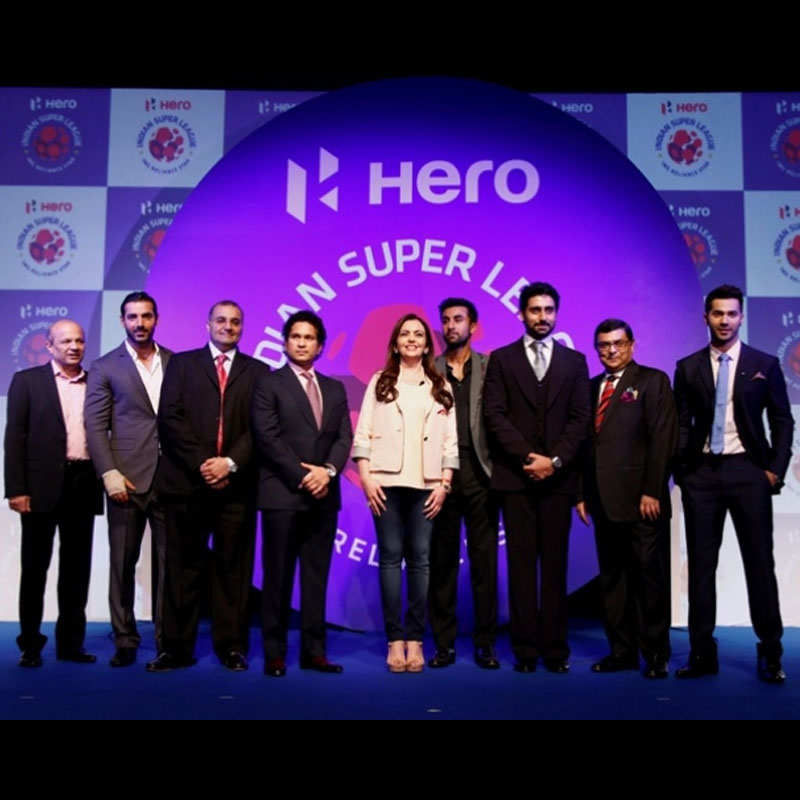
    MUMBAI: The opening match of the Hero Indian Super League (ISL) season 4, ATK and Kerala Blasters FC, got 25 million total TV impressions with a 59 per cent growth in viewership over last year’s first game, as per data shared by the broadcaster.

    The stadium was packed to the brim. The game recorded 7.4 million average impressions, which is double the India vs USA opening game at U-17 FIFA World Cup 2017.

    Star India MD Sanjay Gupta said, “We are thrilled with the response that The Hero Indian Super League is getting from football fans across India. The growth demonstrated is across urban, rural and digital audiences which indeed proves that Future Hai Football! We are looking forward to having an exhilarating journey on this biggest ever season of the league.”

    ISL Season 4 began on 17 November, and can be watched live on Star Sports network and Hotstar. A total of 95 matches will be played in the 2017-18 season between 10 teams. The season will be held over 17 weeks since two new teams have been added. The two-legged semi-finals of the ISL league are scheduled to take place in the second week of March 2018


  • Punitha Arumugam joins Hotstar as platform evangelist

    Punitha Arumugam joins Hotstar as platform evangelist

    MUMBAI: Hotstar has appointed Punitha Arumugam as platform evangelist, with the mandate to showcase the power of the platform to India’s leading brands.

    The appointment is amongst Hotstar’s several initiatives to spur an increasing shift in marketing focus towards platforms with high quality content and engaged audiences. 

    Hotstar has increasingly raised the pressure on Google and Facebook, especially in an environment where many leading multinational brands have raised questions on the quality and safety of content on open platforms against which their ads are placed.

    Hotstar CEO Ajit Mohan said, “Punitha is a leader in digital who has a fantastic track record of having aided the creation of many agency and brand partnerships in India and around the region. Hotstar is a special place for brands. We are delighted that she is coming on board to help us introduce the unique power of Hotstar to marketers around the country.”

    Arumugam added, “Hotstar is one of the few video platforms in the world that has tremendous scale, very engaged audiences and remains open to advertisers. I believe the world of marketing is evolving quite rapidly, and Hotstar has the unique ability to marry the scale and engagement of television, with the power of audience understanding that digital brings. This is what brands have been waiting for, and I am delighted to play a role in shaping the next phase of the industry’s evolution.”

    Arumugam, a media agency veteran, known for her leadership at Madison Media as group CEO for over 13 years, and at Google as agency director for over five years, is seen as a leader who shaped many agencies’ and marketers’ increasing use of digital platforms for brand building. At Google, she led the organisation’s agency business, first from India and later for the region from Singapore, as managing director, APAC agency for Google APAC. She is currently setting up her own firm in the communications tech space.

    Her career spans over 20 years of media. She is widely acknowledged as the driving force behind Madison’s transformation to the second largest media agency in India and is credited for building a buoyant agency business for Google in India and Asia Pacific.

    She will be operating from Mumbai for her role at Hotstar.

  • Hotstar is an important platform for us: ABP’s Avinash Pandey

    Hotstar is an important platform for us: ABP’s Avinash Pandey

    MUMBAI: The days of tuning into the news channel at 7 pm in your living room are gone. Today’s consumers want news to come to them not vice versa. Taking note of this, ABP News bought a Hotstar ticket, which boasts of 10 million downloads on Android devices.

    ABP is the first Hindi news channel on the platform. New entrant Republic TV had secured a place in May this year.

    ABP COO Avinash Pandey feels it unwise to consider Hotstar as a media product. He rather gives it the title of a platform in itself. “The exponential growth in business happens when you move from product delivery to platform delivery. A platform becomes a dissemination medium when multiple people for multiple reasons converge. Hotstar is a promising and future-ready platform and it is important to be on such a destination,” he says.

    ABP shares its DNA with Star India since the channel was formerly called Star News – a partnership between ABP and Star from 2003 till Star decided to give up news for giving attention to entertainment in 2012. The synergy made a compelling case for both to unite.

    The deal benefits both parties. While ABP can reach a large audience on a trusted platform, Star can give value addition to its Hindi-speaking audience via ABP News. Let us not forget the increased traction that advertisers will get through it.

    At the 13th Indian Digital Operators Summit 2017, BARC India CEO Partho Dasgupta highlighted that the Hindi news genre grew by 93 per cent in week 41 of 207 over 2015. Pandey calls this growth as exponential, not progressive.

    “People want news as video rather than text and heavy consumption happens via mobiles and tablet due to lower data charges,” says Pandey. The channel is cooking up something as he says that this partnership is just ‘the tip of the iceberg’ and more should be expected.

    With the latest addition, Hotstar has live feeds of five channels – Fox News, Sky News, Asianet News, Republic TV and ABP news.

    As per the comScore report for April 2017, ABP News had 20.7 million viewers on mobile out of the total 200 million news population on digital. It had just 1.7 million views via desktop devices. The report also showed that people across ages, both male and female prefer mobile to desktop any day.

    Star India chairman and CEO Uday Shankar had earlier said, “Young India has embraced Hotstar. We believe that young, digital-savvy Indians are deeply interested in understanding their country and the world they live in.”

    Hotstar has managed to hook viewers to its entertaining content. Now can it manage to get them to spend more time watching news as well?

  • Barbeque Nation campaign promotes family dining during Diwali

    Barbeque Nation campaign promotes family dining during Diwali

    NEW DELHI: Casual dining restaurant chains Barbeque Nation has launched a promotional campaign Tyohar Ek Roop Anek urging people to indulge in family dining at the restaurant this Diwali.

    The campaign was conceptualised considering the excitement and bustle during Diwali and the need to unwind and spend quality time with family, possibly by dining together.

    The brand has released a 38-second video, where a witty young girl is seen narrating the circumstance at her house during the festival, with her family members preoccupied in a variety of activities. In order to break the humdrum, she decides to book a table atBarbeque Nation for her family and offers them that much needed break and togetherness.To engage with customers through digital and social media, Barbeque Nation, a pioneer in India to promote ‘DIY’ (do-it-yourself) cuisine with live on-the-table grill, since 2006, is promoting the video on a number of leading platforms including Facebook and Hotstar. The video also recorded over three lakh views on Facebook within three days of the launch.

    Barbeque Nation Hospitality CEO Sameer Bhasin said, “No celebration or merriment is complete without a scrumptious meal with the family! Our campaign clearly emphasises the need for each one of us to commit some time to our families amidst the festive hustle and enjoy an evening of great cuisine and relaxation.”

  • Hotstar to exclusively live-stream Paytm Ranji Trophy

    Hotstar to exclusively live-stream Paytm Ranji Trophy

    MUMBAI: Underscoring its position as the home of cricket, Hotstar, a video streaming platform, is the exclusive partner for the Paytm Ranji Trophy 2017-18. The Paytm Ranji Trophy, now in its 84th season, kicked off on October 6th with the group stage matches.

    This season of the Trophy is especially exciting as it will see a long list of Indian cricket stars in action – Ravichandran Ashwin, Cheteshwar Pujara, Murali Vijay, Ishant Sharma, Ravindra Jadeja, to name a few.

    A Hotstar spokesperson said, “Hotstar has made large strides in providing a breakthrough sports viewing experience with innovations like the Fangraph and Key Moments. While the viewing devices could be individual, these innovations provide a more social and connected sports viewing experience, which raises the bar for a sports enthusiast. We are very excited to be the exclusive home of the Paytm Ranji Trophy this year.”

    “The Ranji Trophy has an illustrious and long history in India, and this season should be especially exciting considering the number of India’s international players that are going to be turning out for their teams. Given Hotstar’s cricket viewing experience, we are very excited to partner with them for this season of the Paytm Ranji Trophy,” added a BCCI spokesperson.

    The tournament, played between 28 teams from across India, moves into quarter finals on 7 December, with the final matches slated between 29 December 2017 and 2 January 2018.

    The tournament will be available, live, exclusively on Hotstar starting from the qualifier matches.

  • OTT trumps TV by 44 min among youth: Chrome DM

    OTT trumps TV by 44 min among youth: Chrome DM

    BENGALURU: Online was larger of the two platforms for consumption of content by youngsters who consumed content only on television or only online in India, a Chrome Data Analytics and Media (Chrome) “OTT Consumption” study has revealed.

    The average daily time spent on content consumption online was 44 minutes higher than the average daily time spent on content consumption on television. Chrome’s survey included 2,505 respondents of which 28 per cent were aged between 15 and 24 years and 72 per cent were in the age group of 25 to 34. 49 per cent of the respondents were male and 51 per cent were female.

    Television versus online

    According to the study, 16 per cent of the respondents consumed content only on online devices, while only two per cent said that they consumed content on television alone. 81 per cent of the respondents said that they consumed content on both the platforms.

    Consumption patterns by respondents who used both platforms for content consumption

    2,054 respondents consumed content both on television and online.

    Genres consumption

    A mobile phone was the preferred device for music consumption among respondents who used both platforms. Eighty three per cent of the 2,054 respondents said that they consumed music on mobile phones as compared to 34 per cent that said that they also consumed music on television and 17 per cent who said that they also used a desktop/laptop for listening to music.

    In the case of movies, television was the preferred device with 66 per cent saying that they watched movies on television as compared to 39 per cent who watched movies on mobile phones and 29 per cent who watched movies on a desktop/laptop.

    Television was also the preferred device for news consumption, with 64 per cent watching it on television and 29 per cent who also watched it on a mobile phone and 9 per cent who also consumed news on a desktop/laptop.

    Seventy four per cent of the respondents consumed sports content on television. 21 per cent and 14 per cent also consumed it on mobile phone and desktop/laptop respectively.

    Sixty nine per cent consumed GEC content on television, and 17 and 6 per cent watched it on mobile phone and desktop/laptop respectively.

    Daily time spent on the mediums

    The average daily time spent online by the 2,054 respondents who consumed content on both television and online was 1 hour 37 minutes on television and 2 hours and 21 minutes online.

    Twenty nine per cent spent less that 30 minutes viewing television, 39 per cent spent between 1 and 2 hours viewing television daily; 26 per cent spent between 2 and 3 hours daily watching television, 3 per cent spent 3 to 5 hours viewing television daily and 3 per cent spent more than 5 hours on daily television viewing.

    Comparative numbers for online consumption of content were: 23 per cent spent each less than 30 minutes daily and between 1 and 2 hours daily; 29 per cent spent between 2 and 3 hours daily; 9 per cent spent between 3 and 5 hours and 17 per cent spent more than five hours on online content consumption daily.

    Frequency

    Seventy four per cent of were daily watchers of television and 26 per cent had no fixed routine for watching television. 77 per cent watched content online daily; 14 per cent watched content online during weekends and 9 per cent had no fixed routines.

    Apps

    YouTube was the preferred app for consumption of all types and genres of content. Other apps/websites such as hotstar, JioTV, Eros Now, Voot, gaana, saavn, Wynk Music, Sony Liv, TOI and NDTV were used for different content genres.

    Top three apps for music consumption

    The top three apps for Hindi music consumption were YouTube, Hungama and gaana , while for English music consumption they were YouTube, Wynk Music and gaana. In the case of Regional Music, the top three apps were YouTube, saavn and JioTV

    Top three Movie apps

    The top three apps for Hindi content consumption were YouTube, hotstar and Eros Now, for both English and Regional content they were YouTube, hotstar and JioTV.

    Top three GEC apps

    The top three apps for Hindi GEC content were YouTube, hotstar and Voot, while for English and Regional content they were YouTube, hotstar and JioTV.

    Top 3 sports apps.

    The top 3 sports apps were YouTube, hotstar and Sony Liv

    Top 3 News apps/websites

    The top 3 News apps/websites were YouTube, NDTV and TOI

    Top 3 apps for Online exclusive content

    The top 3 apps for online exclusive content were YouTube, Hotstar and Voot