Tag: Hotstar

  • Vivo IPL 2018 final breaks multiple viewership records

    Vivo IPL 2018 final breaks multiple viewership records

    MUMBAI:  The VIVO IPL final on 27 May 2018 garnered a record viewership on both digital and TV, as per figures released by the broadcaster Star. The final, which was aired live on 17 channels across eight different languages, powered the network’s growth by 34 per cent with 52.9 million average impressions.

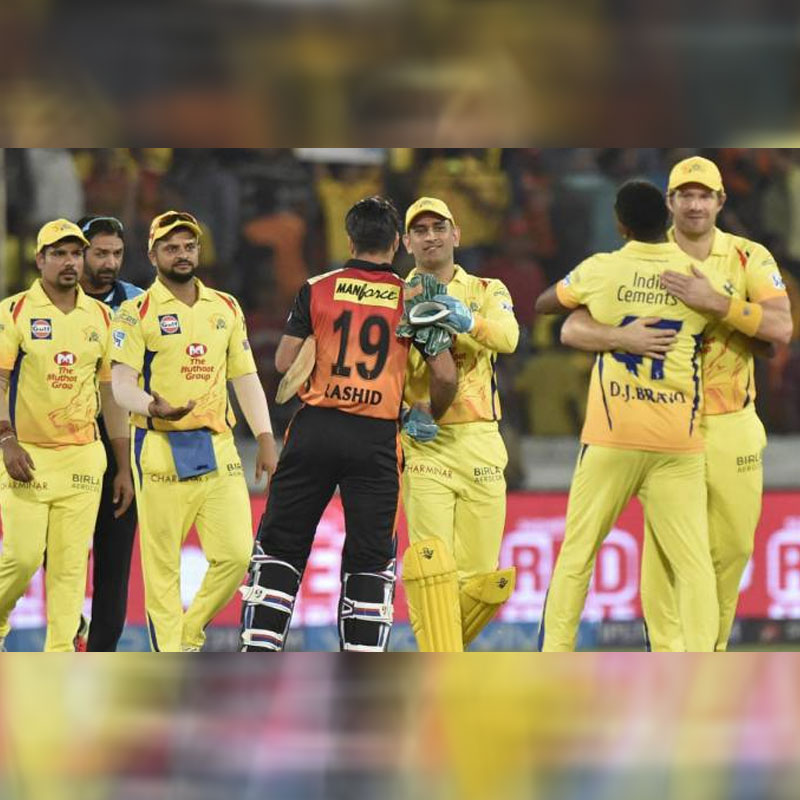
    The final between Chennai Super Kings and Sunrisers Hyderabad was produced with 11 live feeds across the TV network and Hotstar. The match had the highest reach (211 million across screens) in the history of the cash-rich league.

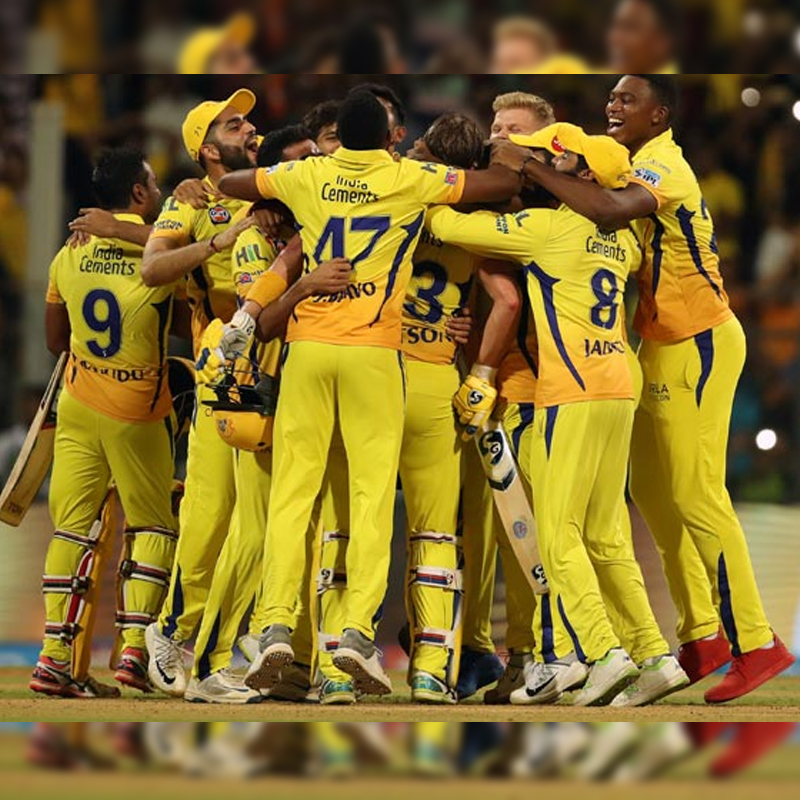
    Hotstar hit a world record for concurrent online viewing with 10.7 million viewers for the final. The contest that saw CSK’s Shane Watson score a century to hand the yellow brigade its third IPL trophy helped Hotstar create a new record of over 10 million concurrent users.

    The match witnessed a sudden hike from eight million to 9.1 million and then to 9.7 million before hitting the 10.7 million mark.

    The Grand Finale on television was watched by a historic 160 million fans across Star TV network (not including DD) versus last year’s figure of 121 million, recording a 32 per cent growth in reach. This is the highest television reach recorded for any match in the history of the tournament.

    The television viewership for the tournament as measured by average half hourly time-weighted impressions was 1.4 billion impressions (U+R 2+) with a growth of 15 per cent. The viewership growth in urban audiences was 26 per cent.

    The total television viewership for the tournament as measured by gross impressions was 9.985 billion impressions with a growth of 19 per cent across urban + rural and 30 per cent in urban audiences.

    Also Read:

    Star spending up to Rs 2 cr on production per IPL match

    Hotstar creates record of 10 mn plus concurrent viewers for IPL finale 

  • Hotstar rules as SonyLiv and Netflix witness doubling of installs

    Hotstar rules as SonyLiv and Netflix witness doubling of installs

    MUMBAI: Guess which video streaming app is seeing rapid growth in installs in India? Well, according to Jana, the largest provider of free internet in emerging markets, the two video streamers are Netflix and SonyLiv. This was revealed by it in its Mobile Majority report, which takes a close look at the latest payment  trends in emerging markets. The research was conducted in India from 1 January  2018 through 31 March 31 2018, during which data around streaming app installs and usage was anonymously observed from users of Jana’s mCent browser.

    http://www.indiantelevision.com/sites/drupal7.indiantelevision.co.in/files/styles/large/public/Screenshot%202018-05-30%2012.30.46_1.png?itok=CQFaz6gx

    According to the report, Netflix and SonyLiv accounted for 0.5 per cent and five per cent of the installs on 1 January 2018. By 31 March, their share of installs had gone up to 1.4 per cent and 13 per cent respectively. Amazon saw the install of its Prime Video service go up from four per cent to 5 per cent in the same period, even as the Viacom18 owned Voot watched as its share was shaved 13 per cent to 10.7 per cent.

    http://www.indiantelevision.com/sites/drupal7.indiantelevision.co.in/files/styles/large/public/Screenshot%202018-05-30%2012.30.37_1.png?itok=lLQuzJlY

    YuppTV which accounted for 0.6 per cent of the installs in January saw the number get whittled down to 0.5 per cent. Of course, the monster, which was ruling the app install marketshare sweepstakes was Hotstar which notched up a colossal 69.4 per cent. But this down almost 10 per cent as compared to the  76 per cent at the beginning of the year.

    However, these numbers probably will only skyrocket in  Jana’s next report – especially for Hotstar which saw heightened install activity during the Vivo Indian Premier League.  The finals saw the Star India-owned service serve more than  10.3 million concurrent streams, which was for it and its cloud services partner Akamai a new world record.


  • Hotstar creates record of 10 mn plus concurrent viewers for IPL finale

    Hotstar creates record of 10 mn plus concurrent viewers for IPL finale

    MUMBAI: They helped Hotstar hit a world record for concurrent online viewing a few days ago with 8.26 million viewers in the IPL first qualifier game on 22 May. Once again, the Chennai Super Kings (CSK) and Sunrisers Hyderabad (SRH) helped Hotstar create a new record of over 10 million concurrent users for the Vivo IPL 2018 finale that witnessed CSK’s Shane Watson hit a century and safely take the team to its third trophy.

    While Hotstar viewers could see the number hit 10.7 million, sources say that Hotstar will do a thorough check but can safely say that the number is between 10.3-10.7 million. Just for the season, the OTT platform from Star India increased its bandwidth to 10 million concurrent users at a time, with help from technology partner Akamai. A source from Star India says, “The numbers are insane, no other platform can handle the scale which we have achieved. We are going to check and recheck with Akamai regarding the numbers.”

    As Watson continued to slash through to his ton, viewers kept building up, especially for the last four overs. A sudden hike from eight million to 9.1 million and then to 9.7 million was witnessed before it breached the coveted mark to hit 10.7 million.

    The result of the final was the same as the first qualifier. SRH batted first setting a target of 179 runs in 20 overs, but the batting line-up of CSK was ready with all guns firing. The second innings started where the SRH bowlers dominated the powerplay but Shane Watson played the innings of his life scoring 117 off just 57 deliveries. SRH has defended low scoring games of 118 and 132 runs playing against Mumbai Indians and Kings XI Punjab respectively but could not halt CSK’s Watson.

    Hotstar, apparently, has played a key role in helping team Uday Shankar and Sanjay Gupta get closer to their revenues. Sources indicate the advertising revenues accruing courtesy the Vivo IPL are in the region of Rs 350 crore. Even rivals acknowledge that it is a landmark figure Hotstar has managed to achieve. To top that is the subscription revenue – guesstimated at around Rs 100 crore – which the streaming service has notched up so far.

    Star India has four more seasons of IPL for now and it is surely going to take this success and look forward to beating its own record. For the next season, it will have to increase the bandwidth to accommodate new viewers.


  • Hotstar and Akamai create internet history

    Hotstar and Akamai create internet history

    MUMBAI: Hotstar, India’s leading premium streaming platform, leveraged Akamai Technologies, Inc. (NASDAQ: AKAM), the world’s most trusted and largest cloud delivery platform, to create streaming history on 22 May 2018 during the first qualifier match of VIVO IPL 2018. The match between Sunrisers Hyderabad and Chennai Super Kings attracted an unprecedented 8.26 million peak concurrent viewers tuning in simultaneously to witness the nail-biting finish, thereby breaking all previous records in online video streaming across the world. Over four hours, more than 26 million viewers tuned into Hotstar to watch the match.

    The previous record is believed to have been established by YouTube when Felix Baumgartner’s space jump in 2012 saw a peak of just over 8 million concurrent viewers tuning in to watch the event.

    Hotstar’s steady march into the record books started in 2017, when it recorded a peak concurrency of 4.8 million simultaneous viewers during the India-Pakistan ICC Champions’ Trophy final match, the highest in APAC at the time. The opening week of Vivo IPL 2018 upended this record with 5.5 million concurrency recorded on 10 April, followed by the next peak of 7.1 million on 25 April. The peak seen during the ICC Champion’s Trophy Final was nearly doubled during the VIVO IPL 2018 match between Sunrisers Hyderabad and Chennai Super Kings. With all sports streaming records broken, the next frontier was to go beyond just sports and raise the bar on streaming as a whole.

    Commenting on the historic development, Hotstar, CEO, Ajit Mohan added, “Four years ago, when we started streaming IPL, 8 million viewers would have been a big deal for the whole tournament. Crossing 8 million simultaneous users is a testimony to the power of VIVO IPL and evidence of the abiding passion of cricket fans. It is not just about the scale, however. It is about reinventing the sports experience online and constantly raising the bar. Our objective is to create the future of social TV. And we are proud that the tech that we are building is expanding the frontiers of online video.​”

    Akamai Technologies, Vice President, Media, APJ, Parimal Pandya commented, “Over the past year and a half, Hotstar has broken several online viewing records at the regional level. A contributing factor was technology from Akamai playing a role in bringing down the latency drastically so users can enjoy the live action almost as well as people watching it on their television. This is a clear indicator of the fact that, driven by technology from Akamai, live sporting action can be enjoyed on a smartphone which is the new frontier for audience engagement and growth.”

    VIVO IPL 2018, now in its final week, to be concluded on Sunday 27 May 2018, is the fifth year that Hotstar is streaming the tournament. The current edition of the tournament marks a sharp upgrade in viewing experience, with additions like WatchN’Play, a skill based game that tests the cricket fans’ knowledge as they watch, VR to really immerse the viewer in the on-field action, and feeds available in 8 languages.

  • BTVI to leverage digital mediums for growth

    BTVI to leverage digital mediums for growth

    MUMBAI: English business news channel BTVI is completing two years in August this year. The company was transformed from Bloomberg TV India after Bloomberg decided not to renew its deal with Business Broadcast News. BTVI got its COO Megha Tata in 2016 at the same time it got its new name. 

    English Business News (EBN) genre is still a very niche market with only five channels in the race – CNBC TV18, ET Now, BTVI, NDTV Profit and CNBC TV18 Prime HD. The genre contributes to less than one per cent of the total TV pie where BTVI is still struggling to compete with the genre leaders, CNBC TV18 and ET Now.

    It was around the same time that BTVI decided to bring in ex HBO MD Megha Tata on board as the channel’s new COO. Tata’s journey ever since has been a roller-coaster ride and she believes that refurbishing the leadership at BTVI has been a positive step. “Bringing back revenue function in-house which was outsourced before was another move that has worked for us,” she says. 

    One of the crucial decisions that paid off for BTVI was refurbishing the leadership. “Besides having a strong editorial leadership, in people like Anuj Katiyar to lead marketing, research and branded content, Shilpa Shetty to head revenue, Ashim Chakraborty as HR head and Deepa George to head our legal, I think we found an absolutely perfect leadership team. Bringing back revenue function in-house which was outsourced before was another move that has worked for us,” she adds.

    The hard work in the last one year has helped in boosting the channel’s market share from two per cent to a stable 15 per cent (touching as high as 24 per cent at times). This growth was riding on the back of very strong consumer insights being translated into on air content, programming changes, promo planning, FPC planning and brand building. 

    Tata believes that the business news genre is consumed not only on linear TV but also on OTT platforms. The channel is already present on Hotstar, Jio TV, Yupp TV, Airtel TV and Tata Sky TV. The key trend this year, according to Tata, will be the further penetration of TV in rural areas.

    Tata says that the future is for broadcasters to create specialised content for their social media as well as OTT platforms to retain subscribers and their loyalty. “More TV viewers from rural India will also mean an increase in advertiser base and hence advertising revenue. This year will also see exponential growth in the viewership of non-linear OTT platforms. Now that these OTT platforms have garnered critical subscriber base, it will be interesting to see what are the different revenue models that will emerge to monetise this critical subscriber mass. BARC is expected to launch EKAM – the integrated viewership measurement module – later this year. This will certainly help in rationalisation of investments in these OTT platforms,” she adds.

    With eight states gearing up for elections, news channels are sure to have a ball. Tata thinks that with addressable TV, broadcasters will get an option of customising ad breaks and play different ads targeted at different markets/TG. This will make TV lucrative for regional and small advertisers thus increasing advertiser base and revenues of broadcast TV media.

    BTVI, in the last financial year, had focussed on improving the OTS levels to 100 per cent in its key markets. In this financial year, the channel’s aim is to achieve this 100 per cent OTS in all the P1 markets.

    The growth in digital hasn’t had a deteriorating impact on traditional news viewing. Instead, Tata believes they complement each other and it is the content that will be the winner. Advertising on digital medium is growing rapidly, though not at the expense of TV revenues. 

    Urban India is ahead when it comes to consuming news on digital mediums but it is mainly headlines. When it comes to analysis, views or opinions, the option is always a news channel or newspaper.

    Tata reveals that increasingly audiences are consuming English business news on their mobiles and non-linear platforms like OTT and m-sites of trading apps. It’s an opportunity not to be missed. “Hence, we at BTVI have increased our focus on building a strong digital ecosystem for brand BTVI. We are already available on trading apps of Kotak, Axis Direct and IIFL. We are also working on our mobile app as well as revamping our website. To support the app and website, we plan to build a robust digital content plan,” she says.

    Though the regional market is important, BTVI will first look at focussing its energy and resources in establishing itself in its core metro market first. The regional market will come in at a later time.

    Speaking on the issue of taking up dual local channel number (LCN) she says that though it is advantageous to the channel, it can even hamper the brand since people can’t remember more than one number for a channel. Though it may get additional reach, it won’t get enough TSV to justify the cost.

  • Hotstar notches up concurrent viewing world record of 8.26 million

    Hotstar notches up concurrent viewing world record of 8.26 million

    MUMBAI: The closely fought Chennai Super Kings (CSK) vs Sunrisers Hyderabad (SRH) playoff game for Vivo IPL 2018 set a new record for India’s leading video streaming service – Hotstar. According to it, the match saw a massive 8.26 million concurrent users logging on to the service, which is a world record for any video app, says its Twitter handle.

    The earlier record was around seven  million concurrent users in the early part of the IPL.

    What helped was the see-sawing of fortunes that both the teams saw during the course of the match. Even as Chennai Super Kings was popping the champagne for restricting the Sunrisers Hyderabad team to just 139 runs, the SRH bowlers put the brakes on the CSK batters when they came to the crease. At one stage the 140 target looked distant as wicket after wicket tumbled to tight bowling on a slowing track at Mumbai’s Wankhede stadium. But a last over first ball six saw the MS Dhoni-led team romping home comfortably.

    Hotstar, apparently, has played a key role in helping team Uday Shankar and Sanjay Gupta get closer to their revenues. Sources indicate the  advertising revenues accruing courtesy the Vivo IPL are in the region of Rs 350 crore. Even rivals acknowledge that it is a landmark figure Hotstar has managed to achieve. To top that are the subscription revenues – guesstimated at around Rs 100 crore – that the streaming service has notched up so far.

    With the finals set to be played by end this month, expect a newer record being set. Keep checking indiantelevision.com for updates.

    Also Read :

    We are fundamentally changing storytelling: Hotstar CEO Ajit Mohan

    Ab Raaton Raat Ban Jao Sarkar with WatchN’Play on Hotstar

    Hotstar packs a punch with IPL 11 opening week user numbers

  • Star spending up to Rs 2 cr on production per IPL match

    Star spending up to Rs 2 cr on production per IPL match

    MUMBAI: After having bought rights for almost all important sporting properties in India, Star India had the massive task to ensure that it sets a new benchmark for cricket. In February, it won the audio-visual production rights for IPL 2018, making it the first time that a broadcaster is producing IPL as till last year, the production rights was with the BCCI.

    Star hired ‘Why Project’ a management company based in London. About 28-32 cameras are being used for every match include drones swooping around all stadiums but Kolkata (where it didn’t get the permission) for the first time. A total of 16 DSNG OB vans are used for the live telecast of a match. Eight vans work on the world feed, four on the Hindi feed and rest on the regional feeds. The English feeds are being transmitted to other countries like the US and New Zealand. Two levels of quality check are done on the feeds, firstly the ground check then comes the Star India’s office and then goes on to uplink.

    Star has added Marathi and Malayalam feeds for the IPL finale as well. On the decision to do so, a Star India spokesperson said, “On social media there was a lot of demand for the Marathi commentary. The attempt is to make the broadcast of the finals available to the widest possible audience. Any region that we felt was potentially underserved by our current offering, we decided to add it to the mix which is Marathi and Malayalam.” Star Pravah and Asianet will be the channels to host the respective languages.

    It also provides tailor-made content for core cricket followers contextualised with a deep and passionate understanding from expert commentators and panellists through Select Dugout on Star Sports Select. It is an experience that extends beyond traditional ball-by-ball commentary, providing fans with a richer analytical experience, interactive demos with experts, before, after as well as during the matches. Star even added new arenas like a gaming experience WatchN’Play as well as virtual reality feeds.

    “We want the IPL finals to be a landmark event in Indian television, 17 channels will be airing it in eight different languages. The production cost of a match in IPL ranges from Rs 60 lakh to Rs 2 crore depending on the match. 700-800 people together are working hard towards the production of IPL 2018 including the regional feeds,” the spokesperson added.

    Being practical, Star doesn’t hope to sell much inventory on the newly added feeds. 

    The IPL finals will be telecast on 17 different feeds across the Star network – Star Sports 1 English, Star Sports 1 HD English, Star Sports 1 Hindi, Star Sports 1 HD Hindi, Star Sports 1 Tamil, Star Sports 1 Select SD English, Star Sports 1 Select HD English, Star Plus SD, Star Plus HD, Star Pravah SD, Star Pravah HD, Star Gold SD, Star Gold HD, Star Suvarna Plus, Star Maa Movies, Star Jalsha Movies and Asianet Movies.

    According to the numbers provided by the broadcaster, its OTT platform, Hotstar was viewed by 5.5 million viewers in virtual reality (VR) in week six. 30-35 per cent of the viewers watched it live and the remaining watched it in highlights.

    The same team is ensuring that content is being churned out on both TV and digital. Reports suggest that Star may also want to rein in homemakers by airing playoffs and finals on Star Plus.

    It introduced several regional feeds to hook new viewers but sources say that the incremental from there will not be more than 10 per cent. On Hotstar, it found that the highest concurrency in a match was around seven million and it has increased the bandwidth to 10 million. The highest concurrency which Star India has witnessed apart from IPL was in the ICC Champions Trophy 2017 of around 5.5 million.

    Nevertheless, any technical work is bound to have some glitches and Star isn’t immune to them. Viewers have mentioned about screens freezing and the DRS review replay being that of a different match. But the agility that Star is known for will ensure it resolves these as they crop up.

  • Ab Raaton Raat Ban Jao Sarkar with WatchN’Play on Hotstar

    Ab Raaton Raat Ban Jao Sarkar with WatchN’Play on Hotstar

    MUMBAI: With cricket season in full swing, Hotstar, India’s leading premium streaming platform, has taken the excitement to another level. Users can now become part of the on-field action with Hotstar’s cricket game, WatchN’Play, which users can play while they watch the match on their mobile phones. Putting your cricket smarts to the test has never been more rewarding, as the grand prize being given away after each and every match, is a Mahindra KUV100 NXT.

    Most people in India are self-styled cricket experts providing running commentary on player performance and the ebb and flow of the match, as they watch their favourite sport. Watch’NPlay gives them a chance to put this skill to good use. Through the game, Hotstar users also get to win exciting prizes from partners like Cadbury, Big Bazaar, FBB, Domino’s and PhonePe.

    With over 60 matches through the entire season, and one Mahindra KUV100 NXT, along with 10 lakh other prizes, being given away at the end of each match, the game has already made Hotstar viewers across India proud car owners, with winners in metros of Mumbai, Bangalore, and New Delhi, as well as cities such as Jaipur, Kochi, and Indore, among others.

    To convey to viewers that with Watch ’N Play more people can win a big prize than ever before, Hotstar has placed hoardings across cities saying “raaton raat ban jao sarkar”. Often, there is cynicism and disbelief around games promising big prizes and Hotstar recognizes and addresses that with hoardings communicating “yeh vaada nahi hai bekaar”. The intention is to make sure that people realize that this is a very real and rare opportunity for viewers to win big with cricket, every single day. The outdoor campaign is also accompanied by a new ad film wherein we see winners popping up in every town.

    Turning spectators into participants, WatchN’Play is set to elevate the viewers’ experience by engaging them with the game more deeply than ever before. 

  • Star India to pump $50 million into Hotstar this year

    Star India to pump $50 million into Hotstar this year

    MUMBAI: Speaking during an analyst call focusing on 21st Century Fox’s investments in India, James Murdoch has said that this year’s investment by Star India into its streaming service Hotstar would be $50 million.

    “We’re very comfortable that we’ll hit our $500 million EBITDA target at Star TV,” said James Murdoch. “We had decided, however, from the strong quarter in the year to continue to increase our investment in Hotstar, which for the year will be about $50 million.”

    Murdoch noted that the sports business and the digital business are also growing fast. Hotstar exceeded 140 million users in April alone, he said. The India Premier League’s watch time on Hotstar has grown by 2.5 times as against last year and achieved 7 million live streams during one IPL game, the highest-ever for any streamed sports event anywhere in the world.

    “In the Indian TV business, our entertainment channels achieved significant regional market share growth over the past year and two of the largest regions when launching the number one national free to air in the country, Star Bharat,” Murdoch added.


  • We are fundamentally changing storytelling: Hotstar CEO Ajit Mohan

    We are fundamentally changing storytelling: Hotstar CEO Ajit Mohan

    Ajit Mohan is not your flashy kind of guy. Quiet, unassuming normally, he opens up and the words flows easy when it comes to talking about his pet project—the fast-growing Star India-owned OTT service Hotstar. Over the past three years, he has gradually—with the support of Uday Shankar and Sanjay Gupta and, of course, the Murdochs—grown the service, setting new download, watch time and quality records.

    With huge money riding behind the cricket rights that Star India has acquired, Mohan is going to play a crucial role in helping monetise what some are calling very expensive acquisitions. Moreover, the global big boys are gearing up to carve out huge slices of India’s one-billion-plus mobile populace. Netflix, Amazon, Facebook, YouTube and JioTV are the majors with deep pockets that will pull out all the stops in terms of content—local and global originals—to gain traction. But Mohan, while respectful of the other players, is quite clear that he and his team will be digging in their heels and will battle without yielding any quarter.

    He was in Bali at APOS and he had a conversation with MPA’s Vivek Couto on stage. Excerpts from the interview:

    So, what’s the latest that has happened that has got the team excited?

    We crossed 7.1 million concurrent users last week. We are gunning for the largest number of concurrent users online. To the best that we know, it is eight million. And that is the number we are aiming for in this IPL. At 10 million, many elements of the internet ecosystem will be tested and challenged. We want to get to eight million before we get to 10 million. If I circle back three years ago when we launched Hotstar, 1.5 million was what was testing what the internet ecosystem could take. I think a lot of different parts of the networks are really geared up. I think we are a much better tech company than we were three years ago. I do believe there is a path to 10 million but I don’t want to jinx it.

    Tell us a little bit about your journey at Hotstar.

    A good friend of mine who works for one of the global tech companies told me in 2014 when I was about to take up the position: “Many broadcasters have gone down this path. You should try it. Because it’s good to try things in life. But in six months, you will probably figure out that this is probably not for a media company.”

    And, for me, if I step back and think about what’s happening in Asia, a few things stand out. I think the global tech majors have done an amazing job in shaping many markets. But I think they have also been quite successful in seeding this narrative that there is no future for old media companies. We are establishing that, especially at Hotstar, that the narrative is not true. That if you really build a service that has its DNA in storytelling and you build technological capabilities around it. I think, the future is very much for people who are grounded in stories but who have the aggression and forward-looking approach in building real technical capabilities. And I genuinely believe that one of the myths that has been broken is the belief that it would be short-form content that would work on the mobile. And most of the world is seeing the internet for the first time on a mobile. I think that has been turned on its head. The consumers’ appetite is for great stories; it’s for curated long-form content, the kind of stories that have worked for the last 40-50 or 400 years. And for me that is the big proof of concept that Hotstar has provided for the rest of the world that it is for us to shape this future. That we are very much at the centre of the story.

    What is the transformation that is taking place at Hotstar?

    While our DNA is in storytelling, we were quite conscious that we needed to become a technology company. Over the last three years, we have worked to build serious technological capabilities inside the company. I don’t think it is possible to outsource technology or to build a service by a patchwork of technology partners. Today, we have more than a 100 engineers who work at Hotstar. We are looking at doubling that in the next six to nine months. And, for me, even the scale that we are able to do today is because we have people inside the company, who are tuning technology to address the scale that’s being driven by the demand from consumers.

    I think the second point is I do believe that great stories shine, one way in which we have been different than even some of the pioneers in streaming is we did not look at stories from the lens of “it’s the same content and it is on a different screen. Or it’s the same content that’s on broadcast that is available on demand.” I think we have looked at it saying we can change the format of storytelling. We can create new experiences. As an example, in cricket, what we did was we created a new proposition where consumers could come and watch a match but they could also play a game while watching the match. And more than 20 million people who have taken part in the watch and play feature. So, all of a sudden, the proposition is not watching the same content, it’s fundamentally changing storytelling. That is core to what we are doing at Hotstar.

    Unlike other tech companies in the world, I don’t think we have the desire to do everything. We have not turned around and said look now we are really doing well in one genre, now let’s get into food; and let’s be a food app, an ecommerce app. We believe the biggest opportunity is in video. And it fundamentally is creating experiences around video, and we have obsessively been focused on doing that one thing really well.

    What kind of content is being consumed nowadays? Is it primarily sport?

    We have been more vocal about the sports numbers, but the reality is that most of our consumption is on TV shows and movies. Then there are days when there is a large cricket match, the scale is dramatic for that day. But if I look at it over a year, then 75-80 per cent of our watch time still comes from outside of sports. We’re not a sports platform. What’s special is that we are bringing together TV shows, movies, sports, news—all on a single platform. In less than one year of introducing news on our platform, we are already one of the largest video destinations for news in India.

    One of the interesting challenges we have is we have made the choice to put everything in a single service and I think that’s a challenge some of our peers may not have; we have a lot of diverse content. And as much as one of our objectives is to match the right content to the right users, one of the challenges we face every day is the risk of alienation. Because India is not a single country with the appetite for the same stories everywhere. For instance, if we serve a Tamil movie to someone whose language is Hindi, you are signalling to the user that you don’t understand him.

    So, we have an interesting technology challenge of leveraging the scale of bringing everything together and yet create a platform that a set of users feels is deeply personal and intuitive.

    We are finding that at the beginning of Hotstar a lot of people were coming in and looking at it as a catch-up destination. They would see an episode of a TV show if they did not watch it on TV. More and more people were introduced to the proposition of the platform, to start looking at it as a primary screen. Today, hardcore users are watching as much time in a month or more in a month as much as the core user of that television show on broadcast TV. It no longer is a catch-up destination. For a lot of people, it is the primary screen.

    What is the demographic of the user today?

    Maybe it is no longer conventional wisdom. There is a belief that content is for millennials, whoever they are, and in Asia almost every one is a millennial, it is a very young audience. The content on TV would be very different from what works for on demand or on the mobile. The average age in India is 26-27, they are young audiences. What works on TV works well on Hotstar as well.

    I think it is fundamentally about great stories. There is no format for millennials that anyone has cracked so far that stands out. The second thing that does stand out— maybe because we have cracked some of the classical streams of distribution in the cable and satellite industry—we are not seeing that people are consuming one set of content. We have consumers who are watching Game of Thrones as well as a Tamil movie or Homeland and a Hindi TV show. I think some of the stereotypes that have been created in broadcast television is that there are users for a certain kind of an Indian TV show; there are users for an American TV show.

    We are finding that those boundaries, those stereotypes don’t exist. People’s appetite does not seem to conform to the constraints we have set from a distribution point of view in the old world. We are seeing, on average, between 45 and 60 minutes a day in terms of people coming in and spending time. And that’s where I think of the constraints of three years ago when data costs were high especially relative to what they were used to paying for pay TV and the bandwidth was very patchy. That’s changed: there is no fear of data charges anymore. If you leave aside what we in India call masala content, our belief is that we are doing watch time every day on Hotstar maybe the same or more than what YouTube does in India. For me, it is a big shift from what the environment was three to four years ago.

    How’s the advertiser client looking at you following your direct to brand strategy, which has potentially cut out the agency?

    The proposition that we have offered to the advertisers for the past couple of years, we believe it works from a consumer point of view as well. Brands have been built on TV because consumers were paying attention. And in the transition from linear television to video-on-demand services, a lot of advertisers got excited about the great data that was available: you can slice and dice audiences, you could target specific audiences. But I think what was lost in that process and I think now there is consciousness of that: you had a lot of awareness about of your users, you could play around on dashboard, but those consumers are not paying enough attention. It is difficult to pay attention to a two-minute video when you are scrolling around stuff. 

    And, therefore, our big pitch to advertisers was this marries the best of what worked for TV, real engagement, with the audience understanding that comes with digital. And if I bring together the best of both worlds, we have a proposition for you as an advertiser that is fairly unique.

    It’s not been easy. I think the tech companies have done a fabulous job of building that— some of them only self-serving. It’s been our mission to tell people that it is possible to build brands on digital by bringing the power of engagement and data.

    We launched the Hotstar ad server a few weeks ago that allows smaller advertisers to connect with us directly. Our objective is not to cut out the agencies. Agencies have been great partners for us. They have had huge belief in what we are doing. But I believe Google and Facebook have done a phenomenal job; you do have to have a platform for smaller advertisers who may not have the scale of the marketing spend or even the capabilities to hire these types of agencies. It is early days and we are saying that a small advertiser in a small town of India or an early-stage start up should have the same access to Hotstar as the largest marketer, which is Unilever.  

    We have been successful in commanding a premium because of the advertiser proposition I spoke about. But I think as the market expands dramatically, I think it is an open question where will CPMs land.

    What is your view on subscription?

    On the subscription side, just as there was skepticism that India was ready for online streaming, there is skepticism whether Indians will pay for it. And we are taking on the mantle and as a leader we are saying: if you create differentiated content, we do believe subscription can take off in India. And I think that party started with American shows and movies. We do believe that we have the best English proposition in India. We believe that the best American films and TV shows, and live sports and local TV shows being made available to users before they watch on TV, I think we are going at it a lot more aggressively. The early focus of the first three years was on building the platform, getting tech right, building up the scale. We have 15 million users this month, that is massive scale.