Tag: Hotstar

  • Hotstar most popular video streaming platform, finds study

    Hotstar most popular video streaming platform, finds study

    MUMBAI: It’s a tough game for international OTT players to beat Hotstar in India. A study conducted by SEMrush found Hotstar crossed the mark of 35 million searches during April 2018 having a difference of over 30 million searches with Netflix. It revealed the dominance of Hotstar on all other online TV and entertainment platforms.

    Hotstar with its range of content in every domain including cinema, sports, English TV series, regional shows, serials has number of options to lure viewers. The OTT platform has outrun its global peers and domestic competitors in the Indian market including Netflix, Eros Now, YuppTV, BoxTV, and others.  The search volume trends for Hotstar showed that the platform gained maximum popularity in the months of June and September 2017, and broke records in April 2018.

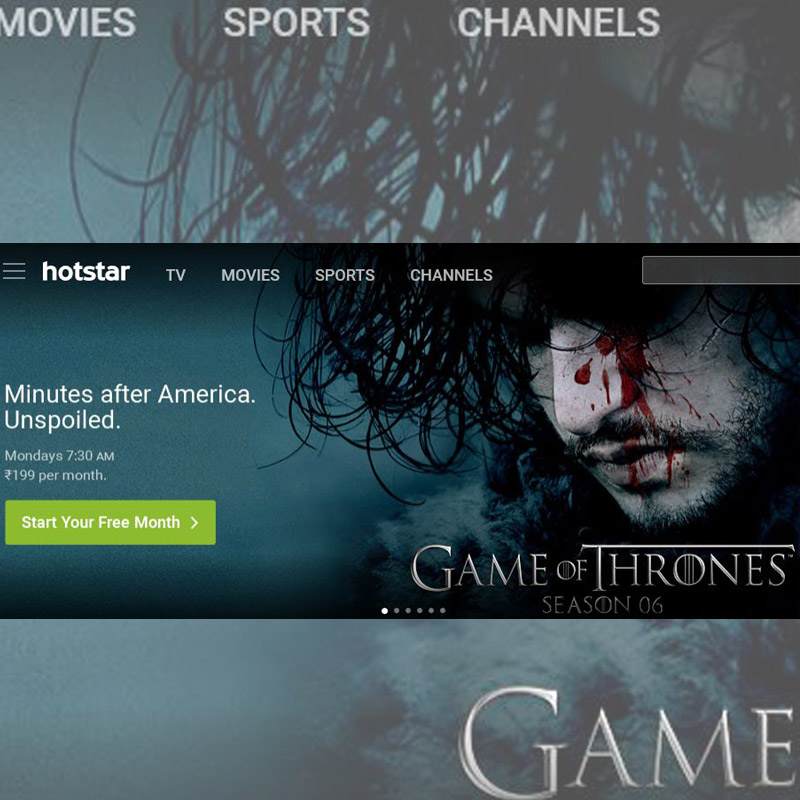
    The study also revealed Game of Thrones(GoT) as the TV series with the highest search volume in India marking over 600,000 searches during the year 2017-18. Hotstar having the rights of this over popular show could have acquired high number of viewers. GoT became the TV series with most searches in India since the telecast of its 7th series in August 2017.

  • IPL value soars 19% to $6.3 billion

    IPL value soars 19% to $6.3 billion

    MUMBAI: The overall value of the IPL ecosystem has increased by 19 per cent from US$ 5.3 billion in 2017 to US$ 6.3 billion in 2018, supported by the broadcasting rights fee surging at a compounded annual growth rate (CAGR) of 18.9 per cent, according to the fifth edition of Duff and Phelps, IPL Brand Valuation Report 2018.

    Star India, the new broadcasting partner for the IPL, has given a boost to the broadcast rights fees which increased by a CAGR of 18.9 per cent. Under Star, content delivery expanded to various regional channels across the universe with commentary in eight different languages, rather than limiting the transmission to sports channels with just English commentary.

    Duff & Phelps MD Varun Gupta said, “Star India’s broadcasting rights deal was a game changer that put IPL on par with some of the biggest sporting leagues in the world (on a fee per match basis). The change in content consumption, influx of over-the-top (OTT) and digital viewing platforms and increased support from advertisers, broadcasters and sponsors has given the IPL greater significance in terms of brand value.”

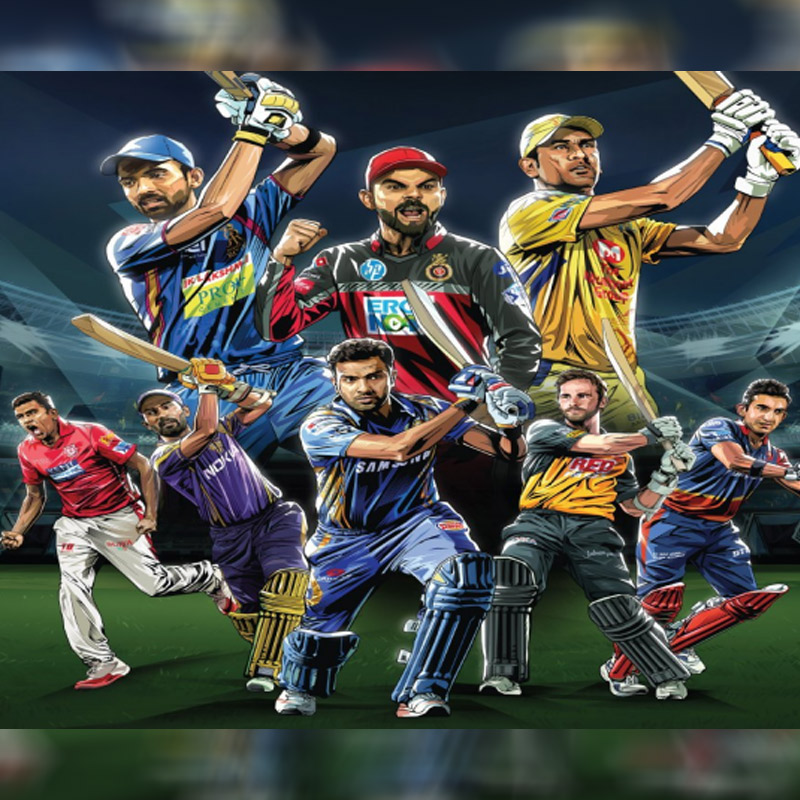
    The Mumbai Indians, with a brand value of $ 113 million, continue to top the charts for the third season in a row with seven per cent growth from $ 106 million.  Kolkata Knight Riders are in second place with a brand value of $ 104 million. The two-year ban imposed on Chennai Super Kings (CSK) and Rajasthan Royals has had some bearing on their brand values. However, CSK’s on-field performance and the Dhoni factor helped them to neutralise the negative impact, as it was valued at $98 million alongside Royal Challengers Bangalore. Sunrisers Hyderabad, Delhi Daredevils, Kings XI Punjab and Rajasthan Royals follow in the brand rankings.

    This season also witnessed the importance of OTT sports viewership which has become an established and fast-growing market. Hotstar set a world record of OTT viewership with 10.7 million concurrent viewers, beating the 2012 world record of over 8 million concurrent viewers held by YouTube for Felix Baumgartner’s space jump. This surge in online streaming of IPL and the increasing momentum of OTT as a medium to watch sports online was also one of the key reasons for companies to show a willingness to acquire digital rights for streaming IPL.

    Duff & Phelps MD Santosh N said, “Our IPL brand values report reflects the evolution of the modern cricket business paradigm with clubs benefiting from not only the enduring popularity of cricket in India but also from strong marketing and globalisation of the game. However, for growth trajectories to maintain their momentum, all teams need to continue broadening their footprint, forming relationships and generating revenue opportunities in growth markets. Ultimately, however, much of cricket’s future depends on ensuring the product is of a sufficiently high quality to continue attracting viewers, sponsors and broadcasters, the latter of which have become a vital component for the game’s financial health.”

    Finally, social media continues to be an important driver of brand value. The first week of the previous season of IPL garnered 642,900 mentions on social media platforms. That has gone up to 855,400 in the first week of the 2018 season and to 1.3 million after two weeks.

  • Challenge the establishment to crack digital code: Hotstar’s Ajit Mohan

    Challenge the establishment to crack digital code: Hotstar’s Ajit Mohan

    MUMBAI: Just when India was warming up to the concept of internet on the mobile, Star India came out with its over the top platform Hotstar. Today, it is the top OTT platform in the country and one may think the road to success was entirely smooth. But Hotstar CEO Ajit Mohan spoke about the streamer’s journey  while speaking at The Advertising Club’s D-Code.

    Hotstar was initially a free-ad supported venture when it was launched in 2015 causing rapid growth in users. The challenge was when it had to convince the price-conscious Indian consumer to pay. Indians were so used to free goodies that paying for content was unheard of.

    It had just bagged the streaming rights for the popular show Game of Thrones season 6 and came out with a campaign leveraging the lingo of the American fantasy drama. Though it was a great campaign for Game of Thrones fans, the subscription number did not move.

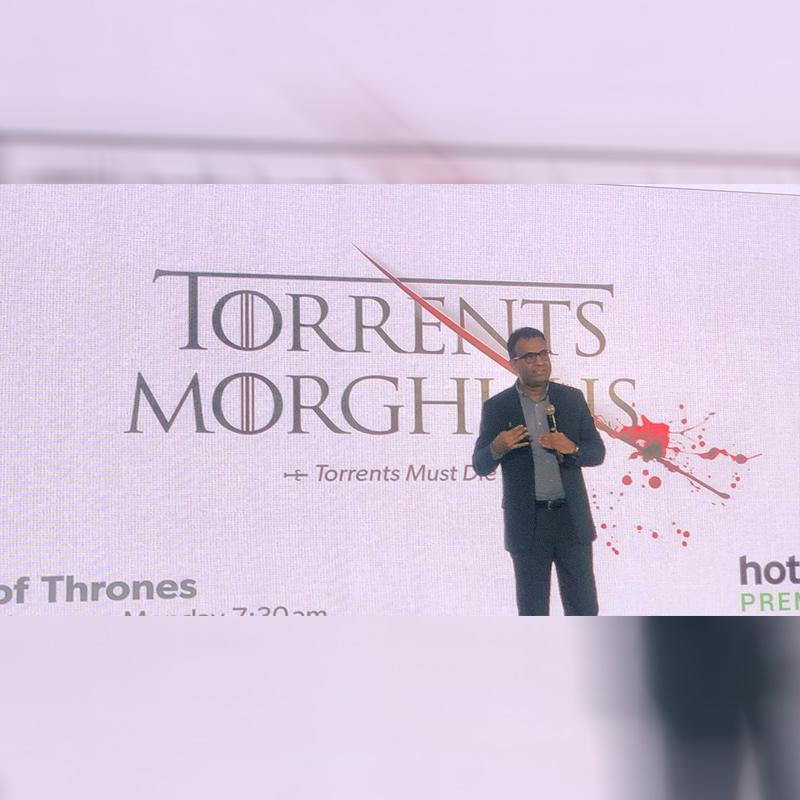
    The game changer campaign which makes the Hotstar CEO very proud, was launched during season 7 of the stalwart show. The multimedia campaign titled ‘Torrents Morghulis’ is a twist on the phrase ‘Valar Morghulis’ from the show. The meaning of the original phrase “All men must die” was tweaked into “All torrents must die.”

    “It clearly communicated the fearlessness of the premium proposition,” Ajit Mohan said. It was not easy to challenge torrents which enjoyed a lot of loyalty and commitment among its users. “…Therefore it was a statement to tell them (torrent users) that not just did we have a better proposition than torrent but torrent was dying,” he added. The campaign led to a “dramatic rise” in Hotstar Premium Subscription numbers.

    Mohan also spoke about a campaign from Domino’s which can give valuable lessons to brands. The “classic video campaign” was rolled out during this IPL leveraging Hotstar’s WatchN’Play. While WatchN’Play provided cricket fans to play along with their favourite teams virtually, Domino’s was the first brand to utilise the opportunity. The rule for users was that the points collected from the game help to access Domino’s coupons. 19 million coupons were distributed across the country on the back of this campaign. Domino’s blurred the line between brand and performance according to Mohan.

    This IPL itself was a benchmark for Hotstar as 202 million viewers logged on to its video streaming platform to watch the T20 tournament. Moreover, it successfully handled more than 10 million concurrent viewers during the IPL final match.

    The man who saw the challenges from the initial days of OTT business in India and built a world-class platform along with his team thinks challenging the establishment is very important, however small a brand could be. A campaign line alone does not suffice to crack digital code without an articulated philosophy. He concludes with, “Look for the truth in humour and the humour in truth.”

  • An evening dedicated to D-CODEing the digital landscape

    An evening dedicated to D-CODEing the digital landscape

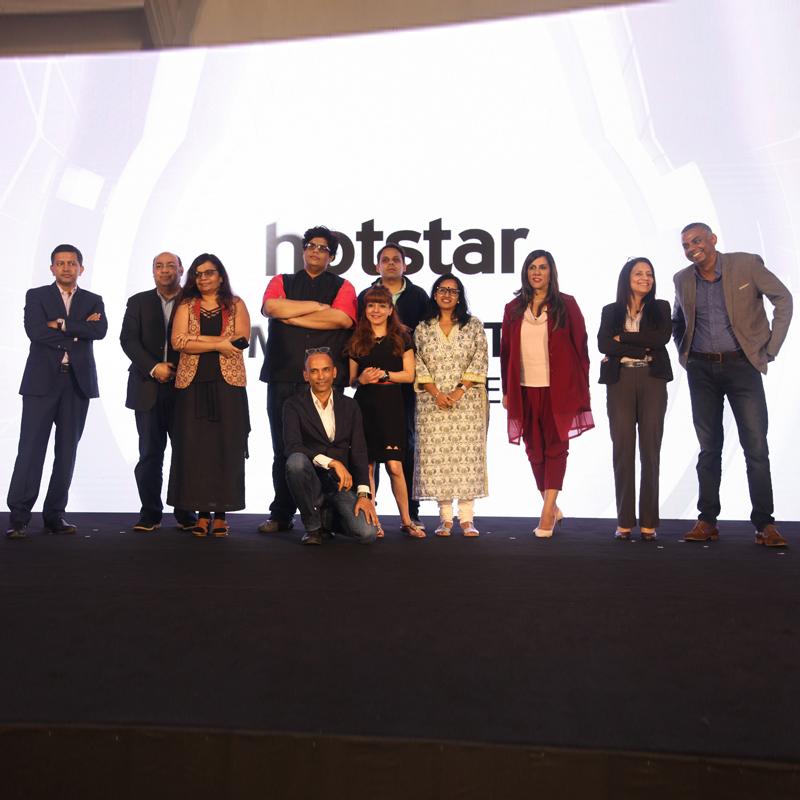
    Mumbai, 1st August, 2018: The ballroom at a posh city hotel transformed into an interaction and learning hub as the leaders of Indian media, marketing and advertising industry gathered together at The Advertising Club’s maiden edition of D-CODE: The Annual Digital Review 2018. The panel asked its members to share an example of their own work, one work they admire and 3 learnings they would want to share with the audience. 

    On the stage were Ajit Mohan- CEO, Hotstar, Anupriya Acharya- CEO Publicis Media, Anuradha Aggarwal- CMO, Marico, Arun Iyer- Chairman & CCO, Lowe Lintas, Juhi Kalia- Head of India & Anthology APAC for Creative Shop, Facebook, Rahul Johri- CEO, BCCI, Mohit Kapoor- VP Advertising, Reliance JIO, Sam Singh- CEO- South Asia, GroupM, Sapna Chadha- Head of Marketing, India and SEA, Google, Siddharth Banerjee- EVP, Marketing, Vodafone and Tanmay Bhat- Co-Founder, AIB. 

    Vikram Sakhuja, President, The Advertising Club, said, “The Advertising Club has been at the forefront of driving the A&M industry’s excellence agenda. We are constantly creating forums that enhance the learning curve of the fraternity. With D-CODE we have created another engaging property that bring together the industry to debate and deliberate on the stimulating issues of the digital ecosystem.”

    Aditya Swamy – Managing Committee Member, The Advertising Club said: “I have always believed in the power of colabs. Inspire and be inspired was the theme of D-CODE and bringing together key stakeholders across the industry to crack the digital code was an exciting idea. From my days at MTV where we looked to marry pop culture and brands to now at Google where we unlock the power of digital and tech to deliver value to advertisers, this is a journey that only throws up more and more interesting opportunities. I look forward to being in the center of this equation as we build centers of excellence.”

    Punitha Arumugam – Managing Committee Member, The Advertising Club said: “Our endeavor while curating D-CODE was to create a platform that would showcase pioneering work on Digital and facilitate ideas exchange within the fraternity.  We have tried to bring representation of all facets of digital with the versatile panel of stalwarts from across the M&E industry.”

    The five key learnings that the advertising, digital and marketing mavens agreed upon were:

    1) Digital is a medium that everyone is experimenting with and no one exactly knows how to ‘crack-it’. The need of the hour is to approach it with an open mind, keep experimenting and learning from one’s own and each other’s strategies.

    2) Digital as a medium does not exist in a silo. All that media needs are great ideas, beautiful craft and creative people who can utilize the right tools to gain success. 

    3) One needs to invest in the right marketing technology, tools, talent and partnerships.

    4) To execute successful digital campaigns, one needs to fully leverage digital signals, customize messaging, employ data and have performance oriented goals. 

    5) Partnerships are critical in making digital campaigns effective. Scale for both a campaign and digital as a medium of marketing can be amplified when the power of partnerships is harnessed.
    With a galaxy of the who’s who of the media, advertising and digital industries in attendance, the debut edition of D-CODE was off to a fantastic beginning.  
  • Flipkart, Hotstar announce new ad platform ‘Shopper Audience Network’

    Flipkart, Hotstar announce new ad platform ‘Shopper Audience Network’

    MUMBAI: Flipkart and Hotstar recently announced the launch of Shopper Audience Network, Flipkart’s new ads platform that allows brands to connect with customers through personalised TrueIntent video ads on Hotstar.

    Developed by Flipkart, Shopper Audience Network uses deterministic audience based insights to help brands connect with users by leveraging Flipkart’s understanding of users’ purchase journey and the massive scale of TrueIntent video ads. It will help serve personalised advertising to over 150 million users across hundreds of categories.

    Speaking on the partnership, Flipkart senior director Prakash Sikaria said, “Understanding our customers better than anyone else has always been one of Flipkart’s core strengths, and these insights help marketers in their ad journey, on our platform. This partnership further leverages the intent-based understanding and couples it with Hotstar’s platform to create an unparalleled offering in the ads industry in India.”

    Commenting on the development Hotstar EVP Prabh Singh said, “In Hotstar, marketers today have access to a large scale audience that is deeply engaged and paying attention. Brands that advertise on Hotstar are seeing the power of that engagement. The partnership with Flipkart will build on this proposition and provide marketers an opportunity to connect the dots to hundreds of product categories on Flipkart.”

    This partnership ties in with Flipkart’s ambition to be a leading digital ads platform in India and the partnership leverages Hotstar’s huge momentum in the video ads market.

    The three key components  of Hotstar video platform’s canvas of high quality content, innovative ad formats and a sticky and affluent audience when powered via Flipkart’s customer insights come together to create a compelling platform for any brand to talk to its consumers.

  • Former Times Internet CRO Gulshan Verma joins Hotstar

    Former Times Internet CRO Gulshan Verma joins Hotstar

    MUMBAI: After almost three years in the company, former Times Internet chief revenue officer Gulshan Verma has joined Hotstar. The professional with more than twenty years of experience has taken up the responsibility of client and agency SVP and head (SVP & head, client and agency).

    The London School of Economics alumnus has worked with leading firms including McKinsey & Company, Associated Press, Yahoo. In the previous position, Verma was responsible for setting up strategies, direction and management of Times Internet’s revenue opportunities.

    He was the first person to be appointed as CRO Of Times Internet Ltd. The veteran in media industry also served as the CRO of digital marketing platform Komli Media.

    Hotstar in April appointed Sid Taparia to head the company’s international business. The digital venture of Star is taking several new initiatives to scale its business.

  • Hotstar and the art of managing traffic spikes

    Hotstar and the art of managing traffic spikes

    MUMBAI: Ajit Mohan sits back in his chair on the 26 floor of Urmi Estate in Mumbai his chest swelling with pride as he reads what he has just posted on LinkedIn. “Reading about YouTube TV crashing for the England vs Croatia game and being reminded again that scaling for live is no accident. Feel proud about Hotstar Tech and our VIVO IPL 2018 scale,” the post states.

    What the CEO of Hotstar is referring to is the huge spike of 10.33 million concurrent viewers that India’s leading video streamer could handle during the IPL 2018 finals. 

    “Over the past three and a half years, we have built live tech that is truly world class and that can handle massive surges in traffic. It is not about just scaling the video infrastructure , it is about making sure all parts of our tech can scale, including the gaming and social TV experience. I do think we have built something unique and special in live tech and we are proud that the bar has been set by an Indian service,” he says.

    In fact, Ajit has over the past year or so invested heavily in tech resources – in terms of teams and in-house hardware, monitoring tools,  and what have you. So much so that most of the Hotstar tech today is run by its own engineers with very little reliance on third parties.

    Today Hotstar’s command centre in Mumbai hosts more than 100 techies, most of them youngsters between the ages of 23 and 35 only. “It’s the youngsters who are driving leapfrogs in innovation,” says Star India managing director Sanjay Gupta.

    Cubicles are buzzing with data scientists, programmers and hardware and software geeks peering over and at screens monitoring hotspots where traffic is unusually high and ensuring that Hotstar stays up at all times. “We want to be and probably are the gold standard in streaming experience – not just in India but the world as well,” says Ajit.

    It is this almost maniacal obsession with giving Hotstar users a consistent streaming experience while they are watching live cricket or shows from its linear channels that has made it the envy of the likes of leading media tech company Netflix’s CEO Reed Hastings who has referred to it on several occasions during investor calls and briefings.

    As compared to that, larger companies such as Optus down under simply collapsed unable to bear the weight of a few thousand subscribers during the group phase of the FIFA World Cup 2018.  Customers were subject to repeated drop outs or blurred and low quality streaming with the spinning progress wheel continuing for minutes at an end.  They came out in hordes slamming the service labeling it #FloptusSport. . So much so that it was forced to turn off the pay button and give free access to subs until 31 August and even issue refunds. Optus will also be offering customers the first three rounds of the Premier League for free.

    Another major which simply disintegrated during the current football frenzy was media tech titan Google’s YouTube TV which costs viewers a hefy $40 a month.  Customers were once again left frustrated when the service got logjammed unable to handle the thousands of concurrent live streams. YouTube aplogised profusely but to no avail. Soccer fans took it to the cleaners. Tweeted one of them: “..it’s completely down. If Google can’t keep it online in a surge like this, nobody can.”

    Google engineers could probably try knocking at Hotstar’s doors and learn a trick or two from Ajit and his tech team.  That would probably give their customers a better video experience.

    Akash Saksena, one of the Hotstar engineers, posted on a blog what went into making Hostar the smooth streamer it turned out to be during the World Cup. Read on to find out more.

    “Your cloud provider also has physical limits of how much you can auto-scale. Work with them closely and ensure you make the right projections ahead of time. Even then, nothing can make it better for you if you are inefficient per server. This calls for rabid tuning of all your system parameters. Moving from development to production environments requires knowledge of what hardware your code will run on and then tweaking it to suit that system. Be lean on your single server and yield results with more room to scale horizontally. Review all your configurations with a fine tooth, it’ll save you the blushes in production. Each system must be tuned specifically to the traffic pattern and hardware you choose to run it on.

    No Dumb Clients
    At Indian cricket scale, we cannot afford to have clients that rely completely on the server systems to make decisions. Tsunami’s can overwhelm the back-end. Retries will make the problems worse. Clients must be smart about inferring when things don’t look right, and add “jitter” to the requests they make to the servers. Caching, exponential back-offs and panic protocols all come together to ensure a seamless customer experience.

    Three pillars

    Our platform has three core pillars, the subscription engine, meta-data engine and our streaming infrastructure. Each of these have unique scale needs and were tweaked separately. We built pessimistic traffic models for each of these basis which we came up with ladders that controlled server farms depending on the estimated concurrency. Knowing what your key pillars are and what kind of patterns they are going to experience is pivotal when it comes to tuning. One size does not fit all.

    Once Only

    Scaling effectively at such a scale means that you drive away as much traffic as possible from the origin servers. Depending on your business patterns, using caching strategies on the serving layer as well as smart TTL controls on the client end, one can give breathing room to their server systems.

    Reject Early

    Security is a key tenet, and we leverage this layer to also drive away traffic that doesn’t need to come to us at the top of the funnel. Using a combination of white listing and industry best practices, we drive away a lot of spurious traffic up front itself.

    The Telescope

    Like any other subscription platform, we’re ultimately beholden to the processing rates that our payment partners provide us. Sometimes during a peak, this might mean adding a jitter to our funnel to allow customers to follow through at an acceptable rate to enable a higher success rate overall. Again, these funnels / telescopes are designed keeping in mind the traffic patterns that your platform will experience. Often these decisions will need to involve customer experience changes to account for being gentler on the infrastructure.

    The Latency Problem

    As the leading OTT player in India, we’ve been steadily making improvements to our streaming infrastructure. It remains a simple motto of leaner on the wire, faster than broadcast. As simple as this sounds, its one of the most complex things to get right. Through the year we have brought down our latency numbers from being roughly 55s behind broadcast, to approximately 15–20s behind broadcast and only a couple of seconds behind on our re-done web platform.

    This was a result of highly meticulous measurement of how much time each segment of our encoding workflow took and then tweaking operations and encoder settings to do better. We did this by applying profiling of the workflow to instrument each segment. This is another classical tenet, tuning cannot happen without instrumentation.

    We continue to tweak bit-rate settings to provide a un-compromised experience to our customers while at the same time be efficient in bandwidth consumption for Indian conditions.

    Lower latencies and smarter use of player controls to provide a smooth viewing experience to customers also helps with smoother traffic patterns as fewer customers are repeating the funnel, which can cause a lot of ripple through the whole system with it’s retries and consequent additional events that pass through the system.

    Server Morghulis (aka Client Resiliency)

    The Hotstar client applications have been downloaded multiple hundred million times so far. Suffice to say that when game time comes, millions of folks are using Hotstar as their primary screen. Dealing with such high concurrency means that we cannot think of a classical coupling of client with the back-end infrastructure.

    We build our client applications to be resilient and gracefully degrade. While we maintain a very high degree of availability, we also prepare for the worst by reviewing all the client : server interactions and indicating either gracefully that the servers were experiencing high load or by a variety of panic switches in the infrastructure. These switches indicate to our client applications that they should ease off momentarily, either exponential back-off or sometimes a custom back-off depending on the interaction so as to build a jitter into the system that provides the back-end infrastructure time to heal.

    While the application has many capabilities, our primary function is that to render video to our customers reliably. If things don’t look completely in control, specific functionality can degrade gracefully and keep the primary function un-affected.

    Ensure that the primary function always works and ensure resiliency around server touch-points. Not every failure is fatal, and using intelligent caching with the right TTL’s can buy a lot of precious headroom. This is an important tenet.

  • Netflix streams first Indian original series ‘Sacred Games’

    Netflix streams first Indian original series ‘Sacred Games’

    MUMBAI: Netflix has finally started streaming its much-hyped first Indian original series Sacred Games. After two and a half years of its entry in the crowded Indian OTT (over-the-top) market, the streaming giant has tuned in to Bollywood flavour by starring Saif Ali Khan, Nawazuddin Siddiqui and Radhika Apte.

    In the Indian OTT market, almost every player is betting big on originals. Ekta Kapoor-owned ALTBalaji has emphasised on originals as well. Netflix’s international rival Amazon Prime has already launched two Indian original series Inside Edge and Breathe along with one non-scripted show Remix. Though Netflix has won the heart of viewers with original US shows like House of Cards, Orange is the New Black and Stranger Things, it has realised the importance of local content to woo Indian audience.

    Netflix: Kashyap, Motwane to direct parallel ‘Sacred Games’, targeting 5-6 originals in a year

    The crime thriller is based on the critically acclaimed novel, Sacred Games by Vikram Chandra. Vikramaditya Motwane and Anurag Kashyap, co-founders of Phantom Film co-directed the new series.

    “There are great stories everywhere, but there are really four or five centers of TV and film (globally). Mumbai (Bollywood) is certainly one of them, and it is important for us, because we are going to be actively invested in India,” Netflix international originals VP Erik Barmack said as quoted by Reuters.

    Still now Netflix is far behind in the competition in the Indian market compared to Hotstar, Voot and Amazon Prime. A KPMG-FICCI report read that Netflix’s total active subscriberswas 4.2 million in January 2017 while Hotstar had 63 million, Voot had 13.2 million and Amazon Video had 9.5 million. However, Netflix CEO Reed Hastings has high hopes as he said earlier that the next 100 million subscribers of the company would come from India.

    Given the dominance of regional languages apart from Hindi, domestic players have already been very bullish about regional content too.

    “There is an argument to be made that each region in India is rich enough to be developing series, as if it is its own country. We should and we will. It is a matter of sequencing,” Barmack commented on the issue.

  • Comcast makes sweet $65 bn offer for Fox’s entertainment assts

    Comcast makes sweet $65 bn offer for Fox’s entertainment assts

    Let the games begin. That’s the clarion call that Comcast CEO Brian Roberts has given by making an offer of $65 billion to acquire the Murdoch-owned Fox entertainment assets. Priced at $35 a share, the Comcast “superior” offer is at a 19 per cent premium over what Disney’s Bob Iger  made last year at $28 per share or $52.4 billion in an all-stock transaction.  The deal is undergoing regulatory approval and includes Fox’s movie studios, networks Nat Geo and FX, Asian pay-TV operator Star TV, and stakes in Sky, Endemol Shine Group and Hulu, as well as regional sports networks.

    Comcast is already taking steps to clearly stake its claim to the prized 21C Fox assets.  Roberts in a letter addressed to Rupert, Lachlan and James Murdoch stated that his company was going ahead with filing a preliminary proxy statement with the Securities Exchange Commission (SEC) in opposition to the Disney merger proposal. He added that Comcast had been “advised this is necessary to be in a position to be able to communicate with your shareholders directly regarding the votes they are being asked to cast on 10 July We hope this is precautionary only, as we expect to work together to reach an agreement over the next several days.”

    The Comcast  offer comes a day after a US district judge Richrd Leon  approved AT&T’s $85 billion bid for Time Warner. Leon emphatically thumbed down the government’s claim that AT&T/Time Warner would be anti-competitive and harm consumers. Roberts who had already announced last month that his company would make an offer post the regulatory go ahead from the US law makers for the AT&T- Time Warner transaction.

    Most observers are expecting The Walt Disney Co to up the ante by bettering its bid possibly flagging off a bidding war.

    Roberts in a conference call with investment analysts said that Fox’s assets are financially attractive. “Fox is an outstanding company which has done an outstanding aggregating content and distribution on a global basis,” he said. “This transaction offers a good chance to add these complimentary assets to our existing NBC Universal portfolio laying the foundation for many group opportunities. We have a proven track record of integrating companies, investing in them and growing them. And we can do that for Fox assets.”

    Roberts was quite confident that Comcast’s proposed transaction will obtain all necessary regulatory clearances in a timely manner and that “the transaction is as or more likely to receive them than the Disney transaction. Accordingly, we are offering the same regulatory commitments as the ones 21CF has already obtained from Disney, including the same $2.5 billion reverse termination fee agreed to by Disney. To further evidence our commitment, we also are offering to reimburse the $1.525 billion break-up fee to be paid by you to Disney, for a total cost to Comcast of $4.025 billion, in the highly unlikely scenario that our transaction does not close because we fail to obtain all necessary regulatory approvals.”

    During the conference call. Roberts added that the acquisition of Fox’s assets would expand Comcast’s core businesses to new markets and give it leadership position in four of the markets of the US, the UK, India and Latin America. Also the third most valued media company’s  international revenue contribution to its top line would rise from nine percent to 27 per cent following the digestion of Fox assets. Distribution platforms  such as Tata Sky, Sky, Fox and X1 would accrue to its portfolio giving the company a collective customer relationship of 53 million. Additionally, OTT platforms such as Hotstar, Hulu, NowTV,and Fox Plus would help give it more content and revenue leverage.

    Roberts has urged the Murdochs to make haste as its merger proposal with Disney is coming up for shareholder vote on 10 July. And he has pointed that  “there should not be any meaningful difference in the timing of the U.S. antitrust review between a Comcast and Disney transaction.”

    Comcast CFO Michael Cavanagh told investment analysts that the media gianthad enough financial muscle on its balance sheet to be able to finance and see through the transaction quickly- within 12 months of signing. He pointed out that he expected cost synergies of $2billion to be realised post merger, keeping in mind that Comcast will acquire 100 per cent of Sky, He explained  that he expected the deal to add to the proforma company’s free cash flow per share and earnings per share. Cavanagh expected the company’s debt to be at four times net debt EBIDTA in 2019.

    Roberts told investors that he was waiting for a revert from the Murdochs and the Fox board. He also stated that he has known them for a long time and that “there was disappointment when 21CF decided to enter into a transaction with The Walt Disney Company, even though we had offered a meaningfully higher price.”

    Meanwhile, late in the day, Fox acknowledged that it had received a new offer from Comcast and in keeping with its fidicuary duties the Fox board said it will carefully review it.

    It added that it hasn’t decided whetther it would postpone or adjourn the 10 July meeting to vote on the Disney proposal. 

    It’s over to the Murdochs and The Walt Disney Co. 

  • Airtel TV breaches 5 crore downloads mark on Android

    Airtel TV breaches 5 crore downloads mark on Android

    MUMBAI: Indian telecom giant Bharti Airtel’s video streaming app, Airtel TV, has clocked over 5 crore downloads on Google Play, the company said on Thursday. To mark the occasion, the telco has extended free subscription to Airtel prepaid and postpaid users from June 31 to December 31.

    “We are thrilled at achieving this milestone and being able to scale up the app so rapidly. This is a strong endorsement from our users and a result of our unrelenting focus on delivering a world-class in-app experience,” Bharti Airtel  CEO – Content and Apps , Sameer Batra, was quoted as saying by NDTV.

    The app, which offers more than 375 live TV channels, over 10,000 movies and shows, was given a face lift in 2017 to enhance its reach. The recently concluded edition of the Indian Premier League (IPL) was streamed for free on Airtel TV. The app offers 15 language options.

    In order to improve engagement through quality content, Airtel TV has partnered with Eros Now, SonyLIV, HOOQ, Hotstar, Amazon and AltBalaji. That’s not all. The company intends to pursue a similar model going forward to further innovate its offerings.