Tag: Hotstar

  • English biz news genre exhibits drop in TV viewership, growth on digital platforms

    English biz news genre exhibits drop in TV viewership, growth on digital platforms

    MUMBAI: Despite all the hullabaloo about digital cannibalising TV, the rapid rise of digital platforms hasn’t had a negative impact on traditional news viewing for now. In fact, the two consumption modes have complemented each other, enhancing the reach of content and news pieces to an ever wider audience. This trend, however, does not seem to hold true for English business news. While the viewership of the genre is increasing on digital, that on TV seems to have taken a hit in the recent past.

    Comparing viewership data for the top three channels in the past one year, it is not difficult to spot this difference. The leader in the genre, CNBC TV18, had 654 impressions ‘000 in week 4 in 2018 compared to 339 impressions ‘000 for the corresponding period in 2019. ET Now saw a dip from 608 impressions ‘000 to 155 impressions ‘000 in January 2019. BTVI too wasn't exempt from this trend, showcasing a viewership drop from 110 impressions ‘000 to 52 impressions ‘000. 

    According to BARC data, the core audience for the English business news channel is All India (U+R): NCCS AB: Males 22+ Individuals. CNBC TV18 has witnessed a drop of 39 per cent viewership among its core audience within a time frame of 15 weeks, starting week 40 2018 to week 2 2019. CNBC TV18 accounts for 65 per cent of the genre viewership. If we consider CNBC TV18 Prime HD, the viewership share goes up to 70 per cent.

    On the other hand, CNBC TV18 seems to be gaining quite a bit of traction on YouTube. The channel's total subscribers on YouTube are 285,867; it gained around 18,000 subscribers and was watched for 14.7 million minutes in December 2018.

    Commenting on the growth of business news on digital media, PwC MD risk assurance- media and entertainment Anand Punmiya said, “If we analyse TV English business news viewership data for past one year it appears that spike and downtrend are clearly event driven. However, on an average the TV viewership impressions were in the range of 500-600 and there was a marginal fall when news became available on digital platforms. It may not be apt to state that viewers have moved from TV to digital platform with respect to English business news, both platforms continue to have their own significance and convenience of use.”

    Urban India is ahead when it comes to consuming news on digital mediums but it is mainly headlines. However, for analysis, views or opinions, the preferred option is always a news channel or newspaper. Advertising on digital medium is growing rapidly, though not at the expense of TV revenues.

    BTVI claims to have doubled its viewership market share from 10 per cent in December 2018 to 19 per cent in January 2019.

    BTVI COO Megha Tata said, “In my opinion, core TG of the genre (22+ Males) is out of home (at their place of work) during the prime time of the genre (8 am to 4 pm). Hence, measuring at home does not give a true picture of genre viewership. Having said that, English business news is a very unstable genre and according to current measurement methods, genre viewership has seen a decline of 18 per cent in CY 2018 as compared to CY 2017. However, BTVI has grown by 19 per cent in the same time period.”

    BTVI has built a strong digital ecosystem, its content is available on OTT platforms such as Hotstar, JioTV, YouTube, Sony LIV, ZEE5, and YUPP TV. The channel is available on these platforms both as LIVE stream and VOD. 

    “Going by our experience, we have seen a huge uptake of business news content on OTT platforms as well as trading apps mentioned above. Clearly, there is a huge market for business content on digital ecosystem. However, we have grown our viewership on linear TV platform as well. Hence, it would be more accurate to say that viewers are getting added as genre consumers on digital platforms and not shifting from TV to digital,” Tata added. 

    Besides such OTT platforms, large proportion of business news genre viewers actively deal in stock market over various trading platforms. Such trading platforms have relevant set of viewers ready to consume business content on these platforms. Knowing this, BTVI became the only English business news channel to be present on trading apps such as Axis Direct, Kotak Securities, IIFL markets, HDFC Securities and Geojit. 

    With the general elections just around the corner, it remains to be seen what English business news channels have on offer to woo the audiences. With a tantalising political contest on offer, business news channels would like to seize upon the chance to regain some of the lost momentum with clever and engaging programming.

  • Star India’s ambitious foray into content with Hotstar Specials

    Star India’s ambitious foray into content with Hotstar Specials

    MUMBAI: Star India, the nation’s storyteller and its most innovative content company across TV, Films & Sports, is ready with its next big leap in content on the back of its OTT, Hotstar. The company today announced the launch of Hotstar Specials, a bold and ambitious content foray featuring shows from India’s most acclaimed storytellers. 

    “Star has always challenged conventions and been at the forefront of content reinvention in India" said Sanjay Gupta, MD, Star India. “With the mobile phone leading an explosion in the number of screens in the country, we feel that our content also needs to reinvent and boldly move forward. With Hotstar Specials we hope to create the biggest Indian stories delivered to a billion screens. To bring this vision alive, we are proud to partner with a stellar line up of talent who are headlining our first set of Hotstar Specials"

    For its first set ofHotstar Specials, Star India has partnered with the best storytellers of India including Shekhar Kapur, Neeraj Pandey, Kabir Khan, NikkhilAdvani, Ram Madhvani, Venkat Prabhu, Sudhir Mishra, Tigmanshu Dhulia, NageshKukunoor, Mahesh Manjrekar, Vishal Furia, Rohan Sippy, Debbie Rao, Sharad Devarajan and Salman Khan!

    Hotstar Specials will feature an extensive variety of Indian stories, mounted on a big scale, unconstrained by format. The company's ambition is not to make this a narrow or niche play but to explode into the consciousness of the country in an unprecedented way.  

    Hotstar Specials will enable makers to tell their most passionate stories and provide them unmatched reach. The stories will provide a burst of variety across genres and formats and will be available in seven languages for viewers to consume them in a language of their choice. They will leverage the unprecedented reach of Hotstar to reach the length and breadth of the country and also reach global audiences.  With 350 million downloads and over 150mn monthly active users,  Hotstar is the country’s biggest OTT, significantly bigger than its closest competitors. The launch of Hotstar Specials is yet another moment of disruption for Hotstar, which has been at the forefront of change in the space of digital content in India.

  • Star India awaits cricket bonanza in 2019 after solid sports growth in 2018

    Star India awaits cricket bonanza in 2019 after solid sports growth in 2018

    MUMBAI: Uday Shankar, who was recently promoted to president of The Walt Disney Company Asia Pacific and chairman of Star and Disney India after the Fox-Disney units combined, has disrupted the Indian sports broadcasting business in the last couple of years. From scooping the media rights of the cash-rich Indian Premier League (IPL) to bolstering his sports networks’ regional offerings with the launch of Telugu and Kannada language, Shankar has thrown caution to the wind on more than one occasion in his bid to change the rules of the high-stakes game. Shankar’s grand vision and appetite for big bets has now placed Star India in a rather enviable position with a stranglehold over cricket properties this World Cup year.

    Tightened grip on Indian cricket

    Star wasted no time in setting the tone for the year as it appointed Gautam Thakar as the new Star Sports CEO on 15 January 2018. Thakar was roped in to fill up the void left by the exit of Nitin Kukreja, Shankar’s blue-eyed boy, who left the organisation in March 2017.

    The broadcaster tried to alter the IPL timings (8 pm game to 7 pm and the 4 pm match to 5.30 pm), a controversial development which was confirmed to Indiantelevision.com by then IPL chairman Rajeev Shukla. Despite the IPL governing council on board with the idea, opposition from team owners stalled Star’s plans.

    In February, Star won the rights for IPL’s audio-visual production as well as the BCCI domestic circuit for 2018-19, further tightening its grip on Indian cricket.

    In April, Star kept its foot on the pedal as it retained the BCCI rights, conducted via an e-auction for the first time, until 2023 for mind-boggling Rs 6,138.1 crore. Star came out on top after a fierce bidding war, which lasted three days, against Sony Pictures Network India (SPNI).

    The broadcaster paid Rs 60.1 crore per match for the 2018-23 home rights across five years which, a 50 per cent increase from the Rs 40.1 crore it shelled out for the 2012-18 cycle with a bid of Rs 3,851 crore for 96 matches.

    Kicked off IPL with a bang

    Star couldn’t have asked for a better start to its IPL reign, firing on all cylinders. The IPL final, aired live on 17 channels across eight different languages, powered the network’s growth by 34 per cent with 52.9 million average impressions. The title decider was produced with 11 live feeds across the TV network and Hotstar.

    Super streamer Hotstar, then led by Ajit Mohan, hit a world record for concurrent online viewing with 10.7 million viewers for the final. The final witnessed a sudden hike from eight million to 9.1 million and then to 9.7 million before hitting the 10.7 million mark.

    The television viewership for the tournament was 1.4 billion impressions with a growth of 15 per cent. With a total of six regional languages contributed to 22 per cent of the overall viewership.

    According to industry sources, the network clocked close to Rs 2000 crore in advertising revenue for the first season.

    For the first time, IPL was also aired on public broadcaster Doordarshan. According to the agreement, Doordarshan could telecast a select number of matches with a 60-minute delay along with some highlights.

    Another potential Star-Prasar Bharti face-off

    It wasn’t all smooth sailing for the broadcaster. In October, MIB proposed to amend the Sports Act 2007, which will provide ‘sports events of national importance’ on Prasar Bharati-owned, free-to-air Doordarshan Network an extended reach via private direct to home and cable TV Networks.

    The MIB has now proposed to amend the act to make such events available on DD through all mediums of distribution. This may result in preference changes of the consumer and would not subscribe to costly private sports network channels. This will also give the distribution platforms an opportunity to negotiate harder with the sports broadcasters.

    The move to amend the Sports Act 2007 has been necessitated due to a Supreme Court verdict which held that the public broadcaster Doordarshan cannot air events of national importance on private distribution platforms.

    In the same month, MIB issued a notice for receiving feedback/comments from general public/stakeholders on the draft bill, 2018. In a recent update, the ministry has extended the deadline to give feedback on the draft sports broadcasting signals (Mandatory sharing with Prasar Bharti) (Amendment) Bill 2018 till 15 January 2019. The earlier deadline was 31 December 2018.

    A move of this nature could adversely impact the revenues of sports broadcasters, particularly Star given its big bets on Indian cricket.

    Bolstered regional play

    Star India launched three channels in 2018, in line with its commitment of fostering a multi-sports culture in the country. Star Sports 3, a multi-lingual channel, was launched on 15 September and the first big event to air on it was Indian Super League (ISL) Season 5 in Hindi.

    Star Sports launched its third regional channel Star Sports 1 Telugu after Star Sports 1 Hindi and Star Sports 1 Tamil. The channel went on-air on 7 December.

    The broadcaster added a fourth regional channel, Star Sports 1 Kannada, on 29 December. Star India’s attempt at securing an exclusive sports channel for its Kannada viewers didn’t see the light of day for the 11th season of IPL. Regulatory hurdles made the broadcaster switch the Kannada feed to Suvarna Plus.

    According to FICCI- Re-imagining India’s M&E sector 2018, the sale of broadcasting and media rights is the biggest source of revenue for most sports organisations, and can account for 55 per cent to 70 per cent of total revenues. The global sports media rights is expected to breach the US$50 billion barrier in 2019 and could reach US$54.3 billion by 2021.

    2019 cricket bonanza

    2019 is loaded with marquee cricket events with Star India owning rights to most of them. The summer has four key series or tournaments – New Zealand versus India, India versus Australia followed by the 2019 IPL and the all-important ICC World Cup 2019. Barring two series, Star is bound to be the home for Indian cricket lovers this year. That’s not all. The broadcaster intends to further dominate the regional language market play with the launch of three additional sports channels in Bengali, Marathi and Malayalam. 

  • Hotstar pulls down Hardik Pandya, KL Rahul’s ‘Koffee with Karan’ episode

    Hotstar pulls down Hardik Pandya, KL Rahul’s ‘Koffee with Karan’ episode

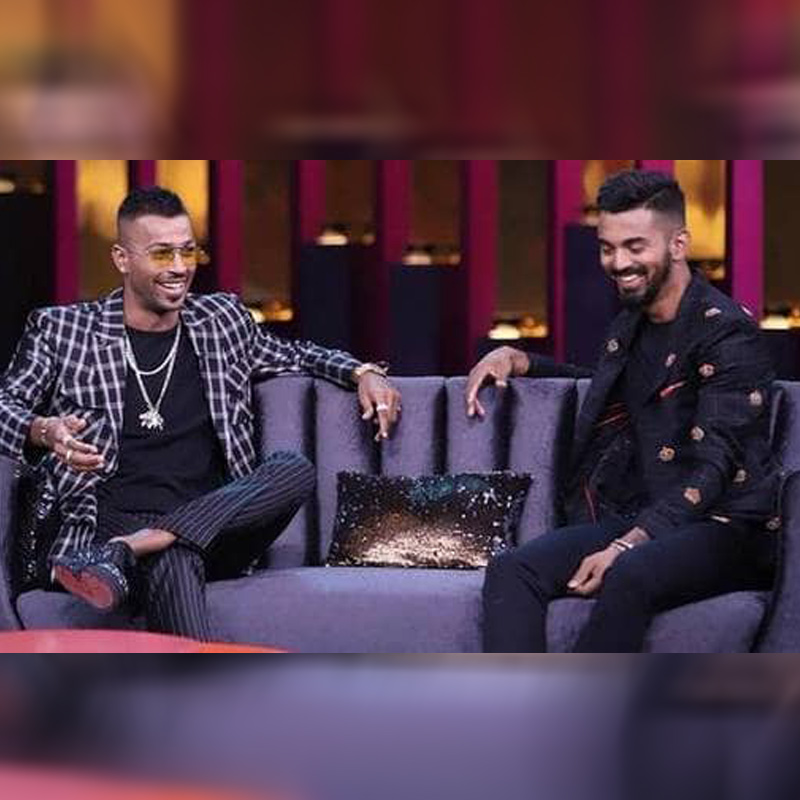
    MUMBAI: Koffee with Karan season 6’s latest episode, which featured Indian cricketers Hardik Pandya and KL Rahul was the most talked about episode on social media. The duo has not just been criticised on social media but has also displeased the Board of Cricket Control in India (BCCI) by making sexist remarks on the show.

    The episode was aired last Sunday on Star World and was available on Star’s OTT platform Hotstar. However, currently all the other episodes of Koffee with Karan are available except for the one that featured Pandya and Rahul.

    The cricketers have now been served with a notice, where they have to give an explanation and based on the explanation, they might be banned from playing cricket. CoA member Diana Edulji has already sought legal opinion and will be talking to BCCI top brass over the possible ban.

    After receiving the notice, Pandya apologised tweeting, "After reflecting on my comments on Koffee with Karan, I would like to apologise to everyone concerned who I may have hurt in any way. Honestly, I got a bit carried away with the nature of the show. In no way did I mean to disrespect or hurt anyone's sentiments. Respect." Rahul hasn’t given any public statement with regard to his involvement in the show

  • Hotstar adds offline watching feature for premium content

    Hotstar adds offline watching feature for premium content

    MUMBAI: Hotstar, the leading streaming platform of India has now made the option of offline viewing available for its premium content. While the in-app download feature on rival platforms like Amazon, Netflix has been well received, Star India’s digital arm restricted the download feature to only non-premium and old content.

    The facility is available now for both Android and iOS users. It has also enabled support for watching videos in 18:9 aspect ratio, which most of the modern full-screen phones offer. However, it is not clear if the support is also available for premium users.

    “Now you can download and watch offline most of your favourite premium shows like Game of Thrones, Friends, Big Bang Theory and many more,” Hotstar Android app changelog noted on Google Play.

    Hotstar users will have the option to choose between low, medium, high and full-HD quality to download. However, downloaded premium content on the app will expire within 7 days of the download or 48 hours since the user starts watching it.

    Among the number of OTT platforms in India, Hotstar is way ahead in the race. Even streaming giant Netflix admitted that YouTube and Hotstar are till now leaders in the Indian market.

  • OTT platforms may soon adopt self-censorship

    OTT platforms may soon adopt self-censorship

    MUMBAI:  Leading OTT players clearly don’t want the government interfering with their content or creating rules like broadcast. So, Netflix, Hotstar, Reliance Jio and some other streaming services may soon adopt a voluntary censorship code.

    As part of the code, the platforms will remove content that has been banned by the courts and that disrespects the national flag, emblem, hurts religious sentiments or promotes violence or terrorism against the country, or even shows children in sexual acts. These are codes that even the broadcast industry follows.

    Economic Times citing sources reported on the self-censorship initiative. However, tech companies including Amazon, Facebook and Google are unlikely to sign up for the code as this move of could set an example of how to regulate internet and meddle with creative freedom.

    The code is likely to include a “redressal mechanism” allowing the users of the streaming platform to issue complain in case they think that the over-the-top (OTT) services have violated the code. Eventually, this mechanism may transform in an “adjudicatory body” that will resolve the complaints filed by the customers.

    According to the report, ZEE5, Times Internet, Eros Now and AltBalaji are in favour of the code and the Internet and Mobile Association of India (IAMAI) is facilitating the process. It also added that the players who don’t think it as a very wise step opine it would lead to an unnecessarily nervous environment and validates the government’s point of view that the internet needs regulation.

    Allegedly, the whole process has been opaque and closed-door while content creators have not been included in the discussions. The opposition group to the court also believes the process has been swayed by companies that want OTT companies to be at a more level playing field with broadcasters.

  • A year when OTT onward march & TRAI tariff issue hogged limelight

    A year when OTT onward march & TRAI tariff issue hogged limelight

    MUMBAI: 2018 could have been easily dubbed as the Indian year digital or OTT, with its chaotic growth continuing and multi-million dollars being poured into programming by global and local players, however, the new tariff and regulatory regime for the broadcast and cable sector occupied as much mind space.

    Though these are early days for a sure shot business model for digital space emerging as players continue to experiment with AVOD, SVOD and combination of several other models, there’s no denying OTT has more than a foot inside the door in India.  

    According to a report by market research firm Media Partners Asia, online video revenue, comprising net ad spend and subscription fees, will grow at an 18 per cent CAGR across Asia Pacific between 2018 and 2023, climbing from $21 billion 2018 to $48 billion by 2023. While China will account for the lion’s share of industry value, with more than 60 per cent of Asia Pacific online video revenue and more than 75 per cent of direct-to-consumer SVOD subs by 2023, other big markets by revenue would include India, Japan, Australia, Korea and Taiwan.

    So, though traditional pay TV is not dead yet and will continue to grow in India as the saturation point is still far from over (BARC India estimates there are about 197 million TV homes in India over 100 million still to be covered), traditional media players have realised OTT and other forms of digital delivery of video — professional or user generated — will continue to grow and put pressures on ARPUs and other numbers as more Indians take to smartphones and devises with broadband infrastructure slowly improving and cost of data plummeting in the short term.

    The inroads into India in 2018 made by Chinese mobile companies have been impressive while raising fears of tracking and data misuse too.

    “With 160 million shipments of smartphones in 2019, apart from being the only market to grow in this sector, India will also be the most potential market for global content creators,” Zeel MD Punit Goenka tweeted last week. This observation is testimony to traditional media players waking up to the competition from OTT platforms for eyeballs.

    The growth of online platforms also means the continued search for both original and library content too will grow as it did in 2018. Not only global players like Netflix and Amazon announced big-budget investment in original content starring leading Hindi film stars like Shah Rukh Khan and Saif Ali Khan, local companies too have upped the ante realising the potential of the digital space. Star India’s digital arm Hotstar claimed 100 million viewers for the IPL cricket and ZEE5 has come out with some refreshing non-fictional programming.

    If online video distribution is growing in India, so has the demand for content regulation. Even as Indian policy-makers struggle to understand the business model(s) for digital players, the cry for regulation to suit Indian sensibilities (or lack of it) too has increased. Netflix Indian original Sacred Games is still fighting out a legal case, while informal warnings have gone to other Indian OTT platform too to tone down edgy programming being streamed.

    Bouncing amongst several government organisations (MIB, TRAI and Meity), the issue of online content regulation was a hotly debated topic in India with a large section of the industry pushing for self-regulation like those prevailing for TV content.

    If not in 2018, some sort of content regulation for online video will definitely come. The only thing that matters is whether in 2018 or it will be post general election in 2019.

    The action in the online video segment and its delivery mode was catalysed by the arrival of Reliance Jio that has expanded from just being a player to becoming a behemoth in a short period of time, handing out services at comparatively low prices. The rollout of Jio Giga fibre network in 2018 has sharply woken up legacy distribution players, including telcos who went on a partnership spree to source content.   

    And, if the regulators in India struggled with the issue of online  content, TRAI’s new tariff regime, proposed first quarter 2017, continued to cast a shadow in 2018 with confusion relating to some aspects (like a 15 per cent cap on discounts to consumers for TV channels) lingering on like a unfinished record playing out discordant notes. While TRAI has sought clarification from the Supreme Court on the discount issue (the next hearing is sometimes in January 2019), it has simultaneously cracked the whip on broadcasters and distribution platforms to fall in line with its new tariff regime by end of the present year.

    The formulation of a new telecom policy or the National Digital Communication Policy 2018 could also be said to be a milestone as India stopped just short of creating a mega communications regulator overseeing the realms of TV broadcast, online and telecoms, depending on having increased synergies amongst these segments and their regulatory regimes.

    Increased mergers & acquisitions seen in 2018 would continue consolidating the market and players. But such activities also raised doubts on possible creation of monopolies. Disney takeover of most of the media businesses of Rupert Murdoch’s 21st Century Fox, including Asia biggie Star, played out in India too even as Mukesh Ambani’s Reliance Industries and its various arms went on a shopping spree buying sizable stakes in content makers (Balaji Telefilms, Eros, for example), distribution platforms (Hathway, DEN Networks) and other media assets. That Subhash Chandra-founded Zee too is looking for an investor spiced up the mergers and acquisitions space.

    Channels continued to be launched in 2018 with almost all networks rolling out new offerings in regional languages – a trend which began over 2016 and 2017. Colors Tamil, Sony Marathi, Star Sports 3, Zee Keralam were unfurled for viewers by the major players. What's keeping broadcasters buoyant is the annual expansion in advertising continues unabated at about nine to 10 per cent annually. 

    While legacy media players (like cable TV, MSOs/LCOs, DTH) in India have started a fight for survival and improved bottomlines in the aftermath of online’s growth, the #MeToo effect in 2018 did not leave the media and entertainment untouched.

    Though #MeToo in 2018 more impacted the advertising and film segments with some big names becoming casualties, the ripple effect in the broadcast sector was low. But the movement has opened up a can of worms in the Indian media, entertainment and advertising segments.

    The industry is on tenterhooks in an election year, wondering whether the BJP or NDA will make a comeback in April-May 2019 or yield to the Congress. Will the policy regime continue or will there be changes? These are questions that seem to be creasing many a brow. 

    But on the whole, will the trends continue in 2019? Of course, yes as it too promises to be quite a roller-coaster.

  • Viacom18 to have 360-degree play for e-sports: Sidharth Kedia

    Viacom18 to have 360-degree play for e-sports: Sidharth Kedia

    MUMBAI: Esports is at an early stage of development in the country. It is expected to be the future of entertainment and holds an upcoming opportunity for brands and media to promote, reach digital natives and develop new content concepts.

    Viacom18 EVP & head corp strategy, M&A, data science and deputy chief commercial officer Sidharth Kedia said, “While e-sports is a youth phenomenon today, its growth pattern will reflect the trajectory it has followed in other parts of the world and we will see people starting to play e-sports at a much younger age group. Other OTT players just have e-sports content but we are doing a whole 360-degree play including live, TV and digital.”

    Nodwin Gaming MD Akshat Rathee said, “In about a five-year time, we will be close to the music industry and definitely bigger than all the other industries including comedy.”

    Kedia thinks that e-sports on television doesn’t exist. Though all OTT players including Hotstar, SonyLiv and Voot have delved into some kind of e-sports on digital, the industry cannot be defined because the numbers are too small. “We know the number of people that engage in e-sports. About 90 million people play PUBG in India and 30 million people play cricket game every month. These numbers will start translating into this phenomenon which will be on digital, TV and live,” he added.

    All youth focus brands and technology brands show interest in e-sports. Voot currently has some 100 hours of e-sports content out of which ESL has 40 hours of content.

    “We don’t have an end date to DreamHack since we just started. We believe no one in this country understands both kids and youth better than Viacom does and while television and digital are passive engagement platforms, e-sports is an active immersive engagement platform,” said Kedia.

    The state of sports industry over the next three to five years is estimated to grow by 5.3 per cent in Asia and 9.4 per cent in Middle East and Africa (ME&A) according to PwC Sports Survey 2018. Despite the growth in Asia and ME&A, globally the industry will witness a drop by 10.2 per cent. This is because the market conditions across the industry are stabilising as it transitions from traditional to digital media consumption, with sports leaders continuing to predict healthy growth in absolute terms.

    Viacom18 on television is experimenting and conceptualising with some interesting formats and that will not be just U Cypher that we saw on MTV. “We believe there are 150 million potential viewers of e-sports on digital and that number is only here to grow,” Kedia concluded.

  • Star India invests into Zapr Media Labs

    Star India invests into Zapr Media Labs

    MUMBAI: According to a report by Brand Equity, media company Star India has made investment of Rs 55 crore in media-tech start-up Zapr Media Labs.

    As per filings with the Registrar of Companies (RoC) which were sourced by a data analytics platform, Paper.vc, the funds have been added by the broadcaster via its holding firm – Star India US Holdings Subsidiary LLC.

    Previously in March 2017, Star India picked up a minority stake in the Bengaluru based media tech start-up Zapr Media Labs. The investment was made for a strategic partnership between Hotstar and Zapr.

    Zapr was founded in February 2012 by IIM Ahmedabad batch mates Deepak Baid, Sandipan Mondal and Sajo Mathews. Zapr provides television viewership, which it analyses with the help of audio recognition tool.

  • IPL auctions set to kick off 2019 cricket bonanza for brands, marketers

    IPL auctions set to kick off 2019 cricket bonanza for brands, marketers

    MUMBAI: Indian fans are in for a rollercoaster ride in 2019 thanks to an action-packed cricket calendar. Virat Kohli’s men have major challenges – tough and exciting in equal measure – lined up right through the year. The Indian side is set to play 12 Tests, 22 ODIs, 17 T20Is and the all-important World Cup in June. That’s in addition to the two-month-long cricket party – the Indian Premier League (IPL).

    The mouth-watering prospect of the star-studded Indian cricket team taking on some of the most formidable cricketing nations offers an exciting proposition for fans, marketers, and brands. From a broadcast perspective, it obviously is a golden opportunity for ensuring maximum viewership and revenue. While Indian broadcasters are now investing in emerging sports along with a growing interest from audiences, nothing captures the hearts and minds of India’s public like a hotly contested cricket match.

    Dentsu Aegis Network South Asia chairman and CEO Ashish Bhasin says cricket always commands premium price purely because of the consistency of viewership that it ensures.

    “I think cricket is always a good opportunity for brands particularly those who want to reach a wide range of audience because it is one of those properties that reaches to each and every corner of the country and has got the universal appeal. If you look at the last few years, cricket hasn’t let any advertisers down because the interest has only gone on increasing. So I do think it’s a good opportunity and every opportunity comes at a price. Advertisers pay for eyeballs and cricket gets you consistent eyeballs. So it will always command a good price,” he feels.

    According to the 2018 KPMG media and entertainment report, television is expected to grow at a CAGR of 12.6 per cent owing to growing TV penetration, strong advertising demand on the back of domestic consumption and major events (two cricket world cups and a general elections on the next five years) supported by better distribution realisations due to operationalisation of TV digitisation.

    Season 11 of the IPL saw a spike of 15 per cent in viewership from 1.2 billion impressions in 2017 to 1.4 billion impressions in 2018. On the other hand, Star India’s OTT platform Hotstar hit a world record for concurrent online viewing with 10.7 million viewers for the final. The 2015 ICC World Cup garnered 635 million viewers till the India versus Australia semi-final. A total of 309 million Indians (TAM Panel CS4+ extrapolated to the universe using a standard conversion factor) tuned in to watch India’s semi-final clash against the Aussies on their television sets.

    Syska Group marketing head Amit Sethiya is looking forward to all the opportunities the upcoming year is likely to throw up to his brand.

    “Definitely there are a lot of opportunities that are going to come because of a whole range of experiences in 2019. But I think the main concern is that advertisers and brands need to check what kind of integration they are going ahead with. Three things that we are fundamentally repeating that it’s Bollywood, politics and cricket and these things still stand true,” he adds.

    Sports advertising expenditure is largely driven by cricket with other sports contributing a minor share. According to India Sports Sponsorship report 2018 by ESP properties and SportzPower, media spending in sports as a whole grew 15.8 per cent from Rs 3511 crore ($ 516 million) to Rs 4065 crore ($ 616 million), driven even more strongly in 2017 by Television On Air, which grew an incredible 42.7 per cent from Rs 2376 crore ($ 348 million) to Rs 3379 crore ($ 512 million). The other reason for sports adex increase is the annual increase in ad rates, especially on IPL.

    Broadcasters have started investing heavily in regional feeds, the likes of which were witnessed in the last IPL season. Star India leveraged 17 of its channels, including Star Plus and Star Gold to make the finals a runaway success. It was aired in eight languages including Hindi, English, Tamil, Telugu, Bengali, Kannada, Marathi and Malayalam.

    At the time, Star India aired all the regional feeds apart from Hindi and Tamil on GEC and movies channels, but in the recent past, it has launched a new channel for Telugu feed called Star Sports 1 Telugu. The network is also ready to launch its fourth regional channel on 30 December for the Kannada audience named Star Sports 1 Kannada.

    Fashion brand fbb’s marketing head Prachi Mohapatra said that cricket now reaches more demographic segments than before and therein lies its true power.

    “Our association with IPL has been positive from a view of fbb’s brand visibility and subsequent in-store traction. We were confident about the partnership and believed in the strength of the association. Cricket stays a superior property and now has a wider consumption that cuts across demographic segments than what it had earlier. Hence, association with the same will remain high on the agenda for many participating brands,” she adds.

    The ad expenditure on IPL increased from Rs 228 crore in 2008 to Rs 1204 crore in 2017. Sports advertising across all media accounted for Rs 4065 crore, 6.6 per cent of the total ad spends in the country. While the bulk of this advertising is on cricket though, other sports like kabaddi, football and badminton are now gaining traction from both the viewers and advertising.

    Eros Digital COO Ali Hussein highlights how his platform’s partnership with Kohli’s IPL franchise helped him drive their subscriber numbers.

    “It has been an interesting collaboration with Royal Challengers Bangalore as it was an industry first. No other OTT player in India has sponsored an IPL team. This association helped us reach a larger audience for Eros Now and we were able to leverage great synergies with content that we created for the platform and value that we were able to drive to our subscribers via match tickets and exclusive merchandise,” he said.

    While cricket has been the country’s most loved sport for a while, the explosion of the IPL has added another dimension to the sport. Apart from helping the Board of Control for Cricket in India (BCCI) to further propagate the game, the cash-rich league has aided brands in unlocking new markets and tapping more consumers.

    “Consumer-focussed brands are always seeking for various mediums & opportunities to reach out to their target audience. Given the kind of viewership these cricketing events enjoy in India, they would always serve as potential platforms for partnerships. Cricket and Bollywood are the two most followed headlines in the country and hence provide for a great association for a brand like Eros Now,” Hussein adds.

    Earlier this in January, IPL teams spent a mind-boggling Rs 431.7 crore in a two-day auction in Bengaluru, with pacer Jaydev Unadkat bagging a Rs 11.5 crore contract to earn the top Indian grosser’s tag.  The salary cap of Rs. 80 crore then was 33 per cent higher than the Rs 60 crore available in the 2014 auctions.

    Franchises have witnessed a windfall due to the renegotiated broadcast rights (won by Star India for Rs 3270 crore per year, four times higher than what Sony Pictures Network India paid per year during from 2008 to 2017) and title sponsorship rights (acquired by Vivo for Rs 440 crore per year).

    Indian cricket has set global benchmarks in the past couple of years, with the IPL rights being awarded for a record Rs 16347 crore to Star India for the period 2018 to 2022 and Oppo snapping up the Indian cricket team’s sponsorship rights for Rs 1079 crore till 2022.

    As the IPL money-spinner returns for its 12th edition, the auction on 18 December is where all the action commences before the players battle it out on the field.

    While 1003 players had initially registered but the final auction list is out with a total pool of 346 cricketers set to undergo the hammer in Jaipur. In a sense, the IPL auction is likely to end 2018 with a big and set the agenda for a thrilling season of cricket in 2019.