Tag: Hooq India

  • BBC Studios, HOOQ India sign content deal for three British dramas

    BBC Studios, HOOQ India sign content deal for three British dramas

    MUMBAI: Indian viewers will get access to nearly 200 hours of top BBC dramas—Luther, Maigret and Wolf Hall—as a result of a content deal between BBC Studios and HOOQ India. The announcement was made on the second day of the Asia Pay TV Operators Summit (APOS) in Indonesia.

    “We have seen increasing interest in premium British dramas in India and are very pleased to be working with HOOQ to deliver quality British drama to meet this demand. We are confident that the programmes will be well received by HOOQ’s subscribers,” said BBC Studios SVP and GM of India and Southeast Asia Myleeta Aga.

    Programmes include BBC’s award-winning crime drama Luther, a gripping psychological thriller driven by an intellectually brilliant but emotionally impulsive cop John Luther (Idris Elba); Maigret, a drama rendition of Georges Simenon’s bestselling crime stories set in 1950s Paris, played by actor Rowan Atkinson; and Wolf Hall, an intimate portrait of Thomas Cromwell (Mark Rylance), the brilliant consigliere to King Henry VIII (Damian Lewis), as he manoeuvres the corridors of power at the Tudor court. 

    “We are always looking out for new content to entertain our subscribers and we are very excited to share with our Indian subscribers these award-winning and highly rated dramas from BBC Studios. Our subscribers have come to know and love the content that we constantly bring to them and we will continue to add more hours of exciting and amazing entertainment to keep India HOOQ’d!” HOOQ chief content officer Jennifer Batty said.

    Also Read :

    Zulfiqar Khan joins Hooq India as MD

    Hooq to maintain its Hollywood focus in India

  • Zulfiqar Khan joins Hooq India as MD

    Zulfiqar Khan joins Hooq India as MD

    MUMBAI: Zulfiqar Khan, former business head and CRO of Eros Now, has joined Hooq India as managing director.

    He confirmed the development to Indiantelevision.com that he has joined Hooq.

    At Eros Now, Khan was responsible for strategic planning, growth initiatives, business partnerships and original content to establish the platform as a market leader in the OTT space and worked for more than two and a half years. 

    Khan was also associated with Star India as senior vice president – ad sales for 16 years and led various leadership roles across sales, business development and revenue growth. 

    Also Read:

    Hooq to maintain its Hollywood focus in India

    OTT players aim to carve a niche with originals

    Hooq announces release of first Hollywood original series

  • Hooq plans to invest $2 million on original Indian content

    Hooq plans to invest $2 million on original Indian content

    MUMBAI: Hooq plans to invest $ 2 million in Indian original content in India. This is part of its APAC strategy to start sourcing local original content in Asian countries.

    A joint venture of SingTel, Sony Pictures TV and Warner Bros., Hooq entered the Indian market back in May this year with a catalogue of over 10,000 movies and TV series.

    “We are in talks with a few other (production) studios in India but nothing finalised yet. As we are still in an observation phase, we are seeing a gap in local language content available on broadcasters’ apps. Such content or programming is not available on other neutral platforms too. That is the gap we are looking (at filling),” said Hooq India managing director Salil Kapoor.

    Though Kapoor refused to comment on investment plans, entertainment industry sources indicated that in the first phase Hooq is likely to spend up to $ 2 million in Indian original content, a plan that’s similar to what the company proposes to do in some other Asian countries too.

    Apart from Hollywood content, Hooq has presently sourced Indian films and shows from studios like Rajshri Productions, Reliance Entertainment, Shemaroo Entertainment, Balaji Telefilms and Whacked Out Studios. With the cost of making original English language shows high, the platform is considering Hindi and other Indian language content.

    For the OTT platform, consumption of its service in the four south Indian states of Kerala, Andhra Pradesh, Tamil Nadu and Karnataka is high and an area of focus in terms of content and expanding subscriber base.

    Though the Indian OTT market is still in an early stage in terms of revenue generation and subscriber base, Hooq has priced its monthly subscription at Rs 199 in a price sensitive market where high data charges and indifferent bandwidth are also major challenges for an OTT player. New subscribers are offered a seven-day trial package for free.

    Interestingly, all the investors of Hooq have other investments too in India. SingTel is a major investor in telco Bharti Airtel, while both Sony Pictures TV and Warner Bros. have separate businesses running in India. Hooq presently operates in the Philippines, Thailand and India with a population footprint of over 1.4 billion people.

    India, which as per a Media Partners Asia report could gain in APAC online video segment owing to China’s restrictive policies, has seen some global digital players setting up shop with significant initial investments in the OTT/VOD eco-system.

    Netflix, for example, has earmarked $5 billion for content creation and acquisition for 2016 calendar period. Chinese Internet conglomerate LeEco is likely to invest nearly $1.5 billion in media-entertainment industry for content aggregation. Amazon Prime, according to media reports, plans to invest $300 million in funding movies and television series in India and is in talks with Bollywood studios.

    Apart from global players, local players too have lined up significant investments in content for online video services. This includes Star India, Viacom18, Sony India, Savvn, Zee, Times of India group and Arre. Mukesh Ambani-controlled Reliance Industries has plans to pump in $17 billion in the Reliance Jio eco-system to build a platform that is aimed at taking Indians to live the digital life with cutting-edge services and quality content.

  • Hooq plans to invest $2 million on original Indian content

    Hooq plans to invest $2 million on original Indian content

    MUMBAI: Hooq plans to invest $ 2 million in Indian original content in India. This is part of its APAC strategy to start sourcing local original content in Asian countries.

    A joint venture of SingTel, Sony Pictures TV and Warner Bros., Hooq entered the Indian market back in May this year with a catalogue of over 10,000 movies and TV series.

    “We are in talks with a few other (production) studios in India but nothing finalised yet. As we are still in an observation phase, we are seeing a gap in local language content available on broadcasters’ apps. Such content or programming is not available on other neutral platforms too. That is the gap we are looking (at filling),” said Hooq India managing director Salil Kapoor.

    Though Kapoor refused to comment on investment plans, entertainment industry sources indicated that in the first phase Hooq is likely to spend up to $ 2 million in Indian original content, a plan that’s similar to what the company proposes to do in some other Asian countries too.

    Apart from Hollywood content, Hooq has presently sourced Indian films and shows from studios like Rajshri Productions, Reliance Entertainment, Shemaroo Entertainment, Balaji Telefilms and Whacked Out Studios. With the cost of making original English language shows high, the platform is considering Hindi and other Indian language content.

    For the OTT platform, consumption of its service in the four south Indian states of Kerala, Andhra Pradesh, Tamil Nadu and Karnataka is high and an area of focus in terms of content and expanding subscriber base.

    Though the Indian OTT market is still in an early stage in terms of revenue generation and subscriber base, Hooq has priced its monthly subscription at Rs 199 in a price sensitive market where high data charges and indifferent bandwidth are also major challenges for an OTT player. New subscribers are offered a seven-day trial package for free.

    Interestingly, all the investors of Hooq have other investments too in India. SingTel is a major investor in telco Bharti Airtel, while both Sony Pictures TV and Warner Bros. have separate businesses running in India. Hooq presently operates in the Philippines, Thailand and India with a population footprint of over 1.4 billion people.

    India, which as per a Media Partners Asia report could gain in APAC online video segment owing to China’s restrictive policies, has seen some global digital players setting up shop with significant initial investments in the OTT/VOD eco-system.

    Netflix, for example, has earmarked $5 billion for content creation and acquisition for 2016 calendar period. Chinese Internet conglomerate LeEco is likely to invest nearly $1.5 billion in media-entertainment industry for content aggregation. Amazon Prime, according to media reports, plans to invest $300 million in funding movies and television series in India and is in talks with Bollywood studios.

    Apart from global players, local players too have lined up significant investments in content for online video services. This includes Star India, Viacom18, Sony India, Savvn, Zee, Times of India group and Arre. Mukesh Ambani-controlled Reliance Industries has plans to pump in $17 billion in the Reliance Jio eco-system to build a platform that is aimed at taking Indians to live the digital life with cutting-edge services and quality content.

  • Digital success via differentiated content, good story-telling, partnerships

    Digital success via differentiated content, good story-telling, partnerships

    MUMBAI: Bollywood, Hollywood and sports content will certainly get you traction, but ultimately well thought out differentiated content, partnerships with platforms and targeted audience will not only get the eyeballs, but also return on investment for content creators on OTT platforms.

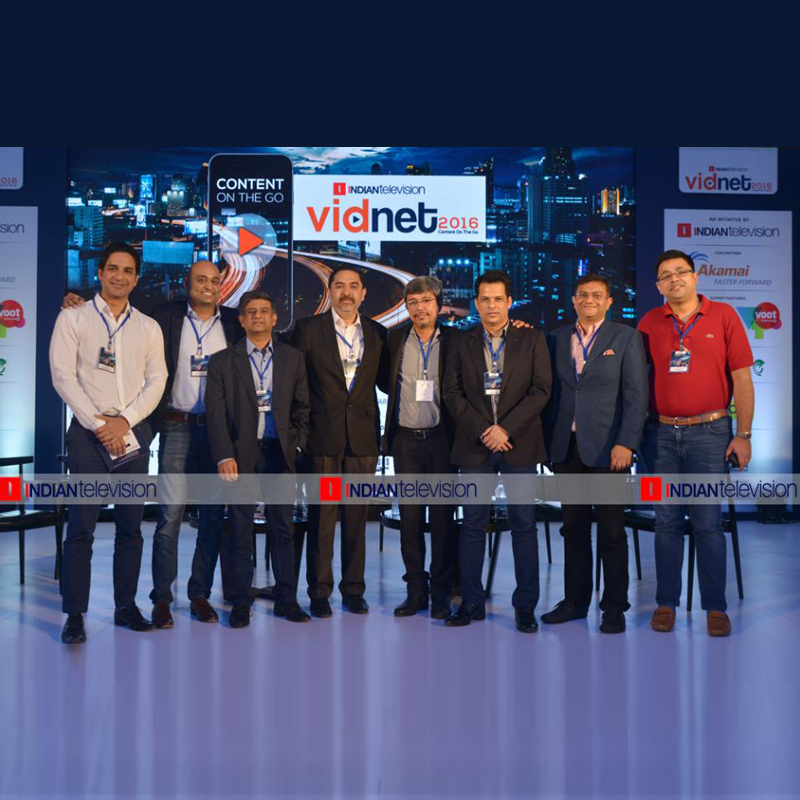
    This was the over-arching message from content creators and OTT platform operators at the session on content paradigm at Indiantelevision.com-organised conference related to OTT here yesterday, aptly themed Vidnet 2016.

    The panel included Abhimanyu Singh, CEO, Contiloe Entertainment, Mahesh Narayanan, MD, Saavn, Salil Kapoor, MD, HOOQ India, Uday Sodhi, EVP and Head Digital Business, Sony Pictures India, Varun Mathur, Co-Founder and Director VEQTA, Viviek Bhargava, MD and CEO iProspect and Yash Patnaik, Founder, Beyond Dreams Entertainment.

    The session’s basic underlying theme, highlighted by moderator Anil Wanvari, Founder and Editor-in Chief, Indiantelevision.com, revolved around the type of content that could work in the digital world while keeping in mind the needs of advertisers, agencies and investments.

    The variety of online content is vast, Sony’s Sodhi said, adding since the ecosystem is fairly new, consumption is from television content catch up. “There is a fair demand for movie viewing, including short films,” according to him as he pointed out sports too is majorly consumed by OTT subscribers.

    However, Sodhi was candid enough to admit that presently in an evolving eco-system it cannot be said with guarantee what works and what does not.

    As SonyLiv depends a lot on streaming of sports content on the platform, a question was raised whether programming differentiation on major OTT platforms was needed and also whether a global player like Netflix, focused on fictional series and movies, needs to re-strategize in India.

    Pointing out that OTT platforms ultimately will come out with their strengths, Sodhi said, “We come with a huge legacy of sports. We believe it works well for us and gives us an automatic connect between our users on TV and digital (platform), acting as an entry point for consumers.”

    While Sony Liv is banking on sports, HOOQ is finalising plans to launch in India as a VOD platform.

    Educating the uninitiated that HOOQ is a joint venture amongst Sony Pictures TV, SingTel and Warner Bros., HOOQ India chief Kapoor was of the opinion that the new digital evolution is about “pull and not push” and, therefore, “good content will get pulled (by consumers).”

    “All sorts of stories and entertainment can co exist in this (digital) space,” Kapoor said, adding that the criteria for success in the digital world were quality of content as people appreciate good content on every format.

    As per HOOQ, the criteria to measure the success of engagement is not downloads (of an app), but continuous engagement and number of active users.

    However, the experts on the panel did agree that since there is more television content, `catch up’ is a big issue presently. The next step ought to be and should be engagement of consumers with original content and the players are experimenting with that as to what’s relevant to digital natives.

    For example, Saavn, the music streaming app, has its own formula to engage audiences. The strategy for audio players is to package their content differently to provide a unique experience.

    Sharing the company’s varied ways of consumer engagement, Saavn’s Narayanan said an interesting property the company created was Saavn Live where live gigs happen on a stage in the company office with artistes performing at a pre-set time that goes live on Facebook.

    Saavn counts on social media to push its content and offers unplugged version of songs.

    The mechanism of how digital content is working has a big influence on advertising sector as well. iProspect’s Bhargava pointed out while previously brands found advertising cheaper than creating content, digital content creation has minimised cost encouraging brands to produce their own content.
    According to Bhargava, this gives brands an opportunity to engage consumers on their own platforms through licensed content and brand communication becomes easier.

    A digital advertising expert, Bhargava also felt that a shift in advertising pattern has happened past 2-3 years where a large chunk of a client’s budget has been dedicated to digital advertising. “This has given brands an opportunity to reduce advertising costs through content. Digital provides same amount of engagement in less money,” he added.

    But the question remains as to which content works and gives the correct RoI. The content creators on the panel were of the opinion that platforms and advertisers can only succeed with the right shows when a good story is created and told well. The message from the content creators was clear: better storytelling does work wonders.

    Contiloe’s Singh pointed out that television has witnessed a downfall in viewership as there was a “disengagement” with “discerning” viewers/consumers. “Platforms and (content) makers will have to shift to making differentiated content,” he explained, adding not only the plot, but storytelling method has to go undergo a change too.

    “There is a severe need to reinvent the way audiences are engaged with plots and characters,” Singh said, adding that the good news is India has a rich tradition of story-telling and an equally rich bank of tales.

    Though in today’s world there is palpable excitement about the digital eco-system, Patnaik from Beyond Dreams expanded the perspective highlighting that television, cinema and digital are separate platforms catering to the same audience and, hence, “viewership will fluctuate” according to quality of content.

    With the kind of buzz digital space is witnessing, brands, production houses and channels are launching their own platforms or attempting to. Could this clutter the digital space?

    Hinting that existing OTT platforms like Sony Liv could be used by content owners and creators, Sony’s Singh said not everyone needs to have their own platforms and, instead, they need to collaborate to create content.

    Yes, collaboration between content creators and platform operators did resonate with the panellists with most having their own perspectives.

    While Contiloe’s Singh supported the collaboration angle as a way forward, HOOQ’s Kapoor said that instead of everybody trying to do everything, partnerships should be explored.

    VEQTA’s Mathur added that sports as a segment is an under-served one in India and more variety in this space would add to the spice.
  • Digital success via differentiated content, good story-telling, partnerships

    Digital success via differentiated content, good story-telling, partnerships

    MUMBAI: Bollywood, Hollywood and sports content will certainly get you traction, but ultimately well thought out differentiated content, partnerships with platforms and targeted audience will not only get the eyeballs, but also return on investment for content creators on OTT platforms.

    This was the over-arching message from content creators and OTT platform operators at the session on content paradigm at Indiantelevision.com-organised conference related to OTT here yesterday, aptly themed Vidnet 2016.

    The panel included Abhimanyu Singh, CEO, Contiloe Entertainment, Mahesh Narayanan, MD, Saavn, Salil Kapoor, MD, HOOQ India, Uday Sodhi, EVP and Head Digital Business, Sony Pictures India, Varun Mathur, Co-Founder and Director VEQTA, Viviek Bhargava, MD and CEO iProspect and Yash Patnaik, Founder, Beyond Dreams Entertainment.

    The session’s basic underlying theme, highlighted by moderator Anil Wanvari, Founder and Editor-in Chief, Indiantelevision.com, revolved around the type of content that could work in the digital world while keeping in mind the needs of advertisers, agencies and investments.

    The variety of online content is vast, Sony’s Sodhi said, adding since the ecosystem is fairly new, consumption is from television content catch up. “There is a fair demand for movie viewing, including short films,” according to him as he pointed out sports too is majorly consumed by OTT subscribers.

    However, Sodhi was candid enough to admit that presently in an evolving eco-system it cannot be said with guarantee what works and what does not.

    As SonyLiv depends a lot on streaming of sports content on the platform, a question was raised whether programming differentiation on major OTT platforms was needed and also whether a global player like Netflix, focused on fictional series and movies, needs to re-strategize in India.

    Pointing out that OTT platforms ultimately will come out with their strengths, Sodhi said, “We come with a huge legacy of sports. We believe it works well for us and gives us an automatic connect between our users on TV and digital (platform), acting as an entry point for consumers.”

    While Sony Liv is banking on sports, HOOQ is finalising plans to launch in India as a VOD platform.

    Educating the uninitiated that HOOQ is a joint venture amongst Sony Pictures TV, SingTel and Warner Bros., HOOQ India chief Kapoor was of the opinion that the new digital evolution is about “pull and not push” and, therefore, “good content will get pulled (by consumers).”

    “All sorts of stories and entertainment can co exist in this (digital) space,” Kapoor said, adding that the criteria for success in the digital world were quality of content as people appreciate good content on every format.

    As per HOOQ, the criteria to measure the success of engagement is not downloads (of an app), but continuous engagement and number of active users.

    However, the experts on the panel did agree that since there is more television content, `catch up’ is a big issue presently. The next step ought to be and should be engagement of consumers with original content and the players are experimenting with that as to what’s relevant to digital natives.

    For example, Saavn, the music streaming app, has its own formula to engage audiences. The strategy for audio players is to package their content differently to provide a unique experience.

    Sharing the company’s varied ways of consumer engagement, Saavn’s Narayanan said an interesting property the company created was Saavn Live where live gigs happen on a stage in the company office with artistes performing at a pre-set time that goes live on Facebook.

    Saavn counts on social media to push its content and offers unplugged version of songs.

    The mechanism of how digital content is working has a big influence on advertising sector as well. iProspect’s Bhargava pointed out while previously brands found advertising cheaper than creating content, digital content creation has minimised cost encouraging brands to produce their own content.
    According to Bhargava, this gives brands an opportunity to engage consumers on their own platforms through licensed content and brand communication becomes easier.

    A digital advertising expert, Bhargava also felt that a shift in advertising pattern has happened past 2-3 years where a large chunk of a client’s budget has been dedicated to digital advertising. “This has given brands an opportunity to reduce advertising costs through content. Digital provides same amount of engagement in less money,” he added.

    But the question remains as to which content works and gives the correct RoI. The content creators on the panel were of the opinion that platforms and advertisers can only succeed with the right shows when a good story is created and told well. The message from the content creators was clear: better storytelling does work wonders.

    Contiloe’s Singh pointed out that television has witnessed a downfall in viewership as there was a “disengagement” with “discerning” viewers/consumers. “Platforms and (content) makers will have to shift to making differentiated content,” he explained, adding not only the plot, but storytelling method has to go undergo a change too.

    “There is a severe need to reinvent the way audiences are engaged with plots and characters,” Singh said, adding that the good news is India has a rich tradition of story-telling and an equally rich bank of tales.

    Though in today’s world there is palpable excitement about the digital eco-system, Patnaik from Beyond Dreams expanded the perspective highlighting that television, cinema and digital are separate platforms catering to the same audience and, hence, “viewership will fluctuate” according to quality of content.

    With the kind of buzz digital space is witnessing, brands, production houses and channels are launching their own platforms or attempting to. Could this clutter the digital space?

    Hinting that existing OTT platforms like Sony Liv could be used by content owners and creators, Sony’s Singh said not everyone needs to have their own platforms and, instead, they need to collaborate to create content.

    Yes, collaboration between content creators and platform operators did resonate with the panellists with most having their own perspectives.

    While Contiloe’s Singh supported the collaboration angle as a way forward, HOOQ’s Kapoor said that instead of everybody trying to do everything, partnerships should be explored.

    VEQTA’s Mathur added that sports as a segment is an under-served one in India and more variety in this space would add to the spice.
  • HOOQ India’s new MD Salil Kapoor bets big on glocal strategy

    HOOQ India’s new MD Salil Kapoor bets big on glocal strategy

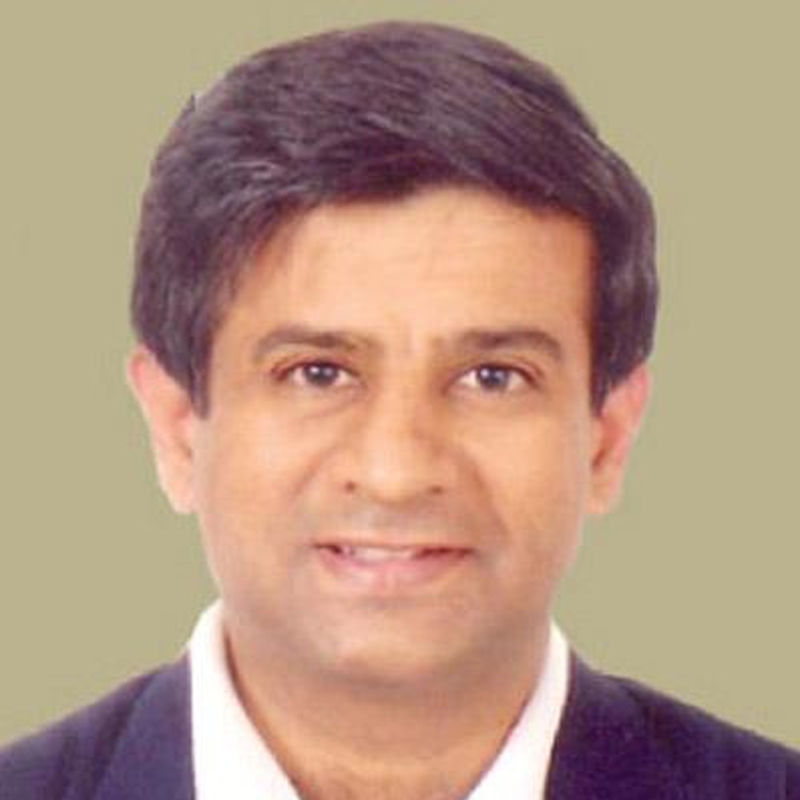
    MUMBAI: Global OTT player HOOQ, which forayed into India earlier this year, has made its first big move forward. The platform has roped in industry veteran Salil Kapoor as managing director to handle its India operations.

    At a time when Indian companies are also firming up with the OTT strategy and keeping the impeding launch of Netflix in the Indian market, Kapoor’s appointment may well be a strategic move to tackle the competitive scenario. Kapoor, who is betting big on glocal content as the way forward for HOOQ, tells Indiantelevision.com, “My primarily role will be to establish the India operations. We will set up a new team and after we have achieved targets set for the Indian market, we will foray into neighbouring countries.”

    HOOQ follows a subscription based video on demand (SVOD) revenue model and has recently inked content deals with the likes of Sun TV and Saregama India, which includes content in South Indian languages of Tamil, Telugu, Malayalam and Kannada as well as Hindi.

    “We will be looking at many other such partnerships, our end goal is to create a strong portfolio comprising Bollywood, Hollywood and regional content for our subscribers,” asserts Kapoor.  

    Moreover, the platform will not just be limiting itself to acquisitions, but will also looking at creating original content.

    Reliance Jio, with the employee launch of its 4G services, has rejuvenated the entire OTT fraternity. Bandwidth has been a teething issue for the sector and Reliance Jio Infocomm’s 4G services has raised the hopes of one and all. “What Reliance Jio is doing is great indeed. But it will have a holistic impact. Now other telecom players will also do something or the other and at the end of the day, data price will go down. So I think good days are ahead when it comes to bandwidth,” says Kapoor.

    The freemium revenue model is something that experts are talking about aggressively in the Indian scenario. In the freemium model, premium content is put on a subscription model, while old content can be accessed for free. At this stage, HOOQ is not looking to change its strategy. “We follow the SVOD model and at this stage we are not looking to deviate from it. It’s my second day in office and with time there will be many more developments,” adds Kapoor.

    All major broadcasters now have their own OTT platforms. Star India has Hotstar, which follows an AVOD model, while ZEE’s DittoTV is a subscription based platform. Viacom18 is yet to disclose the revenue model of its platform VOOT. On the other hand, while Sony Pictures Networks’ Sony LIV follows the freemium model, during the FIFA World Cup matches, it offered all the matches for a subscription. Earlier this year, Eros International’s ErosNow also unveiled aggressive and ambitious plans for original content on its platform. Apart from broadcasters, Ronnie Screwvala, in association with Ajay Chacko and B Saikumar, has also launched an OTT platform called Arre and has a comprehensive plans drawn out for it. In a competitive scenario like this, it remains to be seen how HOOQ manages to create a niche for itself.