|
In May, Viacom18’s international music and lifestyle channel Vh1 started the makeover process. Repositioned as an international entertainment channel, it ushered in new shows and introduced a new tag line ‘Vh1 – Get with it’.
Vh1 will, thus, stand on three legs – music, shows, and fashion and lifestyle. Music, however, will still constitute 50 per cent of the programming mix.
In an interview with Indiantelevision.com’s Ashwin Pinto, Vh1 India associate GM Ferzad Palia says 25 shows will be launched during the fiscal and the new-look image will result in a 100 per cent revenue growth.
Excerpts: |
|
|
What factors prompted the rebranding of Vh1 to an English GEC?
In 2008 we did research as we felt there was a new need gap. The lifestyle shows on our channel like Pimp My Ride were popular. The audience felt that we were taking the lead towards differentiated international entertainment. This buoyed us into getting into the broader international entertainment space.
Music still constitutes 50 per cent of our mix. But now we are also going towards international entertainment with a renewed vigour. |
|
|
What about content repositioning?
Our focus for the next few weeks will be to launch content that allows people to gather information on entertainment on a real-time basis. We will look at new gadgets, gizmos, Formula One and Hollywood.
Vh1 currently stands on three legs – music, shows, and fashion and lifestyle. |
|
|
What is the brand philosophy of Vh1? |
|
|
What value is Vh1 looking to bring to the English general entertainment landscape?
I don’t think that we fit into the English GEC space per se. Our focus is on international entertainment and it covers different formats. |
|
|
Who is your TG?
Our audience is 60 per cent male. We talk to different audiences at different time bands. Youngsters watch us in the morning, early in the evening and also after 11 pm which is when we air reality shows. The mature audience tune in at around 9 pm and, to an extent, early in the morning. While we do Hip Hop hustle for the youth, we also have Vh1 Jazz Masters for the older and more discerning viewer. Our analysis tells us that our audience watches news to get information – and then for entertainment they tune in to Vh1. |
|
|
|
|
Could you talk about the shows that allow Vh1 to be differentiated and daring?
We will launch 25 shows this fiscal. |
|
|
What are the plans for the weekend? |
|
|
You had mentioned giving people the latest news on fashion and Hollywood. How would this work? |
|
|
What marketing activities is Vh1 doing to spread awareness among viewers and advertisers about the repositioning? |
|
|
Are you looking at creating local versions of any of your international shows?
Then we will be doing an initiative called India Rules later this year. Here we will take Indian Acts abroad and give them an international platform. For us , it is a reverse migration and cross pollination of ideas.
We have a lot of local talent but there is no platform to allow it to go to the next level. We feel that it is our responsibility to give them a platform. This I would like to clarify will not be a hunt for a rock band. Anybody with musical talent can approach us. Our message is that the world is waiting for you. |
|
|
What are Vh1’s plans on the events and digital space?
We will also make a big play on the digital space. It could involve packaging content for the mobile and the Internet. |
|
|
Do you see the brand tie up business growing to become a significant source of revenue, apart from advertising?
It will eventually be a big source of revenue. At this point of time, our objective is to build the brand. |
|
|
How is the channel being pitched to advertisers?
We started it last year as a weekly and now as it worked, we have made it a daily show. With Airtel we have an initiative Hello tunes Made Easy. |
|
|
How many clients do you have?
We have 110 advertisers on board. We expect 100 per cent revenue growth for the year. The client list is diverse from a 50 paise candy to a Rs 500,000 jewelry set. We have not been affected by the slowdown to the extent that we had originally feared. |
Tag: Hollywood
-

‘We are getting into the broader international entertainment space’ : Ferzad Palia – Vh1 India associate GM
-
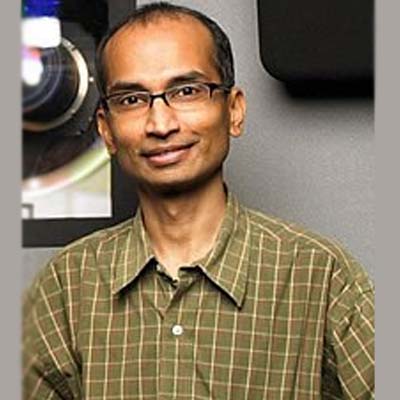
‘The real push for digital cinema will come when biggies like Adlabs decide to ramp up’ : Senthil Kumar – Real Image Media Technologies director
Already setting cash registers ringing across Hollywood, with movies like Beowulf, Hannah Montana and Meet the Robinsons, Digital Cinema has been touted as the next big thing in the entertainment industry. And Chennai-based Real Image Media Technologies (RIMT) is already geared up to herald a major resurgence of the film exhibition industry in India with the introduction of this new technology.
In an interview with Indiantelevision.com’s Anindita Sarkar, Real Image Media Technologies director Senthil Kumar says that the future of cinema lies in digital and unveils the company’s growth plans.
Excerpts:
Do you see digital cinema growing faster from now on?
Several things that were roadblocking the growth have got sorted out. Prices have fallen and the technology has settled down. Film producers, distributors and exhibitors have realised that digital makes better economics. There has been an improvement in sound, though we do not see the same jump in picture quality.What will fuel the growth?
Digital cinema will grow on its own as it is an effective tool against piracy and saves on print costs. But what will further fuel this growth is the emergence of 3D. Across the world today, there are around 5000 digital screens of which at least 1000 are 3D – that is 20 per cent already. In India, we are already seeing a 15 per cent conversion of theatres (about 10,000) into digital. We haven’t seen a 3D wave as yet, but I am sure it will come. More and more people are finding that with plenty of 3D Hollywood ventures coming up in the next two years, 3D makes a lot of sense commercially. That realisation will come in India too.What will drive digital cinema growth in India?
We are already seeing decent growth in India. We have installed 550 digital systems across the country. UFO Moviez has touched 1000 theatres. Reliance ADAG’s Adlabs is testing the technology.The real push will come when Reliance decides to ramp up.What is the model that you follow?
We sell our equipment to various providers like E-City, Pyramid Saimira, and PVR. UFO Moviez, on the other hand, follows a rental model; they act like a technical service provider.So you are not looking at the rental model….?
The rental model is not lucrative for us right now.‘Digital cinema will grow on its own as it is an effective tool against piracy and saves on print costs. But what will further fuel this growth is the emergence of 3D‘But doesn’t this model provide UFO the volumes?
If you put out the money and you operate at the theatre saying pay me a rental, why would you not have takers? Theatre owners do not have any commitment. If the theatres want the digital systems for two weeks, UFO will give it for that period and then take back the services when they do not want it anymore. So it is an easy scheme. Therefore, it is quickly chosen. But these theatres do not always run on digital systems.Isn’t your system more costly?
We charge Rs 3 million for installation of our system. But we have a cheaper option where theatre owners have to pay Rs 1-1.2 million; they can upgrade later on. Most of our customers are from this bracket. For the 3D system, theatre operators will have to further part with Rs 2 million. So it takes Rs 5 million to do digital plus 3D.Is the growth coming in from smaller cities?
No.These 550 equipments are mainly with mainstream A and B theatres including multiplexes. E-City alone is using 150 systems, mainly in Gujarat. Pyramid Saimira has taken 100 while Sri Venkatesh Films in West Bengal has installed our systems in 40-50 theatres. PVR is also using our systems.Is an export market available?
We have sold 150 systems in overseas markets. Our main clients overseas are in US, Canada, Korea and European countries.How effective has digital cinema been in tackling piracy?
We have put in invisible water markings into our system to fight piracy. If a film has been shot from the screen directly, we can tell exactly from which theatre the copy came from. And the best thing about these water markings is that it cannot be edited. We also lock the projector and the server in such a way that the projector is unable to work with any other server.Do you see digital theatres tapping new streams of revenue?
Advertising is a new revenue opportunity. We are going in for consolidated advertising. We have a technology wherein you can put in an ad at a particular time to get the best audience attention. You can also decide the number of times the ad could appear, thereby hitting at the target audience directly. Using this technique, You can also choose the theatres in which you would want your ad to get displayed. This leads to targeted advertising, next only to internet.How big an attraction is 3D?
3D is definitely an attraction – like digital. Take for example the 3D Disney film Hannah Montana that is stated to have made $30 million during its opening weekend.3D is also lucrative for other programmes like live concerts and sports. Today, concerts are being covered in 3D and released; sports are being covered live on 3D and released.
Is the cost of covering a live concert on 3D the same?
Covering live concerts on 3D is much more cost effective when compared to films. When you are making a full movie, of course, the cost on the budget will go much higher; live event coverage is on the other end much cheaper.How is the installation done?
The movie is placed on the server to a digital projector and we transmit the movie through satellite or by hard drive depending upon how many theatres are receiving it. Our system accecpts anything. There are two kinds of technology that can produce a 3D effect, the passive and the active.When it comes to the passive technology, we put them up along with the system in our servers. For example the external rotating polarizing filter that works with a single projector for the single screen. We have taken this technology from Master Image. The other technology is for the dual projector with fixed polarizing filters on each projector. It is for the silver screen. Here there is not active involvement of the eyewear.
The active systems include the infrared emitter and shutter glasses technology from XpanD. It requires a single projector and has and active eyewear and is for the white screen.
How cost effective is it in converting old movies into 3D?
The cost varies between $5 million to $30 million, depending upon how lengthy and complex the movie is. There is only one company that is currently doing it. It’s called In3.How many movies have been converted till now?
Nothing has been released yet. But yes, there are movies like Star Wars (1979) that have been converted.What are your 3D plans for India?
We are trying to act as a catalyst to make 3D happen in India, in both production and exhibition.Satyam in Karnataka has already installed one screen with 3D and we assume that a few more will be coming up very quickly like Adlabs and PVR. Also, we will start helping Indian films shoot in 3D. And this we see will definitely bring in a huge boost to our technology.
Since the digital market is growing, will you need to raise money to fund your expansion?
We are looking at a third round of funding within 6-12 months and expect to raise Rs 600-800 million. The funds will be mainly used for rolling out digital cinema and development work. We are also looking at expanding in the area of 3D. We already have Intel Capital supporting us in the second round. Street Edge and Novastar have participated as initial investors. -

Warner Bros India forays into regional film production, sews deal with Soundarya Rajnikanth
MUMBAI: Warner Bros Pictures India is set to foray into regional film production. The Hollywood major has stitched an exclusive multi-movie deal with Soundarya Rajnikanth’s Ocher Studios to get a footprint across the four southern languages.
According to the terms of the deal, Warner Bros will be involved in funding the film projects. The pact covers the production and distribution of Live-Action South Indian language films to be released by Warner Bros.
Soundarya Rajnikant, the daughter of superstar Rajnikant, said that it is a great privilege for her company to associate with a world leader in the entertainment industry. “Ocher Studios has always strived towards achieving high standards in quality content creation, and with Warner’s expertise in the marketing and distribution space this association will definitely create an impact in the film industry,” she added.
While Warner Bros specializes in the creation, production, distribution, licensing and marketing of all forms of entertainment and their related businesses, Ocher Studios offers its services ranging from VFX, digital film lab, non-linear editing, CGI, and pre-production.
“We are thrilled with this opportunity to expand our local production business across all four southern languages by getting into a strategic alliance with Soundarya Rajnikant of Ocher Studios. As is our practice, we will work closely with our partners to impart our experiences and expertise in a collaborative way,” said EVP Warner Bros International Richard J Fox.
Added Warner Bros. Pictures India country head Blaise Fernandes: “We are excited and proud to be working with Soundarya Rajnikant who is extremely talented, has good insight into film making and knows the pulse of the southern market. Given Soundarya and Ocher Studios’ creative skills combined with our marketing and distribution network, this is a perfect synergy between the two companies to come together.”
-
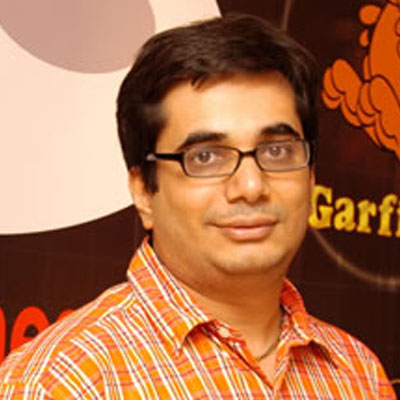
‘Convert pirate users into paying consumers & gaming industry will be worth Rs 3 billion’ : Vishal Gondal – Indiagames founder
Gaming firm Indiagames is on the move. It recently came back into the online gaming space with its Games on Demand concept. UTV also took a majority stake in the company. Indiantelevision.com's Ashwin Pinto caught up with Indiagames founder Vishal Gondal to find out how the company has evolved and the plans ahead.
Excerpts:
How has your business model evolved over the years?
We started off as an online games company. We did free flash games where money came from advertising. However, we found that it was not scalable and limited. So we took a call to move out of online gaming and into the services business.Then we saw the opportunities in mobile gaming and so we became a developer and then a publisher of mobile games. Last year we returned to online gaming with a new strategy games on demand. We have a subscription based gaming service. Users can play unlimited games for a flat fee.
Right now we are at a time when gaming is starting to take off in India. How do you see the gaming space faring vis-a-vis traditional entertainment like TV, films?
Globally gaming is bigger than film. In the US, it is bigger than Hollywood. The same thing will happen in India eventually. In every mature market where it has spread it has done that – like Korea, China. India has a lot of young people who do not watch 'Saas Bahu soaps.They are not as much into current television, which is dominated by the housewives. I am not saying that this segment is bad. However going forward more people will get into interactive entertainment. Gaming is part of this, along with activities like Second Life. More and more people will take to the virtual world.
What would you say is the main challenge gaming faces
in India?
The problem in India is not that people don't game. The problem is that people buy pirated games. Nobody was paying for legal games. Indiagames is trying to build an eco system where price points are such that the consumer does not want to pirate anymore.If we are able to convert the pirate users into paying consumers, that alone will make the gaming industry worth Rs 3 billion.
 'We are about to launch a Godzilla game; we are about to release a cricket Twenty20 game'
What kind of price points are you looking at?
To give you an example; for the games on demand service we offer unlimited games for Rs 200. Today when you pay Rs 150 for cable TV, do you want to buy pirated tapes of TV content? Our logic is the same. When consumers can get all games for Rs 200 why would you buy pirated games for Rs 100?Who are your partners for games on demand?
We have partnered with pretty much all the major gaming publishers in the world for content. So we have distribution deals with firms like Popcap, Atari, Activision, Codemaster Playfirst. We also have a tie up with MTNL, Sify, among other platforms. We also work with Qualcomm, Microsoft to make sure that our games are cutting edge.UTV recently bought a majority stake in Indiagames.
What synergies do you see here?
UTV is an integrated entertainment firm. If you see what Ronnie is doing, he is building a business that encompasses the entire gamut of entertainment from TV, to films, to online entertainment. So the UTV deal allows us to be a part of the bigger picture. Bindass is UTV's effort tap into the youth. The youth want gaming and so we will work with Bindass to see how we can integrate gaming with their offerings.UTV also has a stake in Ignition, which is a console game publisher. Between Ignition and us we have capabilities across all platforms. We will be looking at how we can exploit IP into the console space and vice versa. UTV will also create IP in the form of movies and TV shows. So we can adapt some of these into games, which we then market.
Are we going to see more tie ups like this as traditional entertainment firms seek to broaden their horizons?
The Indian film and media industry are getting more professional. They are also converging a lot. Previously, the film industry was a different silo, the broadcasting sector was a different silo the net industry was a different silo.However Fox buying MySpace triggered off a chain of events where media firms want to have their share of the pie in every segment to boost customer interaction. So if customers are increasing their time spent on the internet, mobile then for traditional media firms who are in TV or print it is a natural progression for them to look at exploiting the other screens too.
You will see more corporate deals. Traditional media firms realise that it is difficult to build a new media business from scratch. It is better to buy such businesses from market leaders in their respective fields. Adobe and Cisco also have a stake in Indiagames.
What targets have been set by Indiagames in terms of market share?
It is too early to talk about revenue targets. On the market share front on the mobile side we enjoy upwards of 50-60 per cent share. On the online front we are the only firm to offer games on demand service. The other players are trying to sell MMOPGs which is a niche segment. It is early to say if there is competition online as the market is new.What have been some of your biggest properties so far
and what have you learnt from their success?
We have worked on properties like Bruce Lee, Jurassic Park, Rush Hour 3. In India, we also distribute content from the likes of Electronic Arts, Fifa, Batman, Transformers.It is important to work on the right kind of property. You cannot take any movie or any story or any character and convert it into a game. The brand has to lend itself to gaming. In the past games have come out of family drama. However cricket, action, sports games work better than love stories.
Which are your five big markets globally and how many
partners do you have?
We have 150 partners globally, Our key markets are the US, Australia, Japan, Europe and India. We have offices in London, Los Angeles, Beijing, Mumbai. These are the core hubs where we do business from. We recently set up an office in Madrid, Spain to cover Southern Europe.What would you say is the main difference between
developing games for the internet and for the mobile?
The screen size is the first major difference. Attention spans differ. For the mobile you design a game for someone on the move. His time with a game is limited. He/she also has limited access to 10 different keys. Online people tend to spend more time on a game. The control is wider.When you work with a firm like NBC how much of a
collaborative process is it?
It is very collaborative. We have to work with the production team, share creative ideas with them. We have to get approval for game concepts. We work together to exploit the complete commercial value of the property.Could you shed light on the relationship between gaming and social networking?
Gaming was the first social network. If you look at xBox Live you see gamers wanting to connect with other gamers. This is how social networking was born. After that social networking was adapted to other common interests. We have had social networking since the first multi player games came up.Where does Indiagames get creative ideas for new games from?
We have a team that brainstorms on creative ideas. We have to see whether properties are relevant in different markets. You do not want to have a situation where a property is only well known in one market. So we have to do research to find out whether people in the US, Australia, Europe, India know about the property. If it is less or more in one country then what is the extent? Our business is about taking calculated bets.From a client viewpoint what does Indiagames bring to the table vis-a-vis the competition?
People know that India is good for technical execution. India has been looked at as an outsourcing base. We have changed this perception. We were the first firm to start licensing games from India. Nobody in the world thought that Indian firms could go the publishing route. Our first success was Spiderman which we worked on with Marvel. We proved that we could not only produce quality stuff in India but that we could market the same globally.Going forward are you looking to sign long term deals with entertainment conglomerates like NBC Universal for games or will it still be on a project to project basis?
It is better to work on a project to project basis as all projects that they do may not be relevant for us and vice versa. I don't know if this will change in the future but as of now we work on a case by case basis.What are the major projects Indiagames is now working on?
We are about to launch a Godzilla game. We are about to release a cricket Twenty20 game.Do you think that game developers in India have an advantage in terms of being able to learn from the experience of mature markets like Korea?
There is always an advantage in being able to learn from different markets. At the same time each market has its own nuances and challenges. It is important not to just blindly follow what a country like Korea is doing as there are cultural issues and local intelligence.Indian preferences for games tend to lean more towards the West than the East. Indians play games like Counter Strike, Fifa, need For Speed. China and Korea on the other hand have a lot of massive multiplayer online gaming.
How important is organising on ground events for you?
Very! We have been doing the Cybergame championships for sometime now. We are working with the CII and the government to see if T-Sports and gaming can be recognised professionally as a sport. It should be given equal status as any other sport. We have the Indian national champions who will be going to Seattle to compete in the Cybergame Championships. We also organised an India versus Pakistan event where Kapil Dev was the chief guest. They played various games like Counter Strike.Finally where do you see Indiagames five years from now?
Right now we are leading in the mobile space. Five years from now I see Indiagames leading in all gaming spaces. -
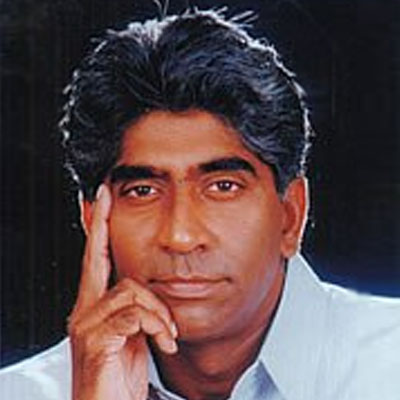
’50 per cent of the challenge of filmmaking lies in marketing’ : Ashok Amritraj – Entertainment chairman and CEO
Former tennis player turned Hollywood film producer Ashok Amritraj has reason to celebrate. Having spent 25 years in filmmaking, he was recently in India to collaborate with English movie channel Pix from the Sony stable to kick off a reality show titled ‘Gateway.’
Amritraj’s new hunt: to discover the “hidden filmmaking talent in India.” His firm Hyde Park Entertainment will act as a platform for this talent to go international.
In an interview with Indiantelevision.com’s Ashwin Pinto, Amritraj shares his insight into the business of filmmaking in the West, his relationship with studios and the experience of working with top talent in the industry like Bruce Willis and Steve Martin.
Excerpts:
What opportunities does the burgeoning Indian media and entertainment scene offer for Hyde Park?
The good news for India is that the entertainment industry is growing. The television industry has seen enormous growth. The motion picture industry will hit a steep curve over the next five to seven years. The younger generation of filmmakers are much more globalised. They understand filmmaking in a different way compared with their predecessors.There are interesting opportunities in a growing industry. My business is in Hollywood first and foremost. But I have always felt a great affection and affinity for the country where I grew up. This year is the 25th anniversary of my being in Hollywood and I have made over 95 movies. It felt like the time was right to come back and do something here.
How did the idea for ‘Gateway’ come about?
Young Indian filmmakers have a lot of talent. Around a year ago over dinner with Sunder Aaron (Pix’s business head) I expressed an idea that involved a search for a talented aspiring filmmaker who would be given an opportunity to work with my company and make a Hollywood film.Pix was interested and so we started to evolve the whole idea. The concept got bigger and better. We are excited about seeing ‘Gateway’ come to fruition.
In the US Mark Burnett and Steven Spielberg did a film-based reality show On The Lot which didn’t fare as well as had been expected. What went wrong and how confident are you that ‘Gateway’ will take off?
I don’t think that anything went wrong. It comes down to a person’s take on a certain kind of a show. At the end of the day our show will pick a director and give him an incredible opportunity. Spielberg’s show was the same way.However, the way of getting there and the tasks that they go through the elimination process is completely different. In one way it is close to The Apprentice as I will act as a mentor. In another way it is also close to Project Greenlight, which was done by Ben Affleck and Matt Damon.
There are different things being done. Our show is very India centric. It is for Indians. The aim is to make the path of a talented Indian filmmaker to Hollywood easier. We are looking to provide a platform for a young fresh Indian director to showcase his/her talent on the world stage. He/she is guaranteed a distribution of his movies between Sony and Hyde Park Entertainment.
What brought you and Pix together?
Our relationship with Pix is based on their tagline – We Tell Stories. This is the basis on which Pix was launched. A lot of what they do is story based. Top Hollywood producers also feel the same way.Money is available from a myriad of sources like hedge funds. However stories, talented and original storywriters are hard to find. When you do an initiative like Gateway you could find an extraordinary talent like an Ang Lee or an Alejandro Gonzalez Inarritu.
What are you looking for in candidates?
I often speak at schools and colleges and also at UCLA, AFI and so on in the US. I say that PQ plus CQ will always beat IQ which means that in films the passion quotient combined with the curiosity quotient will always trump the intelligence quotient.You also need abilities like how to handle actors, how to work with creativity, how to formulate a story, how to keep a producer happy. As you put all these pieces together and add to that a personality that can work, you try to frame the whole picture.
Are you looking at other television projects?
No! I am a film guy. I have not done television. Internationally Gateway represents my first foray into television. This project is personal. It is less about doing a TV show and more about finding hidden filmmaking talent in India.Last year you had mentioned that Hyde Park was looking at a JV with an Indian animation firm. Has anything happened on this front?
Practically everyone has come to us to do something. We are going to make a film here in October called The Other End Of the Line. We will use an Indian actress who could be a newcomer or who has done a couple of movies. It is a question of finding talent. Hyde Park is looking to act as a platform for Indian talent to go international. Bollywood films may not crossover into Hollywood but I certainly think that Indian directors and actors can achieve this.In general what does Hyde Park look for in a project before giving the go ahead?
Everything starts creatively. Our creative team in Los Angeles is presented with around 100 pitches each month. These include novels, books, videogames, comics, screenplays. We look at over 1000 projects a year. We develop a dozen and make three to four films. Those three or four films are chosen on the basis of creativity, gut feel and the kind of film we are looking to make.Secondly you look at the distribution paradigm and you look at who will want to watch this kind of a film. The distribution team gets involved and lets us know what will work and where. Then we get a casting director to tell us things like a certain project will only work if Brad Pitt is involved or it will only work with Kevin Bacon. All these pieces are put together which is why it comes down to only three to four films.
When you work with a big star like Steve Martin on Shopgirl how much of a collaborative process is it?
I am closely involved with every film we make which is why we only make three to four films a year. I could make ten movies a year but we do not as I would not be able to give enough attention to each one of them.The areas where I am very personally involved is developing the screenplay to a point where I as a producer am happy with it. I am closely involved with getting the principal cast and the director. Then I get hands on post-production. During the production period the director runs the project.
We start with storyboards. So you have the movie laid out before you pretty much. We know where the camera angles are, where the locations are. We then do a read through with the whole cast. Sometimes we take a complicated scene from a camera point of view and computerise it. For me the post-production process in terms of the cutting, sound and music becomes very critical.
Could you talk about some of your favourite experiences of working with creative talent?
I have worked with a number of very talented actors over the years. Steve Martin is brilliant as he is a writer as well. We worked very closely together on Shopgirl as it was his novel which he entrusted to me. He wrote the screenplay and produced it with me. I also worked with him on Bringing Down The House which was a completely different experience. Queen Latifah was a complete pleasure to work with. She is a great character.I did Bandits with Bruce Willis, Billy Bon Thornton and Cate Blanchett. That was a dynamic experience as was working with Anjelina Jolie and Antonio Banderas on Original Sin. All these actors are extraordinarily professional. They arrive on time and treat their craft as a business. They are very disciplined which results in success.
As a producer when you have a film like Bandits with more than one big star, how much of a challenge is it to deal with egos?
Actors always have to check their egos. That is a task I have to deal with. It is also part of the director’s job. When we pick a talented filmmaker through our Gateway initiative, he is going to have to understand that managing actors is a large part of the job.‘ Filmmaking is getting democratised with the use of mobile phones & Youtube‘How did a tennis player from India like you get accepted in Hollywood?
The first six to seven years were an incredible struggle. Nobody wanted to make a movie with me as our family was not involved in the movie business at all.I got lucky in 1984. I met a young chap who was a limousine driver. I met him again in 1990 at the Cannes Film Festival. He said that out of 800 photographs he had sent, only I had responded. The person was Jean Claude Van Damme and we made Double Impact. Then people in the industry found messages that I had called two years earlier. They got back to me and things started to roll.
You have been making films for two decades now. What is the biggest change you have noticed in the industry?
There have been many. In 1984-85 when I started to make movies for half a million dollars, there was at that time a fight between two formats – VHS and Beta Max. VHS won in the end. Then the international market for Hollywood grew. Satellite movie channels became more prominent.The digital revolution is amazing. You just have to look at what George Lucas did with Star Wars. A more recent film 300 was shot against a green screen. It is an exciting time to launch Gateway as directors today have more tools at their fingertips.
Would you say that filmmaking has become more democratised?
Absolutely! Democratised is a great word to use. One can use a mobile phone to make a movie. There is Youtube through which you can get millions of film fans to view your film and comment on it. Anybody can make a film.You do not have to be the son or daughter of someone famous to enter filmmaking. You don’t need to have a huge film background to get into it. You need talent, vision and creativity. Gateway is a democratisation of filmmaking.
Are new forms of distribution like VoD making it easier for a film producer to recover costs?
It is another revenue stream. But I agree with guys like Scorcese and Tarantino that a film has to make money theatrically if it is to be anything on video or video on demand.When you started out you focussed on action and comedy. Are you looking to branch out further in terms of genres?
I hate to sound egotistical but I have worked in all genres. I have done action films like Double Impact, action comedies like Bandits, serious films like Shopgirl, Moonlight Mile and family films like Dreamer. The thing that I like about Hollywood is that I can do different things.We just released Premonition with Sandra Bullock. We will release Death Sentence which is a gritty action film. It is not a ‘shoot them up’ film and I believe it will make audiences think a lot. It is about an ordinary man being put in an extraordinary position and to what extent he would go. It stars Kevin Bacon and Kelly Preston.
You co-produce films with different studios. How would you describe your relationship with them?
I have worked with pretty much every studio. My main deals today are with Fox and Disney. I have a first look deal with Fox and a second look deal with Disney. Death Sentence is being released by Fox on 31 August. I am also close with the guys at Sony and Paramount. I made Dreamer with Dreamworks. I have made ten movies with MGM.How does the Bollywood system compare with Hollywood in terms of creativity and professionalism?
The Bollywood system has worked for many decades now. I think that they are now gravitating towards fully completed scripts before shooting commences. There are more storyboards in Bollywood now as you cannot shoot visual effects without them.Are films like the Oscar winner Crash a sign that Hollywood is becoming more multi-cultural now compared to the early 1980s?
Definitely! When I started out 25 years back, I could not find another Indian guy. Today there are Indian agents, studio executives. There are Asians all over the place. Also, Hollywood is getting inspired by stories from Asia and so you have films like The Ring, Dark Water and The Grudge. Also you have Asian stars like Chow Yun Fat, Michelle Yeoh, Gong Li, Jackie Chan and Jet Li.Do you feel that there is a lack of respect for IPR in bollywood?
I think what is lacking is good quality writers. Writers need to be encouraged more here. They are the lifeblood of the Hollywood business.Why can’t India have a global film like what China is doing with films like Crouching Tiger Hidden Dragon?
I think that songs and dances in Bollywood films are a cultural barrier for someone in Idaho. However the way for Indian cinema to succeed overseas is to make films that emotionally resonate across the globe. That is what The Last King Of Scotland did. That film could have been made by anyone. Little Miss Sunshine and Letters From Iwo Jima did the same thing. The casting was also great. Emotionally resonant films come out of great stories and not necessarily from simply having a big star like Tom Cruise.Finally how much of a threat do you feel new forms of entertainment like gaming will be to films five years down the road?
I know that I am not only competing against other films but also with other forms of entertainment. Marketing will have to become more savvy. At Comic Con which was recently held in Las Vegas, we gave away products to push our new film. That is one way in which you can differentiate yourself in a cluttered media environment. Fifty per cent of the challenge of filmmaking lies in marketing. -

Hungama Mobile, Adlabs showcase Marigold at 3GSM World Congress
MUMBAI: Hungama mobile and roamware in association with Adlabs Films premiered its soon-to-be-launched co-production Marigold on a mobile platform at the 3GSM World Congress in Barcelona.
This event is a part of Hungama and Roamware’s Bollywood initiative at 3GSM, which will scale the Hungama digital network from 70 operators in 32 countries to more than 261 operators in over 100 countries.
The 3GSM World Congress is one of the largest exhibitions for the mobile industry. The event attracted over 60,000 attendees from across the global mobile value chain.
Marigold, a romantic comedy, is Bollywood superstar Salman Khan’s first Hollywood film .It is targeted for release in April 2007.Speaking about the tie up, Hungama managing director and CEO Neeraj Roy said, “With the success of providing Bollywood entertainment, the combination of Hollywood and Bollywood will give a new outlook and experience to the audience.
From providing music, imagery, video and games we are now preparing to introduce full features and this project of Marigold is a step in the same direction.”
“Marigold is a perfect example of how Hollywood and Bollywood can co-operate to produce international quality films from India” said co-producer Sidhartha M Jain.
He further added “we used the best talent from Bollywood such as Shankar-Ehsaan-Loy for music, Anil Mehta as DOP, Nitin Desai for sets and a host of other Indian talent, who worked hand-in-hand with the US and UK crew. This event is ideally suited for such a film”.
-

Netflix to produce and globally distribute Tony Bennett doc
MUMBAI: Netflix in association with its Red Envelope Entertainment division has acquired worldwide rights to produce and distribute a new documentary exploring and celebrating the life and career of the legendary recording artist and concert performer, Tony Bennett.
“Tony Bennett: The Music Never Ends will be directed by Bruce Ricker. Multiple Oscar winner and nominee Clint Eastwood Flags Of Our Fathers, Letters from Iwo Jima will serve as executive producer.
Bennett is beloved as one of the premiere interpreters of the Great American Songbook. The new documentary will follow Bennett’s more than 50 years in the music and entertainment industries against the backdrop of a changing America.
Weaving seldom seen archival footage with never before seen excerpts of Bennett’s recent premier performance at the Monterey Jazz festival — highlighted by an on-camera interview conducted by Eastwood that explores the essence of Bennett’s artistry — the film will present an exceptional man in a rare way: a living legend through his life, times and music.
This cinematic portrayal of Tony Bennett caps a year-long celebration of a singer who celebrated his 80th birthday last August. Bennett’s most recent chart topping CD Tony Bennett Duets: An American Classic. It won three Grammy Awards a couple of days ago.Netflix says that it is committed to providing consumers with access to the widest variety of films available and, in association with Red Envelope Entertainment, will fully finance the production. An innovative release plan will include DVD rental and sale, online and TV distribution, as well as an event-driven premiere and theatrical release this summer. The film is currently in production at locations around the country, including Astoria, Queens in New York City, where Bennett was born, as well as Hollywood, California.
Netflix chief content officer Ted Sarandos says, “The coming together of Tony Bennett and Clint Eastwood — two enduring and iconic figures in the world of American entertainment — is a cultural flashpoint. Netflix spearheading this prestigious project showcases our abilities to bring unique content to our subscribers and, in this case, a global audience.”
Richter says, “‘Tony Bennett: The Music Never Ends is an historical record of an American icon. We wanted the film to reach the widest audience possible and Netflix achieves that goal.”
-
CINEMAC Short / Documentary Film Competition on Feb 14, 2007 at Delhi Campus
NEW DELHI: Rai Foundation’s College of Media and Communication (CMAC) organized a pre launch screening of ‘Bollywood Bosses’ of History Channel and CINEMAC Short / Documentary Film Competition on February 14, 2007 at Delhi Campus.
Mr. Joy Bhattacharya, Vice president, programming of the History Channel, Mr. Raza Haider, President of Shikha – a Development Communication Organization and Head of the Dept. – Cinema Studies at School of Communication & Cine Arts and Ms. Sabiha Farhat, Documentary Filmmaker were jury members for the CINEMAC Short / Documentary Film Competition.
Mr. Bhattacharya in his principle lecture told students that they have made a difficult choice by opting for media, which is not essentially all about glamour and money. It takes hard work and passion to excel in the field. The pre-launch screening of ‘Bollywood Bosses’, a production of History Channel, was appreciated by students a lot. It’s followed by award ceremony.
CINEMAC, an all student venture, at CMAC is a film club that screens documentaries, short films, Classics and Contemporary Cinema from Bollywood to Hollywood. This is the first time that CINEMAC in four years of its existence organized this competition. It involved CMAC alumna work that they produced during their stint with college; along with the current students’ work.
Kunal Pruthi’s directorial venture “I was scared of Ram’ won the first prize. Kunal is Programming Head of 104 Radio Tarang. His film touched sensitive religious issues with great deal of sensibility. Abhijeet Singh’s ‘Manzar’ and Rohit Sarkar’s ‘Calling to My Will’ won the second and third prizes. The distinguished jury members Mr. Haider and Ms. Farhat gave crucial feedback on all the nominations.
The CMAC students enjoyed the program, which offered an objective view on their work. CMAC Dean Ms Kakul Rizvi showing satisfaction over the success of the event said the College would broaden the spectrum of this competition by inviting larger participation next time.
-

Star World to feed viewers ‘Crumbs’ from Thursday
MUMBAI: English general entertainment channel Star World will air the show Crumbs every Thursday at 10 pm from 8 February 2007.
The family show sees Estranged brothers Mitch and Jody Crumb reunite in their small hometown to deal with their mother, Suzanne, who is being discharged from a psychiatric facility and has yet to discover that her ex-husband is about to have a baby with his new girlfriend. They have issues.!
Central to everything are the two brothers: Mitch is the prodigal son, who is returning home after a failed Hollywood career, while Jody is the older brother who has stayed in the confines of their small New England town to run the family business. Together for the first time as adults, this family will have to stick by one another despite their combustible relationships.
The show stars Fred Savage as Mitch Crumb, Jane Curtin a two-time Emmy Award winner for Kate and Allie as Suzanne Crumb, William Devane 24 as Billy Crumb, Eddie McClintock as Jody Crumb, Maggie Lawson as Andrea Malone and Reginald Ballard as Elvis.The first episode will see Mitch and Jody reunite in their hometown to deal with their mother, Suzanne, who has just been released from a psychiatric facility and has yet to learn that her ex-husband, Billy, is about to have a baby with his new girlfriend.
-

Deepa Mehta’s ‘Water’ in Oscar race
MUMBAI: Nominations for the 79th Academy Awards were announced yesterday. It is likely that Star Movies’ ratings for the show, which it will air on 26 February, will be higher than last year.
That is because Deepa Mehta’s Water is competing in the foreign film category.
The film deals with the plight of widows in India in the 1930s and was submitted by Canada. It stars John Abraham, Lisa Ray and Seema Biswas. The film was not allowed to be shot in India. The favourite to win the foreign language film award though is Pan’s Labyrinth from Mexican filmmaker Guillermo Del Toro. Mongrel Media and Fox Searchlight, which released Water in Canada and 57 other countries, including the UK and Denmark, have, in the past few months, launched a nomination campaign in Hollywood to attract the attention of the Academy.
Best director is once again a fight between veterans Clint Eastwood and Martin Scorcese. Eastwood made two great second world war films Flags Of Our Fathers and Letters From Iwo Jima. He has ben nominated for the latter film which tells the story of the battle at Iwo Jima from Japan’s perspective. It has Japanese subtitles.
The former releases in India tomorrow 25 January and tells the story from America’s perspective. Scorcese has been nominated for the gangster film The Departed. Two years back Eastwood won for Million Dollar Baby beating Scorcese who had been nominated for The Aviator.
Best picture is less clear. Dreamgirls which had been considered the favourite has not been nominated for best film though it got a leading eight nominations. Besides the films of Eastwood and Scorcese the other films competing for best picture are The Queen about the two weeks following Princes Diana’s death, the global film Babel which has five languages and the comedy Little Miss Sunshine. There is no front runner.