|
Next year Star World will air the show ‘Revenge‘. It is about a woman who returns to The Hamptons to seek revenge on those who were responsible for her father‘s imprisonment and death.
Marty Bowen is one of the executive producers of the show. He spent many years as an agent representing talent like Charlie Kaufman and James Gandolfini before surprising the industry and leaving UTA to pursue a career in producing in 2006. Bowen partnered with veteran producer Wyck Godfrey, to create their own production company, Temple Hill Entertainment.
Their first film was ‘The Nativity Story‘ but the big break came in 2008 when they embarked with Summit Entertainment on production of the ‘Twilight‘ movie franchise. The films have made well over $1 billion at the box office.
Temple Hill Entertainment has gone on to make a television show ‘Revenge‘, created by Mike Kelley and starring Emily VanCamp, Madeleine Stowe and Henry Czerny. It is currently airing in the US on ABC.
Known in Hollywood for his solid work ethic Bowen is very much hands on during the production process. This includes the casting decisions. Indiantelevision.com‘s Ashwin Pinto caught up with Bowen to find out more about ‘Revenge‘ as well as the challenges of being a producer in Hollywood
Excerpts: |
|
|
How did the idea for ‘Revenge‘ come about?
It is an area where very wealthy people go to for their vacations. It was a world that we wanted to explore. We loved the idea of having rich people coming for the summer interacting with the people who live there the year round. We thought that there was really interesting drama to explore. ABC continued to challenge us to find an interesting story engine that might make it really compelling to have audiences go watch. Through a process of elimination we thought that it might be interesting to loosely use the structure of The Count of Monte Cristo to do that. |
|
|
You have had a huge amount of success with ‘Twilight‘. What were the learnings from that which you incorporated into this show?
I don‘t know if I want to be more specific than that but certainly there is a reason why audiences that see ‘Twilight‘ like to see it with groups of people. There is a reason why they enjoy that collective consciousness. We try to learn from that and try to instill the show with some of our elements.
|
|
|
The television landscape is crowded with shows vying for attention. What separates ‘Revenge‘ from the rest of the pack?
The shows that I grew up with included ‘Dynasty‘, ‘Dallas‘ and all those fun soap opera from the 1980s. I think people nostalgically want to tune in to ‘Revenge‘ as they miss those kinds of programmes. At the same time our storytelling remains modern enough to have audiences seem to want to come back again and gain. |
|
|
As a producer how hands on were you in the casting and creative process for the show?
But at a certain point once your baby learns to walk, you have to let them bump into furniture on their own. So we tried to keep a healthy distance to allow our writers to generate stories and write their teleplays in the best environment they can while at the same time steering the ship in the right direction. |
|
|
|
|
Was it a challenge to stick to the budget and production schedule? |
|
|
Could you talk about the talent involved with the show?
I saw how good his writing was and how good that show was. When this idea came about he was literally at the top of our list of people who we thought could do the show. Actor Emily VanCamp is someone who is sympathetic. She is likeable but is also someone that you believe is capable of vengeance. Phillip Noyce made the pilot and he is one of the finest directors in Hollywood. He has made movies like ‘Salt‘. |
|
|
As a producer how many scripts and ideas come your way in a month and what qualities do you look for?
That is the nature of our business. We have a handful of very smart people at our company who constantly throw ideas against the wall to see if something sticks. |
|
|
This year some high profile shows like ‘Charlie‘s Angels‘ bit the dust after a few episodes. What separates a successful show from a failure?
But you ultimately have to be engaged in what the characters are doing. I cannot speak about ‘Charlies Angels‘ as I did not watch the show but this factor is what separates great storytelling from average storytelling. |
|
|
Why are channels impatient in terms of letting a show find its feet?
Some of my favourite television series are shows where the networks believed in the show but which the audience did not get at first. Later on the audiences went on to love those shows. I think that it goes both ways. |
|
|
In terms of how the production process works what is the difference between film and television? |
|
|
In 2006 you left your job to establish a producing partnership. What prompted you to shift track? |
|
|
How did you get your break with ‘Twilight‘? |
|
|
As a producer what is the main challenge you face?
Assembling a project is a challenge. The different pieces have to come together in the way that you want it to. ‘Revenge‘ was one of those times where the studio, the network and the production company were all on the same page. It was a true collaboration. |
|
|
How challenging is it to juggle different projects at once? |
|
|
Do you keep the family audience in mind before giving the nod to a project? |
Tag: Hollywood
-
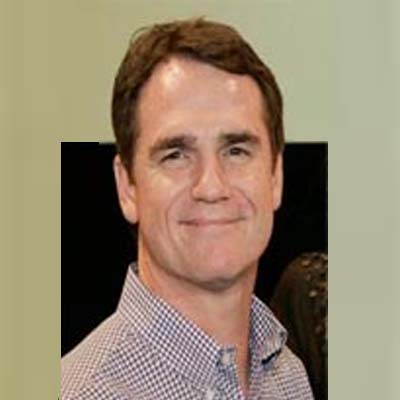
‘With Revenge the studio, network and production company were all on the same page’ : Revenge executive producer Marty Bowen
-

3 Idiots set for a Hollywood remake
MUMBAI: Vidhu Vinod Chopra‘s 3 Idiots, that broke box office records in India, is set for a Hollywood remake.
Confirming the same, Chopra has reportedly said, “We are in talks with three studios in Hollywood and one company in Italy for the remake of 3 Idiots.”
Stephen Chow, known for his film Kung Fu Hustle is also remaking the film in Chinese. Interestingly, the film is due to release in mainland China this week. Some 900 prints of the film have been sent to China in what would be the biggest Bollywood release outside of India.
“It‘s a first for any Hindi film to release with so many prints in China. The film has already made two to three million dollars in Hong Kong,” said Chopra.
The film is also being remade in Tamil. Titled Nanban, it will have Vijay, Srikanth and Jiva as the three protagonists.
-

‘Three Idiots’ to get massive Chinese release this month
PANAJI: A total of 900 prints of Raj Kumar Hirani‘s ‘3 Idiots‘ are being released in China – making the largest release of any Indian film that country.
Stating this, producer Vidhu Vinod Chopra also announced that the film is being made in Hollywood by a filmmaker there, and in Italian.
He said the Chinese release comes on the heels of the huge success of this film in Hong Kong and Taiwan.
He attributed the success of the film to the fact that human emotions were the same everywhere.
He categorically said that the film was only inspired by Chetan Bhagat‘s book and not based on it as it was vastly different.
-

What ails the Indian film industry?
BANGALORE: A panel discussion on ‘What ails the film industry – A reality checkup of the filmed entertainment sector‘ at the third edition of the Ficci‘s two-day Media and Entertainment Business Conclave highlighted a number of issues that plagued the film industry in India.
The session, moderated by actor, director and screenwriter Kamal Hassan had film producer, director and scriptwriter S Priyadarsan, South India Film Chamber of Commerce Secretary L Suresh, Cinemax CEO Suresh Shenoy and Real Images co-founder Senthil Kumar as panellists.
Piracy, multiple sales of the same ticket and the state governments‘ role in fixing movie ticket prices were highlighted as the main banes of the Indian film industry.
In the case of producers, besides piracy, the other major ailments were high cost of talent and high cost of production; cost inflation; lack of understanding of Intellectual Property (IP) and Copyright (CR) rules; lack of access to institutional funding; lack of good scriptwriters and original content.
From the exhibitors point of view, archaic rules and regulations, some as old as 1947, such as getting licenses and renewals, needed a relook since most of the theaters had gone digital. The laws based on the Electricity and the Projection Acts were not really relevant today.
From the distributors point of view some of the problems faced included exorbitant acquisition costs; because of non-availability of institutional funds, regional distributors were finding it difficult to grow beyond their limits, hence making it difficult to release films during peak season time because of high prices by the exhibitors and also multiple releases during a week makes it difficult for the distributor to get good show timings from the exhibitors who control the last mile.
The industry needed to embrace technology at all places down the value chain. Priyadarsan shared the approach of the Kerala Film Industry to curb piracy and revenue leakages through wide releases of films and computerised ticketing. Instead of the 30 or 40 screens that a film was released earlier, it is now being released across 100 screens. In the case of computerised tickets, Priyadarsan said that sitting in his house, he could know how many tickets of his film were sold in real time.
Shenoy cautioned that the viability of a wide release varied from movie to movie. It should be based on the merit of the film. He pointed out the wide release had brought down the shelf life of a movie from 4 weeks to 1 week, hence there could be problem with maintaining a flow of content for the exhibitor. The number of movies being produced had to be at least doubled to maintain a steady flow of content and to advocate wide releases for big ticket films.
Shenoy also suggested that the government should take up piracy issue on a pan India basis and bring in a suitable law and impose it on the states, rather than the current situation where piracy which came mainly under the ambit of state governments‘, many of whom did not take the matter seriously.
Suresh said that Tamil Nadu had one of the best laws to combat piracy that was being emulated by a number of states, but bemoaned the fact that implementation of the law was very poor. Piracy could be eradicated only if the administrators in a town were adamant and ruthless in implementing the law.
Suresh also questioned a state government‘s (like Tamil Nadu) curbs in the pricing of film tickets. The ticket price of a small budget film could be low, while in the case of the big budget film, the producer, with the knowledge-not permission from the state government, could fix whatever price he chose. Computerized ticketing would ensure that a government would get its taxes.
Hassan agreed with Suresh saying that the state government should treat films as any other business, more so in the case of the southern states, where the governments saw films more as a political platform.
Suresh also suggested dynamic pricing of film tickets, maybe, the price could be higher for the first few weeks and then lowered later. He further said that the in the case of other major cities and towns, the benefits of dynamic rates that were being arbitrarily fixed by theater owners depending upon show timings did not filter down to the producers who owned the copyrights of the content.
Shenoy informed, “In some cases, the cost of talent is almost 60 per cent of the film‘s budget”. He suggested that rather than paying per film, the actors should be paid a fixed sum and part of the profits which depended upon the box-office performance of a film, a model similar to the one followed in Hollywood.
Senthil agreed that most of the problems faced by the industry could be alleviated with the right application of technology. Piracy, which caused leakage of 30 to 50 per cent revenue leakage, could be prevented to a great extent. Technology made it possible for piracy to be curbed in all means except through a cam-coder brought into the movie hall. Technology will make the necessity of a film print redundant.
Shenoy said that there was a need for open dialogue between all the stakeholders and the government as well as a constructive dialogue amongst various stakeholders in the film world is critical. For example the multiplex impasse a couple of years ago impacted not only the warring parties, but everyone in the value chain. “The industry must keep channels of communication open and look for alternative means for dispute resolution,” he suggested.
Shenoy further suggested that producers should garner together an initiative to train scriptwriters and paid great importance to research and development to enable only quality scripts being made into films.
-

UTV Action dons new look
MUMBAI: UTV Action, the action movie channel from UTV stable has adopted a new on-air look.
The refreshed logo and new tagline of the channel captures the true essence of Hollywood. It is in line with the brand philosophy that is the ultimate destination for the best of Hollywood Action movies, the channel said.
The look of the new UTV Action will have distinct elements catering to the action, horror and sci-fi genre with key properties like ‘Saturday Power Premiere‘, ‘Big Bang Movie‘ and others redesigned to give audiences the opportunity to consume the best of action in true Hollywood style.
UTV Action business head Sameer Ganapathy said, “With the brand new look, UTV Action takes a step forward in offering latest and premium Hollywood action content to its viewers. We are sure that the new look will redefine the viewing experience making it the ultimate destination for Hollywood action.”
The new on-air concept is dynamic involving fast-paced graphics that give an extra edge to the action packed channel. The refreshed packaging consists of pulsating promos, menus, astons, edits and more that is sure to keep viewers at the edge of their seats.
-

Jessica Chastian to play Princess Diana
MUMBAI: Jessica Chastain will play the late Diana, Princess of Wales in a romantic biopic titled Caught in Flight, according to movie blog Thompson on Hollywood.
Chastian follows Meryl Streep who played Margaret Thatcher earlier or Anne Hathaway who played Jane Austen.
Caught in Flight will depict a secret two-year affair the princess had with heart surgeon Dr Hasnat Khan from 1995, that would be presented as a “love story between a princess locked in a tower and an ordinary man”.
The script of the film has been written by The Libertine‘s Steven Jeffreys and would be directed by Oliver Hirschbiegel.
The film‘s pre-production will start in March 2012 under British production company Ecosse Films while it will be shot in Pakistan, Angola, the South of France and Paris.
-

Japanese film festival in Hollywood
MUMBAI: The Japan Film Society is all set to launch a film festival in Hollywood that will highlight current Japanese shorts and feature films. Dubbed LA EigaFest, the festival will run from 11 to 13 November at the Mann Chinese 6 Theatres.
Yoshimasa Ishibashi‘s Milocrorze: A Love Story will open the festival while the director and his star Takayuki Yamada will be attending the screening.
The festival will conclude with Takashi Miike‘s 2011 Hara-Kiri: Death of a Samurai 3D.
There also will be an awards ceremony that will present the grand prize for the film judged to be the best in the competition.
-

Accident grips The Expendables 2 shoot
MUMBAI: A stuntman died while another injured while shooting for star-studded Hollywood action film The Expendables 2 in Bulgaria, it is understood.
The incident occurred while the two men were shooting a scene involving an explosion in a rubber boat near a dam on Lake Ognyanovo in southwestern Bulgaria last Thursday.
The production unit of the film, written by Sylvester Stallone, was shooting in the mountain resort village of Bansko where the accident happened. “It is with great regret that we confirm this unfortunate accident,” said a statement by producers Image/Millennium Films. “Our hearts go out to the families and those on the production affected by this tragedy,”the statement added.
The Expendables 2, starring Stallone and Arnold Schwarzenegger, Bruce Willis and Jean-Claude Van Damme, is a follow-up of the 2010 action blockbuster. The film has been scheduled for release in August next year.
-

‘Pix’s growth has upset the balance in the English movie genre’ : Pix business head Sunder Aaron
The English movie channel space has seen a shake-up. The power centre has been upset with the growth of Pix and the onslaught of new entrant Movies Now. From being a two-horse race, now there are four – Star Movies, HBO, Movies Now and Pix.
Having acquired the library of its parent Sony Pictures Entertainment, Pix is making a bigger push in a market that is getting more competitive.
In an interview with Indiantelevision.com‘s Ashwin Pinto, Pix business head Sunder Aaron talks about the rise of the channel, the challenges the genre faces and the opportunities to grow the market.
Excerpts:
What have been the focus areas of Pix this year?
To capture moré and more good content, given the competitive nature of the market; to ensure that the channel is distributed on the right networks and in the right position; and to create an environment for viewer stickiness.How far has Pix gained from the output deal with parent Sony Pictures Entertainment?
The perception about Pix among viewers and advertisers has changed as we have moved from a library to a contemporary movie channel. It is easier to change attitudes and perceptions of younger audiences as they do not have an inherent commitment to another channel like HBO or Star Movies.Among our target audience, we have beaten HBO since January. The aim is to become No. 1 eventually. We will continue to focus on getting the right content and building distribution.
Could you talk about how Pix has evolved since launching five years back?
The appearance has really evolved since we launched the channel with library content. The channel went through a massive packaging overhaul in May-end. Our promos look a lot more younger. We are playing bugs; we also give trivia information for some of our key titles.What are the changes you have brought on the programming front?
We were the first ones to create a single ad break movie slot. We also realised that the afternoons and late nights are the non primetime hours where the viewership is growing.Younger audiences come in during the 12:30 pm-4 pm time band. Our programming is geared towards addressing that audience who are mainly college going.
In the last few weeks, two new things have happened. One is ‘Awesome Saturdays‘ where we have lined up the evening with popular movies. And on Sundays we focus on the 12 pm-4 pm time slot with an initiative called ‘Sunday Breakout‘. This is how we are pushing the weekends.
We are doing the Dynamite Diwali festival, which takes place on weeknights at 11 pm. In November, we will have an even bigger stunt. It will probably be called ‘Big Guns of Hollywood’.
‘The perception about Pix among viewers and advertisers has changed as we moved from a library to a contemporary movie channel. The output deal with Sony Pictures Entertainment has helped in this‘What about thematic blocks?
We had started this when we launched five years back, but have moved away from this as we evolved. When your channel does not have a strong identity or presence, you need to build points which can draw in viewers. However, we continue to do festivals.When Pix launched, it skewed towards 25+ audiences. Now where do they come from?
We focus on 15-34 SEC A,B, across six metros. But from a programming perspective, we are inclusive in nature. Older viewers also watch us. We continue with properties like ‘Hand Picked‘which consist of movies that have a strong drama quotient.Is this genre seeing more of appointment viewing than say two years back?
My suspicion is that it is not there. When HBO had groundbreaking series like ‘Sex And The City‘, this was there. Also, when Star Movies had ‘Avatar’ people probably made a point to come in, but they have shown it 30 or 40 times. So you don’t have to make an appointment to view it. I don’t think that it is possible to build it any longer.People watch movies in different ways – DVDs, online, on their ipad. So why would you have to make an appointment at 9 pm to sit in front of a channel to watch a film? I don’t think that channels compete on this basis anymore. Competition is on the basis of content, perception and profile.
Is channel loyalty falling?
Yes, but this is the case across television and is not something specific to the English movie genre. There is more programme than channel loyalty. There is a residual brand presence in the consumers mind at the same time.Has the market dynamics for the genre changed dramatically?
HBO and Star Movies were the leaders. Pix has grown, which has obviously upset the balance. Then Movies Now came in and upset the balance even more.Movies Now has made an impact by focussing on popular films. Does that mean that premieres have lost a bit of their value?
I think that Movies Now has been clever and there have been elements to their success. One is that they selected films that are widely known and recognizable. Another big factor is that they got the distribution right; they invested a lot in positioning themselves properly. The third factor is that you cannot underestimate the value of the Times support.But I wouldn‘t say that it diminishes the value of premieres. It does show that Indian audiences still have an appetite for movies that are familiar to them. But when Pix showed ‘The Karate Kid‘, it was a premiere and propelled us to the No. 1 spot.
Is there going to be more focus on original shows like ‘Gateway’?
Yes! But there is a challenge as it is costly. We are talking to sponsors about bringing back ‘Gateway’ in a different form that will be even more exciting. Currently, we do specials from time to time. ‘Chicks on Flicks’ does things on premieres. We will do new series in a couple of months.How is the deal with the NBA working out?
It is working out well. The big challenge, though, is that the NBA is in a lockout; they have not started the season. The players’ union has not come to an agreement with the owners to start the season. The season will get delayed.Are you looking at more sports properties to build reach?
We are careful. The NBA is enough; if we put more, it will look like a sports channel.How are you pushing distribution?
We are attempting to go beyond the six metros. DTH has shown how we are consumed in other markets as well. We are looking forward to cable digitisation.I don‘t want to rely so much on ad revenue. But we don‘t get our due in terms of subscription income. Carriage fees rise every year while subscription revenue is not keeping pace with it.
Between the different mediums, how is your spend split?
It is defined by the film and not by the city or medium. Flexibility is needed in planning. For instance, if we use radio this month, then next month we may or may not use it at all.I would say that online is a very effective medium. It is highly flexible.
Could you give me a couple of examples of innovative campaigns that have been done this year?
We did the ‘Hollywood is Here‘ campaign where we used clustered outdoor. In Chowpatty (in Mumbai), we took six to seven hoardings together. In Delhi, we used a cluster of 10 mobile vans standing in one line. We showcased our positioning and the new titles that were coming up.For ‘The Social Network‘, we could not use Facebook as a medium. So we used radio and hoardings. People knew Mark Zuckerberg but not the film’s star Jesse Eisenberg. The thought for the campaign was the sexiest man alive; this created an intrigue.
How are you growing consumer contact initiatives like the Pix Movie Club?
We have touched 10,000 members. We are in Mumbai, Delhi and Bangalore and we want to take it further down next year. We haven‘t decided on whether or not to rope in advertisers for this.Are you looking at more marketing initiatives?
We are looking at doing something online. We are working on the details. For me, online marketing is about an idea and not just taking out a bunch of banners across sites. -
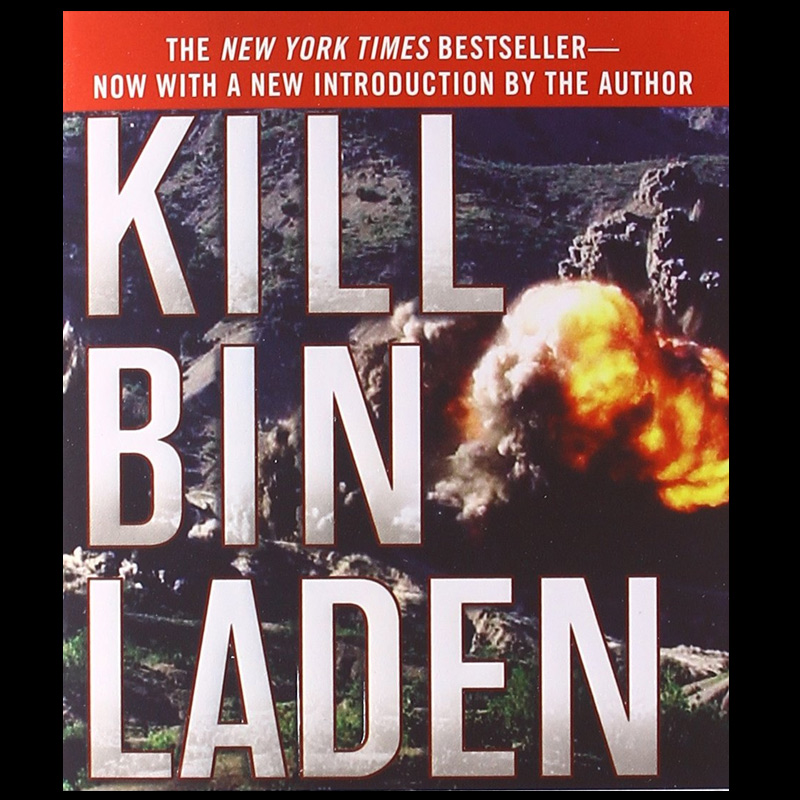
Book on bin Laden killing to be made into a Hollywood film By Indiantelevision.com Team(22 October 2011 3:45 pm)
MUMBAI: Osama bin Laden continues to interest Americans. And now a book detailing his death could be converted into a Hollywood movie.
Chuck Pfaffer, author of “SEAL Target Geronimo: The Inside Story of the Mission to Kill Osama bin Laden,” is keen to sell to studios or producers the television and film rights. The book is set for release on 8 November.
The book is a first hand account of the raid on bin Laden’s compound in Pakistan from SEAL members. Pfaffe, a former U.S. Navy SEAL commander, has offered a different account of the raid than the official White House version.
According to the official version, bin Laden’s death operations took 40 minutes as SEALS made their way up to the bedroom from the ground floor. Pfarrer, however, writes that bin Laden was killed in the first 90 seconds of the raid as the SEALS entered from the roof.
Another movie about the raid is being made by director Kathryn Bigelow and writer Mark Boal for Sony. The film is scheduled to release during the fall of 2012.