Tag: Hollywood

  • India, Hollywood working on ways to collaborate

    India, Hollywood working on ways to collaborate

    MUMBAI: The ball has started rolling for more collaboration and cross pollination of knowledge, technology and talent between two of the world’s largest film communities – Hollywood and India.


    The Motion Picture Association of America (MPAA) chairman, CEO Senator Chris Dodd participated in an event of the LA India Film Council during the 2012 Ficci Frames Convention to discuss how to push this partnership forward.


    The event included the announcement of the Council’s governing body, the premiere of a “sizzle” video highlighting the initiative, and a presentation of the Council’s enhanced website. A special Council publication commissioned from Ernst & Young providing further information about the LA and Indian industries was released and plans for upcoming activities, including film premieres and conference events, were discussed.


    Dodd said, “The LA India Film Council is a natural corollary to the rapidly increasing creative, technological and location partnerships developing between the two countries and promises to set new benchmarks in the world of cinema. On the behalf of the MPAA, and as a big fan of Indian cinema, I wish the Council great success in the future”.


    The LA India Film Council was set up in 2010, as part of a declaration between the city of Los Angeles and the Indian film industry. The initiative aims to explore mutual opportunities in fostering and encouraging partnerships between the two influential film industries.


    Filmmaker and producer Ramesh Sippy said, “We can learn from schools in LA. We should learn from each other. Create and enrich each other‘s knowledge, strengths and experiences. I feel the council can only take us forward. One thing is for sure, it will bring people of two cultures closer together.”


    Hollywood is looking at the growing Indian market even as its threatical revenues from overseas have overtaken that of US. A flood of 3D movies has also made the products popular in tough markets like China.


    “India is a preferred destination for a lot of films, and I think the LA India film council will hugely benefit both countries. We could co-create film schools and schools of technology. The mingling and merging of the two cultures is essentially the desire behind a co-production”, said filmmaker Shekhar Kapur.


    The Council focuses on developing and strengthening motion picture production, distribution, technology, content protection and commercial cooperation between the two filmmaking communities. Members of the Council’s governing body comprise powerful film guilds, government organisations, industry experts and leading companies in the areas of VFX, animation and post production from both Los Angeles and India.


    Actor Anil Kapoor said, “Without a body like this people may get connected with wrong people. A body like this can help and support those who seek guidance”.


    In recent years, the Indian film industry has globalised its reach as producers have improved the international marketability of their films by building partnerships with international domain experts. More and more producers in India are considering foreign locales to shoot their films. Previous big budget Indian productions filmed in Los Angeles include: Kites (2010), My Name Is Khan (2010), Kambakkht Ishq (2009), Kaante (2002) and Pardes (1997)


    Other joint ventures and co-productions between individual Hollywood studios and Indian production houses over the past two years alone include: Ek Deewana Tha (2012), Dum Maro Dum (2011), Stanley ka Dabba (2011), Force (2011) and Engeyum Eppothum – Tamil (2011).


    Indian investment in Hollywood has also been steadily increasing, most notably with Indian entertainment conglomerate Reliance Entertainment’s (A.DAG) acquisition of DreamWorks SKG and the launch of YRF Entertainment in Los Angeles.
  • Industry doing nothing to transform biz models for digital world: Uday Shankar

    Industry doing nothing to transform biz models for digital world: Uday Shankar

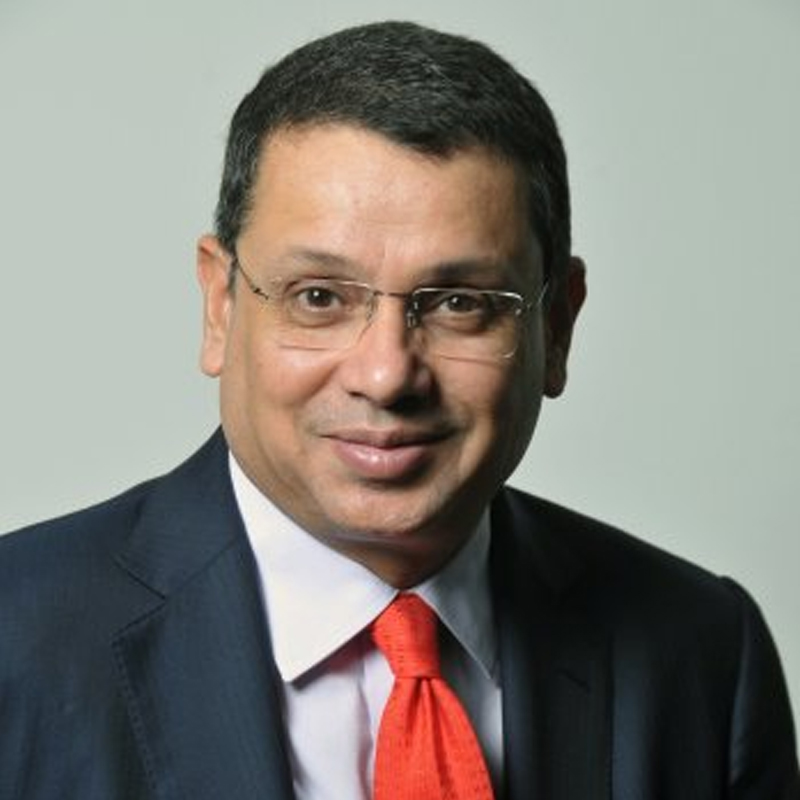
    MUMBAI: Star India CEO and Ficci Broadcast Forum chairman Uday Shankar set the ball rolling at the inaugural of the 13th edition of the Ficci Frames by saying that the industry is at the cusp of what is set to completely transform broadcasting in India, forever.

    Shankar was talking about the universal digitisation of television distribution. A subject that has dominated all discussions at all forums last year and which he presumed will continue to do so for a long time to come.

    “Most of the discussions that I have participated in are still around whether digitisation will happen and if it indeed were to go through, how chaotic it would be. With all humility may I suggest that it is a meaningless discussion triggered by a bunch of retrograde interests who are living in denial,” he said.

    The Cable Television Networks Amendment Act is not the beginning of digitisation. Digitisation of distribution is a big reality and the 40 – 45 million homes that have bought DTH boxes at some point or the other are a conclusive evidence of that. “In fact as we speak, India may just have overtaken the United States as the world’s largest DTH market,” he said.

    Shankar added, “The critics and the cynics who are still wondering whether digitisation would happen, my answer is: Look around, it is already happening and the rest of it is bound to happen because even in this country it would be difficult to undo such a momentous shift. To those who wonder how chaotic it would be, my response is that there would be some chaos, but chaos is not necessarily bad if the alternative is status quo or regression.”

    However, he also cautioned that his biggest concern now is a chaos of another kind that we are all set to create by our inaction. “Whether we like it or not, in a few years time, the vast majority of this country will receive its content through digital media – digital cable, DTH, 4G, wireless and Internet. But are we preparing for that? The answer is a big no,” he regretted.

    He said that while we debate a digital future day-in-and –day-out, the industry is doing nothing to transform or find business models for a digital world. “Let’s face it. Universal digitisation is going to force us to change the way we do business and we are not ready for it. We often blame the cable operators and MSOs that they are not ready but I am afraid that even the broadcasters and the content creators are not ready for a digital world. Are we then setting ourselves up to become uncompetitive and irrelevant?,” he asked.

    DTH has launched services like HD, Dolby sound and digital video recorder” and yet the broadcasters are doing nothing differently to service this segment. DTH has been around now for about six years and broadcasters or the content community have done nothing as an example of a strategy to exploit the new technology. This, he said, is despite an intuitive and an experiential understanding that the behaviour and the consumption patterns in DTH homes are significantly different from analogue homes. “The data also show that the average time spent on content in digital homes is much more and yet we do not treat them differently,” he said.

    Shankar said that it is scary how “we have force-fitted an analogue broadcasting model into the digital domain.”

    Is that what we are going to do even after cable goes digital, he asked. “I am afraid if the past behaviour is anything to go by, we are not ready to offer anything significantly different and therein lies the biggest crisis and risk of a chaos,” he said.

    He said there is enough global experience to suggest that digitisation leads to decentralisation, regionalisation or localisation of content creation and distribution.

    “Creatively, it is a huge catalyst for innovation and diversity. Essentially what it means is that with universal digitisation the business models of broadcasting, which are built on centralised creation and distribution of content and even a centralized advertising revenue model, may come under a huge pressure,” he cautioned.

    Shankar said that the cable community is still busy lamenting the potential loss of carriage fees and not realising what an amazing opportunity it has to participate in the local economic boom that is sweeping most parts of this country.

    “The first phase of digitisation that covers the 4 metros will be a huge unshackling of broadcasting and content opportunities. These are the cities that have crumbled under the weight of analogue frequency limitations. Just imagine the opportunities that these metros also our economic hotspots present when, from the first of July access to frequency will no longer be a constraint. So to my mind the MSOs and the cable operators may potentially become a powerful content creator that the traditional broadcasters have to contend with. There may be new creative talent ready to ride this technological transition. As the subsequent phases roll on, the decentralisation of broadcasting is bound to gain enormous momentum. However, I don’t see anyone trying to race ahead to take a pole position here,” he said.

    He also pointed out that HD TV sets have been available in this country and while many people were buying them, their off-take was still low primarily because there was no HD content and nobody was willing to invest in HD content because there were not enough HD consumers. “It was the classic chicken and egg problem. However early last year, when we at Star launched 5 HD channels with Dolby 5.1 surround sounds, even we were surprised by the rapidity with which HD gained acceptance. Today, in less than a year there are around 25 HD channels. But, I have to admit with a touch of disappointment that I am yet to see an adequate recognition of the potential of HD and a superior sound possibility by my fraternity. It is a classic case of the old mindsets struggling with a new technology,” he rued.

    Are we going to stay locked into this struggle or are we going to create a new generation of television which would be designed for the digital world?, he asked.

    Shankar said he has been an admirer of the current information and broadcasting dispensation which he thinks has shown more vision than any other dispensation in his two decades of interaction with the broadcasting establishment. “However, let me point out that we still need a lot of official and legislative enablers to remove the bottlenecks on this expressway. For instance, a clear policy to enable multiplicity of beams and splits would be a powerful trigger for proliferation of content and revenue opportunities,” Shankar said.

    He ended his keynote with the example of the latest Oscar success from Hollywood – The Artist – which is a portrayal of how a talented and accomplished artist from the silent era could become completely irrelevant because he refused to see that the times have changed.

    “Let’s not try to thwart a revolution which people are crying for. We will only hurt ourselves. The question is whether we will lead the change or whether we will vacate the space for a new set of entrepreneurs and visionaries who will replace us. It is up to us to use it or lose it,” he said.

  • Hollywood studios laud China’s willingness to treat US films more fairly

    Hollywood studios laud China’s willingness to treat US films more fairly

    MUMBAI: The recent move of the Chinese government to comply with a World Trade Organisation order to treat US films more fairly has been lauded by studio executives in Hollywood.

    But privately, they wonder how it will shake out and when because the Chinese government has yet to sign a WTO Memorandum of Understanding.

    Hollywood had agreed to live with the resulting agreement because it could be revisited in five years. A fine ticking point was revenue-sharing: The studios wanted 30 per cent but had to settle for 25 (previously, it was 13 to 17 per cent).

    Beijing-based DMG Entertainment’s CEO Dan Mintz said, “Obviously, from the top-line level, all of this is good. But it‘s important to remember that the quota is just one layer that is used by the powers that be to control things. They have censorship, they control all the screens and hold control over when a film comes on against which competition and how long it stays in theatres.”

    The Chinese market is too hot for Hollywood studios not to keep trying. In 2008, the local box-office intake was $630 million; in 2011, it reached a massive $2.1 billion. Theatre construction is also growing by bounds spurring a proliferation of state-of-the-art 3D screens. And this is where Hollywood has the upper hand as its proliferation of 3D films deliver much-needed content.

    It may be noted that five of China‘s 10 top-grossing films in 2011 were 3D studio releases, all of them from Hollywood. In 2011, Transformers: Dark of the Moon (3D) was China‘s top-grossing title, earning $172 million.

    Interestingly, had the new revenue-sharing deal been in effect then, Paramount would have seen a return of $43 million compared to $26 million.

    The first 3D release set to open in China this year is Titanic 3D, in early April. No one — not even the film‘s overseas distributor, Fox — knows whether the new rules will be in place by then, but most studios believe they will by summer.

    It is also uncertain as to which 3D titles China will accept this year from films like The Amazing Spider-Man, The Dark Knight Rises, Brave, The Avengers, Men in Black III and Madagascar 3.

  • Shah Rukh Khan launches production company in the US

    Shah Rukh Khan launches production company in the US

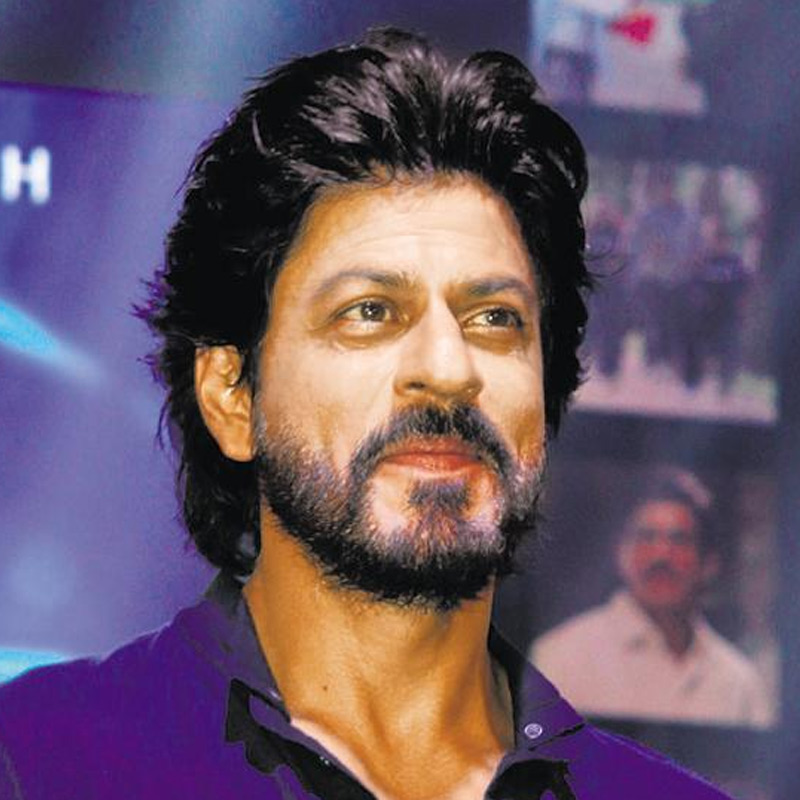
    MUMBAI: While major players like Reliance Big Pictures and Dharma Productions are already testing out Hollywood waters, there’s a new entrant on the scene. Shah Rukh Khan recently launched his production company Red Chillies USA, setting his eyes on international production values and the American box office.

    Charged with expanding the company’s digital presence while also securing partnerships with American production houses, the unit would be headed by Shailja Gupta.

    “I want to start the company off with a bang. But I’d like the work to speak for itself,” Gupta has reportedly observed.

    Red Chillies is not just about promoting the idea of Bollwood in the US. By claiming a presence overseas, the production house hopes to improve the quality of its own film production, whether it means shopping for scripts to co-produce or partnering with cutting-edge technicians.

    Drawing attention to Bollywood’s growing need to join forces with its American counterpart for survival’s sake, Gupta said, “Hollywood’s reach is everywhere; they’ve gobbled up a lot of industries across the world—India and its urban audiences are next. We’re hoping when we tie up with Western filmmakers, they’ll introduce a certain way of writing that we can learn from because Bollywood really needs to buck up on its scripts.”

    Launched in 2002, Red Chillies Entertainment, the parent company of Red Chillies USA, began its operations in Mumbai as a production house co-founded by Shah Rukh Khan and his wife, Gauri. The company later branched out to include other divisions including an in-house visual effects studio at Andheri.

    Khan’s popularity among non-resident Indians is likely to help the company take off in the U.S. “Shah Rukh often jokes that he’s an NRI actor, so having his brand recognised worldwide has never been an issue,” added Gupta.

    Khan’s NRI appeal can be attributed to memorable performances in blockbusters like Dilwale Dulhaniya Le Jayenge, Kuch Kuch Hota Hai and Kabhi Khushi Kabhi Gham.

  • Star World launches ‘Crime At Ten’ band

    Star World launches ‘Crime At Ten’ band

    MUMBAI: English GEC Star World has created a block called ‘Crime At Ten‘ that will kick off on 5 March.

    With the crime related shows airing every weekday at 10 pm, the broadcaster has taken a step towards imbibing the American style of showcasing programmes in a checkered format.

    The property will showcase the latest seasons of crime shows. These include ‘Dexter‘, ‘Castle‘ and ‘Criminal Minds‘ that will air everyday weekday at 10 pm along with new shows ‘Person Of Interest‘ and ‘Unforgettable‘.

    Star India GM, senior VP, English Channels Saurabh Yagnik said, “Star World is constantly designing ways to engage viewers either by bringing the latest Hollywood shows to India or launching innovative properties like Crime At Ten. With this property, we are mirroring the American way of showcasing programmes in a checkered format. Our research shows that Indian viewers have a high tendency to consume crime content and we are hence launching five crime shows on our 10 pm slot.”

    Coming up first on‘Crime At Ten‘ is the sixth season of ‘Dexter‘. Michael C. Hall continues his role as Dexter the serial killer as he explores beyond his surroundings and enters new arenas. But unfortunately whenever a serial killer enters new arenas, they always find someone that‘s needs to be killed.

    On 6 March a new crime show, ‘Person Of Interest‘, kicks off. The series revolves around Mr. Flinch who creates a computer programme that can see the future, providing information about individuals that could be in danger. His first target is to save the life of Diane Hanson, an Assistant District Attorney currently working on a major prosecution with the help of his newly employed colleague John Reese.

    The show not just boasts of nuanced writing and characteriaation but also engages viewers with a post 9/11 sense of paranoia.

    Crime duo- Richard Castle and Kate Becket take centrestage on Wednesday with the fourth season of ‘Castle‘. Following ‘Castle‘ comes a new crime show ‘Unforgettable‘. The show follows the story of Former Syracuse, New York police detective Carrie Wells who has hyperthymesia, a rare medical condition that gives her the ability to visually remember everything. A series of events helps her to find out the one thing she has been unable to remember i.e. what happened the day her sister was murdered.

    On ‘Crime At Ten‘ is also the latest season of ‘Criminal Minds‘. The show revolves around the Behavioral Analysis Unit who analyses the country‘s most twisted criminal minds, anticipating their next moves before they strike again. This season takes off from Season 6 where the BAU team is at crossroads when they are questioned by a Senate Committee for their retaliatory actions to get revenge on Doyle.

  • Octavia Spencer eyes film production

    Octavia Spencer eyes film production

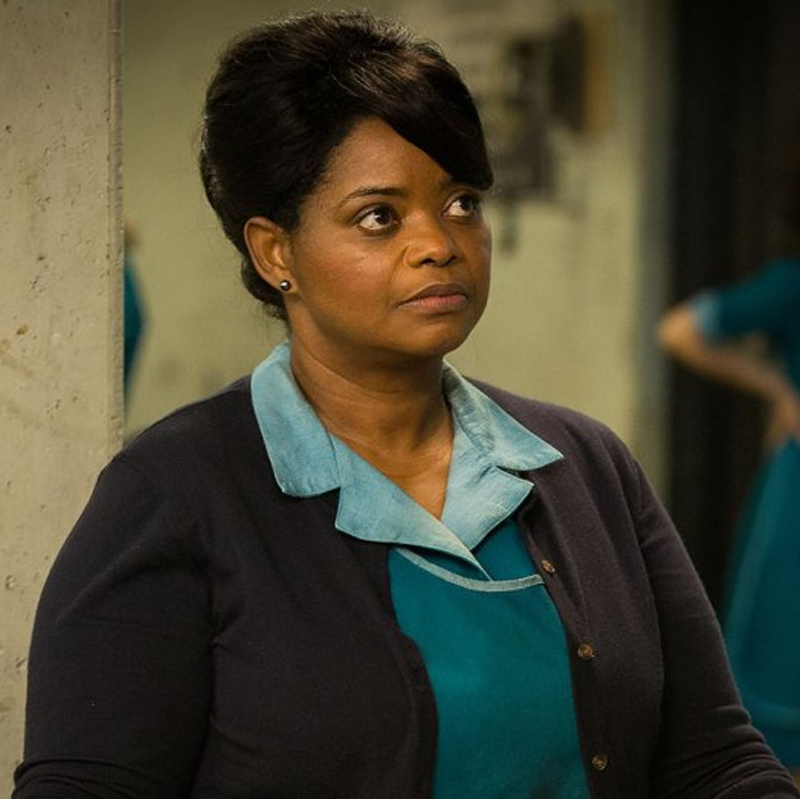
    MUMBAI: Octavia Spencer, winner of the Oscar in the ‘Best Supporting Actress’ category for The Help, has made her intention clear of turning a producer.

    “I don‘t have any role that I want to play. I want to be a producer. I want to be an activist. I was to be pro-active in bringing about work for men, women, boys, girls, everybody who is good at what they do and deserve a shot,” she has been reported to have said.

    After winning the golden statuette, Spencer admitted she was ‘humbled‘ by the accolade and hoped that she could be a beacon of hope to aspiring actresses. “I‘m very humbled because I get to stand here and accept this award and I haven‘t really done anything. I hope that in some way I can be some kind of beacon of hope, especially am I am not the typical Hollywood beauty,” she observed.

    Spencer can next be seen in an yet-untitled film by Diablo Cody.

  • Run up to Oscars starts today after ballots are in

    Run up to Oscars starts today after ballots are in

    MUMBAI: With the final ballots due to reach the Academy’s accounting firm PriceWaterhouseCoopers, the run for the 2011-2012 Oscars will begin after the race for the same that began six months ago will come to an official end tonight at 5 pm PST.


    And with that all the films, the artistes and others in the fraternity will wait with bated breath for the award ceremony due coming Sunday at the Kodak Theatre.


    Since PriceWaterhouseCoopers guards the results, it is very difficult to know how close some contenders came to winning, or how many Academy members participated in the voting process.
     
    History has shown that many Hollywood-area voters wait until the last possible minute to fill out their ballots and then hand-deliver them to the Academy.


    That process could cause some problems this year since the ballots of members who waited until Friday or Saturday last to send off their ballots forgetting that since Monday was President‘s Day, their ballots would not arrive in time to be counted.

  • Imax welcomes China’s move to import Hollywood films

    Imax welcomes China’s move to import Hollywood films

    MUMBAI: Imax has welcomed China’s move to import more Hollywood films after recent deal signed by the Chinese vice-president Xi Jinping and Hollywood studios.

    Imax is one of the key beneficiaries of the loosening of policy on foreign media by China.”We are pleased that the new agreement highlights Imax and allows for even greater flexibility to bring Imax films into China within a structure that fosters more growth and collaboration,” Imax CEO Richard Gelfond said in a statement.

    Toronto-based Imax has taken 15 years to slowly build its presence in China, where it currently has in all 217 theatres.

    “We believe this significant development will help us further our network expansion efforts and enable Imax to continue providing Chinese consumers with great films from both Hollywood and China,” Gelfond added.

    The Canadian-based exhibitor has had box office success in China with local language titles like Aftershock and Flying Swords of Dragon Gate.

  • Salman Khan tipped to replace Amitabh Bachchan

    Salman Khan tipped to replace Amitabh Bachchan

    MUMBAI: Amitabh Bachchan, who has played the narrator or sutradhar‘s role in many films, has excused himself from being one in the Hollywood film John Carter.

    Earlier, when the makers of the film approached the superstar for the sutradhar‘s role for the Hindi version, he decided to do the film.But the actor‘s current health condition has left him with no choice but to back out of the project.

    It is now being said that Salman Khan will now don the hat of the sutradhar for the film.

    However, Khan hasn‘t been able to seal the deal as he is currently in Cuba shooting for Yash Raj Film‘s Ek Tha Tiger.

  • Kodak-a notable absentee at Oscars

    Kodak-a notable absentee at Oscars

    MUMBAI: This year‘s Oscars will see one significant absentee that of Kodak as the company is cancelling its naming contract on the Hollywood Theatre.

    In the midst of bankruptcy, the Eastman Kodak company requested permission to cancel the contract in an effort to improve the company‘s financial situation.

    It has been reported that the original $74 million deal signed in 2000 gives the company naming rights to the theatre. Kodak‘s advisors now say that the benefits of having the company‘s name on the 3,300-seat venue aren‘t living up to the cost of the contract.
     
    Receiving court approval on Wednesday, Kodak is having a hard time justifying the $4 million annual cost of the 20-year contract. It is understood that the Motion Picture Academy has a say in the new sponsor of the Hollywood theatre if they choose to continue to host the event there.

    In case if the Academy chooses to move to a new venue, they lose their say on the theatre‘s name.