Tag: Hollywood studios

  • DNEG set to become the only Pure-play publicly-traded visual effects, animation company

    DNEG set to become the only Pure-play publicly-traded visual effects, animation company

    Mumbai: DNEG, a technology-enabled visual effects, and animation company, and Sports Ventures Acquisition Corp, a publicly-traded special purpose acquisition company have entered into a definitive business combination agreement that will result in DNEG becoming a public company.

    Upon closing of the transaction, the combined company will be renamed DNEG and it is expected that its ordinary shares will be listed on the Nasdaq. The combined company will be led by DNEG chairman and chief executive officer Namit Malhotra.

    A subsidiary of Prime Focus, DNEG creates visual effects and animation for feature films, television, as well as multiplatform content, with operations based in North America (Los Angeles, Montréal, Toronto and Vancouver), Europe (London) and Asia (Bangalore, Chandigarh, Chennai and Mumbai)

    Commenting on this merger, DNEG chairman and CEO Namit Malhotra said, “This transaction creates long-term stability for our teams while also allowing us to exploit the tailwinds in the media and entertainment industry and the explosion in demand for content, which are huge growth drivers for our company. Leveraging our leading technology stack, DNEG is already making great strides into new growth areas such as gaming and content creation partnerships, and we are perfectly positioned to exploit massive new opportunities in the metaverse and the convergence of all forms of content creation.”

    DNEG’s work has earned the company six Academy Awards®️ for Best Visual Effects and numerous BAFTA and Primetime EMMY®️ Awards. Current and upcoming DNEG projects on behalf of its Hollywood and global studio and production company partners include Uncharted (February 2022), Death on the Nile (February 2022), Moonfall (February 2022), Borderlands (2022), Stranger Things S4 (2022), Aquaman and the Lost Kingdom (2022), Knives Out 2 (2022), The Last of Us (2022), The Flash (2022), and Shazam! Fury of the Gods (2023).

  • AFM sues six Hollywood studios for reusing soundtracks in movies

    AFM sues six Hollywood studios for reusing soundtracks in movies

    MUMBAI: The American Federation of Musicians of the United States and Canada (AFM) is suing six major studios for reusing film soundtrack clips in other films and television programs without appropriately compensating musicians.


    The studios named in the lawsuit are: Columbia Pictures, Paramount Pictures, Twentieth Century Fox, Universal City Studios, Walt Disney Pictures and Warner Brothers Entertainment.


    “Our agreements obligate the studios to make additional payments to musicians when soundtracks are reused and AFM members are entitled to receive the benefit of that bargain. Our efforts to resolve these contract violations and missing payments have been unproductive, so we are looking to the courts for relief,” said AFM International president Ray Hair.


    The studios have been pulled up for reusing previously recorded film soundtracks in violation of AFM’s collective bargaining agreement with the studios.


    The lawsuit cites numerous examples of the studios reusing film scores without paying musicians including:

    • Columbia using music from Karate Kid in an episode of the television series Happy Endings;

    • Disney using music from Beauty and the Beast and The Muppet Movie in the television series The Neighbors;

    • Fox using music from Titanic in the film This Means War;

    • Paramount using music from Up in the Air in the film Follow Me: The Yoni Netanyahu Story;

    • Universal using music from Bourne Identity in the television series The Office; and

    • Warner Brothers using music from Battle for the Planet of the Apes in the film Argo.


    The AFM is seeking award damages for all losses, including prejudgment interest.


    In April this year, the AFM had also sued the studios for allegedly breaching the guild agreement by recording film scores outside the US and Canada.


    Click here to read the complaint: 

  • LAFF inks film licensing deals with Sony, Disney, Miramax

    LAFF inks film licensing deals with Sony, Disney, Miramax

    MUMBAI: Continuing to assemble impressive programming assets as it prepares to debut on 15 April, over-the-air broadcast television network devoted to comedy – LAFF – has inked three individual film licensing agreements with Sony Pictures Television, The Walt Disney Studios and Miramax. The deals will bring the network some of the biggest comedic stars and performances of recent times.


    Stars and titles headed to LAFF from the Sony Pictures Television library include: Jerry Maguire starring Tom Cruise; Tom Hanks in Sleepless in SeattlePunchline and Nothing in Common, which co-stars Jackie Gleason; Gleason’s classic pairing with Richard Pryor in The Toy; Pryor and Gene Wilder teaming for Stir CrazySteel Magnolias starring Julia Roberts; Robin Williams in The Fisher King and Moscow on the Hudson; Steve Martin in Roxanne and Mixed Nuts; John Belushi and Dan Aykroyd as Neighbors and also This is Spinal TapAbout Last Night and St. Elmo’s Fire.


    Library movies from The Walt Disney Studios include: Splash, starring Tom Hanks; Robin Williams and John Travolta in Old Dogs; Ellen DeGeneres chasing Mr. WrongJungle 2 Jungle, starring Tim Allen and Martin Short; Eddie Murphy as The Distinguished Gentleman; John Cusack in High Fidelity and Grosse Pointe Blank as well as Honey, I Shrunk the Kids and its sequel Honey, I Blew Up the KidCool Runnings, Mr. 3000 and The Ref.


    Films and stars from the Miramax library include: Kevin Smith’s breakthrough comedy ClerksFlirting With Disaster, starring Ben Stiller; Keeping Up With The Steins with Jeremy Piven and Cheryl Hines; Kristen Stewart, Kristen Wiig, and Bill Hader in Adventureland; Robert Altman’s Pret-A-Porter, with Julia Roberts and Tim Robbins; an all-star cast in Beautiful Girls; Ben Affleck, Liv Tyler and Jason Biggs in Jersey Girl; Matthew Broderick in The Night We Never Met and William H. Macy and Steve Zahn in Happy, Texas.


    LAFF will feature a mix of contemporary off-network sitcoms and popular theatrical motion pictures, with a target audience of adults 18-49.

  • Gaming on Reliance

    Gaming on Reliance

    MUMBAI: There’s a saying: a prophet is respected but in his own country. And that applies quite well to Reliance Games, the mobile gaming division of Reliance Entertainment (Digital). It has successfully been involved in developing games for a slew of Hollywood studios and has been struggling to get Indian film producers to invest in them.


    The company recently launched the official mobile game of The Hunger Games: Catching Fire that released in the US on Friday. It is one of the first multi-player games to be developed in India and Reliance is hoping that it will gain traction. Just like its 17 October 2013 release — “Real Steel: World Robot Boxing” – did with seven million downloads in about a month.
    Reliance Entertainment (Digital) CEO Manish Agarwal thinks the company’s gamble in the gaming business has worked well for them


    Reliance Entertainment (Digital) CEO Manish Agarwal says that he is amazed with the strong response to Real Steel. “We were expecting 10 million downloads in three to four months’ time but I guess that will happen within 40-50 days,” he says, adding that the expectations from the recent game too are high because it’s different in itself as it can’t be played solo.


    “Making just a multi-player game is a bold move for us,” explains Agarwal, who thinks that in India the game might not work well because of the rather low internet speeds, “But it has huge potential to work in countries like Korea, US, UK etc where MOGs are the norm.”


    The company signed a deal with Lionsgate, the studio that has produced the movie, to develop the game earlier this year. Agarwal says that getting the deal wasn’t really difficult for Reliance.


    “What has been an advantage for us is that we have become very close to many of the Hollywood studios with credible works like Snow White, Total Recall, Real Steel etc in our portfolio. The studios have a comfort level with us. And our game based on the movie After Earth (that was launched earlier this year) became a real advantage for us as the recent game is along the same lines and helped us close the deal with Lionsgate Films,” affirms Agarwal.


    The deal was inked on a revenue-sharing basis. Agarwal thinks that a set-up like this works best for both the parties. “Unlike Bollywood that works largely on minimum guarantees, Hollywood is much more mature and the studios there look at gaming as an integral part of the entire process. They don’t take it just as a pre-launch marketing gimmick but look at building it as a franchise, which makes working with them much more exciting,” emphasises Agarwal, who thinks that in India something similar would happen when the gaming market becomes big.


    “The Indian movie gaming industry is still very small. And we would only be able to ape Hollywood when the Indian movie guys truly believe that their movies will be played by millions and they see sizeable revenue coming out of it,” he explains.


    Currently, Agarwal thinks that since the gaming industry is small, the question of revenue-sharing between the game developers and studios in India is completely out of tune as every producer wants to earn his or her pound of flesh.


    “Once the movie guys see profit coming out of it, they will start spending. In Hollywood, they don’t hesitate in spending on games because there’s huge revenue coming out of it from markets like the UK, the US, Australia, Canada, Korea etc.”


    Though the company has had both success and failure in the gaming business with something as popular as World Robot Boxing to a complete flop like Dancing With The Stars, Agarwal says that overall it has been an enjoyable journey.


    “In a portfolio of business, we need to ensure that we maximise whichever is the hit and cover for the losses or failure and that’s what we are doing. Our gaming business will double this year, it has been really profitable giving us confidence to plan on a higher scale for next year,” says Agarwal.


    After producing successful games this year in India, another positive that he has come across is that the company’s Indian team is capable of delivering a world-class product. “That has given us even more confidence to bring many other international projects to India. Today in India we don’t have any competition. We are far ahead of anybody else because the Reliance group has supported us in terms of investments as each of the games is anywhere between half-a-million to a million dollar. It’s a gamble in which we have succeeded,” he concludes.

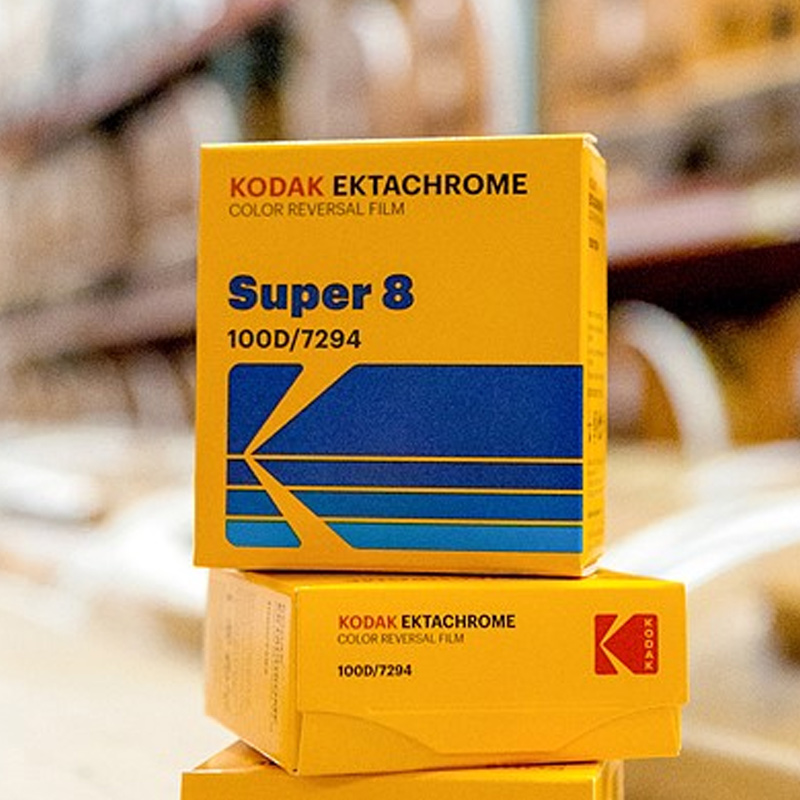
  • Kodak now supplies film to six major Hollywood studios

    Kodak now supplies film to six major Hollywood studios

    NEW DELHI: Kodak has concluded a new agreement with 20th Century Fox to supply motion picture film to its movie and television studios.

    "This is great news for our business," said Kodak‘s Entertainment & Commercial Films Division‘s president and GM Andrew Evenski, which includes the motion picture film business.

    "This agreement shows that this medium remains vital for studios and artists creating a variety of content for a global audience. Kodak is honored to continue supporting Fox and their content creation, distribution and archival needs," he added.

    With the signing of this agreement, Kodak has now completed new contracts with six major Hollywood studios in the last year. The company previously announced agreements with Walt Disney Co, Warner Bros Entertainment Inc, NBC Universal Inc, Paramount Pictures Corp and Sony Pictures.

    Kodak continues to manufacture billions of linear feet of film every year, and the Entertainment Imaging division continues to be the largest driver of film manufacturing volume for Kodak into the future.

  • Hollywood happy of Canadian govt.’s move

    Hollywood happy of Canadian govt.’s move

    MUMBAI: The Canadian government‘s reintroduction of the copyright reform legislation to protect against digital piracy has been welcomed by major Hollywood studios.

    The new rules also proposes to bar anyone from making, importing or selling devices that can break digital locks.
    The proposed legislation also seeks to distinguish between personal and commercial use of recorded TV, radio and online content by Canadians.

    "We support the government‘s commitment to give copyright owners the tools they need to combat online content theft, and promote creativity, innovation and legitimate business models," Wendy Noss, executive director of the Motion Picture Association of Canada, Hollywood‘s point-person in Canada, has been quoted to have said.

    Also lining up to applaud the Canadian government‘s move were Canadian exhibitors, major US music labels and video game developers.

    At the same time, Canadian ISPs that fail to retain subscriber traffic records or to forward notices to suspected pirates will be liable for civil damages if Bill C-11 passes through Parliament into law.

    Ottawa‘s latest proposed copyright reform legislation very much falls in line with U.S.-style protections against piracy. Bill C-11, for example, proposes to bar Canadians from picking a digital lock on music, film or any entertainment product protected from duplication.

    This move is a departure from a Canadian legal tradition that stopped short of pursuing consumers that use circumvention devices to access or copy content as Ottawa looked to balance the interests of consumers and copyright holders.

     The Bill will now move through the committee stage of Parliament in Ottawa and undergo likely amendments, before a vote is taken on whether to pass the legislation into law, likely by the end of the year.

  • ‘Home entertainment is not a commodity but a content- driven business’ : M.N. Kapasi – Excel Home Video MD

    ‘Home entertainment is not a commodity but a content- driven business’ : M.N. Kapasi – Excel Home Video MD

    For Excel Home Video, it is time to expand as big companies like Anil Ambani’s ADAG are planning an entry. The firm recently added MGM to its portfolio of Hollywood studios it has deals with. It is also tapping the TV DVD segment aggressively this year.


    Eventually, Excel plans to get into local content as well for the overseas markets. Indiantelevision.com’s Ashwin Pinto caught up with Excel Home Video MD M.N. Kapasi to find out more about the home video market and the company’s growth plans.


    Excerpts:

    With how many studios does Excel have deals structured?
    We are the home entertainment licensees for among others Fox, Touchstone, Hit Entertainment and Merchant Ivory Productions. Recently, we added MGM to our catalogue. We also have a lot of independently acquired international content. These include documentaries and special interest products. We also have some children’s titles. We recently launched an educational product called Love And Intimacy.


    We have a revenue sharing arrangement with the studios. We also have the master license of Electronic Arts.

    What is the share of Hollywood studios have in the home video market? How is Excel faring and what is the growth rate you are expecting?
    Studies have shown that international content in the home video business has a large share. For Planet M, for instance, 45 per cent of home videos sold are international.


    Within this category, Excel has a 40 per cent market share. We expect growth of 25 per cent CAGR.

    Generally how many units do you sell on an average for a title?
    This is difficult to pull out. The industry which is nascent, is still hits-driven. One big hit or a flop, can skew the average. A big title normally does 15000-200000 units. An average performer sells around 10,000 units.


    For this year so far, our top sellers have been Dor, Pirates Of The Caribbean: Dead Man’s Chest, Night At The Museum, Cars and The Devil Wears Prada.

    Excel has been scouting for a strategic investor for quite some time. Has anything moved on this front?
    We are always open to this option. A partner would add to the speeding up of our growth. The partner could be forward or backward integrating.

    How has Excel gone about improving its distribution model?
    The addition of our gaming division has strengthened our distribution. That is because every gamer is a movie buff.


    We have chased the non traditional distribution model quite aggressively. This includes having a presence in major retail stores which do not have music but have movies and games. A division in our firm actually looks after this aspect.


    We do not have baggages. Firms that are older than us came into the home video area with baggages. They had the psyche that home entertainment is more a rental product than a retail one. Our aim was to make the home entertainment space an ownership business rather than just a renting one.

    Could you talk about your Movies and More division that launched last tear?
    It is a retail chain division focussing on films. It also sells games and music. It is run by movie buffs and targets a captive audience. We are now looking at category management tie ups.


    Right now there are 14 outlets in Mumbai and Pune. The target is to reach 40 outlets across different cities by the end of the year.

    Now you have ATM machines and online selling companies dealing with DVDs. How is Excel adapting in this changing environment?
    We are a technology savvy firm. We know how online buying happens in most developed countries. We have used the internet in the past for gift ideas, pre order campaigns. The internet works well for this.

    One problem for a Hollywood fan is that only a fraction of the films released in the US are available on home video in India. That is also the case with theatrical releases. Do you see this situation changing or is there not enough demand for Hollywood beyond blockbusters and franchise properties?
    The scope is there to expand. We have tried new things over the last couple of years. We have released direct to video titles. This year we are looking at TV titles.


    However the certification process is the one factor that slows us down. Even though home video is a private decision, unlike cinema which is public we still have to get our products certified. The TV show Prison Break has been sitting with the censors for the past seven months.

    We are open to strategic investors. A partner would add to the speeding up of our growth

    Could you elaborate more on the television DVD plans?
    This is a very niche segment still in India but there is a market for it. Due to the size of our population even that niche is large. This year we are focussing on this area.


    We are looking to have 20 titles here. Six to seven titles are already present in the market. We will launch new seasons of shows like 24, Desperate Housewives, Lost, Alias. Commander In-Chief is another show that we will launch on DVD. TV shows on DVDs in developed markets contributes 22 per cent to home videos revenues. We expect similar growth in India.

    Does Excel have plans to get into the rental business as well?
    Our Movies and More division is capable of adapting to the rental model. We had the idea that it should be like Netflix- a rental, online hybrid. But there are challenges.


    As you said, there is a lot of content in the US that we don’t even have a fraction of. You find rental products in the grey market and through parallel imports. For instance, the film Borat has not been rated and is available for rental. If we were to get into rental, then we would have to compete with this. A level playing field does not exist. Having said that, firms like Reliance are setting up rental outlets and we are looking forward to seeing how they fare.

    You mentioned the tie up with Electronic Arts last year for interactive gaming. What progress has been made in this area?
    There were start up issues and the tie up was novel. We had aggressive price points and avoided titles which have parallel imports. The gaming industry like home video, has parallel imports.


    We brought in new capabilities. We released the Harry Potter And The Order Of The Phoenix game which was at the same time as the global launch. Next year there will be Fifa 2008. At this point in time we are not talking with Indian game publishers. Electronic Arts realised that we have in-house synergies which would help the games business.


    Since we have the market leader in gaming with us, we would like the business to settle down before distributing other firms’ products. The amount of money that Electronic Arts puts into making a game is sometimes equal to a Hollywood blockbuster. That is why their products are at least twice as superior to the competition.

    Packaging is important when it comes to purchasing decisions. What innovations has Excel done recently in this regard to distinguish its products?
    It is around 15 per cent of the effort that we make in product presentation. It is important that packaging connects with the film. We also provide value adds and also in terms of the picture and sound quality. International content has DTS, THX certified sound on them.


    There are only two Hindi films that have DTS sound on the DVD. Both of those titles, Lagaan and Parineeta, were released by us. Parineeta was the first Indian DVD to have a director’s commentary.

    What are the major titles coming up?
    We have Pink Panther, Bond titles to launch from MGM. We will be launching the TV show The Simpsons on DVD. We will be releasing films like The Last King Of Scotland, Eragon, Peter Pan Special Edition, Apocalypto.

    In terms of marketing what are the kind of activities that Excel does to create buzz around new titles?
    The home video segment has a limited marketing budget. So we innovate. One programme is exchanging VCD tiles and the consumer only has to pay the difference to get that title in DVD. This has worked well.


    We find that this particularly happens for premium classic titles like Titanic, Sound Of Music. We also have a money back guarantee for all our products.


    We do tie ups with hardware retailers. So if someone buys a DVD player from a certain retailer there will be our coupons offering a discount. That way it makes it easier for the customer to immediately start a library. In the past we have also done synergy marketing like re-releasing a film on home video when its sequel was being released theatrically.

    There is a lot of talk about low prices of DVDs. Does Excel have plans here to reduce prices which would lead to more sales?
    We have around 30 different price points. We have animation VCDs priced at Rs 50. Then we sell a complete season of a TV show like Lost for Rs 2000. Sometimes we also have different price points for the same product. For instance while the Parineeta DVD was sold at the Rs 300 price point, we came out with a Collectors Edition for the film which cost Rs 600.


    This is based on consumer research. I don’t think that home entertainment is a commodity business; it is a content driven business. Do you buy a book just because it costs Rs 30?


    We do consumer price point promotions. We have a promotion running with 200 titles. Each is not more than Rs 333. Our dubbed VCDs are cheaper than the English VCDs.

    The challenge in local content is that prices are coming down. How will you cope with this?
    In terms of prices, the feedback we have been getting is that often cheaper priced DVDs have the quality of a VCD. It is the equivalent of buying cheap T-shirts from street vendors that quickly get ruined in the washing machine. Does the consumer only care for a low price and not for quality? When we get a nod to this answer, then we will have a re-look at our strategy.


    Right now we do not want to compromise on quality. Parineeta, Corporate and Dor sold over 1,00,000 units at price-points that are 10 times higher compared to low priced DVDs that you refer to. Great content, good quality at the right price-points and penetrative distribution will always have the ‘Consumer’ with it.


    We also want to sell Indian content on home video abroad in countries like the US, UK, Australia from next year. The NRI market is underserved in this area. We have already started putting plans in place for this. In those markets the content on home video might be there but the quality is lacking in terms of presentation. We will make sure that our products are available with as many retailers as possible. We, however, do not plan to set up our own stores abroad.

    What are your expansion plans?
    We will have more local content next year. While some film producers have started their own home video label, there are also independent producers who do not have their label. They do not have an outlet as they do not have the economies of scale of putting it in place.


    Our aim is to release six to eight films next year. We will scale this up as we go along. We are looking at a revenue sharing model with the producers and we are confident that this will happen as we are transparent in our operations.

  • Wal-Mart launches movie downloads service

    Wal-Mart launches movie downloads service

     MUMBAI:Retail behemoth Wal-Mart Stores Inc today begins selling films online as the leading seller of DVDs stakes a claim in the emerging market of movie downloading.

    The beta service, powered by new technology from HP Video Merchant Services, includes more than 3,000 movie and TV titles from major Hollywood studios and television networks. Wal-Mart is the first major retailer to offer a video downloads service with the support of all major Hollywood studios.

    New movie releases are available for video download on the day of the DVD release and range from $12.88-19.88 and TV shows at $1.96 per episode.

    “This marks a significant step for Wal-Mart in home video, and enables us to better serve our customers as they begin to complement their DVD purchases with downloading of digital video content,” said Kevin Swint, Wal-Mart’s divisional merchandise manager for digital media. “With thousands of movie and TV titles now available for download, coupled with the strength of our successful physical DVD business, this is an unprecedented offering of video content, features and capabilities currently unmatched in the market. Also, we’re excited to launch a service that has the support of all the major Hollywood studios.”

    “Working with HP in digital video combines Wal-Mart’s ability to bring exciting content offerings to our customers with the substantial technical capabilities of HP. We anticipate further expanding this service to offer a comprehensive online home video shopping experience that meets our customers’ growing needs and allows them to shop a deep selection of movie/TV content in a variety of formats, including video downloads,” Swint added.
     

  • Amazon talking to Hollywood studios for online film downloads

    Amazon talking to Hollywood studios for online film downloads

    MUMBAI: Online retail giant Amazon.com is considering the launch of a service that would allow visitors to download movies and television shows.

    Media reports indicate that the move is aimed at offering an alternative to Apple’s iTunes. Amazon is believed to be in talks with Paramount, Universal and Warner Bros for the store.

    The market for video downloads has gained momentum due to broadband penetration growing. Apple has been strengthening its iTunes offerings. The company just launched a new subscription service that lets consumers purchase TV shows through a monthly subscription.

    AOL, meanwhile, also has been active in expanding its media offerings, creating a service through which users can download videos and other entertainment content. The company is also busy developing its own online TV properties. All of this comes as a challenge to the traditional retail outlets.

    Reports further indicate that Amazon.com’s store is expected to allow users to buy, burn and keep DVD’s and differ from Apple’s current policy on its American store by only allowing visitors to download for viewing on the computer or iPod video.