Tag: Hindustan Unilever

  • Turning boring into fun, while spreading a message

    Turning boring into fun, while spreading a message

    MUMBAI: The brand which follows its corporate social responsibility (CSR) to the T has launched another campaign to promote healthy lifestyle.

    After ‘Help a child reach 5’ campaign from Lifebuoy, germ protection soap from the house of Hindustan Unilever (HUL), comes ‘Jump Pumps’. An on-ground activation to raise awareness about hand washing was based on the insight that more than 2 million children losing their lives to diarrhea every year.

    Time and again, Lifebuoy has implemented several innovative programs to create a habit change for hand washing amongst children as well as to raise awareness about the five critical hand washing occasions in a day.

    HUL general manager (skin cleansing) George Koshy says, “Lifebuoy has a proud history of being a brand that stands for saving lives. It is indeed our mission to ensure that hand washing with soap becomes a habit for children, as a step to reducing diarrheal mortality. The ‘Jump Pump’ activation is an innovative approach that is appealing to children by making it fun and enjoyable.”

    In April 2014, Lifebuoy chose the occasion of the mid-day meal to convey this message. India’s mid-day meal scheme feeds over 120 million children a day, making it the perfect opportunity to address the maximum number of children across schools, at the actual moment of truth.

    Across many rural schools, the FMCG giant in the country found that children were not washing hands before having lunch, despite the availability of soap. The old & heavy hand-operated pumps are the only way to access water in these schools, and hence young children find it difficult and tiresome to operate them.  The challenge before the company was to create an intervention on this key barrier.

    Click here to watch the video

    So, it came up with a simple idea – turn the boring and cumbersome hand pump into a fun game!

    HUL installed specially-crafted rocking horse, made from a combination of wood and metal with a simple screw-on mechanism, on to the handles of these hand pumps in schools – transforming them into ‘Jump-Pumps’.

    At lunchtime, when children headed out of class for their meal, they were taken by surprise by this colourful addition to their school premises. The concept and the proper technique of washing hands with soap along with putting up posters at prominent spots in the school to explain the “Jump Pump” game was then explained to the kids. Apart from this, Lifebuoy soap was also provided to ensure soap availability throughout the activation period.

  • MUSIC F- Fatafati partners with Axe for ‘Dance Party Jhinchak’

    MUSIC F- Fatafati partners with Axe for ‘Dance Party Jhinchak’

    MUMBAI: MUSIC F- Fatafati, the recently launched music channel by Royal Raj Media and Launch Pad, is set to air a new show Dance Party Jhinchak.  The channel has collaborated with Hindustan Unilever’s Axe for the show, which has been designed on a similar theme as the ‘Axe Boat Party’.


    Expect to see youngsters groove to the remixed Bangla music on the show. Be it by the poolside, a beach affair or retro, the property will have thematic parties shot over eight episodes which will be aired for a period of three months between 10-10.30 pm every day.


    For the channel which currently holds the highest time spent viewing ratings in music channel genre in Bengal, this new property aims to set a benchmark in the Bangla music industry. This partnership will enable Hindustan Unilever to engage with a larger segment of its target audience as well as prospective consumers.


    On ground activities will start from Kolkata and eventually move onto other cities as well.


    Speaking about the concept of the new property, Launch Pad director Vikas Varma said, “We believe in giving a world class experience to our audiences. This new property will set a new trend in the music industry that breaks monotony and sets the rating points soaring high.  The viewers will get to explore the richness of Bangla music in a very interesting way. It is going to be a good blend of music and fun.”


    Taking about channel’s association with HUL’s Axe brand, Launch Pad director Probal Gaanguly said, “We are delighted to have Axe on board, as this will be a perfect platform for brand’s core target audiences. In short time, channel has gained immense popularity and we are determined to try out new things to increase engagement with our viewers and advertisers. Dance Party Jhinchak is a one of a kind property that will make Music F – Fatafati a leading music channel in the region and also open opportunities for new genres.”


    The channel has launched a 360 degree marketing campaign for the new property, which includes outdoor hoardings, press ads and cantor activities across multiple locations. Music F – Fatafati is available across all cable and on digital platforms.

  • Marketing, the Dove way!

    Marketing, the Dove way!

    MUMBAI: There has been some exemplary advertising from Dove from the house of Unilever for over a decade now. The brand has endeavored to define beauty in a meaningful manner through its communication strategies.

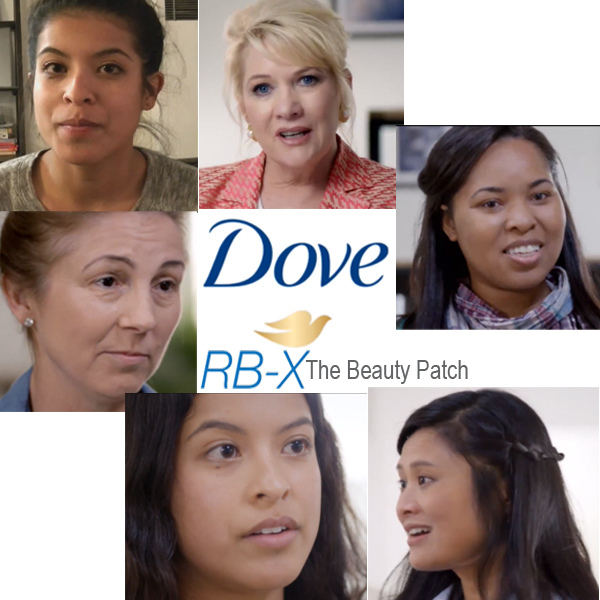
    The latest is a digital film which goes on to say that “Beauty is just a state of mind”. It features a two week-long social experiment by New York Times bestselling author, psychologist and body image expert, Dr Ann Kearney-Cooke, inviting women to wear a custom-made ‘beauty patch’ to help them feel more beautiful. The ladies give personal accounts of how the patch variously made them feel ‘more confident’, ‘refreshed’ and so on. At the end of the experiment, the patch is revealed to contain nothing, proving that beauty is more than just skin deep. Not surprisingly, the film which is running on YouTube garnered more than 15 million views within one week.

    Not just the digital film but most of Dove’s advertising carries significant marketing lessons for other beauty brands. Here’s looking at some of them…

    Stories win hearts

    Advertising with a strong storyline always works. Consumers connect with a product line if it is endorsed by people with a story. Dove has successfully taken care of this aspect locally and globally.

    Be constant

    For people to remember advertising, it is essential for brands to be consistent in the way they project their ideas through communication. Dove over the past few campaigns has gone digital and this has helped them get greater reach.

    Have a clear line of thought

    Projecting an idea sharply helps. One of the reasons why Dove pops up in people’s minds is that it almost always supports a strong line of thought.

    Take the video route

    In the age of social media, creating visual campaigns is a plus. More importantly, videos can be shared and help measure feedback instantly. Tracking the success of the campaign becomes that much easier, and Dove seems to have got that right!

    Use subtle marketing plug-ins

    While rolling out digital films, brands need to go subtle on plug-ins. Two things that work best on digital platforms are curiosity and a good amount of hype. Dove has got just the right amount of both.

    Click here to watch the video

  • ‘Innovating For A Better Tomorrow’ with Amul & Hindustan Unilever’s Pureit

    ‘Innovating For A Better Tomorrow’ with Amul & Hindustan Unilever’s Pureit

    MUMBAI: CNN-IBN, in partnership with Infosys, brings to the fore exemplary innovations that have not only transformed the lives of millions of Indians but have also left indelible impressions globally. This exclusive nine-episode series ‘Innovating For A Better Tomorrow’ showcases innovations with significant business and social impact.

    The seventh episode of the series will feature Amul, one of the most successful companies of India whose innovations helped India emerge as the largest milk producer in the world; and Pureit, a breakthrough innovation by Hindustan Unilever that can provide four litres of drinking water ‘as safe as boiled’ at a running cost of just Re 1.

    Don’t miss the special episode on Saturday, March 29, at 7:30 PM, with a repeat telecast on Sunday, March 30, at 12:30 PM & 7:30 PM, on CNN-IBN; and on Sunday, March 30, at 4.30 PM, on CNBC-TV18. (TBC)


  • JWT celebrates 150 years of Pioneering in Advertising

    JWT celebrates 150 years of Pioneering in Advertising

    MUMBAI: In celebration of the agency’s 150th anniversary, JWT today announced a yearlong program of innovative events and activations to highlight its pioneering spirit and rich history around the world.
     

    “JWT’s 150th is much more than just a birthday. This is a platform to galvanize our employees around our pioneering roots and spirit of inventiveness, and to share our mission with our clients and the world,” said Chairman and CEO Bob Jeffrey.
     

    J. Walter Thompson, the agency’s founder and the original ad man, paved the way for what is now known as modern advertising. Since the agency first opened its doors in 1864, Thompson’s vision as an innovator and pioneer has expanded into a global network of 10,000 employees, spanning 200 offices and 90 countries.
     

    “Every day is an opportunity to reinvent tomorrow, and together with our pioneering clients, we will continue to seize that opportunity for the next 150 years,” said Jeffrey.
     

    Over the decades, JWT has maintained a number of the industry’s longest-standing client relationships including: Unilever (109 years), Kimberly-Clark (84), Nestle (81), Kellogg’s (80), Rolex (68), Ford (67), U.S. Marines (66), Johnson & Johnson (51) and Shell (49).

    In celebrating the agency’s rich history of pioneering, JWT drives forward in its mission and vision for the future to invent pioneering ideas that people want to participate in and spend time with.
     

    “It is an honor to join JWT during such a momentous time. This is an agency with pioneering DNA – the brand, the clients and the people,” said Gustavo Martinez, Global President for JWT Worldwide. He added, “Our strategy for growth in the year ahead as a company will also draw its strength from our spirit of pioneering.”

     
    From hiring the first female creative director and pioneering magazine advertising to being the first agency to expand overseas and the first to send a Kit Kat into space, JWT has pioneered in the world of advertising with groundbreaking ideas that are bold and engaging, and introduced many of the world’s most memorable communications.

     
    In 2013, JWT’s innovative work won a number of accolades at global awards shows including the preeminent Cannes Lions International Festival of Creativity. JWT’s “Fakka” for Vodafone brought home numerous awards, including a gold lion and was also the most awarded piece of strategic work in the industry last year. Additional award-winning campaigns were JWT Beijing’s “Missing Children” app for Baobeihuijia.com and JWT New York’s “Yes, Virginia the Musical” for Macy’s.

     
    And, JWT’s work for Nestlé’s Kit Kat played a significant role in the brand being named one of the most influential candy bars of all time by TIME magazine.  

     
    To kick off the anniversary celebrations, Jeffrey and Martinez unveiled a commemorative logo that revives the original historical mark from JWT’s earliest visual branding: the Owl and the Lamp. The owl, long a symbol of wisdom in many cultures, and the lamp, an emblem of light and clarity of vision, together symbolize that experience and knowledge lead to success.

     
    Additional 150th celebrations underway for the year include:

    •The Commodore Challenge – an internal contest in search of the three most pioneering ideas for the world, with cash prizes

    •Cannes seminar on pioneering and innovation

    •Pioneering Influencer Series with clients, alumni and industry icons

    •Helen Lansdowne Resor Scholarship for female creatives

    •Interactive historical timeline

    •Historical content series highlighting JWT’s first and best stories from around the world

    •JWTIntelligence 150th Initiative

    In 2014, JWT will also continue to reinvent and bolster our digital capabilities. Actively managing digital change, JWT touts more than 2,000 nontraditional specialists dedicated to delivering digital work for clients. The agency will continue to acquire pure-play digital agencies, with a special focus on emerging markets — recent acquisitions include Thomas Idea in Thailand, Post Visual in South Korea, Designercity in Hong Kong and Lemon Sky in Poland — while expanding existing digital networks.
     

    New business growth is an important signal of JWT’s contemporary relevance, as it often involves attracting clients from newer industries. The agency was recently named global agency of record for PUMA, confirming JWT’s credibility in the booming sectors of sport and fashion. Other new business wins included Energizer personal care brands, Air Canada and The Singapore Tourism Board.

  • AICL to transform annual reports from boring vanilla to interactive

    AICL to transform annual reports from boring vanilla to interactive

    MUMBAI: Annual Reports is just more than numbers, it’s a piece of handiwork through which a company can promote itself, its prospects to its various stakeholders.  It is no longer just a compilation of statistics.


    And to make them more interactive rather than just plain vanilla, AICL Communications, a full-service strategic communications consultancy, has taken upon itself to change the way one looks at the boring text running over pages and pages.


    A recent survey by Burson-Marsteller found that 95 per cent of chief executives in the US believe corporate reporting plays a critical role in achieving key business objectives. To bring that thought and change in India as well, AICL is assisting several Indian corporates in giving shape and character to their annual reports, paving the way for stakeholder groups to understand them better.


    The company has big daddies of various categories as its clients. Reliance Industries, Zee, Hindustan Unilever, Kotak Mahindra Bank, IDBI Bank, Maruti Suzuki, Tata Group, Hero MotorCorp, to name a few.


    AICL Communications CEO Arvind Agrawal says, “Many companies now recognise the significant role an annual report plays in providing a road map of key messages and strategic direction. The role of annual reports has been largely changed by innovations in technology that have broadened access to information. At AICL, we are partnering the best Indian brands to help them create a corporate image among the investor community that is commensurate with their business potential.”


    The thought is to add spunk and interactivity in addition to containing relevant information, visuals and imagery. Today, good annual reports are as essential as good advertising for any company. The best practices to create a good annual report according to Agrawal are: data visualization, use of imagery to highlight company’s scale, highlight company’s contribution to people and the planet through its CSR.


    “Internet too has changed the way people look at things. We believe that if one can access the annual report online then it becomes very interactive,” says Agrawal while stating the example of HUL, Zee on how such companies have created micro-sites for their annual reports.


     “We have immense respect for the work and effort AICL invests to make our reports an interesting read. These reports not only help us gain a leadership position in the minds of current and prospective stakeholders, but also allows us to clearly state our goals and pioneering initiatives in the space we operate in,” added Zeel global head brands Ronald Landers for the company which is in its fifth year of association with the consultancy.


    AICL operates in the specialised domain of corporate reporting, with services spanning annual and sustainability reports, internal communication, digital and moving image solutions.


    When asked if the company is looking at raising funds from the market, Agarwal pointed out that since it operates in a niche space and has a high profile clientele, the company doesn’t need funds from the market and are self-sufficient at present.


    The company’s quest to underscore the importance of reporting has driven it to continuously strive towards innovation in the domain. In doing so, it has built a portfolio of clients which comprise nearly 40 per cent of the BSE Sensex, 30 per cent of the Nifty 50 and three of the eight Indian Fortune 500 companies, besides multiple MNCs and PSUs.

  • Adversioning advertising gains currency

    Adversioning advertising gains currency

    MUMBAI: A national jewellery brand had to reach out to the diverse markets in south India. It needed a solution that would allow it to simultaneously beam on a national television channel different creatives for the diverse markets in the region, each featuring a regional celebrity.


    Thanks to technology solutions, the jewellery company could get its different creatives beamed to relevant demographics at the same time on the same channel.


    The concept is called adversioning or geo-targeted advertising in the media world.


    Technology for such simultaneous telecast of different advertisements on the same channel has been available for a few years now but advertisers have begun to use it on a significant scale only recently.


    Advertisers are increasingly making use of geo-targeting. These include fast moving consumer goods major Hindustan Unilever.


    The geo-targeted advertisements in value terms now account for about 20 per cent of total ads on television. In the US, the proportion of such ads is almost 40 per cent. According to GroupM, total advertising spend on television in 2013 was Rs 16,860 crore.


    But the potential for geo-targeted ads in India is seen to be much, much higher considering the extent of diversity in the country, says SureWaves founder Rajendra Khare. SureWaves is a technology solution provider for geo-targeted advertising and had provided its service to the national jewellery brand but decline to disclose the name of the brand.


    Khare says it makes sense for any advertiser to opt for geo-targeted advertising to not only break the language barrier but also to target differently the different the socio-cultural groups across the country with a sharp and direct emotional connect.


    So, the next time when you are on a trip to Chennai, don’t be surprised if you come across an ad by Fastrack Cabs on a national channel.


    The Indian market is a complicated one. From regional differences to numerous brands, one needs to stand out in a clutter to catch the attention of as many consumers as possible.


    Apart from SureWaves, there is amagi Media Labs that offers advertisers and broadcasters solutions for geo-targeted advertising.


    Geo-targeting or adversioning is done with the help of a barcode system and cloud-based infrastructure on which TVCs are stored. The technologies solutions then enable playing of different ads in different regions on the same air-time band on a particular channel.


    There’s a possibility of making available different solutions to meet different needs. For instance, Carat Media which handles baby products maker Libero’s account, wanted to reach out to non-Marathi female audience in Maharashtra. Amagi’s technology enabled Libero to use channels with a national footprint for the launch campaign of Libero in a specific market like Maharashtra.


    Amagi which had to answer a lot of questions when it started out in 2008 feels that those doubts have now been put to rest.


    “Today, largest national players like HUL, GSK too want to follow a regional plan and have different communication depending on the region,” says Amagi’s co-founder KA Srinivasan.


    Geo-targeting or adverisioning implies customised broadcast of creative communication to different markets in the same ad slot. In other words, it means splitting up of the national beam of a broadcaster into local beams akin to what national newspapers do for their local editions.


    ‘How can we sell a standardised product to local and different consumers?’ has been a dilemma for most marketers. However, with the adversioning concept, things are supposed to change.


    According to GroupM Trading (CTG) south Asia Managing Partner Prasanth Kumar, who is a big votary of adversioning, says, “clients can benefit in multiple ways as spill-over reduces, national channels can be used to run local promotions, the same 30 second slot can be used for multiple creatives (different brands in different markets, different language versions in specific markets). Majority of the clients who have used this availability are local clients.”


    There might be companies which don’t feel the need to make an ad locally oriented, but there are a few which opt to geo-target ads. One of the main reasons a brand may geo-target ads is because it only offers services/products within specific areas. There is a huge and compelling demographic component involved with geography that can influence click-through-rate (CTR) and conversion rates as well.


    Recalling how cable operators’ years ago would show local advertisements, Havas Media India managing director Mohit Joshi says if we take a look at the southern market, one can see a lot of local players which isn’t the case in the northern part of the country. “The concept makes sense for local clients/marketers a lot as it gives them a chance to target their TG.”


    But will the local marketers be able to find their place and compete with national players? Answers Kumar, “Yes. Local advertisers form a large part of the 2,000 plus clients who have tried this concept. They see value in placing their ads on national channels as these channels were earlier much more difficult to afford and local players have specific market requirements.”


    On the same lines, Pipal Majik CEO CD Mitra highlights how brands too have been emphasizing on “localisation” and if adversioning helps them achieve it then many will opt for it.


    “For example, if a particular tea brand wants to sell its particular blends in certain regions then this is the perfect solution for them to advertise in a certain regional beam of a national channel.”


    Talking about the cost of geo-targeted ads, experts say creative production cost is just a small segment of the overall marketing budget a brand allocates.


    The credit for the growth of the format and news, movies and GEC channels experimenting with it goes to the fact that vernacular media has been growing at a much quicker pace than the national media, Kumar elaborates.


    “The reason for the growing importance of Class B and Class C towns for advertisers, the growing education levels, expansion of vernacular publications into new markets with categories like retail, real estate along with FMCG is fuelling the growth,” he adds.


    Khare adds that a marketer needs to utilize both national as well as regional channels to reach out to as many people as possible. “It is not national vs. regional, but how one can utilize both for its benefit. We have to also understand the importance of spot TV which is the most cost effective way for advertisers to market.”


    Technology plays an important part of the concept to become a part of life, soon. Joshi says, “If the technology is not there to support the concept then it will surely fall flat in its face. We as an industry will have to invest in it to see it grow and become an integral part of advertising soon.”


    Apart from this, industry professionals feel that pricing too plays an important role here. The competition between national and local players will vary and also depend on it. “Broadcasters in the end need money. If they get it from local players or national ones, it doesn’t matter. Hence, stakeholders have to come up with attractive pricing and strategies to make it real,” says Mitra when asked if broadcasters would opt for local marketers over national ones.


    Zee TV has been selling ad spots split into regional beams since late last year and has had a good experience with it. Zeel chief sales officer Ashish Sehgal says, “The concept has helped us  increase number of clients if we offer them a strategic plan which will help them reach out to their TG better.”


    He further says the sum of revenues from a divided ad spot has been higher than the revenue it would have got having sold it as one national beam.


    Sehgal says Zee TV has seen an increase in local marketers through geo-targeting. “In the past few months, around 25-30 SMEs have come to us to use the platform.”


    Bennett Coleman & Co president corporate development Sunil Lulla says adversionsing is very much a reality now with many brands and broadcasters using it.


    However, he says that a broadcaster has to be clear about this with the clients otherwise it can hurt some advertisers who pay for a national beam but sometimes local/regional beams could be sold to another client. “We (broadcasters) have to understand that there is a big (regional) market which can be tapped through this and it will benefit everyone.”

  • CNN-IBN & Infosys present ‘Innovating for a Better Tomorrow’

    CNN-IBN & Infosys present ‘Innovating for a Better Tomorrow’

    MUMBAI: As the world around us evolves rapidly, several innovations are born to help us keep pace. CNN-IBN, in partnership with Infosys, is all set to bring to the fore exemplary innovations that have not only transformed the lives of millions of Indians but have also left indelible impressions globally. The exclusive nine-episode series ‘Innovating for a Better Tomorrow’ will showcase innovations with significant business and social impact.

    The series will begin on February 15, 2014 with an hour-long discussion between CNN-IBN Deputy Editor Sagarika Ghose and Infosys Co-Founder and Executive Chairman N R Narayana Murthy. The episode will touch upon various topics revolving around innovation. It will discuss the opportunities, growth prospects and challenges for innovators, while also outlining the role of corporates in encouraging innovation.

    The 14 compelling innovations to be featured on the show are:-

    Business Innovations

    •    Aurolab: For creating the world’s cheapest intraocular lenses.

    •    GE Healthcare: For introducing MAC 400, a low-cost ECG machine that has profoundly impacted clinical guidelines and ECG standards, and made ECGs available to every physician, every patient, everywhere.

    •    Amul: One of the most successful business innovations that came out of our country and helped India emerge as the largest milk producer in the world.

    •    Cipla: For emerging as a world leader in the generic drug market and for making life-saving drugs available to those who need it the most, at an affordable cost.

    •    Hindustan Unilever: For Pureit Water Purifiers, a breakthrough innovation developed and designed locally for low-cost domestic water purification.

    •    Godrej & Boyce ChotuKool: A compact small fridge that runs on both electricity and battery for the mid- and low-income urban and rural markets.

    •    BrahMos Aerospace: For developing BrahMos missile, which is the world’s first supersonic cruise missile that can be maneuvered while still in flight.

    •    Dr Reny M Roy, DRDO scientist: For developing the Explosive Detection Kit (EDK) that uses chemicals to trigger reactions and detect explosives.

    Social Innovations

    •    Akshaya Patra Foundation: Runs school lunch programs across India distributing freshly cooked, healthy meals daily to almost 1.3 million underprivileged children in 9,000 government schools through 20 locations in nine states across India.

    •    Dr Devi Shetty, Chairman and Founder of Narayana Hrudayalaya: Made cardiac surgery affordable to even the poorest in our society.

    •    Bunker Roy, social activist and educator: Founded the Barefoot College that educates illiterate village women, often grandmothers, to assemble and maintain hi-tech solar panels for use in their own villages and for others.

    •    Pratham: The largest NGO working to provide quality education to the underprivileged children in India.

    •    Jaipur Foot: For providing world-class artificial limbs, rehabilitation aids and other appliances, free of charge, to physically challenged individuals below the poverty line.

    •    Ela Bhatt, Founder, Self-Employed Women’s Association (SEWA): For running one of the largest women-led social business enterprises for poor, self-employed women workers.Speaking about the series, Sagarika Ghose, Deputy Editor, CNN-IBN, said, “The world has experienced commendable changes over the years on account of brilliant minds that have introduced several innovations across verticals. As we continue to progress, our series Innovating for a Better Tomorrow aims to highlight and felicitate top innovators, who have helped our country and other nations prosper.”

    N R Narayana Murthy, Co-Founder and Executive Chairman, Infosys, said, “Innovation is all about new methods of using existing knowledge to make the lives of people better. Societies that have embraced innovation have enhanced productivity and grown their economies rapidly. I think in a developing country, like India, there is both a need and huge potential to innovate in every sector. Innovating for a Better Tomorrow is our attempt to recognize individuals and groups who have changed thousands of lives with their innovations.”

    The series will conclude with a grand finale wherein the 14 innovators will be awarded.

     
    Don’t miss the series beginning with the curtain raiser on Saturday, Feb 15, at 7:00 PM, with repeat telecasts on Sunday, Feb 16, at 12:00 PM & 6:00 PM, on CNN-IBN; and on Sunday, Feb 16, at 3:30 PM, on CNBC-TV18.

    ABOUT TV18

    The Network18 Group is a media and entertainment company with interests in television, internet, films, e-commerce, magazines, mobile content and allied businesses. Through its subsidiary ‘TV18 Broadcast Ltd.’ [BSE: 532800, NSE: TV18BRDCST], the group operates news channels – CNBC-TV18, CNBC Awaaz, CNBC-TV18 Prime HD, CNN-IBN, IBN7 and IBN-Lokmat (a Marathi regional news channel in partnership with the Lokmat group). TV18 also operates a joint venture with Viacom, called Viacom18, which houses a portfolio of popular entertainment channels – Colors, Colors HD, MTV, SONIC, Comedy Central, VH1, Nick. Nick Jr. and Nick Teen – and Viacom18 Motion Pictures, the group’s filmed entertainment business. TV18 has also forayed into the Indian factual entertainment space through A+E Networks | TV18 (a joint venture between A+E Networks and TV18 Broadcast) and operates HistoryTV18. TV18 and Viacom18 have also formed a strategic joint venture called IndiaCast, a multi- platform ‘content asset monetization’ entity mandated to drive domestic and international channels distribution, placement services and content syndication for the bouquet of channels from TV18, Viacom18 and other broadcasters. For more information, please log on to www.network18online.com

    For further information contact: Althea Brett MSLGROUP 84478 38739


  • ASCI upholds complaint against 144 ads in June 13

    ASCI upholds complaint against 144 ads in June 13

    MUMBAI: The Consumer Complaints Council (CCC) of the Advertising Standards Council of India (ASCI) has upheld complaints against 144 out of 174 advertisements in June.


    The category leading the pack of misleading ads was health and personal care category followed by education sector. For the first time ever, ASCI has also tracked and upheld complaints against four online advertisements,   out of which one is an advertisement of Hindustan Unilever on the YouTube.


    The CCC found two ads violating Chapter III 1(b) of the ASCI Code as they deride colour of the skin in the digital space. The complaints were upheld against HUL’s Ponds BB Cream which is titled ‘The Future of India’ and goes on to talk about various benefits of the product and how women yearn to have fair skin and Emami Fair and Handsome cream ad which shows a flow chart depicting various problems such as inferiority complex, not good looking, etc. affecting dark skin colored people.

    In the health and personal care product or service category, the CCC found that claims of 58 ads released in the press is either misleading or false or not adequately/scientifically substantiated and hence violating Chapter I of the ASCI Code. Some of the health care products or services ads also contravened provisions of the Drug & Magic Remedies Act.


    The complaint against HUL’s Sunsilk Perfect Straight ad that shows a girl packing/selecting all her hair straightening equipment and her friend telling her about a shampoo that can keep the hair perfectly straight after attending a gym session, party or even in other situations’  has been upheld for misleading the customers.


    Another one making to this list is Johnson’s Baby Natural Massaging Oil advertisement. The ad claims that the ‘oil helps in 47 per cent more weight gain.’ Similarly, Dabur’s Fem Turmeric Herbal Bleach claim of it being a ‘herbal, mild and ammonia free bleach’ and  Zee Laboratories’ advertisement of Virgin Again Gel claiming that the ‘Vagina tightening and rejuvenating gel improves muscle tone’ complaints have been upheld.


    Livon Hair Gain Tonic in their print ad claiming ‘Increase hair growth with the latest hair gain formula- Livon Hair Gain Tonic’ is another one making to the list of products being upheld.


    The Himalaya Complete Care Toothpaste TVC begins with a message depicting importance of the `anti-oxidant’ having health benefits. The commercial which communicates that anti-oxidant not only kills the germs but also removes toxins and further strengthen the gums and teeth and then, ultimately, concludes with a message that it is much more than gum protection was upheld too.


    Second in lead was the education category wherein CCC found 57 different advertisers in print violating the ASCI guidelines for advertising of educational institutions and hence the complaints were upheld.


    Eight complaints were upheld in the consumer durables category with brands like Godrej, Samsung, Microtek etc.


    In the telecom category, the advertisement of Tata Docomo Network showing a husband quietly eating a pizza at night when the Tata Docomo signature sound starts playing in the background. A voice over that starts ‘When you are enjoying your pizza, think of us because leading pizza chains use our network. So, are you on the network that is everywhere?’ The CCC viewed the TVC and concluded that the claim, ‘leading pizza delivery chains  use Tata Docomo network’, was not substantiated as the support was provided only for one chain i.e. Pizza Hut.   The advertisement contravened Chapter I.1 of the Code.  The complaint was upheld.


    Complaints against Bennett Coleman & Co. Ltd, CNBC Awaaz and Punjab Kesari were upheld in the media category.  


    Other categories against which complaints were upheld were auto, food and beverage and many other.


    ASCI, through the National Advertising Monitoring Service (NAMS), has already started post tracking of advertisements in print and TV against which complaints are upheld.  Initial tracking results show overall there is 90 per cent compliance from advertisers on ASCI’s decisions.

  • ASCI upheld complaints against 52 of 84 ads; healthcare

    ASCI upheld complaints against 52 of 84 ads; healthcare

    MUMBAI: ASCI‘s Consumer Complaints Council (CCC) upheld complaints against 52 out of 84 advertisements, which came under the scanner of the self regulatory body in March 2013. Taking a proactive measure to protect the interest of healthcare, education and personal care consumers, ASCI upheld complaints against those ads that were making misleading claims to engage clients, in forming pseudo brand image.

    The major brands that had come under ASCI‘s scanner, include Dabur India Ltd, Procter & Gamble Hygiene & Health Care Ltd, Hindustan Unilever Ltd, Johnson & Johnson Ltd, Ag Herbs (Singapore) Pte Ltd, Zaptech, Garima Career Foundation, Montfort Group of Institute, The Economic Times, Honda Siel Power Products Ltd, Hindustan Unilever Ltd and Eureka Forbes Ltd.

    In March 2013, ASCI witnessed a surge in number of complaints against the deceiving ads, which had mounted to 84. However, all of them did not contravene ASCI‘s codes or guidelines, and 32 complaints were later taken back. Those which didn‘t trespass the code were, Aditya Birla Management Corporation Pvt Ltd- Idea 3 G, Applect Learning Systems Pvt Ltd– Meritnation.com, Cadbury (India) Ltd – Perk Glucose, Carrier Midea India Pvt Ltd – Midea Air Conditioners, Hindustan Unilever Ltd – Dove Elixir Hair Oil and Nitta Gelatin India Limited, Parle Products Pvt Ltd – Parle Londonderry.

    In the case of health & personal care products or services ASCI upheld complaints against those inadequate and unscientific print ads, which had violated the Chapter I of the ASCI code. Some of the healthcare product or services ads also contravened the provisions of the Drug & Magic Remedies Act. Due to which industry‘s major players, including Dabur India Limited, Hindustan Unilever Ltd, Johnson & Johnson Ltd, Dr. Monga Clinic, ClinTech Medical & Aesthetic Center, Rvita Ayurveda Centre, Vaarid Herbal Face Pack and Soliel International came under the fire.

    On the educational fore, there were 14 advertisements that could prove its essence and had violated the ASCI Guidelines for Advertising of Educational Institutions. For instance, players like Zapak, Garima Career Foundation, Mazenet Solution Pvt Ltd and BS Abdur Rahman University, Montfort Group of Institute‘s claims came up futile in providing 100 per cent job to people.

    ASCI‘s regulation didn‘t spare India‘s biggest media conglomerate like Times Group, when ET Now came under scanner for its print ad saying, “ET Now is the undisputed leader on the budget date, and only our competitor will say it was a bad budget.” They have quoted ET Now has 64 per cent of the market share and CNBC TV18 has 36 per cent of the market share.The CCC noted the contents of the ad and concluded that the market share claimed by the advertiser was not adequately substantiated. The advertisement contravened Chapter I.1 of the Code; therefore, the complaint was upheld.

    Above all, there were some other companies from Automobile, FMCG and consumer durable products that flouted the codes of ASCI‘s Consumer Complaints Council (CCC).