Tag: Hinduja

  • Q1-2016: Cable TV in India – Sequential quarter revenues down, broadband shines

    Q1-2016: Cable TV in India – Sequential quarter revenues down, broadband shines

    Indian Cable TV is a long haul work-in-progress is what we had said last quarter. The results of the four sample companies in the quarter ended 30 June, 2015 (Q1-2016) in that report seem to endorse this fact. All four companies comprising the big three – Hathway Cable and Datacom Limited, Den Networks Ltd, Siti Cable Network Limited and the minnow – Ortel Communication Limited reported a quarter on quarter (QoQ) drop in total income from operations (TIO or revenue) in the current quarter. As expected, broadband subscribers and revenue continues to grow.

    Note: (1) 100,00,000 = 100 lakh = 10 million = 1 crore.

    (2) Some figures are approximate.

    (3) Generally other income has not been factored in for EBIDTA figures in the report.

    Performance

    Though Den Networks’ and Hathway’s YoY results in the current quarter deteriorated, QoQ, both performed better, albeit both the cable companies reported losses. Siti Cable’s loss in Q1-2016 increased YoY and QoQ, and though regional player Ortel returned a profit in the current quarter as compared to a loss in Q1-2015, its Q1-2016 profit was less than half the profit reported in the immediate trailing quarter.

    Over the last few quarters, Den Networks’ financial performance has shown a marked decline. From a company that reported profit after taxes, it has started reporting a loss. Without considering other income, the company reported a negative EBIDTA of Rs 4.67 crore as compared to the operating profit of Rs 57.16 crore in Q1-2015 and a higher operating loss of Rs 5.97 crore in the immediate trailing quarter. However, the company’s Cable TV segment reported a higher QoQ EBIDTA in Q1-2016 of Rs 18 crore (6.9 per cent margin) as compared to the Rs 14 crore (5.3 per cent margin) in Q4-2015, but a lot lower than the EBIDTA of Rs 69 crore (27 per cent margin) in Q1-2015.

    Hathway’s EBIDTA in the current quarter declined 25.4 per cent to Rs 32.73 crore (12.8 per cent margin) as compared to the Rs 43.87 crore (17.5 per cent margin) in the corresponding year ago quarter but was 5.7 per cent more than the Rs 30.98 crore (11.5 per cent margin) in the immediate trailing quarter.

    Siti Cable’s EBIDTA including other income for Q1-2016 increased 5.1 per cent to Rs 38.1 crore as compared to the Rs 36.26 crore in Q1-2015 and was 18.7 per cent more than the Rs 32.11 crore in Q4-2015.

    “Our commitment to improving operational efficiency and streamlining operations continues, leading to EBITDA growth of 18.7 per cent and margin expansion by 501 bps QoQ,” explains Siti Cable executive director and CEO VD Wadhwa.

    Ortel’s EBIDTA in the current quarter improved by 24.1 per cent to Rs 10.84 crore (26.7 per cent margin) as compared to the Rs 8.73 crore (22.1 per cent margin) in Q1-2015, but declined 34.5 per cent as compared to the Rs 16.55 crore (36.9 per cent margin) in the immediate trailing quarter.

    Ortel president and CEO Bibhu Prasad Rath said, “Overall growth was delivered on the back of steady contribution from Cable TV and Broadband segments supported by continued momentum in the Infrastructure Leasing segment. Significant growth in subscriber base, deeper penetration, enhanced product offerings and a strong team, should enable us to notably improve our performance going forward.”

    Total Income from Operations

    Please refer to the figure below. Den Networks, the company with the largest TIO among the four, reported TIO at Rs 265.60 crore, 11.1 per cent less than the Rs 298.81 crore in Q1-2015 and 1.7 per cent lower than the Rs 270.30 crore in Q4-2015. The company’s loss in the current quarter at Rs 51.89 crore was lower than the Rs 61.15 crore reported in the immediate trailing quarter Q4-2015. The company had posted a profit of Rs 1.12 crore (0.4 per cent margin) in the corresponding year ago quarter – Q1-2015.

    Though Hathway reported 5.7 per cent growth in standalone TIO in Q1-2016 to Rs 264,41 from Rs 250.11 crore in Q1-2015 QoQ, its TIO was 2.1 per cent lower than the Rs 270.03 crore in Q4-2015. Hathway’s loss in the current quarter widened to Rs 43.91 crore as compared to the Rs 0.93 crore in Q1-2015, but was considerably lower than the Rs 76.99 crore in Q4-2015.

    Siti Cable reported TIO of Rs 228.09 crore in Q1-2016, which was 9.1 per cent higher than the Rs 209.02 crore in Q1-2015, but was 10.9 per cent lower QoQ than the Rs 256.01 crore in Q4-2015. The company reported a higher loss of Rs 37.11 crore in Q1-2016 as compared to the loss of Rs 31.67 crore and a loss of Rs 34.13 crore in Q4-2015.

    Ortel reported 20.5 per cent growth in TIO at Rs 40.60 crore in Q1-2016 as compared to the Rs 33.69 crore in Q1-2015, but 9.6 per cent lower than the Rs 44.91 crore in Q4-2015. Ortel reported profit after tax (PAT) of Rs 2.44 crore (six per cent margin) as compared to a loss of Rs 1.16 crore in the corresponding year ago quarter, but Q1-2016 PAT was less than half (lower by 56.8 per cent) the PAT of Rs 5.65 crore (12.6 per cent margin) in the immediate trailing quarter.

    Cable TV (Video) Subscription Revenue

    Subscription revenue in the current quarter dropped QoQ in the case of Siti Cable and Hathway, while both Den Network and Ortel saw an increase in YoY and QoQ subscription revenue. At the same time, all the companies have reported higher digitisation numbers in DAS and non-DAS areas. Siti Cable and Ortel have reported a gain in subscription numbers as well. While Den Networks and Hathway have reported flat or slightly higher digital as well as analogue average revenue per user (ARPU), Ortel has reported a slight drop in both ARPUs. 

    According to company sources, Siti Cable, which is the biggest player among the four sample companies in terms of cable TV subscription revenue, had flat QoQ ARPUs in Q1-2016, while YoY ARPUs showed double digit growth. The company claims that its subscriber base has increased by two lakh (all digital) to 107 lakh as it expanded its footprint by entering into 12 new towns across India as a part of the ongoing voluntary digitization process in order to be compliant with the DAS phase III digitisation deadline.

    Despite the flat QoQ ARPUs and higher subscription numbers, Siti Cable’s cable TV subscription revenue fell QoQ because the company had initiated strict measures against erring LCOs and had switched off signals to the extent of about four lakh cable TV consumers, as per industry sources.

    “During the quarter, we have further tightened our credit control measures and started taking strict actions against defaulting operators, which shall result into improved credit discipline and saving in operating cost,” revealed Wadhwa. A source told Indiantelevision.com that Siti Cable’s strict measures seem to have worked and signals have been resumed to the subscribers, but that it would take time to reflect the improved numbers in its financials.

    Ortel’s Rath added, “I am also pleased to share that over and above the 542,217 RGUs (revenue generating users) as on 30 June, 2015, we have signed buy out agreements with multiple LCOs with total estimated RGUs of 33,000, which would be integrated into Ortel’s last mile network going forward. So we remain on track and are confident of achieving our target of one million RGUs by March 2017 backed by our LCO buy out strategy and focus on organic growth both in broadband and cable TV.”

    Pay channel Costs

    Please refer to the figure below that represents the Cable TV costs paid by the four sample companies. 

    The big three reported a QoQ fall in pay channel costs, while in the case of Ortel, pay channel costs rose. This does not mean that a la carte has become a reality and the multi-system operators (MSOs) are only paying for what their subscribers are paying. It’s just that this quarter, balancing amounts have been paid to a broadcast aggregator, since excess payments had been made until Q4-2015. 

    Diverting from the performance for a bit, a source from an MSO says, “As a matter of fact, it’s the big broadcasters that are resisting a la carte. A la carte will affect their overall advertisement revenues for packaged deals across the multiple channels within their fold.”

    Internet subscription revenue

    This is one avenue that most cable companies are looking at as their business and revenue growth alternative. Internet ARPUs in India are much higher – to the extent of 3 to10 times the ARPUs from cable television. All the four sample players in this article reported YoY growth. The big three- Hathway, Den and Siti Cable also reported QoQ revenue growth, while Ortel’s internet subscription revenue remained flat. Higher subscription numbers, higher ARPUs brought in the accelerated revenue growth for Hathway, Den and Siti Cable. Typically, broadband ARPUs for the big three were in the range of Rs 750 in Q1-2016 as Rs against 650-700 in Q1-2015 and Rs 720-750 in the previous quarter.

    Among the four, Hathway with an initial higher internet subscriber base in excess of four lakh plus, reported a growth of 50,000 subscribers to bring its total subscriber numbers to 4.6 lakh in Q1-2016. Already its internet revenue subscription has a reasonably big share in its overall revenue pie. Comparatively, the other three have internet subscribers than number in just tens of thousands, though all have reported reasonable YoY and QoQ growth in subscribers.

    Ortel reported a slight depletion in ARPUs and hence the flat internet subscription revenue despite a higher QoQ subscriber base. Ortel’s broadband RGUs in the current quarter grew 4.1 per cent to 60,900 from 58,519 in Q4-2015. Ortel also launched up to 50 Mbps DOCSIS 3.0 Broadband Internet in Odisha. The company’s broadband ARPUs in the current quarter also declined by Re 1 to Rs 393 from Rs 394 in Q4-2015.

    End Points

    At present, most MSOs have two separate arrangements with broadcasters – one for Digital Addressable System (DAS) areas and another for non DAS areas. Recently the Essel Group that operates both carriage platforms – DTH though Dish TV as well cable TV through Siti Cable – formed a common entity called “COMNET” to help synergize strengths of both entities in dealing with broadcasters. Siti Cable says that the primary reason for forming this venture was to ensure that consumers have access to quality content at affordable prices. This move would assist in keeping content cost in consonance with consumer ARPUs and market realities. 

    Players across mature markets such as the US continue to report a fall in video subscribers – to that extent that most companies there have higher broadband subscribers than video subscribers. Such a scenario is not probable in the near future in India, but cable TV players do face competition from wireless internet players and mobile companies as well as from other devices as a mode of entertainment rather than the idiot box. Carriage or placement fees could continue as bargaining currency in the near future.

    Once a la carte becomes a reality, to some extent, one could infer that if the pay channel costs are down, it’s because subscribers have used the option, and not that the player has lost more subscribers than it gained. In theory, DAS has made it possible for carriers to pay broadcasters if and when the subscriber subscribes for pay channels. It now remains to be seen if the players in the industry allow the theory to be put into practice. Cable TV subscription revenues and ARPUs could fall if players don’t play it right.

    The response to the Hinduja’s HITS (headends in the sky) platform from local cable operators (LCOs) has been tremendous, if one were to go by initial reports. The DTH industry has started making inroads into DAS phase III and IV areas and could grab more than the 30 to 40 per cent of the subscribers that it did in phase I and phase II.

    As has been pointed out by industry experts, just the seeding of set top boxes (often non-BIS compliant STBs) does not mean implementation of DAS as it was truly meant to be. It can be safely reiterated that there’s a lot of work to be done by the industry.
  • “We are looking at funding options and are actively engaged with investors”: JK Jain

    “We are looking at funding options and are actively engaged with investors”: JK Jain

    Cable TV industry in the country has been the hub of the action for the past one year, especially with the government pushing through digitisation of cable TV homes. An important player in the industry is the headend in the sky (HITS) player JAINHITS, which did face some initial hiccups in being accepted by the broadcasters and local cable operators (LCOs), but has now finally made in-roads in several homes pan-India.


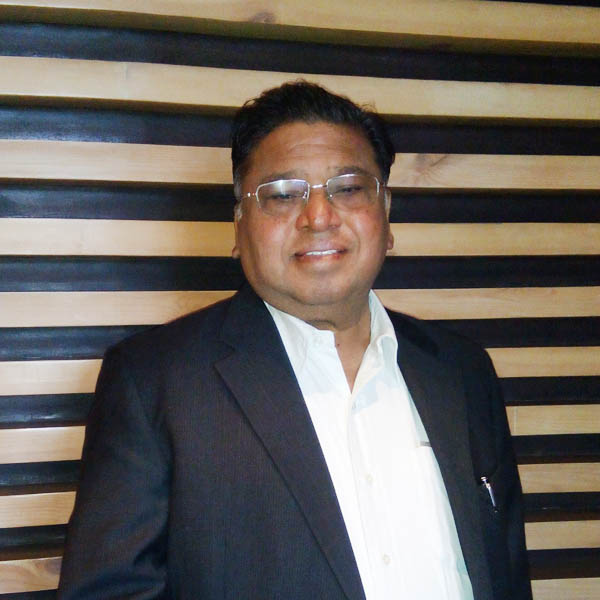
    And leading the HITS platform from the front is Dr. Jinendra Kumar Jain, who is not only a surgeon, a former member of parliament, but also the founder chairman of Jain TV Group.  


    He pioneered the satellite TV era in India by launching the country’s first round-the-clock satellite television service in Indian languages. JAINHITS is his latest initiative to serve the national goal of digitisation. 


    The HITS platform proposes to distribute 200 to 500 digital channels via satellite to the existing ground networks of cable operators. It is designed to integrate broadcasting and broadband services and thus, help bridging the digital divide in one go all over the country.


    Jain’s leadership, innovative ideas in the ICT sector and entrepreneurial initiatives have led to establishment of several successful businesses, including: Video on Wheels (Vow), a countrywide network of mobile video and health service vans, Noida Software Technology Park Limited (NSTPL), India’s first private teleport that provides both fixed (FSS) as well as mobile (MSS) satellite services, Medical Communication Network (MCN) whose publications include the Indian edition of FIGO Journal, IJGO (International Journal of Gynecology and Obstetrics) and the Population Reports for John Hopkins University, National Broadcasting Academy (NBA), a graduate and post graduate educational programme providing degrees in Management and Communication fields.  


    While the eyes are fixed on the soon-to-be launched HITS platform from Hinduja, Indiantelevision.com’s Seema Singh spoke to Jain on the platform’s performance, the struggle in getting accepting, his future plans and much more….


    Excerpts…


    How did you think of launching a HITS platform in a market which was dominated by multi system operators (MSOs)? How long did it take from planning to finally launching the service?


    We were the very first company that explained the headend in the sky (HITS) strategy to deliver digital signals to the cable operators. It was somewhere in the year 2003 that the then Minister Sushma Swaraj declared the decision of digitisation. They had obviously not done any homework and officials in her Ministry were willing to learn the technological aspects of the task. I had an opportunity to explain Anil Baijal, the then additional secretary in the Ministry about HITS. He liked the idea and I agreed to submit a detailed project report with all the relevant information.  The Government issued us the permission letter to deliver HITS services from our Teleport which had already been set up. In the beginning, there was no market and therefore we did not show any hurry. In fact, Citi Networks also got the similar permission and even started HITS based services without waiting for finalisation of rules and regulations. They arrived in the market before time but we waited for the right time and that is how they closed their shop without waiting for the market conditions to ripe and our timely decision is now giving us full benefits. Today we are the market leader in this sector. 


    Was it a task to get the broadcasters onboard? How did they initially react to the HITS model?


    Yes it was quite a task to get the broadcasters onboard. This became possible only with the help of judicial intervention. The big monopoly houses of the Indian cable industry have been offering resistance at every step of our journey. Nobody doubts the fact that cable digitisation will be a game changer in India. The cable distribution market is flourishing and millions of people in India watch TV via cable. Digitisation is certainly good news for broadcasters and tax authorities because subscriber numbers will be reported accurately and transparently.  Even the subscriber shall benefit from itemised billing detail so that they will be charged only for the channels that they wish to subscribe.


    It is true that the vertical chain of the industry stands divided between big and small players.  But, the game is turning in favour of small cable operators and their victory would mean the success of HITS platform.


    While a lot of the issues have been resolved with the court ruling in your favour, how have you dealt with the issues the broadcasters were raising, that of piracy?


    We have deployed best technology solutions to prevent piracy related issues.  As a company we take ‘Piracy’ very seriously. We have our own anti-piracy teams who look into such piracy issues.


    We also work in tandem with our business partners- broadcasters, LCOs, and distributors and take inputs from them to fight back the malice of Piracy. At present, during the audits conducted by the broadcasters they have found our systems working efficiently and exceeding industry standards. 


    How big is the company today, in terms of number of offices, employees, ground stations, revenue?


    NSTPL is a Public Ltd. profit making company. The business of the company is divided across three verticals:


    NSTPL Infra

    NSTPL Broadband

    JAINHITS


    The company has presence across the country with its own offices as well as distribution partners spread across India. NSTPL that operates India’s only National Cable and Broadband Platform called JAINHITS, operates teleports in Greater Noida and Hyderabad, serving 70 broadcasters. The Teleport is duly authorised & licensed by various regulatory bodies such as Ministry of Information & Broadcasting and Ministry of Communications, Government of India.


    When you started, what was the initial investment that was made into the company? Who were the partners? How have you grown the company over the years?


    NSTPL is a closely held Limited Company with fully paid up share capital of Rs 30 crore. 86.66 per cent of its shares are held by  Ankur Services Growth Fund, 13.33 per cent is held by Jain Studio and 0.002 per cent is held by individuals. We have invested approximately Rs 150 crore in JAINHITS since the concept initiation i.e. from April 2012.


    The response to JAINHITS has been extremely encouraging and thus, in a short span of one year we have signed up with over 300 cable operator partners across India.


    How many TV channels does the platform have currently? How many homes do you reach to and in which regions?


    We have around 254 channels today. Out of which 7 channels, namely, Disney, Cartoon Network, Pogo, Discovery, History, TV18, Animal Planet and Nickelodeon have dual audio feeds. Our services are available pan-India.


    How will digitisation benefit JAINHITS? What are the steps that are being taken to reap the maximum benefits of digitisation?


    Owing to pressure from DTH and on account of the digitisation law, all cable operators have to go digital. JAINHITS provides most cost-effective digitisation solution for such cable operators across India. Any cable operator across India can go completely digital and be fully DAS compliant with mere investment as low as Rs 5-10 lakh, while retaining full control of their business. They also have a chance to enhance their monthly Average Revenue Per User (ARPU) by offering additional value added services like Triple Play Services throughout India – Video, Data & Voice, Broadband Services.


    We keep announcing consumer friendly schemes so that our business partners i.e. the cable operator community have the best to offer to its customers. We conduct LCO meets in every state almost once a quarter. This is a platform where partner LCOs along with potential prospective cable operators come face to face and get their concerns addressed. We participate in industry events and expos to reach more and more cable operators.


    What are the services that the platform provides to its consumers?


    JAINHITS provides a platform of 254 SD channels at present. Very soon we will introduce HD platform and additional value added services like Triple Play Services– Video, Data & Voice, Broadband Services throughout India.


    How do you think HITS platform will play a major role in phase III and IV of digitisation? Will you be competing with DTH and MSOs? What’s the strategy?


    Phase III & IV of digitisation covers over 1350 Municipal Corporation and 597,464 Villages (as per Census 2011) spread in the far flung areas across India. These are the areas where the reach of cable TV is at its lowest level on account of non-availability of adequate infrastructure. For the land based networks and MSOs, this vast area in phase III & IV is the most difficult to reach.


    Only and most effective method of reaching this area is through HITS platform. JAINHITS allows all cable operators in these phase III & IV markets to go digital at a miniscule cost of Rs 5 lakh. The platform also provides these cable networks to offer broadband services to their consumers in these far flung areas. Above all, it is the only platform in the country, offering complete empowerment and ownership to even the smallest LCO by making him a leader & cable owner and an ISO (Independent Service Operator). It provides a simple “Plug & Play cost effective digitisation solution” to cable operators.


    Recently, MSOs have been facing issues with a few broadcasters like Star and Zee. Also with TDSAT ruling that Star channels will be available on RIO, does that impact JAINHITS in any way? What’s your take on the judgment?


    We have most of our content available on RIO basis and accordingly we offer our viewers a choice wherein they can opt for A-la-Carte choice of content to meet their individual needs.


    Per say this Judgment, really doesn’t affect our business models.


    While the cable TV industry in phase I and II are still struggling with packaging and billing, what’s the scenario with the HITS platform?


    HITS services were envisaged with an inbuilt SMS & CAS system. Accordingly, we at JAINHITS have also sensitized our partners- ‘the need’ of different types of packaging that may be required based on the area they will service. Accordingly, we have created different types of packs that serve the needs of large cross-section of people in India. Billing is automated and done through SMS platform.


    Are you looking for funding to go ahead with your plans? Any plans for IPO?

    We are indeed looking at funding options and are actively engaged with investors interested in the Indian cable & broadband market.

  • MCOF conclave stresses on importance of broadband for LMOs

    MCOF conclave stresses on importance of broadband for LMOs

    MUMBAI:  It has been touted as one of the leading get together of the last mile owners (LMOs) in Maharashtra. The Maharashtra Cable Operators Federation (MCOF) National Conclave on Broadband and Cable (NCBC) 2014 saw its president Arvind Prabhoo put his best foot forward in trying to get the LMOs to buy into his vision of a digitised cable TV India where they are also prospering. Apart from formally launching Synergy Cable Operators Private Limited (SCOPE), the first Cable Virtual Networks Operator (CVNO), Prabhoo and a handful of industry vets and consultants, stressed on the importance of broadband and how LMOs could increase their business five-fold, using this tool.


    Prabhoo pointed out that number of active broadband subscribers in India is expected double in the next two to three years according to a Telecom Regulatory Authority of India report.  In Mumbai alone, the figure is expected to go up from the current 1.2 million to 4.5 million in the next couple of years. “Broadband will grow, and we need to utilize this opportunity,” Prabhoo said.


    Drawing comparisons with the US where 50 per cent of broadband services are provided by cable operators, he said, “We need to implement the same in India. As things stand, only a fraction of the broadband subscriber base is delivered by cable operators.”


    Apart from the emphasis on broadband, day one of NCBC 2014 saw heated debate over the existing three models i.e. MSO:LMO, HITS and the newly-minted CVNO, which seeks to provide white label cable TV services to smaller operators in phase III and phase IV.


    Presided over by indiantelevision.com founder, CEO and editor-in-chief Anil Wanvari, the session had all parties putting forth their points of view. The panel comprised Kulbhushan Puri of BR Cable Network, Atul Saraf of ABS Seven Star, Vynsley Fernandes of Castle Media, and Prabhoo.


    During the discussion, Wanvari expressed the view that the full rewards of digitisation have yet to trickle down to the broadcaster, MSO or LMO – as they viewed each other with suspicion, though things have improved in recent times. “There is a need for greater communication and understanding among the stakeholders,” said Wanvari. “The LMOs and MSOs need to understand that broadcasters are investing in content and they need to recoup that investment.  Broadcasters need to understand MSOs are investing in setting up infrastructure and that LMOs want a sustainable future. The cable ecosystem also needs to understand that broadband can be extremely rewarding as compared to simple video signals where subscribers tend to be wary of price increases.”


    To this, Prabhoo invited all stakeholders to come together to discuss issues and take the industry forward while benefitting everyone. “Proper constructive pricing model can be worked out if broadcasters, MSOs and LMOs discuss issues on the same platform,” he said.


    Fernandes, who is involved in the upcoming HITS project of the Hinduja Group, said, “Packaging of content should be in the hands of the LMOs. Additionally, the LMOs need to invest in set top boxes which they will deliver to their subscribers so that ownership stays with them. And this is what the HITS project is set to do.”


    Prabhoo said that while there will be areas covered by the CVNO in phase III and IV of DAS called Headend on the Ground (HOGS), there would be some covered by HITS (Headend In The Sky). “There could also be areas where HITS and HOGS can work together to take digitisation forward,” proposed Prabhoo.


     Saraf said the future of DAS phase III and IV lay in MPEG4 and not MPEG2 STBs that were currently being seeded by operators. On the issue of low ARPUs in phase I and II, he said, “ARPUs can go up only by introducing value added services like Video on Demand (VOD), Movie on Demand and YouTube. We need hybrid STBs, which can provide both cable and internet services.”

  • Hinduja Brothers receive ‘Lifetime Achievement Award’

    Hinduja Brothers receive ‘Lifetime Achievement Award’

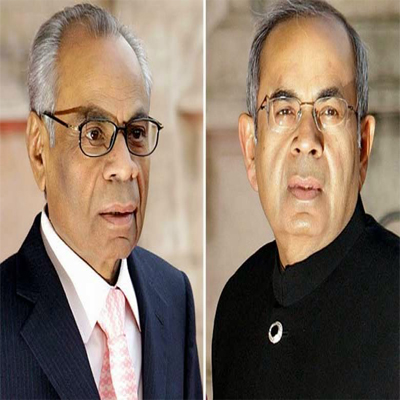
    MUMBAI: Promoters of Hinduja Group, Srichand and Gopichand Hinduja, were presented with a ‘Lifetime Achievement Award’ for their contributions to the United Kingdom’s Asian community.

    “This is a great honour and makes our responsibility more difficult and harder. Our dharma and duty is to serve the Asian community in Britain as best as we can,” said Hinduja Group co-chairman Gopichand Hinduja in his acceptance speech.

    Srichand and Gopichand Hinduja were nominated alongside another NRI businessman Anil Agarwal, Chairman, Vedanta Resources, former England cricket captain Nasser Hussain and Indian-born 102-year-old marathon runner Fauja Singh.

    “This government sincerely values the immense contribution of Britain’s Asian community and as Prime Minister I am extremely proud to lead a truly diverse nation where people of all backgrounds live and work so well together,” said British Prime Minister David Cameron in a special message sent for the awards night.

    The Asian Achievers Awards (AAA), in its 13th year now, are organised by the ABPL Group, publishers of ‘Asian Voice’ and ‘Gujarat Samachar’ newspapers in the UK, to celebrate the achievements of south Asians based in Britain.

    This year’s awards were dedicated towards highlighting the achievements of Asian women and all the money raised from a charity auction was earmarked for the Lily Foundation, a charity working against human trafficking in India and the UK.

    “Large countries have lots of problems and these take time to solve. But I love the idea of India and I am confident that the time for India has come,” said Indian high commissioner to the UK Jaimini Bhagwati, a special guest at the event along with sari-clad Cherie Blair who described herself as ‘an honorary member of the Asian community’.

  • ‘Digitisation will throw open acquisition opportunities’ : IndusInd Media and Communications chief executive officer Nagesh Chhabria

    ‘Digitisation will throw open acquisition opportunities’ : IndusInd Media and Communications chief executive officer Nagesh Chhabria

    T he Hindujas have started the first round of cable TV digitisation in the three metro cities of Mumbai, Delhi and Kolkata. The second phase will open up 15 more cities where IndusInd Media and Communications Ltd (IMCL), the cable TV company they own, operates. Aggression is being planned to take on 14 more cities through acquisitions, joint ventures or direct entries.


    The ambitious target set is deployment of four million digital set-top boxes (STBs) on top of the 1.5 million IMCL is expecting to achieve in the first phase of digitisation. The company is also planning to own one million last mile connections in two years, up from its current base of 300,000.


    IMCL, which operates its cable TV business under the Incablenet brand, will need Rs 6 billion in the new phase that will see 38 cities go digital by 31 March 2013. The company is in talks with private equity investors to raise $75 million.


    “There is a huge appetite now to invest in cable TV companies. The first phase of digitisation has been successfully implemented in the three metro cities of Mumbai, Delhi and Kolkata. There is also no uncertainty now about India’s digitisation programme across the country. We should see equity deals happening in the sector,” says IndusInd Media and Communications chief executive officer Nagesh Chhabria.


    Chhabria believes the cable TV ARPUs (average revenue per user) would rise to Rs 500 by 2015, while carriage income would see a 10-15 per cent drop in DAS (digital addressable systems) markets.


    “In the first phase, we are looking at a 15 per cent increase and believe our ARPU would settle at Rs 225. If the ARPU is lower than this, the local cable operator will not survive,” he says.


    In an interview with Indiantelevision.com’s Sibabrata Das, Chhabria talks about the changing cable TV environment and the multi-system operator’s (MSO) expansion plans.


    Excerpts:

    Q. Is IMCL in talks with private equity investors to raise capital for funding its cable TV digitisation programme?
    We are looking at raising $75 million and have mandated Ernst & Young for this purpose. There is a huge appetite now to invest in cable TV companies. The first phase of digitisation has been successfully implemented in the three metro cities of Mumbai, Delhi and Kolkata. There is also no uncertainty now about India’s digitisation programme across the country. We should see equity deals happening in the sector.


    Q. Will $75 million meet IMCL’s total funding requirement for the second phase?
    We will need Rs 6 billion as we expect to deploy four million set-top boxes (STBs). We have existing lines of credit from banks for $15 million. We can further raise $10 million of new debt. So along with equity financing, we should be comfortably placed. Of course, there is concern about the weakening of the rupee, which will mean STBs becoming costlier. But we are asking our STB manufacturer to offer us a better rate so that it offsets any rise in dollar value.


    Q. Hasn’t IMCL lined up vendor financing so that the pressure on funding upfront eases?
    We have not gone in for that option. The Cisco set-top boxes are 15-20 per cent more expensive than ours. Our model works out cheaper for us.


    Q. Isn’t your estimate of the STB requirement too high as IMCL operates in only 15 out of the 38 cities that fall under digitisation in the second phase?
    It is easier now to get into new cities because there is less entry cost. You don’t have to pay broadcasters for an assumed number of subscribers as digitisation would reflect your actual subscriber base. Capital expenditure, of course, is going to be higher but there is an assured revenue model.


    We plan to enter into 15 more cities and anticipate a requirement of two million STBs from the new operations. For our existing operational cities, we would need two million STBs.

    ‘Even in the second phase, DTH will hardly be able to make an impact. Since most of the cities that fall in this round of digitisation are carriage markets, the national MSOs have a presence in them. Already 10 per cent of this market is digitised by the MSOs‘
    Q. Will you take the acquisition route for entering into these markets?
    Digitisation will throw open acquisition opportunities. There are many operators who will find it difficult to fund for the STBS. So they will either want somebody to invest in their cable networks or completely sell out. We are in talks with many independent operators. We can also enter on our own through fibre or available bandwidth.
     

    Q. How are valuations getting decided?
    We look at the profits made in the last fiscal and offer four times that value. The other option is to look at future profits (sans STB investment) made from the first six months of digital operations and then fix a value. But this has few takers as nobody wants to take the risk.


    Q. Are you not looking at last mile acquisitions that will give IMCL direct ownership of the consumer homes without having to share a portion of the subscription revenue with the local cable operator?
    We have an aggressive plan to own last mile. Our target is to own one million primary points in two years, up from our current base of 300,000. The acquisition of primary points, however, is much costlier and the price could be in the region of ten times the subscription fee. In Mumbai, this could go up to 20 times. But with digitisation necessitating billing systems, the primary points will be up for grabs.


    Q. Has DTH been able to eat into IMCL’s subscriber base in the first phase?
    We have hardly felt the impact. Even in the second phase, DTH will not be able to win over cable TV consumers in a big way. Since most of the cities that fall in this round of digitisation are carriage markets, the national MSOs have a presence in them. Already 10 per cent of this market is digitised by the MSOs. DTH will stand a better chance in tier III and IV towns. Acquisition of primary points in these smaller places will be a good strategy for MSOs to follow.


    Q. How many STBs has IMCL deployed across three cities in the first phase?
    We have already seeded 1.3 million boxes and our target is to touch 1.5 million. In Mumbai we will do 850,000 million and 0.5 million in Delhi. The progress in Kolkata is slow but it will also pick up.


    ‘We are looking at raising $75 mn and have mandated E&Y. There is a huge appetite now to invest in cable TV companies. The first phase of digitisation has been successfully implemented in the three metro cities of Mumbai, Delhi and Kolkata. There is also no uncertainty now about India’s digitisation programme across the country. We should see equity deals happening in the sector‘
     

    Q. Is the conversion into second TV homes significant?
    The demand for second TV sets is higher in Delhi than in Mumbai. But at a combined level we are talking of a 25-30 per cent conversion rate. We are working out a pricing for second and third TV sets as we have to match the DTH offers. But we are yet to ink deals with broadcasters on this.


    Q. What is the kind of content deals that you have stitched with broadcasters?
    We have done cost-per-subscriber deals. This works out better in the long term and is a more transparent system. We get to know our cost per box and it is easier to work out negotiations later. Our content cost would work out to 33 per cent of our subscription revenue.


    We wanted to do three-year deals with broadcasters but they were not ready for it. Most of our content deals are on a yearly basis.


    Q. What is the revenue share you are giving to local cable operators?
    The value chain will take away 33 per cent of our subscription revenue. We also have operational costs and an investment on the STBs, but we also earn carriage or placement revenue. We are seeing a 10-15 per cent drop in our carriage deals for DAS (digital addressable system).


    Q. Will ARPUs go up?
    In the first phase, we are looking at a 15 per cent increase and believe our ARPU would settle at Rs 225. If the ARPU is lower than this, the local cable operator will not survive.


    ARPUs for MSOs should at least be Rs 300 for them not to be dependent on carriage income. MSOs with ARPUs below Rs 300 will have to be carriage dependent.


    Our forecast is that cable TV ARPUs would rise to Rs 500 by 2015. What will lift up ARPUs is HD and regional packages. Premium packages will also get sold.


    Q. So are we talking of financially healthy MSOs in digitised India?
    A lot on how the market shapes up will be decided over the next six months. We will know the actual seeding of boxes in consumer homes once the subscription collections happen.


    Q. Will IMCL rely only on video services or there is a serious plan to pump up broadband investments?
    We will be investing Rs 1 billion on broadband infrastructure in the next fiscal. We are also going to prepare for IPTV and OTT (over-the-top) services.


    Q. What about launching local cable channels?
    Yes, this is very much a part of the plan. Since there will be no constraints on bandwidth in the digital era, we are planning to put together 10-12 local channels, including local news. We are also looking at ad-free channels.

  • Incablenet announces Rs 1500 STB scheme with free subscription for six months

    Incablenet announces Rs 1500 STB scheme with free subscription for six months

    MUMBAI: The price war is on. Hinduja-owned Incablenet announced its bouquet options to subscribers in the Cas (conditional access system) areas of Mumbai and Delhi, retaliating against rival offers from direct-to-home (DTH) service providers and other multi-system operators (MSOs).

    Subscribers can own their digital set-top box (STB) at Rs 1500 (plus taxes) and will be provided free cable TV subscription for six months on three bouquet packages. Incidentally, DTH operator Tata Sky has come out with an offer in Cas areas of free subscription for six months if customers book during the period 28 December-10 January.

    For those who want Incablenet’s Sitara (Star) package, 18 pay channels will be available including all the 12 Star India distributed channels. Besides CNBC TV18, CNBC Awaaz, CNN-IBN and BBC, customers will have the liberty to choose a single channel each from the Zee-Turner and SET-Discovery bouquets.

    In the Sona (Gold) package, Incablenet is offering 20 channels. This includes 13 Sony channels, CNN-IBN, CNBC TV18, CNBC Awaaz and two channels each from the Zee-Turner and Star bouquets.

    The Zabardast scheme has on offer 35 channels which include 33 Zee channels. Sunscribers can also choose a single channel each from the Sony and Star bouquets.

    Neither of the three packages have sports channels included in them. “We are offering consumers total choice from all the three distribution platorms. They can select a Star-loaded or Sony or Zee package. We have covered all the categories and consumers can plan their monthly cable bills,” said IndusInd Media and Communications Ltd director-in-charge Ravi Mansukhani.

    Wire & Wireless Ltd (WWIL) has on offer outright purchase of STBs for Rs 1800 inclusive of a one-year subscription for 33 channels. These include a load of Zee-Turner and SET-Discovery distributed channels like Zee TV, Zee Cinema, Zee Smile, Zee News, Zee Trendz, Zee Jagran, Sony, Discovery, Animal Planet, Animax, Pix, Sab and MTV. Only Star Plus from the Star bouquet is being offered. BBC, CNBC TV18, CNBC Awaaz and Cartoon Network are also available in this package.

    “We have a complete package including the regional channels. In Mumbai we are offering Zee Marathi while in Delhi it is Zee Punjabi and in Kolkata Zee Bangla. ETV Urdu and ETV Telugu are also available while consumers have a choice to take any other ETV channel of their choice. For Mumbai, ETV Marathi is free,” said WWIL CEO Jagjit Kohli.

    Under the STB rental scheme, Incablenet is offering the Optimiser package at Rs 120 which will have the Star and Sony bouquets. For the second TV set, the subscription is Rs 55.

    In the Super Saver scheme, the Star, Sony and Zee bouquets are available at a price of Rs 190. The second TV set will be priced at Rs 100.

    Subscribers do not have to pay a deposit amount on the Rs 45 rental scheme, Mansukhani said.

    Hathway Cable & Datacom has not come out with an outright purchase scheme for the STBs. Neither has the MSO included the Zee-Turner channels in its packages. “We haven’t decided yet on the STB purchase scheme. As for the Zee channels, once we arrive at a settlement with them, we will be creating a new package,” said Hathway Cable & Datacom MD and CEO K Jayaraman.

  • TDSAT declines stay as SET, ESPN and ESS move against CAS pricing

    TDSAT declines stay as SET, ESPN and ESS move against CAS pricing

    MUMBAI: Acting on expected lines, broadcasters have finally taken legal recourse against the Rs 5 tariff that the sector regulator had set as the price for accessing pay channels in a CAS regime.

    Three separate petitions filed against the order of the Telecom Regulatory Authority of India (Trai) by Set Discovery Ltd, ESPN Star Sports (ESS) and ESPN Software India came up for hearing this morning before the apeals tribunal.
    However, the Telecom Disputes Settlement & Appellate Tribunal (TDSAT), which heard the case today, issued no directive to stay Trai’s order.

    A point of note is that of the three petitions that came up for hearing today, two of them were moved commonly by ESS and ESPN Software.

    TDSAT has set the matter for further argument and a possible order on 13 November. The pay broadcasters have challenged the two Trai notifications dated 24 August (on carriage fee) and 31 August (channel pricing).

    The channels have also challenged the revenue sharing model designed for industry stakeholders by Trai. The sector regulator had specified in the notification that the revenue generated from pay channels leaves the broadcaster with 45 per cent, while the multi system operators (MSOs) stays on with 30 per cent and the cable operators get 25 per cent.

    Interestingly, the two major MSOs; Hathway and Hinduja-owned IndusInd Media and Communications have intervened in the appeal in support of Trai’s decision on the CAS pricing.

    For the record, the 24 August notification had mentioned that the carriage fee is to be retained fully by MSOs and can operate throughout a CAS area without any restriction on area of operation.

    Subsequently, SitiCable Networks Ltd (now renamed WWIL) has also filed a petition at the tribunal appealing that the MSO must have a share in the basic tier services fee, which according to Trai notification must be retained fully by local cable operators.

    Earlier this year, a division bench of the Delhi High Court had passed an order directing the implementation of CAS with effect from 31 December in the south zones of the three metros; Mumbai, Delhi and Kolkata.