Tag: Hinduja Group

  • Hinduja Group’s ONE GigaFiber enables over 120 Ganpati Pandals in partnership with  Facebook

    Hinduja Group’s ONE GigaFiber enables over 120 Ganpati Pandals in partnership with Facebook

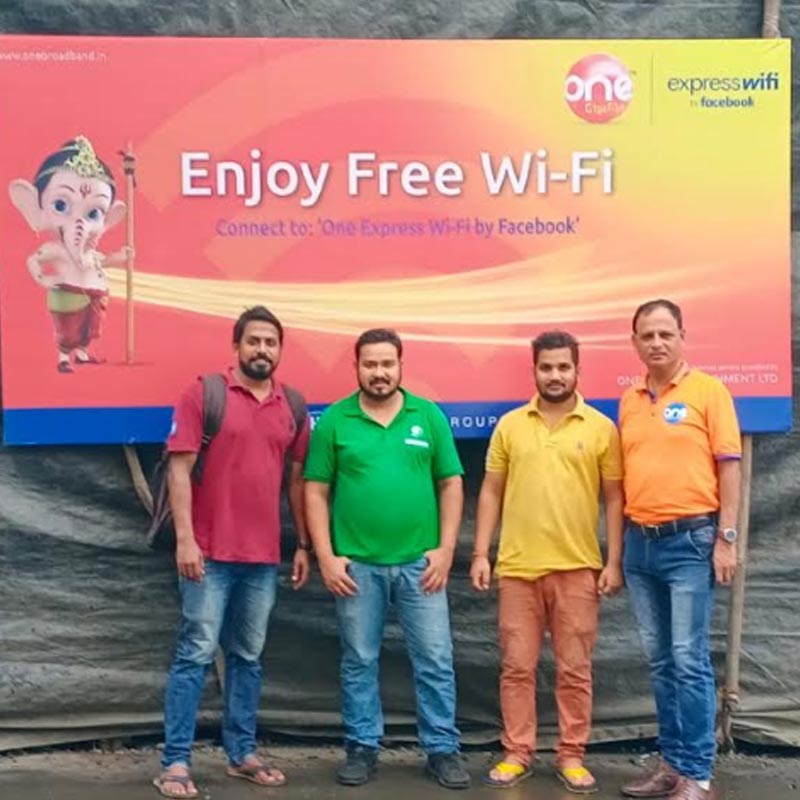
    MUMBAI: ONEOTT Intertainment Ltd (OIL), Hinduja’s foray into Telecom and Internet services, announced a partnership with Facebook to offer Wi-Fi hotspots across Mumbai powered by ONE GigaFiber high-speed internet service, and supported by Facebook’s Express Wi-Fi software platform. The Wi-Fi hotspots will enable consumers in Mumbai to access fast, affordable and reliable Internet for free during the Ganesh Festival.

    This service will be available in over 120 Ganpati Pandals including iconic locations such as Lalbaug cha Raja, Girgaum cha Raja, Ganesh Galli, among others. OIL has been actively involved in providing Public Wi-Fi Services with a special focus on Ganeshotsav, where they have been providing Free Wi-Fi and internet access to devotees since 2016, under the brand name “AamchaNet”.

    The landmark service has seen close to half a million users since its inception, connecting devotees across Mumbai from the first day of the festival till Visarjan, where Free Wi-Fi access is also available at the most popular Visarjan sites including Girgaum Chaupaty.

    Mr. Yugal Sharma, CEO of OIL said – “In the fourth year of providing Public Wi-Fi services during Ganeshotsav, it was amazing to see organizers coming to us directly and asking about enabling their pandals with high speed Wi-Fi. This year, we will be enabling 6 times the pandals and locations that we covered in the first year of launching “AamchaNet”. And now with ONE Wi-Fi hotspots supported by the Express Wi-Fi software platform, OIL’s ambitious plans for providing Public Wi-Fi access have been solidified, and we are looking forward to a successful partnership.”

    Facebook’s Express Wi-Fi is a software platform that helps service providers and mobile network operators build, operate, grow, and monetize their Wi-Fi business in a sustainable and scalable way. Facebook partners with service providers and operators who expand the provision of fast, affordable, and reliable access to the Internet over Wi-Fi using Express Wi-Fi.

    “Express Wi-Fi is an important part of our work to help transform people’s daily lives and connect more underserved communities,” said Satish Mittal, head of Express Wi-Fi, India, Facebook. “We’re excited to partner with OIL to provide access to fast and reliable Internet over Wi-Fi for free during the Ganesh Festival, leveraging ONE GigaFiber and the Express Wi-Fi software platform.”

    To access the service, devotees need to connect to “ONE Express Wi-Fi by Facebook” in the available networks on their devices. By entering their Mobile numbers and verifying the One Time Password (OTP), people can gain access to unlimited data powered by ONE GigaFiber’s high speed connectivity.

  • IMCL’s Subhashish Mazumdar steps down as SVP

    IMCL’s Subhashish Mazumdar steps down as SVP

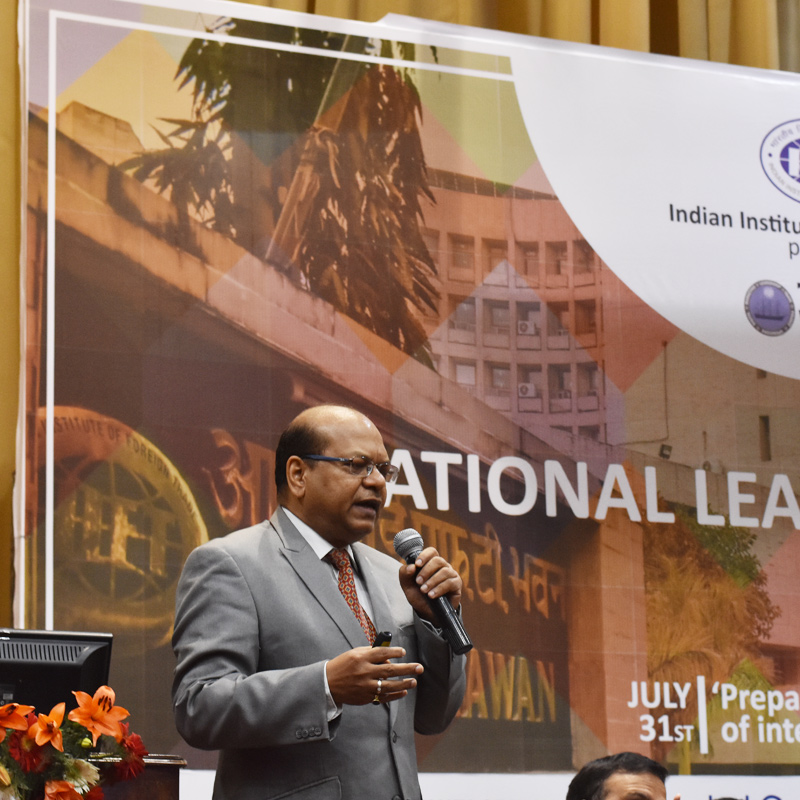
    MUMBAI: IMCL's senior vice president – operations and head of customer care, mar-com and regulatory affairs Subhashish Mazumdar has stepped down from his role, Indiantelevision.com has learnt. 31 July was his last working day at IMCL. Mazumdar is likely to exit the cable television business and move into a new domain in a leadership position.

    He joined as chief marketing officer for CAS in Hinduja Media Group in 2003 and subsequently based on various restructuring of the Hinduja Media Group’s IMCL, worked as head of business development for foreign content, regulatory policy head, customer care and process management head, marketing, operations and sales, senior regional head for north and east, head of JVs etc.

    He has been with the Hinduja Group for over 16 years. Mazumdar been involved in strategic work on content on various digital delivery systems in cable and HITS satellite. He was part of the launch of HITS platform as well.

    The veteran executive was also responsible for bringing South Korea’s key international English channel Arirang TV in India. He has played a very valuable and key role in the entire digitisation process of the cable sector. He has an overall career spanning now over 32 years in middle and senior management levels in almost all aspects of business functions like marketing, sales, finance, operations, people management, customer relations, regulatory among others in diverse industry sectors.

    Mazumdar is a post graduate in management from IIM-A.

  • Hinduja Group announces its foray into Sports Leagues

    Hinduja Group announces its foray into Sports Leagues

    MUMBAI: Hinduja Group’s ONEOTT iNTERTAINMENT LTD and IN ENTERTAINMENT INDIA LTD are now the proud owners of the ‘Mumbai Ninjas’ – the Mumbai Franchise in the Ultimate Karate League (UKL). Mumbai Ninjas are one of the six teams that shall feature in the first season of the UKL Ultimate Karate League starting on 11th January 2019.

    Speaking on the occasion, Mr. Yugal Kishore Sharma, CEO of Hinduja Group’s ONEOTT iNTERTAINMENT LTD and IN ENTERTAINMENT INDIA LTD said, “Not only the technical rules, the business model of UKL too is unique that guarantees a very sound eco-system for Team Owners. It is probably the only Professional Sports League in India that is setting out for 3 Seasons in its inaugural year”

    Along with Mumbai Ninjas, the other teams that shall feature in the first season of UKL are Bengaluru Kings, Chandigarh Fighters, Delhi Bravehearts, Kolkata Radicals and Ranchi Rebels. The debut match is all set to take place at Bengaluru’s Koramangala Indoor Stadium followed by its final leg at Talkatora Indoor Stadium, New Delhi.

    With world champions and renowned national players, the UKL Ultimate Karate League will feature matches that are entertaining and action packed – appealing to all Sports fans in India and across the world. UKL has signed World Champions as Marquee Players in each Team. Legendary Masters Sensei Ilija Jorga and Sensei Vladimir Jorga will be present during the entire Season.

    Mr. Yugal Sharma also added, “Mumbai Ninjas Team has the World’s Best Fighter Mr. Calin Marincas from Romania as its Marquee Player. Calin has 6 World Championship Titles under his belly.”

    Karate was not a spectator sport till the Research & Development works of Sensei Rajeev Sinha resulted in creation of unique technical rules that are specifically structured from televisions’ perspective. Fan-engagement is maximized and the new rules bring in thrilling action as never seen before in a real-time team matches.

    “The main purpose of establishing UKL was to trigger an aspirational connect amongst the existing and future Karate practitioners. It is noteworthy that there are over 190 million practitioners of Karate around the world who pay to learn and compete. However, the current amateur format does not provide platform for trainees to dream of becoming Ronaldos, Dhonis or Tendulkars of Karate as the rules of amateur competitions are too boring for general spectators. With UKL in place, we expect steep rise in its following in India”, said Sensei Rajeev Sinha, Chairman of IPKC.

    UKL has opted for episodic telecast in India, Nepal, Bhutan, Bangladesh, Maldives and Sri Lanka over Discovery Channel’s DSPORT. “We preferred episodic telecasts on Sundays Prime Time for 18-weeks and repeat telecast on weekdays, totaling 36 days over 5 months of visibility over television” said Sensei Rajeev Sinha.

    UKL has tied-up with Czech Republic based QuickMedia to broadcast UKL content to rest of the world over its OTT platform.

    Additionally, UKL has carved out unique Women Empowerment Program #NoMoreMeToo. “The whole world was recently engulfed in #MeToo wave. But that is merely a 'problem statement’ and not a solution. We have revived our women empowerment project ‘Be-Your-Own-Weapon’ with #NoMoreMeToo”, added Sensei Sinha.

  • INDUSIND Media live telecasts “Magnetic Maharashtra Convergence 2018 – Global Investors Summit”

    INDUSIND Media live telecasts “Magnetic Maharashtra Convergence 2018 – Global Investors Summit”

    MUMBAI: INDUSIND Media & Communications limited of Hinduja Group provides the live telecast of events from  “Magnetic Maharashtra Convergence 2018 – Global Investors Summit” through their Indigital services for the benefit of all their viewers in Greater Mumbai, Maharshtra and some Key cities in India. The lvie telecast will be available on  their local channel 998 and HD channel 969 of Indigital from 18th to 20th February 2018

    The telecast would be an exclusive live coverage of the Mega Event “Magnetic Maharashtra Convergence 2018 – Global Investors Summit” from MMRDA Ground, BKC, Mumbai

    “Magnetic Maharashtra: Convergence 2018” is a  one-of-a-kind gathering of the best the State has to offer in Automobiles / Auto Components, Defence, Food Processing, IT/ITes, Electronics, Heavy Engineering and Pharmaceuticals. Magnetic Maharashtra: Convergence 2018 is Maharashtra’s first Global Investors Summit which is being regarded as one of the biggest events, on the lines of the ‘Make In India’ initiative launched by the Prime Minister

  • Brands bullish this festive season but not for Navratri

    Brands bullish this festive season but not for Navratri

    MUMBAI: Marketing mavens are aware that a majority of brand spending in India takes place between August and December every year because of a range of festivals that dot this period. It begins with Raksha Bandhan and chugs ahead with Ganesh Chaturthi and gathers steam in September with Navratri, Durga Pooja and Dussehra, only to move at a superfast speed during Diwali, until the calendar year ends. Indian consumers are in a celebratory mood, flush with cash, courtesy employment bonuses.

    The past 10 months have, however, been different. The reason: the double whammy of demonetisation and the rollout of goods and services tax (GST) put the brakes on optimism. Both forced brand custodians to zip up their ad purses and postpone any spends until customers had money to splurge and the entire GST process – which commenced on 1 July 2017 – panned out.

    Net result: even the months of August 2017 and early September 2017 have seen sedate brand activity. Questions are being asked whether marketers are ready to let their hair down during Navratri 2017 to get consumers back to spending on goodies ostentatiously?

    Indiantelevision.com got in touch with a clutch of marketers and agency heads and the consensus was that a majority of national brands are going to go easy on both, Navratri and Dussehra, but they are going to go hell for leather during Durga Pooja and Diwali, allocating a large chunk of their ad and promotional budgets during these two periods.

    Even in Gujarat, which normally goes into marketing overdrive during Navratri,  there will be some amount of softness this year between 21-29 September.

    “Navratri is clearly the biggest festival in Gujarat which is bigger than Diwali in terms of activations and promotions. It is a big period for Gujarati channels (national and local) as all major FMCG brands, automobile brands and local retailers want to make the most of this season but the spends will be soft this year because of GST and demonetisation,” says a media expert.

    Navratri event organisers in Mumbai and Gujarat had to struggle this year to find sponsors mainly due to the fact that real estate and telecom categories, which otherwise are heavy advertisers during the nine-day festival, shied away, unlike previous years.  The real estate sector was relatively cold as a majority of the developers are busy getting their houses in order to comply with the stringent requirements that new real estate regulations that have been thrust on them by RERA. Adding to developers’ relative lack of enthusiasm is the GST rollout.

    Says a media buyer from a leading agency: “Navratri this year will see a lot of local and retail advertising rather than multinational players. This is a great opportunity for local and small brands to promote themselves on the venue or via various BTL activations at a reasonable cost which otherwise would be priced very high.”

    Indeed, some savvy companies are stepping in to take advantage of the opportunity and spend on the various garba events that have been organised across Mumbai and Gujarat. Thousands gather on various grounds in these two states to dance to the rhythms of dandiya stars — Falguni Pathak, Parthiv Gohil, Preeti Pinky, among other. These events are normally aired on the local cable TV channels as well as on some of the handful Gujarati language channels.

    Consider:

    * ONE Broadband, Hinduja Group’s Flagship Company for Telecom Data Services for Consumer & Enterprise Segments will be offering unlimited 10mbs free Wi-Fi service to the devotees during Navratri season across Maharashtra and Gujarat.

    * Residential, commercial and real estate company Ruparel Realty is the title sponsor for Mumbai’s Navratri Mahotsav 2017 while Colors Gujarati is the television partner for the event. Gujarati queen Falguni Pathak will be seen performing at the event for nine days.

    * Ride hailing app Uber will provide lucky customers with a free gift hamper which consists of free passes for Radio Mirchi Rock n Dhol garba event in Gujarat along with two dandiya sticks.

    * Online e-commerce platforms  Flipkart, Amazon and Ebay have also announced their big sales to commence the festive season encouraging people to buy more products online. The sale on these platforms began yesterday and will go on for a week.

    Dentsu Aegis Network chairman and CEO – South Asia Ashish Bhasin told Indiantelevision.com that there’s no reason to worry, however, as overall he sees the festive season spends this year growing 20 per cent over the last year even as the advertising budgets for the whole year will expand 10-12 per cent. What this means is that the last quarters of this year should contribute heavily, and help make up for the losses during the previous quarters.

    Bhasin notes that consumer goods, automobiles and FMCG  sector are going to go all-out with campaigns to seduce India’s fast-burgeoning middle class.

    A media planner adds that brands are actually drawing up massive plans and there’s actually going to be a shower of spending (mainly by categories like automobiles, real estate, jewelry, electronics along with e-commerce)  this festive season as most of them have got over the demonetisation and GST issues.

    That should be music to most media and TV ad sales professionals who have been toiling away, struggling to meet their ad sales targets.

  • Guest Column: TRAI’s radical tariff & interconnect norms will usher in major changes

    At the onset one must appreciate the efforts put in by the TRAI in coming out with path-breaking orders involving tariff, services inter-connection and quality of services. The effort of the regulator is clearly to increase choice in the hands of consumers to pay for what they want to watch.

    The TRAI guidelines are aimed at encouraging moving away from a push-based model to a pull-based one where demand and supply will be the deciding factors. Still, it’s a known fact that consumers themselves find it difficult to pick and chose, preferring packages instead. But time will tell how the Indian consumer behaves this time around. But if the industry and the government/regulator work together, a lot can be made possible. However, there are some actions that need to be acted upon urgently. In my opinion, they are the following:

    1. TRAI guidelines pre-suppose that all distribution platform operators (DPOs) have the built in capability to create packages and also bill on a la carte basis. While it might be possible for the bigger DPOs who have invested in the backend to have this capability, I am less confident of smaller DPOs. Unfortunately, for many of them digitalization was just converting analog signals to digital. Such DPOs selected weak support players resulting in inadequate capabilities in the backend, which is the heart of digitalization (packaging and bundling). For them to make adequate changes will also mean making huge investment and technology upgrade. One way to make this possible quickly and in a cost efficient way is to implement infrastructure sharing at every level keeping advancing technology in mind. And, to make this aspect possible, it’s necessary to make licensing norms amendments in the statutory regulations relating to cable TV, HITS, and DTH.

    2. As of today, the balance of negotiating power is clearly in the hands of broadcasters and, while the TRAI orders are quite exhaustive in terms of various provisions, lets us not underestimate the capability/ingenuity/creativity of the broadcasters. I personally do not think any broadcaster will absorb the DPO margins. As broadcasters have an in-built minimum return they expect from their channels, in all probability, they will add this margin to the channels’ prices. The regulator should consider setting up a mechanism by which it can review and intervene in a time-bound manner.

    3. DPOs must move away from their analog mindsets and embrace digitalization and its implications by being more honest and transparent in their dealings with broadcasters and other stakeholders.

    4. While TRAI has outlined the terms and conditions of providing TV channels to DPOs, it has been observed that commercial negotiations are fairly simpler than the legal terms and conditions. In my view, this is a result of legacy mistrust between a broadcaster and an MSO. I would, therefore, suggest that a model interconnect be prepared by TRAI, which must be the document entered into by the said parties till the industry settles down to this new environment and mutual trust develops.

    5. Broadcasters and DPOs must work together to jointly grow the business. At the end of the day, both will benefit only if the consumer pays. I think a working group comprising representatives from various industry organizations like the IBF, NBA, AIDCF, DTH Association and TRAI/MIB should be constituted along with some independent experts to facilitate the process. This should be a small group that could make valuable suggestions. Trust and transparency will need to be the hallmark for the industry to move forward and litigations must be kept out as far as possible.

    6. The government should provide more clarity on taxation issues; especially in view of the new GST regime set to be rolled out from later this year. Simultaneously, the government must seriously consider giving `industry status’ to the broadcast sector.

    7. As far as the tariff order is concerned, DPOs have an opportunity, with the different margin structures, to set their houses in order. They need to invest in the backend, introduce VAS (value added services) and look at having some unique content.

    8. From the tariff point of view broadcasters have a challenge on their hands as they know there is a price cap with restrictions on packaging (sports channels). They should seriously consider promoting events on short-term basis as there is no minimum period for subscription. We all know consumers by and large watch 12 to 15 channels. It will be interesting to see how competing broadcasters price channels in specific genres as consumers in the short-term are likely to cap their spends on TV entertainment.

    9. DPOs in smaller towns should consider forming co-operatives to work together, while at the same time retaining their individual identities.

    As a result of fresh TRAI orders, I hope there will be more discipline and transparency in the industry, which could also see mergers within platforms as this is a time to consolidate. The Indian broadcast and cable sector is on the cusp of major changes. Those who embrace change, will flourish, while the rest will slowly perish.

    public://tony_0.jpg (The author, an Indian media industry veteran, is the former CEO-Media, Hinduja Group. The views expressed here are personal, and Indiantelevision.com need not necessarily subscribe to them.)


  • Hinduja Group’s Ashish Kaul joins Prakash Jha Productions as CEO

    MUMBAI: Prakash Jha Productions has appointed the media and entertainment vet Ashish Kaul as the CEO for its television and digital business.

    Kaul has taken up this role after being the business head for IN Entertainment India Limited, the digital cable broadcasting & content business of Hinduja Group. He had joined the group in 2012 as the vice-president.

    Kaul has over 23 years of experience in leadership roles across managing businesses across entertainment, news, ITES, retail and consumer goods. He has served in executive governance roles with conglomerates such as the Essel Group / Zee Network, Credence International, BAG Films, Bajaj Herbals and Golden Medias. He was also the CEO for Association of Motion Pictures & TV Programme Producers in India.

    Prakash Jha Productions is a brand incorporated by the well-known director of topical cinema Prakash Jha, to take his unique brand ‘Cinema with Power’ forward.

    Prakash Jha Productions has been synonymous with the production of quality films for over 20 years. He is a multiple award-winning filmmaker known nationally and internationally for his critically acclaimed and popular films including Amitabh Bachchan starters Satyagraha & Aarakshan, and Raajneeti, Apaharan, Gangaajal, Mrityudand, Parinati and Damul as well as award-winning documentaries such as Sonal, Faces After The Storm, Kudiattam, and Looking Back. Other feature productions include Rahul (2001), Dil Kya Kare (1999) and Hip Hip Hurray (1983).

    Confirming the news to Indiantelevision.com, Kaul said, “Television and digital media is a sunrise industry with tremendous potential of reach and value for the advertisers. I believe the approach to content production and management for television and digital space is not yet understood by the industry and I believe Prakash Jha Productions will be that catalyst of change. Personally, I would like to bring in a collaborative effort to content creation that delivers reach, popularity and ultimately value to the advertisers.”

  • Hinduja Group media head Mansukhani spells out priorities

    Hinduja Group media head Mansukhani spells out priorities

    NEW DELHI: The new CEO  & MD of Hinduja Media Group Ashok Mansukhani, a veteran of Indian media industry, has already got his priorities etched out and expressed willingness to work along with all stakeholders of the sector for the overall growth and mutual benefits.

    Speaking to Indiantelevision.com, the bureaucrat-turned-corporate-executive Mansukhani said priorities included getting digital rollout of Indian TV services “back on track”, push for promotion of digitisation and increased education of consumers, explore how some of his cable segment colleagues could benefit from digitisation and last, but not the least, to work towards bringing other segments of the media and entertainment sector, including regulators and policy-makers, together so a conducive environment for a mature dialogue could be created.

    Indirectly admitting that digitisation had hit roadblocks in the last 12-18 months owing to several reasons, Mansukhani said while the third phase of digitisation is coming to an end, edges in the fourth and last phase need to be ironed out. “At the end of the day, it’s a matter of 73 million homes in small towns and hamlets in the last phase of digitisation and we cannot take the task lightly,” he explained.

    Mansukhani, a former Indian Revenue Service government official, has seen the Indian media industry (specifically the electronic medium) grow from staid Doordarshan days to the present vibrant — and possibly a bit chaotic — stage of evolution when the country has over 800 private sector licensed TV channels, several distribution platforms and approximately 50,000 cable operators. His stints at the pubcaster’s headquarters in New Delhi’s Mandi House area, Ministry of Information and Broadcasting (MIB) and later in the private sector with the Hinduja Group, puts him in a unique position.

    According to Mansukhani, who now will be heading the media assets of the multi-billion dollar Hinduja Group, including MSO company IndusInd Media and Communications Ltd (IMCL) and the HITS venture, the Indian media and TV industry is at a critical stage of development and hinted increased litigation and face-off with the regulator and policy-makers could be detrimental  for the industry, which needs to come together to voice the genuine and common concerns of the industry.

    “I would also like to see and explore how we can help cable operator colleagues and others benefit from digitisation,” Mansukhani said, adding that a more concerted effort needs to be put in by stakeholders, including broadcasters, distribution platforms and the regulator, to educate consumers, especially those in small towns, about the long term benefit of digitisation despite the monthly outflow in subscription fee increasing a bit.

    “Consumer education is very important in general and especially for the fourth phase (of digitisation) homes. All of us need to support this education process as it would be beneficial for all stakeholders,” he said.

    Mansukhani comes in place of Tony D’Silva, who joined the Hinduja Group on 1 August 2012 as the president of Hinduja Ventures Limited and strategised the group’s media businesses. D’Silva had expressed a desire to demit office after completion of his contract on 31 January 2017 to pursue “other interests and spend more time with his family,” according to an official statement from the Hinduja Group.

    However, it needs to be seen how Mansukhani grows the comparatively new HITS business carried out under a separate group company, apart from tackling the challenges of IMCL, an MSO.

    ALSO READ:

    Ashok Mansukhani takes over as IMCL CEO & MD

    Distribution vet Tony D’silva departs from IMCL

  • Hinduja Group media head Mansukhani spells out priorities

    Hinduja Group media head Mansukhani spells out priorities

    NEW DELHI: The new CEO  & MD of Hinduja Media Group Ashok Mansukhani, a veteran of Indian media industry, has already got his priorities etched out and expressed willingness to work along with all stakeholders of the sector for the overall growth and mutual benefits.

    Speaking to Indiantelevision.com, the bureaucrat-turned-corporate-executive Mansukhani said priorities included getting digital rollout of Indian TV services “back on track”, push for promotion of digitisation and increased education of consumers, explore how some of his cable segment colleagues could benefit from digitisation and last, but not the least, to work towards bringing other segments of the media and entertainment sector, including regulators and policy-makers, together so a conducive environment for a mature dialogue could be created.

    Indirectly admitting that digitisation had hit roadblocks in the last 12-18 months owing to several reasons, Mansukhani said while the third phase of digitisation is coming to an end, edges in the fourth and last phase need to be ironed out. “At the end of the day, it’s a matter of 73 million homes in small towns and hamlets in the last phase of digitisation and we cannot take the task lightly,” he explained.

    Mansukhani, a former Indian Revenue Service government official, has seen the Indian media industry (specifically the electronic medium) grow from staid Doordarshan days to the present vibrant — and possibly a bit chaotic — stage of evolution when the country has over 800 private sector licensed TV channels, several distribution platforms and approximately 50,000 cable operators. His stints at the pubcaster’s headquarters in New Delhi’s Mandi House area, Ministry of Information and Broadcasting (MIB) and later in the private sector with the Hinduja Group, puts him in a unique position.

    According to Mansukhani, who now will be heading the media assets of the multi-billion dollar Hinduja Group, including MSO company IndusInd Media and Communications Ltd (IMCL) and the HITS venture, the Indian media and TV industry is at a critical stage of development and hinted increased litigation and face-off with the regulator and policy-makers could be detrimental  for the industry, which needs to come together to voice the genuine and common concerns of the industry.

    “I would also like to see and explore how we can help cable operator colleagues and others benefit from digitisation,” Mansukhani said, adding that a more concerted effort needs to be put in by stakeholders, including broadcasters, distribution platforms and the regulator, to educate consumers, especially those in small towns, about the long term benefit of digitisation despite the monthly outflow in subscription fee increasing a bit.

    “Consumer education is very important in general and especially for the fourth phase (of digitisation) homes. All of us need to support this education process as it would be beneficial for all stakeholders,” he said.

    Mansukhani comes in place of Tony D’Silva, who joined the Hinduja Group on 1 August 2012 as the president of Hinduja Ventures Limited and strategised the group’s media businesses. D’Silva had expressed a desire to demit office after completion of his contract on 31 January 2017 to pursue “other interests and spend more time with his family,” according to an official statement from the Hinduja Group.

    However, it needs to be seen how Mansukhani grows the comparatively new HITS business carried out under a separate group company, apart from tackling the challenges of IMCL, an MSO.

    ALSO READ:

    Ashok Mansukhani takes over as IMCL CEO & MD

    Distribution vet Tony D’silva departs from IMCL

  • Hinduja Ventures increases stake in Indusind Media

    Hinduja Ventures increases stake in Indusind Media

    MUMBAI: The Hinduja group is in a consolidation mood. Especially in its media business. Group company Hinduja Ventures informed the Bombay stock exchange today that it was buying both ordinary and preferential shares of Indusind Media & Communications Ltd (IMCL) from another Hinduja venture Grant Investrade Ltd (GIL).

    IMCL runs the InCable Net, IN Digital, IN2Cable and IN Phone businesses, while GIL is getting ready to aggressively roll out its HITS platform NXT Digital after its launch last year.

    In the communiqué, HVL has stated that it will be buying 43.03 lakh Rs 10 face value shares (equal to 5.82 per cent of IMCL’s paid up capital) of IMCL at a premium of Rs 456 per share, and it will also purchase 7.04 million preference shares (equal to 26.02 per cent of IMCL’s paid up preference capital) of Rs 10 each at par from GIL.

    HVL’s holding in IMCL will rise to 61.91 per cent from 56.09 per cent once the transaction is completed by 20 July 2016.

    IMCL, according to the notification had a turnover of Rs 434- odd crore and a net worth of 139.20 crore in the year ended 31 March 2016.

    Observers say that the transaction will allow some funds to be infused into GIL as it moves to take NXT Digital to its next phase.