Tag: Hinduja

  • NXTDIGITAL reaches out to new consumers

    NXTDIGITAL reaches out to new consumers

    KOLKATA: As the country gears up to welcome Lord Ganesha, NXTDIGITAL, the media arm of the Hinduja Group, has launched a consumer connect program – ‘Ganpati Bappa Morya’ to spread the message of joy and safety amidst the global pandemic. 

    As part of this initiative, NXTDIGITAL would encourage consumers, to shoot their Ganpati celebrations at home (their decoration, sthapna and aarti) on their mobile phones and upload it to NXTDIGITAL at https://ganpatibappamorya.nxtdigital.in. Select participants will get a chance to feature on the television channels of INDigital and NXTDIGITAL network as a part of this video contest.

    Video entries will be judged and the top three videos in the category of ‘Best Ganpati Idol’, ‘Best Ganpati Decoration’ and ‘Best Eco-Friendly Ganpati’ stand a chance to win attractive gifts by answering a simple question. Home Theatre System, Wonderchef Tandoor and Wonderchef Non-stick cookware are some of the exciting prizes up for grabs for the winners of this contest.

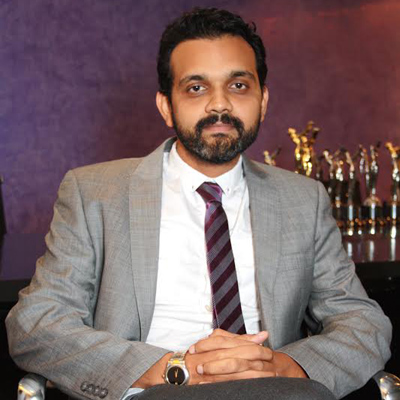
    Commenting on this initiative, NXTDIGITAL brand and marketing head Rajdeep Rudra said “The ongoing pandemic of coronavirus has impacted the economic, social and mental wellbeing of people across the world. As we approach one of the most revered, loved and celebrated festivals of India – Ganesh Chaturthi, we want to help our audience celebrate their love for Lord Ganesha with the same faith and dedication, as they do each year. As caring brands, through this program, we want to create awareness amongst our audience about taking necessary safety precautions while they celebrate this festival from the comfort of their homes. Our objective is to capture this celebratory mood and engage with consumers as we try and build a safe environment for them.”

    Shortlisted videos will also be edited and broadcast on INDigital and NXT DIGITAL (HITS) channels from 22  Aug to 1 Sep 2020 i.e. the entire Ganesh Utsav.

  • ONEOTT Intertainment Limited wins TelecomLead.com Innovation Leaders award 2019

    ONEOTT Intertainment Limited wins TelecomLead.com Innovation Leaders award 2019

    Mumbai: OneOTTIntertainment Limited (OIL), was awarded the 2019 Innovation leaders award by Telecomlead.com. OIL won this prestigious award for adopting innovative steps for expanding broadband connectivity to under connected population in urban locations, like –connectivity of 50 Hotspots in Dharavi which enabled Internet consumers access 2GB data per day free for 30 days via OIL’s Wi-Fi hotspots.

    Commenting on the occasion, Mr. Yugal Sharma,CEO of ONEOTT iNTERTAINMENT LIMITED said,“We are extremely proud and delighted to receive an awardthatis a testament to our endeavors of providing affordable internet services to our customers.OIL’s purpose is to lead digital inclusion in India by connecting homes & offices online thereby, enriching lives of all our subscribers. This initiative in Dharavi directly aligns to why we exist.’’

    In the first phase of the project,50 Wi-Fi hotspots have been enabled in Dharavi, the largest underserved urban locality in India,powered by OIL’s high-speed internet service, and supported by the Express Wi-Fi by Facebook’s software platform. Anyone, who is present in the Wi-Fi zone can connect to a participating hotspot by registering on the ONE Express Wi-Fi by Facebook sign-up page or by downloading the Express Wi-Fi by Facebook Android App available in the Google Play store.

    OIL also has plans to scale up Wi-Fi deployment to 10,000 Access Points and aims to extend its reach to the other Tier 2 & Tier 3 cities. 
     

  • Obit: Remembering InCable’s Ram T Hingorani

    Obit: Remembering InCable’s Ram T Hingorani

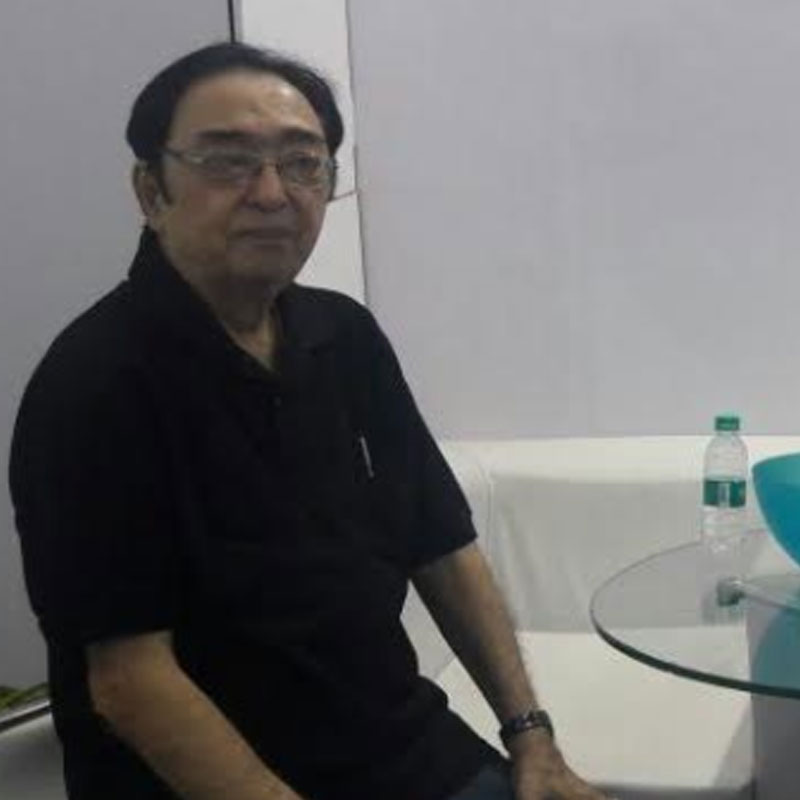
    MUMBAI: “Hi I am Ram Hingorani,” said the squeaky but very amiable voice. I looked around and saw this short bespectacled man dressed in a safari suit, with his hair slicked back. “I am here to show you around and I am with the media business of the Hindujas.”

    The time was the mid to late nineties and I was at the Hinduja office in Worli, Mumbai, just diagonally opposite the Haji Ali Dargah and next to the NSCI to meet up with the group of young men that had set up InCable – the Hinduja foray into the cable TV business.

    He was kind, gracious and over welcoming to a fault, Ram. He then went on to tell me how he had worked at The Times Of India for almost 30 years, retiring if I am right as a general manager or something like that. He then told me about being involved with the Ambanis in the nineties and the acquisition and relaunch of the quickly aborted Observer of Politics and Business and the Sunday Observer. He finally hopped onto the Hinduja group which had expanded into India by acquiring Gulf Oil, Ashok Leyland, apart from other companies.

    He talked about the group moving into the business of media by introducing newspapers, magazines, TV stations, cable TV networks, among other initiatives.

    The Hindujas had formed Induslnd Media & Communications company, which in turn would float four subsidiaries – In Cablenet, In Vision, In Movies and In Print. In Print was slated to publish magazines for specific niche markets, beginning with What’s In, a city entertainment and leisure guide which hit the stands and was distributed to its cable TV subscribers. RTH was in charge of In Print, which ran for a few years and then was phased out.

    He was the Hinduja man as they shopped around for their media ambitions reaching out to the existing media houses along with Sudheendra Kulkarni, the then vice-president of the Hinduja group’s media wing.

    Of all the ventures only one has survived the turbulent media times: the cable TV venture and part of the credit for that must go to RTH as he used to be called. He often played foil to the four musketeers as they were labeled– Yogesh Radhakrishnan, Jagjit Singh Kohli, Yogesh Shah, and Ram Punjabi –by working as a mediator between the Hindujas and them, easing out thorny issues. 

    Along with them, he expanded InCable into 14 cities over 10 years. With the network set up, he moved out, new executives replaced him and he went back to the Ambanis’ Reliance Communications in a bid to set up a triple play venture using the existing infrastructure of independent cable TV operators.

    RTH then retired in 2008 and lived a relatively sedate life – though he mixed around with the cable TV trade from time to time handing out advice – until he passed away on 24 May 2018.  

    The industry came out singing his praises. Said Ashok Mansukhani who currently runs InCable: “He was a giant of a man. He also helped ‘corporatise cable’ and was very hands-on in a world of armchair CEOs.”

    Added Dubai based president & CEO Mediastream FZE (an independent channel and content distribution company)  Rohinton Kapadia: “RTH was always positive even in the face of severe situations at critical times in our cable business. Having worked closely with him for many years I found him to be an inspiration for all of us and an invigorating leader at InCable. We all looked up to him as more of a father figure than our boss.”

    Like the rest of the cable TV trade, Indiantelevision.com sends out condolences to his family. And may his soul rest in peace.

  • Hinduja’s innovative marketing via Pune IPL team

    MUMBAI: For the first time in 10 years of the IPL, cricket fans are expressing their passion for their team and its heroes through a unique, one-of-its-kind digital marketing solution.

    In the ongoing IPL 2017, HGS Interactive (HGSi) has helped Gulf Oil Lubricants India Limited, principal sponsor of the Rising Pune SuperGiant, create a unique customer experience for fans of the team as they follow their players’ exploits and cheer them on. It has designed a clutter-breaking and innovative activation – an IOT-based LED t-shirt for fans that can light up on the press or trigger of a button on the t-shirt or any Android device. So, whenever a player from the RPS team hits a ball for a six or four, or bags a wicket, fans wearing the t-shirt could light up ‘4, 6 or Out’ – similar to the TV screen, and cheer their team.

    “The big idea was to marry technology and the fans’ love for their team and players and come up with a disruptive solution that helps Gulf Oil easily stand out in the crowd. These IOT-based LED t-shirts transform cricket fans into human banners cheering their team,” said Sachin Karweer, Business Head, HGS Interactive, which is the digital business unit of BPM firm Hinduja Global Solutions Limited (HGS) .

    “The IOT-based LED t-shirt is testimony to Gulf Oil Lubricants’ passion for innovation. Fans and the game have converged with this disruptive wearable technology, thus creating an unmatched experience for the spectators of the sport,” said Ravi Chawla, Managing Director, Gulf Oil Lubricants India Limited (GOLIL), adding, “We will continue to embrace such trends and continue to excite our audience and cricket fans all across the country.”

    The innovative fan t-shirt initiative is part of an aggressive marketing campaign unleashed at the 10th edition of IPL by Gulf Oil. The campaign titled “GulfGoFarHarBaar” is currently running in RPS’ home base Pune, and also features the Gulf Fan Bus, Radio Experience, digital videos of players and their interviews. The Gulf Oil campaign intends to communicate the message of “Performing under Pressure” through digital, radio and OOH channels to excite and build a deeper connect with RPS fans.

  • NXT Digital inks deal with Disney Media for two years

    NXT Digital inks deal with Disney Media for two years

    MUMBAI: Headend In The Sky (HITS) platform NXT Digital, which rolled out its services in September 2015, has added one more broadcaster to its kitty. Disney Media Distribution, which recently separated from the IndiaCast distribution platform, has signed a two year deal with the Hinduja-owned HITS company.

    The deal allows both active and passive distribution of the eight Disney channels.

    “This is a partnership deal for two years, we see HITS progressing thick and fast and hence when they reached out to us, we decided to move ahead and sign the deal,” a senior Disney official tells Indiantelevision.com.

    The deal has been signed on a cost per subscriber (CPS) model, and the channels are already available for NXT Digital’s subscribers.

  • NXT Digital inks deal with Disney Media for two years

    NXT Digital inks deal with Disney Media for two years

    MUMBAI: Headend In The Sky (HITS) platform NXT Digital, which rolled out its services in September 2015, has added one more broadcaster to its kitty. Disney Media Distribution, which recently separated from the IndiaCast distribution platform, has signed a two year deal with the Hinduja-owned HITS company.

    The deal allows both active and passive distribution of the eight Disney channels.

    “This is a partnership deal for two years, we see HITS progressing thick and fast and hence when they reached out to us, we decided to move ahead and sign the deal,” a senior Disney official tells Indiantelevision.com.

    The deal has been signed on a cost per subscriber (CPS) model, and the channels are already available for NXT Digital’s subscribers.

  • “Our strategy is clear, we are ready to associate with everybody but we won’t compromise with our transparency:” Tony D’Silva

    “Our strategy is clear, we are ready to associate with everybody but we won’t compromise with our transparency:” Tony D’Silva

    For Hinduja’s Headend In The Sky (HITS) platform – NXT Digital, which was launched earlier this year, the journey so far has been about tussling it out. From procuring the requisite license from the Ministry of Information & Broadcasting (MIB) to getting broadcasters on board, for NXT Digital, it was no mean feat. Focusing on phase III and IV areas of Digital Addressable System (DAS), the venture has made it very clear that they mean business and are here for the long haul.

    Led by Grant Investrade managing director Tony D’Silva, the venture is investing heavily in order to achieve the goals that have been set. With an aim to spread its network pan India, NXT Digital has deployed teams on ground to reach out to operators. Speaking to Indiantelevision.com’s Anirban Roy Choudhury, D’Silva speaks about the roadmap ahead for NXT Digital, the recent deal with Zee Entertainment Enterprises as well as India’s cable digitisation drive. D’silva makes no bones about the fact that the company is ready to associate with anybody but will not compromise with its transparency.

    Read on:

    How did the industry respond to the launch of NXT Digital?

    The launch of NXT Digital has been very well received by most markets across the country. Initially people were skeptical about what this system was all about. There was a lot of negative publicity in the market spread by people with various vested interests saying that we would face the same problems that Jain HITS faced. I think we have been able to overcome that gradually. And now we believe that we are a platform to stay. We have made substantial investment and have the financial support to invest more.

    What do you think has been the biggest achievement so far for NXT Digital?

    The most important achievement is the fact that we have successfully signed all the broadcasters. The deal with broadcasters is for both active and passive services (with exception of Zee), which is a greater achievement. Now I think we have started to move faster. Initially the progress was a little slow because there was a lot of confusion in the market as what will be the last date of DAS Phase III. However, now that there is clarity on the final date, the demand has seen a substantial growth in terms of COPE mini headend systems and set top boxes (STBs).

    When you speak about demand, is there any particular region where you are witnessing the demand or is it pan India?

    It is indeed pan India. In fact, we are observing a huge demand in phase I and II areas. But considering our decision to not disturb the existing ecosystem, we have decided to focus on phase III and IV markets only as of now. That said, we will review the model whenever needed.

    How robust is your infrastructure to meet the growing demand?

    We built our infrastructure for a particular demand but we have gone well beyond that demand and hence we have to now re-build our infrastructure. And that’s exactly what we will do to meet the demand.

    Infrastructure will certainly not be a problem as far as NXT Digital is concerned. We are evaluating various options when it comes to STBs. DAS Phase IV will have a different affording power as compared to phase III and keeping the diversity in mind, we plan to offer a variety of options when it comes to STBs. By next year we will add one or two more transponders too.

    How do you plan to ensure cordial reach out to the operators?

    We reach out to the operators through various print, digital mediums, live roadshows etc. Moreover we have an on-ground team, which interacts with the operators. I think the proof of the pudding is in the eating. Once cable operators as well as the market have seen our services, there will automatically be a level of satisfaction and confidence and then they will be our ambassadors.

    What’s your take on pricing when it comes to DAS Phase III and IV?

    The content pricing is a function of broadcasters. We follow a business model where we don’t make any money from content. We don’t want to make money from content. The lower the broadcaster gives us, the lower we offer to our operators. Broadcasters unfortunately don’t see a difference between Phase III and Phase IV even though we have been repeatedly appealing to them because there is a clear difference in Average Revenue Per User (ARPU) in the two regions. I think it’s the function of authority overseeing the digitisation process to ensure the fact that the price quoted is fair for the entire ecosystem.

    Is there a clear enough revenue model?

    I think there should be a differentiation in the markets, or another way to look at it is to see what you can afford and pay for it. But I don’t know if the second one is a right option at this stage. And the reason I say at this stage is because the consumer is used to a kind of model and suddenly you cannot give him another rationale and logic. The transition needs to happen after following a logical approach and that is something that I firmly believe in. You cannot bring in a change by being harsh on the end consumers. 

    How many operators has NXT Digital signed with so far? Are you happy with the number?

    We are very close to touching the 500 mark and I am very happy with the number. The number will go up substantially as we come closer and closer to the D-Day. There are a huge number of people who are still trying to figure out the best way forward. The main reason why operators held back was because they were insecure about us not having all the content. After getting Zee on board that problem has been addressed and now we will certainly see the demand going up.

    The other problem that we faced in the initial stages was our broadcaster friends campaigning against us. They went on to many operators and mis-informed them saying NXT Digital will also be on the same track as Jain HITS as we will not provide them the content. I think we have proved that these were just rumours and hence they don’t count anymore.

    What’s your take on the entire digitisation process?

    Not all operators are equipped with higher education and hence they do not understand the actual meaning of digitisation. Digitisation does not mean putting a digital head-end and STBs but it is also about managing the backend, packaging and bundling. On the other hand, there are a lot of smart, intelligent Chinese vendors all around laying the trap and there are a good number of operators falling in that trap maybe because of the government pressure or lack of understanding.

    The other thing I have been telling the government is that when you look at regulation per se, the entire onus of implementing digitisation lies on the MSO. However, we are forgetting that a very important part of the process is the local cable operator (LCO), who is delivering the signal to the end consumer. Therefore billing, receipt collection, ensuring quality, consciousness and other on-ground responsibilities should remain with the LCO.

    The government needs to understand that unlike many other countries, India is not a homogenous market. On a single street you will find slums and multi-storeyed apartments, which are both are consuming content. The LCO cannot go with a fixed price because it will be more than some or less than some. Moreover, he will also have to pay service tax on it. The concept of billing needs to be realistic and practical. There are a lot of things that need to be addressed if we really want to digitise the country. 

    You are also providing local channel facility, which is something that lacks on DTH. Who takes the responsibility of the content put on those channels?

    We have a mechanism through which operators can have as many as eight – sixteen local channels. The benefit is that they are all encrypted and hence piracy is taken care of. We are clear with the operator that whatever content is put up, should follow the Cable Act. If the operator airs pirated content or breaches the law, the broadcasters can inform us and we will switch off signals. We have the power to switch off, which other MSOs don’t and that’s another advantage that we have. We have to understand one thing that the COPE belongs solely to the operator and therefore the liability of whatever is inserted through that COPE is on him. 

    Can DD Freedish capitalise on the on-ground chaos? If there is a blackout, people may just move to DD Freedish?

    DD Freedish is also like any other DTH platform. I don’t think it meets consumer requirements. The consumer knows what he wants to watch. Setting up a DD Freedish and buying an STB is similar investment. It’s just that there is no subscription fee attached to DD Freedish but it has its limitations when it comes to number of channels. And not only channels, the exposure that we offer is far beyond, be it international with global channels, local channels or value added services. So we are far ahead of a platform like DD Freedish and we are not bothered by it.

    You had all major broadcasters on board except Zee. How was your experience inking the deal with Zee?

    A deal that took four months to be signed cannot be called a smooth one. We went to the MIB, the Telecom Regulatory Authority of India (TRAI) and then eventually tussled it out at the Telecom Disputes Settlement and Appellate Tribunal (TDSAT). For many years now we have been requesting TRAI to come up with a standard Interconnect Agreement (ICA). There are so many operators across the country who cannot even afford to go to the TDSAT. It’s not an easy process; he has to come to Delhi, hire a lawyer and it needs a lot of financial backup. The deal signing with Zee was a learning experience for me. It was a case of dealing with people who say something and do something totally different. It was a clear case of mis-interpretation of law.

    What is the way forward for NXT Digital?

    Value added services are important to ensure growth and now we are focusing aggressively on that front. I want to make one thing very clear, which is that the Hinduja Group will fight this till the very end. We are not going to be tempered over by anybody in this industry. If there is a genuine problem or concern, we are more than happy to sit and discuss. At the same time, no matter what, we will not be stepped on for nothing. I firmly believe that the whole is always bigger than the individual. If we have all the broadcasters with us and one against, there has to be some vested interest. Our strategy is clear, we are ready to associate with everybody for business or betterment of the industry but we won’t compromise with our transparency. 

  • MSOs, LCOs upbeat about Hinduja’s NXT Digital HITS platform

    MSOs, LCOs upbeat about Hinduja’s NXT Digital HITS platform

    MUMBAI: The Indian television industry is bracing itself for the third phase of digitisation as the deadline for Digital Addressable System (DAS) ends on 31 December, 2015.

    Phase III deadline of digitisation is what the broadcast ecosystem has been talking for a year now. While on the one hand, the government of India has time and again made it clear that there will be no extension of deadline, which is 31 December, 2015, on the other, stakeholders are pointing fingers at the system as the teething issues like inter-connect agreement (ICA), CPS deals et al are yet to be taken care of. In a recent notice the Ministry of Information and Broadcasting (MIB) headed by Arun Jaitley and MoS RajyavardhanSingh Rathore, has asked broadcasters to stop beaming analogue signals to all MSOs. Now with only days to go, people are still unclear as to what’s ahead.

    Amidst the chaos of litigations between stakeholders and various pot-shots being fired, Hinduja’s Headend In The Sky (HITS) platform NXT Digital found its calm in doing actual ground work before launch.

    Harvard Business School professor Rosabeth Moss Kanter once said, “Leaders must pick causes they won’t abandon easily, remain committed despite setbacks, and communicate their big ideas over and over again in every encounter.” And that’s exactly what the team helming NXT Digital did. Prior to its launch on 16 September, the HITS platform carried out road shows involving Last Mile Operators (LMOs) in over 19 cities spread across the length and breadth of the country to communicate the new idea.

    While the initial reactions from the operators weren’t that encouraging, the lack of collaboration on-ground between existing MSOs and LCOs turned out to be a blessing in disguise for NXT Digital, which in turn fuelled its penetration into the hinterland. Now, MSOs and LCOs that Indiantelevision.com spoke to are upbeat about the new platform.

    An independent MSO from the North Eastern Province tells Indiantelevision.com, “I recently invested Rs 50 lakh to establish a cable head-end but as of now I don’t know how much I will be charging the consumers. The Cost Per Subscriber (CPS) model is not even talked about yet. Broadcasters are giving out different deals to different MSOs. If anybody asks me for a suggestion, I would tell them to go for HITS as it is a much more transparent platform.”

    Another impeding problem that the industry will soon face is a serious crisis of Set-Top-Boxes (STBs). While the boxes are assembled in India, the components are still being shipped from China. “The components have not yet been ordered. While a few have placed the first round of orders, there are many who are yet to do that. It takes three months for the components to be delivered from China and then an additional one month to assemble them. So it is certain that the boxes will not reach on time. The STB crisis will be there for NXT Digital too,” said a senior official of an established MSO.

    However, NXT Digital is unperturbed. A senior official of the company says, “There was going to be a set-top box crisis and we always knew about it. Hence we placed an order for four million boxes and there are close to 1.1 million boxes available for us at this stage. So NXT Digital is pretty sorted from the STB point of view.”

    If sources are to be believed, Star is charging Rs 38 for its bouquet in DAS Phase III areas, whereas the Zee bouquet costs close to Rs 30. Sony Pictures Networks India (erstwhile Multi Screen Media) is pricing its bouquet at Rs 24, while India Cast is charging Rs 20.

    On the other hand, NXT Digital is charging Rs 71 per box. “It’s a good deal. It’s just that they don’t have Zee in their package yet. But I don’t think it will take long for them to get them in,” says a reputed member of a Southern cable federation. “They are giving a total of over 300 channels and if there is a spike in demand, they have the infrastructure to meet it too. So it’s a good long term investment.”

    NXT Digital follows a prepaid model, which the Indian ecosystem is not yet used to. “That’s not really a big issue; people usually get used to it. I am getting a lot of positive feedback from the industry about the HITS platform. However, there’s one thing that I will request Mr Tony to look at and that is the exchange of STBs. People are not ready to forget the STB investment that they have already made to have one. If they give an exchange offer, it would be great for us,” opines an LMO.

    Now it remains to be seen how NXT Digital proceeds further and to what extend they succeed in capitalising the hinterlands.

  • Neo Sports’ Mautik Tolia opens up on the Impact of DAS

    Neo Sports’ Mautik Tolia opens up on the Impact of DAS

    DAS (digital addressable system) is here to stay. Despite the shortcomings, the hiccups in the implementation of the first two phases, the government has announced that it will not extend the deadlines of December 31, 2015 for phase III areas and December 31, 2016 for phase IV, when the entire country is expected to be digitised. After complete switchover, cable TV services will be available only through set top boxes in India.

     
    We, at the Indiantelevision.com are starting a new section – ‘The Impact of DAS’ through which thought leaders, experts from the television ecosystem will share their thoughts, ideas, and say their piece on the subject. We are beginning with the impact of DAS on the sports broadcasting ecosystem. 

     
    Our expert for the section is Neo Sports EVP programming Mautik Tolia.


    Excerpts:


    How big an impact has phase I and II digitization made when it comes to subscription revenue?


    Digitization has been a big step forward not just in terms of revenue but in providing secular access to viewers to more sports events, apart from just cricket. As India moves more and more to a multi-sport fan universe, digitization will continue to play in important role in increasing the popularity of all sports. Combined with the increasing market share of DTH platforms, which in turn enhances the reach of sports networks without whimsical interruptions (which were a constant feature in the analog domain) we at neo sports see other sports climbing to a 40 per cent share of revenue universe in 3 years time.


    From sports broadcaster’s point of view are you happy with the two phases of digitization?


    Doubtless there have been roll out issues and delays in implementation but on balance digitization has been a positive. It will be some time before more sophistication is achieved in packages and tiers, which will steadily take us to a CPS billing norm. Transparency in billing remains a challenge but we believe that too will be resolved in the next 2-3 years.


    Is the sports broadcasting industry in a subscription positive scenario? Or we are still ad dependent?


    From a 90:10 ad: subscription ratio 10 years back, the sports broadcast industry has probably moved to a 70:30 maybe even 65:35 ratio. This may even be 60:40 or 55:45 in the case of some networks. Due to significant ad spend on cricket, especially IPL this ratio will inch its way to maybe 50:50 in 3 years for the industry as a whole.


    Are sports like Football, Badminton which are hugely popular but have very little room for advertisement profitable assets for broadcasters?


    Aside of Cricket, the dominant sports are football, tennis, golf, hockey, badminton and motor sport. Except for Football and Badmnton, others have adequate ad break potential. At Neo Sports we believe that it is more a question of focus, ability and experience when it comes to monetizing sports other than cricket.


    With phase III and IV scheduled do you see a substantial inclination in subscription revenue?


    We see further momentum in subscription revenues, reach and secular access for all sports in phase 3 and 4.


    How can a non cricket sport or a sport with least ad room turn profitable for broadcasters in India?


    The profitability conundrum is more a function of irrational acquisition prices and lack of focus on monetizing all sports. We have seen at least one sports broadcaster recently pay over the top for rights that were being jettisoned by another and for which there may well have been no other takers. Ill informed and panic buying has resulted in lack of profitability for some. At Neo Sports we believe that intense discipline is required both with acquisitions as well as in monetizing assets. Wise spending may not make a sports broadcaster no 1 but there are plenty of sports rights constantly available, the universe of sports fans is rapidly expanding, advertisers are increasingly willing to spend on sports other than cricket and affiliate platforms understand that tens of millions of viewers are tuning into other sports – hence there is room for multiple sports networks and increasing opportunity for revenue and viewership expansion.

  • Hinduja’s NXT Digital installs Actus broadcast monitoring platform

    Hinduja’s NXT Digital installs Actus broadcast monitoring platform

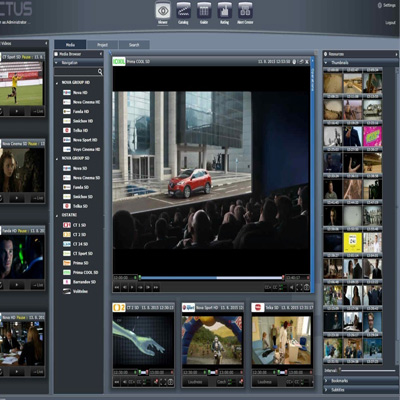
    MUMBAI: Hinduja Group’s headend-in-the-sky (HITS) digital service platform NXT Digital has installed the Actus broadcast monitoring platform.


    The recently launched HITS platform offers over 500 channels to the fast-growing television market in India.


    By implementing the latest version of Actus’s broadcast monitoring platform, NXT is being guaranteed that all IP-based channels are reliably recorded 24×7 and that whenever more channels are added; Actus’s scalable broadcast recording platform will be easily expanded. In order to comply with the current requirements, Actus has deployed Actus View to record and monitor the 350 IP-based channels, Actus Multitrak to support multiple audio tracks, Actus EncoderPro to save hardware resources, Actus Loudness to monitor audio levels, and Actus AlertCenter to provide NXT with real-time alerts for any audio or video issues.


    Grant Investrade MD Tony D’Silva said, “In the dynamic digital video world, we are assured that Actus Digital will not only fulfil our current requirements but also comply with future requirements that the digital world will dictate. Actus has vast experience with installations worldwide and we are confident that the platform will grow as our business expands constantly.”


    Actus was selected for this premier service after a rigorous four-stage RFP evaluation process conducted by Castle Media – Asian broadcast consultancy tasked with end-to-end programme management and delivery of the HITS project.


    “The Actus platform is scalable and modular, which makes the solution cost-effective by allowing GIL to implement only the modules required yet be assured that once additional requirements arise, Actus’s platform will provide us the solution,” added Castle Media executive director Vynsley Fernandes.


    Shaf Broadcast, Systems Integrator, implemented the solution. 


    “We have the knowledge base and experience to deploy Actus Digital’s solutions. The installation, implementation and integration of the Actus platform went fluently and complied with all of our high expectations. The Actus local team worked closely with Shaf engineers to make sure the system will be up and running and meet the high demands and tight time frames. I am assured Actus will provide an excellent platform to NXT Digital also in the future,” said Shaf Broadcast director P.R. Suresh. 


    “One of the challenges, beyond the installation of a large system, was the fastest-possible deployment that was required to meet the time frames of launching the digital rollout of NXT Digital services. In order to be sure that Actus would meet the tight time frames, we sent an Actus-trained local team to the customer’s site to prepare the site ahead of time. With good cooperation with Shaf, we optimized our recorders to take advantage of recent improvements in hardware and of a new version of Actus’s EncoderPro technology and were thus able to offer better performance than initially proposed for the same budget,” said Actus CEO Sima Levy.