Bollywood is becoming a game for the big boys. New upstarts like Sahara and UTV are pumping in money behind production and marketing to create mega commercial hits like No Entry and Rang De Basanti while Anil Ambani‘s Adlabs Films is planning to have a high-point presence in all the segments of film business.
The movie business landscape, in fact, is changing fast. Indiantelevision.com takes a look at how the industry is shaping up to script a new tale.
MORE BANKS LEND, BUT STILL CAUTIOUS…
IDBI Bank is the leader in the pack, having late last year decided to double its exposure limit to Rs 2 billion. No wonder the big daddy of film financing believes it has found the right formula for lending to the industry. It has sanctioned Rs 1.8 billion while disbursals stand at Rs 850-900 million towards movie projects.
Says IDBI deputy managing director Jitender Balakrishnan, “It has proved to be a successful product for us, giving us returns which match other industry sectors. This is why the IDBI board took the decision to increase the upper limit to Rs 2 billion.”
 Other banks like UTI have entered the fray, but the lending is still extended to select production houses and the norms are strictly observed. IDBI, for instance, funds only corporates who have a track record of three years and insists on a 1:1 debt equity ratio. “We don‘t deviate from these lending norms. Besides, the size of the loan can‘t be less than Rs 40 million and anything above Rs 200 million will have to be backed by a completion guarantee,” says Balakrishnan.
Banks rely on an advisory committee drawn from the film industry itself to examine the merit of each project proposal. The approval of the project, however, is done by an internal team after weighing several considerations including revenue earning potential of the movie. “It is just over four years since banks have started film financing. The process is evolving and as the confidence grows, banks will keep changing the lending norms,” says Balakrishnan.
Banks believe there is a need at this stage to stand vigil in a sector that has chronic ups and downs. They have gone slow on expanding their film finance portfolio. Though film producers are required to repay the debt before the release of a movie, holding IPR rights may not be a safety net for loan recoveries. Take Bank of India which has financed just Rs 250 million for five movies over a four year period. While two movies under its portfolio have been successful, one has just about managed to recover costs.
“Another project is stuck over disputes and the movie is yet to be released. We have also financed a fresh project which is coming up for release. Organised finance is coming, but the pace is very slow. We have nominated just one branch in Andheri which does film financing. Because of its risky nature, we have an upper ceiling of Rs 50 million per movie,” says Bank of India general manager (credit) S Sampath.
An early lender into the film business, Bank of Baroda is extremely cautious about providing debt to the film sector. “Our experience has not been good so far,” says a senior official of the bank.
That has not stopped some banks from experimenting in the glamour industry. Export-Import Bank of India (Exim) has recently agreed to lend $7 million to Crest Animation Studios in what would be its first funding for an animation film project. Starting to lend to the film sector since April 2004, the bank has financed Rs 580 million for nine movies so far. This includes Rs 400 million to noted filmmaker Yash Chopra for movies like Veer Zaara, Hum Tum, Bunty Aur Babli and Dum. It has also lent Rs 100 million for Farhan Akhtar‘s Don and Rs 80 million for Mangal Pandey – The Rising.
“We feel the entertainment sector will become big business. We decided to start with the film industry. But we pick and choose projects very carefully. Unlike the telecom and other sectors, it is far riskier than what we have been used to funding. We have been lending only to established names,” says Exim Bank general manager Mathew John.
 Organised finance is available at much lower interest rates, but is not accessible to fresh filmmakers. Private financiers charge as high as three per cent on a monthly basis. “Almost all banks are now open to financing films based on the historical track record and balance sheet of the producer, in addition to the security of the film negative. Interest rates range between 9-13 per cent. There are instances of institutions like Exim Bank offering foreign exchange loans against overseas rights at cheaper rates,” says UTV Software Communications COO Ronald D‘Mello.
Exim Bank, which has been funding Hindi movie projects that have a potential to earn foreign currency revenues in the overseas market, offers floating interest rates.
So what do banks need? “This industry will have to corporatise more. Besides, there has to be a complete cheque mode of payment so that the accounting is transparent. An established track record is also important,” says Sampath.
The lesson in this? If you are making your maiden movie, the chase to the bank for arranging finance may turn futile. Banks are willing to lend to corporate-driven organisations, provided the norms are in place. Such companies can leverage on their equity and internal accruals to raise debt as a mix of funding for movies.
“Of the 117 Hindi movies produced last year, the fund requirement would have been around Rs 7 billion. Only 10 per cent of this must have come from organised finance,” says a trade analyst.
What, though, is not flowing in is equity into film financing from venture capitalists (VCs) or high net worth individuals. Despite attempts at setting up Film Funds, no progress has been made. Explains D‘Mello, “There are no tax or other regulatory incentives to attract subscribers to the Fund. Also, there is a high risk perception of Bollywood movies coupled with non existence of completion bonding which works well overseas.”
 As film production becomes more expensive, innovative forms of financing have to creep in to make it available to a broad section of filmmakers. One way is to ensure a transparent online accounting system on the exhibition side and make that cash flow accessible to banks and institutional funding agencies. “By securitising the cash flows from the theatres into the funding agencies, risks can be made more acceptable. Multiplexes have a role to play in this and banks can take a position on the movie‘s future earning potential,” says Mukta Arts CEO Ravi Gupta.
A more radical suggestion is to allow the formation of limited liability companies. “Such companies can be formed for individual projects. Foriegn and high net worth investors can come in for a movie and after the completion of its commercial exploitation, the company can be allowed to close down. This is a practice in the western countries. But the government will have to allow this format in India,” says Gupta.
INDUSTRY GETS MORE CORPORATISED, BUT DISTRIBUTION STILL THE IRRITANT
The rules of the filmed entertainment business are changing. The production process is getting more corporatised, multiplexes are bringing in a breath of fresh air on the exhibition front, and investors are watching with keen interest which way the fortunes are going to swing.
The production cycle is getting shorter for at least the organised players. Mukta Arts, for instance, took six months to produce Shaadi Se Pehle. The duration of completing a movie, though, varies from project-to-project and also depends on the production house. But, as Gupta says, the average time spent on the floor has generally shrunk.
The industry, once used to waste and extravagance, is realising the value of streamlining operations. Focus on good stories, well-oiled machineries, planned executive and effective marketing campaigns are going to be crucial in driving down costs and getting mainstream hits. Says D‘Mello, “People are not working on broken schedules. This has brought down time and cost escalations.”
Fragmenting and targeting niche audiences is possible today with the number of multiplexes which have sprung up across the country. Multiplexes are also securing a better revenue flow across the distribution value chain. Says E-City Ventures CEO Atul Goel, “The revenue leakage on the distribution front is still an issue. But there is an improvement because of the multiplexes which have brought about transparency.”
Digital delivery of movies will also drive change. But it is still at a nascent stage and is taking place at the low-cost end. “The industry has around 250 digital exhibition theatres across the country. We will have to push it up to 2,000 to 3,000 theatres,” says Gupta. Mukta Arts has a joint venture with Adlabs for the digital delivery business.
Multiplex operators are fast ramping up. Says Goel, “There are around 100 multiplexes in the country. But with the players lining up major expansion plans, this is expected to grow to 250 multiplexes within two years. We are scaling up from four properties and 17 screens to a total of 35 multiplexes and 150 screens by early 2008.”
Adlabs plans to invest Rs 2 billion over three years towards multiplexes, adding 100 new screens by the end of FY 08 to take the total to 135 screens. Even on the production side, it aims to produce over 10 films in a year from FY 06 onwards. “We will have to run faster and higher. We have signed up Ram Gopal Varma, Ramesh Sippy, Prakash Jha and Vipul Shah,” says Adlabs Films chairman and managing director Manmohan Shetty.
 Such ramp ups across the top production houses like Yash Chopra, Mukta Arts and Sahara will be a challenge and will depend upon how much the market can absorb. Though multiplexes are growing, it remains to be seen how much additional supply they can take in.
“The exhibition side is getting valued already. On the production side, as more companies scale up and start demonstrating earnings, the scepticism will disappear and investors will find it a more acceptable model,” Says Enam Financial Consultants vice president Salil Pitale.
STRIVING FOR VERTICAL INTEGRATION MODELS
A more varied business model is taking shape as corporate houses strive for size and vertical integration. Adlabs, Sahara, UTV and E-City originate from different backgrounds and are creating empires that will synergise with their other ventures.
Ambani is building an entertainment powerhouse that will sprawl over his telecom venture. Having paid Rs 3.6 billion for a 51 per cent stake in Adlabs, he quickly raised $100 million through an offering of foreign currency convertible bonds (FCCBs).
Flushed with funds, Adlabs will scale up movie and radio operations with a heavy presence in exhibition, production, film processing and distribution segments. His Reliance Infocomm will link up threatres and deliver content through its fibre optic backbone. His foray into home video segment will help provide content for Reliance Infocomm‘s triple play service which Ambani plans to launch by the end of this year. The direct-to-home (DTH) service will also gain content from Adlabs.
“In this type of a model, it is viable to create an integrated platform, scale up and absorb all the risks from the vagaries of film business. Ambani is best poised to take the film industry forward, but has to get the content right,” says an analyst.
Subroto Roy, on the other hand, grew up a broadcast business and then spread his fabric over Bollywood. His Sahara motion pictures division has churned out several hits and can play a big role in pushing the flagging general entertainment channel forward. He has also launched a Hindi movie channel and, along with news, is hoping to have enough firepower to migrate from free-to-air to pay TV business.
An outsider in film production, Roy has turned out to be one of the leading producers with a pipeline of 40 movies.
Sahara‘s model of tying up with production house K Sera Sera, which had a long term deal with Ram Gopal Varma, for 10 movies proved fruitful. The company also worked out multiple-movie deals with Boney Kapoor and Madhur Bhandarkar. “We are making 20 movies this year. We will be totally funding these movies. We are also into film distribution business,” says Sahara One Media and Entertainment Ltd CEO Shantonu Aditya.
UTV, which started as primarily a TV content production house, has marched into movies and broadcast areas to boast of being an integrated media company. The company has produced seven movies over the last 30 months and more are on various stages of production now. “We do not consider film business more risky compared to other media businesses. Selecting the right project after due evaluation and research, having a slate of film projects of varying content profiles, managing cost and time schedules well and effective and timely exploitation of revenue potential are the key to successfully managing the film business,” says D‘Mello.
UTV was commissioned by Star to produce movies for them. “Broadcasters of late are looking at acquiring a slate of movies from producers for television exploitation compared to film acquisition earlier. Apart from assuring future content, this also helps broadcasters to amortoise the cost over multiple films,” says D‘Mello.
Television content companies like Balaji Telefilms have also made cautious steps into film production. Their aim: to drive topline growth. Movie companies like K Sera Sera are also going the reverse way by foraying into TV content business.
Pure film companies are aiming to size up their business. Yash Raj Films has a strong overseas distribution arm and has set up a hi-tech studio to grab outsourcing work from Hollywood. Others like PNC have attracted equity financing, but are trying to grapple with ways to grow the business. Mukta Arts has opened an academy to train professionals and have a constant supply of talent to feed the industry.
Exhibition companies are getting into the distribution business. “Exhibition margins range between 15-20 per cent. It makes business sense for us to be in distribution, which has margins of 30 per cent, as well. We have entered Gujarat territory as we have taken 22 theatres on hire there. But one has to progress selectively into territories,” says Goel.
 Distribution companies are also finding the climate conducive for movie production. Sony Pictures Releasing of India, which had obtained FIPB (foreign investment promotion board) approval for film production, had stayed out of it for years. But recently the company announced a joint venture with Sanjay Leela Bhansali for production of Hindi movie Saawariya (Beloved). “We are globally into film production. We think the time is also right as corporatisation has led to a more organised production process,” says Sony Pictures Releasing of India managing director Uday Singh.
For any chance of organised funding to get better, efficiencies have to grow across the value chain. Aligning with directors for multiple films can draw and lock in talent while co-productions can raise the production values. On the positive side, the dependence on domestic theatrical collections has reduced while international territories are yielding better cash returns.
The revenue mix for good movies is more widely spread today. While domestic box office accounts for 50-55 per cent (earlier 70 per cent) of total revenues, satellite TV rights make up 20 per cent and overseas territories 10-15 per cent. The home video segment is also growing, accounting for 10 per cent revenues. In the wide basket, it is only the music rights which have sunk over the years and seen very little rise.
New media exploitation options like mobile and internet also offer promissing revenue potential for film content.
The best thing to happen is the emergence of a diverse range of players who are aggressively getting into the film business for strategically different reasons. This is good for the health of the film industry and will fuel its future growth.
 Finding a target group that wasn‘t specifically tapped by the other channels was her first task. She commissioned research firm PQR to help her discover what she calls “our zone.”
 As UTV Youth venture COO, Mehta is geared up with a three phase plan and a piggy bank of Rs 1 billion (drawn from Rs 2 billion outlay over three years) devoted to the first year alone. In GENX, the joint venture company that will roll out the channel and other youth-related initiatives, Malaysia-based Astro will be a 50 per cent equity partner.
 As part of its approach, UTV seems to be adopting a multiple revenue model that old timer music channels MTV and Channel [V] have tried and tested in the market. MTV VP creative and content Ashish Patel calls this form as ‘multi-platformication’ which includes online, mobile, events, retail and merchandise.
 Though not a direct threat, music channels have been targeting a similar demographic segment. “UTV, however, seems to be having a sharper focus within that TG by eyeing programming at the 17-21-year-olds. But we are essentially music channels and having been in existence for so long, are not really worried,” says Channel [V] head honcho Amar Deb.
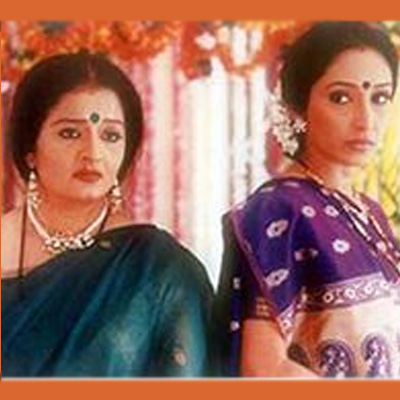
 Whether marital discord, anger and frustration of the man in his professional life, a misunderstanding or the honour of the family, the women were always at the receiving end, notes the study. The relationship between the aggressor and the victim is seen as mostly marital or through marriage, but in a few instances, even a brother was an aggressor.
 In many instances, male and female characters are forced into marriage against their wishes. This results in domestic violence or extra-marital affairs. As upholders of the family honour, women are always expected to place the family ahead of their personal aspirations, claims the study.
 Citing examples, the study mentions Kasauti Zindagi Kay (Star Plus), in which Shivani, just married to Anupam, is slapped by him when she discovers a fraud he had committed. The new bride is shown howling when her brother visits her. The brother takes up the matter with her husband and her in-laws. But Shivani‘s in-laws don‘t intervene. Shivani folds her hands and pleads with her brother to leave.
 In another episode of Kasauti Zindagi Kay, Kajol is threatened and emotionally blackmailed by her boyfriend as well as her family. The parents and her elder brother are against her alliance with the boy. When the elder brother catches her red-handed with her boy friend, he pulls her away angrily and takes her to home. She is brought to the ‘family court‘ where the brother screams at her and threatens her with dire consequences unless she behaves properly.
 In Hubahu (Sony TV), Aditi‘s husband roughly pushes her towards the door and asks her to leave the house because he feels that she is not allowing him physical intimacy. The study points out that though the serials did not project a lot of physical violence against women, there are many instances of extreme and repeated mental pressure, threats, screaming and shouting and anger directed towards women. Women were shown constantly under a lot of stress and anxiety, the panel felt.
 Several female viewers interviewed by CFAR observed that many of the so-called safe family serials, which hook the viewers with very identifiable situations and characters, have their share of problems. Not only is the depiction of men and women lopsided or one-dimensional, it is highly exaggerated, unrealistic and inconsistent, the study claims. Besides, some female characters are portrayed in an extremely unconvincing manner, especially when portraying a scheming, unscrupulous and dominating character. Men are portrayed in a highly negative manner too and such negative behaviour is often glorified.
 “We have launched about three to four shows during this period including Nach Baliye 2, Saathi Re & Paraaya Dhan (Star One) and Antariksh, Karam Apnaa Apnaa and Prithviraj Chauhan (Star Plus) and the effort is to take on any kind of competition in any time band. Star Plus is not going to sit pretty on its relatively strong position. Now, the effort will be to constantly improve the performance. There will be no let off from our side on this front”, says Star India EVP content Deepak Segal.
 “The turnaround started with Saath Phere and Kassamh Se and the kind of innovations and experiments we employed in our storylines have really contributed to this good performance. This way, we managed to get the audience flow. We have steadied our soaps. The launch of Betiyann has completed our soap range for the year and now the focus is on various other genres. Hence, we will have now programmes such as the mythology Raavan and reality show Cinestars coming up. So, the strategy will revolve around non-soap genres for the next phase,” says Zee TV programming head Ashwini Yardi.
 Kyunki Saas Bhi… continues to be Star Plus‘ channel driver programme. The long running soap of Hindi television recorded its best rating of 14.17 TVR on 31 July, 14.31 TVR on 29 August and 13 TVR on 4 September. The channel has a fixed line up of shows occupying all the top four positions including Kyunki… and the shows are Kahaani Ghar Ghar Ki, Kasauti Zindagi Kay and Kahiin To Hoga. While in July, the fourth and fifth positions were occupied by Baa Bahoo Aur Baby and Kkavyanjali respectively, in August the positons went to special shows Nach Baliye 2 Muh Dekhai and Shaadi Ke Rang Bhabhi Ke. In September, Prithviraj Chauhan (best TVR 7.38) and Karam Apnaa Apnaa (best: 7.12 TVR) made it to the reckoning.
 The Star ploy of countering Betiyann with Naach Baliye 2 special episode worked well for the channel. Betiyann‘s launch ratings stood at 2.58 TVR, while Nach Baliye 2 opening episode recorded a rating of 4.86 TVR (CS4+ HSM). However, it looks like the ploy had backfired in Kahaani…‘s case as the soap could gather only 6.14 TVR for the particular day. (Kahaani… normally records a rating of about 8 TVR on an average).
 Strategy-wise, as Yardi has revealed, Zee TV‘s focus will be now on non-soap programmes such as Raavan and Cinestars. Star Plus is looking at the kids genre in a big way and has even accommodated a kids-oriented superhuman show Antariksh in its weekday 8 pm prime time band. The channel has lined up another kids show Lucky for the same slot on Saturdays. As Segal puts it, “We are looking to develop kids also as a key viewer segment of ours. Star has always been popular for its quality kids shows.” Sahara One‘s October-November plans will mainly revolve around the upcoming soap Solhah Singaar‘.
 Late last month, when Zee TV pointed a finger at Star India, making a serious charge of copyright infringement, the incident had given away the plot of the big fight coming up. Zee Telefilms issued a notice to Star demanding it withdraw all activities around its upcoming soap, tentatively titled Betiyaan, claiming ownership of the concept. Zee said it was in fact gearing up to launch its big ticket soap Ghar Ki Lakshmi Betiyann, produced by Creative Eye.
 According to the Zee official communiqué, Ghar Ki Lakshmi Betiyann is Zee TV‘s steadfast attempt to address the ever-persistent issue of gender discrimination in our country. The show highlights certain myths that exist in our society today. States Zee TV programming head Ashvini Yardi on the Ghar Ki Lakshmi Betiyann, “With Ghar Ki Lahsmi… we are trying to highlight the serious issue of gender inequity that is prevalent in our society.”
 “Kahaani Ghar Ghar Ki is an old show with a dedicated viewership and we are confident of the soap overcoming any new challenge in its way. But we will make efforts to protect the show. I am not hinting that we will be doing stunts to keep the viewer glued. We will be taking liberties that the story line would allow and accordingly, we will be creating twists and turns in the plot to fight competition,” Star India senior creative director Shailja Kejriwal says.
 And one show that will be making its best efforts for not getting caught in this exchange of fire would be Sony‘s brand new celebrity dance show Jhalak Dikhhla Jaa. Reason: Jhalak.. again has been placed in the crucial slot of 10 pm, Wednesday and Thursday.
 Star One is meanwhile revamping its prime time band as well, with the entry of Nach Baliye 2 on 25 September (placed in the 8:30 pm slot) and the launch coincides with the Ghar Ki Lakshmi… launch in terms of dates. In October, two other soaps Saathi Re and Betiyaan apni yaa…Paraaya Dhan will mark the launch of new primetime programming band, with Saathi Re airing at 8:30 pm followed by Betiyaan apni yaa…Paraaya Dhan at 9 pm.
 The initial period, as Filmy business head Ashutosh puts it, is “more than satisfactory.”
 To break into the competitive market, Filmy adopted an innovative programming approach. The executives at Filmy fondly call it ‘Wraparound Programming’ and this phrase meant a lot of stress on non-movie programming.
 Lallan (a rustic who has migrated to Mumbai from a small town in Uttar Pradesh), Lal Gulab (a typical villain as seen in all movies), Rokkky (who has the air of a Bollywood superstar and is played by Hindi film actor Chunky Pandey) and Ruchi Reporter (who is like a sting journalist and is interested in exposing the private lives of stars).
 “Our focus was to create our own content such as interstials and station IDs. We wanted to create a space for ourselves in the market. Otherwise, there was no point in being a fourth channel,” explains Ashutosh.
 “This character, has been very well-accepted by urban centres, while rural viewers have found difficulty in understanding the double-act. Hence we have decided to simplify the character with some modifications,” adds Ashutosh.
 On the marketing front, Filmy is following the strategy of taking its lead anchors off air and positioning amidst the public.
 “When we began, it was a ‘by chance’ channel, rather than a ‘by choice’ one. Keeping the tough competition in mind, it was important for us to nurture that ‘force of habit’ and the Tam data validates our success. People now watch the channel by choice,” he says.