Tag: hindi gecs

  • N P Singh elevated to MSM CEO, Man Jit Singh to be MSM India chairman

    N P Singh elevated to MSM CEO, Man Jit Singh to be MSM India chairman

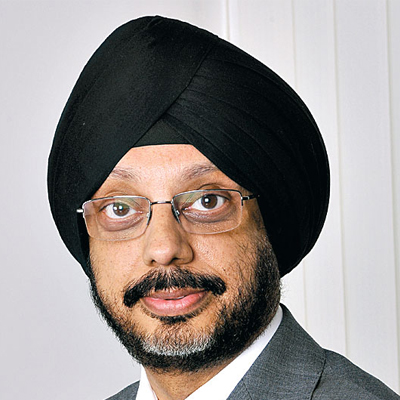
    MUMBAI: In a major development, Multi Screen Media India (Sony Entertainment Television) has promoted its COO N P Singh as CEO effective 3 January 2014. In his new role, NP will report to Sony Pictures Television President Worldwide Networks Andy Kaplan. Singh confirmed the development to indiantelevision.com, adding that he was looking forward to taking the company into its next growth phase.


    He replaces Man Jit Singh who has been designated as non-executive chairman. Singh will reportedly be spending more time in Los Angeles (LA). 

    While much work has been done there is clearly a long road to go before we can fully achieve our vision, says NP Singh

    “NP and I have worked closely together as equal partners these last five years and the success of the company is largely due to his efforts. The time has come for him to lead the company to the next level and I fully expect the innovations he brings as CEO will ensure we have years of success ahead. As the Non-executive Chairman of MSM, I look forward to supporting NP and will continue to remain involved with the Indian television industry,” said Man Jit Singh.


    Kaplan also expressed strong support for the move. “We have full confidence in NP being able to lead MSM and continue the success of the last five years. NP has been involved in all the decisions that lead to the success of our business and this is a well-deserved recognition of his untiring efforts and of the faith we have in his decision making. I wish him all success in his new role as CEO of MSM. I would also like to thank Man Jit for the huge contribution he has made in growing our business in India and setting it on the path of sustainable future growth.”


    “I am delighted by the confidence Man Jit, Andy and the board have expressed in my abilities to lead MSM. It’s been a wonderful experience and a pleasure working with Man Jit last five years. While much work has been done there is clearly a long road to go before we can fully achieve our vision. I am certain that with our top quality management team and our dedicated employees we will achieve new heights of success in near future. I am excited in taking up the new role and look forward to making MSM the most profitable network in the business,” commented NP on his appointment.

    In the new role, I look forward to supporting NP and will continue to remain involved with the Indian television industry, says Man Jit Singh

    NP, a Delhi University alumnus, has been associated with MSM since the past 15 years, that is since 1999. Prior to that, he was the Chief Financial Officer at Spice Telecom. He has also worked as Chief Financial Officer – Telecom and other positions at Modicorp, Controller Business Operations and others for Modi Xerox, and as Senior Accounts Officer and others at Hindustan Copper Limited. His aptitude in business comes from the education he has got. After completing his B.Com (Hons) from DU, NP studied at Delhi School of Economics and further on completed his Management Accounting from Institute of Cost and Works Accountants of India.


    Man Jit on the other hand, prior to joining the MSM group, was with Diogenes Capital, a private equity fund in Los Angeles, California, where he was a principal. He had also served as chairman and CEO of Compete, Inc, in Boston, Massachusetts, a predictive analytics service. He has also been the CEO of several companies specialising in management recruitment and temporary staffing, including Futurestep Inc, Korn/Ferry International’s online subsidiary and Talent Tree Staffing Services, a subsidiary of the service conglomerate BET Plc. He also held senior positions at various management consulting firms including Sibson & Co, LLP in Los Angeles, The Cast Group AG in Zurich, Switzerland and Los Angeles, and Cresap in Los Angeles. He began his career at Nestle India. Man Jit is a graduate of the Anderson Graduate School of Management at UCLA, the Indian Institute of Management, Ahmedabad, and St. Stephen’s College in Delhi, India.

  • Colors to experiment with social thriller genre, Chhal – Sheh Aur Maat to air from 19 March

    Colors to experiment with social thriller genre, Chhal – Sheh Aur Maat to air from 19 March

    MUMBAI: Colors is experimenting with the social thriller genre with the launch of a fiction show, Chhal – Sheh Aur Maat.

    Depicting betrayal and mystery, the daily show will go on air on 19 March at 9 pm. It will add to Colors’ programming lineup representing dramas, romantic comedies, sports entertainment and scripted reality.

    Produced by 24, it will air from Monday- Friday.


    Colors fiction head Prashaant Bhatt said, “This is the first time we’re exploring the social thriller genre and we are happy to have Abbas Mustan supporting our first step. Chhal in our way is a tribute to their kind of film making which forces audiences to think and keeps them on the edge of their seats.”

    Chhal – Sheh Aur Maat is the story of a newlywed bride who is entwined in a situation where her life changes dramatically. While on honeymoon, a strange man stakes claim on her as his wife leaving behind a mystery on her marriage and life ahead. The story takes the viewers through the trials in the girl’s life as she tries to demystify the truth.

    “It may sound like a simple story of a newly-wed bride, but on the contrary, it will take you through twists and turns that have been carefully woven to create the web of mystery and thrill,” said Bhatt.

    24 Frames producers Bhairavi Raichura and Nandita Mehra added, “Chhal’s story involves a lot of action, where audiences can expect to see an interesting combination of suspense, thrills and daredevil stunts. It is a story that will force you to think and make you question whether what you see is really the truth. While discussing the script, we constantly tried to think like the audience to ensure that the story was not getting predictable at any point.”

  • Thriller series Sach on DD

    Thriller series Sach on DD

    Doordarshan has begun telecast of a new suspense thriller Sach from 28 April.


    The serial is telecast on Saturdays at 9 PM on the National Network. The serial has been produced and directed by Manoj Nautya and music is by Bhaskar Sekiya with screenplay is by Devpriya Dutta. Wakar and Kavita Sukhvinder are the lead players in the suspense thriller which depicts true-life stories dramatised in its original form.

  • Sony readying new shows in thriller band

    Sony readying new shows in thriller band

    Sony Entertainment Television is adding muscle to its 10 to 11 pm thriller band with some new offerings that are set to roll out in the coming months. 


    The band is currently occupied by one-hour reruns of the Aahat supernatural thriller series Mondays through to Thursdays, with CID and Achanak 37 Saal Baad on Fridays. The band is likely to see some new shows coming up post-August.

    Fireworks Productions, which is behind Aahat, is currently updating the popular series that will be launched as a one-hour show, probably a weekly.

    Siddharth Kak’s Cinema Vision India is adding to Sony’s proposed late night thriller band with a one-hour weekly fiction series. The show is a thriller but not run of the mill stuff, says Kak. “It will be a show that uncovers the mysteries of mystic India,” he says. Kak is the producer of the series that goes on the floors in the next couple of weeks, while Shriram Raghavan will write and direct the serial. The cast are all fresh faces to television, says Kak.

    Manish Goswami’s Siddhant Cinevision, meanwhile, is producing Force One, the plot which revolves around a crack team of investigators who belong to a fictionalised organisation loosely modeled on Indian government’s espionage outfit – Research and Analysis Wing (RAW). 

    Whatever may be the programming that is being put together by Sony for the 10 to 11 pm band, the channel has a veritable mountain to climb because it is pitted directly against Hindi entertainment television’s top two shows – Kahaani Ghar Ghar Ki andKyunki Saas Bhi Kabhi Bahu Thi, both on Star Plus.

  • ‘We want to be number one. Life OK has always grown in leaps’

    ‘We want to be number one. Life OK has always grown in leaps’

    When two years ago Star India decided to “reincarnate” one of its older channels Star One as Life OK and repackage it with new, fresh content, nobody expected that in a short span of time it would offer stiff competition to the other existing general entertainment offerings. For hadn’t the Star India management been at a loss for quite some time as to what it would do with it.


    But with some path breaking content like Saubhagyavati Bhava initially and Savdhaan India and Devon Ke Dev…Mahadev later, not only did the newbie Life OK lure viewers to itself but it also got industry pundits to take notice and nod their heads in appreciation.


    It still describes itself as, “a brand new general entertainment channel (GEC) that turns up the volume on the things that really matter through its unique and poignant stories” on its online homepage. And general manager Ajit Thakur is happy that he “didn’t succumb to the temptation of doing the usual GEC saas-bahu soaps.”


    On the occasion of its second anniversary Thakur had a chat with Indiantelevision.com’s Disha Shah on its journey so far. Excerpts from the conversation:


    Two years for any media entity implies that it is here to stay. Would you say that for your channel?


    Absolutely we are here to stay. But I think two years later there are lots of thoughts – the first thought is that – when we started two years back, we had the backing of Uday Shankar, Sanjay Gupta and the Star Network that this was the channel which was not going to be a flanker to Star Plus but a challenger. It was a promise. 


    Two years later, I think the promise is more than fulfilled and real. And there are many good things about it – the fact that in this year almost all channels have declined, and Life OK is only one of the two channels which have grown through January-December this year.


    We are happy at the fact that we didn’t succumb to the temptation of doing the usual general entertainment channel (GEC) – saas-bahu soaps. We have stayed away from it because we didn’t want to divide the family; we wanted to entertain the entire family. We are not targeting women, men or kids but all of them. We have managed to do it differently and with a lot of conviction, remained profitable, continued to grow, so that is a very happy place to be in, but are we there yet? No, I don’t think so we are there yet. It is a glass half full. We have a lot more shows working but we haven’t had a big impact like Mahadev in the last two years.


    In terms of marketing, we have a long way to go with the brand. Life OK is there in terms of reach and people are talking about us, but we are still not the number one channel in terms of overall numbers. And it is equally important from the perception point of view, we now have to start scaling and telling people that we are amongst the top channel. Thus perception, big shows and somewhat impact has to come through.


    What have been the high and the low points for the channel in the last two years?


    The launch of the channel was itself a high. When Mahadev took off after four months of the launch, it was a high. The fact that on weekends nobody gave us a chance but today we are at number two/three without a single singing, dancing or a big non-fiction show, on the back of alternative content like Savdhaan India and Shapath.


    I think the big high for us is that almost every day I have people calling from other channels and some production houses saying that, “We don’t care if you are at number six or four or number one. There is something working for Life OK and we want to join.” And this call comes to us every single day. That is something about the culture we have created. The young team and everybody doing their job for the first time even at the HOD level – that is the big high.


    We are still not number one, that is the low point for us. We want to be number one. The lows are that for every one hit we had three failures. But we take it in our stride, I think the day we stop failing, we stop learning. Without the low the high is not as enjoyed as when you have a low.


    To what do you attribute the success of Life OK?


    First and foremost, Star Network had the vision to create its own competition for Star Plus. Without the network, we would not have been where we were. Second, it is the sharpness and clarity of the brand vision that we wanted to be the brand for the family, we will not do saas-bahu, we will go beyond entertainment into social media messaging. Third and the most important reason is the kind of people and culture we have attracted. Even though we stay in the same Star Network building, Life OK has its different kind of culture of its own.


    How would you rate Life OK today and before you joined?


    When I came in, the channel’s work was in progress. Since I have been in the Star Network, one thing I have done for Life OK is that I have put people and team together. Most of the people who used to work for Star One are still with Life OK. So it’s about commitment to the new vision rather than different people.


    What is the life-cycle of a programme on Life OK?


    The attrition rate is very high. One, we pick up stories that are more of a finite series. Second is we don’t take regular saas-bahu stories where you know that you cannot keep the story stretching for long. Third, we always take risk in trying something new. Our risk appetite is high and also failure rate is high. But like I said, I have enjoyed. There is so much to learn from each failure. Because if we don’t try the new genre, how will we learn?


    How do you differentiate between Star Plus and Life OK’s target audiences?


    Star Plus is focused on the young new women of new India today. At Life OK, we don’t want to take a TG cut because we don’t think that is important. We want to cater to the entire family. But within that the mindset which Star Plus is targeting is different than Life OK. The difference is very clear when you see the channel – we offer something for the entire family. If you watch the channel at 7 pm and 9 pm, there will be different kind of stories. It will not be the same story set in the same house. And that is what we take pride in.


    What is the channel’s reach as compared to other channels?


    Our reach has been growing. In many weeks, we have been number two or three in the ratings chart. People were not sure what will happen to the channel after LC1 and digitization but we are the ones who have been growing right through because digitisation meant that our platform was available and we got an equal chance. 

    So in LC1, we are always going to be deeper because when we launch, we launch with 100 markets in 100 towns with outdoor and everything. So from that point of view we were fairly clear that we will be able to stick to our strategy and deliver some numbers.

    The highest reach is 55 per cent and we have reached almost to 50-54 per cent. We have hit 54 in some ways depending upon the launches and other activities. Now what we want to add to this reach is impact.


    Has the channel attracted new producers?


    Absolutely. Even when we were at number six, we have had some of the best producers working with us. Today the line-up in the next six months includes productions by Ekta Kapoor and the Barjatyas. We are also working with many Bollywood directors and actors. Whether we are at number six, four or one, the attitude and culture of Life OK has remained unmatched.


    Are you looking at pushing the envelope of storytelling further?


    All the time. It will be edgy and extreme. If you watch Ek Boond Ishq, it is extremely edgy. It is the reflection of what is happening in that household. Dil Se Di Dua… Saubhagyavati Bhavawas extremely edgy, like a thriller, Main Lakshmi Tere Aangan Ki was almost a love story in comic.


    What new genres you plan to get into programming?


    We have done fantasy with Hatim. For me Ringa Ringa Roses is also very interesting – it is not a typical horror, but about paranormal activity. I want to do a family thriller. I also want to do a period drama, which we have not done yet. These are the next two genres I can think off.


    Are you considering adapting international formats?


    That is the big part of our strategy. We will do more formats. First we started with books –Navvidhaan – which is already on-air as Tumahri Paakhi. We are looking at two more books. We are also looking at three-four American series. Also, for the first time a lot of new producers are working for the channel. All this is happening in the next six months.


    How much research work goes into developing the channel? Is it rigorous?


    A lot, because this is something I fundamentally believe in it. Research is not about should we do this or not, our research is primarily focused on what is small town in UP? What is Bombay? What are they thinking? What are the shifting preferences? Most of our research is about understanding aspirations of the audience. What they want to do? How are they reacting to things? What are their views on India or elections and many more? We are trying to understand everything that is happening in their lives. We have a very consumer focused outlook.


    How have the advertisers taken to the channel?


    If you look at the channel a year back, except for Mahadev we did not have sponsors for any show. Today, we have a sponsor for every show. In some shows, we even have two sponsors. We have grown on reach. One year back only Mahadev was delivering on reach, now shows like SavdhaanShapathEk Boond IshqGustakh Dil and even Tumahri Paakhi has good reach. Each one is attracting more advertisers and each is different.


    We have everything from Shakti Bhog to Hindustan Unilever on the channel. They are as different from each other, but they co-exist because the brand delivers reach in different markets and in different TG. And you can slice and cut it in different ways and do that. We have telecom, automobile, all the big FMCG brands and also the local brands which are coming out in a big way to advertise with us.


    What are the cumulative between men and women viewership? How much of it is children?


    It is 52 per cent female and 48 per cent male. Lot of GECs would have 58 per cent women. Within male and female, kids would be 15 per cent.


    Which are your big markets internationally apart from India?


    When Bachelorette India launched, UK and US were big markets for us. We have experimented but some of it has not worked in India. However, in International markets, it has worked well. Other markets like Canada, Middle East is very big for us and I think with Hatim it will become even bigger.


    Life OK is at number four right now, any specific programming strategy?


    Historically when we have grown, we grew to 100 then we have stayed for some time, then we went to 120 and stayed for some time, then 140 and 160. So we launched at eight per cent share, and we have seen a growth of 14 per cent share now. We have always grown in leaps. It is not a trick. What we did with Mahadev, Hatim is one scale above. We are going to take content to the next level.


    What is your plan for the next few years?


    Of course we want to continue to grow. Big plan for next year is that we want to tell people that when Life OK is serious about something, it really makes an impact. And that is what we want to do. We want to create an impact. We want to create three-four shows but all done differently. We want to have some impact properties, some big stars and directors on board.


    But most importantly, we want to break few more norms. We want to create new genres, we want to look at some American content coming to Indian television but done differently, we want to shoot in new light – what we did with mythology, we want to do the same with other shows. So anything to push the content, marketing and people agenda in a different direction.


    On the digital side, how do you keep your viewers engaged?


    I want to build the brand. I just don’t want people to come and see posters. Hatim is very active on digital but we want people to come and see the show. We talk about serious issues through all our shows. We just launched our Savdhaan app which is about when you travel to any city in the country that app can tell you what to watch out for and which streets not to go to. So the brand thought is so powerful that we want to continue to build the brand on digital. Our digital agenda is not going to be only about the show.


    Has the channel achieved a break even? (Estimated 300-350 crore per year)


    We are profitable in our year two. We are very different from the GECs. Shapath being the classic example, at 9 pm, every other GEC on weekend has singing and dancing shows – that cost is 5x and Shapath is x (20 per cent of that cost). Shapath manages 2 TVR, all the other shows get around 2.8. It is working because it is different.


    What was the biggest challenge for you?


    Biggest challenge was to stay quiet and don’t talk too much about it and just deliver results. And why should I talk about it? Viewers are accepting it, advertisers are advertising in it. Trade is interested in it.


    What future do you foresee for the channel in the digitised world?


    I think digitised world is only going to demand more content. Content will be the king. People will demand the kind of content they want. So for me, the fact that we have variety and we are younger, fresher – all of it is keeping us in good place in the digitised world.
  • Big fight is in Hindi GEC middle rung

    Think television and what commonly springs to mind are Hindi general entertainment channels (GEC) like Star Plus, Zee TV, Sony, etc… That list keeps getting longer with ever new entrants in the space.

    This has forced existing channels to pull up their socks and gird for the fight that is only going to get more fractious. At present though, the sorting is like this: Channels number 1 and 2 are head and shoulders above the pack. Much lower down in the second tier are another two contenders slugging it out. Then come the also rans (at least for the present), each trying to make an impression.

    These are some observations that can be highlighted after analyzing the performances in the Hindi GEC arena over the last six months (July to December 2007) based on data provided by Tam (C&S 4+, HSM), both relative market share and GRPs.

    Star drops but still leads; Zee closes gap, slips back

    There is still no argument. Star Plus, as has been the case for the last seven+ years, holds firmly onto pole position, despite Zee TV‘s best efforts at tipping the ratings scales in its favour.

    Looking at the channel shares, Star Plus garnered 36 per cent in July and was consistent till September. But it picked up strongly to reach 39 per cent in October. Nach Baliye 3 had a big role to play in strengthening Star Plus‘ position.

    Star India VP marketing and communication Prem Kamath says, “Zee TV saw an increase in the ratings post Sa Re Ga Ma Pa launch, which had narrowed the gap between Star Plus and Zee. Though there are a number of other things that have happened in Star Plus which have pushed the channel back to its place.”

    Relative channel share
    Channel Jul Aug Sep Oct Nov Dec
    Star 36 36 36 39

    39

    38
    Zee 29 29 32 32 30 29
    Sony 14 15 14 11 11 11
    Star One 7 7 7 6 6 7
    Sahara 9 9 9 8 8 8
    Sab 5 4 3 3 4 3
    9X 0 0 0 0 2 4
    Source: Tam (c&s 4+, HSM)

    “Last four to five weeks‘ data clearly say that Star Plus is considerably ahead of Zee. Several initiatives that we launched further strengthened our position. A weekly fiction based show called Sangam was launched in August. With Sangam, we extended our prime time to 7 PM, followed by Santan at 7:30 PM Santan is doing extremely well in its time band with 2+ rating. Bidaai, which launched in the 9 PM slot is fetching good numbers. All the newly launched shows cumulatively have consolidated our position in the genre,” says Kamath.

    On the other hand Zee TV started with a market share of 29 per cent, peaked and at 32 per cent in September. After staying consistent in October , it again fell to 30 per cent and 29 per cent in November and December.


    Says Joy Chakraborthy, Zee Entertainment Enterprises Ltd (Zeel) president and revenue, “This year Zee TV has done phenomenally well. Every inventory was utilised. We got more campaigns than any other channel. We have traded well and that speaks well of us.”

    The year brought good fortune for Zee TV as programmmes like Banoo Main Teri Dulhann and Sa Re GA Ma Pa could put down the Super Ks of Star Plus in terms of TVR, on several occasions. Its other shows like Saat Phere have also enjoyed steady eyeballs.

    Queried about Zee‘s drop in channel share, Chakraborthy says, “Dips in GRPs do occur when a show ends. But that is marginal. Our FPC is designed strategically and it offers variety of programs across categories. That has helped us in getting and retaining advertisers.”

    “We would love to overtake Star. Our sales have hyped and we are anyways ahead of them in weekday prime time GRP (Monday to Friday) 7-10 PM,” avers Chakraborthy.

    GRP January 2008, week days – all day
    Channel Week 1 Week 2
    Star 368.16 344.83
    Zee 273.7 271.84
    Sony 90.46 77.17
    Star One 72.71 75.51
    Sahara 64.49 66.45
    Sab 25.11 29.08
    9X 40.17 37.75
    Source: Tam (c&s 4+, HSM)


    GRP January 2008, weekdays – Prime Time
    Channel Week 1 Week 2
    Star 226.65 192.42
    Zee 169.04 170.84
    Sony 52.51 46.77
    Star One 37.05 41.93
    Sahara 27.13 27.74
    Sab 12.08 12.59
    9X 15.47 17.02
    Source: Tam (c&s 4+, HSM)


    Third position at stake

    While Star Plus and Zee TV are currently out of reach for the ‘best of the rest‘, it leaves a lot of room for other channels to slug it out for third position.

    The three channels in this turf would be Sony Entertainment Television (SET), Star One and Sahara One.

    The momentum is clearly with Star One and today it is laying claim to being the number three GEC. It almost stayed cosistent at seven per cent till September before falling down to six per cent in October and November and increased its pie by one per cent in December.

    However what has been spectacular is that the channel saw a phenomenal increase in the GRPs of the first two weeks of this year.

    Kamath says, “We launched Dil Mil Gaye, which has touched a TRP of 2, Annu Ki Ho Gayi Wah Bhai Wah, Choona Hain Aasman, we are launching Pari Hoon Main in the next week, which kind of completes our week day prime time. In the week end we have launched Bol Baby Bol which again has a TRP of 2. We have tasted fair success with Chak De Funjabi. There are lots of vacant time bands in Star One which has not been programmed. There are couple of other shows which will make Star One as the big player in the space.”

    Relative channel share
    Channel Jul Aug Sep Oct Nov Dec
    Star 36 36 36 39

    39

    38
    Zee 29 29 32 32 30 29
    Sony 14 15 14 11 11 11
    Star One 7 7 7 6 6 7
    Sahara 9 9 9 8 8 8
    Sab 5 4 3 3 4 3
    9X 0 0 0 0 2 4
    Source: Tam (c&s 4+, HSM)

    From a year-long look, the biggest downslide has been witnessed by SET of course. The times when it held the second position in the channel stakes are but a distant memory today.

    Not for lack of trying though. It has launched a variety of new shows like Amber Dhara, Jhalak Dikhla Jaa 2, Khwahish and Kuchh Is Tara but none have really clicked. Even Ekta‘s famous K factor failed to spark any TRP magic. The network went heavy with movie acquisitions, changed the network packaging, but to little avail.

    So much so that its GRPs in the first week of January 2008 came down from 90.46 to 77.17 in the second week of 2008, which is just 1.66 points ahead from Star One. If Sony doesn‘t arrest the slide, and soon, Star One could soon be the clear number three in the Hindi GEC space.

    That brings us to the third player in the tier two category – Sahara One.

    The channel has held steady even though it has seen its fair share of rise and fall in GRPs.

    When reality ruled Star Plus, Zee TV, SET and Star One, this channel was not behind either. Sahara One opened its cards with Biggest Loser Jeetega. It then unveiled its second big reality property, Jhoom India, which ended its run last week.

    Looking at the Week 1 and Week 2 data of 2008, we find that Sahara One‘s GRPs have remained consistent during weekdays.

    9X gives an impressive start; cannibalises Sab

    November also saw the launch of 9X. It started well with two per cent relative market share and jumped to four per cent in December.

    If observed carefully. The channel which got directly effected by 9X was Set‘s sibling Sab. Sab‘s market share is down from five per cent in July to three per cent in December.

    The GRPs for the first two weeks of January show that 9X has crossed the first hurdle and is now ahead of Sab.

    Sab has been experimenting to establish its prime time slot since long. Presently it has Left Right Left and Jersey No 10 as its stable shows.

    It is struggling to fill up its prime time with a variety of shows. In the process it also discontinued Sab Ka Bheja Fry, a comedy show which was launched targeting the male viewers.

    A lot of activity can be predicted with the landscape getting crowded with new entrants.

    “This will only increase the cost of production, carriage fees and placement. However the competition will help us grow. The GRPs will increase and advertising revenues will increase as more viewers will sample the shows,” says Chakraborthy.

    Whether up on the channel share scale or not, all channel programming teams agree on the need to present clutter breaking concepts to court viewers. That no channel is really walking the talk is another matter of course.

    According to some media planners, the viewership from GECs has shifted to news channels and movie channels which means that an advertiser will get a better viewer profile on news and movie channels.

    Still, there is experimentation going on. Let‘s us see which property clicks for which channel.

  • Star makes a mark in regional; Sun’s flanking strategy pays off: IRS Survey

    Among Hindi general entertainment channels (GEC), only Star Plus has been able to really improve its position in the regional television space over the years, according to the 2006 IRS survey Round I.

    The data offered by Hansa Research and Media Research Users Council (MRUC) on the regional space also reveals the success of Sun Network‘s flanking strategy across the South.

    HINDI GEC

    The top 10 lists of the Tamil Nadu and Kerala markets offered by the survey don‘t have a single Hindi GEC player present from this category. The markets Hindi GECs are doing extremely well, according to the survey, are West Bengal, Maharashtra and Punjab.

    Though these channels have gone down in rankings overall — as compared to the 2000 data — they still have managed to find a place in the top 10 in the Andhra Pradesh and Karnataka markets.

    The 2006 rankings of Hindi general entertainment channels in various regional markets. Rankings are given in brackets.

    Star Plus: Maharashtra (2), Punjab (2), West Bengal (3), Karnataka (5), Andhra Pradesh (7)
    Zee Cinema: West Bengal (4), Punjab (5), Maharashtra (7), Karnataka (9)
    Sony: Maharashtra (6), West Bengal (7), Punjab (7), Andhra Pradesh (10)
    Zee TV: Maharashtra (8), Punjab (9)
    Max: West Bengal (9)
    Star Gold: Punjab (10)

    Now, compare these positions with the 2000 rankings:

    Star Plus: Maharashtra (7), Punjab (6), West Bengal (10), Karnataka (9), Tamil Nadu (10)
    Zee Cinema: West Bengal (3), Punjab (5), Maharashtra (6), Karnataka (10)
    Sony: Maharashtra (4), West Bengal (4), Punjab (4), Andhra Pradesh (5), Karnataka (4), Kerala (10)
    Zee TV: Karnataka (5), Andhra Pradesh (6), Maharashtra (3), West Bengal (5), Punjab (3).
    Star Sports: Karnataka (7), Andhra Pradesh (8), Kerala (7), Maharashtra (8), West Bengal (8), Tamil Nadu (7), Punjab (10)
    ESPN: Andhra Pradesh (9), Kerala (8), Maharashtra (10), West Bengal (7), Tamil Nadu (8)

    The chart projects an improved performance from Star Plus, when comparing the viewership figures of 2000 and 2006. For example, its West Bengal performance graph has shot up from the 10th position to the 3rd. Though the general entertainment channel (GEC) lost the Tamil Nadu market as it reached 2006, the consolation has come in the form of Andhra Pradesh, where it is positioned in the seventh spot as per the data.

    “The data clearly portrays Star Plus‘ journey post Kaun Banega Crorepati (KBC). KBC established the channel in the Hindi speaking markets and it proved to be a strong launch pad for the channel in the non-Hindi regions. This followed the strategy to strengthen this position through serials, and that saw the entry of all those K serials. Star Plus used its serials effectively lure the all India market. The strategy worked except for Kerala and Tamil Nadu, which are known as hardcore regional language markets,” says Hansa Research marketing & client servicing India head V Sudarshan.

    Speaking on the channel‘s good show in Karnataka and Andhra Pradesh, Sudarshan offers, “These states have certain Hindi speaking belts and hence, the channel is doing considerably well in these South markets as well.”

    Zee Cinema has been successful in retaining all the four markets as it reached 2006, but improvement came only from the Karnataka market. At the same time, the 2006 regional performance graphs of Zee and Sony are not very convincing. As the data given above reveals, Zee TV has lost the top 10 position in as many as three markets, while Sony lost in two. For both the channels, Maharashtra and Punjab proved to be the comfort zones.

    “Zee and Sony were doing decently well with their serial-oriented strategy in the regional markets. However, of late, both the channels were seen devoting their important slots to gameshows and talent hunts. This diversion might have failed to impress the regional market,” opines Sudarshan.

    REGIONAL CHANNELS

    Now coming to regional channels, the 2006 picture is predictable as far as top rankings are concerned. The data shows a Sun Network dominance in Karnataka (Udaya) and Tamil Nadu (Sun) markets. ETV is number one in Andhra Pradesh, while Asianet has edged out Sun‘s Surya TV to clinch the top spot in Kerala.

    In Tamil, while Raj TV has gone down from the 3rd position (2000) to 6th (2006), Jaya TV has done well to reach the third spot this year. The data also offers a portrayal of how Sun Network‘s flanking strategy worked in the Southern space. The bonanza came from the Tamil Nadu market, where Sun‘s movie and music channel KTV holds the second position behind the market leader Sun TV. SCV is in the 5th spot, while Sun News has made it into the 8th spot. In Karnataka, Sun channels hold the top positions. Behind Udaya (1) and ETV Kannada (2), placed in the third position is Ushe, a niche channel from Sun.

    In Andhra Pradesh, Sun has in its hold the second (Gemini) and third positions (Teja), which together beat the estimated viewership numbers of ETV. Thus the data even puts ETV‘s inactivity in the flanking realm under scrutiny. The only multiple channel ETV has is ETV 2, the news channel, in Andhra Pradesh.

    As per the data, the entry of new regional players has taken a toll on Hindi general entertainment channels‘ viewership share in these markets. The new entrants Maa TV (4th rank) in Andhra Pradesh, Kairali (4), Jeevan TV (7), Asianet News (8) and Kiran TV (10) in Kerala have done well in 2006.

    HINDI GEC IN NON-SOUTH REGIONS

    Hindi general entertainment channels continue to hog the limelight in the non-South markets in 2006 also. In Maharashtra, there are only three regional channels which have made it into the top ten list: ETV Marathi (3), DD Sahyadri (4) and Zee Marathi (9).

    Except for ETV Bangla‘s strong second position, the West Bengal market also presents a somewhat similar picture: DD Bangla (5), Akash Bangla (6) and Zee Bangla (10). Again, there is a complete dominance by Hindi general entertainment channels in the Punjab market. Only ETC Punjabi (6th rank) and Balle Balle (8) are the regional channels which have made it into the top 10.

    SPORTS & NEWS CHANNELS

    Surprisingly, sports channels ESPN and Star Sports haven‘t made it into the top 10 in 2006, in any of the seven regional markets presented. “In India, the most valued property for a sports channel is cricket. The lack of cricket content has its negative effect on ESPN and Star Sports this year,” reasons Sudarshan.

    News channels might be in the limelight presently, but the report mentions only two in the 2006 chart: DD News in Punjab, West Bengal (8), Maharashtra (10) and Kerala (9); Aaj Tak (4) in Punjab. Explains Sudarshan, “You would find only two national news channels in 2006‘s top ten list, but even that is a huge phenomenon when compared to the no show in 2000. As per indications, the next two years will see more Hindi news channels entering the top 10. Speaking about the inactivity from English news channels, they cater to only SEC A & B. And these segments together constitute only 20 per cent of the all India market.”

    DOORDARSHAN

    The superiority DD – 1 National Network enjoyed in 2000, by topping in the viewership chart in six out of seven regional markets, is a tale of the past when the market enters 2006. In 2000, Karnataka, Tamil Nadu, Maharashtra, West Bengal, Punjab and Kerala had DD-1 garnering highest viewership among adults, the Andhra Pradesh market had gone in favour of ETV.

    But as we reach 2006, DD-1‘s dominance has reduced to three regional markets: Maharashtra, West Bengal and Punjab. DD-1 has gone down in rankings in markets like Kerala, Andhra Pradesh and Karnataka. The market where DD-1 has really taken a beating is Tamil Nadu, where it has been relegated to the ninth position.

    “That explains the kind of C&S penetration South India underwent in the last few years. Especially in Tamil Nadu, the C&S penetration has been tremendous. The non-South markets, especially West Bengal, the penetration has been low,” says Sudarshan.

    Speaking about the performance by DD‘s regional channels in 2006, the best show has come from West Bengal. Both DD-1 (1st rank) and DD Bangla (5) have sustained their positions, when compared to their 2000 rankings.

    In Andhra Pradesh and Maharashtra also, DD‘s regional channels have been doing decently well. However, there is bad news from Karnataka, Kerala and Punjab markets. In Karnataka, DD Kannada has dipped from the third position to the 10th. In Kerala and Punjab, the respective DD channels have vanished from the respective 6th and 2nd spots.

  • Hindi GECs in summer overdrive

    We will have to speak to our competitors and see how they are placed before scheduling our press conference,” says a PR executive who works for one of the leading Hindi general entertainment channels.The interesting comment came when we told her about the big day ‘24 April‘ that would witness the launch of about five programmes across the channels.

    Yes, this summer is about to witness a programming bonanza in the general entertainment channel (GEC) space, with not less than eight prime time shows being lined up for launch during this April-May phase. Both the weekday and weekend prime time bands will witness a flurry of activity and the shows gearing up for launch include some big budget projects as well. Star Plus, Sony, Zee, Sahara One and Sab, all will be launching an array of soaps during this time.

    Star Plus will replace its daily soap Milee with the much-awaited Ravi Chopra production Viraasat. The show will run Monday to Thursday in the 9 pm slot, starting 24 April. The channel has also lined up two shows — Prithviraj Chauhan, Dharti Ka Ek Veer Yodha and Ek Chaabi Pados Mein — for launch in May.

    According to Star India senior creative director Shailja Kejriwal, Prithviraj Chauhan will run Friday to Sunday, while Ek Chaabi Pados Mein is yet to be scheduled. “Prithviraj Chauhan will run Friday through Sunday. Internal discussions are going on to decide the time slot for this show, as well as the exact schedule for Ek Chaabi Pados Mein,” says Kejriwal.

    The channel has been working on these three projects since a long time as it required strong properties to fill the void left by its weekend driver show KBC 2. With the launch of these three big projects — two in the weekend band and one in the weekday band — Star Plus‘ attempt will be to bring in some significant improvement as well as consistency to its performance in the prime time band across the week.

    Sony, on the other hand, is now eyeing weekdays and is introducing two new shows on 24 April, after strengthening its Friday band with its Shukra Hai Shukravaar Hai package. Aisa Des Hai Mera will be aired at 9 pm and Thodi Khushi Thode Gham at 9.30 pm from 24 April. The shows will run from Monday to Thursday.

    On Monday and Tuesday, these two new shows will replace the second season of Indian Idol, which is coming to its end. Whereas, on Wednesday and Thursday, the two shows will substitute Deal Ya No Deal, which is now being made into a weekly and will air only on Friday at 8 pm.

    The channel is unveiling its programming strategy gradually. While the first one was to strengthen the Friday line up, the second is to ramp up the 9 to10 pm band on weekdays.

    In the next couple of months, Sony will also be revamping the 10 to 11 pm band as well as the afternoon band, where the latter at present comprises re-runs of old shows and repeats of prime time shows. Also, Jassi Jaisi Koi Nahi, which airs from Monday to Thursday at 10 pm will end its run in May and new shows are likely to be introduced then.

    Says Sony Entertainment Television (SET) India chief operating officer NP Singh, “We will be rolling out our new programming strategy step by step in the coming months. The beginning was made with the Friday lineup. By July, the programming schedule of Sony will be completely transformed.”

    Sony‘s move to strengthen its weekday programming with fiction will also see the channel taking a deliberate retreat from the reality terrain. Once Indian Idol 2 bids adieu, the channel will have its reality dose further scaled down with only Fear Factor there to represent the genre.

    Sab TV will be also be launching a new show – Twinkle Beauty Parlour in May in the 9 pm slot. However Sab business head Vikas Bhal declined to comment whether it would be a weekday or weekend show.

    While Sony is making some calculated moves to regain lost glory in prime time, the Zee camp is not sitting on its laurels but banking on some big launches. After launching its biggest project of the year Business Baazigar on 31 March, Zee TV will flag off another key property on 24 April. The soap Jab Love Hua will replace Rubba Ishq Na Hove and Sarrkkar in the 8:30 pm slot to run Monday through Friday. Then viewers can also expect some fireworks from the latest Sa Re Ga Ma Pa version Ek Mein Aur Ek Tu. It is learnt that the channel has ensured a high doze of reality-oriented excitement in the forthcoming episodes of the talent hunt show.

    Ek Mein Aur Ek Tu along with Zee TV‘s soap brigade have their task cut out: block any resurgence by Sony and make the viewers thank Zee TV as well – be it a Monday or a Friday.

    On Monday, 10 April, Sahara One will be launching a new fiction show – Suno… Harr Dill Kuchh Kehtaa Hai in the 10 pm slot. This show will run from Monday to Friday and will replace the re-runs of Virasaat on the channel. Once Buniyaad gets over in May, Sahara One will be launching another show – Sati to replace it.

    Reshuffle in Prime time rankings; Sony & Star One push Zee to fourth spot

    Interestingly, since the re-launch of Shukra Hai Shukravaar Hai on 10 March, Sony‘s prime time performance has seen a radical jump. Last month, the channel strengthened its Friday lineup, which included Deal Ya No Deal (8 pm), Fear Factor (9 pm), CID (10 pm) and Kandy Floss (11 pm). While Fear Factor has been the top rated show on Sony for three consecutive weeks; the new format CID has also been rating well consistently for the channel.

    In the week beginning 26 February, Sony‘s prime time (8 pm to 11 pm) channel share was 12.9 per cent in the C&S 4+ Hindi speaking market according to Tam. Whereas, in the week beginning 5 March (when the new Friday lineup was introduced), the channel‘s prime time share jumped to 20.3 per cent. In the corresponding week (12 March), the share further increased to 22.1 per cent. However, in the week beginning 19 March, the prime time channel share fell to 17.2 per cent.

    The latest prime time picture is as follows:

    Star Plus‘ share in the prime time fell from 56.9 per cent in the week beginning 26 February to 46.8 per cent in the week beginning 5 March and further to 43.4 per cent in the week beginning 12 March, according to Tam. In the week beginning 19 March, Star Plus‘ prime time channel share rose to 49.1 per cent.

    Star One meanwhile has overtaken Zee TV in prime time to claim the third position with 14.8 per cent channel share as opposed to Zee‘s 11.6 per cent in the week beginning 19 March. The shows which have triggered the good performance for Star One include Saarabhai Vs Saarabhai, Remix, The Great Indian Laughter Challenge 2, Kya Hoga Nimmo Ka and Mano Ya Na Mano.

    On the other hand, Sahara One, which has claimed to be the number three channel in the week ending 25 March, is still way behind Sony as far as prime time channel share is concerned. Sahara One‘s prime time channel share in the week beginning 19 March was 5.3 per cent. Star One has overtaken Zee TV in prime time to claim the third position with 14.8 per cent channel share as opposed to Zee‘s was 11.6 per cent in the week beginning 19 March.

    As the prime time action heats up across the networks, expect to see an ongoing jostling for leadership positions over the next two months. Behind Star Plus of course.