Tag: Hindi GEC

  • “India is not yet developed to venture into TV pay model”: Sri Adhikari Brothers’ Markand Adhikari

    “India is not yet developed to venture into TV pay model”: Sri Adhikari Brothers’ Markand Adhikari

    15 September 1959 saw a small transmitter and a makeshift studio in a corner of Delhi give birth to terrestrial television. Decades later in 1990, India saw the arrival of private television channels. When saas-bahu dramas ruled, SAB TV is credited for putting a smile on the face of the Indian audience with the launch of India’s first and only comedy channel. After acquiring relevant experience in the fields of advertising, marketing and media publicity, Markand Adhikari, along with his late brother Gautam Adhikari, started Sri Adhikari Brothers (SAB) Group – in 1985 as a partnership firm. Later, it went on to become the first publicly-listed television production company in India when it was listed on the BSE in 1995.

    The company initially created regional language programs in Marathi and Gujarati and then moved on to producing Hindi programs on the Doordarshan. With the advent of satellite channels in India, SAB started producing serials for Zee TV. The group had numerous channels like SAB TV (now owned by Sony Networks), Mi Marathi & Mastii. The group made regional channels for rural parts of India like Dabangg, Dhamaal and Dillagi. The duo further forayed into films.

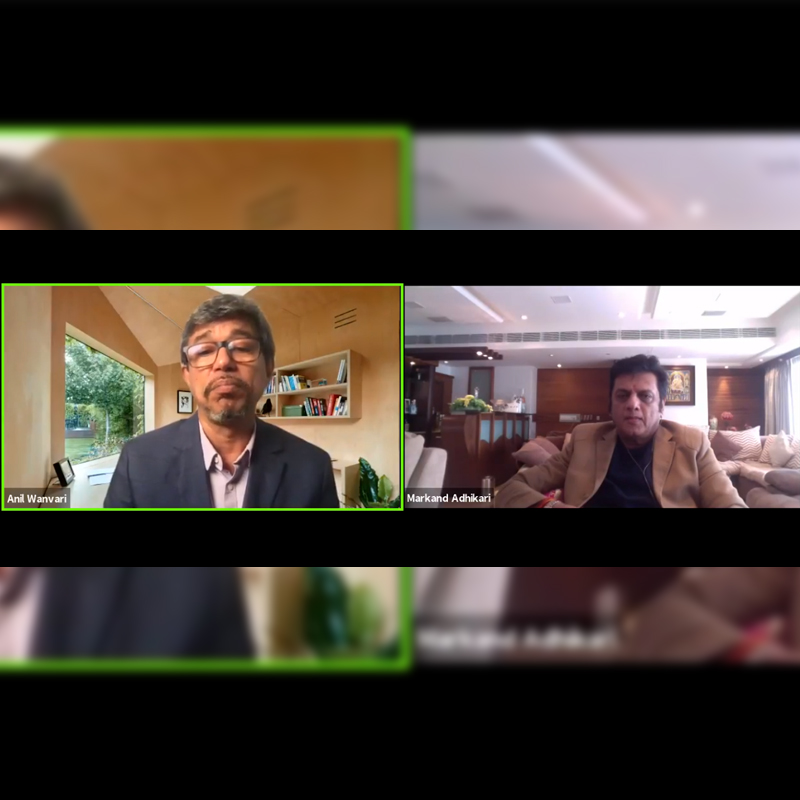
    Sri Adhikari Brothers co-founder Markand Adhikari, in an insightful fireside chat with indiantelevision.com founder, CEO and editor in chief Anil Wanvari, got candid about his journey, plan going forward, advertising and subscription model in television and more.

    Edited Excerpts:

    You have been a part of television industry for 40 decades; can you tell us more about your journey?

    When Doordarshan started in India, it only used to telecast an infotainment show called Krishi Darshan. When I was just a teenager, I met then information and broadcasting minister Vasant Sathe to discuss the chances of bringing commercial shows in India just like the west. At that time, he only asked me to look outside the window and asked me what do you see, I said I could see green trees and a colourful world. He explained to me about vision to bring colour television in India which was heavily criticised back then. Somehow, he accepted my proposal to create a show with Shashi Sharma. It started the era of sponsorship programs on television. We did sponsorship programs on Doordarshan for quite a few years then we ventured into regional space with LPTS (Low Power Transmission). We connected to the regional centres of Mumbai and Ahmedabad. Bandini became the first serial for Bombay Doordarshan. We carried a lot of shows for Doordarshan from the mid 80s to 1991.

    My late brother Gautam Adhikari’s name was registered in Limca book of world records for directing the maximum number of shows. I made Commander with Essel Group chairman Dr Subhash Chandra and I learned a lot from him. With the help of Jeetendra Kapoor (veteran Bollywood actor), I met Ketan Somaiya, a Nairobi-based entrepreneur who used to run an Asia channel in London with Amitabh Bachchan. We created a show called Waqt for him for $11,000 per episode and at that time import and export were free. The show had 52 episodes but due to some non-payment issues, the show was stalled at 26 episodes. After this, I again switched back to Doordarshan because Zee never used to give rights to the shows. DD Metro was recently launched where I did popular shows like Shriman Shrimati and All The Best. At that time, it was Rs 1,20,000 for 10-second spots on DD Metro. Doordarshan wanted us to make an afternoon soap within 15 days. I spoke to TV Asia about my 52 episodes out of which I was only paid for 26 episodes. I imported the pending episodes on half of the rate. Starting with 52 episodes I made Waqt Ki Raftaar which eventually had 600 episodes.

    What happened after you listed your company in 1995?

    Due to the Harshad Mehta Scam, the entire stock market suffered until 1998. Finally, in 1999 the economy was witnessing a boom then I realised it is the perfect time to start our own channel. The main challenge was we were always in production. Broadcasting was altogether a new experience. Our financial adviser only gave the plan of Rs 115 crore for the channel but to launch a channel it was too less. Then with the limited amount at my disposal, I started SAB TV in 2000. Again, due to Ketan Parikh’s scam, the economy was in shambles still we managed to run the channel for five years. We were a trend-setter by bringing a niche comedy channel. Sony Networks took over SAB in 2005, which till date is my biggest regret. However, I am happy that SAB is a big brand. After SAB TV we started two news channels Janmat and Mi Marathi which later I sold at a good price.

    What do you think about the future of television?

    Television in India is not going to die so soon, it will at least stay for another ten years. In the typical Indian household, it is still a culture to watch TV together. Most of the people are not aware of the multi-set concept or firesticks. However, one of the benefits with digital channels is that it is moving whereas television is static. Television is appointment viewing, on the other hand, digital is infinite. But digital requires a lot of capital investment. One cannot enter the digital market with a three-year plan.

    Are you looking at OTT content production?

    Our next-generation has already ventured to digital space with a series called Dheet Patangey that was uploaded on Disney+ Hotstar. It is directed by Gautam Adhikari’s son Ravi. My son Kailashnath and Ravi already have close to five shows which are almost done.

    Television is heavily dependent on advertisers; do you think subscription-based models will be a viable option in the long run?

    As far as television is concerned, I think in India most of the channels will be dependent on ad revenue. Also, I believe India is not yet developed to sustain on a pay model. There are broadcasters, MSO, semi-MSOs and then cable operators who collect money from individual households. So it has a lot of loopholes and layers in between which needs to be identified. There is a lack of transparency. At the same time advertising models will not work on digital platforms because audiences are now used to watching OTT content ad-free.

    What are your thoughts on IPL which is expected to happen during Diwali? Also, will it benefit all the channels or only sports channels?

    I believe it is good news; it is creating a moment with the advertising world and advertisers. IPL or any other cricket forms were running in the same manner as it was before Covid2019. Advertising spends were created keeping all the channels in mind; it was just not for sports channels. I don’t think so IPL will impact the revenue of any other channel.

    According to media planners, 30 per cent of advertising spends are kept for IPL, so do you think it will impact other channels?

    It is not a new scenario. In fact, it is a testing time for other channels, where we will get to see how they perform when IPL arrives.
  • Colors replaces Zee TV in week 29 of BARC India ratings

    Colors replaces Zee TV in week 29 of BARC India ratings

    MUMBAI: Colors channel made a comeback and replaced Zee TV at the third spot on the pay platform in week 29 of 2020 ( Saturday 18 July 2020 to Friday 24 July 2020) of Broadcast Audience Research Council of India (BARC) data.  Dangal, which was at seventh spot for many weeks, slipped down to ninth position in the urban market. Star Utsav from being at number one position slipped down to third spot in the rural market paving way for Zee Anmol.

    On pay platform Star Plus, Sony Sab, Colors, Zee TV, Star Utsav,Sony Entertainment Television,  Zee Anmol,   Star Bharat, Sony Pal and Dangal  were the top ten channels in week 29 of BARC India ratings.  

    Pay Platform

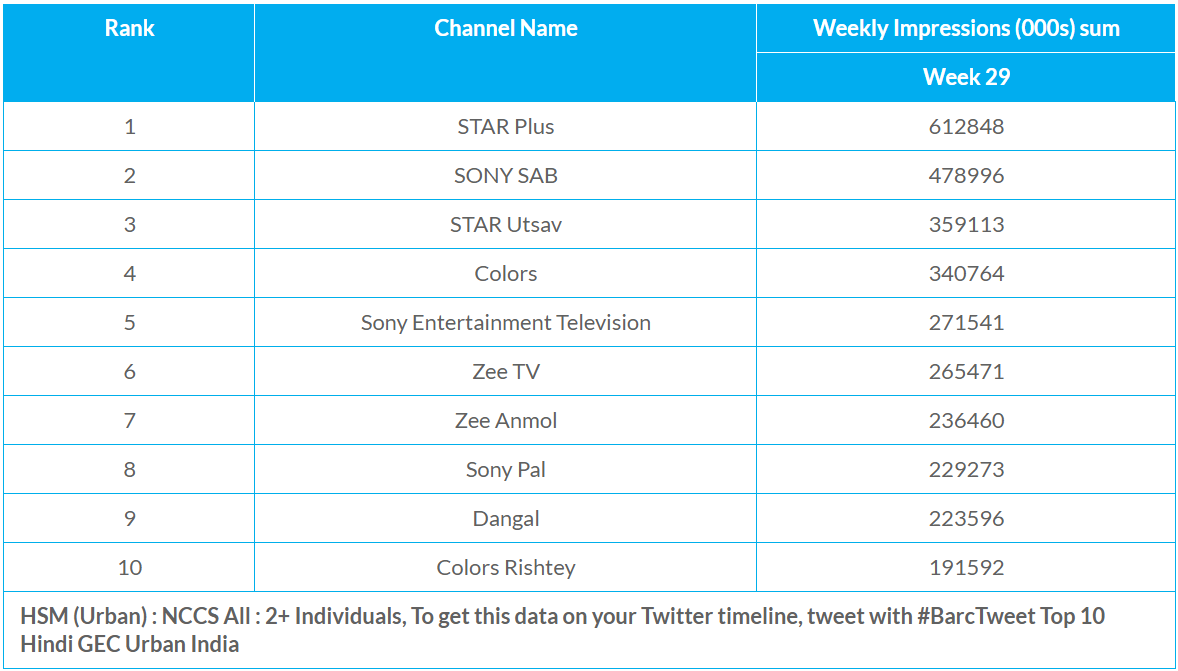
    In the urban market Star Plus, Sony SAB, STAR Utsav, Colors, Sony Entertainment Television, Zee TV, Zee Anmol, Sony Pal, Dangal and Colors Rishtey were the top ten channels in week 29 of BARC India ratings.  

    Urban

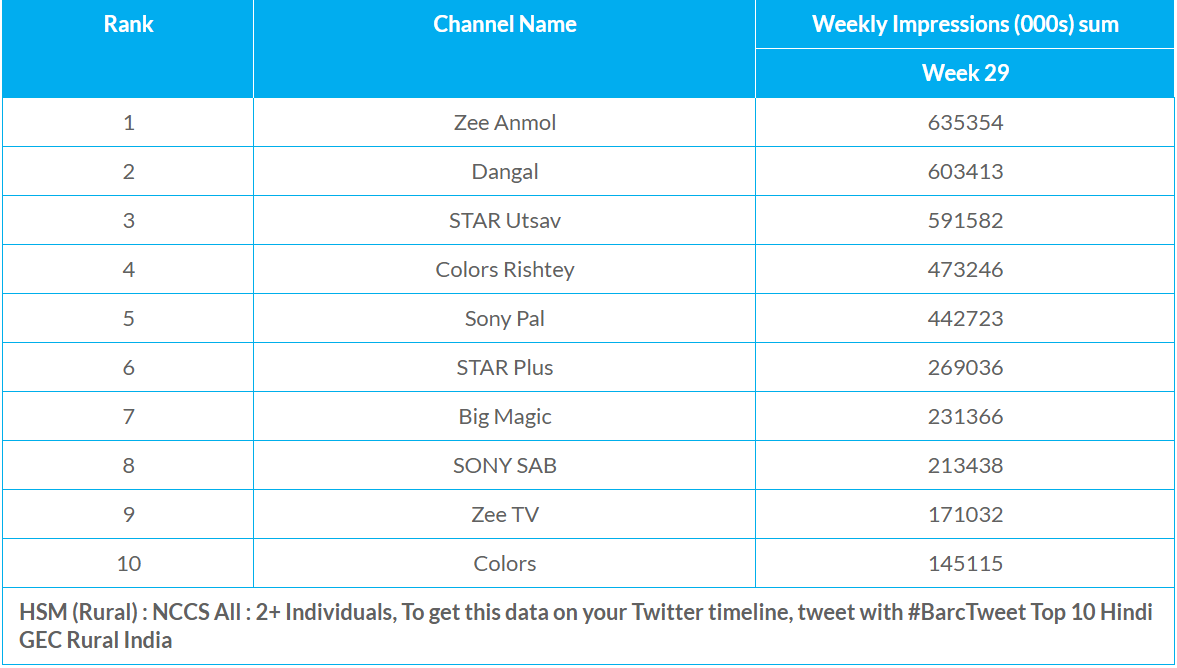
    In the rural market top ten channels were Zee Anmol, Dangal, STAR Utsav, Colors Rishtey, Sony Pal, Star Plus, Big Magic, Sony SAB, Zee TV, and Colors in week 29 of BARC India ratings.

    Rural

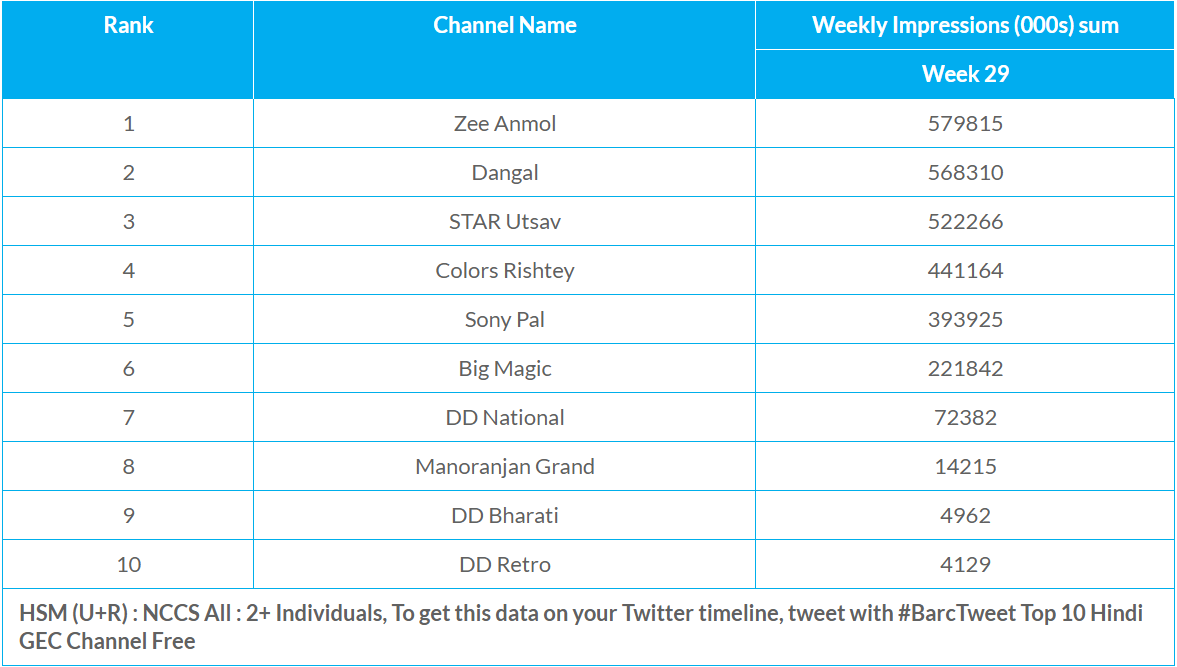
    On the free platform Zee Anmol,Dangal, Star Utsav, Colors Ristey, Sony Pal, Big Magic, DD National, Manorajan Grand, DD Bharati, and DD Retro were the top channels in week 29 of BARC ratings.

    Free platform

    Follow Tellychakkar for the consumer facing news & entertainment

  • Not viable to continue Covid2019 discounts with new episodes: Viacom18’s Mahesh Shetty

    Not viable to continue Covid2019 discounts with new episodes: Viacom18’s Mahesh Shetty

    MUMBAI: Covid2019 had a devastating impact on GECs with close to no advertisement revenue for almost three months. Now, television shooting has finally resumed and TV channels have begun to telecast fresh episodes of the shows.

    According to Viacom18 network sales head Mahesh Shetty, in the month of April and May, advertising was severely impacted due to the lockdown. However, with considerable relaxations from June, retail markets opening up and supply chains for brands stabilising, advertising spends have moved up. He points out that more brands are now willing to advertise and even spend more. Shetty also thinks that though new advertisers are queuing up, most of them are still FMCG brands. However, there has been a jump as compared to lockdown levels.

    Shetty explains that the channel is actively working with brands to go beyond the regular free commercial time (FCT) ad spends. “Thanks to the strong ‘impact properties’ portfolio that we have, we are giving customised sponsorship and integration packages to advertisers. In addition to this, we are also working closely with some of the brands on their specific briefs and exploring options on content solutions for our fiction shows,” he adds.

    He highlights that post easing of the lockdown across the country, overall advertiser interest has gone up in July as compared to the previous month. New advertisers have come onboard across categories. Maruti has been the channel's long term partner for Khatron Ke Khiladi and according to Shetty their spending has increased post resumption of the fresh episodes.

    Shetty also mentions that all broadcasters had given special pricing with discounts to advertisers in the April-June period in the absence of original programming. However, with fresh episodes starting this month, it is not viable for any broadcaster to continue with the Covid2019 discounting. “There has been a drop in discounting in July and we are steadily moving close to pre-Covid2019 level pricing,” he shares.

    In terms of inventory fill, growth rate has been at 45-60 per cent level in comparison to April. Advertisers are hopeful to catch up to last year’s level by August.

    DAN India Amplifi group trading director Sujata Dwibedy says, “During the lockdown very few advertisers were active. We are seeing slight momentum since May-June. Hopefully, the festivals would turn it around. As soon as there will be normalcy and the pandemic will contain, we may see more brands coming back. The time slot that would deliver better be more cost efficient and would definitely be preferred.”

    Dwibedy believes original shows will definitely change the previous quarter’s pattern to the classic viewing behaviour.
    Even though audience sentiments are still low, the rates might go up slightly due to original content. But it will still take some time for broadcasters to get back to the original January-February levels as the lockdown is still on and many advertisers are not yet willing to advertise.

    So the new episodes have quite a lot of catching up to do.

  • Colors shows to incorporate Covid2019-related topics for better relatability

    Colors shows to incorporate Covid2019-related topics for better relatability

    MUMBAI: 13 July 2020 is when viewers of all GECs will be able to get back to watching their favourite shows. Viacom18’s Colors is currently looking at numerous ways to engage the audiences.

    Viacom18 Hindi mass entertainment chief content officer Manisha Sharma expresses that the last few months have been life-altering for broadcasters, producers, artists, crew members and most importantly for the viewers.

    In the new episodes that are being shot, the channel is covering pandemic-related subjects and also integrating it as part of the current storyline. It is also incorporating safety protocols and precautions like sanitisation and other safety measures in the narrative to generate relatability.

    “We factored in the lag and production pace before putting fresh episodes on air. Hence, we are working against a timeline and creating banks of episodes for all our fiction shows,” explains Sharma.

    While shooting resumes, safety and security remain a major concern. The channel is being extremely cautious and strictly abiding by the safety protocols implemented by producers, broadcasters and government.

    Their priorities include sticking to the timelines, creating a pressure-free environment, keeping a tab on the daily influx of people on the sets and ensuring the same set of people are working together to keep risks at bay. Apart from that, the cast and crew members are staying in or around the campus to avoid travel hassles. Regular fumigation of sets, access to medical services, placement of sanitisers, usage of N95 masks, regular temperature checks and other necessary protocols are also being followed.

    In the absence of new content, the channel has observed a shift in the viewers’ content consumption habits too. In this phase, family viewing has gained more prominence, people turned to mythological shows for comfort and entertainment, the trend gradually picked up and the audience soon developed a palette for classics. At the same time, there was a great demand for the erstwhile shows and soon reruns started to rule the viewership.  

    She says, “As the content offerings now change with fresh episodes being aired, viewers will slowly move back to their original habit of appointment viewing. While the initial optics might be slow, we are certain that it will gradually pick up owing to the engaging storyline, highpoints, plot twists and intrigue around the characters.”

    For promotion, the channel will use a ‘Kahaani ab tak’ capsule to summarise the journey till before the lockdown. “Taking the audience through their favourite characters’ journey so far has helped us to familiarise the audience with the show once again. Additionally, along with the marketing surround sound, we are banking largely on the highpoints and various other storyline hooks to keep the viewers intrigued.”

    For now, Colors is shooting in controlled and closed environments with safety protocols. They will venture outdoors only when things get better. 

  • Hindi GECs see 8% growth in non-prime slots: BARC-Nielsen

    Hindi GECs see 8% growth in non-prime slots: BARC-Nielsen

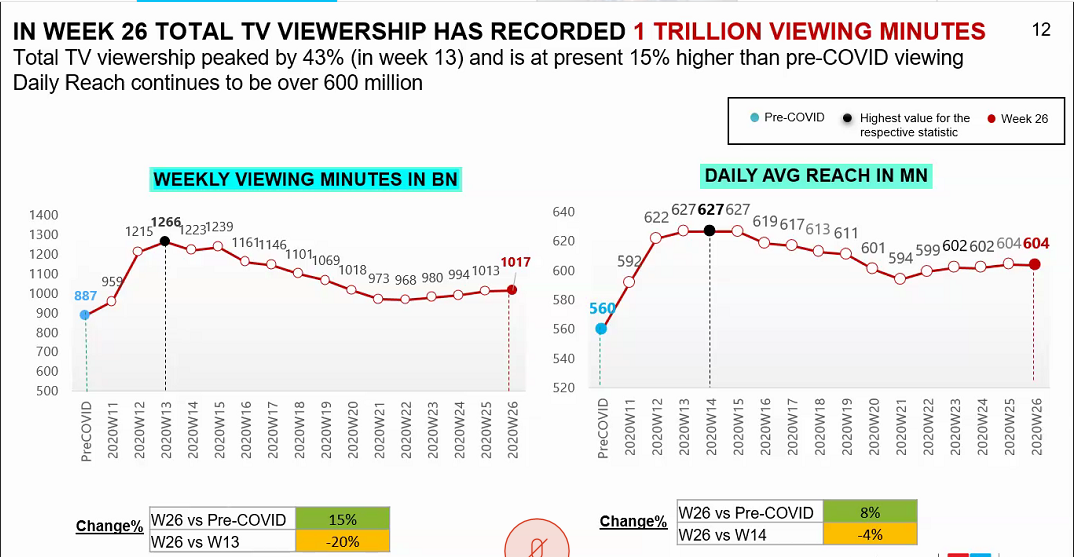
    MUMBAI: Hindi GEC saw eight percent growth in non-prime time slots in 2020 as compared to 2019, revealed the tenth edition of BARC-Nielsen data. However, there is a dip of two per cent in prime time shows. Kids non-prime time shows saw a growth of 32 per cent and in prime time shows it is 28 per cent.

    In week 26, TV viewership is 15 per cent higher than pre-Covid2019 times. Apart from that, TV viewership peaked by 43 percent in week 13. In week 26, daily viewing reach continues to be over 600 million.

    Average daily time spent on television is higher than pre-Covid2019 times but it is lower than usual peak time. The data also reveals that the total number of channels watched per viewer has decreased from the peak. In week 13 it was 23 channels which has now declined to 19 channels in week 26. 

    GEC channels have dominated the television market. The data highlights that TV consumption is higher than pre-Covid2019 time across all markets. The Hindi speaking market has seen a growth of 49 per cent.

    The data also reveals that the share of GECs has consistently increased in the past five weeks. From being at 52 percent in the pre-Covid2019 times it has seen a decline in week 22, but it picked from there and now it is at 48 per cent in week 26. 

    Apart from Hindi GEC, kids and English GECs are also performing better in non-prime time slots as compared to prime time. GECs that recently chose to  be on free platforms have seen growth.

  • Hindi GECs get back in business

    Hindi GECs get back in business

    MUMBAI: Ground zero of the entertainment industry, Mumbai, has been on standstill for over three months. Finally, the wheels have begun moving as production across film, TV and OTT have resumed. GECs, which had resorted to showing re-runs and movies during the lockdown, have begun reshooting their shows.

    &TV's Ek Mahanayak Dr BR Ambedkar and Santoshi Maa Sunaye Vrat Kathayein have also resumed shooting. Zee TV shows Kundali Bhagya and Kumkum Bhagya have restarted shoot with a limited crew. Star Plus popular daily soaps Ye Rishta Kya Kehlata Hai, Kasauti Zindagii Ki, Yeh Rishte Hai Pyaar Ke and Ye Hai Chahatein have resumed shooting.

    Enterr10 Television Network’s Dangal TV has resumed shooting for Pyar Ki Luka Chuppi and Devi Adi Parashakti. The shooting is taking place at Naigaon and Umbergaon.

    Enterr10 Television Network head of marketing Arpit Machhar says, “While we are very excited about resuming shoots and enthusiasm levels are very high, we all have a responsible role to play. Safety and well being of all present on sets is extremely important. We are constantly communicating with our on-set production teams and have briefed and advised them on introducing additional necessary measures that might be required in addition to following the guidelines that have already been laid down. Our production teams are well equipped and will ensure that while the shoot has resumed, all guidelines and rules will be adhered to.”

    Dangal TV gained significant viewers and today, it is one of the most popular Hindi GECs. It emerged as the undisputed leader in the rural Hindi speaking market (HSM), while maintaining a decent hold in urban areas as well.

    Colors also started TV shoots for its show Shakti-Astitva Ke Ehsaas Ki, Choti Sarrdaarni and Barrister Babu in Palghar and Thane. Its tentpole show Khatron Ke Khiladi 10 also returns on the channel. New episodes have started airing from 27 June. KKK10 airs on Colors at 9 pm every Saturday and Sunday.  It aired the last episode on 29 March 2020, a few days after the nationwide lockdown was imposed.

    A source from Viacom18 told indiantelevision.com that though it aired some episodes in the first few days of the lockdown, upon realising that there is no fixed date when normalcy will return, the makers decided to halt the show. As all the episodes are pre-shot, the makers didn’t want it to get consumed before the last episode is ready. The final few episodes are likely to be shot by the end of July.

    KKK season 10 features contestants namely Karan Patel, Karishma Tanna, Shivin Narang, Dharmesh Yelande, Tejaswi Prakash, Adaa Khan, Balraj Syal while contestants who are evicted from the show are Amruta Khanvilkar, RJ Malishka and Rani Chatterjee.

    The channel announced the airing of new episodes with a video of contestant Dharmesh Yelande on social media.

    Last week Sony Pictures Network India (SPN) issued an official statement saying that the network has obtained all required government permissions to resume production.

    It read, “The network is working closely with its production partners to ensure shoots resume in a controlled environment with strict compliance to all necessary government rules, regulations and safety protocols. At SPN, health, hygiene and sanitisation are taken very seriously, and the network is doing all that it can to ensure the safety of its cast, crew and production partners. Other than cast and crew members, visitors will not be allowed on the sets.”  

    The network also informed that effective from July 2020 to December 2020, full payments of the cast and crew will be released within a 30-day time frame, unlike the usual 90-day period. The channel will also bear 100 per cent of the Covid2019 insurance cost for its cast and crew. It has also asked the producers working with Sony TV to strictly adhere to all government guidelines. 

    Barrister Bahu producer Shashi Mittal told news agency PTI, “All this is new to all of us. It is the new normal, but it is not normal. It was essential to make it a habit, so we trained our crew members for ten days before shooting began. There is a small team, so there is warmth. We will become more comfortable slowly. This is a difficult time, and everyone is being cautious.”

  • BARC week 23: Star Plus continues to hold top spot in urban market and pay platform

    BARC week 23: Star Plus continues to hold top spot in urban market and pay platform

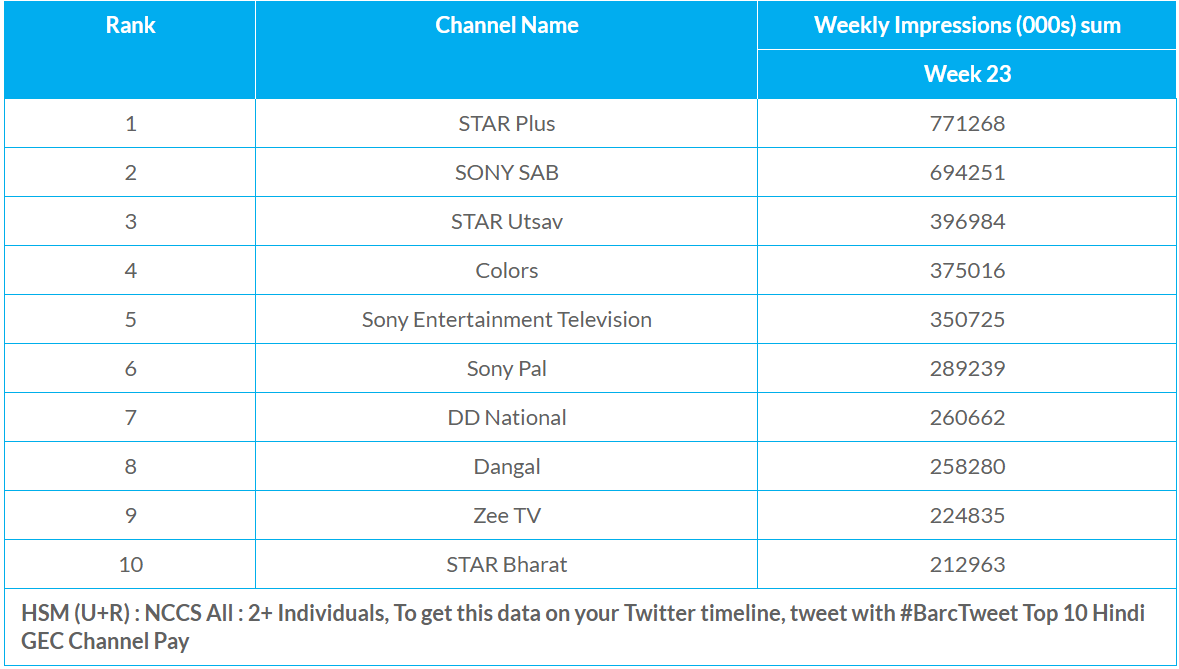
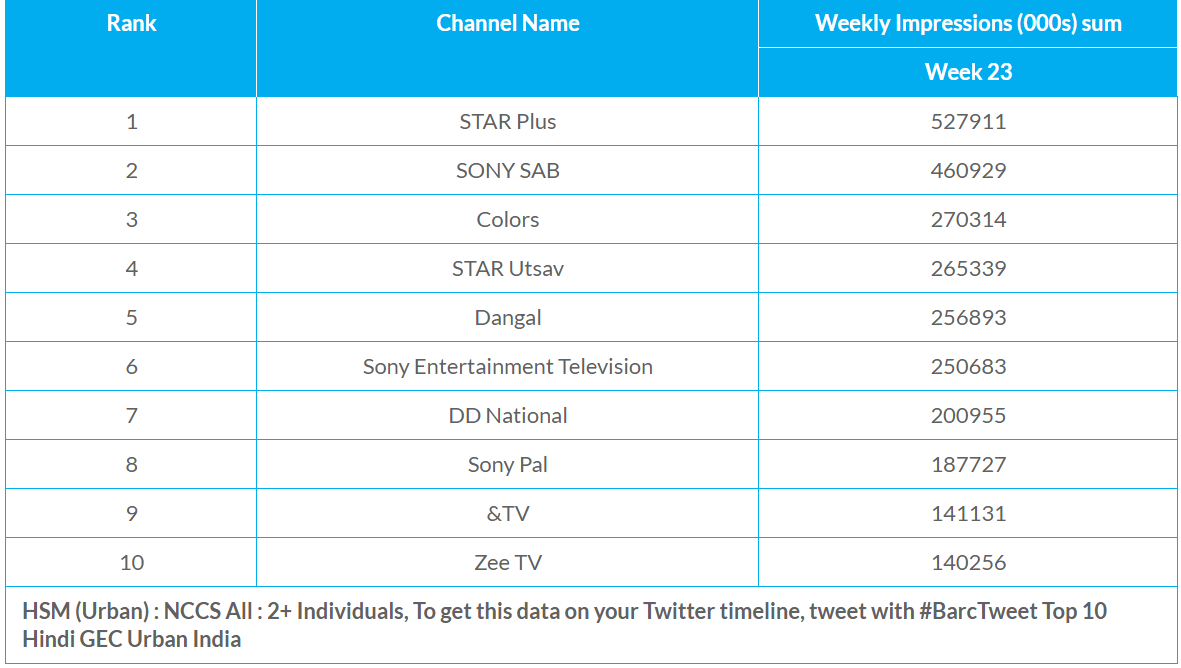
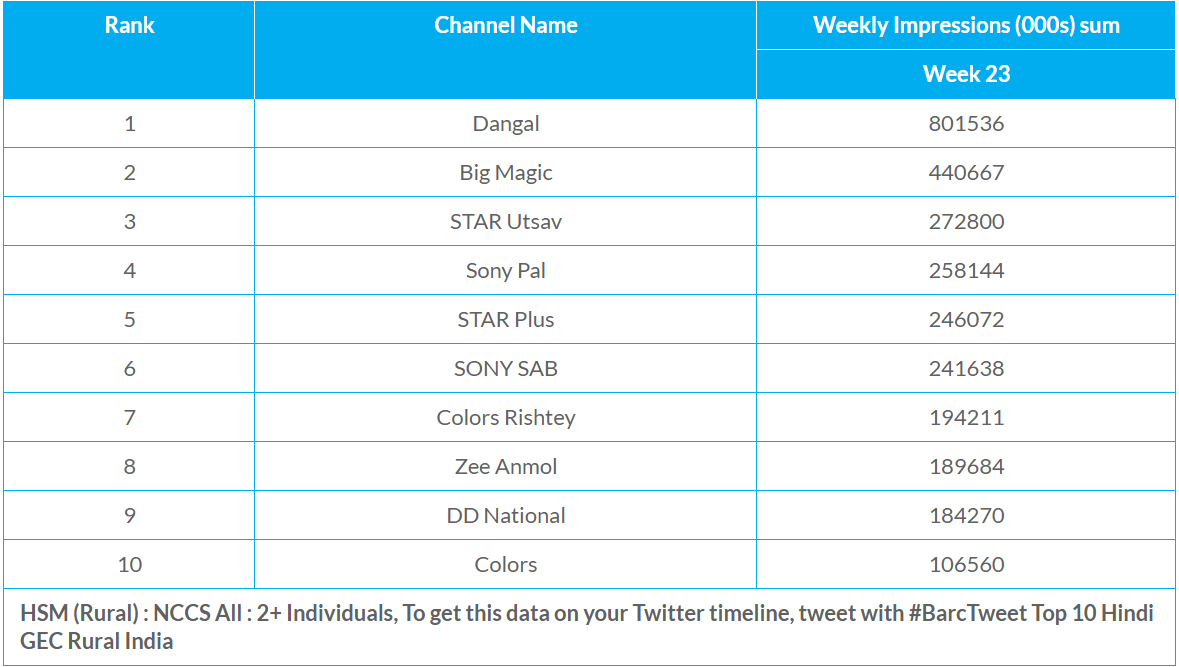
    MUMBAI: Star Plus topped the chart on the pay platform and in the urban market in Week 23 of 2020 (Saturday, 6 June 2020 to Friday, 12 June 2020) of Broadcast Audience Research Council of India (BARC) data. As compared to last week, Star Plus slipped down to fifth position in the rural market. DD National replaced Dangal by gaining seventh position on the pay platform. Dangal, which was at third spot in the urban market last week, came down to fifth position. However, it continued to be on the top spot in the rural market.

    On pay platform STAR PLUS, SONY SAB, STAR Utsav, Colors, Sony Entertainment Television, Sony Pal, DD National, Dangal, Zee TV, and STAR Bharat were the top ten channels in the week 23 of BARC India ratings.

    Pay Platform

    In the urban market top ten channels were STAR Plus, Sony SAB, Colors, STAR Utsav, Dangal, Sony Entertainment Television, DD National, Sony Pal, &TV and Zee TV in week 23 of BARC India ratings. Big Magic which was in ninth position last week and was replaced by &TV. Zee TV made it way again on the list at the tenth spot. 

    Urban

    Dangal, Big Magic, STAR Utsav, Sony Pal, STAR  PLUS, SONY SAB, Colors Rishtey, Zee Anmol, DD National, and Colors, were the top ten channels in the rural market in week 23 of BARC ratings. From being in the sixth position last week STAR Utsav jumped to the third position. Whereas  Sony Entertainment Television is out of the top ten list. 

    Rural

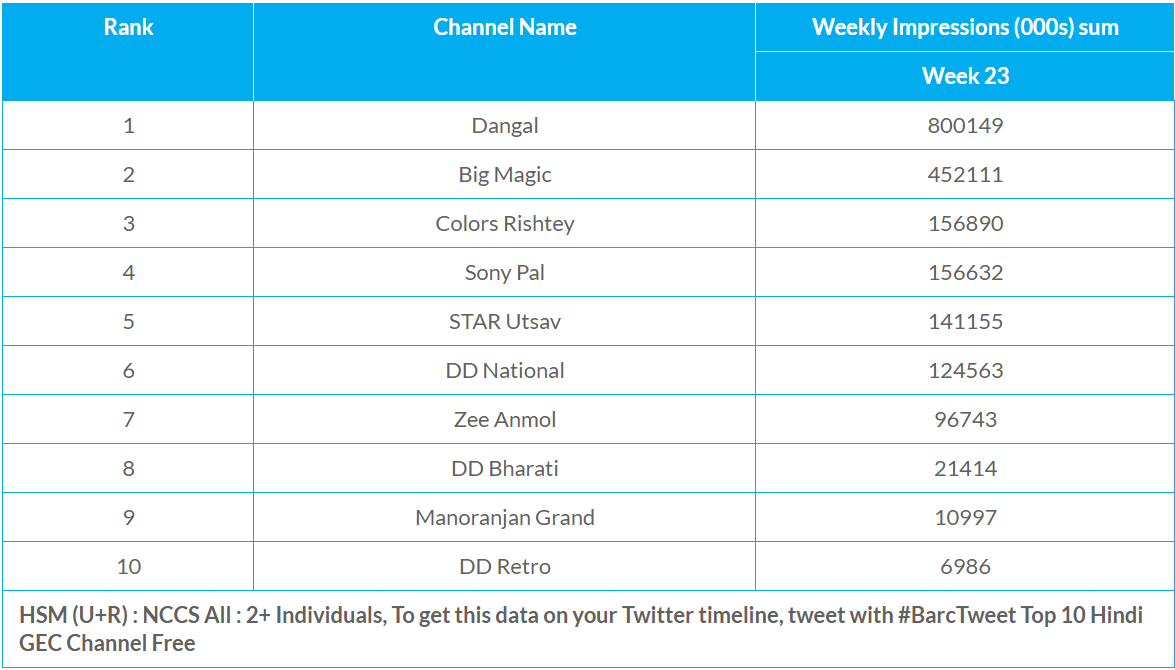
    On the free platform Dangal, Big Magic, Colors Rishtey, Sony Pal, STAR Utsav, DD National, Zee Anmol, DD Bharti, Manoranjan Grand and DD Retro were the top ten channels in week 23 of BARC ratings.

    Free Platform

  • BARC week 22: Star Plus continues to hold position in urban market and pay platform

    BARC week 22: Star Plus continues to hold position in urban market and pay platform

    MUMBAI: STAR PLUS tops the chart on the pay platform and in the urban market in Week 22 of 2020 (Saturday, 30 May 2020 to Friday, 5 June 2020) of Broadcast Audience Research Council of India (BARC) data.  However, Star Plus slips down to third position in the rural market. Dangal which is on seventh position on the pay platform does better with gaining third spot in the urban market and top spot in the rural market. 

    On pay platform STAR PLUS, SONY SAB, STAR Utsav, Colors, Sony Entertainment Television, Sony Pal, Dangal, DD National, Zee TV, and STAR Bharat were the top ten channels in the week 22 of BARC India ratings.

    Pay Platform

    A screenshot of a cell phone

Description automatically generated

    In the urban market top ten channels were STAR Plus, Sony SAB, Dangal, Colors, STAR Utsav, Sony Entertainment Television, DD National, Sony Pal, Big Magic and &TV in week 22 of BARC India ratings.

    Urban

    A screenshot of a cell phone

Description automatically generated

    Dangal, Big Magic, STAR  PLUS, SONY SAB, DD National, STAR Utsav, Sony Pal, Zee Anmol, Colors, Sony Entertainment Television were the top ten channels in the rural market in week 22 of BARC ratings.

    Rural

    A screenshot of a cell phone

Description automatically generated

    On the free platform Dangal, Big Magic, DD National, DD Bharti, Manoranjan Grand,  DD Retro, DD Uttar Pradesh, DD Madhya Pradesh, DD Rajasthan, DD Prabha were the top ten channels in week 22 of BARC ratings.

    Free Platform

  • Hindi GECs’ romance with mytho shows to continue post Covid2019

    Hindi GECs’ romance with mytho shows to continue post Covid2019

    MUMBAI: As the pandemic shows no signs of abating despite the lockdown, viewers’ affinity towards mythological shows on GECs is growing. With no fresh content to entertain their audiences, the overall consumption of GECs fell as compared to the pre-Covid2019 era but did not tumble thanks to the rejig in programming strategy.

    Public broadcaster Doordarshan evoked this nostalgia of old mythological shows by airing Ramanand Sagar’s Ramayan and BR Chopra’s Mahabharata and later Shri Krishna. The re-run of famous mythological shows took the channel to the top of the television ratings. Following the trend, private GECs also joined the bandwagon.

    Viacom18’s Colors acquired the rights to Chopra's Mahabharat which started airing on 4 May. On the other hand, Star Plus also decided to re-run Ramanand Sagar’s Ramayan around the same time. Along with pay channels, even free-to-air (FTA) channels also started airing Ramayan from 7 May. All these channels are running those shows on primetime.

    However, it has to be seen how these shows will stay on top once the audience again gets a taste of their favourite programmes post the lockdown. According to Viacom18 Hindi mass entertainment chief content officer Manisha Sharma, mythological shows have always been a hit amongst the audience and have laid the foundation of the television ecosystem continuing to hold prominence in daily lives. She adds that the shows provide a wide scope in terms of the narrative, characters and entertaining plots that strike a chord with the audience. Sharma affirms that mythological content will be on the rise in the future as well given the versatility of the genre.

    “We have always understood that mythological content appeals to viewers very strongly and have had mythological shows air even in the pre-lockdown phase. Viewers connect with these shows at a personal level. Considering the traction we have seen for such content beyond the lockdown period, we are certain that viewers will continue to watch these shows with the same enthusiasm even after the lockdown is lifted,” Enterr10 Television Network marketing head Arpit Machhar says. When the lockdown began, Dangal also started re-runs of other mythological shows like Chandragupt Maurya, Mahima Shanidev Ki, Dwarkadheesh, Devi Adi Parashakti.

    “We (Dangal) continue to be among the top five channels across genres at an all-India level even during this lockdown. Our content is diverse and highly appealing to both rural and urban viewers and our advertisers understand our strength and reach. Ramayan and our other shows have been receiving very good traction. As per latest BARC data for week 17, three out of the top five programmes are from Dangal. We continue to see interest from advertisers even for these re-runs considering the mass appeal these shows have,” he adds.

    About ad inventory of these re-runs, Viacom18’s Sharma said that mythological shows such as Jai Shri Krishna and Mahabharat have helped to bolster television audiences and attract a lot of advertisers. She notes that time spent on such shows has consistently been increasing and brands that are relevant in today’s context are and should use it as an opportunity to create awareness and salience. Products with huge demand and ample supply like FMCG and retailers are the revenue generators, contributing largely to the ad inventory.

    “Re-run of mytho shows have become preferred content for GECs and viewership contribution has increased substantially in the past few weeks. This trend has benefited brands which are active on GECs to attain campaign deliveries and drive efficiencies,” says Carat executive vice president Mayank Bhatnagar. However, he mentions that a lot of advertisers have paused campaigns making it difficult for GECs to ask for higher rates. According to him, planners would evaluate or renegotiate deals and will look for safer and stable options to minimise the risk.

    According to BARC India viewership data for week 15, mythological shows were watched by 353 million viewers for 109 billion minutes, making up nearly 43 per cent of overall Hindi GEC viewership. In the pre-Covid2019 period, total viewership share of mythological content on Hindi GECs was just 14 per cent. The trendsetter DD National continued to top the chart of Hindi GECs from week 14 to week 17.

    Will they invest in more mythological shows? Sharma says that as broadcasters, they do see merit in commissioning new mythological shows. Asked about further investment for mythological shows, Machhar said that they will continue to keep an eye out for content that is innovative and that has mass appeal not only for rural audience but also for urban viewers

    What might have led to people to choose mythological shows right now? “In times, when we are seeking relief and hope, the epics are proving to be a perfect reminder of the golden times and guiding light for how we wish to lead life from here on. The combination of purpose, nostalgia and the great narrative keeps bringing people back to watch these shows and take away something meaningful from it every time. The shows are also backed by a strong storyline and impressive character outlines that make for a great entertainment proposition,” Sharma says.

    Macchar reflects the same and comments, “Indian mythology connects with viewers very strongly and given a choice, viewers continue to consume re-runs of epics like Ramayan. Viewers are currently restricted to their homes and in need of wholesome entertainment. Moreover, shows like Ramayan and Chandragupt Maurya depict the story line and the events that happened very closely and hence can be watched over and over again as it lets audience re-live those moments.”

    Bhatnagar says channels will be happy to see the high viewership contribution from these re-runs. In the absence of any fresh content, these re-runs have worked really well for the GECs. He adds that if we look at past trends, mythological shows have appealed to larger audiences and ensure stickiness, and therefore, channels bank on these shows. Although for the past few years reality and fiction shows have led the charts, with the absence of fresh content, audiences are watching whatever is available on their favourite GECs and these mythos shows are preferred content for them. 

  • Total TV viewership grows by 24% in week 18: BARC India & Nielsen

    Total TV viewership grows by 24% in week 18: BARC India & Nielsen

    MUMBAI: Total TV viewership has grown by 24 per cent in week 18 over pre- Covid2019 period and recorded 1.1 trillion viewing minutes. The highest viewership was recorded in week 13, post which there has seen a gradual drop, though it’s still significantly higher than Pre COVID levels. TV viewership is still higher than pre-Covid levels, according to the edition 8 of BARC India & Nielsen.  
    Individuals watching TV all seven days a week was 239 million in pre-Covid2019 period. It peaked 363 million in week 15 and is at 332 million in week 18.

    Prime-time viewing has come down in week 18, most prominent dip being in south.
     
    For the Hindi GEC segment, the viewership share of top three channels has dropped vs peak levels attained in week 13, courtesy the lack of original programmes. However, viewership share is stable for Hindi news and Hindi movies.

    Genre-wise, news and movies share started to stabilize but continues to operate at higher levels. The drop in viewership is more in markets with lower presence of red zones.

    While non-primetime continues to grow, primetime viewership is 7 per cent lower than pre-Covid levels (an effect of no original programming). Decline in PT viewership is more pronounced in the South.

    For Hindi GEC, the viewership share of top three channels has dropped vs. peak levels attained in week 13 (an effect of no original programming.)
    In week 18 overall FCT dropped by 9 per cent and there has been a seven per cent decrease in advertiser count.

    Smartphone consumption continues to be at 4 hours per day, 14 per cent higher versus pre-Covid.  

    Optimism high 

    Indian optimism has remained steady since April. People are showing confidence in India’s economic recovery. 
    Individuals watching TV all seven days in a week was 239 mn in pre-Covid. During week 18, total TV consumption increased by 24 per cent, all India. 

    Advertising trends

    The dip in overall FCTs continued in week 18 as well, reveals the fresh batch of BARC-Nielsen data on media behavior during the COVID19 lockdown. As compared to week 17, a dip of 9 per cent was witnessed in overall FCTs, taking the number from 205 lakhs to 187 lakh. 

    Ad volumes while remained consistent across GEC  for the last couple of weeks, News and Movies recorded a dip of seven-eight per cent as compared to the last week.

    The drop in news has come mostly from Hindi language channels while regional languages and English channels remain stable. Kannada and Gujarati channels, in fact, witnessed a slight improvement in FCT. 

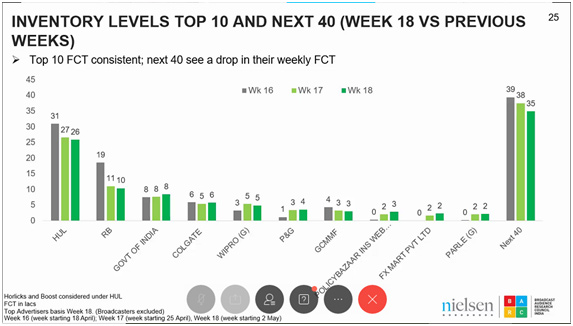
    The previous week had seen a dip in the inventories by top 10 advertisers and an increase of 9 per cent by the next 40. This week witnessed a dip in FCT of next 40 as well, while the top 10 mostly remained consistent. 

    After a spike in the number of new brands on TV in the past week, this week saw a massive slump. The numbers dropped from 395 to 274. A 7 per cent dip in advertiser count was also witnessed.