Tag: Hindi GEC

  • The Q appoints Sujata Samant as head of marketing

    The Q appoints Sujata Samant as head of marketing

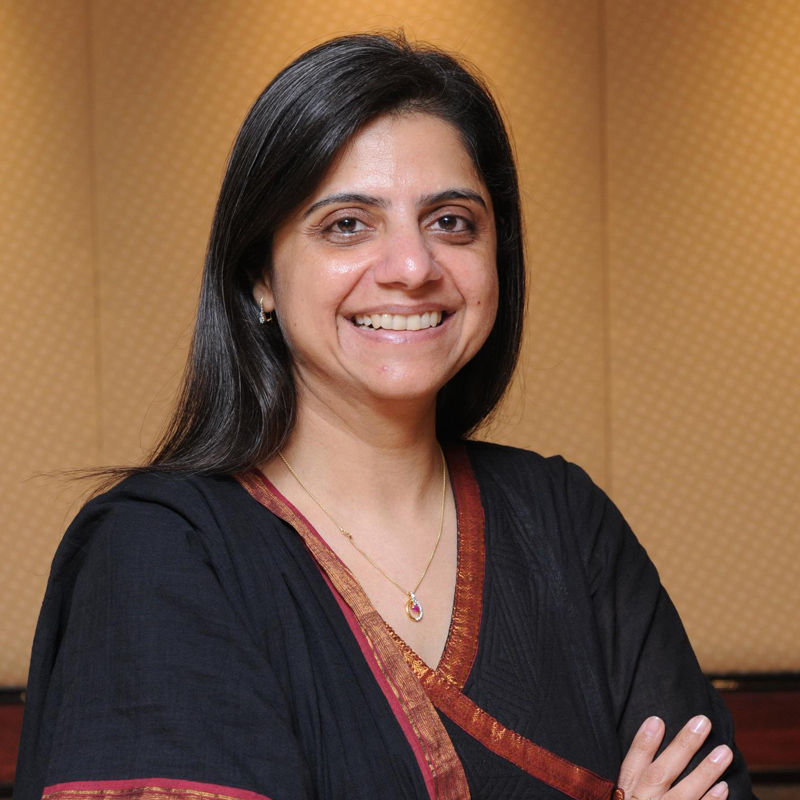
    Mumbai: Homegrown Hindi GEC, The Q has strengthened its leadership team with the appointment of Sujata Samant as head of marketing. Samant joins the channel with immediate effect and she will report to the chief operating officer, Krishna Menon.

    In her role at The Q, Samant will be responsible for driving the channel’s marketing and communications strategies spanning strategic partnerships, branding, marketing campaigns, and corporate communications, the channel said in a statement on Monday.

    Welcoming Samant on board, Krishna Menon said, “Sujata has had a fantastic track record and I am confident that her experience in building entertainment brands with a constant rigor for innovation will lead our business to further heights and set new benchmarks in the Hindi television space.”

    A content marketing and brand champion, Samantcome with 14 years of industry experience. She has been instrumental in building media and entertainment brands such as ZEE TV,  ZEE Cinema, and Movies Now. Prior to joining The Q, Samant was associated with ZEE TV.

    “Owing to its differentiated content offering, The Q has already witnessed incredible growth within a short span of time. Although a young channel, The Q currently enjoys a strong position in its category unlike any other,” said Samant on her appointment.

  • Azaad TV aspires to be the most credible platform for rural India: Bharat Kumar Ranga

    Azaad TV aspires to be the most credible platform for rural India: Bharat Kumar Ranga

    New Delhi: Even as the fast-growing network of Over the Top (OTT) platforms take the media industry by storm, television continues to hold its position as the preferred screen choice for a majority of Indians. And, a vast section of this audience lives in rural India. In fact, the ownership of TV sets in rural India has outpaced growth in urban pockets, shows the latest data from the Broadcast Audience Research Council (BARC).

    With this, has come a paradigm shift, where consumers have once again taken the centre stage in determining how traditional broadcasters decide their content offerings. While there may be a plethora of content for urban viewers, there aren’t still enough choices for the rural audience. It is this vast market that Mumbai-based Beginnen Media is keen to tap into, with its new Hindi GEC- Azaad TV. The channel with its philosophy – ‘People First, Rural First’ hit the airwaves in May and caters exclusively to people in rural India. It’s currently available on DD Free Dish and select DPOs.

    In an exclusive interaction with Indiantelevision.com, Beginnen Media, managing director Bharat Kumar Ranga talks about his vision for the new channel, its financial model, content offerings, and introduces for the first time, the newly formed team that helped build the brand.

    Edited excerpts:

    On the decision to focus on rural India

    At Beginnen Media, we wanted to relook at the media and entertainment sector with a fresh perspective. We believe that the real transition is not from broadcasting to individual casting or TV to digital, but from being from creative/content-centric to being consumer-centric. We found a great opportunity in the rural segment. While the urban segment has been over-serviced by TV and digital platforms, consumers in rural India are still under-serviced with content that was originally created for urban viewers. They weren’t really considered primary consumers. So, we thought that there was an opportunity for us to see them as primary consumers and create stories exclusively for them.

    On how the target audience was identified

    We put most of our energies into identifying our target audience. We saw that rural people have a certain mindset, and we decided to focus on that. No matter which place they migrate to, they will carry that mindset with them. Though our content will cater to the Hindi-speaking audience, it will also try to reach out to Hindi-understanding markets like parts of Gujarat, West Bengal, Punjab, Maharashtra, where people may not speak Hindi, but they do understand the language. We want to design our content in such a way that people from across states relate to it. We have also hired specialist agencies that work on consumer products, like the Delhi-based agency- Futurebrands, which is led by Santosh Desai to provide us with data and insights.

    On the decision to go Free-to-air (FTA) and growth opportunities in the rural market

    In terms of distribution, the TV consumption in rural India is largely through DD Free Dish, and you cannot be on DD Free Dish if you are a Pay channel. So, we chose FTA so that we could reach out to that audience. Since we are the first rural GEC, we thought it makes much more sense to reach out to people quickly, and start building on that connection.

    Generally, people tend to confuse Free-to-air (FTA) with rural. While it is fair to say that most people who consume FTA channels are in rural India, and that is the market that we are entering into. But a significant part of the rural audience is also watching pay platforms, other than on DD Free Dish. So, we are venturing into a new category, where we are competing with not just the FTA channels, but also the Pay channels in the rural segment. FTA channels are also available in more households than Pay TV. It’s just that the FTA market has not unlocked its full potential yet. The over-supply of acquired content on these channels does not seem to be working anymore. The audience understands that the channels are recycling content, and they want something new, so that is why we hope that our rural model might work.

    On the content offerings and original shows

    Our original shows got delayed because of the pandemic. But since we had to start the channel distribution, we went ahead with the soft launch. We started building a connection with the audience. Now, our new shows are also under production and we hope that we will be able to sustain and keep the process running in case there’s a third wave too.

    In terms of content, we have put in a huge amount of energy to determine what our rural audience will like to watch. On the face of it, our content might not look different, but the larger differentiation is in the point of view of the people, that we will try to reflect in the shows. Currently, stories on pay platforms are set up in rural areas, but they are told to an urban audience. We wish to tell stories that reflect their point of view irrespective of where they are based.

    On the financial model and opportunities for advertisers

    As a rural entertainment channel, we need to have all kinds of revenue- subscription-based, advertising-based, as well as digital revenue. In terms of advertising revenue, we are looking at some sort of premium around the environment that we are giving to our advertisers- ‘digital virtues in a TV business’.  Firstly, we are providing a focussed target audience. For instance, if a campaign runs on any FTA channel, the advertiser may not know if it’s reaching the urban or rural audience. But, in the case of Azaad, the focus is entirely on people with a rural mindset. Secondly, the programming environment. If an advertisement is put on YouTube, it’s difficult to identify the content/genre that the consumer is watching. However, we will offer brand safety in terms of content that aligns well with the values of the brand. Advertisers will be interested in an entertainment platform that is consumer-focussed. We already have some regular advertisers like HUL on board. But the main exercise will begin once we launch original shows.

    On the distribution plans for the channel

    Simple to our plan, we have looked at all the MSOs. We began with DD Free Dish, where the channel is currently being aired. Then we identified some 50 individual distribution cable operators in rural areas. We are also in talks with 15 more such operators who are working in the outskirts of these areas. They may be lesser-known but attractive to us. We are also in touch with some top DTH and MSOs, but our priority is rural India and we will stick to that.

    Rural is a super mass category. We want to create a little space for ourselves, and we understand that it will take some time for us to create a relationship with the audience. We want to become the most credible platform for rural audiences.

    On the team that leads Beginnen Media

    Director – project & operations: Mohan Gopinath 

    A media and broadcast veteran, Gopinath carries nearly 25 years of work experience. He worked with Zee Entertainment Enterprises Ltd (ZEEL) for 18 years, turned entrepreneur, and co-created Bhu Entertainment in 2015. He also helped Viacom launch its first movie channel, Rishtey Cineplex.

    Chief marketing officer – Rachin Khanijo

    Khanijo carries over 17 years of extensive MarComm experience, during which he has worked at Eros Now as vice president, marketing, and COLORS as associate director – marketing. He has also worked as marketing head at &TV and brand director – Filmfare, Femina, and GoodHomes. At Beginnen Media, he handles marketing, corporate communications, on-air promotions, research & distribution.

    General manager, product: Doris Dey

    Dey spearheads Business Development, Programming & Content Strategy, Product Innovation, Content Creation, and Curation. In a career spanning 18 years, she has worked as a writer, creative director, and even Independent Producer (OTT). In her previous stint at Essel Group, she envisaged and launched &TV.’

    Chief revenue officer, Johnson Jain

    Jain carries over two decades of experience in the Media & Entertainment industry and specialises in advertising revenue. He has worked with leading media conglomerates including ZEEL, Sony Network (SET India) & 9x Group. He has played a key role in relaunching Zing in 2016.

    Chief financial officer, Dinesh Bhutra

    An associate member of the Institute of Chartered Accountants of India, Bhutra has more than a decade of experience in various sectors like Airlines, Telecom, Entertainment, Education, Finance, Media, Data Centre and Refinery including Jet Airways, Reliance Jio, Essel Corporate, MT Educare Ltd, ISSL.  At Beginnen Media, Bhutra also heads Commercial, Administration & Human Resources as its chief finance officer.

  • The Q India unveils summer 2021 line-up

    The Q India unveils summer 2021 line-up

    MUMBAI: With summer vacations around the corner, The Q is all set to bring forth an array of animated original content with stories of the bravest heroes, most iconic villains, noblest kings and their treacherous enemies, the biggest battles and the most captivating conspiracies.

    Expanding its animation genre with the addition of new shows, The Q’s fresh line-up of animated content will include some of the most riveting stories of legendary characters from the Ramayana, Mahabharata, Panchatantra stories, as well as tales of Akbar Birbal and Vikram Betal in a fresh and unique format, making it interesting for the young and old to watch together.

    The Q India programming head Tanya Shukla said, “At The Q, we are committed to infusing the broadcast universe with fresh concepts and a unique lineup of content that engages the youth and also makes their world inclusive for the whole family. Television, in Indian homes, is the last frontier where the family still gathers. With a bouquet of shows from varied genres that is perfect for new India’s homes, we will bring the very best of entertainment from an expanded horizon of new age online content creators.”

    With the entire family staying home amidst the unprecedented situation, The Q’s upcoming content line-up starting with the animated version of Ramayana, went on-air on 17 April, 2021, Saturday. The show airs every Saturday and Sunday from 6:00 am onwards with multiple telecasts throughout the day.

    The Q India is an advertiser and influencer marketing supported Hindi language content brand, channel and VOD provider delivering hit digital programming from social media stars and leading digital video creators targeting Young Indian audiences. The channel has recently become one of India’s fastest growing youth entertainment brands reaching 46.42 Gross Rating Points (GRP) on BARC (Broadcast Audience Research Council) as of week 14. It has reached an audience of over 712 million via 100 million television homes with partners including DD Free Dish, Tata Sky, Dish TV and Siti Networks; 380 million OTT users via platforms including ShemarooMe, MX Player, ZEE5, and Dish Watcho; and 232 million users on mobile and digital platforms including Snap, JioTV, Airtel Xstream, Amazon Fire TV, Chingari and Samsung TV Plus.

  • IPL vs GECs: Experts play down the league’s impact on the latter’s numbers

    IPL vs GECs: Experts play down the league’s impact on the latter’s numbers

    MUMBAI: The countdown to the country's biggest cricketing extravaganza, the Indian Premier League (IPL), has begun. Any doubts about the popularity of the IPL can be laid to rest if the viewership of the thirteenth edition of the tournament is taken into account. According to BARC, IPL 13 viewership grew by 23 per cent compared to the preceding edition, with overall 400 billion viewing minutes.

    Meanwhile, GECs are lining up new fiction and non-fiction properties to counter this Goliath. However, experts believe that the whole television ecosystem is so accustomed to this phenomenon that it will hardly make any difference. Broadcasters are used to devising strategies in advance to compete against the IPL for eyeballs and ad revenue.

    IPL to not have major impact on GECs

    Last year, due to the onset of the Covid2019 pandemic, the IPL was delayed by close to six months, and when it took place, it coincided with the launch of impact properties like Bigg Boss, Kaun Banega Crorepati on GECs. Back then, analysts had pointed out how these marquee shows were unable to garner TRPs like their previous editions due to the clash with the cricketing league. However, IPL 2021 is happening at its usual time.

    Wavemaker India sports national director Jigar Rambhia asserted that the tournament has nothing to do with festive or non-festive time period, viewers tune into the IPL regardless.

    Thinking along similar lines, Ormax Media CEO Shailesh Kapoor revealed, “There has traditionally been a 10-20 per cent drop in viewership of genres like GEC, movies and news because of the IPL. This has now been a known impact for almost a decade, and broadcasters plan for it consciously.”

    How broadcasters are prepping

    IPL matches are played in two slots – in the afternoon from 3.30 and in the evening from 7.30. The question arises how primetime shows are going to perform during this time frame. The common notion is that single TV homes will opt for the IPL, with GEC shows being watched between the match breaks or viewers tuning into them when the matches end.

    Zee TV business head Aparna Bhosle disagreed with this viewpoint.

    According to her, Hindi GECs over many years have managed to sustain viewership and even grow despite the IPL. “Long running fiction or non-fiction shows have, by and large, not seen an adverse impact on viewership due to existing fan bases and the loyalty channels’ command in terms of appointment viewership,” she noted.

    Viacom18 chief content officer Manisha Sharma, during an earlier conversation, had mentioned that the network’s flagship Hindi GEC Colors will continue to spice up its existing fiction line-up with consistent highpoints across all shows, while dance reality show Dance Deewane 3 will safeguard the weekends. “With our strong weekday & weekend programming line-up, we are sure to protect our ratings from the IPL brunt,” she had stated.

    However, Kapoor is of the opinion that prime-time shows will witness a ratings drop, ranging from 10 per cent for the popular programmes, and up to 20-30 per cent for the middling ones.

    Rambhia was of the view that broadcasters are unlikely to launch new programs that directly clash with the IPL. “There are some networks who are in fact putting their original content on Sunday afternoon when there is no match. For e.g. if any GEC is putting their show at 12 pm it can easily get over by 3.30 when the match will start. I believe Filmfare is also going to premiere at 12 pm,” he added.

    Audience engagement through different devices

    Kapoor shared that the consumption of IPL on digital (Disney+ Hotstar) is largely driven by solo viewing and out-of-home consumption, such as during travel. When the family wants to watch a serial on a GEC, an IPL fan in the house will watch the match online at that time.

    Growth of online consumption has created more viewing choices within the family, and this doesn't harm GECs in any way; in fact, it helps to some extent, he opined. Additionally, while HD homes are a niche group, one doesn't expect their viewing dynamics of IPL to be too different from SD homes.

    “We are still a single TV household. There is a consumption happening on mobile phones and other mediums but for genres to target specific people on various platforms will take some time. Largely, we are still a TV viewing country. So, it is not going to make much difference,” Rambhia detailed.

    How GECs fare in terms of advertisement

    When it comes to advertising, experts are confident that GECs will fetch their usual ad rates. Rambhia revealed that since January, advertising rates are at an all-time high. He shared, “In terms of inventory, I don’t think television channels are getting impacted. Because at the end of the day, only a certain percentage of advertising is available on IPL then you have other players who advertise on GECs. Whereas there are some categories and brands like cola which advertises on both IPL and GEC.”

    Kapoor pointed out that there has been no major impact on ad rates, as most bigger deals are for a longer period, like six to 12 months.

    “Over years, advertisers who want to be seen on IPL have allotted budgets to it, some of which have come from other media like print and outdoor, while some have been diverted from other genres on TV like GECs. But IPL is so settled now that we cannot call this an impact anymore. It's more like a norm now, whereby advertisers make their annual plans keeping IPL in mind,” he shared.

    It will be interesting to see if GECs are able to hold their own against the IPL come 9 April. Or will the shorter gap between the 13th and 14th edition play against the league’s favour? However the chips may fall, for now the game is on!

  • Monetising Ishara is the primary focus in next few quarters: Aditya Pittie

    Monetising Ishara is the primary focus in next few quarters: Aditya Pittie

    MUMBAI: In September 2016, Anand Mahindra-owned television channel Epic roped in Pittie Group CEO Aditya Pittie as its managing director. Since then, the Anand Mahindra-and Pittie-promoted IN10 Media has expanded – from television (Epic), to OTT platforms (Epic On and Docubay), and even a production house (Juggernaut) in its kitty.

    After establishing its linear broadcast channels in their respective genres, Epic, Filamchi, Gubbare and ShowBox, the In10 Media Network is all set to foray into the Hindi GEC market with Ishara. Five original shows debuting as part of the channel’s inaugural line-up include mythological masterpiece Paapnaashini Ganga; crime-thriller Faraar Kab Tak; and three fiction shows Agni-Vayu, Humkadam, and Janani. Besides that, it was recently announced that Juggernaut Productions and Mango People Media will also produce a show based on the life of Maharani Gayatri Devi, to air on Ishara.

    Pittie finds his passion in creating value and wealth and building scale. “That’s why I am interested in multiple businesses, not just any particular business. I am passionate about business, and building businesses that have scale, that gives employment to many people. That is what drives me,” says Pittie in a conversation with indiantelevision.com’s Shikha Singh, during which he spoke at length about new kid on the GEC block – Ishara, its programming line-up, marketing strategies and much more.

    Edited excerpts:

    On launching Ishara amid the pandemic.

    As a media broadcast channel, we have the ambition to have another market share and after adding Showbox in our portfolio and launching Filamchi, it was always in our plan to venture into the Hindi GEC genre, hence we launched Ishara. The planning was in place before the pandemic took place. Now as the market is bouncing back, and the GDP is coming back on track, we feel the demand for content is comparatively more and most importantly, we felt that the timing is right to offer something which is slightly differentiated and fresh to the audiences.

    On the channel’s standout USP.

    We are positioning the channel as a celebration of life, while the stories are about real India, we are trying to bring the element of freshness and progressiveness. The idea is to provide something that is deeply rooted in values but also progressive in nature. Our idea is already resonating with people on social media and other consumer engagement sites. I think our USP is communicated fairly well, and that is how we are going to differentiate from other competition existing in this space.

    On the initial sampling of the channel.

    The way we have chosen our line-up is unique. Sampling is a factor of availability, very rarely do you see a channel in the pay and HSM (Hindi speaking market), so availability plays a very important role. We tried to create a lot of awareness including using an extensive marketing plan. Then obviously, how interested audiences are after seeing the trailers and the promos that you communicated, and what kind of conversion you are trying to get out of sampling. The fact that we have chosen Paapnaashini Ganga as our mythological show and Janani is a very powerful concept which everybody can relate to. We feel that with the combination of all of these factors there definitely will be a strong sampling for our channel. We have a mix of fiction and non-fiction shows which are in the pipeline.

    On conducting research and deriving consumer insight pre-launch.

    We have engaged with certain focus groups and agencies; we collected some data and qualitative analyses to understand consumer preferences. The fact that we are launching a channel with a 7-9 pm programming slot and again 9-11 pm, it’s very rare that a channel repeats its prime-time programming in the same primetime slot. Our channel is our own competition. The decision has been taken after the deep consumer research including both quantitative and qualitative.

    On its target audience.

    The genre is targeting both urban and rural audiences. However, as our country is growing so fast, consumers are evolving it would be difficult to find where our audiences live, but we have a slightly more urban slew. Similar to any other GEC, our major target audiences are females.

    On advertisers’ response.

    The responses are quite encouraging, the feedback is very strong. They feel our content is very fresh and there is potential to get market share. They are willing to partner with us at the early stages.

    On content and distribution strategy.

    At present, we have launched all our channels as part of the  Epic value pack which is a Rs 2 bouquet. From 1 April onwards we are increasing our price to Rs 7, where you will get all the five channels in the same amount.

    On their media mix and how much digital will occupy.

    For Ishara, we have allocated maximum resources to television slots. That is the fundamental strategy, we feel the convergence is higher from television to another TV channel. We have also taken lots of EPG spots with cable and DTH players. Apart from that, we have partnered with all radio networks across India. We are also leveraging digital, print and OOH mediums.

    On linear feed availability on the network’s OTT platform Epic On.

    We are still considering when to make Ishara available on our OTT platform, the linear feed won’t be coming soon to Epic On. We’re still deciding on when to make livestreaming available, and catch-up will be available subsequently. Currently, maximum sampling of our channel is going to happen on broadcast before we start moving some of the audiences to digital. But eventually, it is going to be the combination of both linear TV and OTT. We are living in a world where both are complimentary so definitely the content will be available on Epic On at some point in time.

    On getting into sports broadcasting.

    We are very clear about our strategies, and we are definitely not getting into sports broadcast. It is not part of our agenda.

    On the secret ingredient that has kept the In10 brand going for years.

    I think being a challenger brand or a product is something that as an entrepreneur I enjoy building. The whole mentality of starting up when the odds are against you is what encourages and drives the organisation to grow our business. I have an inherent love for creating content, whether it is creating compelling infotainment which is India centric or loved by so many people, we are the only music channel which has 40 per cent non-Bollywood music. The love for offering and creating content is actually the main driver for our ambition. This is the only reason we call ourselves content engines.

    On content consumption trends, and what themes will rule 2021.

    With India’s disposable income rising and internet connectivity improving, there will be more consumption of premium content. People’s ability to pay for premium content will increase, hence we are witnessing a growth in OTT content consumption. However, I think television content will still continue to be a priority for Indian viewers. Both television and OTT will be complimentary to each other, while content will become the main driving force in consumption. People will switch between watching content on disconnected services like mobile phones or broadcast set-top boxes. In terms of genre, feel-good, spiritual content, and comedy content will resonate more with viewers. Apart from that, horrors and supernatural shows will also be there.

    On his vision for 2021.

    We have created a good product with Ishara, we hope viewers will appreciate it. Obviously, monetising Ishara will be our focus for the next few quarters. In the coming six to eight months, we will make sure our entire bouquet of channels continues to grow.

  • #Throwback2020: For M&E industry, there’s no such thing as closing shop

    #Throwback2020: For M&E industry, there’s no such thing as closing shop

    MUMBAI: It has not been the easiest of years and none of us ever dreamt that the last couple of months would be the way they have been. But I always believe that there is always a silver lining and that there is a lot to learn from what has transpired in the last ten months. Having said that, I think we have stayed true to our promise of keeping our viewers entertained, even in a crisis situation. We made sure that we were there for them when they needed us the most because there were no other entertainment outlets available.

    We adopted different strategies across different genres to make sure that our viewers get what they want. But, the one big thing that stood out for us as an entertainment broadcast company and the franchise that I oversee, is that we were true to our DNA. We were true to our promise of continuing to narrate great and relatable stories and keep our viewers engaged and entertained in a time when they really needed us the most. That to my mind, brings true value to my organisation and our brand.

    Looking back at 2020

    We didn't have a single minute or day of blackout despite the lockdown, which happened overnight. We continued to run our channels with content that engaged and entertained our viewers across genres whether it was in GEC, Hindi movies, kids, music, English, youth and regional portfolio. So, I think, resilience, determination and entertainment stood out for us, as storytellers, to do what we do best. Definitely, we all pivoted our plans to adapt to the new normal.

    If you look at Hindi GEC, which is the biggest and the most mass genre of them all, a big surge in non-prime time viewing was noticed because of the lockdown. We did lose out on some viewership to the other genres in the primetime slot due to lack of original content as a result of the shoots coming to a halt for some time. We witnessed a comeback strategy in Hindi GEC because we realised that there was a lot of family bonding and family viewing happening – a big trend that has continued to stay. Keeping this trend in mind, we went back into our libraries and brought back shows like Mahakali, Shani Dev and Jai Shri Krishna. We even looked at external libraries as well and aired Om Namah Shivay and Mahabharat. Some of our old legacy shows that brought back a lot of nostalgia included Balika Vadhu, and Uttaran, to name a few.

    Post the opening of the lockdown, we launched many new shows. Some of them were shows that had a social commentary and became household conversations. With shows like Molkki, Namak Issk Kaa, which is a romantic drama, or Ishq Mein Marjawan which is a romantic thriller, or Pinjara Khubsurti Ka, we managed to launch a lot of new content including our biggest reality television show Bigg Boss. So, variety in entertainment was a trend that we managed to keep. With the resumption of original content, viewership during primetime and non-primetime have more or less gone back to pre-Covid2019 levels now.

    How shows have performed

    Colors has had a fantastic run. We were the first ones to start with original content once shoots resumed. We are slot leaders with Ishq Mein Marjawaan and are slot leaders at 7 to 7:30 pm with Choti Sarrdaarni and then at 8 pm with Shakti. Bigg Boss continues to rule the roost from 10:30 pm onwards which is a very good slot for us. Barrister Babu has also given us superb ratings. Post the unlock, we have a robust 19 per cent market share. We are also a very strong number two in our all-day primetime. With a 22 per cent market share, we had great launches and out of the top five launches in the unlock, three of the launches belong to us, which includes Naagin, Pinjara Khubsurti Ka and Namak Issk Ka. All the shows have propelled our prime time viewership on weekdays and weekend viewership with Bigg Boss.

    We couldn't be happier because our entire prime time from 7 pm onwards has kicked in. Molkki is doing very well for us at the 10 pm time slot. So, variety entertainment is at its peak across genres along with family drama, romantic thriller, romantic drama, social issues, and adventure. We even experimented and innovated during the lockdown with Khatron Ke Khiladi Made In India for the first time, followed by Hum Tum Aur Quarantine with Harsh and Bharati. 

    Some of these strengths have sort of rationalised themselves over a period and some of these trends, such as co-viewing, relatable, relevant characters and storyline continue in Hindi GEC. At Colors, we do our best in terms of fiction, as well as reality television. And we are hoping to launch our next reality show once Bigg Boss concludes.

    Biggest Trends

    Apart from that, we saw a lot of the viewership moving to kids, news and movies. Existing for almost two years now, Rishtey Cineplex, in a very short period of time, has acquired a seven per cent market share which is a great beginning as far as we are concerned. We have grown tremendously by focusing on premieres, festivals that we do every month. Movies is a genre that we at Viacom18 are very serious about. With the Freedish and FTA trend, we re-entered with Colors Rishtey and Rishtey Cineplex. I am glad we did so, because there has been a huge amount of growth in terms of viewership and in terms of monetisation in the FTA space. In a very short span both the channels have secured a 15 per cent market share in their respective genres. We are really very happy to see that because we are actually sweating our assets even more and that makes our ROI much better. So from that perspective, the Freedish trend is here to stay.

    I think the other big piece which cannot be denied, is that the last ten months have reaffirmed our view that in India, unlike the western countries, OTT and digital is going to co-exist with linear television and broadcast television. This is particularly a market, which is an ‘and’ market and not an ‘either-or’ market. Thanks to this co-existence of digital and linear, as storytellers and content creators it is a fabulous opportunity for us, since there is a huge growth in demand and consumption of content. Therefore, as an organisation, we are looking at creating stories, shows and content that is sometimes pipe or screen agnostic. This is a huge and I think 2021 will only reaffirm this further as a trend.

    Consuming content in regional languages is also seeing an upswing. As marketers, we have pivoted our plans to ensure that we engage and interact with our viewers outside of the formal mass media vehicle. We have moved our engagements to digital, to our websites and social media. We engaged and created communities in the online world and engaged our audiences and told stories with games, through Instagram and many other innovations.

    Adapting to the new normal

    We have already adapted to the new normal with shows that we launched in the recent past, which is Namak Issk Ka and Molkki. Some of these shows are already being stitched together with the fabric of the nation, which is about family bonding and family viewing. It is about catering to human emotions and narrating relatable and relevant stories. So, I think a large part of it has already been actioned. As far as we are concerned, I think we will continue to see this trend for a while until Covid2019 vaccines are in and life and economy comes back to normal. I think the economy is recovering and so is the broadcast industry and so is Viacom18 and all our brands.

    So, one is of course, to tell relatable and relevant stories. The other one is to cater to the need of action, adventure, and voyeurism reality, which Colors is known for. Coming up in 2021 is the finale of Bigg Boss, followed by the launch of several impact properties, including Dance Deewane. Our machinery is on and we will see some disruptive content coming this year as well.

    Performance in terms of revenue

    We did see a very soft q1 and Q2 because the economy had slowed down big time and now as the economy recovers and as unlock happens, we have had a great comeback in Q3. We saw a fabulous festive season. In fact, we were able to slightly surpass quarter three of last year. Q4 looks good. A lot of advertisers are coming back to us because we are the only means of reaching out to a mass audience in light of the other vehicles falling off. TV continues to deliver mass reach, relevant reach, captivated reach, and therefore a measurable reach as well. Due to this, advertisers have come back to us and continue to come back to us post festive season as well. When we launched Bigg Boss, we actually got 17 sponsors.

    Ad spends in the foreseeable future

    I think the ad spends will continue to remain stable because the economy is on a path of recovery. We have seen demand coming back, consumption going up. I think the power to spend is also returning and with that advertisers will have to continue to create and gain their share of voice. In my view, there is no better medium than television, which will continue to be one of the single largest mode of advertising in the future as well. There is a grown advertiser interest in digital too. But having said that, television will be advertisers’ favourite. We do see a trend of television continuing to monetise ourselves and advertiser interest continuing to be at an all-time high in Q4 as well.

    Investment in Hindi GEC

    When a lockdown happens, you can cut costs and you can shut down your factories and save and not spend or manufacture and therefore save your cost. But in the entertainment industry, there is no such thing as closing down a factory. We need to continue to grow and churn content every single day to ensure that we entertain our viewers. So there is no pulling back on content costs at all.  We are preparing to enter 2021 with a whole new plethora of primetime and weekday and weekend content. 

    There is no lack of good investment in any of the genres. We will continue to buy movies and movie catalogues and premieres.

    Creating other revenue streams

    I believe ancillary revenue streams are here to stay and I think they will only be more relevant in the years to come. Advertisers are looking at innovative ways of reaching out to their audiences and for me, brand integrations, product licensing, promo licensing and brand solutions and brand integrations are a win-win for all the stakeholders because the advertisers are able to convey the message to viewers in a very interesting and clutter-breaking manner.
    (The author is head of Viacom18 Hindi mass entertainment & kids TV network. Indiantelevision.com may not subscribe to her views.)

  • GEC ad volumes saw 33% rise in 2020: TAM AdEx

    GEC ad volumes saw 33% rise in 2020: TAM AdEx

    MUMBAI: 2020 was a difficult year for the television broadcast space, courtesy Covid2019 pandemic. Every genre struggled hard to ensure saliency in terms of content generation and maintaining ad volumes. In the early days of the lockdown, GECs were hit the hardest because the production schedules were canned and there was no fresh content. They were forced to rerun the old episodes of popular shows and were unable to create fresh content until the Unlock phase started and that too under strict guidelines. The situation forced the advertisers to rethink their strategy. 

    Television Audience Measurement (TAM) released an analysis on ad volumes and active brands on GECs in 2020.  Ad volumes on general entertainment channels (GECs) last year has grown by more than one fourth over that of 2016, according to the TAM AdEx-Mirroring Y 2020 for advertising in GEC genre. It witnessed 33 per cent rise in 2020 compared to base year 2016. After ad volumes on GECs troughed in the second quarter of 2020 due to the imposition of a nationwide lockdown, they witnessed resurgence during the third and fourth quarter on the back of a gradual Unlock. 

    It also pointed that the month of October and November had the highest ad volume share (10 per cent each) due to the festive period. True Shield Hand Sanitizer was the top brand during the period of April, May, June and August in GEC genre. 

    In 2020, top three channel genres retained their positions compared to 2019, among which the Hindi GEC genre topped during both the periods. The Hindi GEC witnessed a growth of one per cent since 2019. Tamil GEC has continued to take 15 per cent of the pie in both the years. Malayalam and Kannada GEC observed positive rank shift. Top five channels genres accounted for more than 65 per cent share of ad volumes during both the periods.

    The report stated that the count of advertisers and brands dropped by 38 per cent in quarter two of 2020 which recovered by 48 per cent and 58 per cent respectively in quarter four over quarter two. Personal care/personal hygiene sector topped with 25 percent share of ad volumes followed by F&B with 22 per cent share.  Top sectors which included personal care/personal hygiene, F&B and services together added 57 per cent share of ad volumes which were also on top during 2019. The top four sectors also including hair care has dominated the GEC genre in year 2020.

    While the toilet soaps category maintained leading position during 2020, with seven per cent share of ad volumes, ecom-media/entertainment/social media climbed by five spots to achieve the second rank, replacing toilet/floor cleaners. The report highlighted that the top ten categories belonged to food and beverages sector. Biscuits category was the only new entrant in the top ten, replacing hair oils. Positive rank shift was observed in milk beverages and ecom-media/entertainment/social media categories. In terms of growth, hand sanitisers category witnessed highest growth of 10X, followed by range of toiletries with six times growth.

    Among the top advertisers of the year 2020, HUL topped the list followed by Reckitt Benckiser India. Top ten advertisers contributed 58 per cent share of GEC ad volumes. Marico was the only new entrant in the top ten advertisers’ list. P&G, ITC, Cadburys India, Wipro, Godrej Consumer Products, Colgate Palmolive India, Nestle India and Marico were in the list of top ten advertisers with a positive rank shift compared to the year 2019. Clinic Plus Shampoo was the top brand during 2020, followed by Lux Toilet Soap. The top ten brands together added 10 per cent share of ad volumes during 2020. Also, six out of the top ten brands were from HUL while three belonged to Reckitt Benckiser.

    2020 was a difficult year for the television broadcast space, courtesy Covid2019 pandemic, but regional channels have managed to hold their market. According to the report, regional channels had 3X ad volumes compared to national channels. Regional and national channels had 77 per cent and 23 per cent share of ad volumes respectively during both the years (2019-20).  HUL and Reckitt Benckiser India were the top two advertisers present in both regional and national channels during 2020. In GEC genre, regional channels had three times more ad volumes compared to national channels. Apart from this, Docubay Media and Attica Gold Company were the top exclusive advertisers in national and regional GECs respectively.

    One of the most affected genres on television in terms of ads during the Covid2019 lockdown was the GEC genre. The broadcasters were dependent on reruns of famous and old shows as shooting and production stopped due to restrictions. This led to a steep decline in adverts on GECs. From July onwards, when fresh content arrived, it propelled the advertising in the GEC genre, logging 330+ hours of average ad volumes per day. It saw a spike of  74 per cent more compared to lockdown period from April to June 2020. Tally of categories grew by 24 per cent whereas advertisers grew by 95 per cent and brands rose by more than 2X during Unlock.

    The report further highlighted that prime time was the most preferred timeband on GEC genre, followed by afternoon and morning time-bands.  Prime time, afternoon and morning time bands together added 72 per cent share of ad volumes.

    Ad commercials of 20-40 seconds were most preferred for advertising on GECs during both the years. Commercial advertising added 55 per cent share of ad volumes whereas promos had 45 per cent share in 2020.

  • Zee TV bids adieu to 2020, looks ahead to 2021

    Zee TV bids adieu to 2020, looks ahead to 2021

    MUMBAI: 2020 has been a year of significant ups and downs for the Indian television industry. While the year began on a high note with Zee TV along with other Hindi GECs launching fresh and engaging content for its viewers, the year soon saw a low with the novel Coronavirus rearing its head. During the crucial phase of the lockdown where each and every person was spending time at home, struggling to stay afloat in the battle against the pandemic, the need for entertainment was more than ever. In this space where channels came to the rescue with various forms of content, old and new, Zee TV kept its loyalists entertained all through the year. As we gear up to embrace another year full of opportunities with a fresh outlook, let’s have a look at the year gone by.

    Beginning 2020 in a grand style

    After seven successful seasons of ruling reality television, Sa Re Ga Ma Pa Li’l Champs once again opened its doors to welcome India’s finest young singing talent with season eight of the show. While the popular singers Alka Yagnik, Kumar Sanu and Udit Narayan ventured on the journey as the judges and mentors of the show, Himesh Reshammiya and Javed Ali came aboard and stepped in for Kumar and Udit as the new judges post lockdown. With various celebrities from Sajid Khan to Govinda and even Poonam Dhillon gracing the stage with their presence, the show culminated with Li’l Champ Aryananda Babu being crowned the winner.

    Set against the backdrop of Devprayag, Qurbaan Hua is an intense drama about two passionate young individuals, Neel (Karan Jotwani and currently Rajveer Singh) and Chahat (Pratibha Ranta) who are completely different people hailing from starkly different backgrounds and cultures. Being on a mission of their own, they sacrifice the single-most important and intimate relationship of life by tying the knot with each other, without a trace of love that forms the foundation of any marriage. While Neel is burning with the fire of revenge for his sister’s death, Chahat is single-mindedly determined to clear her abbu’s name as she’s convinced he had no role to play in the death of Neel’s sister. Via the show, Zee TV brought forth the question to its viewers – To what lengths will these warriors of love go for the love and pride of their family?

    Reviving the nostalgia around classics

    Zee TV brought back some of its most iconic shows and left no stone unturned to entertain its audience to the fullest during the Covid2019 lockdown.

    A universal favourite across generations, Hum Paanch made a mega comeback on public demand on the channel after 25 years. The iconic show that brought together a stellar cast, narrated the story of Anand Mathur and his amusing middle class family comprising his wife Bina Mathur and his five daughters, who would constantly plot plans to turn his world upside down. Adding more chaos and confusion to his life is the photo frame of his late wife, who occasionally talks to him and nags him on certain decisions.

    In addition to this, Zee TV brought back episodes of its first inter-generational family saga set amidst a modern Muslim milieu, Qubool Hai. Following the journey of Zoya (played by Surbhi Jyoti), the show gave an interesting insight into the world of the Muslim community and the progressive changes that take place within.

    A mix of spine-chilling tales and period drama

    With another surprise up its sleeve, Zee TV brought back a collection of some of  the spookiest short horror stories of ghosts and spirits that scared the daylights out of everyone back in the day. Along with re-introducing The Zee Horror Show, it also narrated the classic tale of Akbar Birbal that not only made people laugh with its majestic storytelling but also imparted some valuable life lessons to its  viewers.

    A reality flashback

    The most popular seasons of Dance India Dance and Sa Re Ga Ma Pa Li’l Champs saw a comeback on television with the superhit judges' trio of Terence Lewis, Remo D'Souza and Geeta Kapoor along with Neha Kakkar, Himesh Reshammiya and Javed Ali respectively.

    While the current youth icons – Shakti Mohan, Dharmesh Yelande and Punit Pathak revived the energy amongst viewers with their splendid dance performances, the Li’l champs brought melody to their ears through some soulful performances.

    Bhakti ki shakti

    Offering its viewers an escape into the spiritual world with stories about the greatest protectors of the world, Zee TV narrated the story of Lord Vishnu’s ten incarnations through BR Chopra's Vishnu Puran. Based on an ancient collection of stories and scriptures, the show helped viewers transcend into a heavenly world and learn some interesting life lessons from Lord Vishnu aptly played by veteran actor Nitish Bharadwaj.

    It also narrated various fascinating chronicles of the natkhat Krishna and depicted the mischievous side to this Makhan Chor with Paramavatar Shri Krishna. Enchanting viewers with his various and diverse facets the show also showcased the victorious tale of Krishna’s triumph over the evil Kans mama’s tyranny, while giving us a glimpse of the warrior within him.

    Succeeding in first of its kind initiatives

    Celebrating 25 years of India’s longest-running non-fiction franchise – Sa Re Ga Ma Pa, Zee leveraged its network strength for a truly unique initiative, ‘Ek Desh Ek Raag’ which began with a 25-hour music marathon on digital with back-to-back, round-the-clock performances by popular singers across ten Zee Facebook pages that captured the vibrancy of the sur, taal and spirit of every Indian sub-culture.

    The 25-year milestone culminated in a grand televised, shot-from-home fund-raising concert across 23 channels of Zee & Zee Media with performances by the most iconic faces of the show.

    Establishing a first-off connect between OTT and television

    In its quest to provide viewers with differentiated content amidst lockdown, Zee TV introduced four new finite shows for the first time on television after them being aired earlier on respective OTT platforms. While shows like Karle Tu Bhi Mohabbat, Baarish and Kehne Ko Humsafar Hain reassured viewers in the power of love during the most challenging times, Queen motivated its viewers by narrating a hard-hitting story of an ordinary girl who stood up to life’s curveballs to emerge as the extraordinary ‘Iron lady of Indian politics.

    A unique saas-bahu relationship

    Capturing the essence of the ever-evolving dynamics of the saas-bahu relationship in Indian society, Zee TV's new show Hamariwali Good News presented a heart-warming journey of the Tiwaris, who like most families, are grappling with the quest for the quintessential 'good news' of a tiny tot who'll fill up their lives with joy. Only this time around, it is the saas who rather than pressurising or berating her bahu for not being able to conceive, will go the extra mile, brush aside societal norms regarding age and the worry of ‘what will people say’ by conceiving a baby with her husband to bring the good news that they collectively await. The journey of this unique saas-bahu relationship between the daughter-in-law, Navya (Shrishti Jain) and her mother-in-law, Renuka (Juhi Parmar) and the manner in which it beautifully deepens in the face of this role reversal forms the crux of this show

    A tale of defying destiny and rising above

    Set against the backdrop of Jaipur, Apna Time Bhi Aayega is an inspiring narrative of Rani, (Anushka Sen and currently played by Megha Ray) the young daughter of a head staff member of an affluent family, who refuses to be tied down by her humble roots. The show depicts her journey in breaking free from the shackles of her background as she chooses to carve her own destiny and reach out for her ambitious goals. This family-drama also debunks the deep-rooted class system and questions its unwritten rulebook of aukaat (status) in our society, which almost curtails the chances of the lower strata in taking charge of their destiny and rising above their means.

    An ordinary woman’s battle against evil

    Set against the backdrop of Ambala, the show Brahmarakshas 2 follows the journey of an ordinary young girl, Kalindi (Nikki Sharma) whose destiny gets entwined with the most ferocious evil force that has ever awakened, the Brahmarakshas. It turns out Kalindi was born under a peculiar birth star that makes her special and as a result, the Brahmarakshas needs her in order to accomplish his mission of attaining immortality. Kalindi’s only source of strength is her love for her partner, Angad (Pearl V. Puri). As she navigates and manoeuvres her way through the world of evil and her own ordinary life, Kalindi finds herself up for a gruelling battle to protect the people she truly cares for!

    Roli and Rishu’s innocent mission to bring their family back together

    In December, Zee TV introduced a slice-of-life drama Kyun Rishton Mein Katti Batti depicting the innocent world of two young and adorable kids who team up and set off on a mission to rekindle the love between their parents, Shubhra (Neha Marda) and Kuldeep (Siddhaanth Vir Surryavanshi). The latter duo’s relationship has begun to go south due to personal conflicts that have paves the way to a series of arguments and fights. In the hope of bringing papa back to mamma and  completing their ‘happy family’, Rishu (Pratyaksh Panwar) and Roli (Mannat Murgai) vow to be the glue that will fill the cracks that have developed between their parents.

    What continued ruling hearts?                  

    While the viewers developed a fondness for the new shows, the old ones continued to be audience favorites.

    Taking a leap of faith

    Having intrigued and entertained the viewers with several interesting twists and turns in Guddan (Kanika Mann) and Akshat’s (Nishant Singh Malkani) love life, Guddan Tumse Na Ho Payega took a 20-year-leap that that saw the entry of television star Savi Thakur to essay the character of the new male lead – Agastya Birla. On the other hand, Kanika Mann, who flawlessly brought alive the character of Guddan onscreen, was seen playing the role of her own daughter, Choti Guddan. Showcasing the various ups and downs in the latter’s life, the show also the entry of actors like, Pratham Kunwar, Maera Mishra along with the exit of Nishant Singh Malkhani, Sehrish Ali and Shweta Mahadik.

    Tujhse Hai Raabta being a favourite amongst viewers for its intriguing plot and natural performances by Kalyani (Reem Shaikh) and Malhar (Sehban Azim) took a  leap, after a shocking twist where Malhar was seen pulling the trigger on Kalyani. Five years down the line, it showcased a  deeply dejected Malhar demoted to a  sub-inspector who was on a self-destruction spree. Just as Malhar looked like he was drifting away beyond a point of repair or return, the leap saw the return of Kalyani in an all new avatar that turned Malhar’s world upside down.

    Welcoming the old Zara in Ishq Subhan Allah

    Zee TV’s Ishq Subhan Allah reunited viewers with the original Zara Siddiqui essayed by television actress Eisha Singh in season one. Eisha Singh made an exciting comeback in an all new avatar of a music healer who believes in the extraordinary healing powers of music and its potential to revive even the most depressed. Questioning Kabir’s prior mindset that music is haraam as per his interpretation of religion, she returned to challenge his traditional belief system.

    Reconnecting viewers with their favourite on-screen jodis

    While Zee TV reconnected its audiences with the journeys of their beloved characters post lockdown, they also brought back the viewer’s favourite pairs together after much anticipation. Kundali Bhagya saw major twists and turns occurring in Karan (Dheeraj Dhoopar) and Preeta’s (Shraddha Arya) life with Mahira attempting to get hitched with Karan. However, the drama finally culminated with Karan and Preeta coming together as the audience’s favourite jodi once again.

    Kumkum Bhagya too saw the return of Pragya (Sriti Jha) in Abhi’s (Shabbir Ahluwalia) house where Pragya received a bahu-like welcome at Abhi’s house.

    Ending the year on a high note

    With numerous shows, be it ongoing or new keeping the audience entertained all through the year, Zee TV will give its audiences the best of entertainment at one go with the biggest event of the year.

    Zee Rishtey Awards 2020

    Acknowledging the contributions of innumerable actors, directors, producers, creative teams, technicians who have been working relentlessly to bring you all your favourite daily primetime shows, Zee Rishtey Awards once again made it’s audience’s evening a memorable one as it drew the curtain on 2020. The special event saw popular faces of television across Zee TV’s primetime shows letting their hair down and having a gala time like never before!  Showcasing some amazing performances, the actors were seen giving viewers a taste of all the festivals that they might have missed celebrating through their acts. From Sriti and Shabbir’s scintillating Diwali Dilon ki performance to romantic performances by Rajveer – Pratibha, Mugdha – Krishna and Juhi – Shakti to Ankita Lokhande’s divine act giving a special tribute to the late actor Sushant Singh Rajput, the Zee TV Kutumb ensured that everyone came together and enjoyed the show whole-heartedly.

    Welcoming a new tomorrow in 2021!

    Indian Pro Music League

    Zee TV will present Indian Pro Music League (IPML), a first-of-its-kind music league which will have six teams supported by the likes of Shraddha Kapoor along with Shakti Kapoor and Siddhant Kapoor, Govinda along with wife Sunita, Rajkummar Rao, Bobby Deol, Suresh Raina and Riteish Deshmukh. These teams will be seen representing different regions of India, battling it out against each other in a musical championship. Each of these teams will have celebrated playback singers, one male and one female vocalist as their captains including the likes of Mika Singh, Sajid Khan, Shaan, Ankit Tiwari, Neha Bhasin, Akriti Kakar, Javed Ali, Shilpa Rao, Asees Kaur and Bhoomi Trivedi. Additionally, every team will also have reality stars like Hemant Brijwasi, Salman Ali, Jyotica Tangri, amongst others. To add to this pool of talent, six fresh voices from various regions of the country, one for each team, will get a chance to be a part of this league! To be hosted by two top anchors, the Indian Pro Music League will be launched in early 2021

    Teri Meri Ik Jindri

    Set against the backdrop of Amritsar, Teri Meri Ik Jindri is an endearing tale of two young souls, Mahi (Amandeep Sidhu) and Jogi (Adhvik Mahajan) who despite their starkly different personalities, walk together on the common path of love. While Mahi is an educated, self-driven and ambitious girl belonging to a middle-class family, Jogi is a simple, carefree and grounded boy born and brought up in a lower middle-class family. These two opposite personalities differ widely in terms of their background and outlook towards life. Yet, the only thing uniting and keeping them bound together is their immense respect and love for each other. The show will be launched in early 2021

  • Sincerely yours: Key to longevity in the Hindi GEC category

    Sincerely yours: Key to longevity in the Hindi GEC category

    MUMBAI: From the start of daily soaps in 2000, Hindi GEC fiction has witnessed multiple ‘eras’: From the now-notorious saas-bahu dramas in the first decade, to shows addressing societal evils and women empowerment,to family-based love stories that brought in the younger viewers. With each passing era, characters in the Hindi GEC category have become smarter, more fashionable and more progressive in their outlook. What’s interesting, however, is that characters who have managed to retain long-term popularity among the audience have one aspect common to their personalities: they are generally over-indexed on the personality dimension ‘sincerity’.

    In her brand personality framework, psychologist Jennifer Aaker identifies five dimensions to a personality –sincerity, excitement, competence, sophistication and ruggedness. Most brands will have some image associations with these dimensions, but the more enduring brands largely have one emphasised primary dimension, and optionally a secondary one.

    While originally designed for brands, the framework works equally well for celebrities and characters. In the Hindi GEC category, the one emphasised dimensionacross most long-standing popular fiction characters is the sincerity dimension. Five of the seven popular Hindi GEC characters between 2016-19 (based on Ormax Characters India Loves)had sincerity as their strongest, or a strong number two, dimension. These five characters span a width of age, profession and content genres. There’s themiddle-aged shop keeper and familyman Jethalalin a sitcom; young dentist Ishita engulfed in across-cultural family drama where she falls in love with a divorced father;the quintessential girl-to-bahu journey of Akshara; the young and quirky Pragya who marries a rock star accidentally; and the talentedvillage singing prodigy Kullfi,who moves to the city in search of her father.

    The trend continues in 2020. The undisputed success story of this year has been Star Plus’July launch Anupamaa. The show has achieved record ratingsin a challenging and disruptive Covid2019 period. The lead character of the show raced to number two on Ormax Characters India Loves within a month of the show’s launch, a new record in character popularity tracking in the last decade.

    Anupamaa’s rapid growth is a combination of various factors, such as a unique yet relevant concept (it addresses the ‘anti-family’ topic of extra-marital relationship in a very family-palatable way), strong writing and direction, and the performance by thelead actor herself. It is no surprise, however, that Anupamaa’s character too is heavily loaded on the sincerity dimension, even more than the five characters listed above.

    So why do ‘sincere’ characters strikesuch adeep chord with the audience?

    Storytelling on Indian televisionis different from films and web-series, because in serials, audience look for ideas that are important to them. They connect with characters that are ‘avatars’ of themselves. They feel their feeling, live their emotions. As a collectivistic society, most Indians value family cohesion and cooperation as a non-negotiable aspect of their identity. They take great pride, and seek comfort, in the strong emotional bonds they share with their family members. Watching stories driven by characters who reinforce family values give these shows a higher purpose beyond entertainment. 

    In this context, characters like Jethalal and Anupamaa are the quintessential Indianfamily man and Indian family woman respectively, who value their families and relationships above everything else. While the former is in a sitcom and the latter leads a family drama, it is their fundamentally earnest personalities thatendear them to the Indian value system. Coupled with good storytelling, such characters build long-term equity, engaging the audience with their journeys that fundamentally revolve around their large families in a manner that’s truly Indian at heart, i.e.,sincere!

    Story and storytelling will continue to get more progressive with time. But the cherished place characters high on sincerity have in the hearts of Indian TV audience is unlikely toweaken anytime soon.

    (The author is Ormax Media partner. Indiantelevision.com may not subscribe to their views.)
     

  • &TV presents the story of ‘Yeshu’, a first for a Hindi GEC

    &TV presents the story of ‘Yeshu’, a first for a Hindi GEC

    MUMBAI: To highlight the virtues of compassion, kindness, hope, love and forgiveness in these times of crisis, &TV will present the inspiring tale of Yeshu. &TV has bagged Priya Gold Lite Biscuits as sponsor.

    The show features a stellar cast — Vivaan Shah portrays the role of young Yeshu, Sonali Nikam is Mary, Aarya Dharmchand plays Joseph, Darpan Srivastava is King Herod and Rudra Soni as Herod Antipas, along with others. Produced by Arvind Babbal Productions, the serial will premiere on 22 December at 8 pm on &TV and will air every Monday to Friday. 

    Yeshu is the story of an exceptionally benevolent child who only wants to do good and spread happiness all around him. His love and compassion for all is a stark contrast to the dark, evil forces prevalent during his lifetime. Witnessing the various atrocities on his family and in society has a deep impact on him. His attempt to help others and ease their pain often leads to situations where he inevitably ends up being hurt and condemned, by not just the oppressors, but also people at large. But even that does not stop Yeshu from continuing on his path. 

    Born in a cowshed, Yeshu, in his growing up years, has profound knowledge and understanding of spirituality and religion, which shapes his core beliefs of love, compassion, forgiveness and peace. While he is blessed with miraculous powers, he is unaware of them. Through his childhood, Yeshu is nurtured and guided towards his life purpose by his mother. 

    &TV business head Vishnu Shankar said, “We have always been successful in presenting interesting and unique characters like Bhabiji, Daroga Happu Singh, Gudiya and most recently, the father of the Indian Constitution, Dr. B. R. Ambedkar. Today we are ready to launch yet another remarkable show titled Yeshu. While it is one of the most iconic stories, it is untold and unheard in the Hindi GEC space. This story is relevant for audiences across geographies and age groups and we are confident that Yeshu will resonate positively with all our viewers.” 

    Producer and series director Arvind Babbal said, "The ongoing pandemic has impacted everyone’s lives, leaving them distressed and helpless. Through Yeshu, our attempt is to spread compassion, happiness, and positivity in the minds of our viewers. It gives out a message of hope, selflessness, empathy, love, compassion, forgiveness, generosity, and kindness. These are all important human virtues. I am confident that viewers will be receptive to the show and I carry immense pride to present a show like Yeshu along with &TV in front of a very eager audience.”