Tag: Hindi film production

  • Disney India confirms ending Hindi film production

    Disney India confirms ending Hindi film production

    MUMBAI: Reams and reams of newsprint and countless words have been written over the past week, about the exit of Disney India from the motion picture business and the departure of its managing director Siddharth Roy Kapur. The company refrained from reacting to any of the news reports.

    But it has now decided to issue an official statement confirming that it is indeed bringing down the curtains on its bold Hindi production initiative which it once considered as a crown jewel when it acquired UTV from Ronnie Screwvala four years ago.

    “We periodically review and realign our business priorities in response to evolving market dynamics. Given the challenges with the current economic model for investing in the local film industry, we intend to shift the focus of our film strategy to driving our Hollywood movie slate in India. These movies have enjoyed considerable success, including The Jungle Book, which is the highest-grossing Hollywood movie of all time in India. We remain optimistic about the incredible potential of the Indian market and will continue to invest in growing the Disney brand in India with our movies, television networks, consumer and interactive products, and live experiences,” reads the official statement from the company, which is to be attributed to ‘Disney spokesperson.’

    While Disney India has reserved all comments about Sid hanging up his boots, there is clear indication that he is quitting as a headhunt has commenced to find a replacement for him. .

    To many industry observers the decision to bring up the closing scene to its Hindi film production story, is not a sudden move but is a very calculated step that seeks to have it focusing on nurturing the revenue generating businesses rather than doing the balancing act at the local box office.

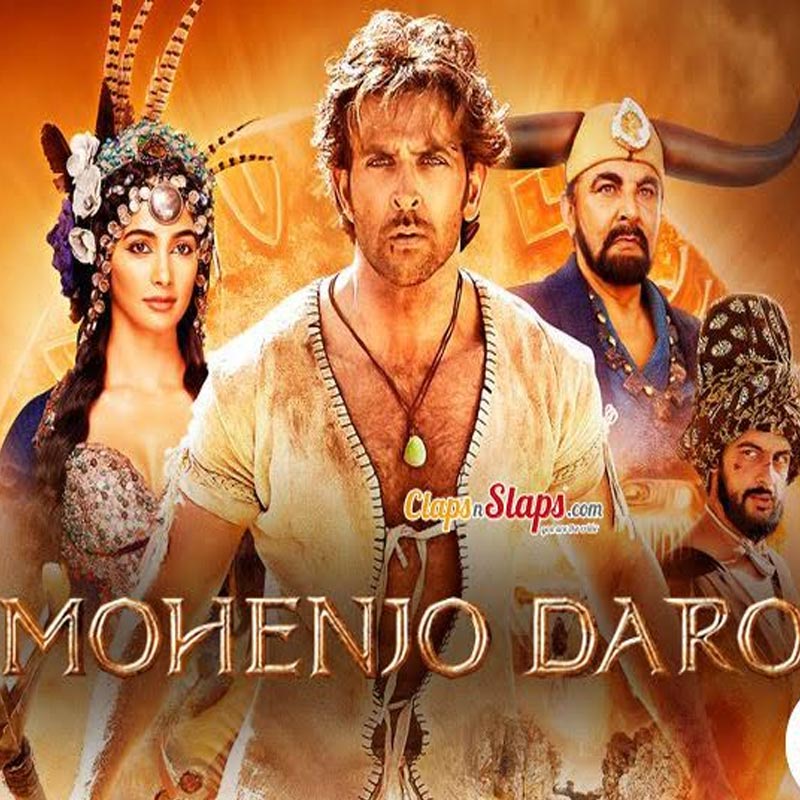
    While some may point that it is the dud performance of Mohenjo Daro at the box office that served as the catalyst behind this decision, it is the overall market dynamics that doesn’t favour profitability in the movie making business, is Disney India’s belief.

    The Hindi box office has been declining in the last few years whereas Hollywood has grown by almost 50 per cent this year. Out of the 250 plus Hindi movies that release every year and within the top 20, less than half the films make profits for the investing studio. Considering the cost of each film, it is very hard to get that money back and make moolah with the limited screens that the country has, shared a veteran in the movie distribution business. Even if a movie does make money, a lion’s share of that profit goes to the stars.

    Since Walt Disney is in the business of making money, staying in the Hindi film market doesn’t make sense for it.

    “Few of the projects that they have greenlit didn’t make practical sense honestly. Filmmakers and studios need to draw realistic budgets if they are to stay in business. A movie like Mohenjo Daro that required a heavy budget due to its historic storyline didn’t seem like a sensible investment from a business standpoint. Not to mention instead of a solo release, it hit the screens with another project and therefore the number of screens it was exposed to were less,” opined Mumbai-based film distributor Rajesh Thadani.

    To be fair to Disney India, Thadani shared that several other studios including Balaji and 20th Century Fox have had their fair share of mistakes and calls this development at Disney India a cue for the film industry to do a reality check for a more realistic approach to making films. “It won’t impact the film making in the industry but it definitely has given the corporate world food for thought,” he shared.

    While the studio will not sign any new production deals in the Indian film market, it will release the promised magnum opuses with due diligence — Dangal in December 2016 and Jagga Jasoos in April 2017.

  • Disney India confirms ending Hindi film production

    Disney India confirms ending Hindi film production

    MUMBAI: Reams and reams of newsprint and countless words have been written over the past week, about the exit of Disney India from the motion picture business and the departure of its managing director Siddharth Roy Kapur. The company refrained from reacting to any of the news reports.

    But it has now decided to issue an official statement confirming that it is indeed bringing down the curtains on its bold Hindi production initiative which it once considered as a crown jewel when it acquired UTV from Ronnie Screwvala four years ago.

    “We periodically review and realign our business priorities in response to evolving market dynamics. Given the challenges with the current economic model for investing in the local film industry, we intend to shift the focus of our film strategy to driving our Hollywood movie slate in India. These movies have enjoyed considerable success, including The Jungle Book, which is the highest-grossing Hollywood movie of all time in India. We remain optimistic about the incredible potential of the Indian market and will continue to invest in growing the Disney brand in India with our movies, television networks, consumer and interactive products, and live experiences,” reads the official statement from the company, which is to be attributed to ‘Disney spokesperson.’

    While Disney India has reserved all comments about Sid hanging up his boots, there is clear indication that he is quitting as a headhunt has commenced to find a replacement for him. .

    To many industry observers the decision to bring up the closing scene to its Hindi film production story, is not a sudden move but is a very calculated step that seeks to have it focusing on nurturing the revenue generating businesses rather than doing the balancing act at the local box office.

    While some may point that it is the dud performance of Mohenjo Daro at the box office that served as the catalyst behind this decision, it is the overall market dynamics that doesn’t favour profitability in the movie making business, is Disney India’s belief.

    The Hindi box office has been declining in the last few years whereas Hollywood has grown by almost 50 per cent this year. Out of the 250 plus Hindi movies that release every year and within the top 20, less than half the films make profits for the investing studio. Considering the cost of each film, it is very hard to get that money back and make moolah with the limited screens that the country has, shared a veteran in the movie distribution business. Even if a movie does make money, a lion’s share of that profit goes to the stars.

    Since Walt Disney is in the business of making money, staying in the Hindi film market doesn’t make sense for it.

    “Few of the projects that they have greenlit didn’t make practical sense honestly. Filmmakers and studios need to draw realistic budgets if they are to stay in business. A movie like Mohenjo Daro that required a heavy budget due to its historic storyline didn’t seem like a sensible investment from a business standpoint. Not to mention instead of a solo release, it hit the screens with another project and therefore the number of screens it was exposed to were less,” opined Mumbai-based film distributor Rajesh Thadani.

    To be fair to Disney India, Thadani shared that several other studios including Balaji and 20th Century Fox have had their fair share of mistakes and calls this development at Disney India a cue for the film industry to do a reality check for a more realistic approach to making films. “It won’t impact the film making in the industry but it definitely has given the corporate world food for thought,” he shared.

    While the studio will not sign any new production deals in the Indian film market, it will release the promised magnum opuses with due diligence — Dangal in December 2016 and Jagga Jasoos in April 2017.

  • Content usage: Yash Raj effects new rate card

    Content usage: Yash Raj effects new rate card

    MUMBAI: Hindi film production and distribution powerhouse Yash Raj Films (YRF) has introduced new rates for the usage of its content. The new rate card became effective from 1 July.

    The company, which over the years has cornered 60 per cent of the exhibitors, most of the top stars and music directors, and now most of the big producers as well, is sighting this as a way to increase its royalty revenue stream.

    The new rate card cuts across all kinds of events and is split on the basis of televised and non-televised programmes. The new rate card covers the following event categories: live ground event (commercial), corporate in-house events/ non-commercial ground events (private), song based television programmes and television programmes / news channels.

    With respect to television programmes/news channels, an audio clip of a song for three telecasts up to a minute duration would cost the channel Rs 5000. The charge doubles to Rs 10,000 when it comes to the usage of any song for more than a minute up to three minutes.

    In case of a visual clip of a song, the channel will have to fork out Rs 10,000 for a one minute clip, which is permitted three airings. And the charge would double for one minute plus to three minutes. For a one scene clipping a price tag of Rs 15000 has been attached. This stands applicable for three airings and for a duration of three minutes.

    For reality based music shows, the channel will have to shell out Rs 100,000 for using the YRF original sound recording for performance. This can be aired up to three telecasts. In the case of any rendition of a song/version by a participant, the channel will have to fork out Rs 75,000. 

    The client will have to pay Rs 20,000 for an audio/visual of a song in the background for three telecasts and for a length of not more than three minutes. If only the audio is been put to use as a background tool, the charge is Rs 10,000.

    For any live ground event (commercial), as per the card, the performance of YRF original sound recording/medley for three telecast for a song will cost Rs 1,50,000 while Rs 1,00,000 for a non-televised purpose per song for a duration up to full song.

    In case of rendition of song/version by a participant, which will be aired up to three telecast for a song will have to pay Rs 100000. In the same case, for a non-televised use for a song, the user will have to pay Rs 75000.

    For any audio/visual usage of a song in the background, the user will have to pay Rs 20,000 per clip which can be aired thrice, while the same amount is applicable even for a non-televised purpose, which is not more than three minutes on per clip basis.

    On the other hand, for any audio track, the user will have to pay Rs 10,000 for per clip, which is applicable in case of both televised as well as non-televised usage.

    It is interesting to note that the company has spared the nomination clipping, which are largely screened for any award function.