Tag: High Court

  • HCs’ informed about SC decision to transfer all DAS cases to Delhi HC

    HCs’ informed about SC decision to transfer all DAS cases to Delhi HC

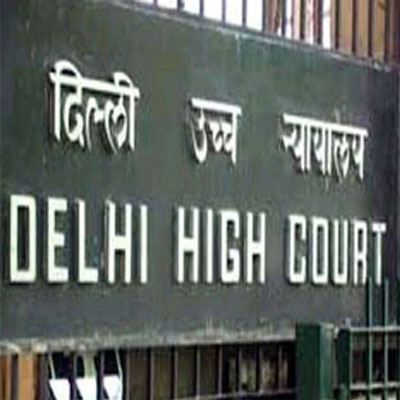
    NEW DELHI: The registry of the Supreme Court has finally sent to all the concerned high courts the directive of the apex court for transfer of all cases seeking extension to digital addressable system for cable television to Delhi High Court with a view to avoid conflicting decisions’.

    Court registry officials told indiantelevision.com that the order of the apex court of early this month had been sent on 16 April. A copy of the order was also sent to the Delhi High Court and it was now up to that court to fix a date.

    The officials said that the attempt would be to first receive from the various high courts the papers relating to the petitions, which almost all had pleaded shortage of set top boxes for seeking extension or stay of DAS which became effective 1 January 2016.

    Earlier, the apex court had accepted the plea of the central government that ‘it would be justand proper for this court to withdraw all those cases pending in different high courtsand transfer the same to Delhi High Court.’

    In its order of 1 April, justices V Gopala Gowda and Arjun Mishra had said on the transfer petition filed by the central government that ‘in future, if any case on the same legalquestion is filed before the high court(s), such case(s) shall also be transferred to theDelhi High Court’.

    The Supreme Court registry was directed to communicate the order tothe registrar general(s) of the respective high courts for transmitting the records of thecases pending before the respective high courts to Delhi High Court.

    The order took on record the fact that the All Sikkim Cable Operators Association
    had withdrawn from the High Court of Sikkim. The court also noted that one petitioner, JBM Cable Network, had refused to accept notice but this service would be considered sufficient. Ironically, the Information and Broadcasting Ministry had on 12 January written to its counsel in Punjab and Haryana High Court that it had understood the Hyderabad order to mean a pan India stay while asking him to defend the case.

    Buit later, the ministry sources admitted to indiantelevision.com that there was a misreading of the Bombay High Court directive. The Court had merely refereed to the Kusum Ingots & Alloys Ltd vs the Union of India 2004 case to say that if one high court gives a stay, another high court can act in similar fashion if the facts are similar – in this case, shortage of STBs. Thus, they agree that the high court stay was only confined to Maharashtra and not pan-India.

    Earlier, the Indian Broadcasting Foundation had withdrawn its petition after the Supreme Court said that the order of the Bombay High Court did not imply any pan-India stay.

    Meanwhile, cases are pending in the high courts of Bombay, Hyderabad (with separate petitions for Telengana and Andhra Pradesh), Allahabad, Assam, Odisha, and Chhattisgarh for the entire states, apart from Tamil Nadu where prolonged legal cases have been pending since Phase I.
    In Karnataka, three individual stakeholders have got stay orders in Mangalore and Mysore areas while there is no state-wide stay.

    The Bombay High Court had referred in its order to the argument by counsel that the Supreme Court in the Kusum Ingot case had said that if similar circumstances persist in other states, then they can pass an order similar to one passed by an earlier court.

  • HCs’ informed about SC decision to transfer all DAS cases to Delhi HC

    HCs’ informed about SC decision to transfer all DAS cases to Delhi HC

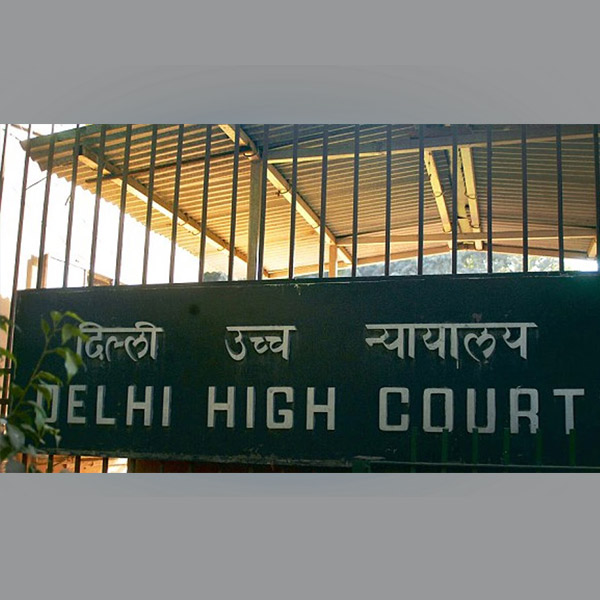
    NEW DELHI: The registry of the Supreme Court has finally sent to all the concerned high courts the directive of the apex court for transfer of all cases seeking extension to digital addressable system for cable television to Delhi High Court with a view to avoid conflicting decisions’.

    Court registry officials told indiantelevision.com that the order of the apex court of early this month had been sent on 16 April. A copy of the order was also sent to the Delhi High Court and it was now up to that court to fix a date.

    The officials said that the attempt would be to first receive from the various high courts the papers relating to the petitions, which almost all had pleaded shortage of set top boxes for seeking extension or stay of DAS which became effective 1 January 2016.

    Earlier, the apex court had accepted the plea of the central government that ‘it would be justand proper for this court to withdraw all those cases pending in different high courtsand transfer the same to Delhi High Court.’

    In its order of 1 April, justices V Gopala Gowda and Arjun Mishra had said on the transfer petition filed by the central government that ‘in future, if any case on the same legalquestion is filed before the high court(s), such case(s) shall also be transferred to theDelhi High Court’.

    The Supreme Court registry was directed to communicate the order tothe registrar general(s) of the respective high courts for transmitting the records of thecases pending before the respective high courts to Delhi High Court.

    The order took on record the fact that the All Sikkim Cable Operators Association
    had withdrawn from the High Court of Sikkim. The court also noted that one petitioner, JBM Cable Network, had refused to accept notice but this service would be considered sufficient. Ironically, the Information and Broadcasting Ministry had on 12 January written to its counsel in Punjab and Haryana High Court that it had understood the Hyderabad order to mean a pan India stay while asking him to defend the case.

    Buit later, the ministry sources admitted to indiantelevision.com that there was a misreading of the Bombay High Court directive. The Court had merely refereed to the Kusum Ingots & Alloys Ltd vs the Union of India 2004 case to say that if one high court gives a stay, another high court can act in similar fashion if the facts are similar – in this case, shortage of STBs. Thus, they agree that the high court stay was only confined to Maharashtra and not pan-India.

    Earlier, the Indian Broadcasting Foundation had withdrawn its petition after the Supreme Court said that the order of the Bombay High Court did not imply any pan-India stay.

    Meanwhile, cases are pending in the high courts of Bombay, Hyderabad (with separate petitions for Telengana and Andhra Pradesh), Allahabad, Assam, Odisha, and Chhattisgarh for the entire states, apart from Tamil Nadu where prolonged legal cases have been pending since Phase I.
    In Karnataka, three individual stakeholders have got stay orders in Mangalore and Mysore areas while there is no state-wide stay.

    The Bombay High Court had referred in its order to the argument by counsel that the Supreme Court in the Kusum Ingot case had said that if similar circumstances persist in other states, then they can pass an order similar to one passed by an earlier court.
  • Despite industry’s closure threats, govt. implements 85 per cent pictorial warning on tobacco packets

    Despite industry’s closure threats, govt. implements 85 per cent pictorial warning on tobacco packets

    New Delhi: Close on the heels of imposing stringent punishments to vendors of tobacco products in the vicinity of educational institutions in January and raising the tax in the budget in February, the Government has implemented its decision asking manufacturers to use 85 per cent space on tobacco packets on health warnings. The decision has come into effect from this month. An affidavit filed by the Health Ministry before the Rajasthan High Court on 28 March said the warning would appear on both sides of tobacco products and come into force from 1 April.

    This follows a decision taken in September last year, after an earlier order for implementation from April 2015 was stayed in June by the Government to allow a parliamentary committee to study the issue further. The Cigarettes and Other Tobacco Product (Prohibition of Advertisement & Regulation of Trade and Commerce, Production, Supply and Distribution) Act also prohibits the sale of cigarettes or other tobacco products to people below 18 years and in areas within a 100- metre radius of educational institutions.

    The Government nailed its latest decision by informing the Rajasthan High Court earlier this week to stick to its decision of 85 per cent pictorial warnings on every packet, thus forcing major tobacco companies to consider shutting shop in India. Interestingly, the Government has bypassed the advice of the Parliamentary Committee which recommended only 40 per cent pictorial warning. Until now, the coverage was forty per cent.

    The Tobacco Institute of India  said a unanimous ‘closure’ decision was  made by the players in the industry in response to the ‘ambiguity’ in the centre’s policy on pictorial warnings on tobacco product packs. Prominent members of the TII including ITC, Godfrey Phillips and VST have already announced their decision in this regard. ITC is already understood to have shut down five of its units. ITC, Godfrey Phillips and VST reportedly account for over 98 per cent of domestic cigarette sales, along with other members of the Institute.

    TII in a press release estimated a daily loss of Rs 350 crore in revenue for the tobacco industry from the production stoppage. It asserted that the revised pictorial warning would promote the trade in illegal cigarettes and affect the livelihood of 45.7 million (4.57 crore) people dependent on the industry.

    The Indian tobacco industry had in mid-March written to the Health Ministry seeking clarification but did not get any reply, leading to the decision for closure ‘fearing, potential violation of rules by continuing production.’
    TII has claimed that illegal cigarettes account for one-fifth of the industry, resulting in an annual revenue loss of Rs 9,000 crore to the exchequer. It even blamed ‘foreign-funded anti tobacco activists’ and ‘vested interests’ for pushing such a policy.

    In fact, many of the tobacco majors in the country have already made inroads in other sectors like hotels, FMCG etc.

  • Despite industry’s closure threats, govt. implements 85 per cent pictorial warning on tobacco packets

    Despite industry’s closure threats, govt. implements 85 per cent pictorial warning on tobacco packets

    New Delhi: Close on the heels of imposing stringent punishments to vendors of tobacco products in the vicinity of educational institutions in January and raising the tax in the budget in February, the Government has implemented its decision asking manufacturers to use 85 per cent space on tobacco packets on health warnings. The decision has come into effect from this month. An affidavit filed by the Health Ministry before the Rajasthan High Court on 28 March said the warning would appear on both sides of tobacco products and come into force from 1 April.

    This follows a decision taken in September last year, after an earlier order for implementation from April 2015 was stayed in June by the Government to allow a parliamentary committee to study the issue further. The Cigarettes and Other Tobacco Product (Prohibition of Advertisement & Regulation of Trade and Commerce, Production, Supply and Distribution) Act also prohibits the sale of cigarettes or other tobacco products to people below 18 years and in areas within a 100- metre radius of educational institutions.

    The Government nailed its latest decision by informing the Rajasthan High Court earlier this week to stick to its decision of 85 per cent pictorial warnings on every packet, thus forcing major tobacco companies to consider shutting shop in India. Interestingly, the Government has bypassed the advice of the Parliamentary Committee which recommended only 40 per cent pictorial warning. Until now, the coverage was forty per cent.

    The Tobacco Institute of India  said a unanimous ‘closure’ decision was  made by the players in the industry in response to the ‘ambiguity’ in the centre’s policy on pictorial warnings on tobacco product packs. Prominent members of the TII including ITC, Godfrey Phillips and VST have already announced their decision in this regard. ITC is already understood to have shut down five of its units. ITC, Godfrey Phillips and VST reportedly account for over 98 per cent of domestic cigarette sales, along with other members of the Institute.

    TII in a press release estimated a daily loss of Rs 350 crore in revenue for the tobacco industry from the production stoppage. It asserted that the revised pictorial warning would promote the trade in illegal cigarettes and affect the livelihood of 45.7 million (4.57 crore) people dependent on the industry.

    The Indian tobacco industry had in mid-March written to the Health Ministry seeking clarification but did not get any reply, leading to the decision for closure ‘fearing, potential violation of rules by continuing production.’
    TII has claimed that illegal cigarettes account for one-fifth of the industry, resulting in an annual revenue loss of Rs 9,000 crore to the exchequer. It even blamed ‘foreign-funded anti tobacco activists’ and ‘vested interests’ for pushing such a policy.

    In fact, many of the tobacco majors in the country have already made inroads in other sectors like hotels, FMCG etc.

  • Delhi High Court declines to interfere on TDSAT’s HITS order; Star may move SC

    Delhi High Court declines to interfere on TDSAT’s HITS order; Star may move SC

    NEW DELHI: The Delhi High Court today said that it did not feel the need to examine whether the Telecom Disputes Settlement and Appellate Tribunal (TDSAT) had the jurisdiction to direct broadcasters to treat the headend-in-the-sky (HITS) operator Noida Software Technology Park Ltd (NSTPL) at the same level as pan-India multi-system operators (MSOs).


    Justice Rajiv Sahai Endlaw said that there was a statutory provision for parties aggrieved by orders of TDSAT to go to the Supreme Court.


    The judge had on 7 January reserved its orders on the petition by Star India arising out of the Tribunal’s judgment of 7 December.


    The Court also agreed that all questions were open for being taken up by the Supreme Court if it is approached by the broadcaster.


    Star India had filed the petition on the ground that TDSAT exceeded its jurisdiction as it did not have the authority to ‘re-write the regulation.’


    A Star India spokesperson told Indiantelevision.com late in the evening that the broadcaster was examining future course of action. It is understood that this includes the opening of an appeal before the apex court.


    The High Court on 7 January had also said that a directive by TDSAT of 18 December asking Star India and other broadcasters to produce the kind of agreements it had with Hathway, Den and Siti Cable and listing the matter for 12 January, would stand suspended until the outcome of the High Court case.


    The Court heard arguments presented by Star India and NSTPL, whose petition had been accepted on 7 December by the Tribunal, which had asked Star India and Taj TV to execute fresh agreements with NSTPL. However, TDSAT had kept the operation of the judgment pending till 31 March this year.


    It had said that on past occasions as well similar suggestions were made with the hope of nudging the TRAI to take proactive steps to reduce the scope of disputes arising out of the regulations. “At the same time, the fact that regulatory intervention may be the ideal way forward cannot and should not be an excuse for this Tribunal to shirk the interpretative issues that have come before us. This is particularly so when there appears to be regulatory inertia,” TDSAT had said.


    The Tribunal had, on 18 December, impleaded Zee Turner and others in another petition by Star India against NSTPL and asked the broadcasters to produce the agreements between the broadcasters and major MSOs. It opined that some agreements have to be suspended by Star and Taj TV.

  • Delhi High Court declines to interfere on TDSAT’s HITS order; Star may move SC

    Delhi High Court declines to interfere on TDSAT’s HITS order; Star may move SC

    NEW DELHI: The Delhi High Court today said that it did not feel the need to examine whether the Telecom Disputes Settlement and Appellate Tribunal (TDSAT) had the jurisdiction to direct broadcasters to treat the headend-in-the-sky (HITS) operator Noida Software Technology Park Ltd (NSTPL) at the same level as pan-India multi-system operators (MSOs).


    Justice Rajiv Sahai Endlaw said that there was a statutory provision for parties aggrieved by orders of TDSAT to go to the Supreme Court.


    The judge had on 7 January reserved its orders on the petition by Star India arising out of the Tribunal’s judgment of 7 December.


    The Court also agreed that all questions were open for being taken up by the Supreme Court if it is approached by the broadcaster.


    Star India had filed the petition on the ground that TDSAT exceeded its jurisdiction as it did not have the authority to ‘re-write the regulation.’


    A Star India spokesperson told Indiantelevision.com late in the evening that the broadcaster was examining future course of action. It is understood that this includes the opening of an appeal before the apex court.


    The High Court on 7 January had also said that a directive by TDSAT of 18 December asking Star India and other broadcasters to produce the kind of agreements it had with Hathway, Den and Siti Cable and listing the matter for 12 January, would stand suspended until the outcome of the High Court case.


    The Court heard arguments presented by Star India and NSTPL, whose petition had been accepted on 7 December by the Tribunal, which had asked Star India and Taj TV to execute fresh agreements with NSTPL. However, TDSAT had kept the operation of the judgment pending till 31 March this year.


    It had said that on past occasions as well similar suggestions were made with the hope of nudging the TRAI to take proactive steps to reduce the scope of disputes arising out of the regulations. “At the same time, the fact that regulatory intervention may be the ideal way forward cannot and should not be an excuse for this Tribunal to shirk the interpretative issues that have come before us. This is particularly so when there appears to be regulatory inertia,” TDSAT had said.


    The Tribunal had, on 18 December, impleaded Zee Turner and others in another petition by Star India against NSTPL and asked the broadcasters to produce the agreements between the broadcasters and major MSOs. It opined that some agreements have to be suspended by Star and Taj TV.

  • Allahabad HC accepts Govt’s view to not press on DAS Phase III

    Allahabad HC accepts Govt’s view to not press on DAS Phase III

    NEW DELHI: Taking note of the Government position that “it will not press for requirement of having a set top box as of now,” the Allahabad High Court has put off to 28 January, a petition by the Allahabad Cable TV Operators Welfare Society seeking extension of the deadline of implementation of Phase III of digital addressable system (DAS).


    Justice Dilip Gupta and Justice Mukhtar Ahmad in their order said they did not feel the need of any interim order at this stage.


    The Court took note of the letter from an under secretary in the Information and Broadcasting Ministry citing that according to legal opinion, the extension order issued by the Bombay High Court was valid for the entire country.


    The letter was written to Assistant Solicitor General Chetan Mittal with regard to a similar case in the Punjab and Haryana High Court, which was then dismissed as infructuous.  


    Counsel Vivek Singla had told the Punjab and Haryana High Court that “the Ministry of Information and Broadcasting, Government of India has decided not to press the requirement of having a STB as for now till the decision of the cases, which are pending before various other Honourable High Courts.”


    The Ministry had also sent to Mittal a detailed note on the issue, apart from orders by the Hyderabad and Bombay High Courts.


    The Bombay High Court had relied on the Supreme Court order in the Kusum Ingots and Allous Ltd case where the apex Court had said that a High Court could give an order similar to that given by other High Courts if the circumstances were similar.


    The matter has already been stayed by other High Courts including Sikkim, Odisha, Chhattisgarh for the entire state, and for individual local cable operators in Karnataka and Kerala on the common plea that there was acute shortage in seeding of STBs.


    However, Ministry secretary Sunil Arora had told Indiantelevision.com earlier that the Centre would be moving the Supreme Court in this matter. Ministry sources said that the petition in the apex Court was likely to be an appeal against one High Court with an application that all other matters may also be heard simultaneously.

  • Allahabad HC accepts Govt’s view to not press on DAS Phase III

    Allahabad HC accepts Govt’s view to not press on DAS Phase III

    NEW DELHI: Taking note of the Government position that “it will not press for requirement of having a set top box as of now,” the Allahabad High Court has put off to 28 January, a petition by the Allahabad Cable TV Operators Welfare Society seeking extension of the deadline of implementation of Phase III of digital addressable system (DAS).


    Justice Dilip Gupta and Justice Mukhtar Ahmad in their order said they did not feel the need of any interim order at this stage.


    The Court took note of the letter from an under secretary in the Information and Broadcasting Ministry citing that according to legal opinion, the extension order issued by the Bombay High Court was valid for the entire country.


    The letter was written to Assistant Solicitor General Chetan Mittal with regard to a similar case in the Punjab and Haryana High Court, which was then dismissed as infructuous.  


    Counsel Vivek Singla had told the Punjab and Haryana High Court that “the Ministry of Information and Broadcasting, Government of India has decided not to press the requirement of having a STB as for now till the decision of the cases, which are pending before various other Honourable High Courts.”


    The Ministry had also sent to Mittal a detailed note on the issue, apart from orders by the Hyderabad and Bombay High Courts.


    The Bombay High Court had relied on the Supreme Court order in the Kusum Ingots and Allous Ltd case where the apex Court had said that a High Court could give an order similar to that given by other High Courts if the circumstances were similar.


    The matter has already been stayed by other High Courts including Sikkim, Odisha, Chhattisgarh for the entire state, and for individual local cable operators in Karnataka and Kerala on the common plea that there was acute shortage in seeding of STBs.


    However, Ministry secretary Sunil Arora had told Indiantelevision.com earlier that the Centre would be moving the Supreme Court in this matter. Ministry sources said that the petition in the apex Court was likely to be an appeal against one High Court with an application that all other matters may also be heard simultaneously.

  • MIB burning midnight oil to find ways to counter battery of High Court orders staying DAS

    MIB burning midnight oil to find ways to counter battery of High Court orders staying DAS

    NEW DELHI: Considering the odds it is facing from various High Courts all over the country for extending the deadline for implementing Phase III of Digital Addressable System (DAS), the Ministry of Information and Broadcasting (MIB) has to find a way to get even justice for the ultimate stakeholder — the consumer.


    Perhaps because of that, the last few days have been very busy in the corridors of fifth and sixth floors of Shastri Bhavan in the capital, which houses the MIB, with officials holding several meetings to find a way to stop the snowballing of the orders that commenced from Hyderabad and found a boost in the arguments in the Bombay High Court based on the Kusum Ingots case of 2004, which encouraged multi system operators (MSOs) and local cable operators (LCOs) in other states.


    At present, the implementation remains stayed for varying periods in the states of Andhra Pradesh, Assam, Maharashtra, Orissa, Sikkim, and Telangana, apart from Tamil Nadu where prolonged legal cases have been pending since Phase I. A petition has already been filed in the Karnataka High Court and is listed for 8 January.


    Ministry sources confirmed to Indiantelevision.com that meetings had been held with legal experts and particularly with Government counsel.


    There was also general consensus on filing a petition by the Government in the Supreme Court, particularly as the apex court had on an earlier occasion relating to the Cable Television Networks (Regulation) Act 1995 and orders issued thereunder that High Courts have to be cautious when giving orders on matters relating to policy.  


    Government legal experts advised that an appeal could be filed against any of the High Court orders in the Supreme Court and the apex court could be asked to transfer all linked matters to Delhi to be heard together.


    However, it needs to be seen whether this will be in the form of a writ petition or an appeal against the various High Courts – a decision left to a battery of legal experts.


    MSOs said, however, that this would impose a lot of financial burden on them as they could ill-afford to hire counsel in the Supreme Court. 


    Even as the Ministry would obey the directives of the various High Courts, which had extended the DAS deadline by various periods ranging between eight to 12 weeks, it would prepare to oppose the decisions.


    A senior Ministry official said that even as the Ministry was waiting to see all the High Court orders, it was working on how plans to thwart the implementation of Phase III could be prevented – if necessary through legislative processes.


    The official also expressed the view that the cases would in fact benefit the direct to home (DTH) and Headend In The Sky (HITS) players and would affect the last mile operator (LMO).


    The sources said they had evidence to show seeding of set top boxes (STBs) to the extent of 76 per cent as revealed in the 13th Task Force meeting on 30 December. 


    Meanwhile, legal opinion is divided on whether the Kusum Ingots case, which was referred to in the Bombay High Court could be used by a High Court to direct a pan-India stay.


    The broadcasters and channel distributors are united on one view: the government should not give any extension on its own, as that would lead to a further delay in not just the Phase III and Phase IV (slated for December 2016) but also pockets of Phase I and Phase II, which have still not implemented digital addressable systems.


    It is also learnt that both broadcasters on the one hand and the channel distributors and major MSOs on the other, are pressing the government to move the apex court to get a single ruling instead of different High Court orders.


    However, it was admitted by the stakeholders that there was very little progress as far as indigenous STBs are concerned with just one or two players making local boxes despite the ‘Make in India’ campaign, and the government had to be proactive in this regard.


    The attempt would be to prevent the High Courts from staying implementation of Phase III under which analogue signals were to be switched off after midnight on 31 December, 2015.


    One representative of a broadcaster said switching back to analogue on getting a High Court stay did not cause any technical difficulty, but it raised problems relating to accounts and agreements already agreed upon.


    Be that as it may, the consumer who has already spent money on acquiring STBs hopes his efforts will not go waste in haste.

  • DAS Phase III: MIB’s big dilemma

    DAS Phase III: MIB’s big dilemma

    MUMBAI: The past fortnight has seen High Court directives in five different states make a mockery of the 31 December, 2015 deadline set by the government for the Phase III roll out of digital addressable system (DAS).


    The courts have urged the Ministry of Information and Broadcasting (MIB) to not act against multi system operators (MSOs) and cable operators who have not been able to place set top boxes (STBs) in homes for two months. In essence, the DAS sunset date has been extended in Andhra Pradesh, Telangana, Sikkim, Maharashtra, Odhisa, Tamil Nadu and now Guwahati.


    The Bombay High Court specifically cited a Supreme Court judgment and noted that a stay granted by a high court on a central notification in one state would be applicable in other states as well. That was the case of Kusum Ingots vs the Union of India, in 2004. (http://indiankanoon.org/doc/1876565/)


    The question on everyone’s mind is: would other petitioners in other states under the DAS Phase III ambit also approach their respective High Courts for relief? Hence, did it make sense for broadcast networks to continue with digitally encrypted signals, which they had resorted to once the clock struck midnight of the new year?


    Most of them including Viacom18, Star India, Zee and Sony thought it did not. Hence, they have all switched on their analog signals a day or so after switching them off.


    Now that has put the MIB in a bit of a quandary. The team lead by MIB secretary Sunil Arora – and including special secretary JS Mathur, and joint secretary RS Jaya apart from other members – have been driving DAS III digitisation and were quite clear that no extension should be given. 


    Sources indicate that one line of action being considered by the MIB is to approach the Supreme Court for relief against the restraint orders granted by the various courts. Experts such as Supreme Court advocate KV Dhananjay have argued against the stance taken in the Kusum Ingots case by the courts. (http://www.legallyindia.com/Blogs/some-hc-judges-are-becoming-terribly-ignorant-of-our-constitution)


    Whether the MIB will go ahead and approach the Supreme Court or not is a moot point, but the industry is putting its might behind it. Most of the industry associations like the Indian Broadcasting Foundation, the DTH Operators Association and the MSO Alliance have all reportedly urged the ministry to move the apex court.


    Industry believes that the extension is unlikely to serve any purpose, as cable operators knew of the phased rollout of DAS as much as for the past three to four years and hence they could have prepared for it. Complaining about a shortage of STBs or interconnect agreements or capital post the sunset date is simply facile, professionals state. 


    “The analog switch off is mandatory,” says an industry observer. “Digitally encrypted signals need to be the only mode of television delivery via satellite in India in Phase III areas. Private DTH operators and the government owned FreeDish can deliver television wherever there are signal dark areas courtesy cable TV’s unpreparedness. The government needs to approach the courts to ensure that DAS Phase III proceeds as soon as possible.”


    We will have to wait and watch if it does.