Tag: Hetal Adesara

  • A tale of a storyteller…

    A tale of a storyteller…

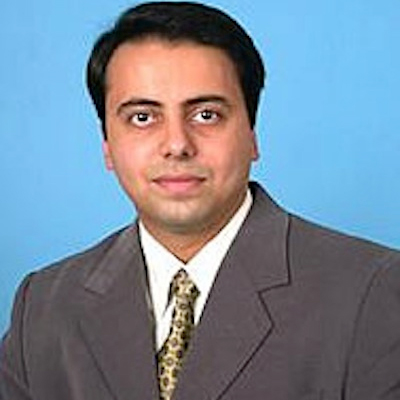
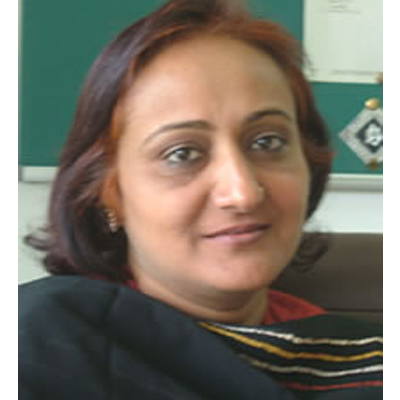
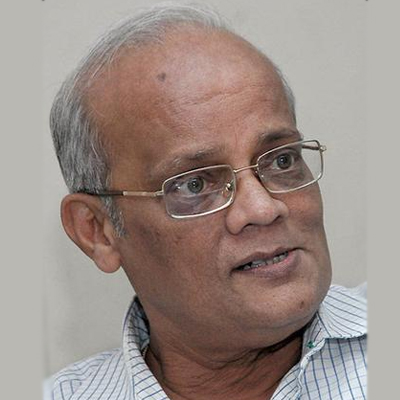
    MUMBAI:  At 34, Hetal Adesara has seen it all… Rather, that’s what she would have us believe through her maiden book, ‘Matrimonial Mocktales.’


    From a traditional Gujarati family in Jamshdepur, Hetal, left the small town in East India to get away from being hurled into another traditional Gujarati family through the instituition of arranged marriage. She saw many a “suitable boy” and was seen by many of them as and when her parents referred them to her even as she moved to Mumbai. 


    ‘Matrimonial Mocktales’ is Hetal’s take on a few of these meetings. She does mention though that the instances are dramatized for a better reading experience.


    After escaping from Tatanagar, Hetal cut her teeth in journalism in indiantelevision.com by starting and editing The Team Players section which profiled young executives in advertising, marketing, broadcast. She then moved on to report on  media, marketing and advertising developments.  Her commitment to work and sharp and clear analyses left an impression on whosoever she interviewed or wrote about in the television, advertising and marketing industries between 2003-2005.  


    She has explored every opportunity that has come her way over the past decade. Following her stint with indiantelevision.com, she helped co-found businessofcinema.com. From writing about films, she went onto to work as an assistant producer with Vidhu Vinod Chopra on 3 Idiots. She then tried her hand at direction, assisting  director Rohan Sippy on Nautanki Saala apart from working as script supervisor on the same film. More recently, she worked on the IIFA Awards at Tampa Bay as executive producer for television and digital content.


    But all along Hetal nursed in her heart a deep desire to pen her own novel. Which this diploma holder in journalism from the Xavier Institute of Communications finally fulfilled last year when she wrote ‘Matrimonial Mocktales’. It took her two years to get the book published. But she finally found a publisher in OM Books International.


    ‘Matrimonial Mocktales’ revolves around young Rhea, who always wanted a Mills & Boon romance but in the real world, that is probably too much to ask. She is raised in a conservative Sikh family in Jalandhar where it is unthinkable for a girl to remain unmarried at 25, let alone 33. But there she is, single and independent and STILL in search of her Mr Right. At just 15, her parents get her engaged to a 23-year-old boy but that story does not pan out as per plan. Having entered the arena of love on a wrong footing, it takes the better part of her young life to find the right man before a whole lot of wrong ones come and go, even as she tries to make sense of her chaotic world.


    Hetal believes many a young girl who has escaped – or is struggling to escape –  from the clutches of arranged marriage will identify with Rhea the character. “Rhea is educated but because of family pressure she goes through what they ask her to do. It could be any other girl from any other small town who has dreams to achieve and be happy with the man she loves, and not the man that’s chosen for her,” she says. “That should resonnate with today’s women.”


    Quite a few eyebrows were raised, even among Hetal’s  friends, at her move to quit working and take time off to write her novel. But, resolute young woman that she is, she did not let any of their reservations hold her back.


    “As a kid, I loved scribbling poems and dreamt of becoming a writer. God has been kind to me and I am sure there is a lot more in store for me,” says she.


    Indeed, Hetal  is already working on the sequel to ‘Matrimonial Mocktales’. “I want to continue to write stories because I think it is an enriching experience,” she adds.


    What would she advise young, budding writers out there? “There is a huge market out there which is unexplored in the publishing industry in India. Get the right inspiration and get to penning it down right,” she says.


    We at indiantelevision.com wish our former employee and colleague good luck and recommend readers to and pick up a copy of her book for a good weekend read! It will be money well spent!

  • ‘If pay model comes into place, I wouldn’t even think twice before launching four more kids’ channels’ : Zarina Mehta – Hungama TV chief operating officer

    ‘If pay model comes into place, I wouldn’t even think twice before launching four more kids’ channels’ : Zarina Mehta – Hungama TV chief operating officer

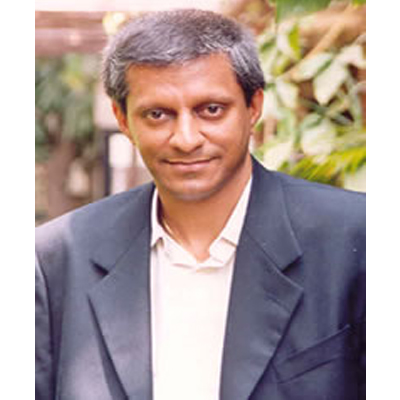
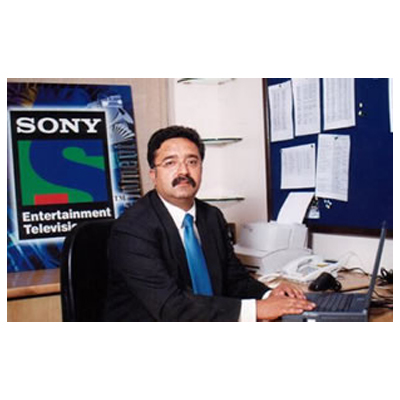
    Hungama TV has recently touched the number two position in the kids' channels space and the channel's chief operating officer Zarina Mehta is in an ecstatic mood. What's more, she is also upbeat about the new talent hunt for kids on the only Indian kids channel beaming in the country.

    The channel has roped in John Abraham for the same and the two kids who win the hunt will get a chance to star opposite the youth icon in a UTV produced movie. This can be termed as a perfect example of synergy between the two brands – UTV and Hungama TV.

    Her enthusiasm and zest for her baby (that's best how Hungama TV can be described) is infectious. In a free wheeling interview with Indiantelevision.com's Hetal Adesara, Mehta talks about the channel's future plans, the kids' space in India and the problems broadcasters are facing due to non implementation of conditional access system (CAS), which will help bring in pay TV revenues.

    Excerpts:

    Hungama TV recently achieved the number two position in the kids' channels space. What has contributed to the growth?
    Overall I think the growth has basically come from excellent distribution for which I have Star TV to thank and my own distribution team headed by Kevin Pereira.

    Secondly, localisation on the marketing and programming front, that has worked on the channel. Whether it is the Hungama Captains' Hunt, which is such a local area that reaches out to the kids directly and pulls them into the channel. They can actually see who is running the channel. Then a show like Hero, which is right now one of our massive driver shows has done really well on the channel so much so that the repeats of the show has got higher ratings that the first time airings.

    The third thing is excellent acquisitions. Doremon is the top rated kids show for the last four – six weeks. This week we got 36 GRPs just from Doremon.

    We did a brand study last year in May because we had a very critical brand problem, which we have now solved. The problem was the logo of the channel with the 'h,' which was perceived as too young. The responses we got from kids about the channel were 'not cool,' 'not for me' or 'my kid sister may watch.'

    The study was done among 2,000 kids and this is when we realised that we had a serious brand problem. So in October 2005, we re-launched with the new logo and in March this year, we changed the entire look and feel of the channel.

    We commissioned the BBC to do design our new on air look but I was very disappointed with what they did. Apart from the new logo with the swirl that they made for us, we re-did the entire on-air look of the channel in-house. This has also helped the channel. Hungama has now become a cool, friendly, fun and Indian channel for kids. The brand perception is shifting now and kids are spending more time on the channel.

    The interesting story about the 141 GRPs that we got a couple of weeks back is that our time spent went up. Hence loyalty and stickiness on the channel are going up, which is very comforting to know.

    How has your role been redefined after becoming COO of Hungama TV? What are the additional responsibilities apart from programming that you are now looking after?
    There are massive additional responsibilities now. Instead of just looking after programming and OAP, I have to look after everything. I am still learning the ropes but so far it has been a good experience.

    I have a great team at Hungama and the people are really passionate about their work. There's Kevin Periera, who is the head of distribution and operations; Siddhartha Roy Kapoor is our group head of marketing who looks after UTV and Hungama TV. Then there is Aparna Bhosle who is vice president programming for the channel, Nilofer Dhund who is vice president sales, Venkatesh G is our head of OAP and Shilpa is the head of research.

    My task is to make sure that the different elements of the channel work powerfully together so that one plus one is eleven, not even four. And that's what I think we are slowly achieving. Marketing, sales, distribution and programming have to work together. We had passionate people before but they were not working together as a team. Now that has changed.

    What are the new shows that you have acquired recently?
    There are three new shows that we have acquired and each one of them is really big. But at this point in time, I cannot talk about it because we haven't yet signed on the dotted line.

    This year, we will be going to Cannes for Mip Junior in October. Last year, we screened each and every show that was there on the market, so now we know the kids' market place.

    What about new local content?
    We have a reality talent hunt show called John Aur Kaun?, which is a magnificent idea. We'll be going across five major cities in search for two kids who will get an opportunity to star in a UTV produced movie starring John Abraham. UTV has signed a two movie deal with John and more than anything else, it is a perfect example of fabulous synergy between UTV and Hungama TV.

    We were thinking of a big idea for Hungama TV and then Siddhartha came up with this one and I immediately lapped it up. My skill is to manage people and recognise a good idea (not necessarily come up with it) and make it happen.

    John has also been roped in as the brand ambassador for the channel. What role is he going to play in this respect?
    John is willing to do the movie with two kids because he recognises how popular he is with the 4 – 14 TG. Then we thought that if we are doing a movie with him; then let's take him on as the channel's brand ambassador. He agreed to that too.

    We are going to figure out ways to synergise the relationship between John and Hungama TV. We are just working all that out and we have at least three innovative ideas but it will take another month or so to finalize the same. When John comes back from his world tour, we will be ready to announce the specifics of what we are doing with him besides John Aur Kaun?

    'I will never ask John to act in 'Hero' or 'Sanya' as it will be a detriment to his brand and also mine'

    Speaking about John, how important do you think is it for a kids channel to have a brand ambassador? If we look at the other channels, Nick had Saif Ali Khan and Animax had Irfan Pathan as brand ambassadors… but nothing much came out of it so to speak…
    Honestly, if I may say, I don't think they used them correctly. I am never going to use John to say – "Watch Hungama TV." I am going to innovate, which is why it has taken me more than seven – eight months to think how exactly to use him in an innovative long term manner, wherein he can bring a long term brand equity to the channel. It is absolutely a no – no that I will ask him to ever act in Hero orSanya. I will never ever do that as I think it is a detriment to his brand and mine because if Hero can't stand on his own two feet then he is not a hero.

    A brand ambassador has to go deeper into the brand and build a meaningful relationship with the kids and I am figuring that out. I will make it work. It cannot be done the way the others did it. Even Sab TV had done it with Karisma Kapoor… it didn't work.

    For my brand it is going to be a deeper connection with the kids. How? I can't answer that right now. The channel will be a medium for kids to connect with John. In no way should either of the brands be diluted by this association… especially his brand.

    Are there any other new local shows apart from this talent hunt that in the pipeline?
    We are doing a whole new series of Hero, which will be launched in June. We have a fantastic new story written by Aarif Ali and I'm sure kids will love it.

    I am also planning a new series of Sanya. Moreover, I think it has a good merchandising and licensing opportunities. All the merchandising and licensing that is happening currently is all international stuff. I want to break to that and I also want Hero and Sanya to become licensing and merchandising powerhouses.

    It's going to take the earth and the moon to do it because somehow Indians tend to buy foreign things, which is sad but true. So we need to break that but I'm going to try.

    So will we be seeing a separate division for licensing and merchandising?
    I must admit that this is one thing where we are nowhere near our competition. However, having said that, we have licensed Yu Gi Oh!with the Pepsi taazzos and it is doing quite well.

    Funnily enough, the very first merchandising property in the kids' space was the Shakalaka Boom Boom pencil and they were a runaway success (except that they got pirated since they were cheap and easy to copy).

    We are lacking there but we are looking at it seriously now. It is going to be quite some time before we actually start making money there or even giving Cartoon Network and Disney any competition there but it will be a beginning.

    There are seven kids channel in the country at present. Together, how much have they managed to grow the market?
    From January 2005 to mid April 2005, there were a total of seven kids' channels, which together contributed 300 GRPs. Compare that to the same time period this year (2006) and the number of channels are the same but the GRPs have climbed up to 500. It's a fantastic, unbelievable and sensational growth.

    I have to compliment my competition as well as us, because together we are driving value to the kids' space. There are a lot of things that we are competing for but there are certain things that we need to do together. We need to change the perception of advertisers towards the kids' space. We have to make them understand that the current big thing that is growing today is the kids' space and everything else is declining. I really believe that 2006 – 2007 is the year of the kids' channels. For me, I value my competition because if they weren't there I would be lazy and bored. I actually want my competition to work because then the space works and it is important for the space to work.

    Overall, the key is to drive our effective rates (ER) up from the current abysmal rates that we have. We should stop selling at low rates because we are worth much more. Even with the cable operators, we should use our clout together. These are the things we should do together. At the same time there is no denying that there is a huge sense of competitiveness amongst Cartoon Network, Disney and Hungama TV. This hots up the space and makes it that much more exciting. No media planner or buyer can ignore us… they may not give us the ERs that we deserve but it is moving in the right direction.

    Programming-wise, what do you think is the way forward for kids' channels – live action or animation?
    It has to be a mix of the two. Originally produced live action is great but we have to admit that it is very expensive. I cannot afford to have more than two or three originally produced live action shows on my channel. I think the rest of the channel has to be filled with acquisition – whether it is live action or animation.

    That is the best way to go. I am very happy with the balance we have currently on Hungama TV.

    Are there any new distribution platforms that you are looking at for your content?
    We were the first to go on the mobile with our Hungaming channel. We launched it in October. Sadly we didn't make a noise about it.

    Kids can download and play the Gol Gol Ghulam and Full Toss games. Also in the pipeline is the Hero game, which is currently being developed. This has been done in association with Indiagames.

    What is the latest on the deal with Sun TV for the two regional kids' channels?
    No comments.

    A couple of years back; at the Ficci Frames seminar you had mentioned that by 2010, we will have 20 kids' channels in India. How realistic does that figure look to you today?
    I still think so. As far as I am concerned, we already have plans to launch two more channels and we definitely need to grow the pie.

    The only thing that is stopping us is the state of cable in the country. Pay TV revenues have to kick in and viewers have to pay for what they get. They cannot keep expecting free stuff as it is not fair to the broadcasters, cable operators or anybody who is running a business. Why should a consumer get it free? It doesn't make sense to me.

    In the market the prices of everything keeps going up but our prices keep going down. Why should it be like that? The government also has to take a hard stand on this. Basically what they are doing is that they are not allowing the market to open. When pay TV kicks in the market will boom again. By not implementing CAS they are actually depressing the growth of the market.

    But do you think CAS will be implemented considering its history in the country?
    I don't know. It is so sad that it is not happening because it is the only way to implement a pay model. And then the other thing is DTH and we are all hoping that DTH will work.

    We have 65 million cable and satellite (C&S) homes and the reporting is a meager five million homes. This is utter nonsense and this is only because viewers are not paying. Cable operators may be underreporting but viewers are actually not paying.

    Let DTH come in and reach that five million homes; I will switch off cable and go to DTH because I need to earn. The fact is that we are spending a lot of money. I don't think any of the broadcasters are profitable as yet. There are a lot of issues that need to be sorted out. But India is the best place to be in and it is the best kids' market in the world. Only if the pay model comes into place, I wouldn't even think twice about launching two or even four more channels.

  • ‘With all the new delivery platforms, we are at the doorstep of a very interesting phase’ : Pradeep Hejmadi – Tam Media Research vice president

    ‘With all the new delivery platforms, we are at the doorstep of a very interesting phase’ : Pradeep Hejmadi – Tam Media Research vice president

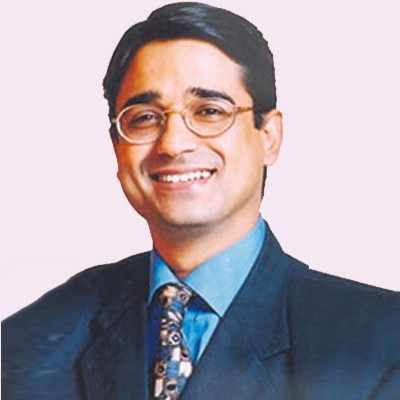
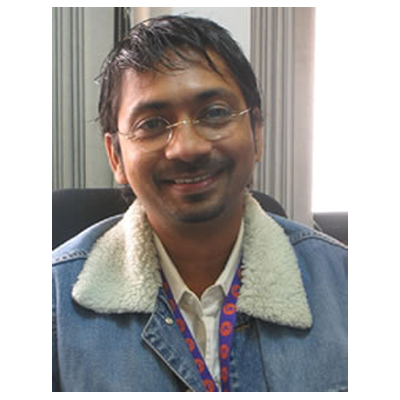
    He has been associated with a wide variety of assignments in the domain of media planning and broadcast management. Now he’s buried into hardcore research.


    It’s been just over six months since Tam Media Research vice president Pradeep Hejmadi joined the company and when we mention that to him, he seems shocked at how time has flown.


    His last assignment was with the kids’ channel Nick. His experience traverses through various media organisations like Turner International, Discovery India, HTA and The Times of India.


    Speaking to Indiantelevision.com’s Hetal Adesara Hejmadi dwells on the various issues that concern the television industry today and also on the exciting phase that it entering.


    Excerpts:

    It’s been just over six months since you joined Tam, how has the journey been so far and what was the mandate given to you when you joined?

    The journey has obviously only begun but it’s been good fun. Being on the broadcast side, you see one view of the world. There I was doing a whole host of stuff that is quite different from what I’m doing here. So from that point of view it is a refreshing change to come to audience research and to help people to converse with data.


    In terms of mandate, the idea was simply to focus on two areas: one is on the needs of the broadcasters and to keep the system abreast in terms of the areas that are emerging as interest areas for the industry per se.


    The other mandate is to get people to make decisions on the basis of the information that they have. Some people tend to have a biased approach towards numbers as research sounds like such a difficult animal to manage and tame. Our focus has been to try and make sure that people are able to read audience behaviour and act on it. And hopefully start seeing some response on the basis of what they are doing so that they can get far more structured in the way they go about their businesses.


    The environment is pretty crazy as we are operating in a very heterogeneous market and it is not easy to use any information and just act on it. Many a times the devil is in the details so our focus is really to find that devil and help people tame it.

    Can you throw light on the new initiatives that Tam is or will be undertaking and in which areas?

    Not too much of what we do is an industry secret, so I’m sure that you know pretty much everything. The Elite panel is something that is going to be launched and the current panel expansion is also underway. The panel expansion is a nine month process that we started in the beginning of this year. By the fourth quarter of this financial year, we should be ready. We have consulted the industry and many people have told us not to make a mid-year change in the measurement science. So after consensus from the industry, we are looking at January 2007 to switch to the new universe.

    What about the launch of the Elite panel and what according to you will be the data thrown by it in terms of viewership patterns? How much of importance will it hold in the coming days in terms of tracking viewership?

    The Elite panel will be up by July this year.


    The way that we have crafted the panel has not been to bring out any nuance but to focus on a segment. Everyone wanted to have an audience profile, which is the top end of our entire market structure. So in Mumbai and Delhi, we are now going to have a panel, which will represent the behaviour of the top three or four per cent of the population.


    Our focus has been to use all the quantitative data that we can get and construct that profile in such a manner that it robustly segments the elite from the national panel. Again we have a whole set of variables through which we have been successful in bringing that point out.


    In terms of behaviour, once the panel is up people will see what happens. There are a lot of myths and that is a constant in any industry. But once the panel is up people will be able to see the reality as it is.


    Obviously, given that the elite are the top three or four per cent of the population will have a different lifestyle and it will reflect in their media consumption as well. Right now we don’t have the panel up so I can’t even force a guess as to what the panel will throw up. But it should be very interesting and the industry is very keen on getting that kind of information.

    Which are the broadcasters who are specifically interested in the elite panel?

    Surprisingly, all the broadcasters are interested. For the Hindi general entertainment channels, the aim is to talk to everybody and they don’t want to exclude the elite. English entertainment channels are also very keen because they feel that the core component of their viewership is the elite. But a lot of these feelings and aspirations that broadcasters have at present are driven by perception. But as the data comes out we will be able to find out the reality.


    A few of the things that we have seen is that for the elite the segmenting elements in terms of defining them differ by market. For example, in Delhi, the definition for elite was a much trickier one than it was for Mumbai. But now for both the markets we have been able to arrive at variables that describe that segment very well.

    ‘In the digital age, numbers will keep rapidly changing so we needed to find ways of being able to pull out from a large sample a very robust estimate of DTH penetration as it stands’

    So the elite panel will be only in Delhi and Mumbai?

    Currently we are looking at only these two cities for the elite panel.

    With new delivery platforms like IPTV and mobile TV coming in this year and also keeping in mind the new DTH platforms launching, is Tam undertaking any research in these areas?

    We have just done a penetration study, which has brought out estimates of what the DTH number is for households, the small number of the addressable conditional access boxes that are there and also what the current incumbent players have in terms of market share.


    Those numbers are already in place. The fact is that in the digital age, numbers will keep rapidly changing so we needed to find ways of being able to pull out from a large sample a very robust estimate of DTH penetration as it stands. The large sample needs to be touched, collected and reported in a very short period of time. We were able crack that by using the IMRB household panel, which has shown very interesting numbers. As things pan out, we will be working towards getting the universe estimates updated more frequently. We will also be able to understand the rollout of this phenomenon in different markets in a very different manner.

    Is this a difference of viewership of people watching DTH and those watching C&S?

    At the moment we don’t know because we are not measuring DTH. To us the mandate from the industry was to measure any phenomenon which had a market share of five per cent and above. If any phenomenon was below five per cent of a market then there is no point in measuring that.


    So from our point of view we have been doing establishment surveys to measure a phenomenon. So if CAS or DTH becomes five per cent of the market then we will have to report on it.

    So are you saying that DD Direct and Dish TV DTH subscribers do not add up to five per cent of the market?

    No it is not five per cent of an individual market.

    Once Tata Sky and Reliance launch their DTH, will Tam begin measuring viewership on DTH?

    Once DTH arrives and reaches a five per cent critical mass, we will begin measuring it. Now whether it is pre or post the launch of Tata Sky DTH is immaterial.

    If you get 300 channels as against 100, will you watch three times the TV? It will be interesting to find out

    What will be the difference in the backend infrastructure for measuring DTH?

    There will be a difference because these signals are digital. Currently, primarily because the market is analog is nature, we had meters which worked on analog. Now we’ve brought in state-of-the-art TVM5 meters which can measure DTH and any digital and IPTV signals. These are the meters that we will be deploying for measuring viewership on DTH.


    So the elite panel will be on TVM5 meters and also all the metros will be moving to TVM5 meters.

    What according to you is going to be the impact on programming content after the launch of these new platforms?

    This is a very interesting question you raised. There is one aspect of what DTH providers will do to justify a person to shift from cable to DTH. And there is another part of the picture, which is what the consumer will do once the new DTH platforms are launched.


    DTH platform players have already realized that to drive people to take a box or dish and to go through the motion of having a one on one relationship with the service provider, they will have to add some value over the basic tier. So from their point of view, they are trying to build and aggregate as much content and provide as much variety as possible. Whether consumers will watch or not, we will know once we know what content has been aggregated.


    It will be a game of wait and watch to find out whether tastes will change. But the fact is that tastes changed when we shifted from terrestrial to cable and satellite. So going by that, tastes should change with DTH coming in but how much and by what measure will have to be seen.


    Obviously some rules of the game will change. For instance, currently distribution does play a very critical role. At that time, the kind of TV sets will not matter because all these households will be remote households by default because they will switch channels off the set top box (STB). All of these households will get all the channels on the STBs provided they pay for them. So it will become television neutral and also cable bandwidth neutral.


    In one sense it becomes a level playing field across consumers. Now if you get 300 channels as against 100, will you watch three times the TV? It will be interesting to find out. I have a feeling that over a period of time people and their tastes change. So you will see a change in behaviour but over what period of time and will it be an easy or painful switch-over will be ascertained by various constituents.


    From our perspective, we need to have measurement that is representative and precise. We need to have people understanding what is coming out of this system so that they can then funnel it back.


    We are actually at the doorstep of a very interesting phase. In six to eight months’ time we will start seeing some things changing.

    What are your views on conditional access system (CAS)? How is it going to impact the industry if and when it comes into place?

    From a long term perspective it is obviously good for the industry. Nothing happens very easily. We know the resistance to change that we as human being have. On CAS it has got into a kind of a mess and has had a bad history. It also got much politicized and hence because of that and a whole host of things, it has made life difficult for CAS.


    But I think once DTH rolls out and channels announce their pricing for DTH, it will help CAS. It is very good that we have a body like the Telecom Regulatory Authority of India (Trai), which has put in certain norms to help platforms iron themselves out. So in their regulation the ‘must provide’ clause has been put in and pricing parity has been brought in so that channels can’t have different pricing for different platforms. This will help CAS and DTH.


    Intrinsically there are some issues with CAS. One of them is inter-operatibility. As far as CAS is concerned, if you stay in Chembur and then move to Churchgate, you might not be able to use the same box. Whereas this problem does not arise in DTH.


    In Chennai, for example CAS did not fly because the tastes of that market is very different. Also the popular regional channels are all free to air. So the number of people who were ready to pay for that box was very small. But in a lot of other markets, most of the Hindi entertainment channels are all pay. As long as they don’t buckle because of advertising revenue pressures and stay pay, they could fuel growth of CAS.

    Tam has been tracking viewership in Chennai, where CAS has been implemented. What have been the learnings from there?

    CAS penetration is very low in Chennai. The pricing is very exorbitant. For instance, initially, the channels that were on STBs and were of interest to the mass population were kids channels and English entertainment channels. If you added up all those channels on an a la carte rate, the cost of the box was four times the cost of annual subscription for these channels. Now that’s prohibitively expensive.


    In that market, it was a first launch, so it is understandable if Sumangali might have adopted the strategy of not wanting to price it down that much. But obviously the value proposition was not that compelling. This is not the case with a lot of northern and western markets. In these markets a lot of Hindi content is pay, which has appeal. Therefore it might drive the box much faster than it did in Chennai. So Chennai is really an exception.

    Going forward, what according to you are the issues that broadcasters will face in the coming years with new technologies launching? Do you have any words of caution for them?

    I don’t have any word of caution for them mainly because of one reason – I don’t see any threat, I only see an opportunity in the way things are happening. Consumers have consumed channels for a while and they like the programming they watch. The positive thing that is happening now is that a broadcaster is seeing an opportunity in a disguised form of various distribution routes.


    If broadcasters see that as an opportunity and seize it, it might be a lot more good news for them than what it seems to be, with certain reservations. If you get your pricing right; if you make sure that as a broadcaster you are not biased towards a distribution platform, it is only going to be better because there are issues with the kind of TVs in a household and in what kind of analog frequency band is there with cable. Plus there are issues with the number of people you can serve with one cable system. All of these will cease to exist with DTH.


    A consumer will start making a choice and give their preferences, whereas broadcasters will be able to solidify the product over a period of time. So that revenue line will become a far more solid line.


    Obviously, there will be a painful and uncertain phase but that is there everywhere. People will have to learn to deal with it but it will take a slightly longer time. Consultation can work much better than confrontation in many a situation. At this stage people in the industry need to communicate more effectively… forget strategy and that’s what will help them.

    Do you see any other major event impacting the television industry this year?

    If I say yes, I might be wrong. If I say no, I might be wrong too. I really don’t know. I think the days ahead are going to be fun as all the different genres are reinventing themselves in order to get a lion’s share, whether it is music, kids, regional or Hindi general entertainment channels, all of them are rethinking their approach.


    I don’t know what else will be big this year, but religious channels are catching up big time. Sports is going through the roof in terms of the number of events. With so much of cricket, I’m not sure whether it will have that novelty value. It will have mass appeal but whether all masses will run for it will be worth watching.

    What are the genres that will work this year? Will reality shows still rule the roost?

    Reality is a very broad term, it’s like saying – serials, which brings everything under one category. But within reality we have seen only a few things happening. Reality has its pluses and minuses, you can’t overdo reality and start running it like a soap as it tends to become boring. It needs to have that ‘Wow’ factor.


    Also notable is the fact that unfortunately all the sequels of reality have not done that well. So it also tells you something about such programming. But there is a growing appetite for it from the consumers’ side. So from that point of view it will stay… in what form and format, we will have to see.


    If you see the number of people going to Mipcom from India, you know that reality is not going anywhere. Over a period of time things will start ironing out in the reality genre.


    In reality a unique concept, which is executed well gets you walk-ins faster than a soap. For anybody who wants a shot in the arm, reality is the quick fix solution. But then, they need to have a solid strategy to retain that new audience and capitalise on it.

  • ‘Our primetime viewership has increased 78%, revenues by 400%’ : Purnendu Bose – Sahara One Television COO

    ‘Our primetime viewership has increased 78%, revenues by 400%’ : Purnendu Bose – Sahara One Television COO

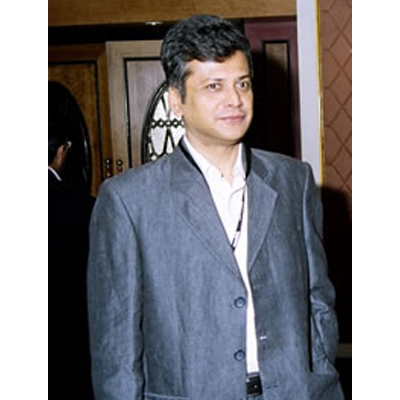
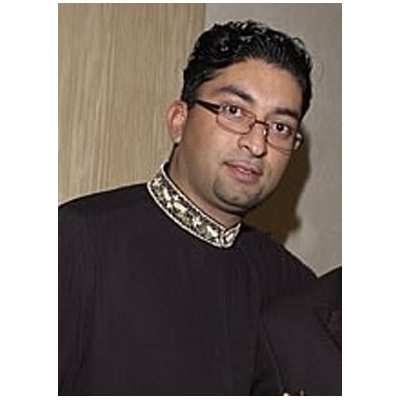
    After joining Sahara One Television in April last year as COO, Purnendu Bose has been able to steer the channel through a period of growth and turnaround. Bose has been responsible for Sahara One Television’s new fresh look and content.


    Bose was also a part of the team that launched Radio City, Star News and Hungama TV.


    Under his leadership, Sahara One has seen an almost 400% jump in revenues and a 78 per cent rise in primetime viewership. In this interview with Indiantelevision.com’s Hetal Adesara, Bose speaks about cricket, the new shows lined up on the channel and more…


    Excerpts:

    Let’s start with the current hot topic of cricket. What do you expect cricket to do for the channel?

    With cricket we found a lot of synergy. First of all, rival channels do not carry our ads and the second thing is that housewives don’t read newspapers. And cricket is religion in our country. With cricket we hope to increase the sampling of the channel and it has all the ingredients — drama, excitement, highs and low — that we aim to offer viewers with our soaps.


    Apart from this, post cricket, our viewership in prime time has gone up by 78 per cent.

    How much has the switch of Sahara One signal to Filmy impacted the connectivity of the channel considering the fact Filmy has just launched?

    There is no loss of connectivity post the switching of signals. We have encrypted our channel and in fact we have almost 99 per cent connectivity in Tam towns. Earlier it was 94 per cent. We just had 48 hours to do the needful and the team did a fantastic job of ensuring availability of the channel across the country.

    Since you have encrypted your channel, are there any plans of going pay?

    Going pay is very much on our agenda but not immediately. Maybe in the next six – seven months, we will go pay.

    Your afternoon band has completely gone off with cricket coming in. Doesn’t that bother you since after cricket gets over, it will have to be brought back and viewers may not come back?

    Our afternoon band comprised repeats of our primetime shows – Woh Rehne Waali Mehlon Ki, Hare Kaanch Ki Choodiyan and Kituu Sabb Jantii Hai. We did not have an afternoon band where we showed other new soaps. Now with cricket on, our loyal viewers are watching those shows on primetime. When cricket does get over in April, we are sure that they will come back to our channel in the afternoon.

    How is cricket being used to build other properties of the channel? One of the things one would expect would be to make a big noise around a new or existing property during this time?

    We already have our key leading ladies from our primetime shows in an ad campaign around cricket. That is being aired on our channels (Sahara One and Filmy) and we also have online ads on the same theme. Apart from that, we keep promoting these shows during the match ad breaks.


    As far as launching new shows is concerned, we do have a few in the pipeline, which will go on air in April – May. These are fiction shows and are tentatively titled Sati and Kya Socha. Sati is most likely to replace Buniyaad when it ends its run in May.

    How would you define 2005 for Sahara One in terms of the programming and marketing initiatives taken? How much has the channel grown in the last one year in terms of viewership and revenues?

    Last year has been good for us in terms of programming. We had success with our shows like Woh Rehne Waali Mehlon Ki, Hare Kaanch Ki Choodiyan, Kituu Sabb Jantii Hai and Kohinoor. Buniyaad is also doing well on the channel. As I already mentioned, our primetime viewership has increased by 78 per cent. On the other hand, our revenues have increased by 400 per cent. We have more than 260 advertisers on board. Clients are also seeing value in our programming and hence are advertising more with us.


    Recently we have divided our programming into two blocks and moved away from classifying shows as fiction and non-fiction. The first time band we will focus on will be the 7 pm – 9 pm one and the second will be from 9 pm – 11 pm.


    These two time bands will be overseen by two programming heads. Naina Toor Singh will be looking after the 7 – 9 pm band and for the time being, I will be looking after the 9 – 11 pm band — until we find a replacement for Kumud (Chowdhary).

    What was the reason behind bringing about this change?

    It’s quite simple. Viewers don’t classify shows as fiction or nonfiction They focus more on the timings of the shows that they want to watch or are interested in. Our aim will be to look at programming from the viewers’ eyes.


    Hence we will be looking at strengthening programming in these time slots. That’s where our new shows will also come in a couple of months.

    Apart from ‘Sati’ and ‘Kya Socha’, another property will be the game show ‘Mission Ek Crore’ with Sanjay Dutt as host. When is it likely to launch and how is the production progressing?

    We will launch Mission Ek Crore some time around the end of April or beginning May. The initial plan was to launch it before the end of this fiscal year. But we have stalled it. One of the main reasons behind this is that we first want to build our programming lineup in the 9 to 11 pm time band.


    Currently we have Woh Rehne Waali Mehlon Ki, Kittu Sabb Jaanti Hai and re-runs of Virasaat and Kadam in this time band. We will be introducing new shows and once that is done, we will launch Mission Ek Crore.

    After the launch of Filmy, how much importance will the movie band on Sahara One hold? Will the premiers be on Filmy now? Would you take off movies from Sahara One and place shows in the weekend or will movies remain a part of the weekend lineup?

    Movies are an integral part of our weekend lineup and they will continue to remain so. We have introduced the concept of multiple premiers wherein the movie will be premiered on Sahara One at 12.30 pm and on Filmy at 3.30 pm and then again on Sahara One at 7.30 pm. So we will be airing the movie premier three times in a day. It’s on the model of a film airing in a theater at different time slots. The idea is that maximum number of people can watch it at whatever time is suitable for them.

    In the GEC space where would you rate Sahara One and why?

    Let the viewers say the same. Recently we did a survey with 2000 general entertainment TV viewers across five cities. And they personified Sahara One Television as the Abhishek Bachchan of Indian television – a star with the potential of becoming a super star. That’s how viewers rate us. And this is a strong endorsement and a matter of satisfaction for us.

    What has contributed to the growth at Sahara One in the last one year?

    It’s not one big thing that matters, but doing thousands of small things behind ever big decision, separates the winners from the others. It is a team effort that has resulted in the change we see on the channel.


    I’ll attribute this to the programming, on-air promos, off air marketing, sales and distribution of the channel. The program strategy of women are real on Sahara One, we have consciously stayed away from stereotypical programs and portrayed the real women that we see all around us.


    The on-air promos strategy has been cutting edge to the brief with simple and crisp messages communicating the channel differentiator. Marketing has burnt the mid night oil to evolve below the line strategies / activities to increase sampling and using mass media to reinstate the differentiator and driving traffic to the channel.


    Sales backed it up with exceptional revenue growth, through innovation thus creating value for money for advertisers leading to over 260 brands advertising with the channel resulting in a 425 per cent growth, in last six months over the first six months of this fiscal. Distribution ensured that we are available in over 96 per cent of 60 million cable viewing homes. All being a team effort.

    Despite the fact that individual shows are doing well on the channel, why does it not reflect in the ratings?

    We have seen an improvement in ratings over the last few months. But the reason why ratings of shows that are doing well are not reflected remains a mystery to us.

    Sahara One was due to launch in the UK before the end of this fiscal. Has that happened as yet?

    No, we have not yet launched in the UK. We want to ensure that we launch in this market with the best partner in order to ensure the maximum reach of the channel from the very beginning. We are in active talks with leading potential distributors which we would close shortly. We will be looking at launching Sahara One there in early 2007, not before that.

    How is the channel faring in the US?

    We have got a good response from our viewers in the US. We get letters from all over the States. In the first six months, we have close to 70,000 subscribers there.