Tag: headend

  • Cable TV, broadband services impacted, as Cyclone Tauktae slams into west coast

    Cable TV, broadband services impacted, as Cyclone Tauktae slams into west coast

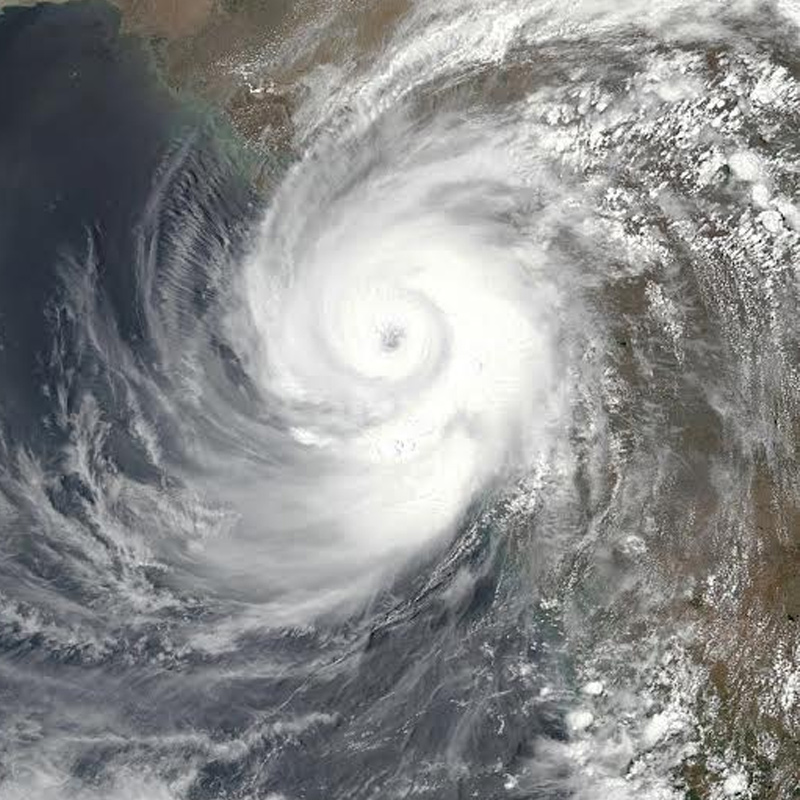
    KOLKATA: Cable TV services and broadband services were impacted across various places in Maharashtra and Gujarat, as Cyclone Tauktae left a trail of destruction along the west coast. Many users took to Twitter complaining about the long hours of network outage. However, both video and broadband services were restored within 12 hours, say cable operators

    NXTDigital MD & CEO Vynsley Fernandes said there were evident impacts on services especially in areas with overhead fibres and overhead wires. But timely weather warnings helped in making arrangements in advance. MSOs had placed teams in strategic locations to address issues and respond. “In most places, the network was restored in the shortest possible time. It did not take more than 12-14 hours,” Fernandes said.

    “There were damages but we were able to mobilise the staff and the workforce immediately. Major lines both for cable and broadband were down,” said Maharashtra Cable Operators Foundation (MCOF) president Arvind Prabhu. “There may still be some minor problems in certain households and we are in the process of addressing those as well.”

    The Konkan region was among the most-affected, as it witnessed the devastating impact of one of the most intense storms to hit the west coast. “Some independent control rooms reported problems in the Konkan region. In Mumbai city, there were issues mostly with fibre cables and overhead cables,” Prabhu added.

    GTPL Hathway cable TV head and chief strategy officer Piyush Pankaj said, the services were disrupted for around 3-4 hours in most areas. “But we were well-prepared this time. Even materials like wires were ready in advance to immediately address damages like a wire being cut or washed up,” he added.

    According to MSOs, cable TV was less impacted than broadband services as the latter not only faced connectivity issues but stress on speed as well. The impact on speed persisted for a longer time.

    Most importantly, the operators say, they learnt from two cyclones of 2020- Nisarg and Amphan after which they incurred huge infrastructural losses, especially in West Bengal. The staff had to invest more than a month to normalise the connections with damage of lakhs of set-top boxes, fibres of few crores.

  • MIB show-causes MSOs on incomplete digitisation info

    MIB show-causes MSOs on incomplete digitisation info

    NEW DELHI: Ministry of Information and Broadcasting (MIB) has issued show-cause notices to those MSOs who have failed to provide digitization details to the government, including the number of boxes seeded in their areas of operation.

    Quoting earlier government directives, MIB told the errant MSOs today in an official note that they had not submitted details of their headends, subscriber management system, number of mandatory TV channels being carried on their networks, apart from the total number of boxes seeded in the market. This information was to have been uploaded by MSOs at a designated place earmarked by MIB.

    “Whereas you have failed to furnish the said details to the Ministry within the stipulated time frame…why not your MSO registration be terminated/canceled?” the government has asked, directing the MSOs to provide the details within 15 days from 31 August 2017.

    Officially, the whole country was deemed digital on 1 April 2017, but in private both the government and industry stakeholders opine that pockets of analog TV distribution still persist and boxes are still being seeded in phase IV areas comprising small towns and villages primarily in rural areas and India’s hinterland.

    ALSO READ:

    DAS: MSOs, LCOs give low figure of STB seeding, official sources admit it’s under 80%

    Arasu DAS licence: Stakeholders fear flurry of similar requests & permissions

  • DAS Phase III: Govt claims 75% STB seeding; MSOs claim 50% across India

    DAS Phase III: Govt claims 75% STB seeding; MSOs claim 50% across India

    NEW DELHI: Even as the Government claimed total success in the switchover to Phase III of Cable TV Digitisation from today (1 January, 2016), there were reports from various multi system operators (MSOs) in different parts of the country who complained of shortage of set top boxes (STBs).
     
    An MSO in a city that came under Phase II in Madhya Pradesh told Indiantelevision.com that he had received frantic calls from some MSOs wanting STBs.
     
    Similarly, an LCO in Mumbai said that he had received similar calls from other parts of Maharashtra. He claimed that there was just around 50 per cent seeding across the country.
     
    The Hyderabad High Court has already extended the Digital Addressable System (DAS) deadline for two months in Andhra Pradesh and Telengana.
     
    Meanwhile, the 13th meeting of the Task Force was told on 30 December that more than 75 per cent seeding of STBs had been acomplished.
     
    Describing the progress as “very positive,” an official release today noted that seeding has taken place in most of the notified urban areas with STBs, while the seeding-dark area were only around 400 out of more than 6000 urban areas, many of which had population below 1000 while the rest were in areas having population of less than 5000. 
     
    The seeding figures as shared in the meeting indicated a high level of seeding in the country, to the extent of more than 75 per cent, excluding Tamil Nadu where certain legal matters have restricted the process of digitisation. This figure was expected to be higher when all the registered MSOs provide their final figures. 

    Broadcasters were advised to ensure that no analogue signals are transmitted in Phase III areas after 31 December but without affecting analogue signals in Phase IV areas. 

    It was unanimously decided at the meeting presided over by Special Secretary J S Mathur that looking to the positive outcome of the Digitisation Phase III exercise and the fact that the notification for the cut-off date for phase III was issued more than a year ago, there was absolutely no requirement for extension of the cut-off date. 

     
    The Task Force, where Joint Secretary (Broadcasting) R Jaya and Adviser Yogendra Pal were present, noted that various awareness campaigns, Task Force and MSO sub-group meetings and orientation workshops for the state and district Nodal officers have been held during this period. A multilingual toll free helpline (1800 180 4343) has also been made operational.
  • “Our strategy is clear, we are ready to associate with everybody but we won’t compromise with our transparency:” Tony D’Silva

    “Our strategy is clear, we are ready to associate with everybody but we won’t compromise with our transparency:” Tony D’Silva

    For Hinduja’s Headend In The Sky (HITS) platform – NXT Digital, which was launched earlier this year, the journey so far has been about tussling it out. From procuring the requisite license from the Ministry of Information & Broadcasting (MIB) to getting broadcasters on board, for NXT Digital, it was no mean feat. Focusing on phase III and IV areas of Digital Addressable System (DAS), the venture has made it very clear that they mean business and are here for the long haul.

    Led by Grant Investrade managing director Tony D’Silva, the venture is investing heavily in order to achieve the goals that have been set. With an aim to spread its network pan India, NXT Digital has deployed teams on ground to reach out to operators. Speaking to Indiantelevision.com’s Anirban Roy Choudhury, D’Silva speaks about the roadmap ahead for NXT Digital, the recent deal with Zee Entertainment Enterprises as well as India’s cable digitisation drive. D’silva makes no bones about the fact that the company is ready to associate with anybody but will not compromise with its transparency.

    Read on:

    How did the industry respond to the launch of NXT Digital?

    The launch of NXT Digital has been very well received by most markets across the country. Initially people were skeptical about what this system was all about. There was a lot of negative publicity in the market spread by people with various vested interests saying that we would face the same problems that Jain HITS faced. I think we have been able to overcome that gradually. And now we believe that we are a platform to stay. We have made substantial investment and have the financial support to invest more.

    What do you think has been the biggest achievement so far for NXT Digital?

    The most important achievement is the fact that we have successfully signed all the broadcasters. The deal with broadcasters is for both active and passive services (with exception of Zee), which is a greater achievement. Now I think we have started to move faster. Initially the progress was a little slow because there was a lot of confusion in the market as what will be the last date of DAS Phase III. However, now that there is clarity on the final date, the demand has seen a substantial growth in terms of COPE mini headend systems and set top boxes (STBs).

    When you speak about demand, is there any particular region where you are witnessing the demand or is it pan India?

    It is indeed pan India. In fact, we are observing a huge demand in phase I and II areas. But considering our decision to not disturb the existing ecosystem, we have decided to focus on phase III and IV markets only as of now. That said, we will review the model whenever needed.

    How robust is your infrastructure to meet the growing demand?

    We built our infrastructure for a particular demand but we have gone well beyond that demand and hence we have to now re-build our infrastructure. And that’s exactly what we will do to meet the demand.

    Infrastructure will certainly not be a problem as far as NXT Digital is concerned. We are evaluating various options when it comes to STBs. DAS Phase IV will have a different affording power as compared to phase III and keeping the diversity in mind, we plan to offer a variety of options when it comes to STBs. By next year we will add one or two more transponders too.

    How do you plan to ensure cordial reach out to the operators?

    We reach out to the operators through various print, digital mediums, live roadshows etc. Moreover we have an on-ground team, which interacts with the operators. I think the proof of the pudding is in the eating. Once cable operators as well as the market have seen our services, there will automatically be a level of satisfaction and confidence and then they will be our ambassadors.

    What’s your take on pricing when it comes to DAS Phase III and IV?

    The content pricing is a function of broadcasters. We follow a business model where we don’t make any money from content. We don’t want to make money from content. The lower the broadcaster gives us, the lower we offer to our operators. Broadcasters unfortunately don’t see a difference between Phase III and Phase IV even though we have been repeatedly appealing to them because there is a clear difference in Average Revenue Per User (ARPU) in the two regions. I think it’s the function of authority overseeing the digitisation process to ensure the fact that the price quoted is fair for the entire ecosystem.

    Is there a clear enough revenue model?

    I think there should be a differentiation in the markets, or another way to look at it is to see what you can afford and pay for it. But I don’t know if the second one is a right option at this stage. And the reason I say at this stage is because the consumer is used to a kind of model and suddenly you cannot give him another rationale and logic. The transition needs to happen after following a logical approach and that is something that I firmly believe in. You cannot bring in a change by being harsh on the end consumers. 

    How many operators has NXT Digital signed with so far? Are you happy with the number?

    We are very close to touching the 500 mark and I am very happy with the number. The number will go up substantially as we come closer and closer to the D-Day. There are a huge number of people who are still trying to figure out the best way forward. The main reason why operators held back was because they were insecure about us not having all the content. After getting Zee on board that problem has been addressed and now we will certainly see the demand going up.

    The other problem that we faced in the initial stages was our broadcaster friends campaigning against us. They went on to many operators and mis-informed them saying NXT Digital will also be on the same track as Jain HITS as we will not provide them the content. I think we have proved that these were just rumours and hence they don’t count anymore.

    What’s your take on the entire digitisation process?

    Not all operators are equipped with higher education and hence they do not understand the actual meaning of digitisation. Digitisation does not mean putting a digital head-end and STBs but it is also about managing the backend, packaging and bundling. On the other hand, there are a lot of smart, intelligent Chinese vendors all around laying the trap and there are a good number of operators falling in that trap maybe because of the government pressure or lack of understanding.

    The other thing I have been telling the government is that when you look at regulation per se, the entire onus of implementing digitisation lies on the MSO. However, we are forgetting that a very important part of the process is the local cable operator (LCO), who is delivering the signal to the end consumer. Therefore billing, receipt collection, ensuring quality, consciousness and other on-ground responsibilities should remain with the LCO.

    The government needs to understand that unlike many other countries, India is not a homogenous market. On a single street you will find slums and multi-storeyed apartments, which are both are consuming content. The LCO cannot go with a fixed price because it will be more than some or less than some. Moreover, he will also have to pay service tax on it. The concept of billing needs to be realistic and practical. There are a lot of things that need to be addressed if we really want to digitise the country. 

    You are also providing local channel facility, which is something that lacks on DTH. Who takes the responsibility of the content put on those channels?

    We have a mechanism through which operators can have as many as eight – sixteen local channels. The benefit is that they are all encrypted and hence piracy is taken care of. We are clear with the operator that whatever content is put up, should follow the Cable Act. If the operator airs pirated content or breaches the law, the broadcasters can inform us and we will switch off signals. We have the power to switch off, which other MSOs don’t and that’s another advantage that we have. We have to understand one thing that the COPE belongs solely to the operator and therefore the liability of whatever is inserted through that COPE is on him. 

    Can DD Freedish capitalise on the on-ground chaos? If there is a blackout, people may just move to DD Freedish?

    DD Freedish is also like any other DTH platform. I don’t think it meets consumer requirements. The consumer knows what he wants to watch. Setting up a DD Freedish and buying an STB is similar investment. It’s just that there is no subscription fee attached to DD Freedish but it has its limitations when it comes to number of channels. And not only channels, the exposure that we offer is far beyond, be it international with global channels, local channels or value added services. So we are far ahead of a platform like DD Freedish and we are not bothered by it.

    You had all major broadcasters on board except Zee. How was your experience inking the deal with Zee?

    A deal that took four months to be signed cannot be called a smooth one. We went to the MIB, the Telecom Regulatory Authority of India (TRAI) and then eventually tussled it out at the Telecom Disputes Settlement and Appellate Tribunal (TDSAT). For many years now we have been requesting TRAI to come up with a standard Interconnect Agreement (ICA). There are so many operators across the country who cannot even afford to go to the TDSAT. It’s not an easy process; he has to come to Delhi, hire a lawyer and it needs a lot of financial backup. The deal signing with Zee was a learning experience for me. It was a case of dealing with people who say something and do something totally different. It was a clear case of mis-interpretation of law.

    What is the way forward for NXT Digital?

    Value added services are important to ensure growth and now we are focusing aggressively on that front. I want to make one thing very clear, which is that the Hinduja Group will fight this till the very end. We are not going to be tempered over by anybody in this industry. If there is a genuine problem or concern, we are more than happy to sit and discuss. At the same time, no matter what, we will not be stepped on for nothing. I firmly believe that the whole is always bigger than the individual. If we have all the broadcasters with us and one against, there has to be some vested interest. Our strategy is clear, we are ready to associate with everybody for business or betterment of the industry but we won’t compromise with our transparency. 

  • Catvision looks to invest Rs 10 crore in FY15-16

    Catvision looks to invest Rs 10 crore in FY15-16

    KOLKATA: Noida-based Catvision Limited, a manufacturer, re-seller and system integrator, has earmarked an investment of up to Rs 10 crore in the current fiscal 2015-16.


    The company aims to install 200 headends by December 2016 and manufacture around 15 lakh set top boxes (STBs) by 2017 fiscal end and the investment will be for such manufacturing and installation.


    The company has installed more than 60 headends till now in the country. Plans are afoot to install 200 more headends by 2016 through its joint venture (JV) company – Catvision Unitron. On the STB front, the company aims to manufacture around 15 lakh STBs to be used in the third and fourth phases of cable TV digitization process in India, which is likely to be completed by December 2016.


    “We aim to invest up to Rs 10 crore in the current fiscal 2015-16 on STB manufacturing and headend installation,” Catvision managing director Athar Abbas tells Indiantelevision.com.


    With the installation of the 200 more headends, Catvision is aiming about 25 per cent share in the headend installation vertical by 2016.


    Catvision Limited signed an agreement with Belgium’s Unitron Group NV, to set up a 50:50 joint venture company – Catvision Unitron in India which would develop AV encoders for the cable television industry. Now the JV develops CATV digital systems and products with the latest world-class technology. Unitron Group NV of Belgium has years of experience in the state-of-the-art digital head-end technology, and is one of the leading companies in Europe in providing solutions for TV distribution to multi- dwelling units and residential complexes.  


    While Catvision has number of years of experience in the CATV industry in India, a market that is migrating to digital technology totally by the end of 2016.


    By aiming to manufacture around 15 lakh STBs to be used in the third and fourth phases of cable TV digitisation process in India, the company is looking at a market share on one per cent, said Abbas.


    “Now, with extended deadline of cable TV digitization process, the industry would be able to cater to all the needs of the fragmented markets. By the end of 2015-16, we are looking at five lakh STBs and by 2016-17 we aim to manufacture another one million STBs,” Abbas further says.


  • Kolkata LMOs CVNO project likely to rollout from 15 December

    Kolkata LMOs CVNO project likely to rollout from 15 December

    KOLKATA: The year seems to be ending on a good note for the Kolkata based last mile owners (LMOs), who post digitisation, have been wondering if they would still have ownership of their customers. The LMOs can now breathe a sigh of relief as the cable virtual network operator (CVNO) is taking shape and should be up and running by 15 December 2014.

    As reported earlier by Indiantelevision.com, the LMOs apart from uniting to set up their own control room and headend have also tied-up with existing DAS license holders. This apart, in order to speed up the launch, the LMOs are now also talking to the Set Top Box (STB) and headend suppliers and other vendors in India and abroad.

    The LMOs have already signed an agreement with a DAS license holder, who will levy a minimum price against every STB. If sources are to be believed, more than 150 LMOs have signed and given consent with an entry fee.

    Not revealing much on the operation model Cable Operators Sangram Committee general secretary Apurba Bhattacharya says, “It would be affordable to subscribers.”

    Tying up with existing license holders ensures LMOs the power of billing subscribers, distribution of package according to the choice of viewers, share of carriage fee and ownership of STBs, further explains Bhattacharya.

    There are some DAS license holders who might go ahead and increase their topline and bottomline by strengthening their presence in the market.

    When asked if the LMOs are setting up the headends, other LMOs, who are part of this initiative inform, “The concept is very clear, to either set up our own headend or to partner with MSOs. The investment for every LMO will be according to how much they can afford. In fact some financiers are also ready to invest.”

    He further explains that the investment would be based on the size of the LMO’s network and requirement of STBs.

    LMOs are the founder of this business. “It can be assured that the quality as well as performance will be competitive with the existing MSOs,” he points out.


  • Kolkata LMOs in talks with STB and headend vendors

    Kolkata LMOs in talks with STB and headend vendors

    KOLKATA: The last mile owners (LMOs) in Kolkata are gearing up to stake claim on their subscribers. Apart from uniting and setting up their own control room and tie-ups with existing DAS license holders, the LMOs have initiated talks with the STB and headend suppliers and other vendors in India and as well as abroad.


    The LMOs have already made an agreement with a DAS license holder, who will levy a minimum price against every set top box (STB). “Recently, more than 150 LMOs signed the deal. And thousands of LMOs from different MSOs are also showing interest to join in this mission,” says a LMO on the condition of anonymity.


    “The LMOs have already formed a company as they intend to counter the MSO business. We are also trying to take control over our business,” informs Cable Operators Sangram Committee general secretary Apurba Bhattacharya.


    He adds, “It is a survival battle; either we set up our own headend or partner with MSOs. As for the investment, every LMO will put in the amount according to their pockets. In fact, some financiers are also ready to invest in it.” He further explained that the investment would be based on the size of LMO’s network.


    Tying up with existing license holders ensures LMOs power of billing to subscribers, distribution of package according to the choice of subscribers, share of carriage fee and ownership of STBs.


    There are some DAS license holders who might go ahead and increase their topline and bottomline by strengthening their presence.


  • 100 Kolkata LCOs group to set up a new headend

    100 Kolkata LCOs group to set up a new headend

    KOLKATA: One would imagine that cable operators would be a happy lot, considering the country is on the threshold of the last two phases of digitisation. However, the truth is LMOs (last mile operators) or LCOs are unhappy with the Telecom Regulatory Authority of India (TRAI) ruling on consumer application forms (CAF) and billing, which according to them, makes multi system operators (MSOs) the owners of consumers.

    Earlier this week, indiantelevison.com reported how a group of LCOs and independent MCOs met the Parliamentary Committee on Information and Technology in New Delhi to put forth their views on the subject.

    The latest, sources reveal, is that around 100 Kolkata-based LCOs – some affiliated with Siticable, others with Manthan – have come together and invested between Rs 2 and Rs 3 crore toward setting up a headend and accompanying infrastructure at Salt Lake College More in the city.

    This group is believed to be in the process of setting up a cooperative venture and is eager to start its own services. With the LCOs’ rising concern over MSOs becoming the owners of their hard-won subscribers, the development does not come as a surprise to the industry.

    However, “MSOs are creating hurdles for these LCOs,” sources added, without divulging any details.

    Swapan Chowdhury, convener of the Kolkata Cable Operators Digitalisation Committee of the Association of Cable Operators confirmed that this new cooperative had indeed been formed and that the LCOs might name the service Bengal Brand. “It is a difficult time for LCOs in Kolkata as the MSOs are not allowing them to go ahead with their plans,” he said.

    Rajiv Sharma, lead analyst (telecom and media), HSBC Securities, opined: “The local cable operators are also thinking of becoming MSOs by coming together… Not good news for the stock prices of existing MSOs which have raised funds from the public even if LCOs fail eventually.”

    Namit Dave, cable TV analyst, stated that bunching together was probably a good option for smaller operators. “A 200 channel headend costs nearly Rs 1 crore; a smaller operator with subscribers running into a few thousands would not find the investment profitable in a small town. However, if operators were to get together, it could end up being a profitable venture,” he pointed out.

    Kolkata-based Manthan Broadband Services director Sudip Ghosh sees more cable ops coming together in east India. Says he: “Players with a subscriber base of more than 500,000 may not consolidate headends. But Kolkata can see the consolidation of players with others having a subscriber base of around 300,000-400,000.

  • Dish not about to let DTH first mover headstart go Sky way

    At Zee‘s office in Noida Film City, on the outskirts of Delhi, which also houses the news, DTH and sports operations with a state-of-the-art playout facility, the atmosphere these days is electric. Meetings are being held all over the place with senior management discussing restructuring, business strategies and increments in hushed tones.

    DTH business head and a younger brother of Essel Group chairman Subhash Chandra, Jawahar Goel, despite the surface cool is unable to contain the excitement even as he rushes back for an appointment with Indiantelevision.com from a management meeting.

    “These are exciting times,” he says, settling down in his plush wood-paneled office. Even as he quickly checks his e-mails on the wi-max enabled laptop, he shoots back with confidence, “In spite of Star and Sony channels‘ absence on Dish TV, we are selling 3,000 connections per day these days. This augurs well for us, though the regulatory environment could have been better.”

    Concurring with Goel is another senior executive of Essel Group, which is the parent of Zee and sister concern ASC Enterprise that holds the licence for DTH service in India.

    “We do expect competition in the middle of (calendar year) 2006, but I feel there‘s space for all players in the immediate future as DTH stands to take away some market share from cable,” says Rajiv Garg, chief executive, finance and corporate strategy, Essel.

    It is this confidence that a business could be built up even against odds and with looming competition that pumps up the adrenalin of the crack team at Dish TV, the brand name under which the DTH service is marketed.

    According to Hong Kong-based media research firm Media Partners Asia (MPA), India is set to emerge as Asia‘s leading revenue generating pay-TV market by 2015 with multichannel video industry (cable, DTH and IPTV) turnover growing from $3.6 billion in 2005 to $7.2 billion by 2010 and $10.5 billion by 2015.

    However, projections on DTH vary and depend a lot on progress (or the lack of it) made on the regulatory front (Dish‘s Goel bookmarks this as an important aspect).

    For example, MPA feels the Indian DTH market is likely to grow to Rs 45 billion ($ 1 billion) by 2015 on a base of slightly over 11 million subscribers and 7.8 million customers by end 2010.

    Contrast this against what others say. According to Sanjeev Prasad, head of equity research at Kotak Securities, the DTH market could grow to only 4 million “pay” homes or $300 million by FYE March 2010, while KPMG projects 8.6 million subscribers by 2010.

    But what most agree on is that digital television, driven more by DTH in India, has the potential of changing the electronic media landscape. In such a scenario, Dish TV, the country‘s first private sector DTH platform, stands to have a beginner‘s advantage. That‘s what most people feel.

    THE DISH STORY SO FAR
    Dish TV was launched in October 2003 by Essel Group after the Subhash Chandra-promoted ASC Enterprise Ltd, the licence holder, got all necessary permissions.

    Since DTH allows users to access a variety of digital television channels directly from the satellite without a local cable service provider, the initial thrust of Dish was in rural areas and those places, like the hilly regions of Himachal Pradesh and interiors of the desert state Rajasthan, where cable TV was a rarity and the terrestrial transmission of pubcaster Doordarshan was fuzzy.

    Thus, providing a superior viewing experience to subscribers who had not viewed anything of the sort, Dish TV built up its subscriber base; albeit slowly. The focus now has broadened to encompass urban areas where the spending power is high.

    Over a period of time, the penetration of Dish TV has increased significantly in the country. It has close to 1 million subscribers presently and is adding approximately 100, 000 subscribers every single month, says Goel. “I am quite happy with the (monthly) rate of growth. Such a ramp has been witnessed only in few top DTH platforms in the world,” he points out.

    With existing features like decent quality boxes, which support features like electronic programme guide, parental lock system and multiple audio feed (at the moment FM radio) Dish TV boasts of a capacity of carrying up to 400 channels and also giving the gaming freaks an opportunity to play video games.

    However, at the moment, technical constraints and uncertainty on the regulation front has compelled Dish to keep the offering to modest levels at conservative prices. Goel admits that channel capacity cannot be expanded at the moment, partly because of lack of transponder space and partly because selecting niche content for a DTH platform from the global market is not easy.

    “If we want to turn into a premium service, we should also have premium content. But clarity on that can only come from the sector regulator (that frowns down upon exclusive content on a delivery platform presently),” he adds.

    THE CHALLENGE AHEAD
    But from this point onward the task of Dish TV becomes that much more difficult as Tata Sky, a 80:20 joint venture between the Tatas and Rupert Murdoch, gears up to unleash its DTH service in the second half of 2006, signaling stiff competition.

    Though Tata Sky, in true Tata style of functioning, is keeping things close to its chest, reports filtering out do indicate that the service would focus on niche content, quality of service and aggressive marketing — some of which might be innovative like supplying one master DTH connections to high-rise residential complexes that can be then split up as per the local need.

    Tata Sky also hasn‘t given up the proposal of heavily subsidizing the set-top box, which will help the service gain entry into households quickly.

    Competition certainly there would be, though Dish TV CEO Sunil Khanna puts up a brave front by saying, “Competition? What competition?

    On a more pragmatic note, he goes on to point out that a change is taking place in the C&S dynamics in India where slowly analog is giving way to digital mode of delivery and transmission that will be primarily driven by DTH and to a lesser extent by broadband and IPTV.

    “If DTH is to play such a big role (in the change), all players have to grow as it‘ll help create market awareness about such a service. Tata Sky or other players‘ entry would only help Dish TV‘s growth,” Khanna surmises.

    There‘s certain logic behind such utterances. The entry of another DTH player is also likely to coerce sector regulator Telecom Regulatory Authority of India (Trai) to revisit an earlier mandate on making available all content to all platforms.

    This mandate has been openly flouted by some broadcasters who have delayed making available their channels to Dish TV on the pretext that continued commercial negotiations
    are yet to be concluded. This also means that Dish TV‘s subscribers are unable to get all the content available on cable services at present.

    “Trai‘s initiatives have been challenged in the court, while the government has its own reasons to be non-committal on issues like CAS and must provide. It is my belief that for the broadcasting industry to grow exponentially over the next five years, more government and self -regulation is needed,” Goel says.

    Consumer acquisition and investment on programming and packaging is another aspect that Dish TV needs to address as it‘s going to play a vital role in the Indian scenario.

    “The next 12-18 months and beyond will see a land grab in the distribution area, initially kick started by DTH and the launch of Tata Sky. So clearly Dish TV will require more investment in the future, particularly as STB subsidies and programming acquisition costs scale up,” says MPA executive director Vivek Couto.

    And, Goel partly agrees that customer acquisition and box subsidisation would take a toll on any DTH player as unlike in the DTH‘s developing stages in countries like the US and the UK, exclusive content is unlikely to be THE driving force of such a service in India.

    A unique market in every sense, in India it has to be combination of quality of service, good packaging of available and niche content, clever pricing of this content and pushing it into customers‘ homes by absorbing part of the cost of the box or the total hardware needed for a DTH service.

    The proverbial beginner‘s advantage may play its role up to an extent in Dish TV‘s growth. Take, for example, the cost of the box itself. While the imported boxes from Korean vendors is costing Dish TV on an average $ 38 (the average price might come down as the demand increases), industry sources say a box is likely to cost Tata Sky between $ 60-$ 65.

    “There‘s always a price advantage to the first mover. We had acquired the customer in the beginning when we paid lower satellite space rates. Though we did not experience negative cost of acquisition, things have changed now. Even Insat is unable to provide enough space to all the DTH probables now,” Goel points out.

    A Dish TV set-up box is now available in the market at an entry price of Rs 2,990 for 75 channels for three months, which also includes the monthly subscription fee for the period. The scheme was started in April.

    After this the customer has the option of paying Rs 107 per month for around 75 channels. The prices go up to Rs 300 per month for more than 100 channels, including the radio services. The company had priced its services initially in such a way as to leave some room for manoeuvring later.

    It‘s tactics like these that have kept the competition on the edge, compelling it also to review its options. Says MPA‘s Couto, “Dish‘s pricing structure has made Tata Sky revise its own plans. I‘m sure Dish will scale it (the price war) up further and then Tata Sky may respond.”

    Aware that what the likes of MPA are saying that intelligent packaging of content has some merit, Dish TV has devised various tiers also like Dish Welcome (introductory offer), Dish Bioscope (specially categorized movie channels like Zee Action and Zee Classic) and Dish Goal (for fans of European football).

    So, Dish Plus package, for example, comes packed with a wide selection of national and international channels at Rs 125 per month and offers channels like Zee Studio, HBO, TCM, MCM, Reality TV. Dish Bioscope, featuring Zee Premier, Zee Action, Zee Classic and Pakistani film channel Filmazia, costs Rs. 55 per month. News is packaged in Dish News with Zee Business, Euro News, Euro Sports News, NDTV 24×7, CNBC TV18, Awaaz and CNN Headlines News. The cost: Rs 60 per month.

    Dish Pick is an a-la-carte package that allows subscribers to pick and choose extra regional channels. Two channels come for Rs 30 per month, five channels for Rs 50 per month and all regional channels come for Rs 100 per month. (All the prices listed here are exclusive of taxes.) Channels included in this package include Zee TV, Sahara One Zee Punjabi, ETV- Rajastan, ETV – UP, ETV – Bihar, Geo TV, Zee Telugu, Jaya TV, Jeevan TV, Akash Bangla, Zee Bangla, Zee Gujarati and Marathi, India TV and NDTV India.

    NEW DISH INITIAIVES
    Knowing fully well that it has to continue reinvent itself, not only prices of Dish TV service has been dropped, but the retail networks too are being strengthened, apart from pushing digital video recorders (DVR) as a value added service.

    Dish, which presently has about 6,000 dealers around the country, is beefing up its network with an additional 3,000 dealers of HCL, the computer hardware company that is also a distributor of Nokia handsets in India.

    As per a yet-to-be-announced pact with HCL 3,000-odd HCL dealers would be responsible for selling, installing and servicing Dish TV hardware at customer end.

    “We expect that such non-exclusive deals will help us reach out to more customers and service them better,” Goel says, hinting that in the near future other such pacts may be concluded.

    Apart from this, the company is also in the process of launching anew its DVR service with focus on Delhi and Pune. Selling at Rs 16,000, a DVR will allow a subscriber to download up to 200 movies, apart from other Dish programming, to be watched at leisure.

    “We want to focus on some select cities like Delhi with the DVR offering before making it nationally available. This is a new concept and we want to do some sampling with subscribers,” Dish CEO Khanna says.

    Towards the end of June, Dish will launch its gaming and middleware facility that will allow DTH subscribers to play not only with games, but also while watching traditional television.

    With the help of technology partner Open TV, Dish plans to introduce middleware tech wherein a viewer can access background information about a cricketer, for example, who‘s playing in a match telecast on TV at that moment. (pix-Courtesy DishTV)

    However, one of the most exciting things explored by Dish TV is the introduction of pay-per-view concept in India in the real sense where subscribers of pay television have the option of watching a programme for a particular period of time after making payment for the same.

    Hoping that the Discovery-Sony Entertainment joint venture One Alliance will come on board soon, Dish is exploring whether exclusive Discovery programming (like excavation of Titanic or a famed Egyptian tomb) can be made available to Dish subscribers on selective payment basis.

    “Pay per view is a concept that‘s yet to mature in India. For that content is most important. But we are examining whether we can try out this concept with Discovery once it joins the Dish platform,” Goel informs with excitement written all over his place.

    It‘s quite apparent that Dish TV is far from being complacent. And, the announcement that at a later stage the whole DTH operation, restructured as part of an over all Zee Telefilms rejig, might be listed on the stock exchange has given the company an impetus to ramp up its activities.

    While Khanna is effusive that in the coming months Dish TV will become “more aggressive” on all fronts, MPA‘s Couto feels the restructuring has come at the right moment. “…a spin off could well be the ideal way to induct strategic and/or private equity financing in DTH.” After all, investments have to be made if the Dish operations are to be ramped up.

    (Rs 45 = 1US$)