Tag: HDR

  • Challenges we face in the production and broadcast industry are universal: Stefan Pfütze

    Challenges we face in the production and broadcast industry are universal: Stefan Pfütze

    Mumbai: The second day of the Broadcast India Show at the Jio World Convention

    Centre in Mumbai pulsated with the vibrant energy of the broadcast media and

    infotainment sectors. In an industry where technology evolves at lightning speed, the

    impact on broadcast and entertainment is profound. For over 30 years, the Broadcast India Show has served as an interactive platform, showcasing groundbreaking shifts in infotainment technology while connecting attendees with the innovators behind these marvels.

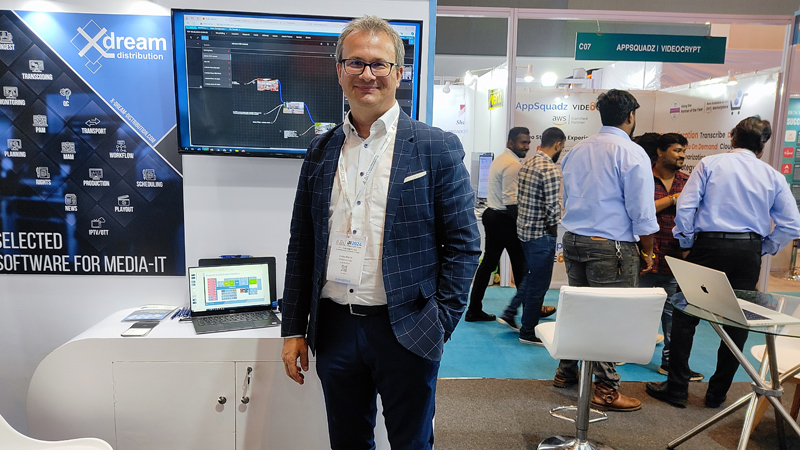
    While exploring the booths, we were particularly drawn to x-dream-group, a full-service provider for the media industry as well as for any commercial or public organisation that utilises audiovisual media. Their clientele includes post-production facilities, broadcasters, telecom operators and public entities.

    Indiantelevision.com’s Rohin Ramesh at the sidelines of this event, caught up with x-dream-group managing director Stefan Pfütze, who shared insights about his organisation with a beaming smile.

    Edited excerpts

    On brief overview of your organisation:

    We are known as x-dream-group, which encompasses three distinct types of activities. One of these is x-media, our company that specialises in software integration, focusing on creating end-to-end solutions using products from other software providers. We are solely dedicated to software and do not engage in hardware manufacturing.

    Through our work at x-dream-media, we’ve identified several established engineering companies that offer excellent products—many now in their second or third generation—but lack international market reach. To address this gap, we established an umbrella organisation called extreme distribution, which serves as a brand ambassador and master distributor for these companies. I am currently representing these various brands at Broadcast India.

    On elaborating some of the productised solutions you have developed for your customers:

    In our journey of development, we began with plugins for transcoders, which have become less relevant over time. From that foundation, we created a business called 1 GUI—a centralised user interface that integrates with various tools such as transcoders, ingest tools, quality control tools, workflow tools, and file transport tools. This interface serves as a cockpit for managing workflow and job queues.

    Over time, we expanded our offerings by adding a workflow starter and a workflow layer. Our latest release is the broadcast suite, a desktop application designed for playback, recording, and multi-viewing—targeted at professional AV users and broadcasters in need of quality control and engineering solutions. While it may not function as a traditional video server in a server room, it provides similar capabilities on a desktop level.

    Our flagship product, extreme fabric, is an end-to-end solution tailored for the media industry. Unlike our software integration approach, which involves customising ecosystems for clients, extreme fabric is a ready-to-go, pre-designed, pre-integrated, and pre-configured solution. Users can simply download and install it to establish a fully functional TV station.

    This may sound ambitious, but our primary target customers are tier one broadcasters who seek custom solutions and want to collaborate closely with us. For tier two and tier three broadcasters, as well as clients from sectors like corporate, banking, insurance, and government, the need is different. These customers often lack broadcast engineering capabilities and require a ready-made solution. When we ask them about their production business processes, they often look at us in confusion—many have little understanding of the necessary workflows.

    We showcase our capabilities on our website and at conferences and trade shows, aiming to enhance the overall process. This challenge is prevalent not only in emerging markets but also in regional TV stations, where organisations may have one or two knowledgeable individuals but lack the capacity to manage large integration projects. They require a more accessible solution. As I travel to various countries, I often hear the excuse that “it’s different in our country” regarding technology, habits, business processes, or even infrastructure. I believe that the challenges we face in the production and broadcast industry are universal whether in India, the Middle East, Europe or America.

    On identifying and addressing the specific needs of your clients:

    To identify and address the specific needs of our clients, we begin with clear demands. For example, when selling individual products, a customer may say they need software to integrate their central ingest desk with their newsroom and post-production systems. From there, we ask probing questions: “Do you also manage remote offices? What about live feeds or social media content?” This often leads to a realisation of additional needs they hadn’t considered.

    When it comes to transcoding, some clients initially believe that open-source solutions are sufficient. However, as they aim for advanced features like 4K Ultra HD, HDR colour spaces, or delivery to professional platforms, they soon realise they must meet strict requirements, such as delivering certified ProRes formats to companies like Apple. This is where we step in to provide the necessary support.

    Monetisation is another crucial area where we see demand for features like ad insertion, graphic overlays, audio track management, and subtitle management—more sophisticated needs than the basics. When we engage with clients, particularly during visits or trade shows, we often hear about inefficiencies in their workflows, such as the inconvenience of using USB devices to transfer content between departments. We can certainly improve these processes, especially for companies with distributed setups that include on-premises installations, cloud services, and multiple facilities across different cities.

    Another significant project category involves managing the business side of operations, particularly through media asset management systems. These systems serve as essential repositories, often involved in both the beginning and end of media business processes. Many vendors offer mini MAM systems for temporary storage, but we approach media management on a larger scale. We focus on publication strategies for marketing, advertising, and B2B or B2C content sales. For B2C, this includes video-on-demand portals, while our B2B offering, called the media market, enables broadcasters and content producers to sell their content online to a global audience.

    Editing is also a critical aspect, where our goal is to manage the bridge between business processes and the editing suite. This includes project management, approval workflows, and remote editing capabilities. Our product portfolio consists of software solutions, allowing customers to select their own hardware, rather than being tied to specific storage systems.

    Additionally, we have introduced a new component we refer to as “storytelling,” which functions as a newsroom system. This terminology resonates with clients outside the media industry, making it more relatable. Our applications are designed to be cross-media, supporting not just TV but also radio, web, and social media. This means that our playout solutions are essentially a form of publication across multiple platforms.

    When it comes to integrating these production systems, aside from editing challenges, we also face issues like ensuring compatibility between various tools and managing different workflows efficiently. We overcome these challenges through thorough assessments of client needs, providing tailored solutions that enhance their overall operations.

    On some common challenges you face when integrating an isolated production system:

    As software developers, it’s natural for us to explore the APIs of various software solutions. Today, most applications typically offer RESTful APIs, though some might have soft APIs, database connections, or file-based integrations. About 99 per cent of software now utilises rest APIs, and when we integrate systems, we prefer this approach because it provides optimal control, monitoring, and failure handling when working with third-party software.

    A common scenario I frequently encounter among system integrators and other vendors involves the use of watch folders. Many systems still rely on a chain of watch folders, where one application drops files into the watch folder of another. This approach is outdated and leads to significant operational overhead, particularly in process management and troubleshooting.

    Another prevalent trend is the transition from on-premises solutions to cloud-based systems. For many of our projects related to publication, we emphasise a hosted approach. However, this doesn’t necessarily mean a public cloud; it could involve dedicated or boutique hosting solutions with either physical servers or virtual machines. While public clouds often rely on virtual machines, they may not be cost-efficient for long-term engagements—though they can be suitable for short-term needs.

    We are witnessing a shift from fully on-premises elements, such as archives and publication systems, to remote data centres. This transition is driven by improved network connections, enhanced security, and better hosting capabilities, including power supply and cooling. Offloading hardware management allows for 24/7 operations without constant oversight, which is a significant advantage of a hosted approach, whether private or public.

    We support this trend through hybrid systems. For instance, high-resolution operations can remain on-premises, where the personnel and content are physically located, and archives may still reside on LTO tapes. Meanwhile, we can move the access components of the system to a hosted solution, connecting both sides to function as a single entity.

    The challenge today is ensuring that these systems operate seamlessly together. Currently, the approach often results in a disruption; the inner system handles publishing to the outer system while the outer system feeds information back to the inner one. Unfortunately, these remain separate systems that do not behave as a unified business process, despite essentially being one.

    On some upcoming trends:

    Discussing trends can be challenging. We’ve seen fads like 3d technology, ultra hd, and hdr come and go. In hindsight, many of these were just hype—something everyone talked about but few actually implemented. Today, most television remains hd and sdr. However, AI is different; it’s here to stay. Currently, we see practical applications like transcriptions and translations being effectively utilised.

    In our portfolio, we offer a product that provides live subtitling with translation capabilities. This tool is actively used in practice, and customers are willing to invest in it because it’s reasonably priced, making it a sensible option.

    One trend I observe is the shift toward on-premises artificial intelligence. Many customers are often unaware of their options and feel compelled to rely on public cloud solutions simply because that’s what vendors are promoting. However, the same software can often be deployed on-premises, which can be advantageous. While it may be challenging to navigate training models and related complexities, the cost savings on data traffic, time, and hosting and processing fees can be substantial.

    Artificial intelligence will also significantly impact storytelling in news, but I view this with some caution. There’s a common misconception that you can simply input a topic into an artificial intelligence and receive a well-formed story. In reality, we still need journalists and reporters in the field, gathering information and engaging with people. Artificial technology can assist in processing and shaping that information into a coherent story, but it cannot create news on its own. While artificial intelligence can generate lyrics or fiction, the essence of news relies on human insight and experience. Ultimately, it is the human mind that remains irreplaceable.

  • Netflix Now Supports HDR on Windows 10

    Netflix Now Supports HDR on Windows 10

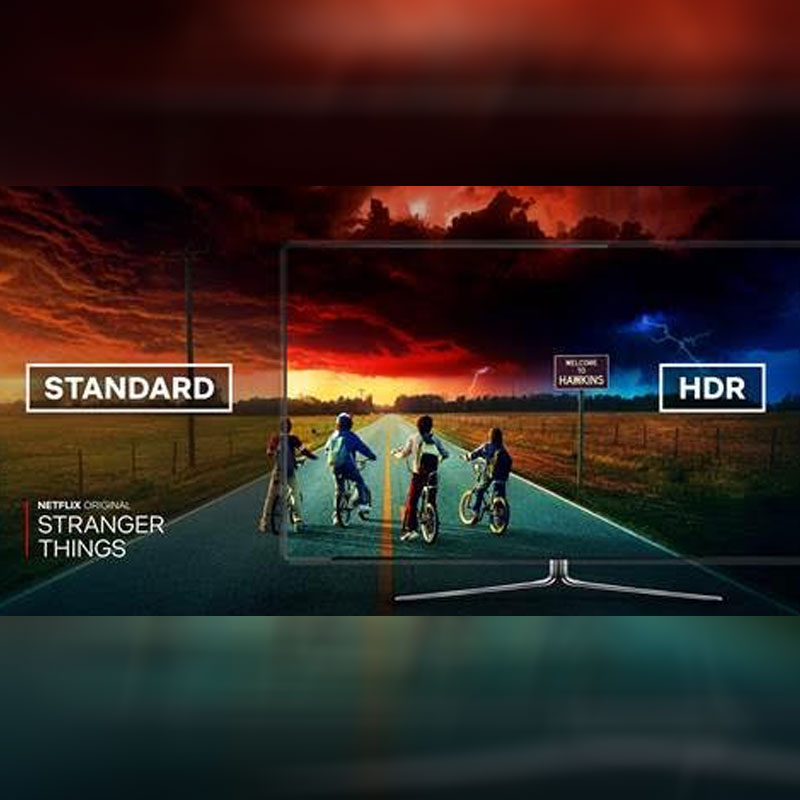
    MUMBAI: Netflix announced the addition of High Dynamic Range (HDR) support on Windows 10 for both the Edge browser and the Netflix app. With this update, Netflix members who have a supported device and a premium plan can enjoy amazing Netflix movies and shows in HDR. With HDR enabled, fans can immerse themselves in the delicious colors of Chef’s Table, the terrifying depths of the Upside Down in Stranger Things 2, and enjoy the upcoming Netflix film Bright starring Will Smith. And this is just the beginning! Today, we have over 200 hours of HDR entertainment, and in 2018 even more HDR PCs will enter the market and support the growing number of Netflix originals.

    This feature is the culmination of a multi-year collaboration between Netflix and a number of industry partners. Intel’s 7th generation and higher CPUs provide that capability needed to play the Netflix HDR10 encodes. In addition, both Intel and Nvidia developed GPUs that use 10 bits-per-channel for each of the RGB colors, increasing the color space that can be represented. With this new hardware available in consumer PCs, Netflix and Microsoft partnered together to put the software pieces in place. Microsoft added the necessary OS and browser changes in their Windows 10 Fall Creators Update and our engineers integrated against those APIs to complete the video player work.

  • Futureworks implements HDR and ACES

    NEW DELHI: Post-production facility FutureWorks is the first in India to set up HDR (High Definition Range) grading and mastering. The post-production house recently installed Sony’s Flagship HDR Monitor BVM-X300, staying at the forefront of technology and offering the most premium.

    With the digitisation of content and with streaming channels like Amazon and Netflix implementing newer standards, FutureWorks latest offering certainly gives them an edge over their competitors.

    FutureWorks senior colorist Andreas Brueckl said, “HDR simply looks stunning and so realistic. Compared to older standards like REC709, we preserve highlights and shadow details to the maximum. Combined with our ACES pipeline on Baselight we can offer film style grading on the highest achievable level.”

    HDR in TV allows one to display images of a higher latitude, larger colour gamut and higher contrast closer to what the human eyes can see in reality. Regular TVs display a maximum brightness of 100 nits while HDR TVs can show unto 1000 nits or even 4000 nits.

    Andreas said: “ACES is a new standard for DI and file interchange, developed by the Academy of motion pictures. There are various benefits of ACES which include up to 32 stops of dynamic range and color gamut wider than the human eye. It also enables us to grade in film style with no limitation and compression.”

  • TCL reveals new TVs with top tech featuring Dolby vision

    TCL reveals new TVs with top tech featuring Dolby vision

    TCL reveals newLAS VEGAS: TCL®, one of the world’s largest and America’s fastest-growing television brand, today announced an innovative portfolio of new products at the 2017 International Consumer Electronics Show (CES). The latest additions feature Dolby Vision™ high-dynamic range (HDR) technology for powerful imaging, advanced LED phosphors to experience vivid colors closer to reality, and Contrast Control technologies to yield deeper blacks and brighter whites. A total of 25 new TCL Roku TVs are coming to the North American market this year across three series – C, P, and S – touting even better picture, sound, design and content than before. TCL’s C and P series meet the highest standards for content with stunning picture quality via Dolby Vision. Using Dolby’s universal HDR solution, these sets will support both Dolby Vision and generic HDR (HDR10), providing consumers maximum choice when it comes to content.

    “We’re excited to partner with TCL to deliver Dolby Vision to more consumers than ever
    before,” said Dolby Laboratories senior vice president – consumer entertainment group Giles Baker. “With Dolby Vision, you are able to enjoy a premium entertainment experience that is more life-like. Preserving the artistic intent of the content creator, watching Dolby Vision is more like looking through a window than at a screen.”

    TCL continues to build on its partnership with Roku which began in 2014. The 2017 4K HDR TCL Roku TV models combine premium picture quality and industrial design with the latest version available of Roku OS and its extensive line-up of streaming channels – more than 4,500 channels and 450,000+ movies and TV episodes. With Roku OS 7.5, TCL Roku TVs can pause live over-the-air programming as well as stay current with automatic software updates providing new channels and features to offer an exceptional smart TV experience.

    TCL Roku TV C-Series: Contemporary Design

    The high-end C-Series marries stunning 4K high-dynamic range and super slim, elegant design for an upscale TV experience. The set supports Dolby Vision, which delivers the ultimate HDR imaging experience. Dolby Vision delivers images that are brighter than those that can be seen on today’s standard TV sets, deep darks that provide a new level of richness and precision, as well as expanded contrast while still maintaining lifelike color and detail.

    Additionally, HDR Dynamic Contrast allows the contrast to be optimized for each HDR scene, delivering brighter whites and deeper blacks. They also feature wide color gamut with advanced LED phosphor for more realistic colors, brighter highlights and increased light-to-dark contrast. The C-Series smart TVs are equipped with TCL 4K Creative Pro up-scaling so viewers can enjoy their existing HD content with increased detail and realistic clarity, an enhanced Roku TV remote with headphone jack for private listening and voice search, high-speed 802.11ac wireless and Ethernet networking for faster streaming, and three HDMI® 2.0a ports with HDCP 2.2 so users can enjoy optimal functionality.   The C-Series will be available this Spring with sizes ranging from 49 to 75 inches.

    TCL Roku TV P-Series: Powerful Picture PerformanceTCL combines superior 4K UHD picture quality with Dolby Vision, which delivers the ultimate HDR imaging experience, in the P-Series. With HDR Contrast Control Zones, contrast is individually optimized across 72 zones to achieve deeper blacks and brighter whites. A wide color gamut with advanced LED phosphor steps up playback performance with exceptional colors, brighter highlights and increased light-to-dark contrast. Furthermore, P-Series TVs come packed with TCL 4K Creative Pro up-scaling, an advanced remote offering voice search and a headphone jack for private listening, high-speed 802.11ac wireless and Ethernet networking, and three HDMI 2.0a ports with HDCP 2.2.  

    Delivering premium Dolby Vision HDR picture quality at a great value, the 50 inch model will launch at $499.99 as part of a lineup that ranges from 50 to 65 inches.

    TCL Roku TV S-Series: Smart Value

    TCL brings together crisp 4K UHD picture performance, HDR and Creative Pro 4K upscaling for precise clarity and detail in the S-Series TCL Roku TVs. The television sets integrate a variety of innovative technologies and features to provide consumers with an exceptional viewing experience, including endless streaming entertainment, fast dual-band wireless connections and three HDMI ports for flexibility. Plus, the simple and intuitive user interface makes switching from streaming to cable and other devices a breeze.   The S-Series will be available beginning this Spring with sizes ranging from 43 to 65 inches. TVs with top tech featuring Dolby vision

  • TCL reveals new TVs with top tech featuring Dolby vision

    TCL reveals new TVs with top tech featuring Dolby vision

    TCL reveals newLAS VEGAS: TCL®, one of the world’s largest and America’s fastest-growing television brand, today announced an innovative portfolio of new products at the 2017 International Consumer Electronics Show (CES). The latest additions feature Dolby Vision™ high-dynamic range (HDR) technology for powerful imaging, advanced LED phosphors to experience vivid colors closer to reality, and Contrast Control technologies to yield deeper blacks and brighter whites. A total of 25 new TCL Roku TVs are coming to the North American market this year across three series – C, P, and S – touting even better picture, sound, design and content than before. TCL’s C and P series meet the highest standards for content with stunning picture quality via Dolby Vision. Using Dolby’s universal HDR solution, these sets will support both Dolby Vision and generic HDR (HDR10), providing consumers maximum choice when it comes to content.

    “We’re excited to partner with TCL to deliver Dolby Vision to more consumers than ever
    before,” said Dolby Laboratories senior vice president – consumer entertainment group Giles Baker. “With Dolby Vision, you are able to enjoy a premium entertainment experience that is more life-like. Preserving the artistic intent of the content creator, watching Dolby Vision is more like looking through a window than at a screen.”

    TCL continues to build on its partnership with Roku which began in 2014. The 2017 4K HDR TCL Roku TV models combine premium picture quality and industrial design with the latest version available of Roku OS and its extensive line-up of streaming channels – more than 4,500 channels and 450,000+ movies and TV episodes. With Roku OS 7.5, TCL Roku TVs can pause live over-the-air programming as well as stay current with automatic software updates providing new channels and features to offer an exceptional smart TV experience.

    TCL Roku TV C-Series: Contemporary Design

    The high-end C-Series marries stunning 4K high-dynamic range and super slim, elegant design for an upscale TV experience. The set supports Dolby Vision, which delivers the ultimate HDR imaging experience. Dolby Vision delivers images that are brighter than those that can be seen on today’s standard TV sets, deep darks that provide a new level of richness and precision, as well as expanded contrast while still maintaining lifelike color and detail.

    Additionally, HDR Dynamic Contrast allows the contrast to be optimized for each HDR scene, delivering brighter whites and deeper blacks. They also feature wide color gamut with advanced LED phosphor for more realistic colors, brighter highlights and increased light-to-dark contrast. The C-Series smart TVs are equipped with TCL 4K Creative Pro up-scaling so viewers can enjoy their existing HD content with increased detail and realistic clarity, an enhanced Roku TV remote with headphone jack for private listening and voice search, high-speed 802.11ac wireless and Ethernet networking for faster streaming, and three HDMI® 2.0a ports with HDCP 2.2 so users can enjoy optimal functionality.   The C-Series will be available this Spring with sizes ranging from 49 to 75 inches.

    TCL Roku TV P-Series: Powerful Picture PerformanceTCL combines superior 4K UHD picture quality with Dolby Vision, which delivers the ultimate HDR imaging experience, in the P-Series. With HDR Contrast Control Zones, contrast is individually optimized across 72 zones to achieve deeper blacks and brighter whites. A wide color gamut with advanced LED phosphor steps up playback performance with exceptional colors, brighter highlights and increased light-to-dark contrast. Furthermore, P-Series TVs come packed with TCL 4K Creative Pro up-scaling, an advanced remote offering voice search and a headphone jack for private listening, high-speed 802.11ac wireless and Ethernet networking, and three HDMI 2.0a ports with HDCP 2.2.  

    Delivering premium Dolby Vision HDR picture quality at a great value, the 50 inch model will launch at $499.99 as part of a lineup that ranges from 50 to 65 inches.

    TCL Roku TV S-Series: Smart Value

    TCL brings together crisp 4K UHD picture performance, HDR and Creative Pro 4K upscaling for precise clarity and detail in the S-Series TCL Roku TVs. The television sets integrate a variety of innovative technologies and features to provide consumers with an exceptional viewing experience, including endless streaming entertainment, fast dual-band wireless connections and three HDMI ports for flexibility. Plus, the simple and intuitive user interface makes switching from streaming to cable and other devices a breeze.   The S-Series will be available beginning this Spring with sizes ranging from 43 to 65 inches. TVs with top tech featuring Dolby vision

  • TV & Set-Top Box SoC manufacturers integrate Technicolor’s HDR Decoder technology

    TV & Set-Top Box SoC manufacturers integrate Technicolor’s HDR Decoder technology

    MUMBAI: Multiple TV and Set-Top Box (STB) System-on-Chip (SoC) manufacturers have  integrated Technicolor’s HDR Decoder technology into their offerings.


    The SoC companies include: Marvell, MSTAR, Sigma and STMicroelectronics. The adoption of Technicolor’s technology by SoC makers, who represent the lion’s share of the market, paves the way for consumer electronics manufacturers to integrate Technicolor’s suite of HDR enhancement technologies, into their 2016 devices. It will allow consumers to access the wave of next-generation content that will become available starting this year.


    At the CES 2016 conference in Las Vegas Technicolor announced a series of initiatives that accelerate the broad availability of high dynamic range (HDR) and other next generation entertainment experiences.


    Technicolor’s presence in the show illustrates the importance of harnessing open innovation and industry-wide collaboration to bring the most exciting and immersive experiences to market, while protecting existing investments consumers have made in devices and customer premises equipment. 


    Technicolor also unveiled a strategic initiative with LG Electronics to collaborate on delivering new content experiences to the home that meet the new UHD Alliance content and display specifications and push the boundaries of video imaging. Early elements of the expanded Technicolor-LG collaboration are on display for the first time this week at CES 2016. The two companies will screen never-before-seen HDR-graded content from multi-Oscar award winning writer/director/producer Francis Ford Coppola.


    Technicolor also inked an agreement with Royal Philips to merge their ongoing delivery roadmaps for HDR solutions, including content creation tools, encoding and decoding software and implementation support. As a result of this collaboration, Technicolor and Philips will offer a unique, best-in-class proposition to the market that allows HDR delivery, with full backwards compatibility to Standard Dynamic Range displays. This will simplify HDR deployments for distributors who will be able to send one signal to all of their customers, regardless of which TV they have. Their networks will be future proof as consumers upgrade to HDR displays over the next few years. 


    Technicolor will also make available the “Technicolor HDR Intelligent Tone Management (ITM)” solution for silicon. Consumer equipment (CE) devices that feature SoCs containing “Technicolor HDR ITM” capabilities will be able to automatically up-convert all legacy SDR content to powerful High Dynamic Range images on their new HDR devices. Technicolor HDR ITM unlocks millions of hours of movies, TV shows, video games, home videos and photos by adding contrast, wide colour palette, realistic highlights and deep shadow details of native HDR content. The solution is based on the Technicolor Hollywood production technology that was honoured with the 2015 Lumi?re Award from the Advanced Imaging Society for “outstanding technologies that advance the entertainment industry.”


    Additionally, Technicolor also showcased how it is advancing the experiences that have ushered in a new era of awe in the media and entertainment sector.

  • Warner Bros. Home Entertainment to debut UHD Blu-Ray titles in 2016

    Warner Bros. Home Entertainment to debut UHD Blu-Ray titles in 2016

    MUMBAI: To coincide with the availability of Ultra HD Blu-ray players in the marketplace in early 2016, Warner Bros. Home Entertainment will be offering four titles on Ultra HD (UHD) Blu-ray at initial launch showcasing 4K Ultra HD resolution with High Dynamic Range (HDR), offering consumers a sharper, brighter and more colourful home entertainment viewing experience than ever before.  

    The first available titles will be Mad Max: Fury Road, San Andreas, The Lego Movie and Pan.

    Following quickly will be theatrical new release titles available day and date with their initial home entertainment release as well as a selection of catalog titles throughout the year including Man of Steel and Pacific Rim.

    By the end of 2016, Warner Bros. will have over 35 titles available on Ultra HD Blu-ray. To complement the disc releases, Warner Bros. will also expand the titles available on 4K Ultra HD with HDR via digital retailers. Dolby Atmos will also be included on select titles for a truly immersive home theater experience.

    “We are excited to take this next technological leap which will allow us to bring our audiences the best possible home viewing experience with crystal clear images and immersive audio. Ultra HD with HDR is the next, and most exciting, advancement in home entertainment, and with the anticipated proliferation of Ultra HD televisions in the coming years, our Ultra HD Blu-ray product offerings will truly complement the stunning capabilities of this new generation of home entertainment hardware.  Warner Bros. is fully committed to releasing a wide range of Ultra HD Blu-ray titles, including both new release titles and offerings from our vast catalog,” said Warner Bros. Worldwide Home Entertainment Distribution president Ron Sanders.

    Warner Bros.’ Ultra HD Blu-ray Discs will feature 4K resolution, High Dynamic Range for enhanced picture vibrancy and colour contrast, a wider range of available colours, smoother colour transitions, and immersive audio on select titles.

  • Technicolor accelerates content production compliant with UHD Alliance specifications

    Technicolor accelerates content production compliant with UHD Alliance specifications

    MUMBAI: Technicolor is accelerating content production that is compliant with the Ultra HD displays and content specifications after the UHD Alliance’s released specifications for the same.


    Technicolor is a founding member of the UHD Alliance and has been a vocal supporter of an open-standard for next-generation video, which will allow consumers to buy devices and content with confidence.


    Technicolor has worked with its global teams and content owners over the last year to develop a new 4K HDR workflow for new titles, a cost-effective solution to remaster existing libraries, and the infrastructure to replicate the first Ultra HD Blu-ray Disc – all of which meet the new UHD Alliance specifications.


    Content creators working on new titles can utilise Technicolor’s global team of colourists and colour scientists to natively grade content in HDR. Technicolor has already graded several films to the UHD Alliance’s HDR specifications for Twentieth Century Fox including Spy and Fantastic Four. Technicolor has also worked with Amazon – the first video service to offer HDR – to grade its Amazon Original Series including Bosch, Mozart in the Jungle and Red Oaks in HDR quality.


    Those looking for an opportunity to unlock new value in the millions of hours of existing library content in a new, higher-quality format can remaster their libraries with Technicolor’s remastering services. Technicolor utilises its unique Intelligent Tone Management plugin for major colour grading systems, which dramatically reduces the time to create HDR content from archives of video content.


    Technicolor’s Home Entertainment Services team also announced it is fully certified by the Blu-ray Disc Association to create 4K HDR Ultra HD Blu-ray Discs. They are preparing to ship launch titles in the first quarter of 2016, timed with the release of new disc players.


    “After a year of dedicated work to define what next-generation video entertainment will look like, Technicolor welcomes the completion of the UHD Alliance specifications which will allow content owners to create next-generation content with confidence that it will look great on all next-generation displays. With cross-ecosystem expertise, and a fundamental understanding of storytelling, Technicolor’s well-tested HDR pipeline maintains the integrity of creative intent from set to screens.  We look forward to helping our partners develop new libraries of compelling content,” said Technicolor vice president of partner relationships and business development Mark Turner.