NEW DELHI: India’s telecom regulator has thrown struggling FM broadcasters a lifeline, recommending a graduated payment structure for digital radio spectrum that defers most costs for a decade while the receiver ecosystem develops.
The Telecom Regulatory Authority of India (TRAI) proposes auctioning two digital frequencies in each of 13 major cities—including Mumbai, Delhi, Chennai and Bengaluru—at reserve prices ranging from Rs 20.52 crore to Rs 194.08 crore. Crucially, successful bidders choosing instalment payments would pay nothing for digital spectrum components during the first five years, when device adoption will be negligible.
The phased approach reflects harsh commercial realities. Private FM radio advertising revenues have flatlined at Rs 1,819 crore in 2024-25, barely recovering to 2015-16 levels despite more operational channels. The sector faces mounting competition from music streaming platforms and shifting listener habits.
“The business model of radio broadcasters is primarily driven by advertising revenues, which is closely linked to listener reach,” TRAI notes in recommendations released on 3 October 2025. “Without affordable receivers, broadcasters may have little incentive to adopt digital radio.”
Under the staggered payment plan, analogue spectrum costs would be recovered in equal instalments over 15 years. But digital spectrum fees—representing one-third of total valuation—would be waived entirely for five years, then recovered at one-third rates from years six to ten, and two-thirds rates from years 11 to 15. All payments would protect net present value using State Bank of India’s marginal cost of lending rate, currently 8.75 per cent.
The delay acknowledges brutal adoption timelines. TRAI estimates two years for service rollout, three more for widespread device availability, and another five to reach break-even—consuming two-thirds of the 15-year authorisation period before meaningful returns materialise.
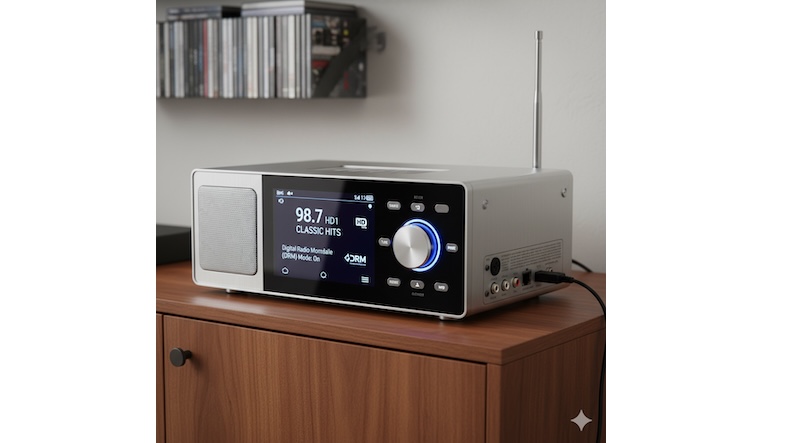
Digital radio allows multiple channels on single frequencies through simulcast transmission—one analogue channel plus three digital channels and one data channel per frequency. But the technology requires new receivers. Mobile handset manufacturers have shown little interest in integration, despite government advisories. Vehicle infotainment systems may take 15 years to reach full penetration given replacement cycles.
The regulator stops short of mandating a specific technology, recommending government choose between HD Radio and Digital Radio Mondiale (DRM) after consulting industry. “Selection of technology among the two technologies suitable in VHF Band-II for deployment in India…may be done in consultation with the industry, including radio broadcasters and radio receiver manufacturers,” TRAI states.
Both technologies are recognised by the International Telecommunication Union. HD Radio, used in North America, requires 400 kHz bandwidth. DRM needs just 300 kHz and is open-source, avoiding royalty fees. The authority warns against allowing multiple standards, citing interoperability nightmares and market fragmentation.
Existing FM broadcasters could voluntarily migrate to simulcast by paying the difference between auction prices and their proportionate remaining licence fees. A six-month window would follow auctions for migration decisions.
The recommendations tackle infrastructure bottlenecks head-on. Common transmission infrastructure in existing cities cannot accommodate new digital channels. TRAI proposes either broadcaster consortiums or assignment to Broadcast Engineering Consultants India Ltd should create new facilities within three months. Mandatory co-location with government infrastructure would be scrapped.
Prasar Bharati, the public broadcaster, should offer land, tower and transmission infrastructure at concessional rates whilst recovering operational expenses, TRAI adds.
Annual authorisation fees would be set at four per cent of adjusted gross revenue for most cities, dropping to two per cent for three years in northeastern states, Jammu and Kashmir and island territories. The regulator proposes a new category of radio broadcasting infrastructure providers authorised to build and lease facilities commercially.
Controversially, TRAI recommends allowing terrestrial radio streaming without user controls like download or playback. This extends reach globally whilst the authority dismisses potential copyright concerns as beyond its remit, noting broadcasters “shall be subject to Copyright Act, 1957.”
The measured rollout—just two frequencies per city initially—contrasts sharply with July 2025’s disastrous auction, where only 63 of 730 channels found buyers across 234 cities. That debacle underscores sector weakness and justifies cautious expansion.
Whether broadcasters bite remains uncertain. The staggered payment plan reduces upfront barriers, but fundamental economics remain challenging. Streaming platforms offer unlimited choice and user control. Digital radio offers better audio quality and emergency alert capabilities, but competes for ears in an increasingly crowded audio landscape.
TRAI’s recommendations now await government action. Implementation timelines are unclear, but the regulator urges swift technology selection before financial bidding begins. The decade-long journey to digital radio viability starts with that choice.