Tag: HD

  • Presidential Fleet Review ’22: DD deploys multi-camera setup on land & sea

    Presidential Fleet Review ’22: DD deploys multi-camera setup on land & sea

    Mumbai: Doordarshan came up with several innovations to undertake the coverage of the Presidential Fleet Review of the Indian Navy this year. President Ram Nath Kovind reviewed the Indian Navy’s fleet at a ceremonial event at Visakhapatnam on Monday. 

    The event witnessed the participation of nearly 60 vessels of the navy, including ships from the Indian Coast Guard and Indian Merchant Marine, aircraft from the Navy and the Coast Guard. The Review also commemorated the 75th year of Independence with the theme ‘Indian Navy – 75 years in Service of the Nation.’

    Doordarshan’s coverage of the event this year included a vast array of multi-camera set up on land and water with at least 30 cameras in place. Drones with special lenses were used to streamline the broadcast from land and sea while ensuring seamless connectivity. Various elements of the Fleet Review consist of anchorage, a steam past in a mobile column, a flypast and parade of sails, different formations of large columns of vessels etc. All of this was captured by DD cameras deployed on land and sea.

    Doordarshan and All India Radio had been preparing for this mega coverage since October 2021. Teams did extensive site surveys and carried out recce around the venue prior to final deployment on land and sea.

    Multi-camera setup included special vantage points on the hills, high-rise buildings and near the shorelines of Visakhapatnam. DD crew was positioned at five such critical points to provide Live visuals. The entire coverage was done in HD format.

    Grappling with the challenging environment at the sea, the team of DD Engineers by identifying multiple and critical camera positions brought to life the Indian Navy’s full might and prowess. DD crew was deployed on five ships to provide live shots of the president’s yacht during the ceremony. Drones, backpacks, wireless, signal streaming, and satellite uplinks were done at the sea to ensure a seamless live broadcast of the event.

    HD camcorders and PTZ cameras were deployed on the President’s yacht. To enhance viewers’ experience, specialised lenses and state-of-the-art high-resolution PTZ cameras were installed.

    The grandstand master control room was set up at All India Radio Visakhapatnam to receive all the camera sources from the land and sea using RF, backpacks, data links and satellite down-linking.

    The high-definition visuals were made more engaging through graphics and a battery of professional commentators who elaborated upon every detail in Hindi and English as the event unfolded, from the AIR control room.

    Uninterrupted live coverage running for almost three hours was broadcast on DD National, DD News, DD India and multiple regional channels of DD, starting from 8.30 a.m on 21 February till the end of the events. The entire coverage is also available through live-streaming on DD’s YouTube platforms.

  • Is IPTV DASH mechanism the way forward for cable operators in India?

    Is IPTV DASH mechanism the way forward for cable operators in India?

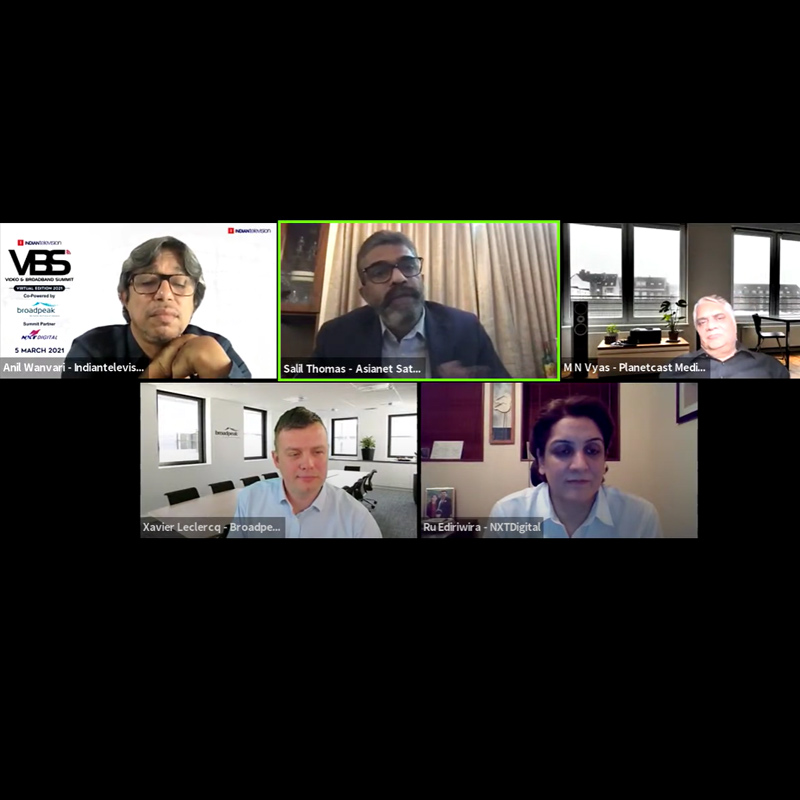
    KOLKATA: Cable television service, the biggest video service provider in India, now needs to look at new technologies for cutting down cost of operations as well as simpler content delivery. At a time when multi-system operators (MSOs) are extending their offerings to broadband services, IPTV network can be the way forward, experts opined at a session at the Video and Broadband Summit (VBS) 2021.

    The panel discussion, ‘Future proofing DPOs on video delivery solutions’ included NXTDigital group CTO Ru Ediriwira, Asianet Satellite Communications Ltd vice president & technology head Salil Thomas, Broadpeak Business Development vice president Xavier Leclercq, and Planetcast Media Services founder director MN Vyas and was moderated by Indiantelevision.com founder and CEO , editor-in-chief Anil Wanvari.

    Although 100 per cent future-proofing is hard to achieve, any organisation should be future-ready in terms of technology, Ediriwira said. “You don’t know what new technology will come around the corner and completely disrupt your industry, way of working. Look at social media, more kids watch YouTube than TV. You have to keep abreast of what is going on and how future generations are changing their content habits, viewing habits,” she added.

    Vyas agreed to the view that futureproof is something that is never possible. But the companies have to look at what is really needed at least in the next five years. According to him, a sea change is needed in the current distribution system. Broadcasters and DPOs have to realise that their role has to be minimal now and TV has to be more intelligent, he stated. The operators need to take an approach where they can take and leverage the existing resources along with adding new things.

    While looking at the future is important, working on the right technology at the right time is also crucial. Thomas explained that they launched a 4K Android TV set-top box three years ago but the boxes are still sitting in their inventory as consumers are not ready for that. Hence, catching up is important rather than jumping ahead of time, he explained.

    “There is a transition happening which is trying to focus more on new users, young audiences and having the ability to reach more screens. We are sort of moving away from the traditional broadcaster domain. This is an interesting turning point,” Leclercq noted.

    According to Ediriwira, the cable industry is seeing logical progression. However, while the industry is nine years into DAS, MPEG-2 slots are still around. While operators are making a push for MPEG-4 and HD boxes, they are a long way off from adopting 4K boxes. MSOs have the advantage, unlimited bandwidth to push 4K and 8K, but there is no content, she said. Moreover, if the industry is not able to sell a huge amount of HD boxes, take off of 8K or 4K boxes will not be possible either.

    “We are seeing people are moving to different devices like fire stick, Chromecast, plug it into TV and install an app and deliver to content. This is a relatively cheaper and cost-effective way of adding new devices and adding streaming applications. On top of it, the difficulty with this is some of the HD, 4K channels have trouble growing in ninjas. This is basically heavy for the networks, for each individual session coming from one of those set top boxes back to the network. You will basically load the network with unicast traffic,” Leclercq mentioned.

    Broadpeak has introduced a technology called MABR that can be used to push multi-screen ABR content (DASH, HLS) over an ISP network. That can be a cable MSO network for example, he added. This content can be pushed all the way to set top box and then it can be consumed by the end device. Operators are starting to build this multicast ABR proposition, he said.

    According to Thomas, IPTV DASH and multicast broadcast is a way forward. IPTV DASH replaces the traditional MPEG-2 TS video structure with a more flexible and adaptive technology. It essentially offers the best of both worlds – the greater flexibility offered by OTT combined with the scalability and low latency at stake with IPTV. It can reduce the huge cost of maintenance for cable networks.

    He added that the aging of cable networks is a big factor that should be considered. Rather than incurring high maintenance cost, it is better to go for fibre-based IP network which will cater to both cable and broadband services. It is better to move TV on the same platform, he stated. Vyas also agreed that someday the industry has to really get into IP deliveries.

    “It is a possibility and we most MSOs have now converted our network to fibre on which we are running both broadband as well as cable. The move to run a full IPTV network that is something any of us have not considered yet. It is very easy for us to drive everything as a broadcast mechanism on Radio Frequency box. But it is definitely worth considering as a potential future capability but at the moment most of us are focusing on trying to upgrade our networks to IP . We have to think about the last mile level also. That requires huge investment from each of the cable operators. We have to help them,” Ediriwira mentioned.

    She added that until that does not happen, the MSOs have to use current technologies. The operators are anyway upgrading their networks and moving to fibre. While she believes that operators should look at transitioning from cable broadcast mechanism to IP network mechanism, she is not certain how helpful it will be for rural areas.  

  • Indian pay TV ecosystem yet to optimise HD viewing opportunity

    Indian pay TV ecosystem yet to optimise HD viewing opportunity

    KOLKATA: Industry leaders have emphasised over and over again that despite recent developments and change in consumer preferences, pay TV will continue to coexist with over-the-top (OTT) platforms. On the other hand, the need for a sustainable business model is also undeniable amid the rapid flux in the media and entertainment industry. In the coming future, the conversion from standard definition (SD) to high definition (HD) can be a key growth driver, the experts said in a panel discussion at the Video and Broadband Summit (VBS) 2021. Moreover, the broadband segment will be another crucial factor, which has seen higher uptake in the last few quarters.

    ‘The leaders speak laying out a profitable future’ moderated by Indiantelevision.com founder, CEO and editor-in-chief Anil Wanvari included Indiacast Media Distribution president Amit Arora, Siti Networks CEO Anil Malhotra, Star & Disney India- India & International TV distribution president Gurjeev Singh Kapoor, Travelxp 4K founder & CEO Prashant Chothani, Fastway Transmission & Netplus Broadband group CEO Prem Ojha, and NXTDigital MD & CEO Vynsley Fernandes as panelists.

    Arora said broadcasters will always remain focused on telling new, exciting stories. But the mediums of broadcasting, distributing content will include a range of devices, TV, screens. DPOs have to look at how they can assimilate all the content assets and determine the best way of marketing those.

    “The pot of gold I see for the industry is how you can make a dollar more from the customer giving him more and more content. India will stay in a broad spectrum of free TV to $10 in the next 10 years, which segment you want to operate in is going to be your choice,” he quipped.

    Fernandes agreed to the need of looking at a wider spectrum rather than having a singular kind of telescopic lens for the distribution platform operators (DPOs) as well. In addition to that, DPOs need to bear down costs like infrastructure sharing. The important thing is how they drive out a better value for each dollar, he added.

    “Our offtake of HD in the country is very low. We have not been able to achieve a strong HD push. There is that much runaway available to us. So, can we make the transition from SD to HD as one of the key drivers going forward as there is so much runway available? The second thing we have to focus on is if we can take the second runway of a whole bunch of customers who are watching FTA content and look at them converting them to basic pay bundles, maybe from one dollar,” he stated further.

    Arora highlighted another important aspect; while HD consuming subscribers are hovering around 14-15 million, a large section of the population buys HD boxes but watches SD channels. Hence, marketing the HD proposition is very important to raise awareness.

    “We are a market of 200 million TV homes and we have 15 million homes who are watching HD channels. We have closer to 40-45 million homes that have HD TV set. The communication piece is a big issue. People don’t know when they buy an HDTV set, they also have to buy an HD set top box, along with that they have to buy a subscription for HD channels. What they think is if they have a TV set, they would get brilliant quality of channels regardless,” Kapoor detailed.

    Broadcasters and DPOs have not taken HD expansion as an agenda but it is more important than ever as OTT platforms are offering high-quality video, experts concurred. However, Travelxp’s Chothani thinks the industry needs to look beyond HD and start focusing on 4K too.

    “Five years from now, there will be 40 million 4K homes in India. MSOs and DPOs have to look at the 4K opportunity. India has a great opportunity because of the infrastructure in the cable system. If a consistent effort by MSOs, DTH platforms is taken, people will realise SD quality is not good enough,” he noted.

    On the other side, broadband looms as a highly promising prospect on top of everything, Fernandes added. Siti Network’s Malhotra is also optimistic that there is an opportunity for everyone despite the presence of players like Jio, Airtel as there are 22 million wired broadband customers compared to 650 million internet users in the country. Even if Jio subsidises as it did for wireless broadband, they might have maximum market share but would not be able to acquire all consumers, he opined. However, the home broadband rollout is slow in the country because it is physically extensive work.

    Ojha said that his organisation has already penetrated the urban consumers in its strongholds and will reach rural areas faster than Jio. “Evolution is happening in the ecosystem. There can be imperfection at every level, even at the regulation level. But we will have to look at the longest horizon where the growth engine has to be broadband driven,” Ojha commented.

  • Tata Sky introduces HD set top box and Binge bundle offer at Rs 4,999

    Tata Sky introduces HD set top box and Binge bundle offer at Rs 4,999

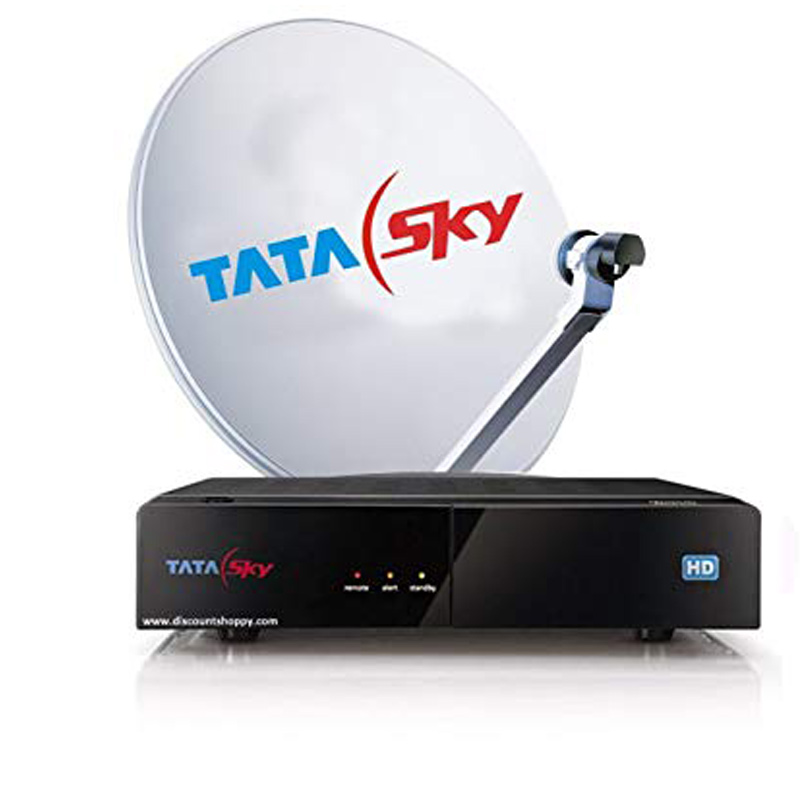
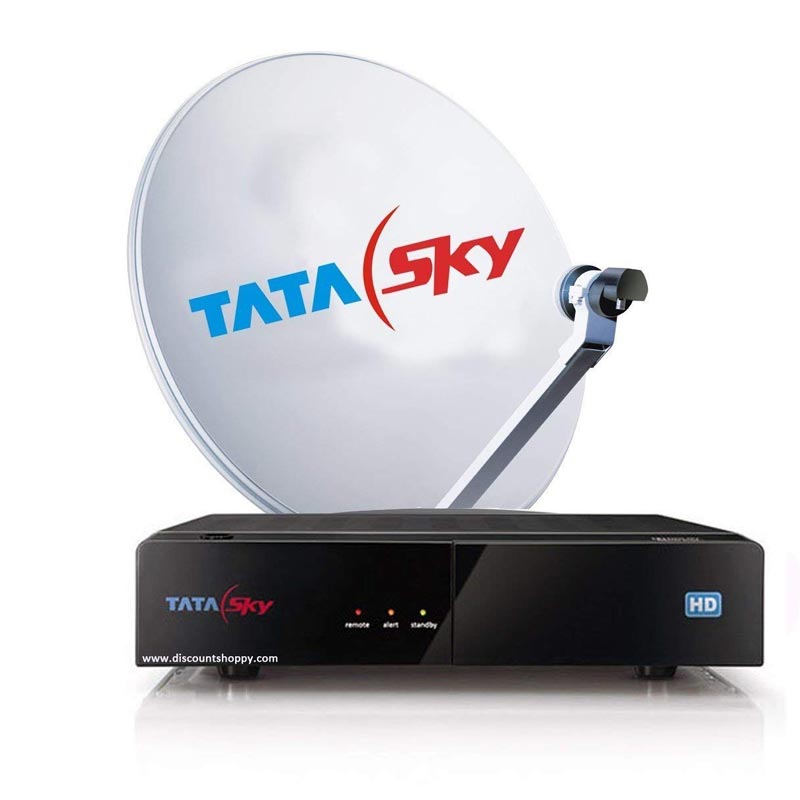
    MUMBAI: After the formal announcement of Reliance Jio Fiber plans, other DTH operators are also taking measures to face the upcoming challenge. DTH operator Tata Sky has introduced an attractive offer for consumers.

    Under the new offer, Tata Sky HD set-top-box and Tata Sky Binge bundle is available for new subscribers for just Rs 4,999 along with other benefits. Consumers will get the HD set-top-box worth Rs 1,499 under the same price and Rs 2,499 will also be credited in their account. Users can select different packs and the amount will be deducted from the cashback amount of Rs 2,499.

    Moreover, they will get six months worth of Binge subscription for free which otherwise costs Rs 1,494 along with three months of free Amazon Prime subscription. The Binge service which was introduced earlier in May, the service offers digital content from, Hotstar, Sun NXT, Eros Now, Hungama Play. 

  • Star Sports 1 Bangla to be launched by 31 March

    Star Sports 1 Bangla to be launched by 31 March

    MUMBAI: Star India is all set to cater to the Bengali audience's craving for sports action. Star Sports 1 Bangla will launch or before 31 March 2019.

    The broadcaster released its rate card after amendments on 21 February 2019 and added the regional sports channel in several bouquets. Star Sports 1 Bangla has been added in the Bengali Value pack priced at Rs 49, Bengali Premium pack for Rs 79, Bengali HD Value pack at Rs 85, Bengali HD Premium priced at Rs 120.

    To cater to the diverse consumer segments based on the consumption, Star India has launched two more packs Bengali-Hindi Premium pack for Rs 85 and Bengali-Hindi HD Premium for Rs 130. Both the pack have Bengali, Hindi, English entertainment and movie channels apart from sports and infotainment channels.

    If a consumer opts for Star Sports 1 Bangla before its launch, the charges will be applicable from the date of launch.

    Star has also revealed that Star Sports 1 Bangla will be available for Rs 19 on a-la-carte basis.

    With the launch of Star Sports 1 Bangla, the broadcaster will have 37 SD channels including 11 SD sports channels. It also owns 27 HD channels including five sports HD channels.

  • Tata Sky favours multiple agencies for TV audience measurement

    Tata Sky favours multiple agencies for TV audience measurement

    MUMBAI: Tata Sky, one of the leading DTH operators in India has suggested Telecom Regulatory Authority of India (TRAI) that there should be multiple rating agencies. The competition will bring in new technologies and new methods in analysis.

    “Yes, multiple rating agencies need to be promoted. Competition will  bring in new technologies, new research methodologies, new methods in analysis, new and better ways to ensure better data quality,” Tata Sky has said in its submission to a consultation paper on TV audience measurement floated by TRAI.

    On the contrary, GTPL Hathway believes that there is no need for competition in the television rating services to ensure transparency and accuracy.

    “If more television ratings agencies are allowed to compete then the sample size will reduce and might even get scattered demographically. Therefore to ensure transparency and accuracy, there is no need for competition in the television rating services,” GTPL Hathway stated.

    The DTH player also commented that BARC India is not transparent regarding sharing the methodology and the representation of the panel home amongst the various platform types.

    Both Tata Sky and GTPL Hathway suggested that the BARC shareholding body should also include members representing the DPO/DTH/OTT platform body.

    To address the issue of panel tampering/infiltration, GTPL Hathway suggested to increase the sample size of the panel household significantly, which will reduce the impact of tampering on overall TV ratings, which in turn will reduce the temptation to tamper with the panel homes.

    Tata Sky argues that there is an under representation of DTH customers amongst the existing panel homes and BARC has taken no steps to publish a list for transparency. The representation of HD homes also needs correction.

    On the question whether BARC India should be permitted to provide raw level data to broadcasters, the MSO said, “We agree with TRAI’s view that release of raw data to broadcasters may potentially compromise on secrecy of households and sanctity of the data. The proposition that availability of raw data would help in giving the broadcaster sharper insights into viewership behavior is not sufficient to take such a huge security risk. There are other ways of sharper insights into viewership behavior such as AI."

    "Provisioning of raw level data to broadcasters will definitely contravene the policy guidelines for television rating agencies prescribed by MIB. The accreditation system mentioned by MIB requires secrecy of panel households, while release of raw data to broadcasters may potentially compromise secrecy of households", GTPL Hathway stated.

  • ZEEL turns activist with ‘Aankhon Ka Aandolan’ driving upgrade to an HD quality viewing experience

    ZEEL turns activist with ‘Aankhon Ka Aandolan’ driving upgrade to an HD quality viewing experience

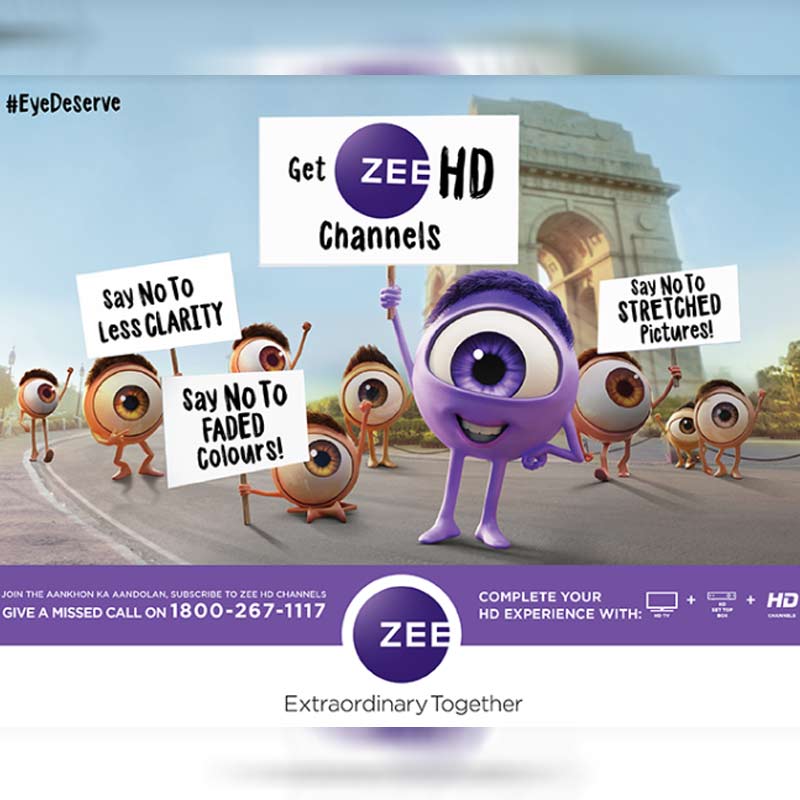
    MUMBAI: Zee Entertainment Enterprises Limited (ZEEL) the leading media & entertainment powerhouse, launched its new campaign ‘Aankhon Ka Aandolan’ to build awareness about the benefits of a High-Definition (HD) channel viewing experience and drive a behaviour change. With multiple players having pushed the HD subscription, its penetration still stands below 10%. With this new campaign, ZEEL aims to drive consideration to upgrade from SD to HD subscription amongst the current SD subscribers.

    The campaign ‘Aankhon Ka Aandolan’ showcases the trouble that the eyes go through and the reason why they are out on streets to protest. The campaign further aims to educate viewers who would have heard about the HD experience being better but are not sure how it is significantly superior to what they are currently experiencing.  Launched in partnership with the country’s top DTH platforms like Tata Sky, DishTV, Videocon d2h, Airtel and cable platforms, the campaign aims to actively drive HD channel upgrades during this festive season. Hence, the creative campaign has a clear Call-To-Action with a missed call number that will allow consumers to opt for their DTH partner or call their cable operators and enquire on the HD offers available.

    The core idea of the campaign is led by strong consumer insights that address the inferior experiences that the SD channel viewers are currently settling for – Less Clarity, Faded Colours & Stretched Pictures. Along with the SD viewers, the campaign also reaches out to those HD viewers who believe that HD viewing is only relevant for specific content, whereas HD experience is an overall upgrade to a superior quality viewing world.

    Conceptualised by the company’s creative partners Lowe Lintas, the campaign aims to be the trigger to upgrade to HD subscription by showing the consumers, the superior quality HD viewing experience that they are missing out on. ZEEL currently offers 14 HD channels. With the revised MRP price point regime that is expected to come into play in a few months from now, and the changing consumer behaviour pattern, the viewer will now be able to independently choose HD and SD channels separately giving them the power to upgrade to a superior viewing experience.

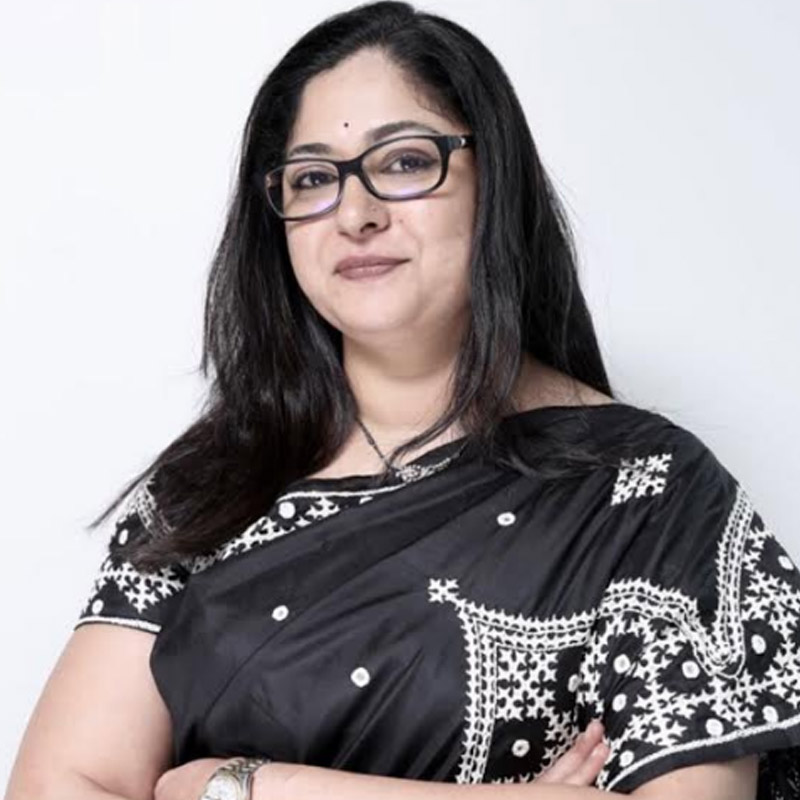
    Commenting on the launch of the ‘Aankhon Ka Aandolan’ campaign, Ms. Prathyusha Agarwal, Chief Marketing Officer at ZEEL said “At Zee, we believe in offering 'Extraordinary Entertainment' to our consumers at all levels. Where we focus on offering versatile content for consumers across age groups, we are equally invested in offering them superior quality viewing experience through our best in class HD technology. We truly believe that HD viewing experience offers our viewers better clarity, and once you get hooked on to it, you just can’t do without it! We have tailor-made our two brand films in 8 languages and given it legs to appeal to our regional viewers spread across the country. The benefits of the HD viewing experience has been brought alive through the lead protagonist across regional markets of the ZEE network.

    Sharing his views on the campaign, Sagar Kapoor, Executive Director at Lowe Lintas said – “FINALLY, THE EYES SPEAK UP! The creative idea stemmed from the very objective of magnifying the benefits of HD over the SD experience. We just shifted the lens on looking at a very apparent yet hardly spoken about TG. The eyes in this case. Hence the idea of eyes asking for HD viewing. It just made complete sense to land the advantage via someone who will benefit the most. Not to mention the cut through we get with the visual idea of creating characters out of eyes themselves.”

    Anaheeta Goenka, President at Lowe Lintas Group also expressed her views saying “In India a better service or product does not necessarily make for adoption. Especially when the comparative does not exist. That was our strategic challenge. Getting people to see the distinct value of HD vs SD. Easy to sell the product – but we refrained and instead took another journey from the ‘viewers eyes’.”

    Zee Entertainment has launched a 360-degree marketing campaign influencing the consumers across their path to purchase journey. The media mix strategically uses ‘TV, DTH and Out-of-home’ to build awareness, ‘Digital’ to influence behaviour and an aggressive ‘Retail’ promotion to trigger conversions at the point of purchase of the HD TV set. The high impact retail push is in association with the biggest electronic stores in the country such as Reliance Digital and Vijay Sales, during this festive season. Alongside, the company will also be seeding the campaign across Samsung and Panasonic stores in collaboration with Dish TV.

    The campaign is promoted through the strength of the network with 35 channels coming together to achieve a reach of 40 Mn viewers ably supported by our digital push with an estimated reach of 45 mn across the campaign period up till Diwali. The Digital campaign has been designed to reach out to the SD viewers across platforms that they have used to either show interest in purchasing HD TV sets, make subscription payments or upgrade their lifestyle. The SD & HD subscribers will be targeted not only through the DTH & cable platforms but also through our network’s vast social media assets. Innovative marketing formats have been used across social media and Out of Home to bring alive the tension points – example, usage of Uber cab windows to bring alive the ‘clarity’ difference between SD and HD channels.

  • Digitisation leading to higher HD adoption in India

    Digitisation leading to higher HD adoption in India

    MUMBAI: High definition (HD) TV channels started launching in India years ago but it was only when digitisation happened on a large scale that the adoption of channels grew.

    According to Broadcast Audience Research Council (BARC), the total HD count in India has increased to 83 channels currently from 59 channels in 2016, witnessing a growth of 41 per cent since 2016. The first HD channel was National Geographic HD in 2010.

    Of the 83 HD channels, 34 are English, 13 channels are Hindi and 10 of them have multiple languages feed. On the other hand, 50 channels out of 83 have both SD and HD feed.

    While the number of channels has gone up by 41 per cent, the viewership share has grown by more than 160 per cent. The reason behind this viewership growth is most likely technology and distribution. There were 10-12 million subscribers availing HD services at the end of FY18, according to FICCI KPMG’s Media & Entertainment report 2018.

    The DTH players have been the front-runners in up-selling HD services to their customers, whereas MSOs only managed to garner about 1-1.5 million HD subscribers.

    KPMG partner and head – media and entertainment Girish Menon said, “The new television sets coming in the market are all HD-ready in some form or the other. Even the set top boxes which are coming out, sold by the DTH and cable operators, are all HD boxes. In that sense, from a hardware perspective, the market is steadily moving towards HD. The second trend which is happening from the content perspective is that all the television channels are now essentially converting and up-scaling their feed into HD. The content available in HD is also increasing. You will see more HD conversions happening, SD subscribers shifting to HD and a greater proportion of HD subscribers that are going to come in.”

    If we look at the market contributing to HD viewership this year, Andhra Pradesh and Telangana have the highest share of the pie with 18 per cent. Maharashtra and Goa contribute 16 per cent to the overall market.

    “Maximum consumption in viewership is contributed by sports and GEC followed by movies. We will see more HD regional channels which will lead to growth of regional viewership. On the regional side, Tamil and Telugu markets will drive the HD growth,” he added.

    GEC, movies and sports genre contributed 94 per cent to HD viewership this year with 59 per, 25 per cent and 10 per cent for each genre respectively.

    The sports genre includes 12 HD channels in India across various broadcasters. As other sporting events apart from cricket are also gaining popularity among the youth, the consumption in HD is also increasing. The viewership share of sports genre is 10 per cent compared to 3 per cent share on SD channels.

    The recently concluded FIFA WC 2018 led to a viewership growth of 1.5x on HD channels, compared to pre-FIFA weeks. IPL 2018 which took place earlier this year was telecast on more number of HD channels on Star India’s sports network and saw a 40x growth in HD Impressions over IPL 2017, according to BARC data.

    As far as 4K technology is concerned, we are a long way off. “We are still seeing HD penetration growing. For 4K you need enough hardware and 4K TV, which at the moment are not there. Secondly, we don’t have 4K content directly available in India. We are three years away before we start seeing any traction in 4K technology,” he concluded.

  • MNX challenges legacy players in the movies category

    MNX challenges legacy players in the movies category

    MUMBAI: The rise in India’s urban educated millennials has also led to the spurt of channels in the English entertainment and movies genre. Over the last few years, several new additions have made their way including MN+, &Prive and Sony Le Plex.

    In this space, Times Network has found the right set of audience for all four channels claims Times Network EVP and head English entertainment cluster Vivek Srivastava. He is aware that beating a legacy player is not an easy task. The channel says it has been head and shoulders above HBO in six metro markets.

    The group has close to 1500 titles and 25-30 shows for its movies channels. The content comes from four major production houses like Disney, MGM, NBC and Warner which are long term deals. The network holds the second output of NBC after Sony Pictures Network.

    English cluster of Sony Pictures Network, on the other hand, picks up the content from Disney, Warner Bros, NBC Universal, Lionsgate and PVR Pictures. &Prive and &Flix of Zeel also have a bigger library with exclusive titles sourced from many independent Hollywood players and studios such as Paramount and PVR.

    According to week 32 of BARC data in the six metros, Times Network has two of its flagship channels, Movies Now and MNX, in the top five list. Movies Now is going to be an eight year old brand in December 2018 and is a home for all the blockbusters. On the other hand, MNX, the youngest channel in its English movies portfolio has been consistent in ratings since its launch in July 2017. The company endeavours to broaden the audience base to be in the top five list.

    “The quarter is gone by and the revenue of MNX is extremely healthy. MNX actually completes the portfolio. We have a family brand as Romedy Now, a sophisticated brand in MN+, Movies Now is the flagship brand that houses the superhero franchise. All the blockbusters will find a space on the channel. MNX being the youngest brand in the mix, it caters to all audiences and all the various titles get a space on this channel,” Srivastava adds.

    In the last two-three years, the Indian audience has evolved and become smarter and knows what to expect. “In this context, the marketing has become a lot easier as the consumer knows the content very well,” he adds. In FY19 Q1, the network got brands like Amazon, Pepsi, Airtel, Trivago, Ford, Flipkart, PhonePe, Myntra to name a few, for all its English movies and entertainment channels.

    As far as the category is concerned in terms of revenue, Srivastava estimates the genre to grow by 15-20 per cent more than the previous year’s figure which was Rs 700 crore.

    On the content acquisition cost, Srivastava points, “There is a little bit of correction expected in the content acquisition cost as we move forward. The correction will come on account of two things – revenue growth across years in the genre and secondly the evolution of business models as some broadcasters are sharing their first output windows with SVOD players.”

    HD is the next array of growth as far as the category is concerned. According to Srivastava, there are only two genres which drive HD viewership, sports and movies. MN+ is an HD-only channel which is performing well, both from a viewership and revenue standpoint.

    He gives out the formula for a successful channel as: “To sustain in the category with more than two channels, you should be able to provide fresh content to your target audience. Until and unless you have a distinct identity to the channel it will never succeed.”

  • &Privé HD to showcase top notch film titles at prime time

    &Privé HD to showcase top notch film titles at prime time

    MUMBAI:  Ooh la la! Zee Entertainment Enterprises Ltd’s premium English movie channel &Privé HD has even bigger plans to tickle the fancy of its exclusive audience. The channel has announced that its prime time programming slot from 9 pm to 12 pm every day will feature some very recent gee-whiz award nominated or winning titles. Among the titles which will be on offer includes: the critically acclaimed Steven Spielberg directed, Meryl Streep Tom Hank starrer The Post,  the Aaron Sorkin directed Molly’s Game, the Luca Gauadagnino directed, James Ivory written Call Me By Your Name. Most of the films in this slot will be those which were released theatrically in the US in the last two months of the calendar year 2017.  The overall catalogue of &Privé HD today consists of 450 library and 48 premieres. At launch,  it was at 350 titles with 40 premieres.

    The new content been curated from different studios and distributors such as Paramount, Reliance, Tanvir and PVR. “We picked up the content from small, small producers from Europe who own  three to six movies. That meant dealing with close to 30 independent studios globally,” says  Zeel business cluster head – premium & FTA GEC channels Aparna Bhosle. Some of these will be available on Zeel’s soon to be launched OTT play – Zee5.

    It has plans to push the top daily pick movie through newspapers like the Times of India and Hindustan Times. “On the digital front, we will be using Google and YouTube banners or video promos,” reveals Bhosle.

    &Privé HD, which competes with Star Movies Select HD, MN+ and Sony le Plex for the estimated  Rs 600 core English movie advertising pie, has been doing well since its launch in September 2017 with its non-conformist 22-50 age group viewers. It was number one in its fifth week with the film Lion and also in the month of December in six metros according to  BARC ratings claims Bhosle. The channel has gained a lot of traction in Mumbai and Delhi.

    “The way we design and package the channel – it is the constant effort and is the endeavour that the ad rates should increase,” Bhosle points out. “The ad rates are absolutely comparable to channels that are considered leaders in the space.”

    Bhosle is hoping to expand the channel’s distribution with deals being signed with distribution platform operators that have not been showcasing &Privé HD as yet. “Talks are still in progress with Videocon D2H, as they had some bandwidth issue at the time of launch. We are planning to have a deal with Hathway in some time” she adds.

    The channel – by virtue of its positioning – is aimed at high net worth homes and individuals who can afford a high definition viewing package. Their tribe has swelled to around 14 million in India today. And Bhosle believes that it is this audience which will ensure that the English movie genre will continue to do well. “The OTT platforms will never affect the business of English movies channels. Yes, they could offer some competition – but finally content is king,” she says.

    Adds an analyst: “A part of the audience that consumes &Privé HD content  has access to massive internet bandwidth as well as smart TVs in their homes. They could not care how they consume – through OTT or through linear TV. If &Privé HD can lure them to watch the linear TV service of the channel, then it could be on a good wicket. Additionally, all these movies are freely available on pirate streaming and  torrent sites. How it manages to curtail the pirates will also help build its audience.”
    That’s a challenge the entire media and entertainment sector faces.

    Also Read :

    ZEEL’s  &Privé  HD channel to target upscale non-conformists in six metros

    &Privé HD ropes in Fiama and Vaseline, premieres with ‘Moonlight’ on Sunday

     &Prive HD campaigns for ‘Jackie’, ‘Pele’ etc premieres, presents first twin-screen trailer