Streamers such as Netflix, Disney+, Amazon Prime, Apple Plus, HBO Max – have been capturing headlines across the world, including in India. But one service which has been growing silently – probably the first totally reliant on advertising – has been Tubi. Launched in America around five years ago, it has caught the US consumers’ fancy with more than 20 million actives users every month.
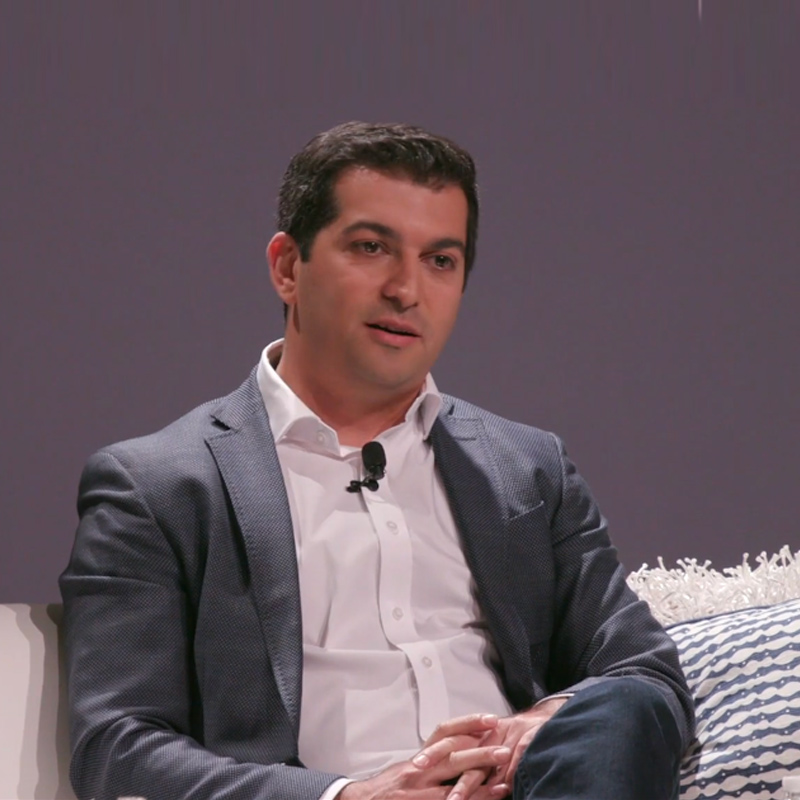
Tubi CEO Farhad Massoudi sat down with Variety’s Todd Spangler during the Variety conference at the Consumer Electronics Show in Las Vegas earlier this month and spoke at length about his vision for the free ad supported streaming service. Indiantelevision.com was there at the CES recording the conversation. Farhad was pretty open about his views on the streaming ecosystem.
Prior to founding Tubi and ad tech company adRise, Farhad was the VP of engineering at socialmedia.com and he also worked as an engineer with Yahoo!Read on for excerpts of the interview:
Tell us a little more about Tubi?
Tubi is the largest movie streaming service in the country. We offer over 20,000 titles to our consumers in the United States. We are expanding globally. It’s completely free at no cost.
What’s the content on Tubi?
Traditional TV is in a secular decline. In the third quarter of last year, we had over two million consumers cut the cord. This is a record and up from half a million the year before. So in an era where consumers are watching less and less traditional TV, it’s being replaced by VOD services. Obviously Netflix and many others are leading that effort. In the world of subscription video on demand, their job is to offer you originals to justify themselves on your bills at the end of the month. So, we expect the average consumer to have a few subscription services whatever that number maybe. So as a result these services become shallower and shallower with more expensive originals. Netflix’s library is shrinking over time.
So the job of AVOD services to be included is to complement these services with a massive library of content – a subset of which is relevant to you. We have a massive diverse kind of content. We have horror movies like Friday the 13th to award winning titles like Catch me if you can, Pulp Fiction, and many others to anime to African American titles to Spanish and many other. We launched Tubi kids in the summer. So it is a vast library of content.
You have deals with a lot of the major studios. Not with Disney.
Yes that’s true. We work with most major media companies. We deal with over 250 companies video content. Lionsgate, MGM, we have deals with all of them. And they are investors in Tubi.
So you don't see Netflix, Hulu, Disney+ – the premium SVOD services as competitors?
We all compete for share of time. That includes Instagram, Facebook, ESPN. But we don’t see Netflix as a direct competitor in fact we compliment them in most households where Tubi is consumed. They offer originals and I am a big fan of Netflix originals. But we offer a library that deserves to be watched – that we give it a voice, that is otherwise not accessible to our viewers. I think that’s really important for the media industry, that’s important for society. And it obviously adds a lot of value to advertisers.
What is the typical profile of the Tubi viewer?
Let me contrast it to traditional TV. The median age in TV is about 58; half our viewers are 18 to 34. So the median age is in the low thirties. They represent the breadth of America. We are all over the United States. In the summer we mentioned we had over 20 million monthly active users. So there is a very large percentage of the American population, which is using us.
How much do people watch?
We have millions of consumers using us everyday for hours and it is a very engaged audience.
You are an ad supported service. What does the ad load look like compared to other media?
First of all most of the successful internet companies are advertising based – Facebook, Google, Instagram to YouTube, Pinterest – so we are just like them. I think it’s very important to offer the service at no cost to the consumer. In regards to the ad load, we offer an ad load of four to six minutes as compared to traditional TV, which is 14-18 minutes per hour. So it’s a substantially lower ad load and it’s important we don’t mess up the experience.
What are the ad formats you are offering advertisers?
What we offer advertisers is pretty straightforward: brand safe. We have no UGC content, no short form content that is traditionally on the web. Most of the consumption is on premium TV screens. So it is a TV commercial experience with an ability to do targeting and measurement. So it is the best of both TV and digital. We offer access to consumers who are watching less and less TV. So that’s a huge extended reach for national advertising. We are expanding beyond US borders. There are a lot of sophisticated targeted measurement capabilities; there are some interactivity capabilities. So we offer access to consumers who advertisers will not be able to access through traditional TV anymore.
What is your business need in terms of the ecosystem to really make a difference?
We started AVOD nine years ago. The concept of ad supported TV is what people made fun of five six years ago. We have had a phenomenal couple of years and it would be shocking if we did not have any competitors. People have noticed that AVOD is a huge opportunity in the US and are launching services similar to us. We still are the largest, the most watched. We have the largest library, the most sophisticated machine learning recommendation engine. We are really comfortable where we are. We welcome all the new players.
What are your biggest challenges?
Look our team doubled in the past year. So maintaining the momentum, the culture, the innovation, and the cutting edge is not easy. So a lot of my attention is on making sure that we keep that culture and we continue pushing the edge.
In the backdrop of the streaming wars are you going to increase the spend on content?
We have been. We announced a nine figure spending for last year. We are going to significantly increase it. The library has more than doubled in the past year. The quality has never been as good as this. The depth of our library in any genre is at level with any streaming service out there. That is going to continue to grow. The thing that we do best and we specialise in it is that we use technology, data and machine learning to figure out what content to license, what do our customers want, and how much we should pay for it so that we can have a sustainable business and continuously grow it.
The originals on Netflix require spends of billion and to license content, don't you need to more capital to break out?
No. Here's what we do and we have been successful doing it. The playbook for SVOD is a content forward playbook, which means you need originals to drive subscribers. So if HBO were to remove their top 10 titles, I don't think they will be worthwhile.
AVOD is the opposite: it is about giving access to the consumer to content that otherwise you won't have access to through SVOD services because it does not drive subscribers. Some of our titles don't appeal to everybody. We have anywhere from documentaries you won’t find anywhere else. To horror movies. And that is something Tubi offers at no additional cost. We are on a mission to aggregate about 99 per cent of TV shows and movies in the market. The top one per cent is going to be the streaming wars – the Netflix, the Amazon and HBO going at each other. Our job is to aggregate that other 99 per cent and personalise it so that you find the titles that are relevant to you as opposed to the rest of it.
99 per cent sounds expensive, you are going to need investment.
We are growing our revenue, and we are going to invest in the library and 20,000 titles is by far the largest library in the market. For any service – AVOD or SVOD. Netflix has about 5,400 titles. We have 4X or 5X Netflix’s titles. We are not the long tail. Long tail video suggests cat videos, which is not what we offer. We are not about the top one per cent of content – I call those the shiny titles, the ones that win awards, that get a lot of headlines. The subscription services need those to convince you to pay. We will focus on the rest.
Will you focus on original content? And do you require exclusivity for your content licensing deals?
No. We will not to do originals for the reasons I just mentioned. I get these pitches for original content and I tell them sorry we are not the right partners. If we can get exclusivity for licensed content, sure. Ultimately what matters is that on a Friday night you put on Tubi and we pair you up with the content that is relevant to you.
What developments are you looking at to make personalisation better?
The sophisticated machine we have built to pair the right content with the user, needed a lot of content. We have been working on our machine learning recommendation engine for five years. We are the only AVOD service or the most sophisticated with a recommendation engine. That is critical to our success.
Tubi originated from adRise – an adtech company. How did that happen?
The fun story is I was in school college many years ago. And I took a business class that the CFO of Netflix attended. And I remember students were grilling him that the more your consumers use your product, the more you have to pay for shipping them and they were a DVD by mail service. And he said the future of TV is streaming and the apps will replace TV channels. And that stuck with me.
Years later I was in adtech and in advertising and I realised that advertising as long as we know is going to be dominated by TV. So I put two and two together and I said TV app replaces TV channel. The domestic $70 billion ad market and the global $200 billion one is going to be completely be disrupted. And consumers still want more content that is subsidised. So that was the hot moment for me.
So I launched in 2011, the first AVOD OTT business and it was called adRise. It was a white label streaming platform that powered other media companies’ apps behind the scenes. The thinking then was that I would not be able to license content with no money for my free streaming service. Which certainly was the case back then. And most people thought streaming was not going to happen and this concept of ad-supported service is ludicrous. Five years ago we saw an opportunity to launch our own brand called Tubi TV, which we then renamed to Tubi and we stopped doing the adRise business.
Your partners who distribute your content – Comcast and Cox. How is that going?
We love our partners. Our MVPD partners in cable and satellite. And we are going to expand that. We are happy with the two. We are the third app after Netflix and YouTube to launch Xfinity set top boxes. We complement Comcast and Cox and offer their customers 20,000 titles.
In your ad campaign, you are directly saying you are not Netflix. Is it a good idea to name a competitor?
On notonnetflix.com, there are a few celebrities like Terence Howard, Nicole Scherzinger, Carment Electra talking about us. It has been a phenomenal campaign and has been very successful for us. And again we have highlighted that we have content that is not on Netflix which means we complement it. If you want to watch 13 reasons why, go for it. For everything else, there is Tubi.
What’s you forecast for SVOD?
The idea of a consumer having to subscribe to a Netflix, Amazon, Disney+, Hulu, ESPN, HBO Max, HBO Now, Starz, CBS All Access – it is ludicrous. It is not going to happen. Most of these businesses are not going to be viable. A lot of these businesses are going to fail because they just won’t have scale. Consumers are not going to subscribe to all of these services. The jury is out which ones are going to build a viable business and which ones are going to spend billions and stop doing it. The reality is we will know in the next couple of years. In the meantime, you pick the few you really like, because they have oriignals you really like and you complement it with Tubi.