Tag: HBO Max

  • Netflix CEOs play coy about Warner Bros Discovery acquisition

    Netflix CEOs play coy about Warner Bros Discovery acquisition

    LOS ANGELES: Netflix is keeping its cards close whilst the rest of Hollywood scrambles for Warner Bros Discovery’s assets. Asked during Tuesday’s third-quarter earnings call whether the streaming giant might join the bidding war, co-chief executives Ted Sarandos and Greg Peters delivered a masterclass in strategic ambiguity: they ruled nothing out, but ruled nothing in either.

    “It’s true that historically, we’ve been more builders than buyers, and we think we have plenty of runway for growth without fundamentally changing that playbook,” said Sarandos. “Nothing is a must-have for us.” 

    Yet he added that Netflix looks at “all” merger opportunities through the same lens—a nod that Warner Bros Discovery’s studio and streaming empire, including HBO, HBO Max and Warner Bros Television, might just pique its interest.

    What Netflix definitely won’t touch are Warner Bros Discovery’s linear networks. “We’ve been very clear in the past that we have no interest in owning legacy media networks, so there is no change there,” Sarandos said. That rules out a bid for the whole company, which Warner Bros Discovery is splitting in two: one entity (Warner Bros) housing the streaming and studio jewels, the other (Discovery Global) lumping together cable channels and Discovery+.

    The carve-up comes after Warner Bros Discovery announced it was reviewing “strategic options” following “unsolicited interest” from “multiple” parties. Paramount is reportedly leading the charge, having offered $20 per share for the lot, then upping its bid to $24—both rejected. CNBC reports that Netflix and Comcast are also circling.

    Peters downplayed the threat of rivals bulking up through deals, pointing to mega-mergers like Disney-Fox, Amazon-MGM and Discovery-WarnerMedia that failed to shake up the landscape. “None of those mergers represented a fundamental shift in the competitive landscape,” he said. “Watching some of our competitors potentially get bigger via M&A does not change our view.”

    The caginess came as Netflix reported third-quarter revenue up 17 per cent year-on-year to $11.5bn, in line with forecasts. Operating income rose 12 per cent to $3.2bn, though it fell short of expectations after a $619m hit from a dispute with Brazilian tax authorities. Shares tumbled 6.5 per cent in after-hours trading, though Netflix insisted the tax spat won’t dent future results.

    By region, revenue in the US and Canada grew 17 per cent to $5.01bn, Europe, Middle East and Africa climbed 18 per cent to $3.7bn, Latin America rose 10 per cent to $1.37bn and Asia Pacific surged 21 per cent to $1.37bn. Netflix now commands 8.6 per cent of US television viewing time, up from 7.5 per cent in late 2022, and 9.4 per cent in Britain, up from 7.7 per cent.

    Hits last quarter included Wednesday season two (114m views), The Thursday Murder Club (61m) and My Oxford Year (81m). The Canelo-Crawford boxing match drew 41m viewers, making it the most-watched men’s championship bout this century, Netflix claimed.

    For now, Sarandos and Peters are content to watch the feeding frenzy from the sidelines. But their refusal to slam the door suggests they might yet crash the party—provided the price is right and the baggage left behind.

  • WBD’s streaming and studios segments soar as linear TV slows

    WBD’s streaming and studios segments soar as linear TV slows

    MUMBAI: Warner Bros. Discovery (WBD) has delivered a mixed bag of results in its second quarter, with its film and streaming divisions providing a much-needed shot in the arm as its traditional linear TV business struggles.

    The company, which is planning to split its streaming & studios and global linear networks businesses, reported a net income of $1.6 billion, a stark contrast to the massive $9.9 billion loss it posted in the same quarter last year. Adjusted EBITDA also saw a respectable 9 per cent year-on-year increase, hitting $2.0 billion. However, free cash flow took a hit, falling by 28 per cent to $702 million, partly due to one-off separation costs.

    The studios segment was the star of the show, with revenues rocketing by 54 per cent to $3.8 billion. Content revenues, in particular, surged by 59 per cent, largely driven by a strong box office performance from theatrical releases like A Minecraft Movie, Sinners, and Final Destination: Bloodlines. The company’s film slate grossed over $3 billion globally this year and saw five consecutive films open to over $45 million domestically. On the television side, WBTV received 60 Emmy nominations, a record for a studio, with its shows like The Pitt, Abbott Elementary and The Penguin receiving critical acclaim.

    The streaming business also showed strong momentum, adding 3.4 million global subscribers in the quarter to reach a total of 125.7 million. Revenues for the segment rose by eight per cent to $2.8 billion, and it turned a profit of $293 million in adjusted EBITDA, a significant improvement from a $107 million loss a year ago. The company’s international expansion, including a successful launch in Australia, helped drive subscriber growth. However, global average revenue per user (ARPU) decreased by 11 per cent to $7.14, mainly due to the influx of lower ARPU international subscribers and the wider distribution of the ad-supported HBO Max tier.

    In contrast, the global linear networks business took a tumble. Its revenues fell by nine per cent to $4.8 billion, and adjusted EBITDA plummeted by 25 per cent to $1.5 billion. The decline was attributed to a nine per cent drop in domestic pay TV subscribers and a hefty 13 per cent decrease in advertising revenue, driven by a 23 per cent decline in domestic linear audiences.

    Looking ahead, WBD is targeting 12-14 theatrical releases annually and is set to launch HBO Max in Germany, Italy, the UK, and Ireland in 2026. The company also reduced its gross debt by $2.7 billion in the quarter, bringing the total to $35.6 billion.

  • Blockbuster breakup as Warner Bros. Discovery plots a starry split

    Blockbuster breakup as Warner Bros. Discovery plots a starry split

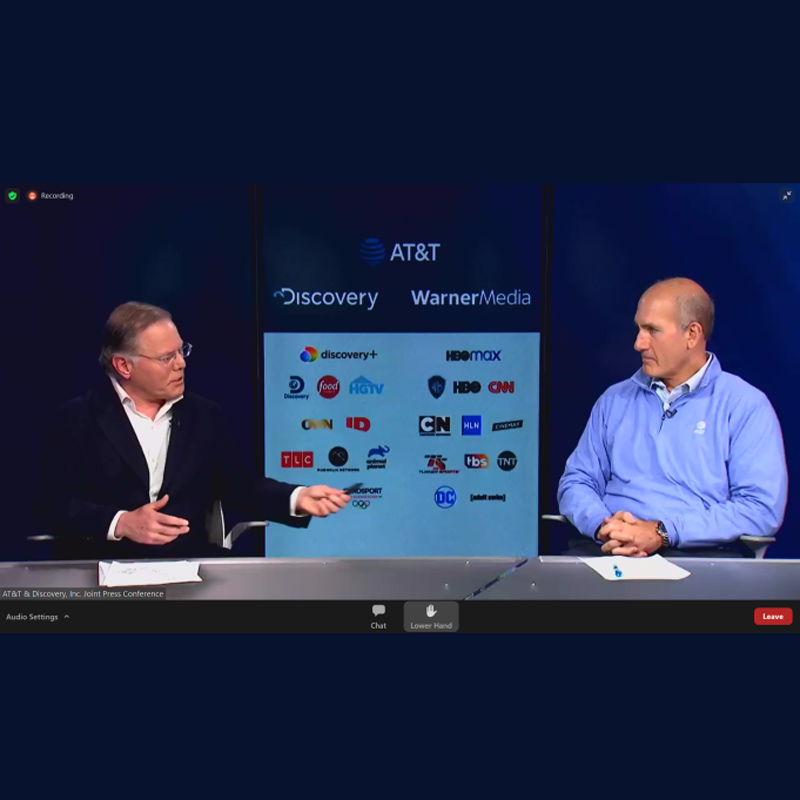
    MUMBAI: When one studio door closes, another opens with a box-office bang. In a dramatic plot twist that rivals its biggest screen spectacles, Warner Bros. Discovery (WBD) is pressing play on a two-part sequel splitting into two publicly traded companies to give each unit its moment in the spotlight. Announced today, the tax-free separation will see WBD carve out Streaming & Studios home to HBO, DC Studios, Warner Bros. Pictures and Television, and HBO Max from Global Networks, which includes CNN, TNT Sports, Discovery, and Discovery+, as well as key linear and digital assets across 200 countries and 68 languages.

    David Zaslav, WBD’s current President and CEO, will lead Streaming & Studios, while Gunnar Wiedenfels, its CFO, will take charge of Global Networks. Both will retain their existing roles during the transition.

    “This move gives us the sharper focus and agility needed to thrive in today’s fast-evolving media universe,” Zaslav said, promising a future of creative excellence and strategic flexibility. Wiedenfels added that the split will allow “each company to leverage its strengths and financial profiles,” paving the way for innovation and shareholder value.

    Streaming & Studios will combine storytelling firepower and IP goldmines think Harry Potter, Game of Thrones, and Batman with global platform HBO Max, which currently operates in 77 markets and plans further expansion by 2026. WBD is aiming for 3 billion dollars in annual adjusted EBITDA from this division.

    Global Networks, meanwhile, commands a massive reach of 1.1 billion viewers, with an eye on live content growth, international opportunities, and monetising digital assets like B/R and CNN’s new streaming play. The unit boasts industry-leading margins and strong free cash flow.

    A crucial detail: Global Networks will retain up to 20 per cent stake in Streaming & Studios, planned to be monetised later for balance sheet de-leveraging.

    To support the split, WBD has secured a 17.5 billion dollars bridge facility from J.P. Morgan, which it expects to refinance before separation. Tender offers and consent solicitations have also been launched to optimise its debt structure.

    The full spin-off is targeted for mid-2026, pending board approvals, market conditions, and tax clearances from the IRS. J.P. Morgan and Evercore are advising, with Kirkland & Ellis as legal counsel.

    WBD Chair Samuel A. Di Piazza, Jr. framed the move as a win for shareholders: “This transaction is a great outcome, unlocking long-term value and strategic focus for two exceptional businesses.”

    The end credits may still be a year away, but WBD’s bold reboot is already setting the stage for a media double feature like no other. One company to power global fandoms, another to rule the airwaves all from the studio that gave us a century of storytelling magic.
     

  • Disney+, Hulu combined would own most hit titles in the US: Ampere Analysis

    Disney+, Hulu combined would own most hit titles in the US: Ampere Analysis

    Mumbai: A combined offering of Disney+ and Hulu would account for the largest share of the 100 most popular titles of any US subscription video on demand (SVoD) service. At approximately 30 per cent, the player would enjoy a comprehensive lead on Netflix’s 23 per cent, according to a recent study by Ampere Analysis.

    Shows from Disney’s Marvel Studios, Lucasfilm, and Hulu Originals, such as Only Murders in the Building and The Handmaid‘s Tale, are among them.

    Will Disney push to close the deal early? The US streaming platform Hulu is currently owned by Disney (67 per cent) and Comcast (33 per cent), who are due to reach a sale agreement in January 2024. However, recent reports suggest that Disney intends to close a deal sooner to take a 100 per cent stake and integrate the streamer into Disney+ as a combined offering.

    The merger seems logical to Ampere’s analysts, as Disney’s share of Hulu content has grown significantly, suggesting that the company has continued to invest considerably in the platform. Since September 2016, the proportion of Hulu’s catalogue for which Disney owns the distribution rights has tripled, from six per cent of all movies and TV shows to 19 per cent by September 2022.

    Meanwhile, the major studios without streaming platforms have reduced their contribution to Hulu’s content slate (down from 81 per cent in 2016 to 71 per cent in 2022), and those with their own streaming services have generally maintained or reduced their input. Specifically, the combined content from NBCUniversal, Paramount Global, and Warner Bros. Discovery now makes up less than 10 per cent of all TV shows and movies on Hulu.

    Title reclamation is posing a threat to Hulu. The removal of content from Hulu to support newer services like Peacock, Paramount+, and HBO Max poses a threat to Hulu’s competitiveness. The streamer has already lost highly popular titles like America’s Got Talent (to Peacock), movies and TV shows set within the Star Trek universe (to Paramount+), and Family Matters (to HBO Max). If major studios reclaim their proprietary content, Hulu could lose 10 per cent of its overall catalogue. This figure rises to 37 per cent of Hulu’s 100 most popular titles, using Ampere’s popularity score metric, which tracks overall online engagement with a title.

    Ampere Analysis analyst Christen Tamisin said, “The threat of further popular or critically acclaimed titles leaving Hulu for rival platforms is a concern as engaging content is critical for subscriber retention, especially as the US SVoD market nears saturation. This risk makes the argument for Disney to merge Hulu and Disney+ into a single platform stronger.

    “On the other hand, Disney+ and Hulu’s complementary catalogues mean a combined platform would have a more diverse content offering—akin to that of other major market players—than the two standalone platforms have currently. While the Disney brand has long been associated with family-friendly content, Hulu has a broader, general-audience appeal, offering a wide range of genres and more adult-targeted titles,” he added.

  • Netflix to remain SVod world leader by 2027: Digital TV Research

    Netflix to remain SVod world leader by 2027: Digital TV Research

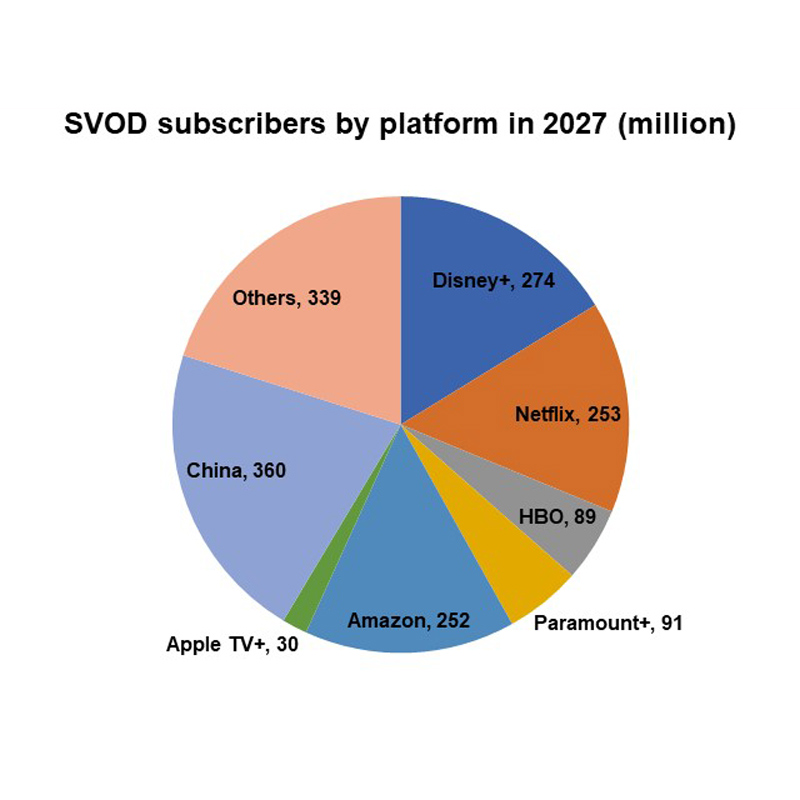
    Mumbai: Global SVod subscriptions will increase by 475 million between 2021 and 2027 to reach 1.68 billion. Six US-based platforms will account for 47 per cent of the world’s total in 2027.

    Netflix will remain the revenue winner, with $30 billion expected by 2027 – similar to Disney+, HBO Max and Paramount+ combined. Global SVod revenues will reach $132 billion by 2027.

    Digital TV Research principal analyst Simon Murray said, “Our forecasts in June had Disney+ [274 million subscribers] overtaking Netflix [253 million subs] by 2027. These forecasts assumed that Disney+ Hotstar would retain the Indian Premier League cricket rights. It didn’t – hence the 67 million lower forecast for Disney+.

    “SVod revenues for Disney+ will reach $15 billion by 2027. Despite lowering our forecasts by 67 million subscribers, SVod revenues for Disney+ will be the same in 2027 as in our previous forecast. SVoD ARPUs and revenues will increase in key markets after the platform introduces the hybrid AVoD-SVoD tier and the more expensive SVod-only tier,” he added.

  • Western Europe continues to witness growth; adds 73 mn Svod subscribers

    Western Europe continues to witness growth; adds 73 mn Svod subscribers

    Mumbai: Western Europe will have 238 million Svod subscriptions by 2027. The figure has increased from 165 million by end-2021. Six US-based platforms will account for 81 percent of all Svod subscriptions by 2027.

    Netflix will have 62 million subscribers by 2027 – three million more than 2021. Subscriptions are flat for 2022 mainly due to increased competition. Netflix’s share of the total will fall from 36 percent in 2021 to 26 percent by 2027.

    Disney+ will have 46 million subscribers by 2027 – 20 million more than 2021. Newcomer Paramount+ and SkyShowtime will add 11 million subscribers and HBO Max will bring in an extra 5 million.

    Western European Svod revenues will total $25 billion by 2027 – up from $16 billion in 2021. The UK will remain the Svod revenue leader.

    Digital TV Research principal analyst Simon Murray said, “Netflix will slowly lose Svod revenues as we assume that it will convert its cheapest tier to a lower-priced hybrid Avod-Svod tier. Any Svod revenue shortfall will be covered by its Avod revenues. Netflix will remain the Svod revenue winner, although its share of the total will fall from nearly half in 2021 to a third in 2027.

    “We do not expect many more price rises due to the intense competition. We assume that Disney+ will follow its US example by converting its present tier to a hybrid Avod-Svod one and charging more for SVOD-only tier,” Murray added.

  • Saugata Mukherjee rejoins SonyLIV as content head

    Saugata Mukherjee rejoins SonyLIV as content head

    Mumbai: Sony Pictures Network India (SPN) has appointed Saugata Mukherjee as head of content for SonyLIV.

    In his new role, Saugata will lead the content division for Sony digital businesses.

    He will report to Sony LIV, Sony Entertainment Television (SET), and Studio Next business head Danish Khan.

    Mukherjee said, “I have witnessed the platform’s growth and am proud to be part of its growth story once again. SonyLIV has always pushed the boundaries of content by telling stories that have never been told, explored, or shown before, making my role a challenging but exciting one.”

    A media and entertainment industry veteran, Saugata has over two decades of experience. Saugata has previously led content teams for prestigious media conglomerates. He recently left Warner Bros. Discovery, where he was HBO Max content head.

    Warner Bros Discovery puts HBO Max launch in India on hold

    In his previous stint with Sony Pictures Networks India, he worked as SonyLIV’s original content head for one year, where he was looking after content commissioning, developing, producing, and curating the premium content for the platform.

    He has also worked with Disney+ Hotstar for almost two years, where he was head of development and creative for Hotstar Specials.

    At Star TV Network, he was senior vice president and editor of the content studio for five years.

    He is an alumnus of the Indian School of Business and Jawaharlal Nehru University.

  • SVOD subscribers base to reach 22 million in Arab countries: Report

    SVOD subscribers base to reach 22 million in Arab countries: Report

    Mumbai: In a forecast report from Digital TV Research on Monday, it is noted that there will be 21.52 million paying SVOD subscriptions [TV episodes and movies only], up from 9.49 million in 2021, across 13 Arabic countries by 2027 in the next five years.

    The largest player in the region will continue to be Netflix, which will see its Arabic base increase from 3.55 million to 5.45 million by 2027.  Despite its fast growth, Disney+ will remain behind Shahid VIP (second place), increasing from 2.16 million to 3.77 million, while Starzplay will be in third with 3.47 million. 

    With its launch in the region earlier this year, Disney+ is set to have an explosively growing launch period to become the fourth largest player with 3.39 million, with Amazon seeing similar massive growth from 715,000 in 2021 to 2.35 million in 2027.

    After Disney+ withdrew its content and launched as a standalone platform, OSN lost some traction. However, OSN will retain exclusive rights to HBO Max and Paramount+ content. By 2027, OSN will have 1.60 million paid SVOD subscribers.

    Digital TV Research principal analyst Simon Murray commented, “Netflix will continue to lead the market, although Disney+ has provided a strong challenge since June. We assume that Netflix and Disney+ will add hybrid ad-supported tiers in a pan-Arabic platform from 2024.”

  • Warner Bros Discovery puts HBO Max launch in India on hold

    Warner Bros Discovery puts HBO Max launch in India on hold

    Mumbai: Warner Bros. Discovery has put the launch of HBO Max in India on hold. According to a major business publication, the company is considering cost-cutting measures around the world and is working on integrating discovery+ and HBO Max in existing markets.

    The company announced plans to launch a combined streaming service with discovery+ and HBO Max.

    In an official statement from Warner Bros. Discovery Company, the company said, “The intent is to launch a combined streaming service, including in key Asia-Pacific territories in 2024.”

    It further added, “The existing licensing agreement with Disney+ Hotstar includes a selection of HBO Originals and other content from Warner Bros. Discovery.”

    Also read: HBO Max and Discovery+ to merge into single streaming platform by 2023

    The company also confirmed the news of HBO Max India head of content Saugata Mukherjee’s departure. The statement said, “Saugata Mukherjee decided to leave the company. He is an incredibly talented leader, and we wish him the very best in his future endeavours.”

    The company further informed Indiantelevision.com that Arjun Nohwar has been appointed as general manager, Warner Bros. Discovery for South Asia and Jason Monteiro is heading streaming for the APAC region, in addition to leading integrated marketing for the India, South East Asia, and Korea markets.

    Earlier, Warner Bros. Discovery had planned to launch American subscription video-on-demand (SVOD) service HBO Max in India, and Saugata Mukherjee was appointed as head of content for HBO Max India. After news of Saugata quitting, speculation was made that Warner Bros. Discovery had delayed HBO Max’s launch in India. Mukherjee is expected to go back to SonyLIV.

  • HBO Max delivers a new mobile, desktop apps for an improved user experience globally

    HBO Max delivers a new mobile, desktop apps for an improved user experience globally

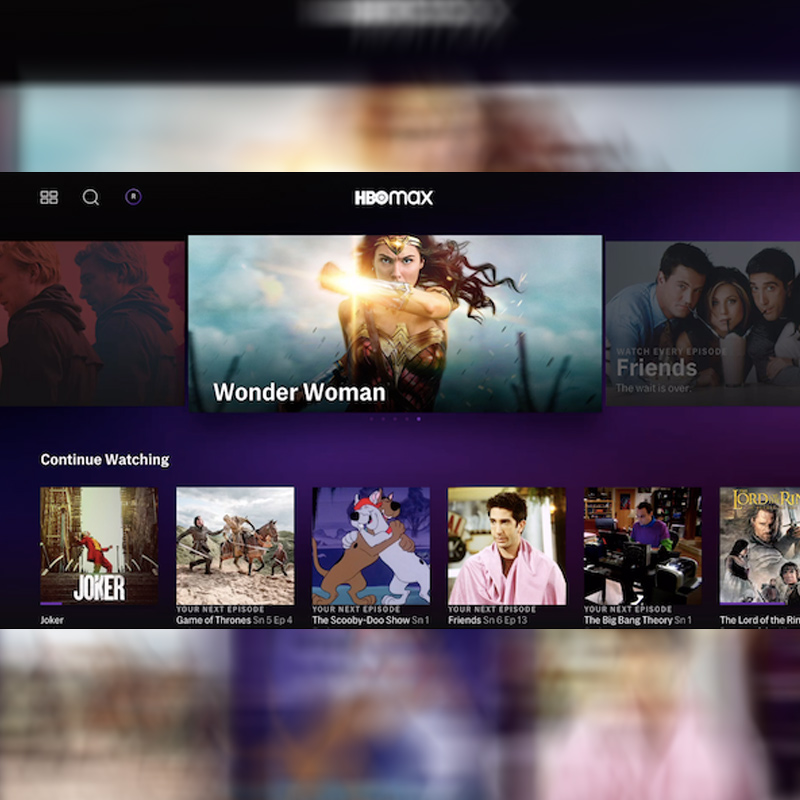
    Mumbai: Warner Bros. Discovery’s OTT service HBO Max has completed the rollout of a new user experience on desktop, iOS and Android mobile devices, and Amazon Fire tablets, where available globally. The replatformed app delivers highly requested new features from HBO Max fans and marks the conclusion of moving all HBO Max apps to a new, more performant tech stack. This was a process that started with replacing connected TV applications last year in September.

    The latest features available in the updated HBO Max mobile and desktop applications include:

    1.     Shuffle button functionality is expanded to mobile devices. Previously, only available on the desktop and CTV experiences, this feature gives users the ability to randomise the first episode that plays for select series on the platform.
    2.     SharePlay support for iPhone and iPad users (US only): Subscribers in the US with an ad-free plan and an iPhone or iPad can now use SharePlay to watch their favourite HBO Max programmes in sync with friends and family while on a FaceTime call.
    3.     A dedicated home for downloaded content with improved performance and stability.
    4.     Tablet support for both landscape and portrait orientations.
    5.     An enhanced screen reader experience with improved navigation elements and functionality.
    6.     The ability to split screens with other apps on any behaviour-supported mobile device.
    7.     The intuitive navigation has been updated.
    8.     A refined design and visual styling to let the content shine.
    9.     Chromecast’s stability has been improved.
    10.  

    According to the platform, these updates mark a significant improvement to the experience that will further connect audiences with the stories and storytellers.

    Warner Bros. Discovery Streaming senior VP of product design Kamyar Keshmiri said, “We are delighted to introduce the revamped HBO Max mobile and desktop apps. The changes give our users more of the features they care most about, along with improved navigation and a more immersive canvas for storytelling, helping them click play on their favourite content faster and with less friction.”