Tag: Havas

  • Havas establishes dedicated customer experience network

    Havas establishes dedicated customer experience network

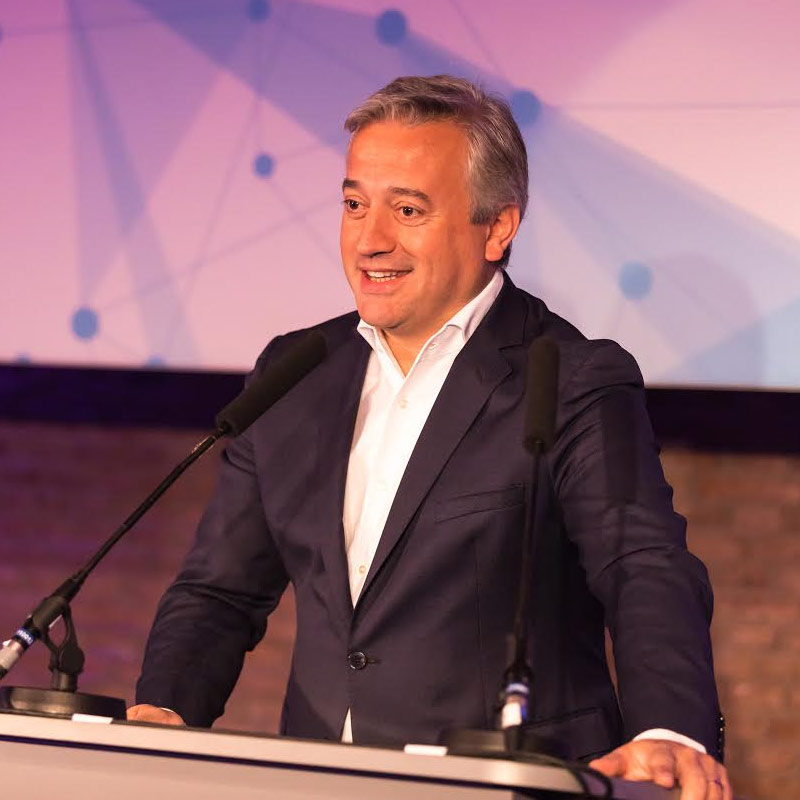
    NEW DELHI: Havas Creative has launched Havas CX – a new, international network dedicated to delivering meaningful brand experiences across the entire customer journey. It brings together more than 1200 people from 20 of Havas Creative’s global agency groups and local agencies, plus additional CX specialists from across the Havas network, under a common structure, governance, methodology and mission.

    Havas CX will span 18 major Havas Villages around the world, with key hubs in London, Paris, New York and Mumbai. It brings together global agency groups including ekino (digital transformation), BETC FullSix (customer experience), Havas helia (customer engagement) and award-winning leaders in their markets including Plastic Havas, Langoor, Boondoggle, Gate One, Think Design, Host/Havas, Project House and Intellignos.

    Havas CX’s competitive advantage lies in its ability to combine this deep-rooted, newly coordinated CX expertise with Havas’ rich insights into modern consumers (via its proprietary Meaningful Brands study of 350,000 consumers), its ground-breaking Prosumer studies of ‘leading edge’ consumers, and its X Index – a new barometer for measuring and managing customer experience) and its unique, integrated village model–establishing the ability to look at customer experience from a more holistic, comprehensive and less siloed perspective.

    This combination provides the network with the ability to marry the technological, functional aspects of CX with its clients’ brand promise and the personal and cultural context devised from Havas and BETC’s consumer insights.

    The move to establish a dedicated CX network follows the successful launch of the BETC Fullsix agency model in Paris and the acquisition in 2019 of best-in-class specialists Langoor (digital engagement), Think Design (user experience) and Gate One (a digital and transformation consultancy).

    The component agencies’ branding will be updated to reflect the new network identity. The new network already boasts clients including Reckitt Benckiser, Tesco, Maersk, Club Med, AbbVie, Airtel, Starbucks, Canal+.

    The Havas CX network will be led by Yann Doussot (Global COO) overseen by an executive committee chaired by Chris Hirst (Havas Creative Global CEO), Mercedes Erra (Chairwoman BETC FULLSIX), Donna Murphy (Global CEO Havas Health & You) and Peter Mears (Global CEO Havas Media Group). And a strategic committee chaired by Hirst including Tracey

    Barber (Global CMO), Stéphanie Nerlich (Global CCO, executive managing partner, Havas North America), Olivier Vigneaux (CEO BETC FULLSIX), Xavier Rees (CEO Havas London), Mark Sinnock (CSO Havas UK).

    Havas Group chairman & CEO Yannick Bolloré says: “Having pursued an acquisition strategy of cutting-edge agencies in the customer engagement space over recent years, we feel the time is right to unify our agencies under one joined-up, global network brand. In Havas CX, we believe we have the most comprehensive customer engagement proposition the industry has to offer–and it’s one we intend to continue to strengthen by hiring top talent and making further best-in-class acquisitions.”

    Havas Creative global CEO Chris Hirst adds: “Today customer experience is the bedrock on which a brand is built – indeed, the majority of a consumer’s experience of any brand won’t be through above-the-line advertising, but their personal interactions with it. As technology advances almost any conceivable purchase is just a couple of clicks away and the opportunities for brands to get it right, or wrong, are manifold. CX is the new battle ground – and the brands that get it right will win, and those that don’t will lose; it’s as simple as that.

    “Now is the right time to be overt in our commitment to the one the discipline that today underpins all others by bringing our 1200-plus specialists in a single brand. With our integrated village model and our proprietary consumer insights, the Havas CX Network will significantly extend the power and capability of our offer.

    “The network will be guided by our world-class leaders in France, UK, US, Asia and LATAM ensuring we share learning, best practice and capabilities to make the network greater than the sum of its parts and helping our clients build deeper and more meaningful connections with their customers”
  • Harpic’s new spots continues to aware Indians on disinfection

    Harpic’s new spots continues to aware Indians on disinfection

    NEW DELHI: For 100 years, Harpic has been working towards providing clean and hygienic sanitation solutions across the world. Being a leader in the toilet care category in India, Harpic has been pioneering the cause of hygiene and sanitation in Indian homes for decades.

    Harpic, with its new brand campaign- ‘Saaf Nahi Swachh’, is educating consumers on superior hygiene and disinfection of toilets and bathrooms at home to protect their family’s health & well-being.

    RB Hygiene south Asia CMO Sukhleen Aneja said, “Over the last 100 years, Harpic has been a champion in providing access to clean and hygienic sanitation solutions across the world. Its communication has been focused on driving behavior change. With our new ‘Saaf Nahi Swachh’ campaign, we’d like consumers to adopt superior disinfection at home to keep their loved ones protected. Harpic’s range of toilet and bathroom cleaners not only provide superior cleaning and disinfection but have also been found effective at killing the Covid2019 virus while being extremely water efficient vs commonly used detergents.”

    Read more stories on RB

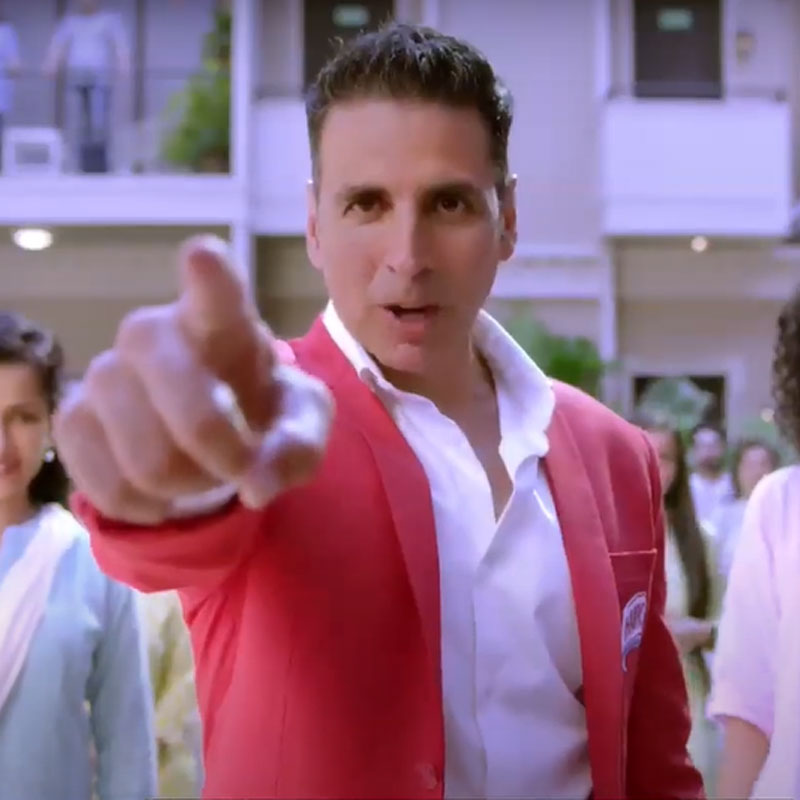
    Bollywood actor Akshay Kumar commented, “Being associated with Harpic has helped me reach out to Indian audiences and educate the Indian audiences them on the need for optimum hygiene and sanitation. During the ongoing pandemic, where everyone is aware of the need to wash hands, disinfect floors and surfaces, cleaning toilets & bathrooms that can have illness causing germs is equally important. I am certain that this campaign will be a message for consumers not just to clean but also to disinfect their bathrooms and toilets, thus avoiding the spread of infection.”

    RB Hygiene south Asia director R&D Dr. Skand Saksena highlighted, “Harpic plays an important role in providing superior solutions that effectively clean and disinfect toilets/bathrooms. Both, Harpic Toilet Cleaner and Harpic Bathroom cleaner, have been scientifically proven to successfully kill Sars-Cov-2 virus when used undiluted. These products, therefore, play a contributory role in protecting homes and families during this tough time.”

    Read more stories on Havas Media

    The Harpic ad film has been created by Havas Media.

  • The psychology behind the making of TV ads vs digital

    The psychology behind the making of TV ads vs digital

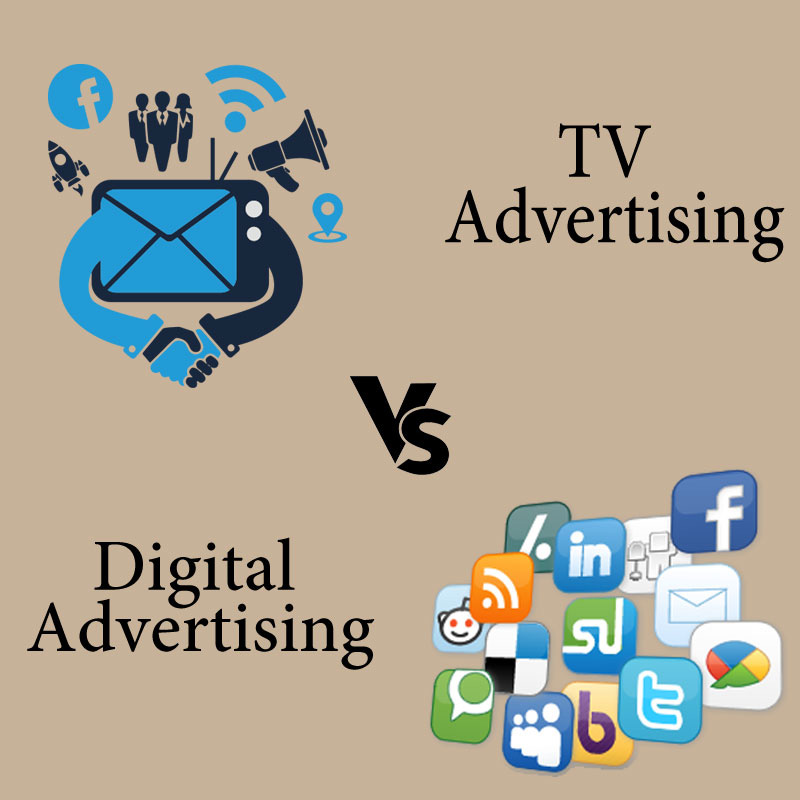
    MUMBAI: There was a time not so long ago when TV was the main medium to consume content. All that one had to do was create a TV commercial and voila! It was watched by millions. But recently, more and more youth and millenials are gravitating toward platforms like from Facebook to YouTube to Twitter to Whatsapp to Tiktok to Instagram to OTT, to consume video. How are brands engaging with them? What format of video ads are they creating to communicate their brand message?  And have TV commercials evolved in their journey from TV to OTT and digital?

    However, according to some industry experts, there is just a shift in the trend and format of advertising. In earlier days TVCs were the only content that was created but today it is much beyond that. Today it is more about creating ads for different platforms and of different durations rather than creating one single commercial.  Experts also believe that the slump in the economy has resulted in the decline of creating long format advertisements.

    Says Jigsaw Pictures founder and creative producer Rajnish Lall:  “I think there is a bit of similarity in creating both a TV and digital commercial. The difference is not about reach. Both are catering to a product or a brand and are done keeping in mind the brand proposition. People usually make a brand film which is 59 seconds so that it could also be put on Instagram. Content that we make is usually three and five minutes, depending upon client requirements.  Television costs a lot more. And to run on Facebook, WhatsApp or Instagram or any other digital platform it’s much more reasonable and people go for the longer version of it. Having said that, both the platforms are representing a brand and have more seriousness about it. When it comes to making a TVC the client is more precise about the output. The production quality cannot be down it has to be good, very good or great. However, in digital, people could make content in all sorts of budgets.”

    According to Havas Media Group CEO India and South East Asia Anita Nayyar, TVCs shot for television are normally for 30 seconds to 60 seconds and when they want to make an edit to run on television 60 sec is pretty long. Generally, ads are shot for 60 seconds so that it could run on cinema. When they run the campaign for other platforms they have the adaptation of 30 seconds to 20 seconds to 10 seconds depending upon the storyline.

    She adds: “There are two ways of putting a commercial on YouTube where you can do a long edit of a commercial that runs for one or half a minute but whereas when you look at advertising on digital media the ads are pretty short because according to reports the average attention span is three to five seconds. The creativity and the thinking in digital are done on that basis.”

    "Unlike a TVC which is based on a traditional story arc – beginning middle and end; the making of digital ads involves adapting to the media platform format and context,” points out Madison Media Sigma CEO Vanita Keswani. “The digital video creatives span from five to six seconds short format videos as well as long format 60-120 seconds storytelling ones. Tech innovative creatives on digital have a two-way communication with consumers" She adds.

    The advertising costs related to producing content for TV is expensive as compared to digital format. In fact, as per the reports of Magna, the research arm of  IPG Mediabrands, digital ad spending in 2017 reached $209 billion worldwide that is  41 per cent of the overall market. While television brought in $178 billion which tots up to 35 percent of the total market.

    If one were to estimate about 9 per cent of that going towards buying space and inventory on the different media platforms, that leaves us with digital ad production totting up to around $20 billion worldwide, whereas TV commercials production spend would be around $17 billion. The figures would be much lower for India, though as spends on creative and TV are much lower here compared to more developed markets in Europe, the US and Latin America.

    Says an ad industry veteran:  “A large part of the production budget is kept aside for paying celebrities as endorsers (even as high as 25 per cent sometimes) as lazy creative’s from advertising agencies and not savvy enough marketing executives look for short cuts to create their communication. My estimate is that almost 30 per cent of TVCs are relying on celebrity endorsements. What this means is that the quantum of TVCs being made by a brand is falling each year or if they want to produce the same number, they have to slash the production side of the budget,” says an industry expert. And this is being felt even more in these tough economic times where brands have slashed their spending. There is a huge squeeze on TV commercial makers.”

    Lall echoes this. “Before the digital era, they used to make two to three films in that budget. Now what is happening, the budget hasn’t gone up because economically we are a little down as a country so things are not taking off. The client has limited money, his expectation is not to make two or three films but to make eight films. So, the money you invested in making a television ad has gone low.”

    He also points out to another problem. According to him, advertisers are anyway even today more inclined towards putting aside higher budgets for making TV and cinema spots as compared to digital, though he would like this to change.“Normally you will not see a good quality digital film because of the lower budgets. Digital spots can be shot on any kind of camera, it could be on their phones as well. So basically it can be done at a very basic budget. So the output is not great. However, very established brands don’t mess around it because they are conscious and particular about every piece of communication they are providing to the brand. It should match the brand's personality, image and aura in the market and in the mind of the consumer also which the upcoming brands are not paying much attention to.”

    Says Nayyar:  “If you have a long format TVC they are normally done on a high budget which is done for Rs 1 crore to Rs 3 crore and Rs 5 crore. Whereas, in digital ad creation they usually don’t look for a long life piece of communication. While for television you produce one commercial for a longer period of time and for a digital you make multiple commercials. I don’t think so for digital money spend is as much as spent on creating TV or cinema commercials they are long format. TV spots also get adapted to suit digital. In digital you have to look at short duration, collaborations, what will grab the attention of audiences within the span three to five seconds as they have been provided with the option of skipping ads.”

    Keswani’s view is that brands and agency creatives should reduce their dependence on celebrities in TVCs. Says she: “Celebrity mass advertising is not as authentic, relevant and relatable today. The authenticity is being questioned. What works better is turning the spotlight on consumers in TVCs. Ad agency creative’s and brand managers could consider having real and relatable faces in TVCs, which will help the masses connect with the brand and its messaging.”

    “What it will also do is free up budgets towards creating a greater number of TVCs or putting in more VFX, animation, or a greater number of locations or better sets or bringing in better directors and videographers so that more impactful ads can be created for both digital and TV,” says the anonymous executive quoted earlier.

  • WhatsApp ads to test targeted marketing, user readiness and data security

    WhatsApp ads to test targeted marketing, user readiness and data security

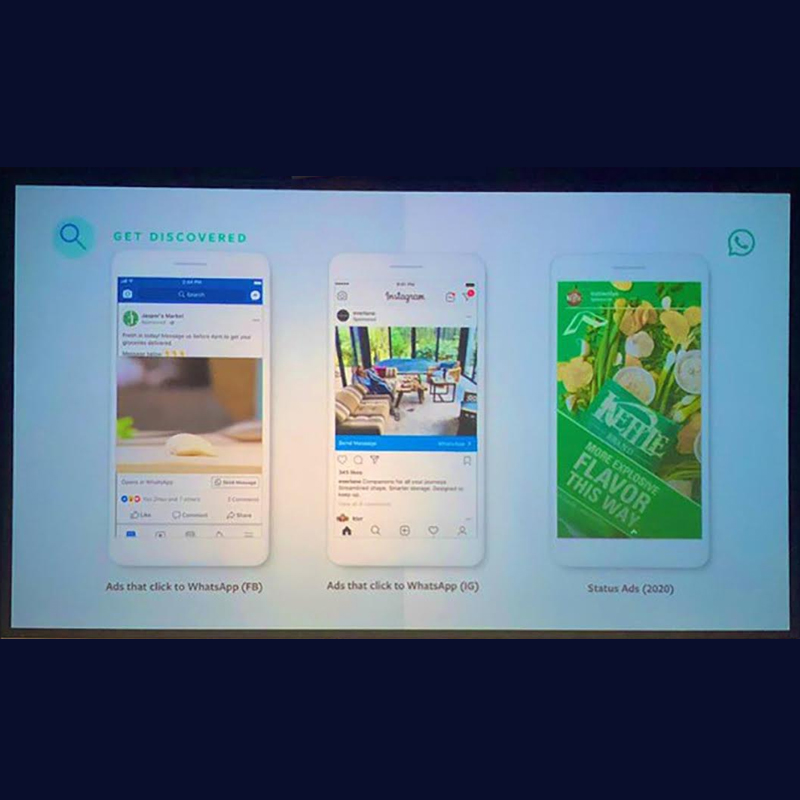
    MUMBAI: Ever since Facebook acquired WhatsApp, people have been expecting the popular chatting app to move towards an ad-based model. Recently, a tweet from an attendee at the Facebook Marketing Summit Rotterdam confirmed that WhatsApp intends to launch ads soon in the status/stories section and will also be connected to its sister sites like Instagram and Facebook.

    This started a fresh conversation around two major topics; are the users ready and what about data security on an ‘encrypted platform’? Indiantelevision.com interacted with some marketing and digital experts and sought answers to these two very pressing questions.

    While users on all social media platforms have become used to seeing ads, a similar pattern on WhatsApp is difficult to follow. As it is a more personalised platform used for chats with close peers, unlike the Facebooks and Instagrams of the world, which people use to follow a global base of users who might not be directly related to them, introducing ads will seem like an intrusion in the personal space.

    ADOHM chief executive officer Kuldeep Chaudhary says, “While the content consuming pattern in the audience is evolving and they are getting used to seeing ads on multiple platforms, having ads on WhatsApp may not be welcomed easily. The reason being WhatsApp has a very large user base in the masses, for whom ads will be an intrusion. This step will see a similar reaction like how it was during the initial days of YouTube ads. While platforms need to take this step from a revenue perspective, audiences are not yet ready for the move as from consumer point of view it is another bombardment from advertisers.”

    Vertoz founder and CEO Ashish Shah also advises brands to be cautious. “Ads showing up on WhatsApp might be looked upon as an intrusion into the users’ private space, considering the highly personal and very private environment of this communication tool. It is imperative for brands to ensure that the ads are non-intrusive in nature and do not irk off the users or disturb their privacy.”

    Though feature ads are going to be a new addition to the chatting platform, WhatsApp has already been active in giving some brands a chance to interact directly with the consumers. Be it delivering e-tickets like MakeMyTrip and BookMyShow do, or sharing timely updates of order deliveries like Ajio does, many brands are active on the platform to offer their customers a more personalised and seamless experience.

    Havas managing director Mohit Joshi notes, “Currently WhatsApp is a great space for two-way communication between the consumer and the brand. Marketers are creating WhatsApp brand profiles and then integrating them with their product/service offering across verticals. Many brands like MakeMyTrip, Ixigo and Milap have already started using this platform as a substitute/addition to email/SMS to connect with consumers once they have interacted with their platform. Currently, there is merit in using the platform more from an ‘owned media’ standpoint.”

    However, any of these activities do not rely directly on the data from the app. But with advertisements from sources that are not connected to the users coming in place, a huge pile of data and information will be required by the advertisers to create a targeted reach. Users, in the past, have moved away from platforms like parent Facebook after cases of data breaches came to light.

    NeoNiche Integrated Solutions Pvt Ltd MD and CEO Prateek Kumar mentions, “WhatsApp has always tried to ensure security between users for their conversations with end-to-end encryption being introduced in 2016. The announcement of ads on the platform seemed inevitable but the true extent of targeted marketing will only be realised after the full release. However, the extent of data shared with companies is probably the most contentious issue in this scenario.”

    Also, getting data out of an encrypted platform seems quite impossible. Carat SVP Mayank Bhatnagar says, “Right now, it (ads on WhatsApp) is just to drive the reach. I will not forward my tickets to anyone else, and thus there is no engagement parameter in place. It is just to help consumers. Once they open the full-fledged advertising solutions, it will be helpful in garnering that reach but I am not sure how will they measure the engagement.”

    However, Chaudhary states that Facebook can access keywords from WhatsApp chats despite encryption being in place. “In spite of the fact that WhatsApp states that they cannot access users’ data due to end-to-end encryption but in order to run targeted ads, access to data specific to individuals is required. Security researchers have pointed out that even with encryption in place, it will be possible for Facebook to derive keywords from people’s messages and use them to impose an ad-targeting model on the app. These ads will be showcased on WhatsApp stories and in-message advertising for WhatsApp business accounts.”

    Kumar further shares, “It seems more likely that while chatting with other users, WhatsApp will showcase ads of particular brands that might be most relevant to you depending on the topic of conversation or particular keywords. One of the best-case scenarios for users would be if sponsored ads were only displayed after the use of keywords or syntax based content to drive clicks where individual, demographic and chat-based data would not be shared. However, understanding the growing prominence of target marketing and its effectiveness in the digital world, the on-ground scenario may differ greatly.”

    Another way to access relevant data could be through telecom companies, as shared by RK Swamy BBDO president and director Sangeetha N. She notes, “Telecom companies do provide data based on gender, age, make of phone, average billing per month, location, post-paid/pre-paid, etc. While we’ve used this data in the past to send out SMS’es, we can surely use the same data to send out WhatsApp messages.”

    Shah vouches on the importance of programmatic methodology to drive successful ads on WhatsApp as he notes, “WhatsApp can build the users’ profile using the information gathered directly from the platform and elsewhere. If WhatsApp is using programmatic advertising, then it will be the smart choice for these requirements. Programmatic advertising uses Data Management Platforms (DMPs) that help advertisers to analyse, process and structure the user’s data. DMPs can be used to get relevant audience profiles and to deliver personalised and relevant ads to them. Further, using the different targeting options like interest-based targeting, behavioural targeting, contextual targeting and many more, advertisers can deliver relevant and targeted ads to their customers on platforms like WhatsApp.”

  • Havas Creative strengthens Mumbai team with two senior hires

    Havas Creative strengthens Mumbai team with two senior hires

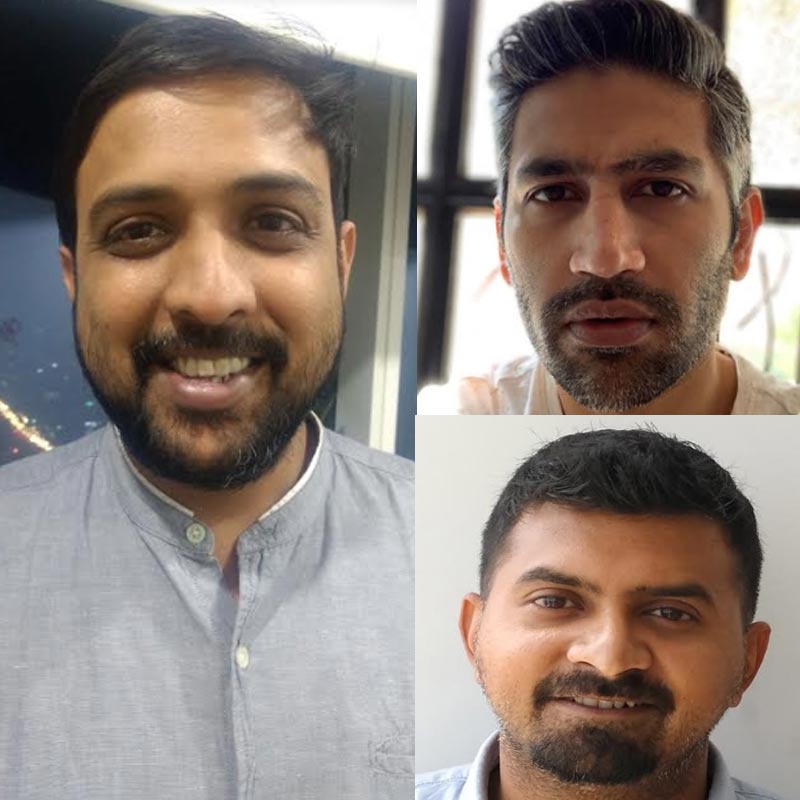
    MUMBAI: Havas Creative has further bolstered its creative offering with two senior hires in its Mumbai office.  Gururaj Rao has joined as executive creative director and Durgesh Singh as associate creative director – copy. Both Gururaj and Durgesh will report to Havas Creative national creative director Mayur Hola. The duo will aim to foster creativity at the heart of everything, in line with the Group’s integrated approach manifested in the ‘Havas Village’ model.

    Having worked across agencies like Publicis, Ogilvy, JWT and DDB Mudra, Rao has nearly 13 years of experience in advertising. Prior to Havas, he was working with an Indie creative shop Tiqui-Taka.  He has worked on brands like Nerolac Paints, Sony Sports, Urban Clap, Dr. Fixit, Fevicol, Skoda, Cadbury 5 Star, Havmor Ice-cream, Volkswagen and HDFC Mutual Fund. Moreover, his work has been recognised at both national and international awards like the Clio Awards, Young Guns, Effies and Abbys. He has been nominated by the Ad Club Bombay for the ‘Young Achievers Award’ as well as being ranked 35th in the Young Guns Global Young Creatives Ranking in 2008.

    Singh carries with him eight years of extensive experience in the field of content generation and creative writing with agencies like DDB Mudra and Publicis India. He has worked across brands like HDFC, Skoda, Zee, and Nerolac.

    Commenting on the appointments, Mayur Hola said, “Guru brings an infectious energy that Bobby and I are sure will light up the Havas Mumbai office and give it purpose. His interaction with people is at a granular level and he’s just a straight up solid guy who puts his head down and gets work done. We’re very happy to have a kindred spirit such as him on-board. Durgesh is a bright spark. His ideas are just what we need as we add creative muscle to the Mumbai office. We’re sure that Durgesh and Guru will create a powerful alliance and work with the rest as part of a great team.”

    “I am really looking forward to being part of this exciting new team and working with Bobby Pawar and Mayur Hola and their vision of a refreshed creative proposition for Havas Group India,” said Rao.

    “I feel I've come to Havas at a very interesting time. Havas Group’s integrated operating model and Vivendi (an entertainment powerhouse) parentage creates a world of opportunities. I am excited to be a part of the team and look forward to doing some amazing work,” said Singh.

  • Havas Media wins integrated media duties of OYO

    Havas Media wins integrated media duties of OYO

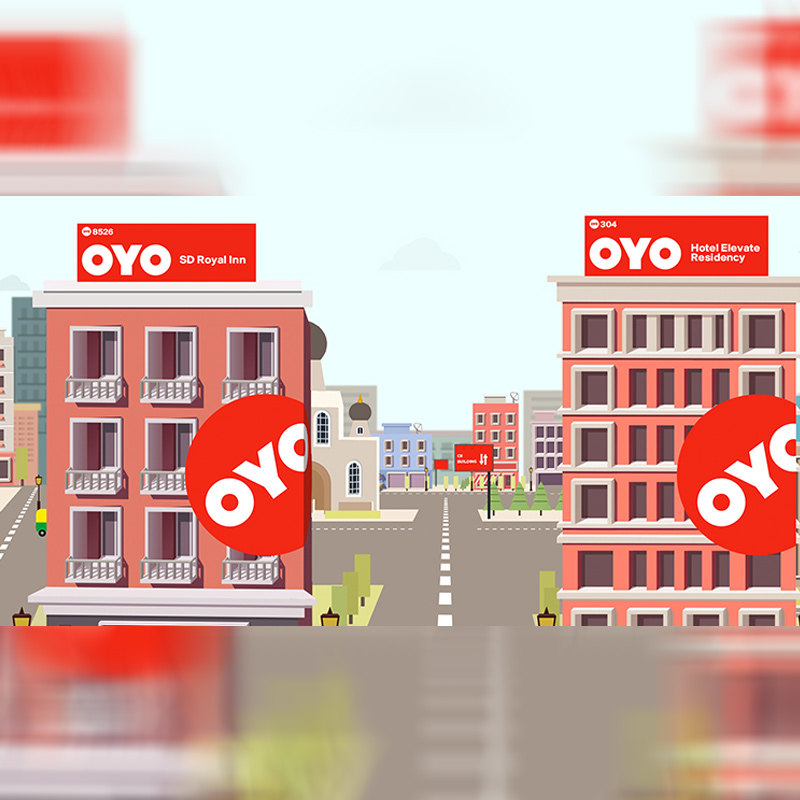
    MUMBAI: Havas Media has bagged the integrated media duties of OYO, South Asia’s largest hotel chain with presence across India, China, Malaysia and Nepal.

    The account will be handled out of the agency’s Gurgaon office led by Uday Mohan, managing partner for North and East India.

    OYO’s expertise in managing chain of hotels backed by technological innovations and its unique business model makes it possible for it to offer high quality standardised experiences at unmatchable scale. Over the last five years, OYO has built distribution, operational and transformational, construction capabilities and its diverse portfolio includes OYO Rooms in the budget category with OYO Townhouse, OYO Home, SilverKey in the mid-market category and Palette Resorts in the leisure category.

    OYO VP of conversions Burhanuddin Pithawala says, “We want our customers to have a hassle-free, technology-driven travel experience with quality living space at affordable pricing. Price point and quality are the two strong differentiators of OYO. With the launch of the brand and expansion into international markets, defining a brand positioning and a go-to-market plan is the need of the hour. We are confident that Havas Media with its integrated media approach and market expertise will take the brand to newer heights.”

    Havas Media Group CEO for India and South Asia Anita Nayyar adds, “According to a research conducted by Havas Group, travel & hospitality ranks No 1 as the most meaningful category globally while in India it stands at No 10. OYO with its unique business model is using technology and talent to fix this socio-economic problem. It is among the few start-ups creating a global brand from India. We are very excited to be partnering with yet another innovative and entrepreneurial brand.”

    “OYO is a pioneer brand in the hospitality space which thrives on technology & innovation. We proposed a unique city level micro-marketing approach leveraging advanced analytical techniques. Going forward, Havas’ Meaningful Brands framework, will be key in mapping the brand chart for OYO. According to the research, brands that are meaningful enjoy 60 per cent higher chance of purchase in the hospitality and travel industry. We look forward to a long and mutually fulfilling partnership with OYO,” mentions Havas Media Group, India managing director Mohit Joshi.

  • Havas hires Contract’s Chakraborty to lead creative partner Benckiser team

    Havas hires Contract’s Chakraborty to lead creative partner Benckiser team

    MUMBAI: Sanghamitra ‘Shong’ Chakraborty has joined Havas Media’s Gurgaon operations as the senior vice president and business head. She will lead the integrated Reckitt Benckiser (RB) team at Havas India, which is the creative partner for many of RB India’s brands.

    It is also a hub of creative work on three major RB brands – Harpic, Mortein and Veet – for the world other than for Europe and North America.

    Chakraborty joins Havas from Contract Advertising. In over 18 years in advertising and brand management, she has worked on several major global and home-grown brands such as GSK, Tata Docomo, Nestle, Maruti Suzuki, Motorola, Dabur, National Geographic etc. across stints with Grey Worldwide, TBWA, Publicis and Contract.

    Havas India CEO Nirmalya Sen said – “Anyone who has worked with Shong – clients and colleagues alike – will agree that she isn’t just a ‘make-it-happen’ person. She is a ‘make-everyone-happen’ person. Her energy is infectious, as is her ability to pull off the impossible.”

    Chakraborty said: “It is a new experience to work in an environment where the offline and online worlds, as well as the creative and media worlds, have been woven seamlessly into one Village, held together with the brand’s philosophy of ‘Better Together’. My other reason, really, was fairly selfish, Havas and RB gave me the opportunity to be an origin market for some of the biggest brands in the FMCG space, and that to me is challenging and should be rewarding at the same time.”

  • Havas develops CTS transparent client facing programmatic solution

    Havas develops CTS transparent client facing programmatic solution

    MUMBAI: Client Trading Solution (CTS) – a game-changing programmatic solution that gives clients complete visibility and control over their campaigns – has been launched by meta programmatic solutions pioneer Havas Group to act as a control tower, offering clients complete visibility across trading desks, DSPs and providers.

    Clients can ensure the quality of their campaigns across their own objectives (visibility, fraud control, brand safety, trading practices, costs, spending, products, formats, channels, countries, etc). The platform delivers exceptional visibility of digital workflow at every stage of the campaign – programmatic media planning, partner negotiation, ad-serving, campaign setup, monitoring, optimisation and reporting – within a fully independent, technology agnostic ecosystem that is open to all partners. The innovative product was developed by award winning data scientists, MFG labs.

    Havas group global managing director Dominique Delport said, “Client Trading Solution is a significant breakthrough. For the first time, we have an offer that gives clients full visibility and control. This innovative, platform gives brands full visibility on costs, investments, outcomes and ROI, across trading desks, DSPs, inventory, providers, marketplaces. Any advertiser using it can see exactly what’s behind all programmatic solutions, with complete transparency allowing us to work hand-in-hand with our clients to build the best strategies for their business.”

    MFG Labs product manager Raphael Mirat said, “CTS complements Havas Group’s programmatic offer. It really shines when clients want both power and control, as it gives them unprecedented flexibility to allocate budget across DSPs and trading desks, without sacrificing anything on supervision and reporting. For the first time, clients have all their trading operations and related data in a single platform, secure and efficient, built on a dedicated infrastructure.”

    Together with MFG Labs, Havas Group launched the industry’s very first Meta-DSP in 2014 and the Media Quality Barometer in 2015. CTS is the most advanced solution on the market allowing full programmatic transparency for clients. The platform has already been used successfully by Telefonica and has received endorsements from Telefonica, tech partners and leading industry bodies.

    Client Trading Solution was developed by Havas Group’s leading tech and math entity MFG Labs. CTS is already being used by traders to manage campaigns for clients via one central, shared platform. Its rich product ecosystem already includes optional features such as Campaign Parameter Optimizers (powered by MFG Labs), DMP Capabilities and Inventory Quality Assessment (powered by Artemis Alliance, Havas Group’s data capacity) and Smart First-party Segments (powered by Constellation).

    “MediaMath has applauded Havas’ continued commitment to programmatic innovation — CTS is an important and differentiated achievement that will deliver increased transparency, control and ROI to digital marketers.”, added MediaMath co-founder and head of key accounts Erich Wasserman.

    Strategic Partnerships EMEA Doubleclick by Google director James van Thiel said, “Google is proud to be part of this initiative. With the integration of DBM into Havas’ Client Trading Solution, it is now much easier for us to collaborate together with both agencies and clients. This innovative solution delivers a more efficient and transparent way for the industry to focus on results.”

  • Havas appoints Mediacom’s Karl Wu as Greater China CEO

    Havas appoints Mediacom’s Karl Wu as Greater China CEO

    MUMBAI: Havas Media Group has appointed media and marketing specialist, Karl Wu, as the CEO for Greater China. Based in Beijing, Wu will be responsible for Havas’s brands — Havas Media and Arena Media, as well as Havas Group pure player agencies Socialyse, Affiperf, Ecselis and Mobext. The media group currently has five offices in China, Hong Kong and Taiwan.

    Wu joins the agency with an impressive track record in integrated marketing and advertising space, having held senior roles both on the agency and the client side. He was most recently the COO of Mediacom China and concurrently the Asia Pacific Managing Director of one of the agency’s largest clients – Volkswagen.

    Prior to joining Mediacom, Wu led Digital Marketing for Nokia as Marketing Director for Asia Pacific as well as China. He has also held senior positions at Dentsu Aegis Media and Publicis Vivaki, and his experience on the brand side extends to blue chip companies such as Intel and NBA in China, and Bell Canada in Toronto Canada.

    Wu will report to the Global Executive Committee represented by Christophe Cases, who will relinquish his role as CEO of Greater China but continue to be based in China in his global role as Deputy Global Managing Director of Havas Media Group.

    Cases said, “We are delighted to have Karl as CEO for Greater China. He is a very important hire for us and integral to our ambition for this market as we strengthen our client-centred collaborative model. Karl brings with him an international mindset and deep knowledge of not only China market but Asia Pacific as a whole. His experience in leadership roles both on the agency and the client side will be a definite asset as we move our business to next level of growth.”

    Wu said, “I have been on both sides of the table, and I can see the changes needed for our industry to deliver better customer value. Havas Group not only has the vision and strategy but has also started executing to that vision. The Havas Village integration is an example of the many initiatives that will ultimately re-shape our industry. I am excited about what the future holds and looking forward to my new role.”

  • Havas appoints Mediacom’s Karl Wu as Greater China CEO

    Havas appoints Mediacom’s Karl Wu as Greater China CEO

    MUMBAI: Havas Media Group has appointed media and marketing specialist, Karl Wu, as the CEO for Greater China. Based in Beijing, Wu will be responsible for Havas’s brands — Havas Media and Arena Media, as well as Havas Group pure player agencies Socialyse, Affiperf, Ecselis and Mobext. The media group currently has five offices in China, Hong Kong and Taiwan.

    Wu joins the agency with an impressive track record in integrated marketing and advertising space, having held senior roles both on the agency and the client side. He was most recently the COO of Mediacom China and concurrently the Asia Pacific Managing Director of one of the agency’s largest clients – Volkswagen.

    Prior to joining Mediacom, Wu led Digital Marketing for Nokia as Marketing Director for Asia Pacific as well as China. He has also held senior positions at Dentsu Aegis Media and Publicis Vivaki, and his experience on the brand side extends to blue chip companies such as Intel and NBA in China, and Bell Canada in Toronto Canada.

    Wu will report to the Global Executive Committee represented by Christophe Cases, who will relinquish his role as CEO of Greater China but continue to be based in China in his global role as Deputy Global Managing Director of Havas Media Group.

    Cases said, “We are delighted to have Karl as CEO for Greater China. He is a very important hire for us and integral to our ambition for this market as we strengthen our client-centred collaborative model. Karl brings with him an international mindset and deep knowledge of not only China market but Asia Pacific as a whole. His experience in leadership roles both on the agency and the client side will be a definite asset as we move our business to next level of growth.”

    Wu said, “I have been on both sides of the table, and I can see the changes needed for our industry to deliver better customer value. Havas Group not only has the vision and strategy but has also started executing to that vision. The Havas Village integration is an example of the many initiatives that will ultimately re-shape our industry. I am excited about what the future holds and looking forward to my new role.”