Tag: Hats Off Productions

  • Today, audiences are slot loyal and not TV loyal: JD Majethia

    Today, audiences are slot loyal and not TV loyal: JD Majethia

    MUMBAI: Jamnadas Majethia, better known as JD, started his career as a theatre artist and has been active in the Gujarati theatre scene for over two decades. The actor/producer teamed up with his close friend Aatish Kapadia and launched the joint venture Hats Off Productions in year 2001-2002. Their first co-production Khichdi was followed by Sarabhai vs. Sarabhai and a host of hit comedy shows on television. Now, the studio is back with a new avatar of the beloved legacy show Wagle Ki Duniya – Nayi Peedhi, Naye Kissey, which is airing on Sony Sab.

    Comedy and family values have always been at the core of the works they’ve created, shared Majethia. Feel good shows are the strength of Hats Off Productions, as he believes this kind of content can be watched together as a family.

    Said he: “We have always received a great amount of respect, adulation and love from audiences. Hats Off Productions is a team of passionate people who believe in giving progressive content to their audiences. Relationships, warmth, creating memories and emotions are the elements that work well in India and so we always try to work around these factors. Our shows Sarabhai vs Sarabhai and Khichdi are two decades old but they still resonate today and are loved by audiences. Audiences have kept this show alive that is what we strive for.”

    Apart from the iconic and memorable Khichdi and Sarabhai vs Sarabhai, he has experimented with formats outside his forte of comedy, such as family dramas (Baa Bahu Aur Baby, Jasuben Jayantilaal Joshi Ki Joint Family, Sukh By Chance, Behenein), romance (Chintu Chinki Aur Ek Badi Si Love Story, Ek Doosre Se Karte Hain Pyaar Hum) and supernatural/fantasy (Bakula Bua Ka Bhoot, Badi Dooooor Se Aaye Hai).  

    Explaining how majority of his shows based on family values have worked well among the different genres that he has produced to date, Majethia said, “Viewers only have half an hour to enjoy our show, in that specific time period we need to catch their attention and  provide them wholesome entertainment. In today’s time content is the king, it is important to come up with fresh ideas which are also engaging.”

    Majethia believes that today audiences have a myriad of options, from TV loyalty the focus has been shifted to slot loyalty. He opined that earlier one channel used to dominate all the slots. But now things are changing, audiences are programme loyal. More than the brand, the content is working, which works in the favour of production houses. Be it comedy, horror, crime, thriller, daily soaps, historical or mythology, each of these genres works well among viewers, he explained.

    On Wagle Ki Duniya reboot

    The opportunity to bring back popular sitcom Wagle Ki Duniya, which aired on DD National from 1988 to 1990, landed before him almost like an act of providence, quipped Majethia.

    “We were working on a show with middle class and higher middle class backdrop. It was almost finalised when Sony Sab business head Neeraj Vyas called Majethia to re-adapt Wagle Ki Duniya. Interestingly, on the same night he received a call from RK Lakshman’s daughter in law Usha Lakshman. Considering this as the universe’s calling, I went ahead with the story. Earlier the show had only 19 episodes and Usha Lakshman wanted to utilise those episodes. But it has very little scope when it came to creation. That is when the makers decided to create a programme all together with a new format,” he detailed.

    Along with his co-partner Kapadia, he created a bank of pilot episodes which got an instant thumbs-up from the Sony Sab team. However, the biggest challenge is to create fresh episodes every single day. Unlike other daily soaps, there is no scope for stretching the content or utilising previous shots and the existing library.

    Explaining on how this version is going to be different, Majethia remarked, “In those days what RK Lakshman created was the story of a common man, we have taken that same story a notch higher. The issues are more pertinent to today’s time. He is addressing the real challenge of feeding his family, raising kids, taking care of parents in the pandemic. He wants his family to have a happy lifestyle, but his income is not sufficient and he is also not a risk taker. So, the story is about how he manages everything simultaneously. Our motto is to make people understand that ultimately life is all about being happy and creating new memories.”

    With a change in generation, the protagonist in the new series will face a newer set of dilemmas and challenges. The show will also showcase the progression in the lives of the middle-class in the country. While Aanjjan Srivastav and Bharti Achrekar will reprise their roles of Srinivas and Radhika Wagle, Sumeet Raghvan and Pariva Pranati will play the new lead couple along with child artist Sheehan Kapahi and Chinmayi Salvi.

    Earlier, Wagle Ki Duniya was filmed in a small house but now, in step with contemporary norms, the team has shot the show in a two-bedroom flat. The entire set is in Mumbai’s Mira Road where they have created a house, society garden and an office. They have also created multi-utility rooms with all the technical assistance to make the work much more efficient. Behind Wagle Ki Duniya – Nayi Peedhi, Naye Kissey there is a strong team of ten writers including Majethia and Kapadia and headed by Jayesh Patil. The show is directed by Sameer Kulkarni.

    Hats Off Production is also working on its latest drama Janani for In10 Media’s new Hindi GEC Ishara. Supriya Pilgaonkar is essaying the lead role. In the near future, Majethia said he wishes to work on non-fiction shows.

  • Sony Pictures Networks India ups safety bar on TV sets

    Sony Pictures Networks India ups safety bar on TV sets

    MUMBAI: TV production in India has been a bit of a bummer over the past few years: hazardous material constructed sets, loosely put together electrical connections, below par sanitation, and shoddy facilities have been the hallmarks of shooting floors. Safety measures for TV actors and crews have been sub-par. Accidents have sometimes got out of hand, and there have been several incidents over the years where crew have been injured or lost their lives. Sony Pictures Networks India (SPN) is changing that at least on one front: having ambulances and clinics on all sets where TV shows or films are being shot.

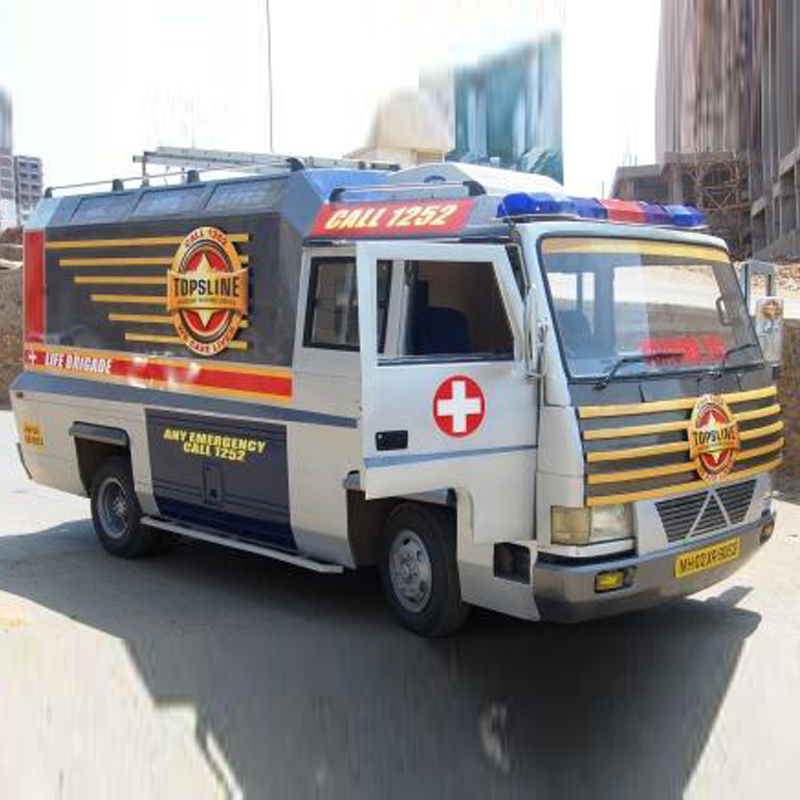
    Apparently, the company has hired one of India’s top emergency response services TopsLine to deploy 11 mobile clinics and ambulances at the sites of 16 shows where shooting is under way in Mumbai and its periphery. Why is SPN India suddenly getting a shot of corporate social responsibility?

    Well, it’s part of its efforts to raise the bar and provide protection to those who work on the front lines to churn out the content that brings it ratings and revenues. A while ago SPN India officials had conversations with these folks on how they felt on the sets, and the reaction was pretty eye-opening. Most respondents said that, apart from wages, what they wanted was better hygiene and ablution facilities, apart from safety. That prompted the network to spring into action, taking the first of many more steps it intends to take in this direction.

    The mobile medical vans are likely to cover around 1600 people at a stretch if one were to assume 90-100 people working on an average at each of its different sets at a time.

    While TV industry professionals have lauded SPN India’s initiative, a lot more needs to be done says Hats Off Productions co-founder and the Indian Film & TV Producers Council TV division head JD Majethia. However, there are challenges, he admits.

    “The nature of business is so different — the shooting sites are temporary structures; it’s difficult to make arrangements. Sites keep shifting, and sometimes the sets are on wheels,” says Majethia.

    There is the lack of basic hygiene amongst the crew at times who chew tobacco, spit betel nut juice (pan) on the sets, which tends to dirty the area. Of course actors have their vanity vans, which keeps them ring fenced from the mess. But the crew has to bear with it all the same.

    A problem that is faced by many a producer and production supervisors is providing proper lunch tables on locations. “On large shooting floors, if there are 100 people at work and everybody needs to be accommodated during lunch, it becomes difficult to manage, say 10 tables, in an hour’s time,” explains Majethia. Then, potable water, for example, is one of the issues that needs careful planning.

    At times there is the mosquito menace at the shooting locations. And when the Dengue fever scare has been running rampant, this is indeed concerning. “In such situations, we often take the help of pest control services and also provide safety creams such as Odomos to all the actors and workers,” Majethia said.

    Majethia once again lauded SPN India’s ambulance drive and added that the industry is constantly working with the various trade craft bodies to improve the lot of those on the sets. “And things can only get better from here,” he said.

  • Sony Pictures Networks India ups safety bar on TV sets

    Sony Pictures Networks India ups safety bar on TV sets

    MUMBAI: TV production in India has been a bit of a bummer over the past few years: hazardous material constructed sets, loosely put together electrical connections, below par sanitation, and shoddy facilities have been the hallmarks of shooting floors. Safety measures for TV actors and crews have been sub-par. Accidents have sometimes got out of hand, and there have been several incidents over the years where crew have been injured or lost their lives. Sony Pictures Networks India (SPN) is changing that at least on one front: having ambulances and clinics on all sets where TV shows or films are being shot.

    Apparently, the company has hired one of India’s top emergency response services TopsLine to deploy 11 mobile clinics and ambulances at the sites of 16 shows where shooting is under way in Mumbai and its periphery. Why is SPN India suddenly getting a shot of corporate social responsibility?

    Well, it’s part of its efforts to raise the bar and provide protection to those who work on the front lines to churn out the content that brings it ratings and revenues. A while ago SPN India officials had conversations with these folks on how they felt on the sets, and the reaction was pretty eye-opening. Most respondents said that, apart from wages, what they wanted was better hygiene and ablution facilities, apart from safety. That prompted the network to spring into action, taking the first of many more steps it intends to take in this direction.

    The mobile medical vans are likely to cover around 1600 people at a stretch if one were to assume 90-100 people working on an average at each of its different sets at a time.

    While TV industry professionals have lauded SPN India’s initiative, a lot more needs to be done says Hats Off Productions co-founder and the Indian Film & TV Producers Council TV division head JD Majethia. However, there are challenges, he admits.

    “The nature of business is so different — the shooting sites are temporary structures; it’s difficult to make arrangements. Sites keep shifting, and sometimes the sets are on wheels,” says Majethia.

    There is the lack of basic hygiene amongst the crew at times who chew tobacco, spit betel nut juice (pan) on the sets, which tends to dirty the area. Of course actors have their vanity vans, which keeps them ring fenced from the mess. But the crew has to bear with it all the same.

    A problem that is faced by many a producer and production supervisors is providing proper lunch tables on locations. “On large shooting floors, if there are 100 people at work and everybody needs to be accommodated during lunch, it becomes difficult to manage, say 10 tables, in an hour’s time,” explains Majethia. Then, potable water, for example, is one of the issues that needs careful planning.

    At times there is the mosquito menace at the shooting locations. And when the Dengue fever scare has been running rampant, this is indeed concerning. “In such situations, we often take the help of pest control services and also provide safety creams such as Odomos to all the actors and workers,” Majethia said.

    Majethia once again lauded SPN India’s ambulance drive and added that the industry is constantly working with the various trade craft bodies to improve the lot of those on the sets. “And things can only get better from here,” he said.

  • The Content Hub: Few breakaways from herd mentality

    The Content Hub: Few breakaways from herd mentality

     MUMBAI: The fiction show space in India is going through a changing scenario. While there is experimentation, several shows address similar themes. Discussing about the same at indiantelevision.com’s, ‘The Content Hub,’ were Hats Off Productions founder JD Majethia, Balaji Telefilms creative director Nivedita Basu, Epic Television Networks creative head Ravina Kohli, MTV programming head Vikas Gupta, writer and producer Ila Bedi Dutta and author and scriptwriter Gajra Kottary. The session was moderated by IPR Times Group head of content and operation Monisha Singh Katial.

    The discussion began with Katial questioning whether the fiction space was experiencing a lull period. Basu who joined Balaji after a sabbatical, said that the reason why she rejoined was because the fiction space was still evolving. However, Kottary felt that there is a lull in terms of the fact that everything looks the same.

     Kohli too agreed that there is a herd mentality, but Epic isn’t  competing in the GEC space, since it is a different channel. “Usually people evaluate shows by seeing if others will like it. We believe that if we can watch a show, we will go ahead with it rather than make it for an audience that we don’t even know,” she informed.

    Gupta said that due to age group differences, looking at a show from an age group perspective wasn’t easy. “I may be older but I am creating shows for the age group of 15 to 20. And research is showing us that 30 is the new 18,” he explained.

    Writers on board said that most of them have had unusual stories to tell, but broadcasters pick up shows depending on their research. “When a creative person comes up with a good show, which receives appreciation, but not the ratings, then the broadcaster pulls the plug on it. He loses conviction in experimenting and goes back to the tried and tested shows,” opined Majethia. He mentioned that Sarabhai vs Sarabhai which was telecast once a week never got the desired ratings and when Star One put it as a repeat daily, the ratings shot up.

     Through the discussion, Kohli added that it isn’t possible to sustain creativity day after day, which was agreed by Majethia, who said that the current shows are squeezing writers so much that they lose the creativity and passion that they began the show with.

    While Basu said that it was encouraging to see the type of content that Epic and MTV are creating, Balaji’s experience has been quite different. “Channels want success. We at Balaji have also tried doing mature shows such as Kehna Hai Kuch Mujhko but our experiments have failed miserably and so we were asked to go back to doing dailies,” she said.
     
    The issue with having a single episode a week shows is that the audience doesn’t usually come back like it does for a daily because it has been trained that way, said Majethia. According to him, the way to do this was to have Monday to Thursday shows and Friday to Sunday shows because it is easier to remember weekends than once a week.
     
    Gupta said that the audience looks forward to weekend shows being larger than life. He said that while experiments have happened such as MTV’s own show about a gay love story, not every viewer is ready. While earlier shows catered to urban settings, with increasing TV penetration shows have also gone backward.  He also highlighted a point saying, “There isn’t a lull in fiction, there is a lull in fiction success. Everyone tries something new in fiction almost every year.”

     Over the years, there has also been an increasing competition among GECs, unlike the limited channels earlier. Kottary also spoke about one of her shows which was broadcast on Zee TV in the early 2000s which was about a 34 year old lady doctor falling in love with a younger man. This according to her was much ahead of its time and yet worked for three years.

     Basu, who has also worked on the Indian adaptation of 24, said that though a lot of efforts went behind it, but it didn’t garner the expected ratings. She then proposed a question asking which of the two channels, Zindagi and Sony Pal that launched with different content,  could be called a success? Majethia to this said that Zindagi has spent little on buying the shows while Pal has invested heavily in producing original shows. “Zindagi is a success because it is a finance driven model,” he said.

    Basu with her bag full of ideas, said that channels have been typecast. So a comedy show will be sent to Sab, while a youth oriented show will be sent to MTV, to which Gupta said that this level of segmentation is healthy.

    Whether writers, producers and channels are really pushing the envelope was a question raised in the session, to which most people replied with a positive note, while Kottary said that she doesn’t feel they are really pushing it, but it was possible.