Tag: Hathway

  • Hathway to target existing users for new OTT, cable hybrid STBs

    Hathway to target existing users for new OTT, cable hybrid STBs

    MUMBAI: Indian consumers are not losing interest in linear TV anytime soon but one can’t be too wary given the OTT burst. To stay ahead of the game, Hathway has unveiled two new products – an OTT set-top box and a cable hybrid box. Both of the boxes have been priced at Rs 2999.

    80 per cent of Hathway’s target will be existing users who can upgrade to the new hybrid box while 20 per cent will be new customers. As on 30 June, it had 7.2 million cable TV subscribers. Overall, the company is hoping to sell 100,000 STBs each month. The box production capacity is the same as before for now but if the volume of response explodes, it can even double it.

    The newly introduced boxes will be available to the local cable operators from 15 October and consumer registrations will start by 1 November.  For initial rollout, the company will work closely with local cable operators.

    Hathway Play Box, the OTT set-top box is based on Google’s Android TV. The remote carries a dedicated YouTube, Netflix and Google Play button. It will also have voice-enabled Google assistant and inbuilt Chromecast. The hybrid cable box named as Hathway Ultra Smart HUB combines linear TV with Play services in HDR quality along with easy navigation. It will enable users to download apps from the Google Play store also.

    “When we developed Ultra Smart Hub, the most important aspect has been listening to our customers to understand their needs regarding their TV viewing. We see a clear shift in consumption in content today compared to earlier. Indian consumers today want a mix of traditional linear television viewing combined with on-demand or streaming services. With the Smart Hub we have a product that meets their expectations,” Hathway Cable and Datacom MD Rajan Gupta said.

    There is a slight difference in the usage of both. The cable hybrid boxes can be made available in areas where Hathway has its cable infrastructure while the OTT has an advantage. It can reach areas where there’s no cable but Hathway’s broadband service is offered.

    The new boxes can lead to the company’s ARPU growth also. He hopes top 25 per cent of consumers will go for OTT services. “In general, any OTT service providers will be more than happy to do such tie-ups because it will help them increasing reach,” he also added.

    “Starting 1 December we will have a TVC for this product. Our marketing team is working on a 360-degree marketing campaign. Creating awareness, right from metros, mini metros to rural will be the key. We will also be working closely with our LCO partners. In fact, we will be rolling out first with them and apart from TVC we will also take help from them to create awareness,” he added.

    In the previous investors call from the Q1 financial result, Gupta mentioned the necessity of an innovative model, bundling IoT, cable with current pay TV and OTT. He had said that the company is working on it and would announce something soon.

    "We are pleased to be working with Hathway and look forward to leveraging their extensive broadband and cable network to enable more exciting and useful Android TV experiences for consumers," Android, Chrome & Play Business Development head India Pranab Mookken commented.

  • OTT players, cable ops find harmony in integration

    OTT players, cable ops find harmony in integration

    MUMBAI: Studies have shown that as far as India is concerned, nothing is going to dethrone TV’s position for a while. But the OTT boom is undeniable. Even TV broadcasters want to have their cake and eat it too by setting up their own video on demand services. Although cord-cutting is not as prevalent in India as developed markets, it is certain that viewing habit of consumers has already started changing. Cable TV (http://www.indiantelevision.com/iworld/broadband/cable-tv-dth-players-cautiously-optimistic-on-jio-fiber-competition-180706 ) operators are most vulnerable to the major shift in the near-term while DTH players are also under pressure to come up with new strategies.

    Recently, Hathway took a step to bridge the gap between TV and OTT by landing a deal with streaming giant Netflix. Hathway is more vulnerable to the change due to its urban-centric business. Another large operator Siti Networks announced its first hybrid set-top box that has YouTube and YouTube Kids in-built. However, this is not about only cable operators, OTT players also have high chances to reap the benefit of it.

    “Traditional cable players are already penetrated very deep, with 90-100 million TV households and broadband customers too. That is a huge customer base for OTT platforms to leverage. It’s a win-win situation: the OTT (http://www.indiantelevision.com/iworld/over-the-top-services/higher-production-values-of-ott-content-wont-put-pressure-on-tv-biz-punit-goenka-180814 platform gets access to the customer base while the cable company can increase subscription ARPUs,” Ernst & Young media and entertainment advisory services partner Ashish Pherwani commented.

    Netflix, the US streaming giant is trying to beef up its business in India very soon. With deep pockets, it wants to make a premium content library. But as the platform has high pricing and still does not have a considerable amount of regional content, it’s not easy for it to acquire customers here.

    KMPG India media and entertainment partner and head Girish Menon said it’s definitely a starting point for cable operators to be able to offer OTT content. With the rapid growth of mobile internet, linear TV may be under threat at least for certain situations. According to him, by offering OTT platforms, these cable operators are protecting their business from digital.

    “The biggest challenge for any OTT platform is physical distribution and customer acquisition. So by a deal with Hathway, Netflix is actually taking them into many more households than they are currently able to access on a direct basis. It partially helps them with both distribution and acquisition challenges,” Menon commented.

    A study by Parks Associates said approximately 33 per cent of cord cutters in the US would have stayed with their service provider if offered a Netflix-style service bundled with broadcast TV channels. In the US, where the cord-cutting started first, viewers love to get both experiences at the same time. As traditional TV still remains the primary screen in India, these integrations can definitely help cable operators to reduce churn and increase stickiness.

    On the contrary, Dolat Capital VP research Karan Taurani thinks the deal won’t help Netflix to acquire customers as the service is not bundled and will cost the same amount of money. According to him, Netflix is much easier on Chromecast.

    “It may help Hathway in some way if they tie up with four to five VoD platforms rather than just one; further, they will also have to provide the set top box with VoD access at a minimal price in line with the price of a Chromecast device which gives access to any VoD platform,” he added. However, the new set top box with a special button on remote for Netflix has been priced at Rs 2999.

    Talking about the benefits of the deals, Menon mentioned another vital point. As most of the cable companies also have broadband businesses, the alliance between cable and OTT players can lead to the broadband growth of the cable companies. Moreover, for cable companies, broadband operates at a much higher margin than traditional cable business.

    It seems as if even broadcasters are growing alert to the potential danger in OTT unless you make them your friend. Recently Zee Enterprises Entertainment Ltd entered into a content deal with Airtel after breaking up with Jio while ALTBalaji partnered Xiaomi with Mi TV. Eros Now, the OTT platform from Eros International, struck a deal with FashionTV.
    It is very certain that the industry is about to see more partnerships along the same line. Even DTH players have also struck few deals with OTT players. Acknowledging it as an upcoming trend, Pherwani commented that every OTT platform is trying to maximise its reach.

    “I think you will see more and more such partnerships and this is not just in cable, even in DTH. The reason behind it is that to a certain extent they are preparing for a future. Because the FTTH broadband roll out front that Reliance has announced makes it a significant player that could actually impact the distribution business of cable and DTH players. So the partnerships are a protection,” Menon commented.

    Large players like Hathway, Siti Networks, Den Networks will find it easy to invest more in the technological update and remain relevant. But small MSOs with lesser investment, cash flow will not be able to survive in the thriving competition. Hence, the cable industry is definitely going to witness a number of consolidations. The DTH and telecom industries have already realised that they need to merge if they want to sustain their businesses.
    Going forward, we will see more partnerships and deals between traditional TV and modern OTT.

  • BSNL sees speed spike in latest Netflix ISP ranking

    BSNL sees speed spike in latest Netflix ISP ranking

    MUMBAI: The streaming giant Netflix has released its monthly ISP Speed index data where India’s BSNL saw a noteworthy speed jump. The state-owned telco company’s average speed rose to 2 Mbps, up from 1.66 Mbps in July. Along with the speed spike, it also rose one spot according to the ranking. Other than BSNL, rankings of Hathway and D-Vois have also improved but the speed spike is not much notable. In overall country rankings, India fell one spot to 54th place. The Netflix ISP Speed Index is a measure of primetime Netflix performance on a particular ISP.

    According to ISP index, 7 Star Digital, Spectranet, Airtel have acquired top three positions. Another government owned entity MTNL fell one spot due to the spike in BSNL’s average speed.

    Globally, largest speed gain on the index was experienced by Flow in Jamaica. Speeds at the Jamaican operator increased by 0.74 Mbps, bringing its average monthly speed to 2.37 Mbps. Indosat-Fibre in Indonesia also saw notable spike reaching a 4.14 Mbps average for August up from 3.76 Mbps in July.

    [[{“fid”:”836733″,”view_mode”:”default”,”fields”:{“format”:”default”,”alignment”:””,”field_file_image_alt_text[und][0][value]”:false,”field_file_image_title_text[und][0][value]”:false},”link_text”:null,”type”:”media”,”field_deltas”:{“1”:{“format”:”default”,”alignment”:””,”field_file_image_alt_text[und][0][value]”:false,”field_file_image_title_text[und][0][value]”:false}},”attributes”:{“height”:631,”width”:700,”class”:”media-element file-default”,”data-delta”:”1″}}]]

    In the losses category, KBro in Taiwan and SK Broadband’s speed in South Korea decreased notably. KBro experienced speeds decline to a monthly average of 2.80 Mbps from 3.06 Mbps last month and SK Broadband’s speeds slowed to 2.71 Mbps on average down from 2.97 Mbps last month. As per country rankings, Jamaica dropped five spots to 51st and Singapore dropped four spots to 12th.

    The country reckoned to have the overall top speed is Switzerland at 4.19 Mbps, followed by Netherland’s 4.07 Mbps and Romania’s 4.01 Mbps. Netflix’s home country, the US, stood at eighth position with average 3.98 Mbps speed.

  • Hathway to show Netflix content with new STB

    Hathway to show Netflix content with new STB

    MUMBAI: Hathway has taken the step ahead to bridge the gap between TV and OTT by landing a deal with giant Netflix. Consumers will get seamless access to Netflix through the Hathway set top box. While there will be a dedicated Netflix button on the remote of the set top box, Hathway subscribers will be able to pay for Netflix subscription using the Hathway bill.

    The introductory price for set top box has been set at Rs 2,999. All existing and new Hathway broadband consumers, who subscribe to Netflix and pay through their Hathway bill for their Netflix subscription, will receive this box for free.

    “In this smart and digital era, customers are looking at leading internet entertainment services like Netflix to access high quality, well produced entertainment. The soon-to-be launched Hathway set top box will make watching streaming videos on large screens an incredible experience. The Hathway set top box will be bundled with our high-speed, unlimited fibre-to-home monthly plans,”  Hathway MD Rajan Gupta said.

    In the changing content scenario, both OTT platforms and internet service providers are getting into deals to expand consumer reach. While for Netflix it is an important deal to reach local consumers, Hathway will also be able to lure customers on the back of the OTT platform’s content library. Moreover, when Jio is gearing up to roll out its fibre to home service, all other existing players have started changing their strategy.

     “We’re very excited to partner with Hathway Broadband in India to bring the latest technologies and great stories under one roof. The Hathway set top box will allow Hathway’s customers to use the Netflix button on their remote controls to seamlessly access and enjoy the best entertainment at high speeds,” Netflix Asia business development VP Tony Zameczkowski said.

  • Hathway focuses on high data usage consumers to grow broadband

    Hathway focuses on high data usage consumers to grow broadband

    MUMBAI: Hathway Cable and Datacom Ltd (HCDL), which has been one of the major players both in broadband and cable business, could be most vulnerable to the changes in the ecosphere given that much of its business is urban-centric. Now, the company is focusing on high data usage customers (more than 80 GB per month users) to remain relevant in the competition and the company will roll out more plans around this segment very soon. To have a more stable and loyal subscriber base, apart from 30,000 regular churn, it had 57,000 forced churn from low speed, low data consumption consumers.

    The company had to take the step of forced regular churn because it did not want to utilize capex for them. Low pricing data plans from networks can easily lure the customers who use less than 40 GB data per month increasing the churn rate of the service provider. Especially, the bucket of 0-20 GB data has more low pricing deal seeking tendency as HCDL MD Rajan Gupta said in an earnings call. Though the company is focusing on retaining 80 GB data users, he also mentioned there’s no stress in the bucket of more than 40 GB usage.

    “These customers, who were anyway not using the network, are suddenly getting the same 12-20 GB for Rs 200 even on post-paid, even with the reputed number 1 and number 2 players. So these people from January- February started asking for more and more deals. So we had two options. We could have given them deals and maintained them at Rs 300 ARPU. But then I’m blocking my capex, my CMTS, my network hubs, my data centre, which will prevent me from giving that sort of quality service to all my high data users, or I have to put much more capex. We didn’t want either of the scenarios,” Gupta explained the logic behind cleaning up “non-productive base”.

    While the company currently stands with 5.5 million home passes, for the rest of this financial year it will not expand home passes any more. The focus will be on adding high usage customers within the current network. The strategy is to initially invest in growing this base through a mix of FTTH, pay TV, OTT and IoT services. In few select cities, the plan of offering home services bundling solutions along with high-speed data has already been rolled out on a four-month plan. Gupta claims to see 10 per cent increase in gross addition in those particular geographies while six to seven per cent current consumers are upgrading to it.

    But before coming up with extravagant marketing strategy, it wants to get the right product first. In the next three to four months, the company will master the product and overall service. However, while ARPU has declined to Rs 690 this quarter, the initial focus is on adding value to the service of high usage customers rather than expecting a return in ARPU. Basically, the plan is revolving around J-curve growth strategy where the initial focus on service will lead to harvesting revenue and higher EBITDA growth.

    Jio Giga Fiber has already lured customers with several additional amenities including Jio Giga TV set top box. In this changing scenario, Airtel and BSNL have already revised their plans. The giant DTH player Tata Sky has recently rolled out its broadband service in 12 cities. Another MSO DEN Networks has chalked out plans of working more closely with local cable operators to get a hold of last mile competition.

    However, like many other experts in the industry Gupta also emphasised that with the entry of large players, the awareness about fibre to home, high speed broadband will increase because of the PR and marketing efforts. He mentioned that out of the current 17 million wire and broadband base, only 5 million is high speed broadband. On an optimistic note, he thinks eventually this 5 million will become 17 million.

    “We want to make sure, in every market we operate, we have the best of solutions; either the ability to give even 1,000 GB to a consumer at a very low price or the ability to give speeds of 200-300 Mbps. On ARPU we’ll see 2-3 per cent reduction every quarter,” he added.

    While the company which itself is focusing so much on broadband business sensing the demand, the question rises how OTT is affecting the churn in its cable business wing. Gupta says a high number of consumers are still sticking to cable and DTH because of low monthly pricing. He adds that OTT and cable or DTH will more and more start complimenting each other over a period.

    “We don’t believe these are two very separate spaces. We believe our expertise is the last mile. We have access to consumers. Now if consumers want broadband, we are pretty much there. If consumers want OTT, we will be there. And if consumers want linear TV, which again, is not showing any sign of drop, we are already there,” he added.

    In the cable TV segment, the company plans to increase phase III, phase IV ARPU by about 15 per cent. While 6 per cent has already come in Q1 owing to the price implementation, balance effect is expected to come in Q2. In the case of the first two phases, the plan is to increase ARPU by 7 per cent. As all the price changes have been implemented from the month of August, it hopes to stabilise it by September.

    The company plans to have 25,000-28,000 gross additions per month in the next 9 months of FY19. Alongside that, the company is also focusing on doing underground fibre to increase the service to customers. As the entire fixed broadband business ecosystem gradually picks up thanks to more Indian, vernacular content on OTT platforms, Hathway is also taking more aggressive moves in the segment.

  • Hathway Cable gets approval to raise funds worth Rs 99.63 crore

    Hathway Cable gets approval to raise funds worth Rs 99.63 crore

    MUMBAI: Leading cable and broadband player Hathway received an approval to raise funds worth Rs 99.63 crore at a board meeting held on 29 August. Following the approval the company’s shares rallied as much as 15 per cent.

    The approval has come for raising of funds through issuance of 30,800,000 equity shares at a price of Rs 32.35 per equity share including premium of Rs 30.35 per equity share which is higher than the issue price determined in accordance with Regulation 76 of Securities and Exchange Board of India (Issue of Capital and Disclosure Requirements) Regulations, 2009, as amended, aggregating to Rs. 99.63 crore on preferential basis to Hathway Investments Private Ltd, an entity forming part of the promoter group, as posted on BSE.

    Hathway offers cable television services across 140 cities and towns and high-speed cable broadband services across 21 cities.

  • Broadband on cable fibre declining?

    Broadband on cable fibre declining?

    BENGALURU: Is broadband on cable fibre on the decline in India? Results over the past few quarters of some of the multisystem operators or MSOs seem to indicate just that. Mukesh Dhirubhai Ambani’s largest start up in the world Reliance Jio Infocom Ltd (JIO) is the one of the biggest upheavals that has happened in the Indian telecommunications ecosystem ever. With its operations of scale and low cost services, there just does not seem to be a better bet for the prudent Indian internet user. What is missing is quality of services, but, then that is the case also with all the major mobile  and internet service providers in India, be it an Airtel or a Jio or a Vodafone or the public sector BSNL and MTNL.

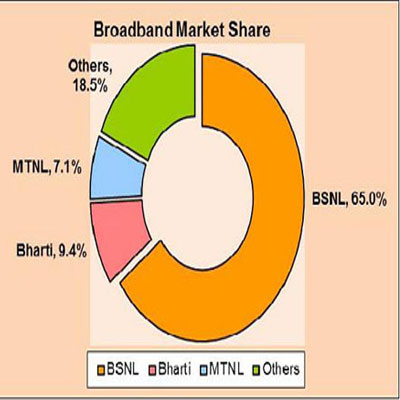
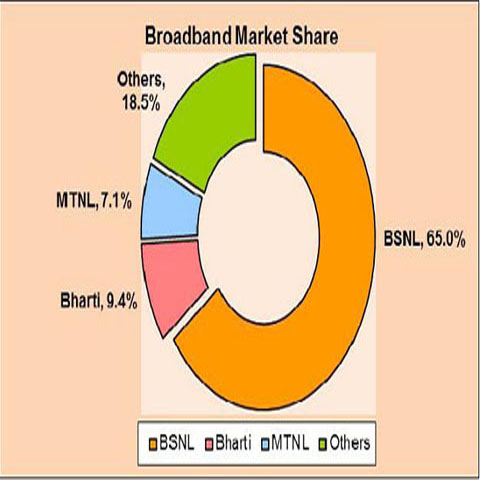
    Wired broadband internet subscriber numbers have been declining, while wireless broadband internet subscribers have been growing according to Telecom Regulatory Authority of India (Trai) data. Among the top five wired internet services providers in India, BSNL and MTNL have been slowly and steadily losing subscribers. However, the overall loss of wired broadband subscribers is higher than the numbers bled by these two public sector behemoths. Subscription numbers of the other three players in Trai’s top five wired broadband internet service providers list such as Bharti Airtel, ACT and Hathway have been either increasing slowly or have been steady month-on-month in calendar year 2018 according to Trai data. MSOs and LCOs are among the other wired internet service providers in the country. Financial numbers released by major and other MSO and wired internet service providers such as Siti Networks, Den or Ortel indicate lower revenues from their respective broadband segments, implying either loss of subscribers or lower ARPU due to competitive pricing or both.

    Is the laying of fibre cable or FTTH (fibre to the home) that Jio has planned to provide broadband internet services to the doorstep out the right way forward? Anything that Reliance does will be on a huge scale. However, why not pause and limit the size of Jio’s FTTH plans and then leapfrog and start offering 5G services? 5G is a wireless service to the user’s door and needs no messy holes or wires for access into the user’s home. All that is needed by the user is a modem that works like a wireless modem.

    Affordable 5G services could effectively change how a user receives internet and related services. It’s not going to be easy and will require a huge amount of capital for the infrastructure for line of sight transmission in crowded cities, etc. But, already players such as AT&T and Verizon in the US have planned a slow but steady rollout of 5G services in the US. One the US majors will roll 5G services first in four cities by the end of 2018 and then across the US over time. Players in the US are planning to bundle 5G services with offers such as free Youtube.com TV and Apple TV 4K for a limited period of time. Jio has the resources, the wherewithal to do so.

    Of course 5G could be even more bad news for the current Indian cable TV ecosystem’s wired broadband offerings, maybe even the current Indian media and entertainment ecosystem, but could be a huge beneficial and cost effective game changer for the user. Using the cliché, change is the only constant, well maybe the entire ecosystem that brings entertainment to the common Indian does need a huge shakeup?

  • Cable TV, DTH players cautiously optimistic on Jio fiber competition

    Cable TV, DTH players cautiously optimistic on Jio fiber competition

    MUMBAI: The terminator…, oops sorry, the disruptor is back. And, this time it is targeting India’s multi-billion-dollar cable TV and DTH businesses with promises to unleash high-speed fixed line fiber-based broadband services that aims to “connect everyone, and everything, everywhere” — at least in 1,100 cities to begin with. No wonder the legacy businesses are eyeing the announcement on the launch of Reliance Jio GigaFiber project with a mix of healthy skepticism and optimism.

    “It will be a challenge, but then this would increase general awareness about fixed-line broadband (FLBB) services as penetration of wired broadband is pretty low,” Kerala Communicators Cable Ltd (KCCL) CEO Shaji Mathews told Indiantelevision.com when asked about the big bang launch of Jio GigaFiber from 15 August 2018, which is also backed by Reliance Industries’ money power.

    According to Mathews, Jio GigaFiber rollout would help getting the focus back on good quality FLLB services as “over the years the industry in general had been focusing on and talking more about wireless broadband”. KCCL is an initiative of independent cable TV operators in Kerala under the guidance of Cable Operators Association (COA), an umbrella union of over 4,000 local cable operators functioning all over the southern state.

    What about the gorilla in the room? Mathews, who has spent almost a life time in the cable TV business, was of the opinion that Jio’s entry into the FLLB segment would “bring true value to real players as the capable cable ops will survive” the competition. “Moreover, as the cable companies are already on ground with existing businesses, they have an added benefit of existing fiber optics,” he added optimistically.

    Echoing similar sentiments SITI Networks Limited chief business officer Rajesh Sethi, while accepting further disruption — as in Jio fiber — was expected in the content delivery eco-system, said, “As we keep pace with changing technological trends, the industry is expected to become more multifaceted, efficient and customer centric.”

    A senior rep from another MSO company who didn’t want to be named felt that with the entry of cash-rich companies like Reliance Jio, it would help legacy players to “focus better” on the core business. “The new venture of Jio will also bring back investors’ focus on the sector, apart from increased awareness among consumers,” the MSO company exec added while talking to Indiantelevision.com.

    India’s FLBB penetration was expected to increase to 10.3 per cent from the present single digit share by year 2022 as per Singapore-based Media Partners Asia research. As content and applications were also getting heavier and denser in size gradually, there were fair chances that Jio could disrupt the market, while other players have equal opportunity too in this segment, the MPA analysis had stated some time back.

    An immediate effect of the Jio fiber project announcement was that shares of listed MSO companies like Hathway Cable & Datacom, Den Networks, GTPL Hathway and SITI Networks dropped in the early part of trading on Indian bourses. It must also be mentioned that shares of Reliance Industries too had dipped in early trading as RIL chairman Mukesh Ambani was addressing the shareholders at yesterday’s company annual general meeting.

    While the spotlight may be falling on cable operators and MSOs, there is no denying the fact that Jio GigaFiber could also impact the business plans of DTH platforms and incumbent telecom players like Airtel, Vodafone and even State-run BSNL as Jio plans to offer not only just FLBB, but also a host of other telecom and TV services, apart from smart solutions for the retail consumer’s home, in general.

    India’s DTH players, for example, felt that while fiber-based broadband services could be a good option for high-rise residential complexes in urban Indian cities, it would be a challenge to lay fiber in far-flung hilly areas or take the lines into homes in those places where houses are horizontally laid out.  

    For cities like Mumbai, Bengaluru and Gurugram, having rows and rows of high-rise gated residential complexes, fiber based broadband services was a good opportunity, but it would be an expensive affair for a row of houses, DTH operator Dish TV’s managing director Jawahar Goel was quoted by BloombergQuint as saying. He added: “For delivering the cable and DTH services, we will always have the competitive edge, as our cost is lesser.”

    Telcos like Bharti Airtel, considered India’s biggest operator in terms of market and subscriber shares, however, are expected to react to the impending Jio competition in FLLB by cutting subscription rates and handing out higher monthly data packages to consumers at reduced costs.

    Over the last few months, Airtel, for example, has been aggressively attempting to sell its high-speed digital fixed line broadband services to existing consumers in Delhi and National Capital Region, which includes areas like Gurugram and places like Vaishali and Kaushambi in Ghaziabad district and Noida — all having rows of high-rise residential complexes of various sizes with varied population.

    Meanwhile, telecom industry body Cellular Operators Association of India (COAI), which has been at loggerheads with member Reliance Jio over a slew of issues in the past, yesterday termed Jio’s fixed-line fiber broadband system as a “game changer” and said the company garnering over 200 million mobile users in a short span of time is “commendable”, according to a Press Trust of India report from New Delhi.

    “The announcements made by Mukesh Ambani (RIL chairman) have positioned RJio as an extensive technology company rather than just a telecom service provider. This is an interesting development and once the plans laid out today start taking shape, we can expect new streams of revenue to be initiated that will benefit the industry,” COAI director-general Rajan S Mathews was quoted by the wire service as having said in a statement.

    The PTI report also took note of a latest note from JP Morgan that said while there were no details yet on pricing of the upcoming optic fiber broadband service, it was of the view that given Jio’s customer acquisition strategy, the launch pricing should effectively be at a “large discount” to current broadband and set top box pricing prevalent.

  • Hathway ropes in Sitendu Nagchaudhuri as new CFO

    Hathway ropes in Sitendu Nagchaudhuri as new CFO

    MUMBAI: Leading cable operator Hathway Cable and Datacom Ltd has appointed Sitendu Nagchaudhuri as the new chief financial officer (CFO). The fellow chartered accountant’s experience in the field of corporate finance, commercial and strategy leadership spans over 27 years.

    In a corporate announcement to the BSE, the company has informed about the appointment decided in a meeting of the board of directors held on 2 July.

    The earlier CFO Vineet Garg resigned in May after a stint of almost four years in the company. He was promoted to the position of CFO in February 2016.

    Prior to this appointment, Nagchaudhuri worked as CFO in Navin Fluorine International Ltd. The company is engaged in the specialty fluoro-chemicals. Along with plants in Gujarat and Madhya Pradesh, the company has a global footprint in the UK, US and Asia Pacific.

    The expert has experience with Fortune 500 MNCs and leading Indian enterprises in diverse sectors like specialty chemicals, oil and gas, lubricants, FMCG and infrastructure.

    Also Read :

    Hathway CFO Vineet Garg resigns

    Hathway reports improved standalone Q3 results

  • Hathway plans to seed 2.5 lakh high definition set top boxes in FY19

    Hathway plans to seed 2.5 lakh high definition set top boxes in FY19

    MUMBAI: Going along the lines of FY18, broadband and cable TV service provider Hathway Cable and Datacom is planning a Capex of Rs 310 crore in FY19. In addition to that, it plans to seed 2.5 lakh high definition (HD) set top boxes (STB) in FY19. The company had 2.16 lakh HD subscribers at the end of March 2018.

    While in FY18 Hathway spent Rs 225 crore on broadband business and Rs 85 crore on the cable TV business, the company has a similar planning of expenditure in both the business for FY19. The company had 7.2 million cable TV subscribers along with a broadband subscriber base of 0.8 million.

    “In FY18, we spent around Rs. 225 crore in broadband capex and around Rs. 85 crore in video business capex. We intend to spend similar capex in FY2019 as well. In terms of addition of consumers, we have seen good momentum so we are confident that this momentum will continue in FY2019 as well,” Hathway Cable and Datacom MD Rajan Gupta told analysts during an earnings call.

    The company is focusing on four key markets including Maharastra, Mumbai, Karnataka, Bengaluru, Hyderabad, and West Bengal.

    Due to the inability to implement the Telecom Regulatory Authority of India’s (TRAI) upcoming tariff order and regulations, a number of MSOs may collapse. Taking the opportunity, company is looking to acquire customers of MSOs to increase market share. Along with increase in market share, increase in average revenue per user (ARPU), HD STB seeding will play key role in the subscription revenue growth in next fiscal year.

    More importantly, Gupta revealed that the company has closed content deals with broadcasters for FY19. While net increase in content cost for FY19 will be Rs. 40 crore, however, there will be no increase in content cost for two to three large broadcasters.

    Also Read:

    Hathway CFO Vineet Garg resigns

    IndiaCast, Hathway fail to concur on carriage, subscription fees