Tag: Hathway Cable & Datacom

  • Viren Raheja’s reengineering drive at Hathway

    Viren Raheja’s reengineering drive at Hathway

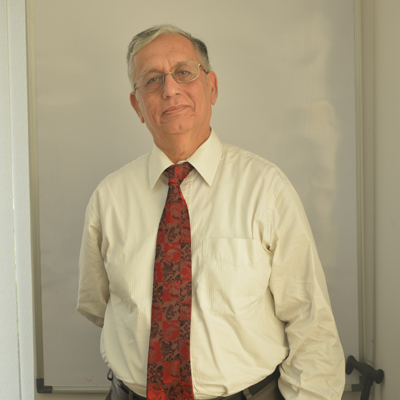
    BALI: Viren Raheja is a man with a mission: to change the culture at India’s leading cable TV multi system operator Hathway Cable & Datacom. With eight million digital TV homes from a total of 11 million, the network has been regarded as one of the shining stars emerging out of India’s cable TV ecosystem. But it has lost some of that shine in recent times.


     Admits Raheja who is a director of the firm: “We are going through a challenging phase – turbulence in the cable TV space – life is challenging.”


     Raheja is using the changing climes in India’s fragmented cable TV ecosystem – which has been undergoing a government mandated digitization rollout – to re-engineer his firm. “The company – like most of the other MSOs – was rooted in a B2B mindset as most of the time we were dealing with LCOs,” he reveals. “Now we are working on changing the DNA of Hathway from B2B to B2C.  We have already changed the entire senior management with one that has more of a B2C mindset. You will see more of that happening with talent from the telecom being hired.”


    Speaking at the Media Partners Asia organized Asia Pacific Operators Summit in Bali, Raheja  revealed that Hathway has done better than most in digitizing and putting set top boxes in subscribers’ homes  with a 30 per cent marketshare nationally. 


    “Now the key challenge is monetizing, upscaling customers to HD services and getting subscribers to pay,” he said.  “Gross billing has happened in some places but we are mostly at net billing with the LCOs. Over six months we see the movement to net billing being completed in phase I areas and over 12 months in phase II.”


     Raheja pointed out that digitizing is leading to a new power equation being forged between LCOs and MSOs. “Over 12-18 months, this relationship will stabilize. The current revenue split between us and our LCOs in 40 per cent to us and 60 per cent for them.  We see that settling at 65 per cent for us and 35 per cent for the LCOs. Once that happens, we may then think about acquiring some of them.”


    He is clear that the next 12 months are going to see the MSO focus on developing local content, pushing HD services and also building up its broadband play.


    “HD will help us give a better viewing experience and also the customer will pay more and local content will help keep them engaged,” Raheja disclosed.


    “On the broadband front, today, 15-20 per cent of our revenue is coming in from broadband. I would like to see that going up to 35-40 per cent over the next three years. Our play includes giving world class broadband with DOCSIS 3.0 modems. For me getting a nice return from subscribers is more important. Hence, I will be open to losing a video subscriber to retain a broadband subscriber who pays a lot more.”


    He believes that all this will need a cash infusion of about $100-150 million, which he intends to raise through a mix of debt and equity dilution.


    No merger or acquisition is on the cards with any other multisystem operator – at least for now- he revealed. “Cable is about local operations…I am not sure a merger with DEN or anyone else will create something unique,” concluded Raheja.

  • “Phase III and IV should be broken into three phases”: Ashok Mansukhani

    “Phase III and IV should be broken into three phases”: Ashok Mansukhani

    Having served as Indian Revenue Service Officer in the income tax department for 22 years, Ashok Mansukhani’s last government posting was as Doordarshan deputy director general (1992-96), during which DD metamorphosed from being a single channel broadcaster to a multilingual and multichannel regional entity reaching over 100 million homes in the country.


    Mansukhani’s association with the cable TV industry started in 1996 when he joined IndusInd Media and Communications Limited (IMCL), the media wing of Hinduja Ventures Limited (HVL), as director. Over the years, he became executive director and then president of Hinduja TMT before taking on the mantle of whole-time director of HVL.


    In his present capacity, Mansukhani is preparing IMCL for a future that is essentially about pay-per-view, video-on-demand and triple-play services, even as his contemporaries grapple with the initial phase of digitization. With his vision and experience, Mansukhani has also been appointed president of the MSO Alliance.


    In a t?te-?-t?te with indiantelevision.com’s Seema Singh, Mansukhani, who is just back from a week-long holiday, talks about the way the industry is moving in terms of digitisation, plans for IMCL, and the growing need for communication among its various stakeholders.


    Excerpts:


    IMCL underwent huge reshuffling a couple of months back. What was the reason behind it?


    There is a new digital era that has come in and the board and promoters may have felt that it would be good to bring in fresh talent, to get professionalism in the analogue regime as we transit to the digital era. And what has really been done is that a new team has been brought in that not only understands media but will be able to carry the media assets of the Hinduja group in the next 10 years. So, it is from that point of view that changes may have been made.


    The company recently got the licence for taking forward its Headend In The Sky (HITS) project. How far has the work progressed?


    Every possible step will be taken to meet the December 2014 deadline. There are certain permissions which are statutory in nature and which need to be taken. There could be perhaps a three to four week lag factor because of elections. But post 15 May, the process will get fast forwarded and personally, I would like to see it operational before the end of the year.


    Will HITS play a major role in phase III and IV markets? How will IMCL cope with these phases?


    Yes it will, because it is meant to really take advantage of the fact that in phase III and IV, there are hardly any MSOs that operate. But there are 6,000 independent operators and 60,000 LCOs and a majority of them are in phase III and IV. Now they will find it tough to meet digital regulations, quality of service norms, subscriber management system, conditional access systems and sourcing of STBs.


    It is a tough task for a small guy, but if he continues to be the proprietor of his network and is helped by a HITS platform to be able to supply high quality 300-500 channels in MPEG 4 capacity, then surely it will cause excitement. To add to it, it will be a prepaid model, having complete transparency.


    Yes, HITS will play a major role, but that doesn’t mean that Indigital will be left behind. From the group’s perspective, both will be developed and both are being developed.


    Incable exists in phase III, but not in phase IV. For phase III, there are already specific cities for which plans are being drawn up. Incable is also pioneering the concept of digital feeds, which is fibre optic based feeds. Because it may not make sense in a city like Udaipur to put up a digital headend of Rs 10 crore, but it may make sense to take a city like Bhopal and set up a headend and the rest of the state can well be served by fibre optic feed, because then the cost of transmission goes down.


    Incable anyways has thousands of kilometres of installed fibre optics of its own, which many others do not have. So we have the capacity and we will now utilize that. Even in phase II, we have digital feeds running through fibre optics. There have been regulatory issues like broadcasters having a different view, but our say to broadcasters is that in digitisation when every box is accounted for and every customer is paid for, then surely the mode by which we transmit should not be the problem of the broadcaster, but should be left to the MSO to work out the best cost effective model.


    Digitisation means that you can use a mix of both. Currently, fibre in India is to the colony gate and in the time to come, it will be to home and when that happens, there will be quadra-play. We will have cable telephony as well coming in, but these are far away, at least 3-4 years away.


     Will we see investments in IMCL as well by the group?


    IMCL is currently being funded by HVL through a preferential share capital based on its requirements for phase III and consolidation of phase II. IMCL will not suffer from shortage of money. That’s not the issue. The issue is that IMCL has to cope with change and with that change, whatever support is needed is available.


    SitiCable has launched local cable TV channels. Is IMCL treading that path? If you have to launch a channel, what kind of content will you have?


    We are the pioneers as far as local content is concerned. In Mumbai for example, we had In Mumbai channel which we started way back in 1995-96. It was operational for a couple of years and was very popular. It had a mix of news, local events, interviews and it was more of a city-specific channel. At one stage, almost every city that Incable was operating in had a local channel and even today there are local channels, but it has typically not been run by the company in the recent past, but has been run by people who had perhaps bought time on the channel or have agreed to share a part of their advertising revenue.


    So basically, they source the content and not the company, since our focus had shifted more on distribution. But today, with a fat distribution pipe being created and video on demand on the way, with two-way to happen with broadband, localization of content, in my view, has a strong public demand.


    It also helps in stickiness in terms of vast competition in MSOs and DTH. So at one stage, when In Mumbai was part of Incable, it was a reason that people stayed with us, because they wanted to watch it. Also we had In News which ran in five languages.


    Localisation, not on the Siticable model, but perhaps reviving the In Mumbai model, may take place.


    While news and sports are important, I feel localized content, like local events, regional events, festivals and community events, have been neglected. The vast progress that we have seen internationally is more of a mom and pop show in India.


    This area can undergo an upgrade, both in terms of quality and quantity. It is an interesting area to look at. Animation is again an interesting area that can be tapped.


    Content can be self generated, syndicated or can be brought in and then re-created. What we have seen recently is that there is enough competition in every sphere of television and yet there is scope. Therefore, our sister company in entertainment will look at it and take advantage. There are 30 million cable TV homes with boxes, another 100 million to follow. 2014 is an ambitious year. Even if we can achieve 50 per cent of this, there will be 80-90 million cable TV homes to tap. 24 hours of programming is needed. It is not easy to really supply that content, so perhaps it’s easier to create content or to source it and then re-purpose it for your own audience.


    The Telecom Regulatory Authority of India (TRAI) recently came out with its regulation on tariff rise in non DAS areas. How does it impact the business of MSOs?


    This simply means that the cost of television has gone up by 27 per cent. When the consultation had started, I had personally taken it up with TRAI and told them that the price shock, if it has to be given, must be in phases. It was expected and long due and in the long run, as long as packaging is sensibly done, a la carte channels are offered, it will benefit all the stakeholders.


    In the beginning, customers will be hit by the price shock, but after that, they will adjust.


    Time has come for MSOs to discipline themselves. The MSO today has to take a stand that it doesn’t make sense for a non-paying or a zero paying LCO to have the signal.


    Every change is resisted initially, but once it happens, things fall into place.  There is a need for more communication in the industry.


     When do you see gross billing starting in Mumbai for phase I? By when will digitisation of 38 cities in phase II be completed?


    There have been discussions and there are amendments in the entertainment tax acts, but the notification has not been issued as yet by the entertainment tax authorities. According to me, in whichever way gross billing has to happen, it will take a couple of weeks more.


    The 38 cities that comprise phase II should be completed by 30 June.


    When do we see packaging of channels taking place in phase I and II cities? Why is it taking so long? What kind of packages can one expect?


    The initial task of installing 30 million STBs was tough. Today, attention has shifted to packaging which will also be a function of the prices at which packages can be obtained from the broadcaster. There is disaggregation that will happen soon, which will lead to re-pricing of packages, possibly from July 1.


    Packaging has to be a joint exercise of broadcasters and MSOs. Currently, it is not. So that’s another aspect which needs to be kept in mind that at the end of the day, it is the product of the broadcaster and the distribution is ours.


    What if packaging teams were to be set up between MSO Alliance and IBF as an example? They could then get together and do a customer research and find out who wants to do what.


    New models for packaging need to come in. Why should I pay ‘X’ amount for sports throughout the year, when during the year, there will be only three times that we watch Sports channels,. So can’t we have variable pricing, say during the world cup?


    The second phase of digitisation will happen when the market will mature. And all this will happen in 2014-15 and 2016.


    DTH today has a much better hold on packaging, than the MSOs. Regional packages need great attention and especially for national MSOs. The need of a customer in Bengaluru is different from that of a customer from Gujarat. Packaging requires research and customer connect. The customer is being currently taken for granted and they do not like it.


    We still need to move to the CPS model and once that happens, the MSO can collect the money and pay the broadcaster. There are people who are still working with an analogue mindset in the digital era.


    One way is to sell the channels on an a la carte, the other way is to shrink the package and the third is to say that I will give you growth, but cannot give the growth you demand which has no relation with the actual size of my network.


    Why is there resistance from broadcasters, every time a new packaging model is suggested? 


    When status quo is disturbed, things change. Also when a particular channel is not available in a package offered to most, then the broadcaster may lose the advertisement support. But in time to come, we will move to a 50:50 regime, in subscription and advertisement.


    What is the impact of the TRAI regulation on disaggregation on MSOs?


    The regulation has given a great level playing field for independent MSOs like IMCL. So far, there has been clear favoritism towards MSOs who are owned by broadcasters and therefore, independent MSOs have had tough times or litigation times and that has taken away from further move to say digitisation. This is a welcome move and yet, sufficient safeguards have been given to the broadcasters. They have got 27 per cent tariff hike. The order should be accepted in the spirit. It is to increase digitisation and not to harm anyone.


    Are you looking at enhancing broadband services, like Hathway Cable & Datacom did recently?


    We have broadband services and that will be a key focus area in the years to come and what I personally look forward to is: pay per view, video on demand and triple play services. But these will take time. These services will be possible more in the prepaid era.


    We always have been operating broadband as we have the ISP licence.


    We don’t want to ape Hathway. They have their own focus point, we have ours. We want to develop digital best practices, keeping in mind what the customers want.


    How would you look at phase III and IV markets? Will Incable compete with HITS in these areas?


    It will be in phases. We will first concentrate on phase III, where we already have a reach, so we will see which cities to cover there. Then we have to decide which cities will be covered by the HITS platform. Which cities will have headend and which will have fibres. These are things that the IMCL management is working on.


    No, the two will not compete with each other, as the markets will be different. There could be synergies in best practices but not in market.


     Should phase III and phase IV of digitisation be taken at the same time? Do you think it can be completed within the deadline of December 2014?


    My view is phase III and IV should be broken into three phases. If it took two phases to do 30 million homes, how can one expect 100 million homes to be done in two phases? The statistics don’t work and then currently, there is no movement in phase III.


    While TRAI gave a start date for implementing digitisation, there is no need to give an end date. The regulator should incentivise those who digitise faster. Tax holiday or tax benefit or a better rate in terms of 42 per cent guideline of the Supreme Court, would work better than giving deadlines.


    Phase III and IV is huge and untapped. The industry needs to be recognised as a small industry. Also there is a need for bank financing, formation of cable cooperatives and associate ventures. This is the reason that IMCL has pioneered joint ventures which exist is smaller towns and cities.


    Dish TV launched its new Zing service in February; does it bother the MSOs in any way?


    90 per cent of cable TV homes in phase I and II remained with MSOs. While the customers may have switched MSOs, they largely stayed with being a cable TV home. And this, when everyone thought that DTH players will have a smooth walk in these cities. DTH is an expensive proposition.


    If DTH players think of launching something which is less expensive, it can lead to cannibalizing DTH itself and not necessarily an MSO. The MSO already has a sunken asset. We are just looking at stickiness of consumers and return on investment. Such moves will not affect MSOs.


    Post elections, there can be a regulation on the cable TV monopoly. Do you think that will impact MSOs?


    It may affect the regional MSOs, but not the national ones. These are proposals, but what comes out in the fine print will finally determine our way to look at it. I expect lighter facilitative and not restrictive regulations and I think TRAI is moving towards that.


    What are the biggest challenges for you today?


    The ability to harness the latest technology with the fastest way in which you can bring in specialty content at the cheapest possible cost in such a way that every member of the value chain is made happy with the money he retains after all taxes are paid is the real business plan challenge that industry needs to work on and which we are also working on. Ultimately, we should be able to run a profitable business.


    Do you see the ARPUs going up? If so, by how much, and when?


    The ARPUS will go up by 20 per cent in the next 12 months.
  • Hathway launches 151 SD and 4 HD channels

    Hathway launches 151 SD and 4 HD channels

    MUMBAI: Hathway Cable & Datacom is doing all that is needed to enhance consumer experience. The multi system operator (MSO) has announced the launch of 151 additional Standard Definition (SD) channels and four new High Definition (HD) channels to their existing cable TV distribution network in Bengaluru and Mysore.


    With this, the number of channels now offered by Hathway is 442 including 31 HD channels. “Hathway now has the largest bouquet of SD and HD channels in Bengaluru and Mysore and covers the entire spectrum of south Indian channels (both paid and free to air),” says the statement released by the MSO.


    The MSO in order to enhance the regional flavour now also has a line-up of Kannada channels.  “We are the only MSO in Bengaluru to offer key regional TV channels in HD and now have 31 HD channels, which is the largest HD portfolio in Bengaluru,” reveals the release.   


    That apart, Hathway has also introduced its new HD digital set top box, which will deliver high quality HD video with Dolby Sound technology thereby enhancing the television viewing experience for its subscribers in Bengaluru and Mysore.


     “This is the single largest channel expansion in the country; more than 150 additional TV channel expansion at one go is unprecedented in India,” said Hathway Cable & Datacom MD & CEO Jagdish Kumar.  


    “We are the largest provider of digital TV services in Bengaluru and Mysore, thanks to the quality of our services and now with this channel expansion, we are in a position to cater to the diverse viewership demands of our subscribers in Bengaluru and Mysore,” he added.  


     This channel offering will be available to Hathway subscribers in Bengaluru, Bengaluru Rural and Mysore. Hathway is expanding to other cities in Karnataka and has already started services in various cities of North Karnataka.


    With on-going digitisation of the Indian cable television industry, “Hathway is committed to bringing compelling content to its consumers in India.”


    The MSO has launched Hathway – CCC, Hathway Entertainment and Hathway Movies. In addition to these, it will soon launch many more channels covering genres like general entertainment, kids, music, regional movies, lifestyle and adventure.

  • Hathway launches ultra-high broadband in Bengaluru

    Hathway launches ultra-high broadband in Bengaluru

    MUMBAI: Hathway Cable & Datacom has launched a 50 Mbps broadband service, targeted at the mass market, on its Docsis 3.0 ultra high speed network. Docsis 3.0 is a widely deployed and dominant broadband network technology (capable of delivering speeds up to 1 gigabit) which powers leading broadband markets like USA, Korea and Europe.


     “We are the first company to launch a truly mass market high-speed 50 Mbps retail product in Bengaluru,” said Hathway Cable & Datacom MD & CEO Jagdish Kumar.


     “We have experienced a great response to our 50Mbps Docsis offering in Mumbai and Pune and with our CISCO powered Docsis 3.0 network we are in a position to deliver 50 Mbps speeds to every retail customer in Bengaluru. We are confident that the 50 Mbps Docsis 3.0 service will get a huge response in the IT capital of India. Hathway will continue to invest in expanding the Ultra High speed Broadband network in other parts of the country,” he added.


    Hathway broadband business head Kunal Ramteke further added. “Our pricing for 50 Mbps speeds is similar to what other operators are charging for low-speed services of 1 to 2 Mbps. The speeds we are delivering on our Docsis 3.0 network are comparable with the speeds in the most advanced broadband markets like Korea and USA. A High Definition video file of 2GB can be downloaded in just 5 to 10 minutes on our Docsis 3.0 network. YouTube in HD and lightning fast responses in internet gaming are other experience enhancing features Bengaluru customers will enjoy on Hathway’s Docsis 3.0 network.”


    The Docsis 3.0 broadband network was initially deployed in Mumbai and later expanded to Pune. Delivering a speed of 50 Mbps has revolutionised the user experience in the cities where it has been launched. In Bengaluru, the customers will not only be enjoying the 50 Mbps high speed with a 99.9 per cent uptime guarantee but will also experience Gold Standard Customer Support with fully trained staff to handle any service requirements pertaining to high speed internet access through multiple devices and a guaranteed service issue resolution within 24 hours.


     The 50 Mbps Docsis 3.0 broadband service starts with a monthly price of Rs 733. A complete portfolio of 50 Mbps plans is being launched to cater to residential and corporate customers.

  • Jaipur LCOs to form cooperative, set up own headend

    Jaipur LCOs to form cooperative, set up own headend

    MUMBAI: Local cable operators (LCOs) feel threatened with compulsory digitisation of cable TV services. LCOs own the end subscribers, but do not have the bargaining power with broadcasters and also access to funding.


    This has led to an increasing trend towards LCO consolidation, if not through the mergers and acquisitions route then through formation of associations and unions, especially in Gujarat, Maharashtra, Kerala and Karnataka, states the FICCI-KPMG media and entertainment industry report 2014.


    Now, nearly 220 of the about 250 LCOs in Jaipur, Rajasthan have decided to come together to protect their business. The LCOs are looking at forming a cooperative and setting up their own headend.


    The move comes as many LCOs are unhappy with the monopoly of the multi-system operators with the progressing digitisation.


    “It is at a nascent stage, but we are tired of the MSO monopoly here in Jaipur and hence looking at setting up a cooperative and converting into an independent MSO,” says a cable operator from Jaipur who is currently taking feeds from Hathway Cable & Datacom.


    The cooperative has been set up under the banner Jaipur Cable Operators Welfare Society. The LCOs are meeting regularly to finalise details.


    While the initial investments will be made by the LCOs, they will also approach banks for loans to meet the investment demands. “We are unhappy with the way things are moving in the state. Neither the Telecom Regulatory Authority of India nor the Ministry of Information and Broadcasting is ready to listen to us. And so we have decided to take this move,” says the LCO.


    As of now, four lakh set top boxes have been seeded in the state. “The Jaipur cable operators are in talks with us as they are looking at setting up a cooperative. We will be meeting in April in Mumbai to discuss further,” informs Maharashtra Cable Operators Federation (MCOF) president Arvind Prabhoo.


    It is not only in Jaipur that the LCOs are coming together to form cooperatives. While earlier such cooperatives were set up in Chennai, Delhi, Bengaluru and Kolkata, now LCOs are coming together in Mumbai, Jaipur, Jodhpur and parts of Madhya Pradesh to set up their own headends.

  • Case by MSOs challenging Entertainment Tax to be heard on 27 May by DHC

    Case by MSOs challenging Entertainment Tax to be heard on 27 May by DHC

    NEW DELHI: Three multi-system operators were given interim relief in January in the entertainment case issue. In January, the case was adjourned to 13 March and today has further been adjourned to 27 May by the Delhi High Court. However, the HC said that the stay order issued earlier in January to multi-system operators in entertainment tax issue will continue.


    DEN Networks, Hathway Cable & Datacom, and Siticable had moved the court seeking protection against the Entertainment Tax Officer’s order to pay entertainment tax.


    Acting Chief Justice B D Ahmed and Mr Justice Siddharth Mridul gave the order on a plea by counsel for the petitioners.


    DEN Networks, Hathway Cable & Datacom, Siti Cable and InCable were ordered to pay entertainment tax due since April 2013.


    Orders were issued directing the four MSOs to file returns and deposit the pending tax amount with interest under the Delhi Entertainment and Betting Tax Act and Rules, 1996.


    The MSOs argued that it was the local cable operator who should pay the entertainment tax. They had moved the Court to prevent any coercive action.


    DEN and Hathway argued in the last hearing that they are not liable to pay entertainment tax from April since they have started consumer billing only from November. DEN also argued that the entertainment tax must be collected only on actual collections. The MSO also sought clarity from the tax department whether entertainment tax is paid on per subscriber or per set-top box (STB) basis. While Siti Cable adhered to pay entertainment tax, it challenged the quantum of the tax. IMCL 

  • Hathway launches ‘Hathway CCC Cine Channel’

    Hathway launches ‘Hathway CCC Cine Channel’

    MUMBAI: Hathway Cable & Datacom today announced the launch of ‘Hathway CCC Cine Channel’ on its all India distribution network.


    Hathway CCC Cine channel will showcase the best of Bollywood content. The channel will be part of the existing base pack and customers will enjoy premium Bollywood content at no additional cost.


    The move is a part of Hathway’s commitment towards bringing compelling content to its consumers in India.


    Hathway CCC Cine channel’s library has premium movies from all the major studios including Shemaroo, Yashraj and Eros.


    In addition to Hathway CCC Cine channel, Hathway will be soon launching many more channels covering genres like general entertainment, kids, music, regional movies, lifestyle and adventure.


    Hathway content business AVP Amit Dave said, “We are delighted in our ongoing endeavor of delivering premium content to our discerning customers.”


    The newly launched channel will be available on channel number 110 in Hyderabad, channel number 309 in Bangalore and channel number 112 in the rest of India.

  • MSO Alliance condemns attack on Hathway senior executive

    MSO Alliance condemns attack on Hathway senior executive

    MUMBAI: The MSO Alliance comprising Hathway Cable & Datacom, SitiCable, DEN Networks and IndusInd Media and Communication Limited (IMCL) has condemned the attack on Delhi-based senior executive of Hathway.


    The executive was attacked in Gurgaon on 25 February, while he was on his way home and is currently recuperating in the hospital.


    A statement issued by MSO Alliance secretary SN Sharma reads, “All national MSOs are implementing DAS as per rules and regulations defined by TRAI and are implementing the law passed by the Parliament to bring greater transparency in the entire value chain of the cable TV industry.  This is being done to enhance consumer viewing by delivering world class digital experience to them. However, there are certain persons who are trying to derail the entire process of digitisation and have even used illegitimate and criminal means to stall the process.”


    All the leading MSOs have strongly deplored and condemned the criminal and nefarious activities “and persons who have done such reprehensible act against an employee who had no fault and was simply involved in implementing the law of land,” the MSO Alliance says.


    The MSO Alliance has reiterated its commitment to DAS. “We would like to emphasise once again that such activities would not deter us in implementing the process of digitising the country and we urge the authorities to take strict action against such criminals immediately,” reads the note.


  • Four national MSOs file writ petition against Ent Tax

    Four national MSOs file writ petition against Ent Tax

    MUMBAI: Entertainment tax has become a bothersome issue for both MSOs and LCOs. Right from the amount of tax levied to ownership of collection, state government mandates have got the two cable TV factions locking horns. While government regulations mandate MSOs to collect tax from the LCOs and submit it, the LCOs would rather take the onus on themselves.


    Four Indian national MSOs – Den, Hathway, Siticable and InCable have filed separate writ petitions in the Delhi HC to challenge several aspects of the entertainment tax being imposed as well as the tax collecting authority’s stance towards the MSOs in the state of Delhi.  The cases are all set to be heard today in a joint hearing.


    While Hathway Cable & Datacom was put through an enquiry on its own premises, others have decided to legally protect themselves before something similar happens to them. Siticable claims that it has been fulfilling all duties effectively. An ex parte order was taken out against it for non compliance in April and May 2013 which Siticable had appealed against. When that didn’t go very far, it decided to lodge its writ petition seeking redressal and  justice.


    Siticable’s first hearing was yesterday when the lawyer on behalf of the tax authority asked for a day’s time to come up with its side of the case. “We had deposited the tax and had also filled the form 10 as per requirements. Yet the authorities were after us. So we went to court to request that no coercive action be taken by them ,” says Siticable CFO Sanjay Goyal.


    Hathway is of the opinion that entertainment tax collection is a duty that has been undertaken by the LCOs for several years now and that is how it should be. Its writ petition states that the order passed against it was unreasonable.


    MSOs say that they are alright with collecting the tax and passing it on to the department but traditionally it had been the job of the LCO to do that. However, in case of  a lapse of payment by the LCO, the MSO should not be asked to cough up the remaining money is what they say.


    The case will come up for hearing today. Who knows whether the Delhi High Court will give a stay order or decide on its fate tomorrow itself.

  • MSOs meet; decide to start gross billing in Mumbai soon

    MSOs meet; decide to start gross billing in Mumbai soon

    MUMBAI: The national multi-system operators (MSOs) don’t want any more delay in starting the gross billing in the phase I cities. While gross billing has already begun in Delhi and Kolkata, the MSOs who have been facing resistance from the last mile operators (LMOs) in Maharashtra, met today in Mumbai to decide on the means to implement billing in the city.

    The four MSOs: Hathway Cable & Datacom, DEN Networks, IMCL and SitiCable have unanimously decided to authorise the LMOs to bill their consumers. “The LMO wants ownership of their consumers, and we have decided to give them that,” informs a MSO present during the meeting.

    The MSOs during the meeting decided that they will generate the bill and hand it over to the LMOs, who can further give it to the subscribers. “We will start the process in the next couple of days. Consumers will receive the bill for the month of December,” he adds.

    While the decision on who collects the entertainment tax is still pending with the Bombay High Court, the MSOs have decided to go ahead and complete the process of gross billing in Mumbai and submit the compliance report to the Telecom Regulatory Authority of India (TRAI), the deadline for which was 31 December. “We will submit the compliance report, once the billing process starts,” says the MSO.

    But what happens if the consumer pays the bill through a cheque? “Well! It is up to the subscriber, they can either sign the cheque in the name of the MSO or the LMO. But considering that the entertainment tax needs to be paid by the LMOs, it will be preferable that the subscriber signs it in the name of the LMO. The LMO will pay us the collection after deducting his revenue share,” he informs.

    The decision has been taking to brings everything on track. “The decision on entertainment tax will come sooner or later. But, that cannot deter us from getting the process rolling,” says the operator.

    At the meeting, the revenue share for the pay and free channels was also discussed. “These are commercial discussions. We have almost reached on an agreement for that as well. And our plan of revenue share is better than the one suggested by the TRAI,” says the MSO.

    But, are the LMOs completely convinced as well? “We will be meeting Hathway and IMCL on 4 January to discuss the fine points. Our concern is that the ownership of consumer should be with the LMOs. We will discuss with them the billing format and also get clarity on whose name the bill is being generated. The heading of the bill should have the name of the LMO and not the MSO. We will not allow that,” says Maharashtra Cable Operators Federation (MCOF) president Arvind Prabhoo.

    However, the MSOs have suggested that the bills generated from the MSO will have the name of the LMO, while that generated from the LMO to the subscriber will have the name of the subscriber. “This is a welcome move. But, we still need to discuss the finer points tomorrow,” adds Prabhoo.

    In the meeting to be held between MCOF and the MSOs on Saturday, finer points like additional cost of bill printing, distribution and collection will also be discussed. “These are additional liabilities of DAS in the absence of the interconnect agreement and also unfair revenue share and hence need to be discussed,” concludes Prabhoo.