Tag: Hathway Cable & Datacom

  • Hathway launches dedicated online portal for LCOs

    Hathway launches dedicated online portal for LCOs

    MUMBAI: With an aim to redefine, transform business dynamics and further strengthen the role of the local cable operator (LCO) in the distribution chain, Hathway has launched a special initiative – Hathway Connect.


    Launched in Bangalore on 28 January, Hathway Connect is designed to make the lives of LCOs easy and convenient by providing technology and support through a dedicated online portal, which will have detailed features that will allow the LCO to run his business efficiently and effectively, in turn, offering better quality and high standard customer experience.


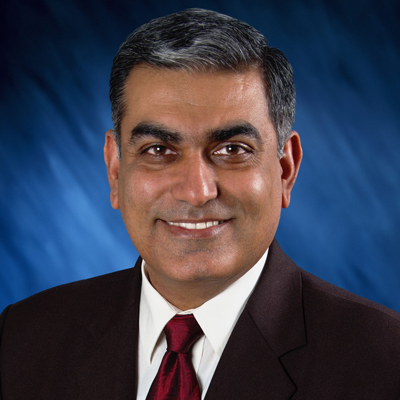
    Hathway Cable & Datacom CEO and managing director Jagdish Kumar said, “In the era of technology and digitisation, the world is shrinking and we are living technology. The C&S industry in India has seen major changes in the last 5 years and as we move forward, technology will form an integral part of how the cable industry performs and matches customer expectations. Through Hathway Connect, we aim to empower our LCO partners with technology and business tools that will upgrade the way they do business on a daily basis and transform customer experience.”


    The digitisation era has raised several questions about the existence of the LCO in the cable value chain. With this disruptive move, Hathway aims to strengthen the role of the LCO even further in reaching out to its subscribers and delivering world-class entertainment with unmatched customer service levels.


    Hathway Cable & Datacom president – video business TS Panesar added, “Our LCO partners have been the backbone of this industry, the heart of our business, which we truly recognise and appreciate. Through the new online portal, we aim to empower them to run their business independently and upgrade customer experience levels, thus, becoming competitive with the industry.”


    Some salient features that the online portal offers are: online activation of new customer (E-CAF), pack management, balance management including integration with bill desk, customer prepaid option, sending customised notifications to subscribers, specialised LCO help desk and self-care through mobile app amongst many others.


    Panesar said that these features will help LCOs scale up operations, create efficient and seamless processes with the overall objective of giving customers the best offering.

  • Hathway launches dedicated online portal for LCOs

    Hathway launches dedicated online portal for LCOs

    MUMBAI: With an aim to redefine, transform business dynamics and further strengthen the role of the local cable operator (LCO) in the distribution chain, Hathway has launched a special initiative – Hathway Connect.


    Launched in Bangalore on 28 January, Hathway Connect is designed to make the lives of LCOs easy and convenient by providing technology and support through a dedicated online portal, which will have detailed features that will allow the LCO to run his business efficiently and effectively, in turn, offering better quality and high standard customer experience.


    Hathway Cable & Datacom CEO and managing director Jagdish Kumar said, “In the era of technology and digitisation, the world is shrinking and we are living technology. The C&S industry in India has seen major changes in the last 5 years and as we move forward, technology will form an integral part of how the cable industry performs and matches customer expectations. Through Hathway Connect, we aim to empower our LCO partners with technology and business tools that will upgrade the way they do business on a daily basis and transform customer experience.”


    The digitisation era has raised several questions about the existence of the LCO in the cable value chain. With this disruptive move, Hathway aims to strengthen the role of the LCO even further in reaching out to its subscribers and delivering world-class entertainment with unmatched customer service levels.


    Hathway Cable & Datacom president – video business TS Panesar added, “Our LCO partners have been the backbone of this industry, the heart of our business, which we truly recognise and appreciate. Through the new online portal, we aim to empower them to run their business independently and upgrade customer experience levels, thus, becoming competitive with the industry.”


    Some salient features that the online portal offers are: online activation of new customer (E-CAF), pack management, balance management including integration with bill desk, customer prepaid option, sending customised notifications to subscribers, specialised LCO help desk and self-care through mobile app amongst many others.


    Panesar said that these features will help LCOs scale up operations, create efficient and seamless processes with the overall objective of giving customers the best offering.

  • Hathway Cable & Datacom director Brahmal Vasudevan resigns

    MUMBAI: Hathway Cable & Datacom independent director Brahmal Vasudevan has tendered his resignation at the company with effect from 13 January, 2016.


    Vasudevan, who founded Creador and serves as its CEO, joined Hathway as an independent director in 2011. 


    He has also had stints with Monet Investment Advisors and ChrysCapital Investment Advisors as managing director.

  • Hathway re-appoints Jagdish Kumar G Pillai as MD & CEO

    Hathway re-appoints Jagdish Kumar G Pillai as MD & CEO

    MUMBAI: Hathway Cable & Datacom’s board of directors have re-appointed Jagdish Kumar G Pillai as the managing director and CEO of the company for a period of two years with effect from 21 December, 2015.


    Since 21 December, 2012, Pillai served as CEO, MD and executive director of Hathway Cable and Datacom Limited.


    With more than 27 years of experience, Pillai has worked with bluechip companies like ITC Ltd, Star TV and Reliance Industries.


    Prior to joining Hathway, he was part of the Reliance Jio project team as president – media & entertainment at Reliance Industries Ltd.

  • Hathway to demerge broadband business to subsidiary company

    Hathway to demerge broadband business to subsidiary company

    MUMBAI: Hathway Cable & Datacom is planning to demerge its broadband business into its wholly owned subsidiary Hathway Broadband Private Limited.


    The company’s board of directors have given in-principle approval to demerge, transfer and vest the company’s entire broadband business into its wholly owned subsidiary, subject to requisite approvals from the shareholders, creditors, High Court(s), Department of Telecommunications, Stock Exchanges, Securities and Exchange Board of India and other applicable regulatory governmental authorities.


    The carving out of the broadband business is aimed at accelerating value creation for Hathway shareholders. The separation will allow Hathway to aggressively focus on the significant growth potential for high speed data and related services in India. Globally, wireline or fixed broadband has emerged as a key driver of technology adoption and overall, GDP growth. India lags most countries including countries in Asia in wireline broadband penetration reaching only about eight per cent  of the potential universe.


    Hathway Broadband intends to take the lead in driving wireline broadband penetration in India and become a key player in Prime Minister Narendra Modi’s Digital India initiative. The company believes that its hybrid fiber coax infrastructure on DOCSIS 3.0 platforms is the most effective and sustainable technology in a price sensitive market like India.


    Hathway Cable & Datacom MD & CEO Jagdish Kumar said, “We are uniquely placed to leverage our leading position in the cable television industry and our brand to provide Indian subscribers with a world class broadband experience. This restructuring recognises that the market dynamics of the broadband business are unique as compared to our parent cable television business. The separation is a step towards increasing the broadband business’ customer focus and market competitiveness and in delivering a superior value proposition to our subscribers.”

  • Q1-2016: Cable TV in India – Sequential quarter revenues down, broadband shines

    Q1-2016: Cable TV in India – Sequential quarter revenues down, broadband shines

    Indian Cable TV is a long haul work-in-progress is what we had said last quarter. The results of the four sample companies in the quarter ended 30 June, 2015 (Q1-2016) in that report seem to endorse this fact. All four companies comprising the big three – Hathway Cable and Datacom Limited, Den Networks Ltd, Siti Cable Network Limited and the minnow – Ortel Communication Limited reported a quarter on quarter (QoQ) drop in total income from operations (TIO or revenue) in the current quarter. As expected, broadband subscribers and revenue continues to grow.

    Note: (1) 100,00,000 = 100 lakh = 10 million = 1 crore.

    (2) Some figures are approximate.

    (3) Generally other income has not been factored in for EBIDTA figures in the report.

    Performance

    Though Den Networks’ and Hathway’s YoY results in the current quarter deteriorated, QoQ, both performed better, albeit both the cable companies reported losses. Siti Cable’s loss in Q1-2016 increased YoY and QoQ, and though regional player Ortel returned a profit in the current quarter as compared to a loss in Q1-2015, its Q1-2016 profit was less than half the profit reported in the immediate trailing quarter.

    Over the last few quarters, Den Networks’ financial performance has shown a marked decline. From a company that reported profit after taxes, it has started reporting a loss. Without considering other income, the company reported a negative EBIDTA of Rs 4.67 crore as compared to the operating profit of Rs 57.16 crore in Q1-2015 and a higher operating loss of Rs 5.97 crore in the immediate trailing quarter. However, the company’s Cable TV segment reported a higher QoQ EBIDTA in Q1-2016 of Rs 18 crore (6.9 per cent margin) as compared to the Rs 14 crore (5.3 per cent margin) in Q4-2015, but a lot lower than the EBIDTA of Rs 69 crore (27 per cent margin) in Q1-2015.

    Hathway’s EBIDTA in the current quarter declined 25.4 per cent to Rs 32.73 crore (12.8 per cent margin) as compared to the Rs 43.87 crore (17.5 per cent margin) in the corresponding year ago quarter but was 5.7 per cent more than the Rs 30.98 crore (11.5 per cent margin) in the immediate trailing quarter.

    Siti Cable’s EBIDTA including other income for Q1-2016 increased 5.1 per cent to Rs 38.1 crore as compared to the Rs 36.26 crore in Q1-2015 and was 18.7 per cent more than the Rs 32.11 crore in Q4-2015.

    “Our commitment to improving operational efficiency and streamlining operations continues, leading to EBITDA growth of 18.7 per cent and margin expansion by 501 bps QoQ,” explains Siti Cable executive director and CEO VD Wadhwa.

    Ortel’s EBIDTA in the current quarter improved by 24.1 per cent to Rs 10.84 crore (26.7 per cent margin) as compared to the Rs 8.73 crore (22.1 per cent margin) in Q1-2015, but declined 34.5 per cent as compared to the Rs 16.55 crore (36.9 per cent margin) in the immediate trailing quarter.

    Ortel president and CEO Bibhu Prasad Rath said, “Overall growth was delivered on the back of steady contribution from Cable TV and Broadband segments supported by continued momentum in the Infrastructure Leasing segment. Significant growth in subscriber base, deeper penetration, enhanced product offerings and a strong team, should enable us to notably improve our performance going forward.”

    Total Income from Operations

    Please refer to the figure below. Den Networks, the company with the largest TIO among the four, reported TIO at Rs 265.60 crore, 11.1 per cent less than the Rs 298.81 crore in Q1-2015 and 1.7 per cent lower than the Rs 270.30 crore in Q4-2015. The company’s loss in the current quarter at Rs 51.89 crore was lower than the Rs 61.15 crore reported in the immediate trailing quarter Q4-2015. The company had posted a profit of Rs 1.12 crore (0.4 per cent margin) in the corresponding year ago quarter – Q1-2015.

    Though Hathway reported 5.7 per cent growth in standalone TIO in Q1-2016 to Rs 264,41 from Rs 250.11 crore in Q1-2015 QoQ, its TIO was 2.1 per cent lower than the Rs 270.03 crore in Q4-2015. Hathway’s loss in the current quarter widened to Rs 43.91 crore as compared to the Rs 0.93 crore in Q1-2015, but was considerably lower than the Rs 76.99 crore in Q4-2015.

    Siti Cable reported TIO of Rs 228.09 crore in Q1-2016, which was 9.1 per cent higher than the Rs 209.02 crore in Q1-2015, but was 10.9 per cent lower QoQ than the Rs 256.01 crore in Q4-2015. The company reported a higher loss of Rs 37.11 crore in Q1-2016 as compared to the loss of Rs 31.67 crore and a loss of Rs 34.13 crore in Q4-2015.

    Ortel reported 20.5 per cent growth in TIO at Rs 40.60 crore in Q1-2016 as compared to the Rs 33.69 crore in Q1-2015, but 9.6 per cent lower than the Rs 44.91 crore in Q4-2015. Ortel reported profit after tax (PAT) of Rs 2.44 crore (six per cent margin) as compared to a loss of Rs 1.16 crore in the corresponding year ago quarter, but Q1-2016 PAT was less than half (lower by 56.8 per cent) the PAT of Rs 5.65 crore (12.6 per cent margin) in the immediate trailing quarter.

    Cable TV (Video) Subscription Revenue

    Subscription revenue in the current quarter dropped QoQ in the case of Siti Cable and Hathway, while both Den Network and Ortel saw an increase in YoY and QoQ subscription revenue. At the same time, all the companies have reported higher digitisation numbers in DAS and non-DAS areas. Siti Cable and Ortel have reported a gain in subscription numbers as well. While Den Networks and Hathway have reported flat or slightly higher digital as well as analogue average revenue per user (ARPU), Ortel has reported a slight drop in both ARPUs. 

    According to company sources, Siti Cable, which is the biggest player among the four sample companies in terms of cable TV subscription revenue, had flat QoQ ARPUs in Q1-2016, while YoY ARPUs showed double digit growth. The company claims that its subscriber base has increased by two lakh (all digital) to 107 lakh as it expanded its footprint by entering into 12 new towns across India as a part of the ongoing voluntary digitization process in order to be compliant with the DAS phase III digitisation deadline.

    Despite the flat QoQ ARPUs and higher subscription numbers, Siti Cable’s cable TV subscription revenue fell QoQ because the company had initiated strict measures against erring LCOs and had switched off signals to the extent of about four lakh cable TV consumers, as per industry sources.

    “During the quarter, we have further tightened our credit control measures and started taking strict actions against defaulting operators, which shall result into improved credit discipline and saving in operating cost,” revealed Wadhwa. A source told Indiantelevision.com that Siti Cable’s strict measures seem to have worked and signals have been resumed to the subscribers, but that it would take time to reflect the improved numbers in its financials.

    Ortel’s Rath added, “I am also pleased to share that over and above the 542,217 RGUs (revenue generating users) as on 30 June, 2015, we have signed buy out agreements with multiple LCOs with total estimated RGUs of 33,000, which would be integrated into Ortel’s last mile network going forward. So we remain on track and are confident of achieving our target of one million RGUs by March 2017 backed by our LCO buy out strategy and focus on organic growth both in broadband and cable TV.”

    Pay channel Costs

    Please refer to the figure below that represents the Cable TV costs paid by the four sample companies. 

    The big three reported a QoQ fall in pay channel costs, while in the case of Ortel, pay channel costs rose. This does not mean that a la carte has become a reality and the multi-system operators (MSOs) are only paying for what their subscribers are paying. It’s just that this quarter, balancing amounts have been paid to a broadcast aggregator, since excess payments had been made until Q4-2015. 

    Diverting from the performance for a bit, a source from an MSO says, “As a matter of fact, it’s the big broadcasters that are resisting a la carte. A la carte will affect their overall advertisement revenues for packaged deals across the multiple channels within their fold.”

    Internet subscription revenue

    This is one avenue that most cable companies are looking at as their business and revenue growth alternative. Internet ARPUs in India are much higher – to the extent of 3 to10 times the ARPUs from cable television. All the four sample players in this article reported YoY growth. The big three- Hathway, Den and Siti Cable also reported QoQ revenue growth, while Ortel’s internet subscription revenue remained flat. Higher subscription numbers, higher ARPUs brought in the accelerated revenue growth for Hathway, Den and Siti Cable. Typically, broadband ARPUs for the big three were in the range of Rs 750 in Q1-2016 as Rs against 650-700 in Q1-2015 and Rs 720-750 in the previous quarter.

    Among the four, Hathway with an initial higher internet subscriber base in excess of four lakh plus, reported a growth of 50,000 subscribers to bring its total subscriber numbers to 4.6 lakh in Q1-2016. Already its internet revenue subscription has a reasonably big share in its overall revenue pie. Comparatively, the other three have internet subscribers than number in just tens of thousands, though all have reported reasonable YoY and QoQ growth in subscribers.

    Ortel reported a slight depletion in ARPUs and hence the flat internet subscription revenue despite a higher QoQ subscriber base. Ortel’s broadband RGUs in the current quarter grew 4.1 per cent to 60,900 from 58,519 in Q4-2015. Ortel also launched up to 50 Mbps DOCSIS 3.0 Broadband Internet in Odisha. The company’s broadband ARPUs in the current quarter also declined by Re 1 to Rs 393 from Rs 394 in Q4-2015.

    End Points

    At present, most MSOs have two separate arrangements with broadcasters – one for Digital Addressable System (DAS) areas and another for non DAS areas. Recently the Essel Group that operates both carriage platforms – DTH though Dish TV as well cable TV through Siti Cable – formed a common entity called “COMNET” to help synergize strengths of both entities in dealing with broadcasters. Siti Cable says that the primary reason for forming this venture was to ensure that consumers have access to quality content at affordable prices. This move would assist in keeping content cost in consonance with consumer ARPUs and market realities. 

    Players across mature markets such as the US continue to report a fall in video subscribers – to that extent that most companies there have higher broadband subscribers than video subscribers. Such a scenario is not probable in the near future in India, but cable TV players do face competition from wireless internet players and mobile companies as well as from other devices as a mode of entertainment rather than the idiot box. Carriage or placement fees could continue as bargaining currency in the near future.

    Once a la carte becomes a reality, to some extent, one could infer that if the pay channel costs are down, it’s because subscribers have used the option, and not that the player has lost more subscribers than it gained. In theory, DAS has made it possible for carriers to pay broadcasters if and when the subscriber subscribes for pay channels. It now remains to be seen if the players in the industry allow the theory to be put into practice. Cable TV subscription revenues and ARPUs could fall if players don’t play it right.

    The response to the Hinduja’s HITS (headends in the sky) platform from local cable operators (LCOs) has been tremendous, if one were to go by initial reports. The DTH industry has started making inroads into DAS phase III and IV areas and could grab more than the 30 to 40 per cent of the subscribers that it did in phase I and phase II.

    As has been pointed out by industry experts, just the seeding of set top boxes (often non-BIS compliant STBs) does not mean implementation of DAS as it was truly meant to be. It can be safely reiterated that there’s a lot of work to be done by the industry.

  • M&E stocks take a beating as Sensex crashes 1600+ points; NDTV worst hit

    M&E stocks take a beating as Sensex crashes 1600+ points; NDTV worst hit

    MUMBAI: Triggered by global concerns over China’s falling economy and its impact on global markets, the benchmark BSE Sensex witnessed bloodbath on Monday, 24 August as it closed the day at 25,741.56, down 1,624.51 points (5.94 per cent). This is one of the biggest fall since 2009.


    Moreover, the Nifty was also down 490.95 points (5.92 per cent) to close at 7809.


    According to media reports, on the back of the market meltdown, investors lost more than Rs 7 lakh crore. The downfall not only left the major oil, goods and bank companies in the red but the Indian Media and Entertainment (M&E) companies were also badly hit. 


    In the media sector, news company NDTV India was the worst hit as it fell 16.27 per cent to close the day at Rs 88.50. This was followed by TV Today, which witnessed a fall of 13.99 per cent to close the day’s trade at Rs 192.15. On the other hand, multi system operator (MSO) Hathway Cable & Datacom at Rs 40.05 was down 13.78 per cent.


    Some of the other major M&E companies like Balaji Telefilms, direct to home (DTH) company Dish TV and Sun TV Network were not spared either. While Balaji Telefilms was down 12.31 per cent to close the day at Rs 72.65, Dish TV was down 11.85 per cent at Rs 96.35. The Maran owned Sun TV dipped 11.63 per cent to close at Rs 298.50.


    Eros International Media closed at Rs 441.95 after registering a 11.60 per cent decline. Even music companies were not left untouched from the stock market waves. Shemaroo Entertainment, Saregama and Tips recorded a fall of 10.74 per cent, 9.98 per cent and 9.53 per cent respectively.


    Other media companies including DQ Entertainment, Network18, B.A.G Films and Entertainment Network India Ltd (ENIL) were down by 9.38 per cent, 8.78 per cent, 8.59 per cent and 7.33 per cent respectively.


    The Dhoot family owned DTH company Videocon d2h was the sole company unaffected by the fall of the Sensex. The company’s stock was up by 0.33 per cent and closed at Rs 137. 75.


    Some of the companies, which were not as impacted as much were Zee Entertainment Enterprises Limited (ZEEL), which was down 6.11 per cent to end the day at Rs 359.65, Jagran Prakashan (down 5.20 per cent) and MSO Siti Cable (down 5 per cent). 


    HT Media bore a loss of 2.84 per cent, whereas the Orissa based MSO Ortel Communications was down 2.27 per cent to close the day’s trade at Rs 202.30. 


    Ascribing the market crash to global turbulence, finance minister Arun Jaitley said that the government along with the Reserve Bank of India (RBI) was watching the situation and hoped that things will stabilise once the transient impact is over.

  • TDSAT directs Hathway to pay Rs 14.56 crore to MSM Media Distribution

    TDSAT directs Hathway to pay Rs 14.56 crore to MSM Media Distribution

    MUMBAI: The Telecom Disputes Settlement and Appellate Tribunal (TDSAT) has directed multi system operator (MSO) Hathway Cable and Datacom to pay Rs 14.56 crore towards subscription dues to MSM Media Distribution (MSMMD) till the expiry of the agreement i.e. 31 October, 2015 in three installments.


    It can be noted that both Hathway and MSM have two separate deals for phase I and phase II cities. While the agreement for the phase I cities is valid till 31 October 2015, the agreement for phase II ended on 31 March, 2015. 


    “Hathway hasn’t paid us for the past six-seven months in phase I areas and has not renewed the deals in phase II cities. So while we have stopped signals to the platform in phase II cities, we approached the Tribunal to recover the money for phase I, where the MSO had signed a fixed fee contract with us and is now trying to come out of it,” said MSMMD executive vice president sales and marketing Makarand Palekar.


    The TDSAT, in its order, has said that Hathway has to honour the commitment under the memorandum of understanding (MOU) for the entire term for DAS phase I areas till its expiry i.e. up to 31 October, 2015. Accordingly, Hathway has to pay the subscription fees in accordance with the MOU. 


    “We will have to keep the service on in the phase I cities, considering the agreement is till 31 October, but we could not have been more patient in terms of recovering the money, which the MSO hasn’t paid for the past six-seven months,” added Palekar. 


    According to Palekar, close to five million homes across the country will not be able to watch MSM channels with the network being pulled off from Hathway. “There are close to 3000 MSOs and we have a cordial relation with all. The subscribers will suffer because of the MSO not signing the agreement,” concluded Palekar. 

  • “India will be a huge broadband market over the next 3 years:” Rajiv Kapur

    “India will be a huge broadband market over the next 3 years:” Rajiv Kapur

    MUMBAI: The Indian Cable TV sector has a gargantuan task at hand. Not only does it have to work towards converting analogue cable TV homes to digital, but it also needs to work towards connecting India with high-speed broadband pipes.


    Multi system operators (MSOs) are now working towards strengthening their broadband services. While Hathway Cable & Datacom was the first to launch a 50 mbps broadband service on its Docsis 3.0 ultra high speed network in 2013, Siti Cable and Den Networks were quick to follow suit in 2014. Not only this, several cooperatives that mushroomed post the digitization announcement, are also looking at offering more broadband services. And all this, to improve business as well as their average revenue per user (ARPU).


    So are MSOs in India taking the right approach to build a broadband base in the country? Broadcom India managing director Rajiv Kapur tells Indiantelevision.com, “I applaud the MSOs in the country for what they are doing. They are taking the right approach. If anything, they should do more of it.”


    The satellite versus cable versus IPTV is probably the biggest war in the broadcast universe, where three different ways of delivering live TV compete with each other. “India is at a very nascent stage for IPTV, and that brings us to the satellite versus cable TV war. Like in any other market, both will co-exist with their own unique offerings. Both have existed with a large enough pie of their own and both bring something unique to the table,” opines Kapur.


    Kapur believes that a reason why cable benefits over satellite is because it can provide a two way service. “While one way service is very limited, two way services are way more powerful in customizing things to make them more entertaining, or in gaming context more interactive. Taking a cue from what has happened in the rest of the world, I foresee that the sheer desire to remain competitive against satellite will again lead cable to bring broadband more aggressively in Indian cable market. The market itself isn’t exactly demanding it, so there has to be a little bit of a push to create the demand,” he adds.


    Since Indian subscribers are currently not aware of the advantages of a two way pipe, cable operators will need to start making creative use of the pipe that gives two way cable services, which enhances one’s TV watching experience and not just leave it as a pipe. “Even if it is left as a pipe, there are still some benefits for cable operators because the ARPU will still be way higher,” Kapur informs.


    Broadband will not only benefit cable operators, but also subscribers as there will be less capital expenditures (CAPEX) and a lower total bill, if they get the services from one operator. “So everyone benefits and this will happen whether it’s a sheer data pipe or there are services in the data pipe, which embellishes TV watching experience,” says Kapur.


    According to him, one needs to be a little more patient with broadband as India is going through the basic steps of digitization. “As a country, barely have we been able to figure out how to get such a large footprint of analogue converted to digital. It is a very large market and that makes it that much more difficult. One needs to keep in mind that business relations between broadcasters, MSOs and LCOs are still settling down,” points out Kapur.


    The country definitely needs a broadband push and now. Talking about how it will happen, Kapur suggests two types of push mechanism. “The first push is much easier and has already started, which is offering a higher bandwidth speed at aggressive pricing. This kind of push takes a progressive operator to initiate it and we have seen it happening. The second level of push is TV embellishing two way service. If you fast forward into 2016, there will be at least one progressive like-minded large cable operator who will begin showcasing interactive services that others will either be forced to follow or would want to follow,” he suggests.


    Talking about the right pricing for broadband, Kapur says that the sweet spot of bandwidth and price is between Rs 800 – 1000. “There is always a package, which is above it and there is a package below it. What will happen with time is that higher speeds will come at the same price. This is the beauty of a competitive market. In a year from now, at least a few operators will start aggressive broadband packages in the market. The side effects of this on other operators starting the same, will take another year or two. So in the next two-three years, India will be a much larger broadband market than it is today,” feels Kapur.


    Delay in Digitization


    Kapur believes that even if the country sees a large percentage of digitized homes and not 100 per cent, is still a big step forward. “The only benefit of 100 per cent digitization is that one can do an analogue shut off,” he says.


    Citing the positives of the delay of digitization, Kapur says, “The sheer magnitude of what needs to be done is very large. The delay gives time and opportunity to MSOs, LCOs and broadcasters to sort out their complex relations and their businesses.”


    The pressure to complete seeding of set top boxes (STBs) on time in phase I and II saw many MSOs compromising with the STB quality. “If we have to deploy 50-100 million boxes, it will be a shame to do it without keeping quality in mind. This country shouldn’t waste money in replacing boxes. So there is a big positive in the delay as now the quality matrix of what needs to be looked in hardware procurement will be left uncompromised,” he adds.


    Pay TV channel revenues post digitization


    Currently there is fear in the masses that prices of pay TV channels post digitization will go up. Kapur feels that while there is an element of truth in that, it is only because in the analogue regime, people were not paying for what they were viewing. “The second television was not being paid for and people were slicing the cable and taking feeds. So in the bigger picture, prices will go up just because of that.”


    Citing examples from the telecom sector, where high competition and usage led to reduction of prices, Kapur suggests that hyper competition will force price control even in the cable TV sector. “More services will come, which if taken by subscribers, will increase the ARPU for operators,” he opines.


    In satellite, DTH players have existed since over 10 years, however the country witnessed hyper competition amongst players only in 2008-2009. As the DTH market enters its early stage of maturity, more services are being considered and offered to consumers. “All this took a decade. Cable will not take that long because the market is established due to DTH, but it still needs to go through it,” informs Kapur.

  • FY-2015: Indian cable industry – long haul work in progress

    FY-2015: Indian cable industry – long haul work in progress

    BENGALURU: The cable industry in India has made a remarkable amount of progress in implementing DAS in phase I and phase II considering the weak balance sheets that most players carry, but all still have a long way to go before they actually start making profits. However, the promise of addressability, greater transparency and higher average revenue per user (ARPU) is yet to be realized by the cable industry.

    Current Status

    As on 31 December, 2014, 138 multi system operators (MSOs) have been granted permanent registration (for 10 years) for providing Cable TV services through Digital Addressable Systems (DAS) by the Ministry of Information and Broadcasting (MIB).

    DAS roll out in phases III and IV is expected to be more challenging on account of larger geographical spread, poor balance sheets of the cable industry players and low potential for ARPUs from the conventional cable carriage and subscription business. Implementation of phases I and II was challenging, tiered packages have yet to be offered to the viewer and billing is still work in progress as MSOs still face resistance from local cable operators (LCOs) in giving up ownership of customers in some cases.

    Cable players in India have started giving broadband services a lot of serious attention in fiscal 2015. A few players such as the medium sized MSO Atria Convergence Technologies Private Limited (ACT) had actually changed strategy since 2012 and started focusing more on broadband services, without losing focus on its MSO operations. Despite being a regional player, ACT is the second largest private wired broadband player in the country with a market share of 3.24 per cent and over 6.11 lakh broadband subscribers as on 31 December, 2104, just after the behemoth Airtel (15 lakh subscribers, 7.95 per cent market share). ACT had 4.25 lakh (includes numbers of Beam Telecom Limited which was merged with ACT on 1 April, 2014) broadband customers as on 31 December, 2013 and hence, its broadband subscriber base has grown by 43.76 per cent in the 12 months until 31 December, 2014. As on April 30, 2015, Atria had a wired broadband subscriber base of 6.8 lakh.

    Public sector companies such as BSNL (the largest wired internet services player in India with 69.83 per cent market share, 1.317 crore subscribers) and MTNL (6.02 per cent market share and 11.3 lakh subscribers) are of course bigger players in the wired broadband services than ACT. Among the major MSOs in the country, Indusind Media & Communications Limited is probably the only player whose broadband subscriber base has not grown much until 31 December, 2014, during which the company reported 29,709 internet subscribers (including 3539 narrowband subscribers) as compared to the 28,337 subscribers (including 4750 narrowband subscribers) as on 31 December, 2013.

    Internet services has turned into a heavy capex exercise for many MSOs where the last mile is owned by LCOs mainly because an MSO may not be allowed access to the customer for sales and service by the LCO, and/or the quality of the cable may not be at par.

    This report takes four MSOs – Den Networks Limited (Den), Siti Cable Network Limited (Siti), Hathway Cable and Datacom Limited (Hathway) and Ortel Communications Limited (Ortel), financials as a sample size.

    Note: 100,00,000 = 100 lakh = 10 million = 1 crore

    Let’s look at FY-2015 numbers reported by these companies:

    (Please refer to Fig 1 below) The sum total of operating revenue (OR) for these companies in FY-2015 grew 9.94 per cent to Rs 3213.27 crore from Rs 2922.86 crore in the previous year. Den, the company with the highest operating revenue numbers and subscriber base amongst the three, showed the lowest operating revenue growth of just 1.16 per cent to Rs 1129.64 crore in FY-2015 from Rs 1116.69 per cent in FY-2014. Siti showed the highest operating revenue growth at 29.93 per cent in FY-2015 at Rs 905.93 crore from Rs 627.24 crore in FY-2014. The minnow – Ortel’s operating revenue grew 20.46 per cent to Rs 158.79 crore in FY-2015 from Rs 128.50 crore in the previous fiscal, while that of the second largest player among the four, Hathway grew 4.33 per cent to Rs 1022.91 crore in the current year from Rs 980.43 crore in FY-2014.

    Cable Subscription Numbers

    Most MSOs’ revenue model is subscription, carriage plus advertising charges for cable services and broadband. Set- top-box (STB) seeding is a one time periodic revenue (maybe once every five years?) for the companies that could later erode the profits – considering the depreciation and the interest cost on the STB subsidy that many MSOs offer to subscribers.

    In its FY-2014 annual report, Den said it serves an estimated 1.3 crore households of which over 64 lakh had opted for digital subscription as on 31 March, 2014. The company has a digital subscriber base of 70 lakh (53.85 per cent of total number of 1.3 crore subscribers) as on 31 March, 2015, of which 51 lakh are in phases I and II of DAS, and Den continues to bill about 80 per cent of these subscribers.

    On the other hand, Siti has reported 1.05 crore subscribers and a digital subscriber base of 53.8 lakh (51.24 per cent of total subscribers) for FY-2015, a conversion of 13.8 lakh subscribers to digital over a 12 month period, from the 40 lakh digital subscribers it had reported at the end of FY-2014. As a matter of fact, in Q4-2015, the company deployed 5.3 lakh STBs, and a big portion of its seeding had taken place then.

    Hathway has a subscriber base of 1.18 crore of which 85 lakh (72 per cent of total subscribers) are digital and 65 lakh are paying subscribers. This makes it the biggest player in the country in terms of digital subscribers.

    Ortel reported a subscriber base of 4.72 lakh in FY-2015 as compared to 4.61 lakh in FY-2014. The company reports 1.07 lakh (22.73 per cent of total subscribers) digital subscribers as on 31 March, 2015.

    Ortel CEO and President Bibhu Prasad Rath said, “Ortel Communications’ direct-to-consumer offering with full control over the ‘last mile’ network has enabled us to emerge as a dominant regional player in the cable TV and broadband business. With increasing penetration in our core and emerging markets along with the inorganic LCO buy out strategy, we believe we are well-positioned to achieve our immediate target of approximately 1 million RGUs by the end of FY-2017.”

    Subscription income for all the four mentioned companies has grown, with Siti showing the highest jump at 56.41 per cent – from Rs 339.5 crore in FY-2014 to Rs 531 crore in FY-2015. (Please refer to figure 2 below) Ortel’s subscription revenue grew the least 4.36 per cent – from Rs 75.7 crore in the previous year to Rs 79 crore in FY-2015.

    Siti Cable executive director and CEO V D Wadhwa said, “Our focus on monetization of existing business in phase I and II cities in FY-2015, led to a strong subscription revenue growth of 57 per cent y-o-y and operating EBITDA margin expansion. Siti Cable is engaged in proactive seeding and well placed to benefit from the ongoing digitization process.”

    Internet Services

    As mentioned above, offering internet service is a part of many of the major MSOs’ business and revenue expansion strategy. Internet services, and more so broadband services of all the four companies mentioned in this report have in general shown higher revenue growth than their cable services revenues.

    Den commenced its broadband services in Q1-2015 and has garnered 23,000 subscribers since then. Den CEO Pradeep Parameswaram said, ”We are laying the foundations of building a powerful consumer franchisee in broadband, cable television and television shopping. Significant investments are being made to bring disruptive consumer offerings to the market. We are augmenting out historical strengths in cable operations with high quality talent in all functions.”

    Siti Cable’s broadband revenue in FY-2015 grew 53.3 per cent to Rs 26.5 crore from Rs 17 crore in FY-2015. The company reported a broadband subscriber base of 70,100 in FY-2015 as compared to 54,000 in FY-2014.

    “We are looking to expand our broadband presence on Docsis technology in our endeavour to diversify our revenue stream and provide the consumer with a compelling experience,” added Wadhwa.

    Hathway’s broadband revenue jumped 47 per cent to Rs 247.5 crore in FY-2015. With the addition of Delhi and Central Mumbai to Docsis 3.0 and upgradation of Surat Network, Hathway is the only MSO to offer high speed 50 mbps broadband services in Delhi, Mumbai, Pune, Bangalore, Hyderabad and Surat.

    Ortel’s broadband revenue increased five per cent to Rs 28.9 crore in FY-2015 from Rs 27.5 crore in FY-2014. The company’s broadband subscribers increased 7.52 per cent in FY-2015 to 58,519 from 54,427 in the previous year.

    “We anticipate further improvement in margins going forward as a result of deeper penetration in the Cable business along with our continued focus on the high-margin Broadband segment,” said Ortel’s Rath.

    EBIDTA

    The financials of three of the four sample players showed an increase in operating profits (simple EBIDTA including other income). (Please refer to Fig 3 below) Den EBIDTA dropped to half at Rs 180.23 crore in FY-2015 from the Rs 360.41 crore in FY-2014. With an increase of 94.17 per cent, Siti’s FY-2015 EBIDTA almost doubled to Rs 168.43 crore from Rs 86.74 crore in FY-2014. Hathway’s EBIDTA in FY-2015 increased 16.13 per cent to Rs 560.9 crore from Rs 483 crore in the previous year. Ortel’s EBIDTA increasd 44.6 per cent to Rs 59.05 crore from Rs 40.84 crore in the previous fiscal.

    Profit/Loss

    (Please refer to figure 4 below) Two of the three large players in this sample – Siti Cable and Hatway have reported higher loss in FY-2015, while Den’s results have turned to the red in FY-2015 from the black in FY-2014. Ortel, which was listed a few months ago on the bourses, is the only one among the four that has reported a small profit of Rs 5.90 crore (3.62 per cent margin) in the current year as compared to a loss of Rs 13.79 crore in the previous year.

    “We have seen the positive results on subscription revenues and collections in Q4 of the current year. The profitability has been impacted because of the new business initiatives of the company including broadband, TV Shop and football as we build Den for future,” said Den’s Parameswaran.

    Last year, Den became the owner of the Hero Indian Super League’s Delhi Team – Delhi Dynamos FC. With the introduction of Delhi Dynamos FC, the company aims to become the default destination for entertainment, information and interactivity for the Indian family.

    End Points

    As the value chain shifts to addressable systems and tiering, growth in cable TV ARPUs will be driven by customized channel packs, premium content channels, HD channels and other value added services. It will not be easy going because cable industry players have to contend with DTH players who have strong balance sheets and are backed by deep pockets – be it Airtel, Tata Sky, Videocon d2h, Sun Direct or Reliance.

    The cable industry players need to sort out the ambiguity about revenue shares between the MSOs and LCOs and between the MSOs and broadcasters. The one positive is that larger MSOs appeared to have stopped poaching LCOs from each other, at least in phases I and II areas. “It’s not because the industry has turned goodie-goodie all of a sudden. Generally, it is just not worth the cost to pay to an LCO to switch loyalties in a phase I and II areas, or any area where digitsation has happened in a major way,” reveals an MSO on condition on anonymity. That attitude has to change for the common good of the industry.

    An industry source cites instances of LCOs still trying to fudge numbers despite deployment of STBs, with the LCOs claiming that a customer has relocated without returning the STB, or fudging with the number of STBs received. On the other hand, some LCOs need help in developing a robust last mile infrastructure.

    The cable industry has to leverage whatever advantages it has – this could be providing local information and relevant local news, local advertisements, etc., on MSOs’ own channels and services.

    A key differentiator could be the service quality and the personal connect that many operators have developed with consumers. Industry players need to change the impression they create right from ground up. This includes approach to customers for bill collection, to how each individual is perceived by anyone and everyone in the value chain, and more so banks and financers. Big as well as multiple middle sized players have already brought in a degree of professionalism across many levels and hence have relatively easier access to funding.

    Long term common purpose unity is what the cable industry needs desperately. Each player has to mature, has to understand and accept that one cannot do without the other. The road is still long and arduous.