Tag: Hathway Cable & Datacom

  • Hathway implements Oracle E-Business Suite

    Hathway implements Oracle E-Business Suite

    MUMBAI: Hathway Cable & Datacom has implemented Oracle 11i E-Business Suit as its ERP applications in order to manage data of different lines of its businesses. The multi-system operate offers services in areas of cable TV, broadband and cable channels.

    Covered in the first phase were the purchase, stores and inventory, accounts and finance functions. This went live from 18 January. In the next phase, which will start shortly, the ERP solutions will involve the human resources, marketing and sales functions.

    Hathway has engaged the services of Satyam Computer Services for the implementation of this project.

    “Our business processes are ready and in line with Oracle’s integrated solutions which will tightly integrate the various functions, business processes, key stakeholders and employees across the organisation through this ERP solution,” said Hathway Cable & Datacom MD and CEO K Jayaraman.

    In April 2006, Hathway decided to implement Oracle Applications 11i E-Business Suite This was to run on HP servers using Red Hat Enterprise Linux 4.0 Advanced Server and Oracle 10g database on the Sun server platform.

    “The implementation of this ERP solution is expected to provide better visibility on our transactions and inventory. This will improve our customer delivery performance, reduce inventory and process cycle while bringing down operating costs. The solution is also expected to better cost of compliance and resource utilization through standardized processes, and improve customer service with better controls,” said Jayaraman.
     

  • STBs moving fast in Mumbai, Delhi

    STBs moving fast in Mumbai, Delhi

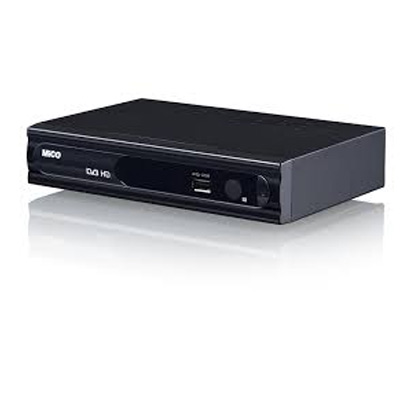
    MUMBAI: Multi-system operators (MSOs) have in store 200,000 set-top boxes (STBs) and orders have been placed for importing more to meet the growing demand from consumers, the Telecom Regulatory Authority of India (Trai) chairman Nripendra Misra tells Indiantelevision.com.

    The offtake of STBs has been slow in Kolkata while there seems to be a healthy demand in Mumbai and Delhi, he adds. MSOs have seeded 135,000 boxes in Mumbai, 105,000 in Delhi and only 24,000 in Kolkata.

     
    “Kolkata is slow to take off and our feedback is that most of the consumers are opting for free-to-air (FTA) package at this stage. But overall Cas (conditional access system) is getting accepted by the consumers,” says Misra.

    Mumbai with 130,000 has the maximum number of STBs in stock while Delhi has 55,000 and Kolkata 20,000. But the major MSOs like Incablenet, Hathway Cable & Datacom and Wire & Wireless India Ltd (WWIL), who are operating in multiple cities, have no problems in shifting the boxes according to the consumer requirement.

    Misra admits, though, that there are “reports of shortages in some pockets.” Consumers falling under the Cas areas did not order for the boxes earlier and there is a rush only after Cas got implemented which has led to this current situation, he clarifies.

     
    The cable & broadcast regulator has called for a meeting with the MSOs on Friday to take stock of the Cas situation. The Trai will be sending teams to Mumbai, Delhi and Kolkata from Monday to make spot assessments, Misra says.

  • Hathway launches digital cable in Mysore

    MUMBAI: Hathway Cable & Datacom has launched digital cable TV service in Mysore through a fibre linkup from Bangalore.

    The multi-system operator (MSO) will have the Scientific Atlanta (SA) solution using the digital content manager (DCM) which supports gig interface (GbE ports) for transmitting the 130 channels over STM4 bandwitdh.

    On the recieving end, is the SA’s digital qam (XDQ). This is an ideal bridge between flexible IP and Giga bit ethernet based backbone networks and existing qam set top boxes.

    Hathway plans to launch the service soon in Nashik, the company said in a statement. Digital cable is already available in Chennai, Mumbai, New Delhi, Pune, Bangalore, Hyderabad, and Punjab.

    The digital set-top box (STB) will offer over 130 TV channels and other value added services like interactive gaming, the release added.

  • NDS expands Indian ops with new office in Mumbai

    NDS expands Indian ops with new office in Mumbai

    MUMBAI: With Conditional acces coming in next year and DTH taking hold in the country the time is right for television technology firms to take a serious look at India. One such firm is the News Corp owned NDS, which provides technology solutions for digital pay-TV.

    It has opened a dedicated sales and support operation in Mumbai. NDS chairman and CEO Dr Abe Peled, said, “NDS has had a research and development facility in Bangalore for over five years. This has grown to nearly 600 employees. NDS Bangalore is pivotal in our ability to roll out state-of-the-art technologies, such as advanced middleware solutions, digital video recorders (DVR) and interactive TV applications, to some of the world’s largest broadcasters.

    “The opening of the NDS Mumbai office, is in recognition that the Indian market itself is ready for the wide-scale deployment of digital pay-TV. NDS has been growing at a compound rate of 15 per cent. We have 66.6 million active Smart Cards using our VideoGuard for conditional access globally. Our middleware is present in 45 million set top boxes. 4.2 million of our Digital Video Recorder (DVR) software has been shipped. Our innovation in DVR shows that we are ken on merging technologies. DVR marks a fundamental change in how people watch television. This basically is a shift from a time viewing paradigm to a content viewing one. ”

    As of now NDS has two clients in India – the Tata Sky direct to home (DTH) service and MSO Hathway Cable Datacom. A point of note is that both companies are News Corp affiliates by virtue of the fact that Star has a 20 per cent equity in Tata Sky and a 26 per cent stake in Hathway.

    Peled claims that NDS provides a competitive advantage because its services go beyond just securing content. “Our message to the cable fraternity is that you cannot afford not to have NDS. There is this notion that we are expensive. But when we have dialogues with them I think that they will be surprised at our edge. After all it is a long term investment for them and it is important to choose the right partner.”

    30 per cent of NDS’ revenue goes into research and development activities says Peled. NDS India VP, GM Vladimir Ruppo says that the Bangalore center is fully responsible for delivery and product ownership. “The focus is on the Mediahighway middleware which is a software glue within the set top box and can also act as an end to end solution. It is built on Modular Architecture and can work on any set top box. It has already been integrated with 60 set top box vendors. Right now the Bangalore center is working on
    developing a new Elecvtroni9c programme Guide (EPG).

    “This solution is aimed at allowing a broadcaster to make dynamic changes and also the user can have a richer experience. The subscriber will be allowed to choose his/ her EPG scheme. The Bangalore office is also working an a solution for enabling mobile TV and also on high definition. It can also offer an end to end IPTV solution which will offer IP connectivity.”

    Coming back to its existing deals in India NDS end-to-end systems are deployed by Tata Sky to offer a range of digital and interactive TV services that give their subscribers greater choice, control and convenience. The NDS systems deployed include NDS VideoGuard conditional access solution (CAS),MediaHighway middleware, and a bouquet of interactive

    TV applications including the electronic programme guide (EPG) for viewer navigation. The PEG was customised to suit the broadcaster’s requirements.

    For example there is a favourite channels feature which offers a display of key channels. Then there is the parental control feature which allows for disabling of channels deemed inappropriate for children by their parents. The EPG also sports multi lingual capabilities. So a bradcaster can offer a feed in multiple languages and the user can select accordingly. There is also fingerprinting to combat piracy.NDS points out that the main aim was to make the EPG simple use for anyone from 7-70 years of age. For Hathway NDS provided a customised EPG.

  • WWIL in drive to acquire LMOs

    WWIL in drive to acquire LMOs

    MUMBAI: Wire & Wireless India Ltd (WWIL), the cable outfit of Zee Network, is on a drive to acquire last mile operators. The company is offering to cable operators a valuation of Rs 2,000-3,000 per subscriber. While WWIL will be a 51 per cent partner, the balance 49 per cent will be with the operators.

    “We want to expand the size of our network. We are making proposals to operators with decent size where we become partners with 51 per cent,” says WWIL CEO Jagjit Kohli.

    WWIL has acquired control over 5 Star which operates in Andheri, a western suburb of Mumbai, adds Kolhi. “We have also poached a few operators from Incablenet in Andheri East and others from multi-system operators (MSOs) are going to join us.”

    WWIL, which doesn’t have a presence in South Mumbai, is also targeting operators in that area. The MSO has linked up optic fibre and is keen to start operations in this lucrative part of the Mumbai market. The government has notified south Mumbai as the area where CAS (conditional access system) will kick off on 1 January.

    WWIL is also planning to launch a headend-in-the-sky (HitS) platform and has expressed its intent to broadcasters. “We are going to do HITS. This will provide us a wider footprint and hasten the pace for digitisation in the country,” says Kohli.

    The buzz in the market is that WWIL is booking seven transponders on Thaicom 5 for the HITS operations. When queried on this, Kohli declined to comment.

    The problem with HITS, however, is that broadcasters are reluctant to get into agreement with MSOs for providing their channels due to fear of piracy.

    Even as WWIL sweetens its proposals to rope in last mile operators, it remains to be seen how big the impact will be in the cable TV industry. If migration from rival networks take place, it will set the pace for a fresh bout of price and dirty wars on the ground. As Hathway Cable & Datacom managing director and CEO K Jayaraman had told Indiantelevision.com earlier in an interview: “As far as poaching of operators go, it is an open ground. Cable companies who focus on good service and have capital to create capacity will turn out winners. Competition is not a one-way street.”

  • Hathway selects Magnaquest as SMS provider for digital pay TV operations

    Hathway selects Magnaquest as SMS provider for digital pay TV operations

    MUMBAI: Hathway Cable & Datacom is integrating its broadband and digital pay TV billing solutions. The multi-system operator (MSO) has selected MagnaQuest as its subscriber management system (SMS) provider for both the services.

    Earlier, when conditional access system (CAS) was to be implemented in 2003, Hathway had chosen Entriq (formerly known as Mindport as the SMS provider.

    Hathway was already using MagnaQuest’s MQSubscribe, a customer management and billing solution (CMB), for the past two years. “Eventually broadband, digital cable and voice services will converge. So we decided to deploy MQSubscribe for rolling out our digital pay TV services as well. We have been successfully using their billing solution for our broadband internet business for the past two years and found the system to be robust and scalable,” says Hathway Cable & Datacom MD and CEO K Jayaraman.

    Hathway Cable & Datacom will use MQSubscribe to handle subscriber information, billing, inventory and logistics management and customer care. MQSubscribe is seamlessly integrated with NDS CAS for automatic activation and deactivation of subscriptions.

    Says MagnaQuest CEO Vijay Debbad, “Apart from our domain expertise, solution flexibility and scalability, we believe it is our commitment and understanding of the Indian Pay TV industry that has enabled us to be chosen by Hathway Cable & Datacom.”

    MagnaQuest recently bagged a contract to manage the broadband and Voice over Internet Protocol (VoIP) billing services of Hyperia Ltd, Nigeria’s leading internet service provider.

  • CAS rollout: MSOs look to channel package tiers

    CAS rollout: MSOs look to channel package tiers

    MUMBAI: Multi-system operators (MSOs) have initiated talks with some broadcasters for providing their bouquet of pay channels at special rates in the conditional access system (CAS) regime. This would enable cable networks to tier various channel packages for consumers.

    The Telecom regulatory Authority of India (Trai) has fixed the a la carte pricing of pay chanels at a maximum of Rs 5 under CAS. The MSOs want broadcasters to price their bouquets below the average of Rs 5 per channel.

    “We are in a very nascent stage of discussions. Some of the broadcasters have moved the courts and are, in fact, waiting for the verdict. We expect to have more definite proposals within a fortnight,” says Hathway Cable & Datacom managing director and CEO K Jayaraman.

    The MSOs will tier different packages to make it price friendly for consumers. “We will be working out packages based on a combination of genres. This will be in addition to the a la carte pricing which, with a cap at Rs 5, is expected to be quite popular,” says Jayaraman.

    Adds IndusInd Media and Communications Ltd (IMCL) director-in charge Ravi Mansukhani: “Once the broadcasters give us their bouquet pricing, we can work out our own bundling which will offer choice to consumers and make it more attractive than the a la carte pricing.”

    The stumbling block to such negotiations at this stage, however, is a number of court cases filed by broadcasters questioning the Rs 5 cap fixed by the sector regulator. Broadcasters feel the regulated pricing is unfair and will hurt their subscription incomes.

    Hathway and IMCL, meanwhile, will soon kick-off CAS awareness campaigns jointly. The estimated spend: Rs 10 million. Hathway plans to spend an additional Rs 5 million in the first phase, says Jayaraman. Hathway has already started marketing its digital drive in bus shelters, radio and other mass media platforms.

    “We are also planning to invest independently through various marketing initiatives. This will be in addition to the joint campaigns where the spend could be Rs 10 million,” says Mansukhani.

    The MSOs have started offering digital set-top boxes (STBs) and cable at an advance deposit of Rs 250 in the CAS notified regions of south Mumbai, Delhi and Kolkata. Consumers will have to pay a rent of Rs 45 per month only after 1 January, the scheduled date for implementation of CAS. If they are not happy, they can discontinue the service.

    “We have started seeding 1,000 STBs a day since 1 November. We expect this to further pick up,” says Jayaraman. Hathway is aggressively pushing for digital cable in both Mumbai and Delhi.

    IMCL has been slow to push the STBs to its consumers. “Once the marketing campaign gathers momentum next week, we hope to seed 1,000 STBs a day. The offtake should further speed up as we go forward,” says Mansukhani.

  • ‘Trai has come up with the correct CAS economics’ : K Jayaraman – Hathway Cable & Datacom MD & CEO

    ‘Trai has come up with the correct CAS economics’ : K Jayaraman – Hathway Cable & Datacom MD & CEO

    The Telecom Regulatory Authority of India (Trai) has laid out a fertile ground for digital cable TV take off. The formula is simple: price everything low and large volumes will create a viable market dynamics.

    India has seen it in mobile phones. The lessons will repeat itself in the television industry. Despite the initial blip, the industry will correct itself and grow as at the centre of this pull of gravity rests the consumers.

    Broadcasters are not in tune with this logic. Their programming costs are rising. So why not let them have the freedom of pricing their products?

    The cable operators, along with the consumers, are in love with the a la carte pricing of pay chanels at a maximum of Rs 5. The multi-system operators (MSOs) feel that a new business model is being set.

    In an interview with indiantelevision.com‘s Sibabrata Das, Hathway Cable & Datacom managing director and CEO K Jayaraman argues how every stakeholder will eventually stand to gain. The a la carte pricing will make digital cable popular while the revenue share across the value chain has been “very accommodative.”

    Excerpts:

    Do you agree with what the Telecom Regulatory Authority of India (Trai) has fixed as the price and revenue share under conditional access system (Cas)?
    The regulator has come up with the correct economics. Consumers will have choice and at a real affordable cost. The a la carte pricing of channels at a maximum of Rs 5 in Cas areas will increase the penetration of set-top boxes (STBs) and drive in volumes. The revenue share allocation across the value chain is also very accommodative. Broadcasters will get 45 per cent share and have access to advertising revenues as well. While multi-system operators (MSOs) will have 30 per cent and carriage fee, local cable operators are also given a fair share with full revenue on the free-to-air (FTA) package and a 25 per cent share on pay channel revenues. Also, the government will get more tax revenues.

    Broadcasters complain that the maximum price of Rs 5 per channel is too low and doesn‘t take into account their high programming costs.
    When subscription becomes transparent, the rate has to be low. For digital technology to take off, we need such a price regulation. Let us face the reality: these are the consequences of a new environment and a change in business model. Besides, the price regulation is only for one year. Free market will prevail and price will be discovered eventually.

    With a la carte pricing, cable bills are expected to drop. How will falling ARPUs (average revenue per user) affect the cable companies?
    Nothing can be worse than the current model. But under Cas, we will, at least, have a legally sanctioned revenue, albeit lower. No doubt we will get a Hindu rate of return. But we will not have under-reporting of subscribers. We are happy that a proper business model is being set. Revenues Will grow once the business model settles. Everybody will be on the move. As consumers have choice, broadcasters will have to worry about pricing their channels correctly within a maximum of Rs 5. If they do that, then MSOs can also make money. We will have to focus on providing quality cable TV service. If we don‘t do that, we have competition from direct-to-home (DTH) service and will face threat of being wiped out.

    Cable companies will also have to subsidise the boxes. Do they have the resources to absorb subsidy costs and still scale up?
    All of us will have to be in investment mode because the business model is changing. The initial subsidy on each box will work out to Rs 1,500. This is the price we have to pay for a change in the business model. But this can be squared off once it settles down. The price of STBs will fall by 15-20 per cent with a surge in volumes. Cable companies will have to raise resources, either through debt or equity. For those who can‘t, survival will be tough. The telcos like Reliance Infocomm are waiting to step in. We should be prepared for a high volume, low margin game. Distribution, initially, is a volume business.

    Won‘t your traditional business from non CAS areas be a support?
    Yes, we will have other businesses to run: internet, non CAS placement fee, ad revenues from local cable channels. We will also have carriage fee from FTA channels in a CAS system. For cable companies to cover up their overhead and variable costs (STBs), they will have to do other related businesses.

    A la carte pricing will drive down our ARPUs. But we are happy that a proper business model is being set

    Like having a well-rounded revenue stream?
    If you are a composite cable company, you will survive. We will have to provide video, voice and data through a common pipe. Standalone players will have a tough time. We, for instance, are preparing to launch voice over internet protocol (VoIP) services by the last quarter of this year. Test runs are currently on. We are also be aggressively pushing digital cable TV in non CAS markets. We recently launched in Jalandhar, having rolled out our digital services earlier in New Delhi, Mumbai, Pune, Bangalore, and Hyderabad.

    Do you see DTH having a perceptional advantage over cable?
    DTH platform providers are well capitalised and have a more long term vision. Their ARPUs can also settle higher as they better their products. But they have a huge variable cost in occupying transponder space. Cable companies, in contrast, have already made the investments and have low operating costs. Of course, now they will have a variable cost towards procurement of boxes. But they have an existing relationship with customers and cable is two-way enabled. Digital cable can also offer more channels. Composite cable companies with focus on multiple revenue streams can effectively fight DTH.

    How are you planning to infuse capital to fund digitisation?
    We will raise Rs 1 billion as debt to fund the first phase of CAS The bulk of the investments will be towards subsidising the STBs. Funding will also be required in setting up VoIP and expanding broadband infrastructure.

    Is it a good time to acquire last mile operators?
    If cable companies have the resources, acquisition of last mile will make sense. In the CAS areas where you have an administered price regime for one year, the payback period will be longer. But once the price is market-based, then recovery will be faster as more channels come under the pay system and people start subscribing to them. Even in non CAS areas, acquisition will provide size upon which a digital platform can be built later. But in case of Hathway where we have limited resources, we would rather put the money in placing more STBs.

    Will Valuations of cable companies go up under CAS?
    CAS will bring some semblance of order into the business. But it is a long term roll out and needs cash flow. What is more important is that cable companies will attract capital, whether in the form of equity, debt or convertible bonds.

    Will there be a consolidation in the industry?
    Consolidation will happen wherever digitisation is required because of new technology and service requirements.

    Zee network‘s Wire & Wireless India Ltd (WWIL) is planning to launch a headend-in-the-sky (Hits) platform and has expressed intent to make inroads into south and western suburbs of Mumbai. Do you see territorial warfare among MSOs returning?
    Hits is right now viewed more as a fashion statement. We are delivering digital without having Hits. If it is necessary, then everybody will do it. As far as poaching of operators go, it is an open ground. Cable companies who focus on good service and have capital to create capacity will turn out winners. Competition is not a one-way street.

  • Zee Sports yet to sign up with Mumbai’s major MSOs

    Zee Sports yet to sign up with Mumbai’s major MSOs

    MUMBAI: Zee Sports, which was available to viewers in Mumbai for the India-West Indies cricket match, is once again blacked out from the major cable networks in Mumbai today evening.

    “Major operators in Mumbai have still not reached an agreement for continuation of signals for the sports channel. Since the operators are being stubborn and are not agreeing to sign the agreement, we are being compelled to switch off the channel on defaulting networks,” says Zee Turner CEO Arun Poddar.

    Counters Cable Operators and Distributors Association (CODA) vice-president Ravi Singh, “If we have not signed the agreement, how can we be turned as defaulters? Zee Sports is asking us to pay for an unreasonable subscriber base.”

    Zee Turner had restored the signals of Zee Sports channel early in the day on assurance from MSOs like Hathway Cable & Datacom and Incablenet that they would be signing the pay channel agreement in Mumbai.

    In a meeting with major operators held in Mumbai, the operators had to discuss and sign the pay channel subscription agreement and had requested Zee Turner to allow the signals for today’s India-West Indies match. Considering the request from cable operators, Zee Turner had allowed the signals of Zee Sports to these networks in Mumbai, says Poddar. “The operators that have already signed the agreement will continue to get the signals for rest of the matches on Zee Sports,” he adds.

    CODA had an internal meeting in the afternoon but could not agree to Zee Sports demand. “The channel does not have telecast rights to any major event after this. If we can withstand the pressure over the next few days, we needn’t yield to their demands,” says a CODA member. The DLF tri-series will last till 24 September.

    Zee Sports, which has bought the telecast rights from BCCI (Board of Control for Cricket in India) for cricket matches to be played by India in non cricket playing countries over the next five years, will be showing the India-Australia match on Saturday.

    The channel, however, is back on cable networks in Pune after the Pune District Consumer Disputes Redressal Forum directed Zee Sports to restore the signals till further hearings on 21 September. “We have restored the signals in Pune following the order. The next hearing comes up on 21 September,” a Zee Turner spokesperson confirms.

    Zee Sports is also available in Chennai as SCV signed a commercial agreement with the channel for the conditional access system (CAS) market. The channel, however, is blacked out in other parts of Tamil Nadu where SCV has not signed up.

  • Hathway plans Rs 1 billion debt for CAS; VoIP launch by year-end

    Hathway plans Rs 1 billion debt for CAS; VoIP launch by year-end

    MUMBAI: Rajan Raheja-promoted Hathway Cable & Datacom plans to raise Rs 1 billion as debt to fund the first phase of conditional access system (CAS). The multi-system operator (MSO) is also preparing to launch voice over internet protocol (VoIP) services by the last quarter of the year.

    “We will require an investment of Rs 1 billion for which we will be raising debt,” says Hathway Cable & Datacom CEO K Jayaraman.

    The bulk of the investments will be towards subsidising the digital set-top boxes (STBs). Funding will also be required in setting up VoIP and expanding broadband infrastructure. The company has tied up with telecom major Bharti for VoIP.

    “We are conducting test runs and expect to launch VoIP services by the year-end. MSOs will have to infuse capital in the changing business environment. On each STB, the subsidy works out to Rs 1,500,” says Jayaraman.

    The Telecom Regulatory Authority of India (Trai) has fixed the pricing of the boxes in the CAS areas. Cable TV service providers will have to offer digital STBs on a monthly rental scheme of Rs 30 and a refundable security deposit of Rs 999. There will be no payment for installation, activation charges, smart card/viewing card, repair and maintenance cost.

    The cost of the STBs including the smart card is around Rs 3,500. “Once we drive in volumes, the price of procuring these STBs should fall by 15-20 per cent,” says Jayaraman.

    Hathway will also be aggressively pushing digital cable TV in non CAS markets. The MSO launched its digital services in Jalandhar a few days back, having rolled it out earlier in New Delhi, Mumbai, Pune, Bangalore, and Hyderabad.

    “Starting with Jalandhar, we plan to roll out our digital services across Punjab over six months. In the first phase, 16 cities of Punjab will be connected by the end of this year,” Jayaraman says.

    The a la carte pricing of channels will increase the penetration of STBs in CAS areas, Jayaraman believes. “We expect a 80 per cent penetration if the broadcasters get the pricing right within a maximum of Rs 5 per channel,” he says.